

OBD-II Code P1578: Brake System Communication Failure
What P1578 means, why it triggers, and how to fix it
- P1578 is a manufacturer-specific code that points to a brake system malfunction on Toyota and GM vehicles, but indicates an instrument cluster failure on Subarus.
- On Toyota and Lexus models, the engine computer triggers P1578 when it detects an underlying ABS or Vehicle Stability Control (VSC) fault while cruise control is active.
- Scan all vehicle modules before replacing parts, as P1578 is almost always a secondary code triggered by a specific chassis (C-code) or network (U-code) failure.
- Check the brake light switch first; this $25 part is a primary cause of P1578 and will often lock the vehicle's shifter in the Park position when it fails.
What Does P1578 Mean?

P1578 is a manufacturer-specific code, meaning its definition changes depending on your vehicle. For most Toyota, Lexus, and Scion vehicles, it signals that the main engine computer (ECU) detected a malfunction in the brake control system while the cruise control was active. For Subaru, it points to an issue with the instrument cluster ('Meter Failure'). On some Fords, a similar code (B1578) relates to the driver-assist camera system. On many GM vehicles (Chevrolet, Cadillac, Buick), it indicates low vacuum in the brake booster system.
Technical definition: The official SAE/ISO definition varies by manufacturer. Toyota defines it as 'Brake System Malfunction,' set when the Engine Control Module (ECM) receives a brake system error signal from the Vehicle Stability Control (VSC) or Skid Control ECU for 0.2 seconds or more while cruise control operates. General Motors defines it as 'Brake Booster Vacuum Sensor Circuit Low Vacuum,' set when the ECM detects brake booster vacuum below a specified threshold.
Can I Drive With P1578?
Yes, But With Caution. Driving is possible but strongly discouraged. This code disables critical safety systems like ABS and Vehicle Stability Control (VSC). While basic hydraulic brakes still function, stopping distances without ABS increase by 15-25% on loose surfaces. Without VSC, the vehicle cannot automatically correct for skids. Drive directly to a repair shop.
Common Causes

- Faulty or misadjusted brake light switch (Very Common) — This small switch at the top of the brake pedal arm tells the car's computers when you are braking. A failure sends conflicting signals, disabling cruise control and the shift interlock, and triggering ABS/VSC warnings.
- Failing ABS wheel speed sensor or damaged tone ring (Common) — Each wheel has a sensor that reports its speed to the ABS and VSC systems by reading a notched tone ring. If a sensor fails, its wiring is damaged, or the tone ring cracks from rust, the VSC system reports an error to the main computer.
- Faulty Brake Booster Vacuum Sensor (GM) (Common) — On many Chevrolet, Buick, and Cadillac vehicles, the brake booster has a dedicated vacuum sensor. If this sensor fails or provides an incorrect reading, it directly triggers the P1578 code.
- Low brake fluid or vacuum leaks (Common) — Low brake fluid indicates a hydraulic leak. Vacuum leaks in the brake booster or its hoses cause a hard pedal and reduced braking assistance. The system detects this poor performance and sets the code.
- Low or unstable battery voltage (Less Common) — Modern ABS and VSC modules are highly sensitive to voltage. A weak battery causes temporary voltage drops during startup or under load, leading to spurious communication errors.
- Wiring or connector issues (Less Common) — Damaged wires or corroded connectors in the CAN bus communication network, or between brake components, interrupt signals. This loss of communication is a primary trigger for P1578.
- Defective ABS / VSC actuator or module (Rare) — An internal failure in the hydraulic pump, solenoids, or the electronic module itself is a serious issue that sets this code and disables safety features.
Symptoms

- Check Engine, ABS, and VSC warning lights illuminated — The Malfunction Indicator Lamp (MIL) and specific traction/stability warning lights appear simultaneously on the dashboard.
- Cruise control disabled — Because the code is often set when cruise control is active, the system disables itself as a safety precaution.
- Inability to shift from Park — A faulty brake light switch prevents the shift interlock solenoid from receiving the signal that the brake is pressed, locking the shifter.
- Brake pedal feels hard or requires more effort — This occurs if the brake booster is failing, has a vacuum leak, or if the booster's vacuum sensor has failed (common on GM models).
- Increased stopping distance in slippery conditions — With the ABS and VSC systems offline, the vehicle's ability to stop quickly and maintain traction is significantly reduced.
Diagnostic Flowchart
Tap your situation to follow the diagnostic path that matches what you're seeing on this code.
Common Fixes & Costs
- Replace Brake Light Switch — Parts: $15-$75, Labor: $60-$90, ~0.7 hr book time (DIY)
- Replace a Wheel Speed Sensor — Parts: $50-$150, Labor: $80-$150, ~1.2 hr book time (Intermediate)
- Replace Brake Booster Vacuum Sensor (GM) — Parts: $80-$120, Labor: $75-$125, ~0.8 hr book time (DIY)
- Replace Brake Booster — Parts: $220-$650, Labor: $280-$420, ~3.5 hr book time (Professional)
- Replace ABS Control Module/Actuator — Parts: $800-$2,500, Labor: $200-$400, ~2.5 hr book time (Professional)
DIY vs Professional
- Replace Brake Light Switch 🟢 Beginner
Tools: Basic hand tools (pliers, socket set). - Replace a Wheel Speed Sensor 🟢 Beginner
Tools: Jack and jack stands, socket set, torque wrench, wire brush, penetrating oil. - Replace Brake Booster Vacuum Sensor (GM) 🟢 Beginner
Tools: Basic hand tools. - Replace Brake Booster 🟢 Beginner
Tools: Extensive tool set, torque wrench, flare nut wrenches, vacuum pump for bleeding. - Replace ABS Control Module/Actuator 🟢 Beginner
Tools: Advanced scan tool, flare nut wrenches, torque wrench.
Used vs. New Parts: Buying Guide
When a used part is worth it: For high-cost electronic components like an ABS Control Module, a used part from a reputable donor vehicle offers significant savings. For inexpensive, high-failure parts like a Brake Light Switch, buying used is never recommended.
Donor-vehicle mileage cap: roughly under 80000 miles for the part to have meaningful remaining life.
Donor quality checklist:
- Verify the exact OEM part number matches your original part; modules look identical but have software differences.
- Purchase from a seller offering a 30-90 day warranty and clear return policy.
- Avoid wheel speed sensors from the 'Rust Belt' due to corrosion.
Decision logic:
- If Part is a simple switch or sensor under $100 new (e.g., Brake Light Switch, GM Vacuum Sensor) → Always buy new. Reliability outweighs minimal cost savings.
- If Part is an expensive electronic module (e.g., ABS Actuator) and the vehicle is over 10 years old → A tested, warrantied used part is a reasonable choice, but be aware of programming requirements.
- If Part is a mechanical wear item with a rubber component (e.g., Brake Booster) → Favor new or remanufactured. Internal rubber diaphragms degrade over time.
Warranty tradeoff: Used parts typically offer a 30-90 day warranty covering the part, not labor. New aftermarket parts offer 1-year to limited-lifetime warranties. OEM parts offer the best warranty at the highest cost.
Worst-case if a used part fails: $400-$800 if a used ABS module fails after installation, requiring repeat labor and brake fluid bleeding.
What Happens If You Wait — Timeline
- 0-2 weeks: Check Engine Light and ABS/VSC lights illuminate. Cruise control is disabled. Basic hydraulic brakes function normally, but safety systems are offline. (MPG impact: 0%% · Added cost: $0)
- 1-6 months: The vehicle automatically fails state safety or emissions inspections. The immediate risk of an accident in an emergency maneuver remains the primary concern. (MPG impact: 0-2%% · Added cost: $50-$200)
- 6-12 months: Continued driving causes secondary damage. Contaminated brake fluid corrodes the ABS module's internal valves. A seized wheel speed sensor damages the hub during eventual removal. (MPG impact: 0-2%% · Added cost: $200-$800)
- 12+ months: A major brake fluid leak leads to a complete loss of hydraulic pressure. A failed ABS module replacement costs over $1,500. (MPG impact: N/A% · Added cost: $1,000-$5,000+)
Cost of Not Fixing It
- Immediate: Significantly reduced vehicle safety. The ABS and Vehicle Stability Control (VSC) systems are disabled, increasing the risk of skidding and loss of control in an emergency stop. (Added cost: N/A)
- 0-6 months: Failed state safety/emissions inspection. The Check Engine Light causes an automatic failure in most jurisdictions. (Added cost: $50-$200)
- 6+ months: Increased risk of a more expensive secondary failure. Ignoring a seized wheel speed sensor damages the wheel hub during eventual removal. Ignoring a brake booster vacuum leak puts extra stress on the vacuum pump. (Added cost: $500-$2500)
Diagnosis Steps

- Check for Other Trouble Codes
P1578 is almost always a secondary code triggered by a more specific problem. Scan the vehicle for any other codes, especially those starting with 'C' (Chassis) or 'U' (Network). Codes like C1201, C1223, or U0129 point directly to the root cause.
Tools: OBD-II Scanner with ABS/VSC capability (Beginner) - Test the Brake Light Switch
Have a helper confirm the brake lights work instantly when the pedal is pressed. For a thorough test, disconnect the switch and use a multimeter to test for continuity. One pair of pins should have continuity with the pedal released and open when pressed; the other pair should do the opposite.
Tools: Helper, Multimeter (Intermediate) - Inspect Brake Fluid and Battery
Check the brake fluid level in the master cylinder reservoir. Low fluid indicates a leak. Test the battery voltage with a multimeter; a healthy, resting battery must be at or above 12.4V. Low voltage causes random electronic faults.
Tools: Multimeter (Beginner) - Visually Inspect Wheel Speed Sensors and Tone Rings
Inspect the wiring leading to the wheel speed sensors at each wheel hub for chafing or breaks. Check the ABS tone rings on the axle/hub for rust, debris, or cracked teeth. Rust buildup under the sensor mounting point pushes the sensor away from the tone ring, causing a weak signal.
Tools: Flashlight, Jack and Jack Stands (Intermediate) - Test Wheel Speed Sensor Signals
For passive (2-wire) sensors, measure resistance with a multimeter; it should read between 800 and 2,500 Ohms. A reading of 'OL' indicates a failed sensor. Active (digital) sensors require an oscilloscope or advanced scan tool to verify the square wave signal while spinning the wheel.
Tools: Multimeter, Oscilloscope (optional), Jack and Jack Stands (Advanced) - Test Brake Booster Vacuum Level
Inspect the vacuum hose from the engine to the brake booster for cracks. Connect a vacuum gauge to the booster supply line. At idle, the gauge should read a steady 18-21 inHg. A reading below 16 inHg indicates a significant leak.
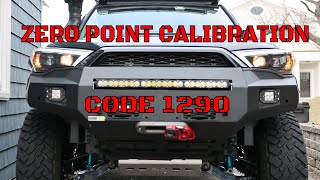
Tools: Flashlight, Vacuum Gauge (Advanced) - Perform Zero-Point Calibration (Toyota/Lexus)
If you recently had an alignment, suspension work, or replaced chassis components, the VSC system's baseline is off. A 'Zero-Point Calibration' resets the learned values for the yaw rate and steering angle sensors using a capable scan tool or OBD-II jumper wire.
Tools: Advanced Scan Tool or Jumper Wire (Professional)
When This Code Triggers (Freeze-Frame Conditions)
- Cruise Control Status: Active (Code is often set when cruise control is engaged.)
- Vehicle Speed: 40-70 mph (Steady highway driving speed.)
- Brake Switch Status: Off (The fault is detected when the brakes are not being applied.)
- Engine RPM: 1500-2500 RPM (Corresponds to steady highway cruise speed.)
Related Codes
- C1201 — A common companion code on Toyota vehicles indicating a general 'Engine Control System Malfunction.' Diagnose C1201 first; fixing it often clears P1578.
- C1223 — Points to a general 'ABS Control System Malfunction.' P1578 is the code telling the engine computer that this ABS fault exists. Diagnosing C1223 is the direct path to fixing P1578.
- U0129 — Means 'Lost Communication With Brake System Control Module.' P1578 is the result, while U0129 is the cause. Focus entirely on checking CAN bus wiring and power/ground to the ABS module.
- P0571 — Indicates a 'Brake Switch 'A' Circuit Malfunction.' If you have both codes, the brake switch is the culprit. Fix P0571 first.
Climate & Environmental Factors
- High Humidity / Road Salt ('Rust Belt'): Corrosion builds up under wheel speed sensors, physically pushing them away from the tone ring and creating an air gap that weakens the signal. Salt also damages the tone ring itself.
- Extreme Cold: Low temperatures cause plastic wiring insulation and vacuum hoses to become brittle and crack. A weak battery's performance degrades significantly in the cold, triggering spurious voltage-related fault codes.
How to Talk to a Mechanic About This Code
Say this: "I have a P1578 code and the ABS/VSC lights are on. Since P1578 is often a secondary code, please scan all modules for any related Chassis ('C') or Network ('U') codes first. Based on my vehicle, I'd like you to start by checking common causes like the brake light switch, wheel speed sensor data, and brake booster vacuum before quoting a major component like the ABS module."
This directs the technician toward a logical, cost-effective diagnostic path, preventing them from immediately jumping to the most expensive conclusion.
Avoid saying:
- 'My check engine light is on, can you look at it?'
- 'The code is P1578, just replace whatever part causes that.'
- 'My brakes feel weird, just fix it.'
Questions to ask before authorizing the repair:
- What specific fault code in the ABS/VSC module is causing the P1578 code?
- Can you show me the live data from the failing component?
- If recommending an ABS module, have you ruled out the brake light switch, wiring, and sensor calibration?
- What is the warranty on the parts and labor for this specific repair?
Where to Take It: Dealer vs Independent vs Chain
- Dealer:
A strong option for Toyota/Lexus VSC calibration or GM vacuum pump issues with extended warranty coverage. Safest but most expensive.
Best for: Vehicles under warranty., Complex procedures like Zero-Point Calibration on a Toyota or module programming., When an independent shop cannot diagnose the issue.
Downsides: Highest labor rates., May replace a whole assembly rather than diagnose a smaller component. (Typical cost: +50% vs. baseline) - Independent Shop:
The best fit for most scenarios. A reputable independent shop handles the vast majority of P1578 causes effectively at a lower cost.
Best for: Out-of-warranty vehicles where cost is a major factor., Diagnosing common failures like a bad wheel speed sensor, brake light switch, or vacuum leak.
Downsides: Diagnostic capabilities vary. Ensure they have modern scan tools that read ABS/VSC codes., May lack manufacturer-specific software for programming new modules. (Typical cost: +0% vs. baseline) - Chain Shop:
Avoid for initial diagnosis. Acceptable only for straightforward part replacement if the diagnosis is certain.
Best for: Simple, clear-cut repairs like replacing an accessible wheel speed sensor after proper diagnosis elsewhere.
Downsides: Technician skill is inconsistent., Lack advanced diagnostic tools for complex electronic issues., Cannot perform procedures like a Zero-Point Calibration. (Typical cost: -10% vs. baseline)
When to Walk Away From the Repair
If the estimated repair cost exceeds 40-50% of the car's current private-party value, seriously consider selling or trading in the vehicle.
- Car worth $5000, fix is $2500: Walk away. The repair cost is 50% of the car's value. Put this money toward a more reliable vehicle.
- Car worth $15000, fix is $1200: Fix it. The repair cost is only 8% of the vehicle's value.
- Car worth $3000, fix is $800: Borderline. The cost is ~27% of the value. If the rest of the car is in good shape, this repair extends its life significantly.
What Scan Tool You Need for This Code
Minimum: A scanner that reads and clears codes from the ABS/VSC module. A basic engine-only code reader will NOT see the underlying 'C' codes causing P1578.
A $20 reader shows the P1578 code from the engine computer, but won't tell you why the brake system is reporting a fault. You need specific ABS codes to know what to fix.
Budget: BlueDriver Pro (~$100) — Reads and clears enhanced codes, including ABS, SRS, and Transmission. Allows you to see specific chassis codes and view live data.
Mid-range: Foxwell NT510 Elite (~$180) — Provides full-system diagnostics and bidirectional control for a single chosen car make. Crucial for performing Zero-Point Calibrations on Toyotas.
Professional: Autel MaxiCOM MK808 / MK808BT (~$450-600) — Offers full bidirectional control and service functions for all makes. Performs dealer-level functions including ABS bleeding and sensor calibrations.
Rent vs buy: Auto parts stores scan codes for free, but often only pull engine codes. Call ahead to ensure their tool reads ABS codes. If doing your own repairs, buying a capable scanner is a wise investment.
How to Clear the Code After You Fix It
- Fix the underlying cause (e.g., replace sensor, repair wiring).
- Use an OBD-II scan tool to clear the P1578 and any related 'C' or 'U' codes.
- Perform a complete drive cycle to allow readiness monitors to run.
Drive cycle (~30 minutes): A general drive cycle involves: 1) Cold start and idle for 2-3 minutes. 2) Drive in mixed city conditions with several stops. 3) Drive at a steady highway speed (50-60 mph) for 15-20 minutes. 4) Let the vehicle cool down completely.
Readiness monitors affected: This code itself does not block a specific monitor, but clearing it resets all monitors., The underlying cause (like a vacuum leak affecting the engine) prevents the Catalyst or O2 sensor monitors from setting.
Before emissions retest: drive at least 100 miles to fully set monitors.
Watch out for:
- Simply clearing the code does not fix the problem; the code returns when the fault condition is met again.
- Disconnecting the battery clears the code but resets all readiness monitors, causing an immediate emissions test failure.
- Failing to perform a Zero-Point Calibration on Toyota/Lexus vehicles after suspension work causes the code to return immediately.
Will This Fail Emissions / State Inspection?
Yes — this code typically fails an OBD-II emissions inspection.
- California: An illuminated Check Engine Light is an automatic failure. After repair, a full drive cycle is needed to set readiness monitors before a retest.
- New York: The OBD-II emissions inspection automatically fails any vehicle with an illuminated Check Engine Light. Clearing the code right before the test results in a 'not ready' failure.
- Texas: In counties requiring emissions testing, an illuminated Check Engine Light causes an automatic failure.
Most Commonly Affected Vehicles
- Toyota RAV4 (2006-2018) — Prone to ABS/VSC system faults. Often accompanied by codes C1201 and C1241. A zero-point calibration is required after suspension work.
- Toyota Prius (2004-2015) — Often related to brake actuator or brake light switch failures. If code P0571 is present, the brake light switch is the cause.
- Toyota Tacoma (2016-2020) — Frequently points to a VSC system malfunction after installing a suspension lift kit, fixed by performing a zero-point calibration.
- Lexus LS430 (2001-2006) — On models with radar cruise control, this code is triggered by brake booster vacuum leaks. A symptom is the car creeping forward at a stop.
- Chevrolet Silverado, Suburban, Tahoe (2015-2020) — P1578 almost always points to a faulty Brake Booster Vacuum Sensor or its wiring harness.
- Nissan Altima, Maxima (2007-2012) — P1578 indicates 'SRS Left Occupant System Malfunction,' related to the airbag and occupant detection system, not the brakes.
- Volkswagen Jetta, Passat (2005-2015) — P1578 is unrelated to brakes and points to an 'Electrical Malfunction in Right Engine Mount Solenoid Valve Circuit'.
- Subaru Crosstrek, Legacy, Outback (2010-2018) — P1578 means 'Meter Failure' or 'No SKIM Bus Message', pointing to a faulty instrument cluster or immobilizer communication issue.
- Ford F-150, Mustang Mach-E (2021-2022) — Code B1578:78 relates to the Image Processing Module A (IPMA) and driver-assist systems. Fixed by a dealer software update per TSB 23-2021.
Manufacturer-Specific Notes
- Toyota / Lexus: This code is almost always triggered when using cruise control. The actual fault lies within the ABS/VSC system, but the code is logged by the engine computer as a response to the error message.
- Subaru: The P1578 code has nothing to do with the brakes. It indicates a 'Meter Failure' (instrument cluster problem) or a communication loss with the immobilizer system, causing a no-start condition.
- Ford: You are more likely to see a 'B' code like B1578:78. This points to a software glitch with the front-facing camera (IPMA) used for driver-assist features, requiring a dealer update.
- General Motors (Chevrolet / Cadillac): P1578 specifically relates to the brake booster vacuum sensor. GM issued recall N202300860 for some 2018 models for loss of brake assist due to vacuum pump issues, extending warranty coverage.
Real Owner Stories
2010 Toyota Prius with P1578 and P0571
Check Engine, ABS, and VSC lights came on. Scanned codes and found P1578 and P0571.
What they tried:
- Owner feared a major brake system repair due to the P1578 definition.
Outcome: A forum expert advised that P0571 ('Brake Switch Circuit Malfunction') was the root cause. Replacing the $25 brake light switch resolved both codes.
Lesson: If P1578 appears with P0571, the brake light switch is the problem. Fix the specific code (P0571) first.
2016 Toyota Tacoma SR5 with 60K miles
Bought a used truck with a rebuilt title. 'Check Vehicle Stability Control System' message was on, revealing code P1578.
What they tried:
- A dealer quoted over $750 for a complete brake booster assembly.
Outcome: Because the truck had prior front damage, the VSC sensors were uncalibrated. Performing a 'Zero-Point Calibration' fixed the issue without replacing parts.
Lesson: On Toyota trucks, always perform a Zero-Point Calibration after alignment, suspension work, or front-end repairs before replacing parts.
2004 Lexus LS430 with 209K miles
While using radar cruise control, the Check VSC, CEL, and TRAC OFF lights illuminated. The car crept forward at stop lights, requiring extra brake pressure.
What they tried:
- A shop cleared the codes, but the symptom persisted.
Outcome: The creeping sensation was a classic sign of a vacuum leak in the brake booster hose. Replacing the cracked hose restored vacuum assist and cleared the code.
Lesson: A hard brake pedal or a car that creeps at a stop points directly to a brake booster vacuum leak.
2018 Chevrolet Silverado
The 'Service Brake Assist' message appeared, and the truck threw a P1578 code with a hard brake pedal.
What they tried:
- Owners considered deleting the belt-driven vacuum pump.
Outcome: The cause is a failure of the belt-driven vacuum pump or its sensor. GM issued extended warranty coverage for this part on specific models.
Lesson: On 2014+ GM trucks, P1578 almost always points to the auxiliary vacuum pump system. Check for extended warranties before paying for repair.
How to Prevent This Code From Triggering
- Flush brake fluid periodically (Every 2-3 years or 25,000 miles) — Brake fluid absorbs moisture, causing internal corrosion in expensive components like the ABS actuator and control module.
- Clean wheel speed sensors and tone rings (During every brake service or tire rotation) — Road grime and metallic brake dust accumulate on the magnetic sensor head, causing an erratic signal.
- Perform regular brake system inspections (Annually or every 12,000 miles) — Catches deteriorating rubber brake hoses and early signs of leaks before they trigger a fault code.
Frequently Asked Questions
Can I just clear the P1578 code and keep driving?
You can clear the code, but it returns as soon as the fault condition is met. Clearing the code does not fix the underlying safety issue, and the ABS/VSC systems remain disabled.
What is a common misdiagnosis for P1578?
A common mistake is replacing the expensive ABS module when the actual cause is a simple part. Technicians often overlook a misadjusted brake light switch, a cracked ABS tone ring, or the need for a zero-point calibration. Always diagnose the cheapest causes first.
My car has P1578 but the brakes feel fine. What's the problem?
The fault is in a part of the system you don't feel during normal driving, like a failing wheel speed sensor. This disables your ABS and VSC systems, creating a safety hazard in an emergency. The code warns of a lost safety feature, not a loss of basic braking.
Why did my cruise control stop working?
The cruise control system relies on the brake system to disengage safely. When the computer detects an ABS/VSC fault, it disables cruise control to prevent it from becoming stuck 'on'.
Can a weak battery cause a P1578 code?
Yes. ABS and VSC control modules are highly sensitive to voltage. A weak battery causes a momentary voltage drop during startup, triggering communication fault codes like P1578.
I just installed a lift kit on my Toyota truck and now I have a P1578 code. Why?
Changing the suspension geometry confuses the Vehicle Stability Control (VSC) system because the yaw rate sensors lose their baseline. The fix is to perform a 'Zero-Point Calibration' using a scan tool to reteach the system its new normal position.
Can I pass a state inspection with a P1578 code?
No. The P1578 code illuminates the Check Engine Light, which is an automatic failure for emissions and safety inspections in most states.
Why does my car get stuck in Park with this code?
The most common cause of both P1578 and a stuck shifter is a faulty brake light switch. Modern cars use a shift interlock solenoid that requires a brake pedal signal to shift out of Park. If the switch fails, the solenoid remains locked.
Key Takeaways
- P1578 is a manufacturer-specific code that points to a brake system malfunction on Toyota and GM vehicles, but indicates an instrument cluster failure on Subarus.
- On Toyota and Lexus models, the engine computer triggers P1578 when it detects an underlying ABS or Vehicle Stability Control (VSC) fault while cruise control is active.
- Scan all vehicle modules before replacing parts, as P1578 is almost always a secondary code triggered by a specific chassis (C-code) or network (U-code) failure.
- Check the brake light switch first; this $25 part is a primary cause of P1578 and will often lock the vehicle's shifter in the Park position when it fails.
Helpful Videos
Shop the Parts Behind P1578
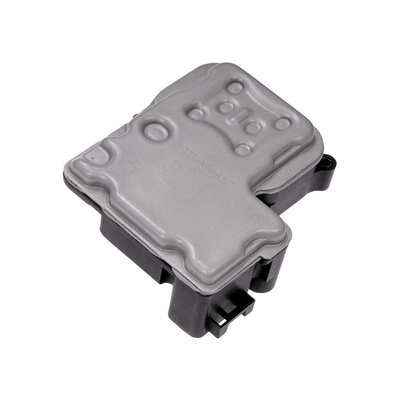
Below are the parts most often responsible for code P1578, ranked by how frequently each one is the actual culprit (per the diagnosis above). Tap any to see what we have for your vehicle.



The information in this article is provided for general reference and educational purposes only. Vehicle specifications, procedures, and part compatibility can vary by production date, trim level, and region. Always consult your vehicle's factory service manual and verify part numbers before purchasing or performing repairs. Safety-critical components such as airbags, seat belts, and braking systems should be installed by a qualified professional.
- 🧭 Diagnostic Flowchart
- 🎬 Helpful Videos
- 🛍️ Shop This Part
- What Does P1578 Mean?
- Can I Drive With P1578?
- Common Causes
- Symptoms
- Common Fixes & Costs
- DIY vs Professional
- Used vs. New Parts: Buying Guide
- What Happens If You Wait — Timeline
- Cost of Not Fixing It
- Diagnosis Steps
- When This Code Triggers (Freeze-Frame Conditions)
- Related Codes
- Climate & Environmental Factors
- How to Talk to a Mechanic About This Code
- Where to Take It: Dealer vs Independent vs Chain
- When to Walk Away From the Repair
- What Scan Tool You Need for This Code
- How to Clear the Code After You Fix It
- Will This Fail Emissions / State Inspection?
- Most Commonly Affected Vehicles
- Manufacturer-Specific Notes
- Real Owner Stories
- 2010 Toyota Prius with P1578 and P0571
- 2016 Toyota Tacoma SR5 with 60K miles
- 2004 Lexus LS430 with 209K miles
- 2018 Chevrolet Silverado
- How to Prevent This Code From Triggering
- Frequently Asked Questions
- Can I just clear the P1578 code and keep driving?
- What is a common misdiagnosis for P1578?
- My car has P1578 but the brakes feel fine. What's the problem?
- Why did my cruise control stop working?
- Can a weak battery cause a P1578 code?
- I just installed a lift kit on my Toyota truck and now I have a P1578 code. Why?
- Can I pass a state inspection with a P1578 code?
- Why does my car get stuck in Park with this code?
- Key Takeaways
- 🎟️ Get 5% Off