

OBD-II Code P1581: Electronic Throttle Control System Fault
What P1581 means, why it triggers, and how to fix it
- P1581 is a manufacturer-specific code that points to the electronic throttle system in VW and Ford, but indicates a camshaft issue in BMWs or a heater fault in FIATs.
- Expect an immediate 5-15% drop in fuel economy, rough idling, and a dangerous 'limp mode' that severely restricts engine power.
- On VW and Audi vehicles, 80% of P1581 codes are fixed by performing a 30-second 'Throttle Body Alignment' using a bidirectional scan tool, rather than replacing parts.
- Never replace a $300+ throttle body without first verifying battery voltage is above 12.4V, cleaning the throttle plate, and completing the electronic relearn procedure.
- Driving with an unresolved P1581 code forces an incorrect air-fuel ratio that destroys a $1,500 catalytic converter within 1 to 6 months.
What Does P1581 Mean?
P1581 is a manufacturer-specific code indicating the Engine Control Module (ECM) detects a fault in the electronic throttle system. This system controls airflow into the engine based on gas pedal position. The error stems from a malfunctioning throttle body, a failed electronic calibration, or—depending on the car brand—a completely unrelated system like cruise control or camshaft actuators.
Technical definition: The official definition of P1581 varies by manufacturer. Jaguar and Ford define it as 'Electronic Throttle Monitor Malfunction'. Volkswagen and Audi define it as 'Throttle Actuator: Basic Setting Not Performed'. BMW defines it as 'B Camshaft Position Actuator Control Open Circuit Bank 2'. FIAT defines it as a 'Blow-by Heater' circuit fault. In all cases, the powertrain control module has detected a circuit or calibration failure.
Can I Drive With P1581?
Yes, But With Caution. You can drive, but expect reduced engine power, stalling, or an erratic idle. The vehicle often enters a 'limp mode' with severely restricted power, making highway merging dangerous. Continuing to drive forces an improper air-fuel ratio that destroys the catalytic converter within months, adding $1,000 to $2,500 to your repair bill. Stop driving and diagnose the issue immediately to avoid safety risks and secondary damage.
Common Causes
- Throttle Body Basic Settings Not Performed (Very Common) — On many vehicles (especially VW/Audi), disconnecting the battery, resetting the ECM, or cleaning the throttle body erases the throttle's calibration memory. If a 'Throttle Body Alignment' (TBA) is not performed with a scan tool, the code sets immediately.
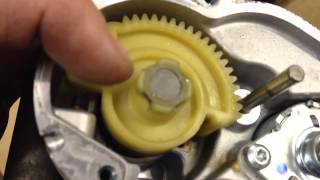
- Faulty Throttle Body Assembly (Very Common) — The electronic throttle body contains a motor and sensors. The internal motor fails, plastic gears strip, or integrated throttle position sensors (TPS) send incorrect signals, causing improper throttle plate movement.
- Carbon Buildup and Internal Contamination (Common) — Carbon and oil sludge from the PCV system build up around the throttle plate, physically restricting its movement. In turbocharged direct-injection engines, this oil also contaminates the internal electronics, causing intermittent failures.
- Wiring or Connector Issues (Common) — The wiring harness connecting the ECM to the throttle body frays, corrodes, or loosens. High resistance from corroded pins interrupts the signal, triggering the fault.
- Faulty Accelerator Pedal Position (APP) Sensor (Less Common) — The APP sensor tells the ECM how far you press the gas pedal. If this sensor fails, the ECM sets a throttle-related code because the throttle's actual position doesn't match the expected pedal command.
- Vacuum Leaks (Less Common) — A leak in a vacuum line, intake manifold gasket, or PCV hose introduces unmetered air into the engine. The ECM struggles with idle control and misinterprets this as a throttle system fault.
- Faulty Engine Control Module (ECM) (Rare) — The driver circuits inside the engine computer fail, sending incorrect commands or failing to read sensor data properly. This is usually accompanied by a P0606 code.
Symptoms
- Reduced Engine Power or 'Limp Mode' — The car's computer intentionally limits engine power to prevent damage, making acceleration extremely slow or unresponsive.
- Engine Stalling or Hesitation — The engine stalls when coming to a stop, hesitates during acceleration, or fails to start entirely.
- Rough or Unstable Idle — The engine idles too high, too low, or surges up and down because the ECM cannot control airflow correctly.
- Check Engine Light is On — The primary indicator of a fault. A 'Wrench' or electronic throttle control (ETC) warning light also illuminates on the dashboard.
- Decreased Fuel Economy — An incorrect air-fuel mixture caused by a faulty throttle body forces inefficient engine operation, dropping fuel economy by 5-15%.
Diagnostic Flowchart
Tap your situation to follow the diagnostic path that matches what you're seeing on this code.
Common Fixes & Costs
- Performing a Throttle Body Relearn/Alignment — Parts: $0, Labor: $50-$150, ~0.5 hr book time (Intermediate)
- Cleaning the Throttle Body — Parts: $10-$20, Labor: $100-$200, ~1.0 hr book time (DIY)
- Replacing the Throttle Body Assembly
— Parts: $200-$800, Labor: $150-$300, ~1.5 hr book time
(Intermediate)
Volkswagen Jetta (2005-2014, 2.5L): OEM 07K133062A (Alt: Bosch, VDO, URO Parts (07K 133 062 A))
Ford F-150 (2011-2017, 5.0L/3.5L): OEM BR3Z-9E926-C (Alt: Dorman (977-328), Bosch (W0133-5402144)) - Repairing Damaged Wiring or Connectors — Parts: $10-$50, Labor: $150-$300, ~2.0 hr book time (Professional)
- Replacing the FIAT 'Blow-by Heater'
— Parts: $150-$200, Labor: $100-$200, ~1.0 hr book time
(DIY)
FIAT Ducato (2014-2024): OEM 5802052418
DIY vs Professional
- Cleaning the Throttle Body — Beginner: Yes
Tools: Basic hand tools (socket set, screwdrivers), throttle body cleaner, rags. - Performing a Throttle Body Relearn/Alignment — Beginner: No (Intermediate)
Tools: Advanced bidirectional scan tool (e.g., VCDS, XTOOL). - Replacing the Throttle Body Assembly — Beginner: No (Intermediate)
Tools: Socket set, screwdrivers, torque wrench, advanced scan tool for relearn procedure. - Repairing Damaged Wiring or Connectors — Beginner: No
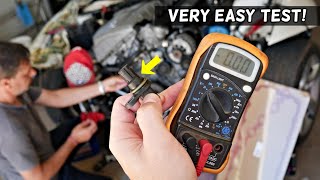
Tools: Multimeter, wiring diagrams, depinning tools, wire strippers, soldering iron, heat shrink tubing.
Used vs. New Parts: Buying Guide
When a used part is worth it: A used OEM throttle body is a cost-effective option for older, high-mileage vehicles where a new part is cost-prohibitive. It makes sense when sourced from a low-mileage vehicle scrapped for unrelated reasons.
Donor-vehicle mileage cap: roughly under 80000 miles for the part to have meaningful remaining life.
Donor quality checklist:
- Verify the donor vehicle's mileage; lower is always better.
- Ensure the part number matches exactly, as electronic components are highly specific.
- Inspect the connector pins for any corrosion or damage.
- Ask about the warranty; reputable sellers offer at least a 30-90 day guarantee.
Decision logic:
- If Vehicle is less than 8 years old or has under 100,000 miles. → Buy a new OEM or high-quality aftermarket part. The reliability and warranty justify the cost.
- If Vehicle is over 150,000 miles and the budget is tight. → A used part from a low-mileage donor is an acceptable risk, but expect a shorter lifespan.
- If The specific vehicle model is known for throttle body issues (e.g., Ford F-150). → Favor a new part. A used one is prone to the exact same failure. Aftermarket brands often offer improved designs.
Warranty tradeoff: Used parts typically come with a 30-90 day warranty covering the part only. New aftermarket parts offer a 1-year to limited lifetime warranty, while new OEM parts carry a 1-2 year warranty.
Worst-case if a used part fails: $300-800 if a used part is faulty or fails shortly after installation, representing repeat labor and sourcing another part.
Cost of Not Fixing It
- 0-1 month: Erratic idle, potential stalling, and a 5-15% drop in fuel economy. Vehicle enters 'limp mode' randomly, creating a severe safety hazard. (Added cost: Negligible, aside from increased fuel cost.)
- 1-6 months: An incorrect air-fuel ratio causes the catalytic converter to overheat and degrade, reducing performance. (Added cost: $1,000-$2,500)
- 6+ months: Complete catalytic converter failure occurs, resulting in an automatic emissions test failure and severe exhaust restriction. (Added cost: $1,500-$3,500+)
Diagnosis Steps
- Check for Other Trouble Codes
Use an OBD-II scanner to read all stored codes. P1581 is often triggered by other faults. Codes for the throttle position sensor (P012x, P022x), accelerator pedal (P2135), or misfires provide the exact root cause.
Tools: OBD-II Scanner (Beginner) - Check Battery Voltage and Grounds
A low battery causes communication errors. Use a multimeter to ensure battery voltage is above 12.4 volts with the engine off and 13.5-14.5 volts running. A minimum of 11.5V is required to perform a throttle alignment.
Tools: Multimeter (Beginner) - Inspect the Wiring and Connectors
Visually inspect the wiring harness leading to the throttle body. Unplug the connector and check for bent or corroded pins. Repair any frayed wires or loose grounds.
Tools: Flashlight (Beginner) - Clean the Throttle Body
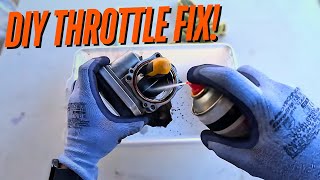
Remove the air intake hose. Clean black carbon buildup around the throttle plate using throttle body cleaner and a soft brush. Do not push the electronic throttle plate open by hand; have a helper turn the key 'ON' (engine off) and press the gas pedal to open it.
Tools: Screwdriver/Socket Set, Throttle Body Cleaner, Rags (Intermediate) - Perform a Throttle Body Relearn/Alignment
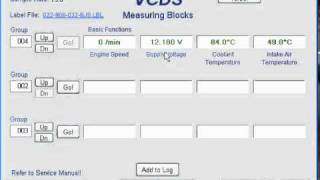
Mandatory for VW/Audi and recommended for others after cleaning or battery disconnection. Use a bidirectional scan tool to run the 'Basic Settings' or 'Throttle Relearn' procedure. The tool cycles the throttle to learn the end stops.
Tools: Advanced OBD-II Scanner (e.g., VCDS, OBDeleven, XTOOL) (Intermediate) - Test the Throttle Position Sensor (TPS) Signal
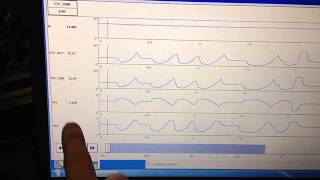
With the key on and engine off, back-probe the two TPS signal wires. As an assistant presses the gas pedal, voltage must change smoothly (e.g., TPS1 sweeps 0.5V to 4.5V; TPS2 sweeps 4.5V to 0.5V). Any jumps or dead spots confirm a failed internal sensor.
Tools: Multimeter with Back-Probes, Repair Manual (Advanced) - Test the Throttle Body Motor Resistance
Disconnect the throttle body connector. Measure resistance between the two throttle motor terminals. A reading of infinity (OL) indicates an open circuit, while near zero indicates a short. Normal resistance is typically 2 to 15 Ohms.
Tools: Multimeter, Repair Manual (Advanced) - Perform a Throttle Actuator Active Test
Navigate to the engine control module's active test functions on a bidirectional scanner. Command the throttle plate to open and close while visually inspecting its movement. If it fails to move smoothly despite good wiring and resistance, replace the throttle body.
Tools: Advanced Bidirectional Scanner (Advanced)
When This Code Triggers (Freeze-Frame Conditions)
- Engine Coolant Temp: 180-210°F (Fully warmed up, during closed-loop operation.)
- RPM: 700-2500 (Triggers during idle or steady-state cruise as the ECU performs self-tests.)
- Engine Load: 15-40% (Light to moderate load, not during heavy acceleration.)
- Vehicle Speed: 0 mph or 40-65 mph (Fault is detected either at idle or during steady highway driving.)
Related Codes
- P0121, P0122, P0123 — Relates to the Throttle Position Sensor (TPS) 'A' circuit. A P0122 (Circuit Low) with P1581 points strongly to an electrical failure in the sensor, rather than a calibration issue.
- P0221, P0222, P0223 — Relates to the Throttle Position Sensor (TPS) 'B' circuit. Modern electronic throttles use two sensors for redundancy; this narrows the fault down from the general P1581 code.
- P2135 — Indicates a 'Voltage Correlation' error between the 'A' and 'B' throttle position sensors. If present, the throttle body assembly itself or its connector has failed.
- P0606 — Means 'ECM/PCM Processor Fault'. If seen alongside P1581, the problem is the engine computer itself, not the throttle body.
Climate & Environmental Factors
- High Humidity / Moisture: Moisture and oil intrusion foul the internal electronics of the throttle body. High humidity accelerates this failure, prompting aftermarket brands to offer upgraded parts with improved shaft seals.
- Cold Weather: Extreme cold makes plastic internal gears brittle and prone to breaking. It also exacerbates weak battery voltage, triggering false electronic fault codes.
How to Clear the Code After You Fix It
- Reconnect battery if disconnected for repair.
- Use an OBD-II scan tool to clear the diagnostic trouble code.
- Perform a throttle body relearn/alignment procedure if the throttle was cleaned or replaced.
- Complete a full drive cycle to allow readiness monitors to run.
Drive cycle (~30 minutes): A general drive cycle involves a cold start (engine temp below 122°F), 2-3 minutes of idling, 10-15 minutes of mixed city/highway driving (including steady speeds around 55 mph), and allowing the vehicle to cool down.
Readiness monitors affected: Catalyst monitor, EVAP system monitor, O2 sensor monitor
Before emissions retest: drive at least 50 miles to fully set monitors.
Watch out for:
- Clearing the code with a scanner resets all readiness monitors to 'Not Ready', causing an immediate emissions test failure.
- The code returns immediately if the root cause (e.g., missing throttle alignment) is not addressed.
- Not driving the car long enough or under the right conditions to set the readiness monitors before a re-test.
Will This Fail Emissions / State Inspection?
Yes — this code typically fails an OBD-II emissions inspection.
- California: An illuminated Check Engine Light is an automatic failure. After repair, a complete drive cycle must be performed to set all readiness monitors before re-testing.
- New York: A vehicle automatically fails the NYS inspection if the Check Engine Light is on. Clearing the code resets readiness monitors, blocking a pass until they are set again.
- Texas: In the 17 counties requiring emissions testing, an illuminated Check Engine Light is an automatic failure. For 2001 and newer vehicles, only one monitor is allowed to be 'Not Ready'.
Most Commonly Affected Vehicles
- Volkswagen Jetta, Golf, Passat (2000-2014) — Code appears instantly when throttle body basic settings are lost after a battery disconnect or replacement.
- Audi A4, TT (2000-2012) — Frequently caused by a need to perform the Throttle Body Alignment (TBA) procedure via VCDS.
- Ford Focus, Mustang, F-150, Edge (2005-2018) — Ford TSB 16-0139 addresses internal contamination from the PCV system causing limp mode, requiring throttle body replacement.
- BMW 3-Series (E46, E90), 5-Series (2000-2012) — CRITICAL NOTE: On most BMWs, P1581 means 'B Camshaft Position Actuator Control Open Circuit Bank 2' and is completely unrelated to the throttle body.
- Chevrolet / GM Silverado, Yukon, Tahoe (2003-2014) — Defined as 'Cruise Move Circuit High Voltage', relating to a fault in the cruise control system, not the primary throttle control.
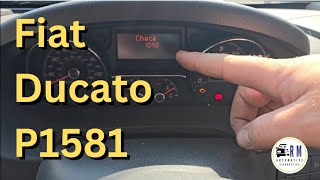
- FIAT Ducato (2014-2024) — Indicates a problem with the 'Blow-by Heater'. Sub-code P1581-15 specifies a 'Short circuit to +battery or open circuit'.
- PACCAR MX-11 / MX-13 Engines (2017-2021) — Relates to a 'High turbo speed malfunction' from the Turbo Speed Sensor (TSS) and appears with code P2579.
- Jaguar S-Type, X-Type, XJ8 (2000-2008) — Points to a failure of the electronic throttle monitor, often due to a faulty throttle body assembly or internal sensors.
Manufacturer-Specific Notes
- Volkswagen / Audi: The most common cause is the need to perform a 'Throttle Body Alignment' with a scan tool (Group 060 in Basic Settings) to recalibrate position after battery disconnection.
- Ford: TSB 16-0139 addresses internal contamination from the PCV system causing this code, requiring complete throttle body replacement rather than cleaning.
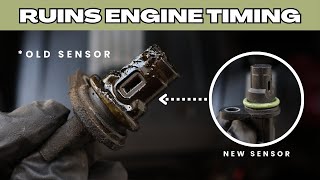
- BMW: P1581 is unrelated to the throttle. It indicates an open circuit for the Bank 2 'B' Camshaft Position Actuator (VANOS solenoid).
- General Motors (GM): Defined as 'Cruise Move Circuit High Voltage', relating to the cruise control system, not the primary throttle control.
- FIAT: Indicates a problem with the 'Blow-by Heater'. A P1581-15 sub-code specifically means 'Short circuit to +battery or open circuit', pointing to a failed heater element.
Frequently Asked Questions
What is the most common misdiagnosis for a P1581 code?
The most common mistake is immediately replacing the throttle body assembly. Technicians often find the true cause is a poor ground connection, a small vacuum leak, or the need for a throttle body relearn procedure. On VW/Audi vehicles, skipping the 'Basic Setting' after a battery change is the primary reason for this code.
I cleaned my throttle body and now my car idles high. What did I do wrong?
The car's computer is still using the old calibration for a dirty, restricted throttle. Now that it is clean, more air bypasses the plate at the same angle, causing a high idle. You must perform a 'throttle body relearn' procedure with a scan tool to reset the baseline.
Why does P1581 mean something different for my BMW than for a VW?
OBD-II codes starting with 'P0' are generic and identical across all cars, while 'P1' codes are manufacturer-specific. This allows carmakers to assign unique codes to their proprietary systems. Therefore, P1581 indicates a throttle body issue on a VW, but a camshaft actuator fault on a BMW.
Can a bad battery cause a P1581 code?
Yes. Low voltage from a weak battery causes communication errors between the ECM and the electronic throttle body, triggering P1581. A minimum of 11.5V is required to perform diagnostic procedures like a throttle alignment.
Why did P1581 appear right after I changed my car battery?
Disconnecting the battery erases the learned memory for the throttle body's position on many vehicles, especially VW and Audi. When power is restored, the computer no longer knows the throttle's calibrated limits and sets code P1581. The fix is performing a 'Throttle Body Alignment' (TBA) with a compatible scan tool.
Can a P1581 code clear itself?
If the code stems from a temporary voltage glitch, the check engine light turns off after several successful drive cycles. However, if the code results from a failed part, carbon buildup, or a missing relearn procedure, it remains a permanent DTC until the underlying issue is fixed.
What does the P1581-15 sub-code mean on a FIAT?
On FIAT Ducato models, the main P1581 code points to the 'Blow-by Heater' circuit. The '-15' suffix specifically indicates a 'Short circuit to B+' (battery positive). This means the control module detects excessive voltage on the circuit, usually due to a shorted heater element or wiring fault.
Key Takeaways
- P1581 is a manufacturer-specific code that points to the electronic throttle system in VW and Ford, but indicates a camshaft issue in BMWs or a heater fault in FIATs.
- Expect an immediate 5-15% drop in fuel economy, rough idling, and a dangerous 'limp mode' that severely restricts engine power.
- On VW and Audi vehicles, 80% of P1581 codes are fixed by performing a 30-second 'Throttle Body Alignment' using a bidirectional scan tool, rather than replacing parts.
- Never replace a $300+ throttle body without first verifying battery voltage is above 12.4V, cleaning the throttle plate, and completing the electronic relearn procedure.
- Driving with an unresolved P1581 code forces an incorrect air-fuel ratio that destroys a $1,500 catalytic converter within 1 to 6 months.
Helpful Videos

Shop the Parts Behind P1581
Below are the parts most often responsible for code P1581, ranked by how frequently each one is the actual culprit (per the diagnosis above). Tap any to see what we have for your vehicle.


The information in this article is provided for general reference and educational purposes only. Vehicle specifications, procedures, and part compatibility can vary by production date, trim level, and region. Always consult your vehicle's factory service manual and verify part numbers before purchasing or performing repairs. Safety-critical components such as airbags, seat belts, and braking systems should be installed by a qualified professional.
- 🧭 Diagnostic Flowchart
- 🎬 Helpful Videos
- 🛍️ Shop This Part
- What Does P1581 Mean?
- Can I Drive With P1581?
- Common Causes
- Symptoms
- Common Fixes & Costs
- DIY vs Professional
- Used vs. New Parts: Buying Guide
- Cost of Not Fixing It
- Diagnosis Steps
- When This Code Triggers (Freeze-Frame Conditions)
- Related Codes
- Climate & Environmental Factors
- How to Clear the Code After You Fix It
- Will This Fail Emissions / State Inspection?
- Most Commonly Affected Vehicles
- Manufacturer-Specific Notes
- Frequently Asked Questions
- What is the most common misdiagnosis for a P1581 code?
- I cleaned my throttle body and now my car idles high. What did I do wrong?
- Why does P1581 mean something different for my BMW than for a VW?
- Can a bad battery cause a P1581 code?
- Why did P1581 appear right after I changed my car battery?
- Can a P1581 code clear itself?
- What does the P1581-15 sub-code mean on a FIAT?
- Key Takeaways
- 🎟️ Get 5% Off