

P1603 on 2014-2018 Toyota Highlander: Engine Stall History Causes and Fixes
On a 2014-2018 Toyota Highlander, code P1603 indicates an engine stall was recorded. The most common causes are a failing low-pressure fuel pump, subject to recall 20TA02, or corrosion in the A43 ECM connector. This corrosion is often due to a water leak from a poorly sealed aftermarket windshield's de-icer harness, as documented in Toyota TSBs. Inspecting the ECM connector behind the glovebox for water damage is a critical first step.
- P1603 means your Highlander's engine has stalled unexpectedly.
- Do not drive the vehicle, as a stall can occur at any time and is a serious safety hazard.
- The two most likely causes are a failing fuel pump or water corrosion in the main engine computer (ECM) connector.
- Before any expensive repairs, have a mechanic inspect the A43 ECM connector for signs of water damage, a known issue for this vehicle.
- Check if your vehicle's VIN was part of the fuel pump recall.
What's Unique About the 2014-2018 Toyota HIGHLANDER
For this generation of Highlander (XU50), the P1603 code is strongly linked to two specific, documented issues. First, Toyota issued technical service bulletins (T-TT-0462-17 and T-SB-0072-19) about water intrusion into the main engine computer's connector (A43 ECM connector), causing corrosion and a host of electrical problems, including stalling. [TSB #T-TT-0462-17, TSB #T-SB-0072-19] This water leak is often traced back to poorly sealed aftermarket windshields, specifically from the de-icer harness which allows water to wick down the wiring into the ECM. Second, these vehicles were also subject to a major safety recall (Toyota recall 20TA02, an expansion of 20V-012) for failing Denso low-pressure fuel pumps that could stop operating, directly causing a stall.
Diagnostic Flowchart
Tap your situation to follow the diagnostic path that matches what you're seeing on this vehicle.
Symptoms You May Notice
- Engine stalls while driving or at idle.
- Vehicle will not start or has a hard start / long crank condition.
- Hesitation, sputtering, or loss of power during acceleration, especially at highway speeds.
- Rough or unstable idle. [OWNER COMPLAINT ODI #11534554] 🎬 Watch: How a bad fuel pump causes stalling and hesitation.
- Check Engine Light is on.
- Multiple other warning lights may appear, such as for the stability control system (VSC) or AWD system.
- A distinct whining noise from the rear of the vehicle (fuel tank area) may be heard if the fuel pump is failing.
- Replacing spark plugs or ignition coils. While misfires can occur with a stall (triggering P030x codes), they are often the symptom, not the root cause of the stall itself.
- Replacing the throttle body. A throttle body issue might cause a stall, but the fuel pump and ECM connector issues are far more common and documented on this specific vehicle.
Most Likely Causes
- Corrosion in A43 ECM Connector due to Water Intrusion 🔴 High Probability Toyota TSBs T-TT-0462-17 and T-SB-0072-19 specifically identify this issue. Water can enter a poorly sealed aftermarket windshield de-icer harness, wick through the engine wiring harness, and collect in the A43 ECM connector, causing corrosion. [TSB #T-TT-0462-17, TSB #T-SB-0072-19] A separate recall by windshield manufacturer Fujian Wanda (18V-929) also addresses this exact issue.
How to confirm: Visually inspect the A43 ECM connector for any signs of green or white corrosion, water, or pin damage. This requires accessing the ECM, which is typically located behind the glove box. Disconnect the battery before unplugging the connectors. The connectors have locking tabs that must be released to be removed.
Typical fix: The connector terminals and ECM pins must be meticulously cleaned. If corrosion is severe, the affected wiring harness section or the entire ECM may need replacement. The source of the water leak (the aftermarket windshield seal or de-icer harness) must be identified and permanently repaired. Using genuine Toyota windshields is recommended to ensure proper sealing. [TSB #T-TT-0462-17]
Est. part cost: $50-$2000+ - Failing Low-Pressure Fuel Pump 🔴 High Probability → Shop Fuel Pump 2017-2019 Highlanders are part of a large Toyota safety recall (20TA02) for defective Denso fuel pumps. The pump's impeller can deform, causing it to stop spinning and cutting fuel flow to the engine.
How to confirm: A technician can test fuel pressure with a gauge to see if it's below specification. A diagnostic scan tool may also show codes like P0087 (Fuel Rail/System Pressure – Too Low) alongside P1603. A whining noise from the fuel tank area is also a strong indicator.
Typical fix: Replace the in-tank fuel pump assembly. If the vehicle is under the recall, this repair should be performed by a Toyota dealer free of charge. It is highly recommended to use an OEM Denso or Aisin part due to the history of issues with aftermarket pumps.
Est. part cost: $250-$550 - Weak or Failing Battery 🟡 Medium Probability → Shop Vehicle Battery
How to confirm: Test the battery voltage with a multimeter. A healthy battery should read approximately 12.6 volts with the engine off and 13.7-14.7 volts with the engine running. A load test at an auto parts store is the most definitive test. Low voltage during cranking can cause various control modules to malfunction, potentially logging this code.
Typical fix: Replace the 12V battery.
Est. part cost: $150-$300
Rare But Worth Checking
- Running Out of Fuel: The simplest cause. The ECM will log P1603 if the engine stalls due to fuel starvation. Always confirm there is fuel in the tank before proceeding with complex diagnostics.
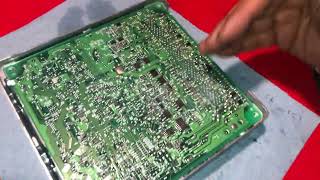
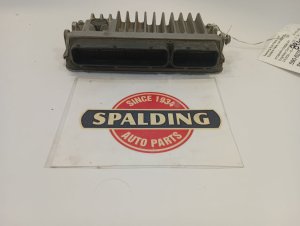
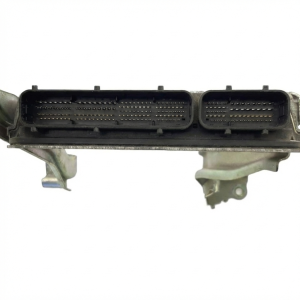
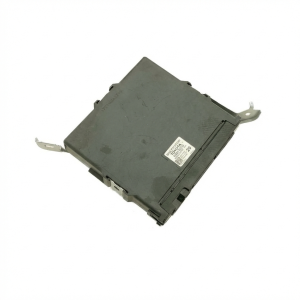
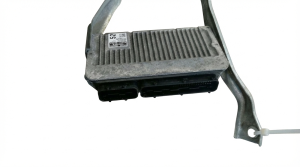
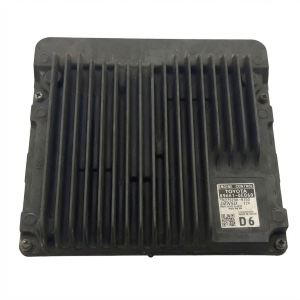
- Faulty Engine Control Module (ECM): → Shop Engine Control Module (ECM) While rare, the ECM itself can fail internally, even without visible water damage. This is usually considered only after all other possibilities, especially wiring and connector issues, have been ruled out.
Diagnosis Steps
- Check for other DTCs. Codes like P0087 or U0100 provide strong clues to the root cause (fuel pump vs. ECM wiring).
- Verify the vehicle has fuel. Do not skip this simple step.
- Inspect the battery and charging system. Ensure battery terminals are clean and tight, and test voltage under load.
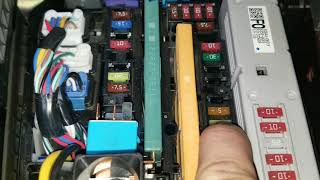
- Access the ECM by removing the glove compartment. 🎬 See how to remove the glove box quickly to access the ECM. Inspect the area for any signs of moisture or water staining.
- Carefully disconnect the A43 ECM connector. Thoroughly inspect for any signs of water intrusion or green/white corrosion on the pins and harness side, as detailed in Toyota TSBs T-TT-0462-17 and T-SB-0072-19. [TSB #T-TT-0462-17, TSB #T-SB-0072-19]
- If corrosion is found, identify the source of the leak (check for an aftermarket windshield and inspect the de-icer harness seal) and repair/clean the connector and wiring. If damage is severe, the harness or ECM may need replacement.
- If no corrosion is found, check if your vehicle is covered by the fuel pump recall (20TA02) by entering your VIN on Toyota's recall website or the NHTSA website.
- If not under recall but the fuel pump is suspected, test the low-pressure fuel system. Connect a fuel pressure gauge and verify pressure is within OEM specifications.
- If fuel pressure is low, the in-tank fuel pump assembly is the likely culprit.
Parts You'll Likely Need
- Fuel Pump Assembly
(OEM #77020-0E130)— A known failure point on this vehicle, subject to recall 20TA02. A failing pump causes a loss of fuel pressure, leading to a stall.
Trusted brands: Denso, Aisin
OEM price range: $400-$550
Aftermarket price range: $150-$350 - Engine Control Module (ECM) — May require replacement if the A43 connector pins are severely damaged by water and corrosion beyond repair. Part number varies significantly by year, engine, and drivetrain.
Trusted brands: Toyota (OEM)
OEM price range: $1000-$1800 - Windshield — If an improperly sealed aftermarket windshield is the source of the water leak causing ECM corrosion, it must be replaced with a genuine Toyota part to ensure a proper seal for the de-icer harness. [TSB #T-TT-0462-17]
Trusted brands: Toyota (OEM)
OEM price range: $800-$1500
Aftermarket price range: $300-$600
Related Codes That Often Appear With This One
- P1604 — This code means 'Startability Malfunction.' It is often logged with P1603 because the condition that caused the stall also makes the engine difficult to restart.
- P1605 — This code means 'Rough Idle.' It is frequently seen because the underlying fuel or electrical problem causing the stall also creates an unstable idle. [OWNER COMPLAINT ODI #11534554]
- P0300-P0306 — These are random or specific cylinder misfire codes. An abrupt loss of fuel pressure or an electrical interruption can cause incomplete combustion, leading to misfires as the engine stumbles and stalls. [OWNER COMPLAINT ODI #11534554]
- P0087 — This code means 'Fuel Rail / System Pressure – Too Low' and points directly to a failing fuel pump or a major leak in the fuel system. It is a strong indicator that the fuel pump is the root cause.
- U0100 — This code indicates a loss of communication with the ECM. It can be triggered by the same ECM connector corrosion that causes P1603, as the water damage disrupts communication lines. [TSB #T-SB-0072-19, TSB #T-TT-0462-17]
Technical Service Bulletins (TSBs) & Recalls
- T-SB-0072-19: Mentions P1603 in connection with drivability concerns, low fuel pressure, and corrosion in the A43 ECM connector, particularly from aftermarket windshield deicer harnesses.
- T-TT-0462-17: A Tech Tip that specifically highlights water and corrosion in the A43 ECM connector as the cause for various DTCs, including P1603, and links it to poorly sealed aftermarket windshields. It recommends checking the A33 de-icer harness connector for corrosion as a starting point.
Platform-Specific Known Issues
- Water intrusion into the A43 ECM connector is a well-documented problem, often caused by poorly sealed aftermarket windshields. This can cause P1603 and a variety of other electrical faults.
Mechanic-Grade Diagnostic Values
- Low-Pressure Fuel System (2GR-FKS Engine, 2017-2018) — expected: 196 to 833 kPa (28 to 121 psi). Failure: Pressure is below 28 psi at idle or when commanded by a scan tool.
- High-Pressure Fuel System at 3000 RPM (2GR-FKS Engine, 2017-2018) — expected: 2,400 to 19,500 kPa (348 to 2,828 psi). Failure: Pressure fails to rise under load or significantly lags the target pressure shown on a scan tool.
- ECM IGSW (Ignition Switch ON) Terminal Voltage — expected: 9 to 14 V. Failure: Voltage below 9V indicates a power supply issue to the ECM.
- ECM E1 (Ground) to Body Ground Resistance — expected: Below 1 Ω. Failure: Resistance above 1 Ω indicates a poor ground connection for the ECM.
Hidden / Shadow Codes Worth Checking
- Multiple Freeze Frames: For a single DTC like P1603, Toyota's software can store up to five sets of freeze frame data. This includes snapshots at -1.5s, -1.0s, -0.5s, the moment of the fault (0s), and +0.5s after. This allows a technician to see the sequence of events (like fuel pressure dropping *before* the stall) leading up to the code. (see via A professional scan tool like Snap-on or Toyota's Techstream is required. In the freeze frame menu for the code, there will be an option to view the multiple data sets, often indicated by a film strip icon.)
Scan Tool Commands That Help
- Toyota Techstream: Active Test: Control the Fuel Pump / Speed — This allows a technician to command the fuel pump to turn on without the engine running. It's used to verify the pump motor operates, check for noise, and test fuel pressure when the pump is commanded on, isolating the pump from the rest of the starting circuit.
- Toyota Techstream: Active Test: Control the Injection Mode (2GR-FKS engines) — For 2017+ models with the D-4S system, this test allows a technician to switch between port injection and direct injection. This can help diagnose if a stalling issue is related to a specific side of the dual-injection fuel system.
- Toyota Techstream: Utility: Reset Memory — After a repair, such as replacing a fuel pump or cleaning the ECM connector, this function should be used to clear all learned values, including fuel trims and idle learning, to ensure the vehicle relearns correctly with the new/repaired components.
Wiring & Ground Locations
- A43 ECM Connector — Located behind the glove compartment assembly.. This is the main data connector for the Engine Control Module. It is the specific connector identified in TSBs T-TT-0462-17 and T-SB-0072-19 as being susceptible to corrosion from water intrusion, which is a primary cause of P1603.
- Engine Harness Grounds (2GR-FE/2GR-FKS) — Key ground points are located on the cylinder heads. One is on the side of the head directly under the throttle body, and another is on the front head.. Improper or corroded engine grounds can cause a floating voltage reference for the ECM and its sensors. This can lead to false sensor readings, incorrect calculations, and erratic behavior, potentially causing a stall and logging P1603.
- Fuel Pump Control ECU — On many modern Toyotas, this is a separate module from the main ECM. Its location can vary, but it is often in the rear of the vehicle near the fuel tank or under a seat.. This module directly controls the speed of the in-tank fuel pump based on commands from the main ECM. A failure in this module or its wiring can cut power to the fuel pump, causing a stall, even if the pump itself is good.
OEM Part Supersession History
Varies→77020-0E130— This is a common service part number for the in-tank fuel pump assembly for 2016-2019 V6 Highlanders. It is the likely replacement for vehicles affected by the fuel pump recall.
Model Year Variations Within This Range
- 2014-2016: These models used the 3.5L 2GR-FE V6 engine paired with a 6-speed automatic transmission. This engine uses a traditional port fuel injection system. Diagnosis is focused on the low-pressure fuel pump and ECM wiring.
- 2017-2018: These models introduced the 3.5L 2GR-FKS V6 engine and an 8-speed automatic transmission. The 2GR-FKS features the D-4S dual injection system (direct and port injection), adding a high-pressure mechanical fuel pump. This complicates fuel system diagnosis, as a stall could be related to the low-pressure pump, high-pressure pump, or the control system between them. These specific years are also the primary focus of the low-pressure fuel pump recall.
Helpful Videos

Used OEM Parts in Stock
New Aftermarket Parts Available


The information in this article is provided for general reference and educational purposes only. Vehicle specifications, procedures, and part compatibility can vary by production date, trim level, and region. Always consult your vehicle's factory service manual and verify part numbers before purchasing or performing repairs. Safety-critical components such as airbags, seat belts, and braking systems should be installed by a qualified professional.
- Toyota HIGHLANDER:
- 🧭 Diagnostic Flowchart
- 🎬 Helpful Videos
- 🛍️ Shop This Part
- What's Unique About the 2014-2018 Toyota HIGHLANDER
- Symptoms You May Notice
- Most Likely Causes
- Rare But Worth Checking
- Diagnosis Steps
- Parts You'll Likely Need
- Related Codes That Often Appear With This One
- Technical Service Bulletins (TSBs) & Recalls
- Platform-Specific Known Issues
- Mechanic-Grade Diagnostic Values
- Hidden / Shadow Codes Worth Checking
- Scan Tool Commands That Help
- Wiring & Ground Locations
- OEM Part Supersession History
- Model Year Variations Within This Range
- 🎟️ Get 5% Off