

P1604 on 1997-2004 Audi A6: Internal Control Module Error Causes and Fixes
On a 1997-2004 Audi A6, code P1604 almost always means the Engine Control Module (ECM) has failed, most likely due to water damage from clogged plenum drains. The fix involves replacing the ECM and programming it to the car's immobilizer, which is a professional job.
- P1604 on a C5 Audi A6 is an ECM failure code, not a fuel or spark issue.
- The most likely cause is water damage. Before spending any money, inspect the ECM for water intrusion and clean the plenum drains under the battery and near the brake booster.
- Do not attempt to drive the vehicle, as the engine can stall unexpectedly.
- Replacing the ECM is not a DIY job for most people because it requires specialized software (like VCDS) and security PINs for immobilizer programming.
What's Unique About the 1997-2004 Audi A6
The C5 generation Audi A6 (1997-2004) is highly susceptible to this code due to a specific design vulnerability. The ECM is housed in a plastic electronics box (e-box) in the plenum area under the windshield. This area has drains, notably one under the battery tray and another near the brake booster, that commonly clog with leaves and debris. When these drains block, the plenum floods with rainwater, submerging and short-circuiting the ECM, making water intrusion the number one cause of P1604 on this platform.
Symptoms You May Notice
- Engine will not start or has a 'crank-no-start' condition
- Engine starts and immediately stalls
- Engine stalls intermittently while driving
- Check Engine Light is illuminated
- Loss of communication with the ECM using a scan tool
- Vehicle enters 'limp mode' with reduced power
- Flashing gear indicator (PRNDL) on the dashboard if the Transmission Control Module (TCM) is also damaged by water.
- Replacing the fuel pump or fuel filter. The generic definition for P1604 on other makes is 'Startability Malfunction', leading many to incorrectly suspect a fuel delivery issue.
- Replacing spark plugs or ignition coils. While these can cause a no-start condition, they will not set the Audi-specific P1604 code.
- Replacing the starter motor or battery without first checking for ECM-related issues.
Most Likely Causes
- Water Damage to the Engine Control Module (ECM) 🔴 High Probability → Shop Engine Control Module (ECM) The ECM is located in the plenum/cowl area, where drains for rainwater frequently get clogged with leaves and debris. The primary clog points are under the battery tray and near the brake booster. This causes the plenum to fill with water, flooding the ECM and its connectors.
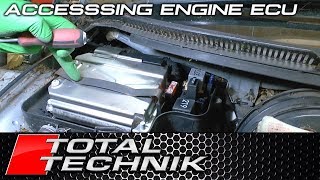
How to confirm: Remove the plastic cowl cover at the base of the windshield. 🎬 Watch: How to access the Audi A6 ECM You may need to remove the battery and its tray to access the main drain. Open the black electronics box (e-box) and visually inspect the ECM and its wiring harness for any signs of moisture, corrosion (white or green powder), or a visible water line.
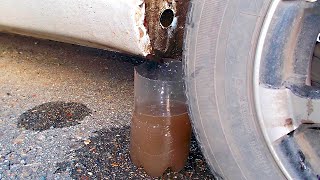
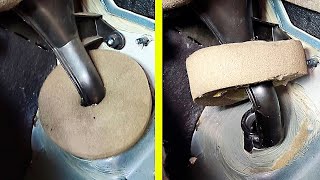
Typical fix: First, clear the clogged plenum drains to prevent a recurrence. This may involve removing the rubber grommets which can be modified 🎬 See: How to clean clogged plenum drains by cutting the tips to improve drainage. If the ECM is water-damaged, it must be replaced. The wiring connectors may also need to be cleaned or replaced if corroded.
Est. part cost: $150-$500 for a used ECM, $800+ for a new or remanufactured unit. - Faulty ECM Power or Ground Connections 🟡 Medium Probability Corrosion from moisture exposure (related to the plenum drain issue) can compromise the power and ground pins at the ECM connector, even if the module itself isn't fully submerged. A weak or failing battery can also cause voltage fluctuations that trigger internal module faults during startup.
How to confirm: Disconnect the battery. Unplug the ECM connectors and inspect for any corroded, bent, or loose pins. Use a multimeter to verify battery voltage and check for solid ground continuity at the appropriate pins on the harness side of the connector, referencing a vehicle-specific wiring diagram.
Typical fix: Clean any corrosion from the connector pins using an electronics-safe cleaner. Repair any damaged wires or terminals. Ensure the battery is fully charged and passes a load test. A faulty wire in the harness may need to be spliced and repaired.
Est. part cost: $10-$50 for cleaning supplies or wiring repair materials. - Internal ECM Failure (Not Water-Related) ⚪ Low Probability
How to confirm: This is diagnosed by exclusion. If the ECM has perfect power, ground, and no signs of water damage, but the P1604 code persists and symptoms are present, the module has likely failed internally due to component failure on the circuit board.
Typical fix: Replace the Engine Control Module and perform the immobilizer adaptation procedure. Some specialized shops may be able to repair the original ECM by replacing failed components on the board.
Est. part cost: $150-$500 for a used ECM, $800+ for a new or remanufactured unit.
Diagnosis Steps
- Scan for all fault codes in all vehicle modules, not just the engine. Note any communication errors or transmission-related codes.
- Gain access to the plenum area by removing the plastic cowl panel below the windshield.
- Inspect the plenum drains for blockages from leaves or debris, especially the one under the battery and the one near the brake booster. Clean them thoroughly regardless of their condition.
- Open the black electronics box that houses the ECM. Look for any evidence of water, moisture, or corrosion.
- Disconnect the ECM connectors (with the battery disconnected) and carefully inspect the pins on both the ECM and the harness for green or white corrosion.
- If corrosion is found, attempt to clean the pins. If the ECM is visibly damaged by water, it must be replaced.
- If no water damage is evident, use a multimeter to test for proper voltage and ground at the ECM harness connector according to a wiring diagram.
- If power and grounds are good and there is no water damage, the ECM has likely failed internally.
- If replacing the ECM, ensure the part number on the replacement unit EXACTLY matches the original.
- After installation, the replacement ECM must be programmed to the car's immobilizer system using specialized diagnostic software like VCDS. This involves logging into the Instrument Cluster (17) and ECU (01) modules and running the adaptation procedure in Channel 50.
Parts You'll Likely Need
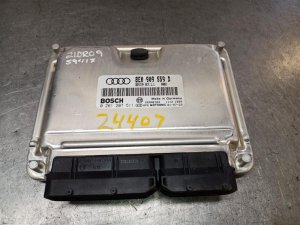
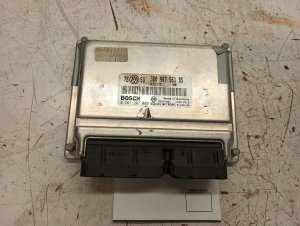
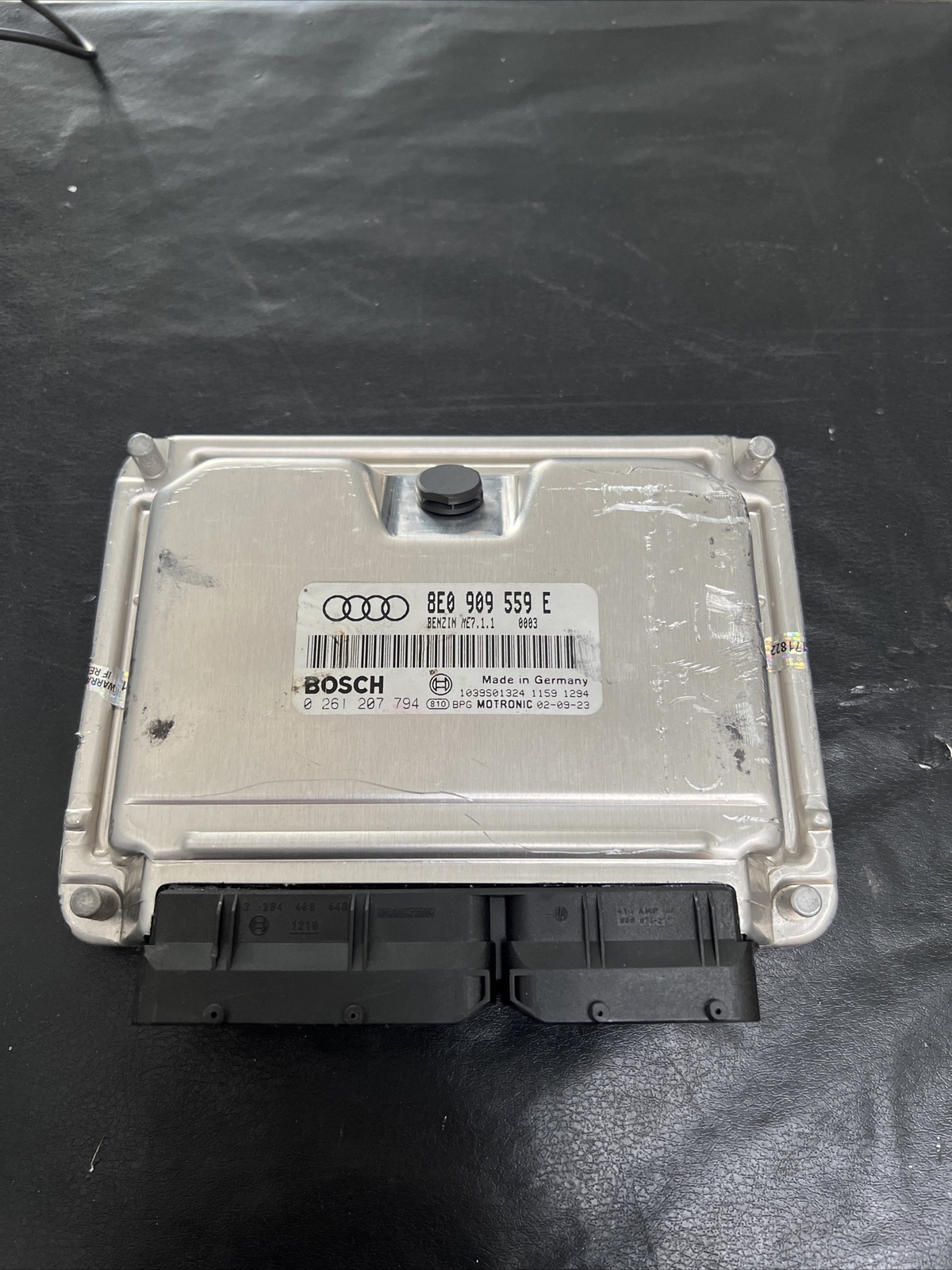
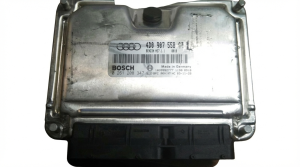
- Engine Control Module (ECM)
(OEM #Varies by engine/year, e.g., 4B0906018AD (1.8T), 4B0907551AL (2.7T). Always match the original part number.)— This is the part that fails and sets the P1604 code, most often due to water damage on this specific vehicle.
Trusted brands: Bosch (OEM)
OEM price range: $800-$1200+
Aftermarket price range: $150-$500 (Used/Salvage)
Related Codes That Often Appear With This One
- P0601 — This code indicates an 'Internal Control Module Memory Check Sum Error', which is another specific type of internal ECM fault that can accompany P1604.
- U0100 — This code means 'Lost Communication With ECM/PCM'. If the ECM is failing or offline due to water damage or power loss, other modules on the vehicle's network will report that they cannot communicate with it.
- P07xx codes (Transmission Faults) — If the plenum drains are clogged, water can also leak into the passenger footwell, flooding the Transmission Control Module (TCM). This causes transmission faults and limp mode, often with the PRNDL lights on the dash all illuminated.
Technical Service Bulletins (TSBs) & Recalls
- While no TSB directly addresses P1604 or ECM water damage on the C5 A6, Audi has issued TSBs for water ingress issues on other platforms, such as TSB 50 23 10 2060335/4 for later A6 models, highlighting the brand's awareness of water management problems.
Platform-Specific Known Issues
- The plenum drains under the windshield cowl are a known design flaw and get clogged easily, leading to water flooding the electronics box that contains the ECM. The main drains are located under the battery and near the brake booster.
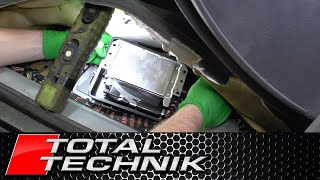
- Water can also leak into the passenger footwell, damaging the Transmission Control Module (TCM) which is located under the carpet. If transmission faults are also present (limp mode, flashing PRNDL), the TCM should also be inspected for water damage. 🎬 Watch: How to remove the TCM under the carpet
Mechanic-Grade Diagnostic Values
- ECM Main Ground Continuity — expected: Near 0 Ohms resistance between these pins and a known good chassis ground.. Failure: High or infinite resistance indicates a broken ground wire.
- ECM Switched Power (Ignition On) — expected: Battery Voltage (approx. 12.5V) with key on, engine off.. Failure: 0V or significantly low voltage indicates a problem with the ignition switch or ECM power relay (J271).
- ECM Constant Power — expected: Battery Voltage (approx. 12.5V) at all times.. Failure: 0V indicates a blown fuse or wiring issue from the battery.
- Ignition Coil Wiring Resistance — expected: Maximum 1.5 Ohms.. Failure: Resistance higher than 1.5 Ohms suggests a problem in the wiring harness between the ECM and the ignition coils.
Scan Tool Commands That Help
- VCDS (VAG-COM): Immobilizer Adaptation (Used ECU) — This is a mandatory procedure after installing a used ECM to make it work with the car. It pairs the replacement ECM to the car's instrument cluster and keys.
- VCDS (VAG-COM): Login -> Adaptation -> Channel 50 — This is the specific function used for immobilizer adaptation. You must first log into the Engine and Instrument controllers using the 4 or 5-digit SKC/PIN for the respective components, then run adaptation in Channel 50 to enter the other component's PIN, synchronizing them.
- VCDS (VAG-COM): Key Adaptation -> Adaptation -> Channel 21 — After the ECU is adapted, this function may be needed to re-match all existing keys to the immobilizer system. You enter the total number of keys to be matched, and the system erases old keys.
Wiring & Ground Locations
- ECM Main Power Relay (J271) — Located in the black electronics box (e-box) in the plenum chamber, near the ECM itself.. This relay provides switched power to the ECM. If it fails or makes intermittent contact, the ECM will lose power, potentially causing a no-start and logging a P1604 fault.
- ECM Ground Pins — Pins 1 and 2 on the main ECM harness connector.. A poor ground connection is a common cause of electronic module failure. Corrosion from water ingress in the plenum can compromise these specific pins, leading to a P1604 code even if the ECM itself is not internally damaged.
- Chassis Ground Points — A primary ground connection point is located on the driver's side A-pillar, in the lower part behind the trim. Another is in the engine compartment on the left side.. The main engine harness and ECM ultimately ground to the chassis at these locations. While less common, corrosion or looseness at these points can cause a range of electrical issues, including ECM faults.
Real Owner Repair Stories
- Reddit user experience (Gen 4 Toyota RAV4 (demonstrates a non-Audi specific cause)) — Check Engine Light with code P1604 stored, but no noticeable starting issues.
❌ Tried (didn't work) Clearing the code, which came right back.
✅ What actually fixed it The battery failed completely about a month after the code first appeared. Replacing the dead battery resolved the P1604 code permanently, suggesting the code was an early warning of the battery's impending failure. - Carly automotive blog user story (Audi A4 (similar electronics to A6)) — Reduced power and unspecified error codes, leading to a suspicion of ECU failure.
❌ Tried (didn't work) Initial diagnosis pointed towards a full ECU repair with a quote of 550 Euro.
✅ What actually fixed it The workshop identified that the main power relay was causing intermittent power supply to the ECU. Replacing the main relay for 120 Euro completely fixed the problem.
When the Usual Fixes Don't Work
- While the most common cause of P1604 on a C5 A6 is a water-damaged ECM, it is not the only cause. There are documented cases where the root cause was a much simpler and cheaper component. One owner traced similar symptoms to a faulty main power relay that was intermittently starving the ECU of voltage. In another case involving the generic version of this code, a failing battery that caused excessive voltage drop during cranking was the culprit. Before spending over $1000 on an ECM replacement and programming, it is critical to rule out these simpler possibilities by testing the ECM power relay (J271) and performing a proper load test on the battery.
OEM Part Supersession History
e.g., 4B0 907 551 L (for a 2000 A6 2.7T)→N/A - Incompatibility is the key issue
Heads up: An ECU from a 2001 model (e.g., 4B0 907 551 T) will NOT work in a 2000 model. The 2001+ vehicles introduced ESP (Electronic Stability Program), and the ECU expects to communicate with the ESP module. Installing it in a car without ESP will cause faults and prevent proper operation. Part numbers must be matched exactly or confirmed to be compatible by a specialist.
Model Year Variations Within This Range
- 1997-2001 vs 2002-2004: The immobilizer system changed from Immobilizer 2 to Immobilizer 3 around 2001/2002. Immo 2 uses a simple 4-digit PIN for adaptation. Immo 3 is more secure, requiring a 7-byte Component Security (CS) code in addition to the PIN, and integrates more modules. This is critical for ECU swaps, as the components and adaptation procedures are different. An Immo 3 ECU cannot be easily adapted to an Immo 2 car.
Diagnostic Flowchart
Other Known Issues on This Vehicle
Issues unrelated to this code that are worth knowing about as an owner of this generation:
- Transmission Control Module (TCM) Water Damage 🔴 High → Shop Transmission Assembly — Very common, especially in regions with heavy rainfall. Occurs when plenum drains or sunroof drains clog, allowing water into the passenger footwell where the TCM is located under the carpet.
- Front Suspension Control Arm Bushing Wear 🟠 Medium — Extremely common. The complex multi-link front suspension has numerous rubber bushings that wear out, typically starting around 70,000-100,000 miles, causing clunking noises, poor alignment, and uneven tire wear.
- Valve Cover and Camshaft Tensioner Gasket Oil Leaks 🟠 Medium — Frequent on V6 and V8 engines as they age. Gaskets and seals become brittle, leading to oil leaks onto exhaust manifolds (causing a burning smell) or down the front/rear of the engine.
- Timing Belt and Water Pump Service 🔴 High — This is a critical maintenance item, not a failure, but neglect leads to catastrophic engine damage. The interval is typically around 75,000-90,000 miles and is an expensive service that should include the water pump, tensioner, and idlers.
- ABS Control Module Failure 🟠 Medium — Common failure on higher-mileage vehicles. The module, often a Bosch 5.3, can fail internally leading to an illuminated ABS light and loss of ABS/ESP functionality. Often requires sending the module out for rebuild.
- Clogged Sunroof Drains 🟠 Medium — Common issue where the four sunroof drain tubes get clogged with debris, causing water to back up and leak into the headliner, A-pillars, or trunk/spare tire well.
Used vs. New Parts: Buying Guide for This Vehicle
When a used part is the smart pick: A used ECM is an extremely common and cost-effective solution for this repair, often saving hundreds of dollars over a new or remanufactured unit. Given the high failure rate from water, there is a robust market for used modules from dry, parted-out vehicles.
Donor-vehicle mileage cap: roughly under 180000 miles for the part to have meaningful remaining life.
What to inspect on the donor part:
- Part number MUST match your original ECM exactly. Incompatibilities exist between years, engines, and transmissions.
- Visually inspect the connector pins for any signs of green or white corrosion.
- Check the housing for cracks or evidence that it has been pried open, which could indicate a failed repair attempt.
- If possible, buy from a seller who guarantees the part is from a running vehicle and offers a warranty.
OEM-only on this vehicle (don't cheap out):
- Engine Control Module (ECM). While you can buy it used, the part itself will be an OEM Bosch unit. There are no third-party aftermarket manufacturers of the complete module.
Aftermarket brands forum-validated for this vehicle:
- SIA Electronics (Repair Service)
- The ECU Pro (Repair Service)
- ACTRONICS (Remanufacturing Service)
- ECU Cloning Services (Various providers found online can transfer immobilizer data from your old unit to the used replacement, making it plug-and-play).
Brands owners have reported issues with on this vehicle:
- Unknown eBay/Amazon sellers offering 'repaired' units without a lifetime warranty or clear testing process.
Real Owner Stories
Aggregated from forums and TSBs cited above. Mileages and costs reflect what owners reported in those sources.
2000 Audi A6 4.2L
Symptoms: Flooded passenger footwell due to a leak between the windshield and cowl, leading to TCM failure and limp mode.
What fixed it: Clearing the drain located under the battery to stop the water ingress.
Source hint: AudiWorld Forums: Help!! 00 A6 4.2 tcm flooded question
2002 Audi A6 2.7T
Symptoms: Transmission limp mode and illuminated PRNDL lights after the passenger floor was inundated with water.
What fixed it: Addressing a clogged vent under the battery that caused water to flood the interior.
Source hint: AudiForums.com: Please HELP! Water Damage to TCM and wiring...
Audi A4 B5 (Platform Mate)
Symptoms: Check Engine Light with code P1604 (Internal Control Module Driver Error) appearing immediately after a battery change.
What fixed it: The code was confirmed as an internal module error triggered by the battery service.
Source hint: AudiWorld Forums: CEL: Pulled P1604 Internal Control Module Driver Error
Related OBD-II Codes
Frequently Asked Questions
Where are the plenum drains located on my Audi A6 that cause the ECM to flood?
Does Audi TSB 50 23 10 2060335/4 apply to my 1997-2004 A6?
My PRNDL gear indicator is flashing along with the P1604 code; are they related?
Can I just swap in a used ECM from another A6 to fix the P1604 error?
Is there a way to prevent the plenum drains from clogging again?
Could a bad battery cause a P1604 'Internal Control Module' code?
Helpful Videos
We Have This Part in Stock

The information in this article is provided for general reference and educational purposes only. Vehicle specifications, procedures, and part compatibility can vary by production date, trim level, and region. Always consult your vehicle's factory service manual and verify part numbers before purchasing or performing repairs. Safety-critical components such as airbags, seat belts, and braking systems should be installed by a qualified professional.
- Audi A6:
- 🧭 Diagnostic Flowchart
- 🎬 Helpful Videos
- 🛍️ Shop This Part
- What's Unique About the 1997-2004 Audi A6
- Symptoms You May Notice
- Most Likely Causes
- Diagnosis Steps
- Parts You'll Likely Need
- Related Codes That Often Appear With This One
- Technical Service Bulletins (TSBs) & Recalls
- Platform-Specific Known Issues
- Mechanic-Grade Diagnostic Values
- Scan Tool Commands That Help
- Wiring & Ground Locations
- Real Owner Repair Stories
- When the Usual Fixes Don't Work
- OEM Part Supersession History
- Model Year Variations Within This Range
- Other Known Issues on This Vehicle
- Used vs. New Parts: Buying Guide for This Vehicle
- Real Owner Stories
- 2000 Audi A6 4.2L
- 2002 Audi A6 2.7T
- Audi A4 B5 (Platform Mate)
- Related OBD-II Codes
- Frequently Asked Questions
- 🎟️ Get 5% Off