

P1604 on 2010-2016 Buick LaCrosse 3.6L: Decoding the Startability Malfunction
P1604 on your Buick LaCrosse means the engine failed to start properly. Before suspecting expensive parts, check the battery, all ground connections, and look for corrosion. A weak battery or poor electrical connection is the most common cause, often leading to communication errors between modules that prevent starting.
- P1604 is a symptom, not a cause. It means the car failed to start, and further diagnosis is required.
- Always start with the simplest and most common electrical issues: test the battery and inspect all main power and ground connections.
- Do not replace the ECM or BCM without professionally confirming they have proper power and ground but are still not functioning.
- Scan for codes in all vehicle modules, not just the engine. 'U' codes indicating network errors are extremely important for diagnosing P1604.
- Module replacement on this vehicle requires programming with specialized tools; it is not a simple plug-and-play repair.
What's Unique About the 2010-2016 Buick LaCrosse
The second-generation LaCrosse relies on a complex network of control modules (ECM, BCM, etc.) that must communicate perfectly for the engine to start. While P1604 is a generic code, on this platform it frequently appears when an electrical issue—like low battery voltage or a bad ground—causes one or more of these modules to lose communication. This can lead to a confusing 'crank-no-start' condition where other modules report 'lost communication with ECM' codes (U-codes), even if the ECM itself is not faulty. A poor ground connection between the battery, chassis, and engine block is a particularly common culprit for creating voltage differentials that disrupt module communication.
Generation note: This guide covers the full second generation of the Buick LaCrosse (2010-2016). Note that the 3.6L LFX V6 engine was introduced in 2012, replacing the previous 3.6L LLT engine. The electrical architecture and potential for communication-based starting issues are common across the entire generation.
Symptoms You May Notice
- Engine cranks but does not start
- Engine starts and immediately stalls
- Check Engine Light is on
- Multiple other warning lights may be on (e.g., ABS, StabiliTrak)
- Scan tool may show 'lost communication' codes (U-codes) for the ECM or other modules
- Complete loss of electrical power in some cases
- Replacing the starter when the engine cranks normally.
- Replacing fuel injectors or ignition coils without confirming a lack of fuel or spark first.
- Immediately blaming the ECM without performing thorough power, ground, and network tests.
Most Likely Causes
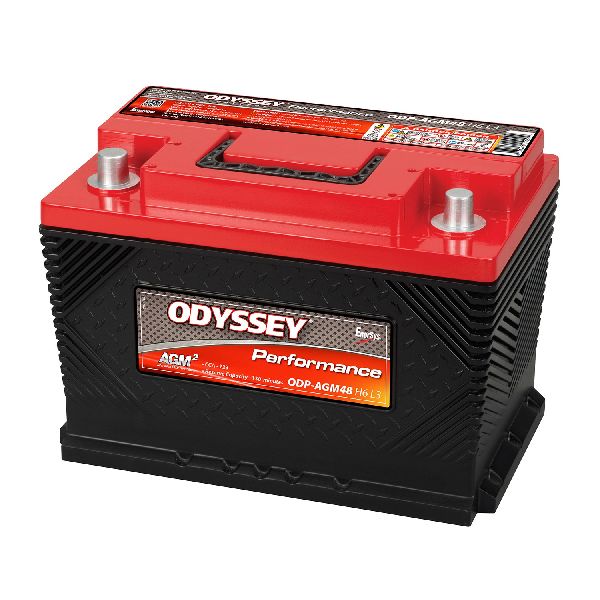
- Weak or Failing Battery 🔴 High Probability → Shop Vehicle Battery Modern vehicles have a high parasitic draw. A battery that is more than 3-4 years old or has been deeply discharged may not provide the stable voltage required by all control modules during cranking, triggering a P1604.
How to confirm: Test the battery voltage with a multimeter. A healthy, fully charged battery should read ~12.6V with the engine off. Anything below 12.2V indicates a low state of charge. A load test at an auto parts store is the best confirmation. Voltage dropping below 9.6V during cranking is a strong indicator of a bad battery.
Typical fix: Replace the battery.
Est. part cost: $150-$250 - Corroded or Loose Battery Terminals / Ground Wires 🔴 High Probability → Shop Vehicle Battery Battery acid can cause corrosion on terminals and nearby ground connections, creating high resistance that prevents modules from getting clean power, especially during the high-amperage draw of starting. There are multiple critical ground points, including the main strap from the battery to the chassis and from the chassis to the engine/transmission, that can degrade.
How to confirm: Visually inspect the battery terminals, main power, and ground cables. Look for white, blue, or green crust. Wiggle the terminals to check for tightness. Trace the main negative cable to its chassis connection (often near the strut tower) and the engine block ground (often below the exhaust manifold) and inspect for rust or looseness. A voltage drop test across the ground path is the definitive check.
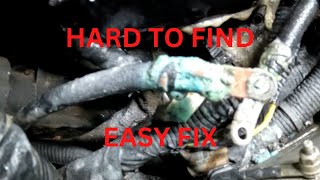
Typical fix: Disconnect the battery, thoroughly clean the terminals and cable ends with a wire brush and baking soda solution, and re-secure them. Replace corroded ground straps if necessary. In one documented case, simply replacing a corroded negative terminal end resolved a no-power situation. 🎬 See how a simple terminal cleaning can fix no-start issues.
Est. part cost: $5-$30 - Faulty Engine Control Module (ECM) or Body Control Module (BCM) 🟡 Medium Probability → Shop Engine Control Module (ECM) While not a high-frequency failure, internal faults in the ECM or BCM can cause a no-start and trigger a P1604. This is often accompanied by a flood of communication codes from other modules.
How to confirm: This is a difficult diagnosis. A professional will first rule out all power and ground issues to the module. Then, using an advanced scan tool, they will check for communication with the module and look for specific internal fault codes. If the module has proper power and ground but does not communicate, it has likely failed.
Typical fix: Replace the faulty module and program the new one to the vehicle's VIN and security system.
Est. part cost: $700-$1100 for an ECM, $400-$800 for a BCM - Failed Fuel Pump or Clogged Fuel Filter ⚪ Low Probability → Shop Fuel Pump This is a general automotive issue, not specific to this platform. It's a less likely primary cause for P1604 alone, but a complete lack of fuel pressure will cause a crank-no-start condition that can set the code.
How to confirm: Listen for the fuel pump to prime (a 2-second hum from the rear of the car) when the ignition is turned to 'ON'. If there's no sound, check the fuel pump fuse and relay. A definitive test involves checking fuel pressure at the fuel rail with a pressure gauge.
Typical fix: Replace the fuel pump module. The fuel filter is typically part of the fuel pump module assembly.
Est. part cost: $250-$500
Rare But Worth Checking
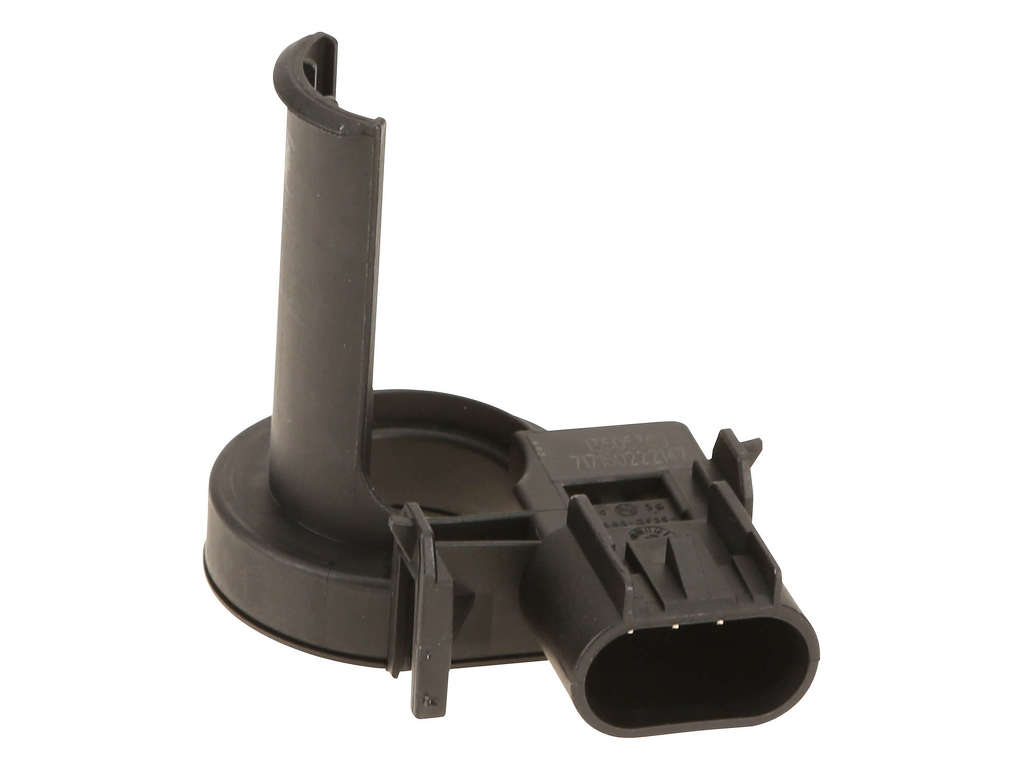
- Faulty Crankshaft Position Sensor: → Shop Engine Crankshaft Position Sensor A failing crankshaft position sensor will prevent the ECM from seeing engine rotation, thus preventing spark and fuel injection. This will typically set a specific code like P0335 or P0336, but P1604 could appear alongside it as a result of the extended cranking.
- Damaged Wiring Harness: Rodent damage or chafing of a critical wiring harness can cause intermittent shorts or open circuits, leading to communication errors and a no-start condition that can be very difficult to trace.
Diagnosis Steps
- Scan for all codes in all modules. Pay close attention to any 'U' (network) codes, as they are critical clues.
- Check the battery's state of charge with a multimeter. It should be above 12.4V. If low, charge and re-test.
- Perform a battery load test to confirm its health. This is often a free service at auto parts stores.
- Thoroughly inspect battery terminals and the main chassis ground strap for any corrosion or looseness. Clean and tighten as necessary. A YouTube video by 'Advanced Level Diagnostics' on a 2010 LaCrosse showed a complete no-power situation caused by a bad negative battery terminal end. 🎬 Watch this diagnostic walkthrough for a complete no-power fix.
- Check the main engine ground strap. On the LFX, this is often located below the exhaust manifold, connecting the engine block to the subframe. A video by 'A Rod's Garage' shows this ground being a 15mm nut during a cable replacement. 🎬 Watch a technician diagnose a tricky no-crank condition.
- Check all fuses related to the ECM, BCM, and ignition systems in both the under-hood and interior fuse panels.
- If all basic electrical checks pass, the next step is to verify power and ground circuits at the ECM connector using a multimeter and wiring diagrams. This is an advanced step.
- If power and grounds are good but the ECM is not communicating, the ECM is the most likely culprit.
- If the issue is intermittent, inspect wiring harnesses for signs of damage, chafing, or corrosion at major connectors.
Parts You'll Likely Need
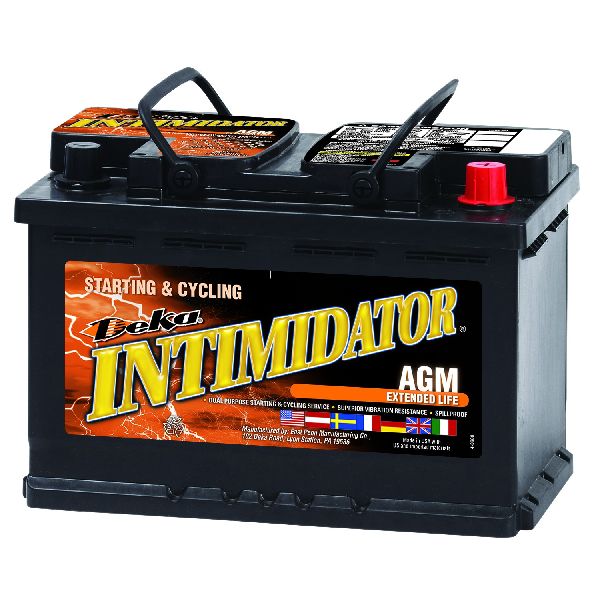
- Battery — A weak or failing battery is the most common cause of low voltage, leading to module communication failures and a P1604 code.
Trusted brands: ACDelco, Interstate, DieHard
OEM price range: $200-$275
Aftermarket price range: $150-$225 - Engine Control Module (ECM)
(OEM #12653998)— If basic electrical systems are confirmed to be good, a failed ECM can be the cause. It is the brain of the engine management system.
Trusted brands: ACDelco (GM Genuine)
OEM price range: $700-$1100
Aftermarket price range: $300-$500 (Remanufactured) - Body Control Module (BCM)
(OEM #13534184)— The BCM works with the ECM for security and starting functions. A failure can prevent the start sequence from completing.
Trusted brands: ACDelco (GM Genuine)
OEM price range: $250-$450
Aftermarket price range: $150-$300 (Remanufactured) - Negative Battery Cable / Ground Strap
(OEM #20942245 (example, verify by VIN))— The factory ground straps can corrode internally or at the connection points, causing high resistance that disrupts module communication during startup.
Related Codes That Often Appear With This One
- U0100 — This code means 'Lost Communication With ECM/PCM'. If other modules cannot communicate with the engine computer, they cannot coordinate to start the vehicle, leading to a startability failure (P1604).
- P0600-P06FF — This range of codes relates to internal control module errors. Seeing one of these alongside P1604 strongly suggests a problem with the ECM itself.
Technical Service Bulletins (TSBs) & Recalls
- Information on High Feature V6 Timing Chain Kits and Chain Guide Replacement: This crucial TSB, which supersedes earlier versions, details the updated timing chain service kits for the HFV6 engine family, including the LFX. It notes that stretched chains are a primary cause for codes like P0008/P0017 and provides guidance on the repair. While not directly for P1604, it documents the most significant mechanical issue with this engine.
Mechanic-Grade Diagnostic Values
- Low-Pressure Fuel System (In-tank pump) — expected: 345-690 kPa (50-100 psi) with pump commanded ON, engine off.. Failure: Pressure below 345 kPa (50 psi) indicates a weak pump, clogged filter, or electrical issue. Pressure above 690 kPa (100 psi) may indicate a faulty regulator in the pump module.
- High-Pressure Fuel System (Engine-driven pump) at Idle — expected: 1.9-5.0 MPa (276-725 psi).. Failure: Pressure significantly outside this range at idle suggests an issue with the high-pressure pump or the rail pressure sensor.
- High-Pressure Fuel System (During Cranking) — expected: Must rise above 3 MPa (435 psi).. Failure: Failure to build pressure above this threshold during cranking will set a specific fuel pressure code (like P00C6) and cause a no-start, which can subsequently trigger P1604.
- Battery Voltage During Cranking — expected: Should remain above 9.6V.. Failure: Dropping below 9.6V indicates a weak battery that cannot supply the stable voltage required by the various control modules, often leading to communication dropouts and a P1604.
- Engine Compression (Cold) — expected: 150-185 psi average, with no cylinder below 140 psi for the HFV6 engine.. Failure: Low compression in one or more cylinders indicates a base engine mechanical problem that would prevent starting.
Hidden / Shadow Codes Worth Checking
- P1604 (2Byte): A GM parts listing for an ECM mentions a 'No Start (2Byte)' condition associated with the module, suggesting that dealer-level scan tools like GDS2 may show a more specific 2-byte symptom code alongside the generic P1604, pointing directly to an internal ECM fault. (see via GM GDS2 or Tech2 dealer scan tool.)
Scan Tool Commands That Help
- GM GDS2 / Tech2: Fuel Pump Enable — This bidirectional command manually turns on the low-pressure fuel pump. It is essential for testing the pump's operation and verifying fuel pressure (50-100 psi) with a mechanical gauge without needing to crank the engine.
- GM GDS2 / Tech2: Fuel Pressure Control — Allows a technician to command changes in the desired high-side fuel pressure while observing the fuel rail pressure sensor reading to verify the functionality of the high-pressure fuel pump and its actuator.
- GM Service Programming System (SPS): Module Programming/Setup — This function is required after replacing the ECM or BCM. It programs the new module with the vehicle's VIN, security information, and specific software calibration. Failure to perform this step will result in a no-start condition.
Wiring & Ground Locations
- ECM Connector X1 — On the Engine Control Module (ECM). For the LFX V6 with three connectors, X1 is the connector that is Black (BK) with a Blue (BU) Terminal Position Assurance (TPA) lock.. Correctly identifying connector X1 is critical for performing pinout tests for power, ground, and communication signals going to the ECM. Pin 13 (D-GN/WH wire) is the Fuel Pump Relay Control, and Pin 20 (OG wire on some diagrams) is Battery Positive Voltage.
- G101 — On the lower front of the engine block.. This is a primary ground for the Engine Control Module (ECM) and Transmission Control Module (TCM). A poor connection here can directly cause ECM communication loss and no-start issues.
- G103 — On the cowl at the left rear of the engine compartment, above the brake booster.. This ground serves the Body Control Module (BCM), Instrument Panel Cluster (IPC), and Data Link Connector (DLC). A fault here can disrupt communication between the BCM and ECM, preventing starter engagement or security authorization.
- G105 / G106 — G105 is at the left front of the engine compartment. G106 is on the front center of the frame cross rail, under the crank pulley. G101 often jumpers to G106.. These are major chassis and engine grounds. Corrosion or looseness at these points can create high resistance in the entire electrical system, causing voltage drops during cranking that lead to module failure and a P1604.
Real Owner Repair Stories
- YouTube video by 'TESLA Fanz' (2005-2007 Buick LaCrosse (older generation, but relevant network issue)) — No crank, no start, no gauges on the instrument cluster, multiple communication codes.
❌ Tried (didn't work) Initial diagnosis pointed towards ECM or BCM.
✅ What actually fixed it The vehicle would start and run perfectly only when the electrical connector to the ABS module (EBCM) was unplugged. The internal failure of the ABS module was flooding the communication bus with noise, preventing other modules from communicating to start the car. Replacing the ABS module was the final fix. - YouTube video by 'Hunter Automotive' (2010 Buick LaCrosse 3.6L) — No crank, no start. Clicking from solenoid. A 300 amp main fuse on the battery was repeatedly blowing.
❌ Tried (didn't work) Another shop replaced the starter motor., Another shop replaced the 300 amp fuse, which blew again.
✅ What actually fixed it The high amperage draw blowing the fuse was misdiagnosed as an electrical short. The actual cause was a mechanically seized engine. The starter was drawing over 600 amps trying to turn a locked-up engine, causing the fuse to blow to protect the circuit. This is an example of a mechanical failure presenting as an electrical one. - Reddit user post in r/AskMechanics (2010 Buick LaCrosse CXS, ~130,000 miles) — Complete no crank, no start, no power to locks. Dashboard lights flicker. Parasitic battery drain. Started after a series of other repairs (thermostat, visor, headlight bulb).
❌ Tried (didn't work) Replacing the battery (new battery also drained)., Checking all fuses and relays (except one).
✅ What actually fixed it The user found an exposed wire from the 'main computer circuit' that was shorting to the chassis. After fixing the wire, they discovered the fan relay was internally grounded, causing a constant parasitic draw. The combination of the short and the bad relay was causing the complex electrical failure and no-start.
OEM Part Supersession History
12633555→12653998— Standard part revision and consolidation by the manufacturer.
Heads up: The new part number (12653998) is the correct service replacement for the original. Both require programming to the vehicle's VIN upon installation.
Model Year Variations Within This Range
- 2010-2011 vs 2012-2016: The 3.6L V6 engine was updated. 2010-2011 models used the LLT engine, which had known issues with premature timing chain stretch. In 2012, this was replaced by the LFX engine, which featured a significantly improved timing chain design and slightly more horsepower (303 hp vs ~280 hp). While P1604 is often electrical, an underlying timing issue on an LLT could cause a hard-start/no-start.
- 2012+: Starting in 2012, a 2.4L 4-cylinder with the 'eAssist' mild hybrid system became an available powertrain. The diagnostic approach for a P1604 on an eAssist vehicle would need to consider the hybrid battery pack and related control modules, which are not present on V6 models.
Diagnostic Flowchart
Other Known Issues on This Vehicle
Issues unrelated to this code that are worth knowing about as an owner of this generation:
- Premature Timing Chain Stretch 🔴 High — Very common, especially on pre-2012 LLT engines but still affects LFX. Often appears between 70,000-120,000 miles. Exacerbated by extended oil change intervals. (Ref: TSB 12-06-01-009D, Special Coverage Adjustment 11340C (now expired))
- Unusual Transmission Shift Logic (6-Speed Auto) 🟡 Low → Shop Transmission Assembly — Common complaint on 2012+ models. Owners report the transmission holding 1st and 2nd gear to very high RPMs (4500-5500) under light acceleration. Dealers state this is normal programming.
- Clogged PCV Orifice / Valve Cover Failure 🟠 Medium — Common on the 3.6L LFX. The fixed PCV orifice in the valve cover can clog, leading to increased crankcase pressure, oil consumption, and contamination of the MAF sensor, which can cause lean codes (P0171/P0174).
- Leaking Intake Manifold Gaskets 🟠 Medium — The intake manifold gaskets are a known failure point that degrade over time, causing vacuum leaks and lean codes (P0171/P0174). The issue often becomes apparent in cold weather.
Used vs. New Parts: Buying Guide for This Vehicle
When a used part is the smart pick: Used parts like battery cables, ground straps, and fuse boxes are a smart choice if they are visually inspected for corrosion, brittleness, and damage. A used ECM or BCM can be a cost-effective option ONLY if purchased from a reputable supplier who guarantees the part and can pre-program it to your vehicle's VIN before shipping.
Donor-vehicle mileage cap: roughly under 100000 miles for the part to have meaningful remaining life.
What to inspect on the donor part:
- For electrical modules (ECM/BCM): Ask for the donor vehicle's VIN to confirm compatibility. Ensure the seller offers VIN programming.
- For cables/straps: Check for any signs of green or white corrosion, especially under the insulation near the terminals. The cable should be flexible, not stiff or brittle.
- Look for parts from vehicles in dry, non-salt-belt states to minimize the risk of corrosion.
OEM-only on this vehicle (don't cheap out):
- Engine Control Module (ECM)
- Body Control Module (BCM)
Aftermarket brands forum-validated for this vehicle:
- For batteries: ACDelco (OEM), Interstate, DieHard are consistently reliable choices.
Brands owners have reported issues with on this vehicle:
- Be cautious with no-name, remanufactured electronic modules from online marketplaces that do not offer programming services or a robust warranty. A non-programmed module is useless.
Real Owner Stories
Aggregated from forums and TSBs cited above. Mileages and costs reflect what owners reported in those sources.
2010 Buick LaCrosse
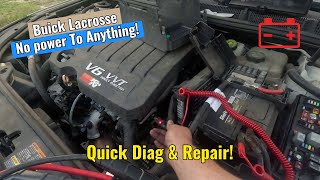
Symptoms: The vehicle experienced a complete no-power, no-start condition with no electrical activity to any systems.
What fixed it: The issue was traced back to a corroded negative battery terminal end which was preventing power flow.
Source hint: YouTube video by 'Advanced Level Diagnostics' titled '2010 Buick Lacrosse - No Power To Anything! Diag & Fix!'
2012 Buick LaCrosse V6
Symptoms: The transmission shift logic felt unusual, specifically holding 1st to 2nd gear until reaching very high RPMs even under light throttle.
What fixed it: No repair was performed; dealers confirmed this behavior is the result of normal factory programming for the 6-speed transmission.
Source hint: Buick Forum thread '6 speed tranny issue'
Related OBD-II Codes
Frequently Asked Questions
My 2010 Buick LaCrosse has no power to anything and won't start; could this be related to P1604?
Does TSB 12-06-01-009D regarding timing chains apply to my LFX engine?
Is there a specific ground point on the LFX V6 I should check for P1604 issues?
My 2012 LaCrosse V6 shifts strangely at high RPMs; is this a symptom of the P1604 code?
How much does it cost to fix a P1604 caused by a faulty ECM on this vehicle?
Can a battery older than 3 years cause a P1604 on the LaCrosse?
Helpful Videos
Used OEM Parts in Stock
New Aftermarket Parts Available


The information in this article is provided for general reference and educational purposes only. Vehicle specifications, procedures, and part compatibility can vary by production date, trim level, and region. Always consult your vehicle's factory service manual and verify part numbers before purchasing or performing repairs. Safety-critical components such as airbags, seat belts, and braking systems should be installed by a qualified professional.
- Buick LaCrosse:
- 🧭 Diagnostic Flowchart
- 🎬 Helpful Videos
- 🛍️ Shop This Part
- What's Unique About the 2010-2016 Buick LaCrosse
- Symptoms You May Notice
- Most Likely Causes
- Rare But Worth Checking
- Diagnosis Steps
- Parts You'll Likely Need
- Related Codes That Often Appear With This One
- Technical Service Bulletins (TSBs) & Recalls
- Mechanic-Grade Diagnostic Values
- Hidden / Shadow Codes Worth Checking
- Scan Tool Commands That Help
- Wiring & Ground Locations
- Real Owner Repair Stories
- OEM Part Supersession History
- Model Year Variations Within This Range
- Other Known Issues on This Vehicle
- Used vs. New Parts: Buying Guide for This Vehicle
- Real Owner Stories
- 2010 Buick LaCrosse
- 2012 Buick LaCrosse V6
- Related OBD-II Codes
- Frequently Asked Questions
- 🎟️ Get 5% Off