

P1604 on 2001-2010 Chrysler PT Cruiser: PCM Internal Failure Causes and Fixes
On a PT Cruiser, P1604 means the engine computer (PCM) failed a self-test. This is almost always caused by a weak battery or corroded/loose battery terminals, not a bad PCM. Before replacing the computer, thoroughly test the battery and clean all connections. Intermittent transmission limp-mode can also be a symptom of this electrical issue.
- P1604 on a PT Cruiser means the PCM has an internal memory error, NOT a generic starting problem.
- The most likely cause is a weak battery or bad battery terminal connections, which triggers a false code.
- ALWAYS thoroughly test the battery and clean all power and ground connections before considering PCM replacement.
- This code can cause a no-start or sudden stalling, so the vehicle should not be driven until repaired.
- If the PCM does need replacement, it must be programmed to your vehicle's VIN to work correctly.
What's Unique About the 2001-2010 Chrysler PT Cruiser
Chrysler electronics of this era are notoriously sensitive to voltage. While P1604 indicates an 'internal' PCM failure, it's most often triggered by an 'external' problem like a weak battery or poor connections. The PCM performs a self-test at startup, and if system voltage drops too low during this check, the test can fail and falsely log a P1604 code. Technicians and owners frequently find that fixing a simple battery or terminal issue resolves the code without ever touching the PCM itself. This voltage drop can also manifest as other seemingly unrelated issues, like the transmission entering limp-mode.
🎬 Watch: Diagnosing a PT Cruiser P1604 no-start issueGeneration note: The PT Cruiser's 2001-2010 run is considered a single generation, but it received a significant facelift for the 2006 model year. One notable difference is that on pre-facelift models (2001-2005), repairing a corroded battery terminal often requires replacing the entire battery harness. On 2006 and newer models, the positive terminal can be purchased and replaced separately (Mopar P/N 5161516AA). Additionally, the electrical system was changed to a CAN bus system starting in 2006, which can affect diagnostic procedures.
Symptoms You May Notice
- Engine cranks but will not start
- Engine starts and immediately stalls
- Check Engine Light is on
- Vehicle may stall intermittently while driving
- No-crank, no-start condition in some cases
- Transmission stuck in 'limp-home' mode (typically 2nd gear)
- Erratic gauge behavior
- Replacing the PCM before testing the battery and cleaning the terminals. This is the most common mistake and leads to unnecessary expense, as the new PCM will likely show the same code if the underlying voltage issue isn't fixed.
- Replacing the transmission solenoid pack or entire transmission when limp-mode is caused by the P1604 voltage issue, not a true transmission fault.
Most Likely Causes
- Weak or Failing Battery 🔴 High Probability → Shop Vehicle Battery The PCM is highly sensitive to voltage drops during its startup self-test. A weak battery can't maintain the stable voltage required (typically above 10V during crank), causing the PCM to fail the test and log this code.
How to confirm: Test the battery with a digital multimeter. A healthy, fully charged battery should read at least 12.4V with the engine off. Perform a load test using a dedicated battery tester to check its actual health under load, as a surface charge can be misleading. Cranking voltage should not drop below 9.0-10.0V.
Typical fix: Replace the vehicle battery. Ensure the new battery is fully charged before installation.
Est. part cost: $150-$250 - Loose, Corroded, or Damaged Battery Terminals/Cables 🔴 High Probability → Shop Vehicle Battery Poor connections create high resistance, which causes a voltage drop between the battery and the PCM. This is a very common failure point on PT Cruisers. Corrosion can wick several inches up the copper wire inside the cable's insulation, invisible from the outside.
How to confirm: Visually inspect the battery terminals and cable ends for any signs of corrosion (white or greenish powder). Physically try to twist the terminals by hand; they should not move at all. If terminals are clean but problems persist, carefully cut back the insulation on the main positive cable to check for internal black/green corrosion.
Typical fix: Disconnect the battery. Thoroughly clean the battery posts and terminals with a wire brush until they are shiny. If internal cable corrosion is found, the affected section of the cable must be cut off and a new terminal end installed, or the entire cable/harness replaced. For 2006+ models, the positive terminal is Mopar P/N 5161516AA. 🎬 See how corroded battery cables cause shifting issues
Est. part cost: $10-$75 - Poor PCM Power or Ground Connections 🟡 Medium Probability
How to confirm: With the battery disconnected, unplug the PCM connectors and inspect for any corrosion, moisture, or pushed-out pins. Using a wiring diagram, identify the main power and ground pins for the PCM and check for continuity and low resistance (<1.0-5.0 ohms) on the ground circuits to the chassis. Perform a voltage drop test on the power and ground circuits while loaded (key on) to ensure they can carry current effectively.
Typical fix: Clean the PCM connectors with electrical contact cleaner. Repair any damaged wires or terminals. Locate, remove, and clean the main chassis ground points 🎬 Watch: PT Cruiser electrical system maintenance tips that supply the PCM until they are shiny metal.
Est. part cost: $5-$20 - Faulty Powertrain Control Module (PCM) ⚪ Low Probability → Shop Engine Control Module (ECM) While the code directly names the PCM, it's rarely the true cause. It should only be suspected after all other electrical supply issues have been definitively ruled out. Chronic exposure to low voltage can eventually damage the PCM, but the root cause is still the poor power supply.
How to confirm: This is a process of elimination. If the battery is proven to be strong, all battery and ground connections are perfect, and the wiring to the PCM provides stable voltage and good ground under load, then the PCM itself is likely faulty.
Typical fix: Replace the Powertrain Control Module. The replacement unit must be programmed with the vehicle's VIN and security information to function.
Est. part cost: $250-$800
Diagnosis Steps
- Verify the code with an OBD-II scanner. Note if P1603, P0700, or P0562 are also present, as they strongly point to a power supply issue.
- Perform a visual inspection of the battery, terminals, and cables. Look for obvious corrosion, damage, or loose connections.
- Attempt to twist the battery terminals by hand. If they move, they are too loose and are the likely cause.
- Disconnect the battery (negative first). Thoroughly clean the battery posts and cable terminals with a wire brush until they are shiny, even if they look clean.
- Charge and load test the battery. A simple voltage check is not enough. A load test will confirm if the battery can supply adequate power during cranking.
- If the code persists, inspect the main power and ground connections at the chassis and engine block. Ensure they are clean, tight, and free of corrosion.
- Carefully inspect the battery cables for internal corrosion. If the cable feels stiff or swollen near the terminal, cut back the insulation to check for black, powdery copper wire.
- Using a factory wiring diagram, perform a voltage drop test on the PCM's main power and ground circuits to identify high resistance that may not be visible.
- If all wiring, grounds, and the battery are confirmed to be in perfect condition, the PCM is the likely point of failure.
Parts You'll Likely Need
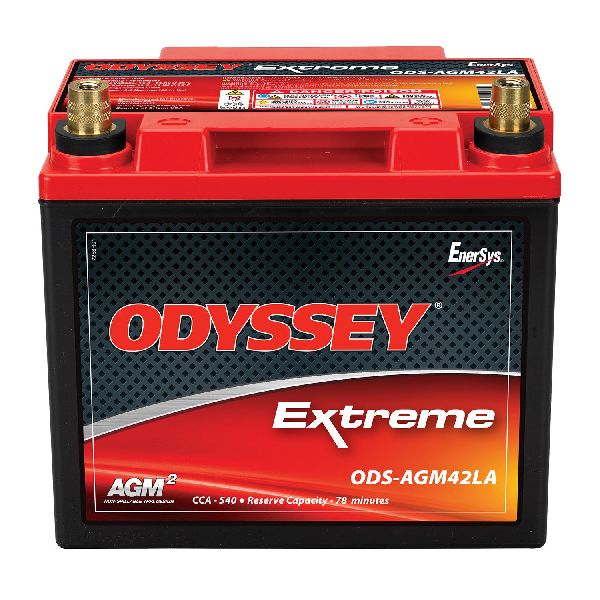
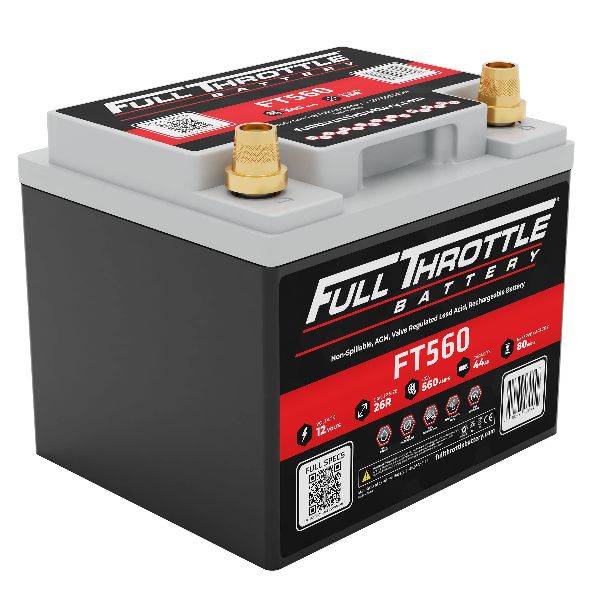
- Vehicle Battery — A weak battery is the most common trigger for a false P1604 code on this vehicle due to voltage drop during the PCM's self-test.
Trusted brands: Interstate, DieHard, Duralast
OEM price range: $200-$300
Aftermarket price range: $150-$250 - Battery Terminals
(OEM #5161516AA (2006-2010 Positive Terminal))— Corroded or damaged terminals are a frequent cause of the voltage drop that triggers P1604.
Trusted brands: Mopar, Standard Motor Products, Dorman
OEM price range: $20-$75
Aftermarket price range: $10-$25 - Powertrain Control Module (PCM)
(OEM #05033326AC, 05033289AI (Examples for 2005, part number must match original))— This is the part that is replaced only when it is confirmed to have an internal failure after all external electrical issues are ruled out. A replacement must be programmed.
Trusted brands: Mopar (OEM/Remanufactured), Cardone, FS1 (Flagship One)
OEM price range: $500-$800
Aftermarket price range: $250-$500
Related Codes That Often Appear With This One
- P1603 — This code, 'PCM Internal Dual-Port RAM Communication Failure,' is a companion to P1604. They are both triggered by the same PCM self-test failure and almost always point to the same root cause, typically a voltage supply issue.
- P0700 — This is a generic code from the Transmission Control Module (TCM). On the PT Cruiser, the TCM is integrated into the PCM. When the PCM logs a critical internal fault like P1604, it also triggers the P0700 code to indicate the transmission system is affected, often resulting in limp-mode.
- P0562 — This code means 'System Voltage Low' and is a direct indicator of the root cause. If you see P1604 and P0562 together, the problem is almost certainly a battery, terminal, or alternator issue.
- P0513 — This 'Invalid SKIM Key' code can appear if the PCM's memory is corrupted or if a replacement PCM has been installed without being properly programmed to the vehicle's immobilizer system.
Technical Service Bulletins (TSBs) & Recalls
- TSB #1802902 / #1802603A: Notes that P1604 can be a false code set during a no-start condition.
Platform-Specific Known Issues
- A Technical Service Bulletin for related platforms (Sebring/Stratus, NHTSA #10000316) notes that P1604 can be set by transient electrical issues, supporting the diagnosis of a power supply fault over a PCM failure.
Mechanic-Grade Diagnostic Values
- PCM Power Supply Voltage (During Cranking) — expected: Should remain above 9.0V.. Failure: A drop below 9.0V during cranking can corrupt the PCM's self-test and trigger P1604.
- PCM Ground Circuit Resistance — expected: Less than 1.0 to 5.0 Ohms.. Failure: Resistance higher than this range between the PCM harness ground pin and a clean chassis ground point indicates a faulty ground connection.
- Voltage Drop on PCM Power or Ground Circuit — expected: Less than 0.2 Volts (200mV). Some technicians report up to 320mV on certain power wires without issue.. Failure: A voltage reading greater than 0.2V while the circuit is under load indicates high resistance that needs to be located and repaired.
- Alternator AC Ripple Voltage — expected: Less than 100mV AC.. Failure: Excessive AC ripple, caused by failing diodes in the alternator, can introduce electrical noise that disrupts sensitive modules like the PCM, potentially triggering a P1604.
Scan Tool Commands That Help
- Chrysler DRB III: Read DTCs, View Data, System Tests — For pre-2006 models that do not use the CAN bus system, the DRB III is the factory-level tool required for in-depth diagnostics. It can access all modules and perform tests unavailable on generic OBD-II scanners.
- Chrysler WiTech: PCM Replacement/Programming — For 2006 and newer models, a modern scan tool like WiTech is needed. When replacing a PCM, the tool is used to program the vehicle's VIN and security key information into the new module, a process often called 'flashing'.
Wiring & Ground Locations
- G101 — At the battery tray.. This is a primary ground point for the engine compartment. Corrosion or looseness here can affect numerous systems, including the PCM.
- G102 — At the left front strut tower.. This is a critical chassis ground point. The PCM and other modules rely on a clean connection here for a stable ground reference. A poor connection at G102 is a known cause of phantom electrical issues.
- G100 — At the left side of the engine compartment.. Another key engine compartment ground that should be inspected for corrosion and tightness when diagnosing electrical faults.
- PCM Connector C1, Pin 12 (2005 Turbo) — On the main PCM electrical connector.. A forum user diagnosed a P1604 by finding low voltage (less than 100mV) on this specific pin when the PCM was connected, indicating a voltage drop issue on that circuit.
- Fusible Link — In the wiring between the alternator B+ terminal and the starter/battery.. This link protects the charging system. If it's damaged or has high resistance (e.g., after a jump-start incident), it can cause system-wide low voltage, leading to P1604.
Real Owner Repair Stories
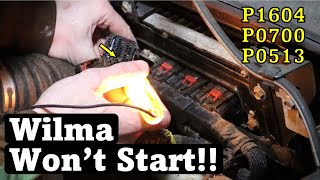
- YouTube user 'ThatJamesGuy' (Chrysler PT Cruiser (year not specified, 'Wilma' project car)) — Crank no-start, with codes P1604, P0700, and P0513.
❌ Tried (didn't work) Initial diagnosis pointed towards a bad PCM due to the codes.
✅ What actually fixed it After checking all power and ground connections to the PCM and finding them to be good, the PCM was replaced. The new PCM resolved the no-start condition. - YouTube user 'JT the Car Guy' (2006 Chrysler PT Cruiser) — No crank, no start.
❌ Tried (didn't work) Initial assumption might be starter or battery.
✅ What actually fixed it The problem was diagnosed as a faulty electrical ignition switch, which is external to the key cylinder on this model. Replacing the ignition switch restored the crank and start functions. - ScannerDanner Forum user (2005 PT Cruiser 2.4L Turbo) — P1604 code present.
❌ Tried (didn't work) Checking all main powers and grounds to the PCM.
✅ What actually fixed it The user identified a significant voltage drop on a specific PCM power input (Connector C1, Pin 12). The voltage was 12.5V with the PCM unplugged, but dropped to under 100mV when plugged in, indicating high resistance in that specific power feed wire or circuit, not a bad PCM.
Model Year Variations Within This Range
- 2006-2010: The electrical architecture was changed to a CAN (Controller Area Network) bus system. This requires different diagnostic tools (e.g., WiTech instead of the older DRB III) and can alter troubleshooting steps compared to the 2001-2005 models.
- 2001-2005: On early models, the battery cable terminals are integrated into the main engine harness. If a terminal is severely corroded, the official repair is to replace the entire harness, which is expensive. Technicians often cut off the old terminal and splice in a generic replacement as a workaround.
- 2006-2010: On later models, the positive battery terminal can be purchased and replaced as a separate component (Mopar P/N 5161516AA), making the repair for a corroded terminal much simpler and cheaper than on earlier models.
Diagnostic Flowchart
Other Known Issues on This Vehicle
Issues unrelated to this code that are worth knowing about as an owner of this generation:
- Front Lower Control Arm Bushing Failure 🟠 Medium — Very common, often occurs between 30,000 and 100,000 miles. Results in clunking/squeaking over bumps, wandering steering, and premature tire wear.
- Cooling Fan Assembly / Relay Failure 🔴 High — Common failure item. The fan fails to turn on, causing the engine to overheat in traffic or at idle, and the A/C to blow warm air when stationary. The fan relays are a frequent point of failure and should be checked first.
- Automatic Transmission Solenoid Pack Failure 🟠 Medium → Shop Transmission Assembly — A well-known issue on the 41TE (A604) automatic transmission. A faulty solenoid pack can cause harsh shifting, delayed engagement, or getting stuck in one gear (limp mode).
- Engine Stalling While Driving 🔴 High — Numerous owner complaints exist regarding the engine shutting off unexpectedly while driving, which may or may not be related to the P1604 voltage issue.
Used vs. New Parts: Buying Guide for This Vehicle
When a used part is the smart pick: A used PCM from a junkyard can be a cost-effective option IF you have access to someone who can program it. For other parts like battery cables/harnesses, alternator, or starter, used parts are a reasonable choice given the age of the vehicle.
Donor-vehicle mileage cap: roughly under 150000 miles for the part to have meaningful remaining life.
What to inspect on the donor part:
- For a PCM, ensure the part number on the used unit EXACTLY matches your original PCM.
- Check the donor vehicle's history if possible; avoid parts from flood or fire-damaged cars.
- Inspect electrical connectors for any signs of corrosion, melting, or pushed-out pins.
- For battery cables, check for green or black corrosion under the insulation near the terminals.
OEM-only on this vehicle (don't cheap out):
- Powertrain Control Module (PCM) - While aftermarket options exist, getting a used OEM unit and having it programmed is often more reliable than some aftermarket remanufactured units which have mixed reviews.
Aftermarket brands forum-validated for this vehicle:
- Cardone (for remanufactured PCMs, though flash programming is required)
- Bosch or Denso (for alternators, as replacement is labor-intensive)
Brands owners have reported issues with on this vehicle:
- FS1 (Flagship One) - Some owners in forums report negative experiences with warranty and product quality for their PCMs.
Real Owner Stories
Aggregated from forums and TSBs cited above. Mileages and costs reflect what owners reported in those sources.
2006 Chrysler PT Cruiser 2.4L
Symptoms: Intermittent no-start and transmission limp-mode.
What fixed it: Tracing the cause to corrosion hidden deep inside the positive battery cables; the corrosion was wicking up the copper wire inside the insulation.
Source hint: YouTube: Corroded battery cables 06 PT Cruiser. Fix intermittent shifting issues?
2001-2010 Chrysler PT Cruiser 2.4L
Symptoms: P1603, P1604, and P0700 codes present; transmission issues.
What fixed it: Replacing poor quality aftermarket battery terminals that were causing voltage sensitivity issues for the PCM.
Source hint: YouTube: Doing this will destroy your car. P1603 P1604 P0700... PT Cruiser
2005 Chrysler PT Cruiser Turbo 2.4L
Symptoms: P1604 code present; technical diagnosis required checking voltage drop at the PCM connectors.
What fixed it: Checking for voltage drop at the PCM connectors to identify high resistance in the power/ground circuits.
Source hint: ScannerDanner Forum: Pcm p1604
Related OBD-II Codes
Frequently Asked Questions
My 2006 PT Cruiser has a P1604 code and the positive battery terminal looks bad. Is there a specific replacement part for this?
Could a Technical Service Bulletin explain why my PT Cruiser has a P1604 code even though it won't start?
My transmission is stuck in 2nd gear and I have a P1604 code. Are these related?
I heard there is a TSB for the Sebring regarding P1604; does that apply to my PT Cruiser?
How much voltage should I see at the battery during cranking to avoid a P1604 code?
Can I just clean my battery terminals to fix this, or do I need a new PCM?
Helpful Videos
We Have This Part in Stock


The information in this article is provided for general reference and educational purposes only. Vehicle specifications, procedures, and part compatibility can vary by production date, trim level, and region. Always consult your vehicle's factory service manual and verify part numbers before purchasing or performing repairs. Safety-critical components such as airbags, seat belts, and braking systems should be installed by a qualified professional.
- Chrysler PT Cruiser:
- 🧭 Diagnostic Flowchart
- 🎬 Helpful Videos
- 🛍️ Shop This Part
- What's Unique About the 2001-2010 Chrysler PT Cruiser
- Symptoms You May Notice
- Most Likely Causes
- Diagnosis Steps
- Parts You'll Likely Need
- Related Codes That Often Appear With This One
- Technical Service Bulletins (TSBs) & Recalls
- Platform-Specific Known Issues
- Mechanic-Grade Diagnostic Values
- Scan Tool Commands That Help
- Wiring & Ground Locations
- Real Owner Repair Stories
- Model Year Variations Within This Range
- Other Known Issues on This Vehicle
- Used vs. New Parts: Buying Guide for This Vehicle
- Real Owner Stories
- 2006 Chrysler PT Cruiser 2.4L
- 2001-2010 Chrysler PT Cruiser 2.4L
- 2005 Chrysler PT Cruiser Turbo 2.4L
- Related OBD-II Codes
- Frequently Asked Questions
- 🎟️ Get 5% Off