

P1604 on 2007-2018 Jeep Wrangler: PCM Failure Symptoms and Fixes
On a 2007-2011 Jeep Wrangler, P1604 almost always indicates a failing Powertrain Control Module (PCM), especially if seen with codes P1603 and P0700. For 2012-2018 models, the cause is less specific but can include battery issues or a faulty PCM. A replacement PCM costs between $500 and $800.
- For a 2007-2011 Jeep Wrangler, P1604 is not a generic code. It is a strong signal of PCM failure, especially if P1603 and P0700 are also present.
- Do not waste money on replacing transmission components until you have ruled out the PCM.
- For 2012-2018 models, the diagnosis is less straightforward. Check battery, grounds, and the separate TCM before suspecting the PCM.
- A replacement PCM must be programmed to your vehicle's VIN to function correctly.
- This is not a beginner-friendly DIY repair due to the programming requirements and potential for vehicle immobilization.
What's Unique About the 2007-2018 Jeep Wrangler
Unlike many vehicles where P1604 is a generic code for a long crank time caused by fuel or spark issues, on the Jeep Wrangler (particularly the 2007-2011 models with the 3.8L engine), it is a well-documented indicator of PCM failure. The Transmission Control Module (TCM) is integrated into the PCM in these models. When the PCM begins to fail, it often throws transmission-related codes (like P0700, a generic TCM fault request) and internal communication fault codes (like P1603) alongside P1604. This specific cluster of codes is a classic signature of a dying PCM on this vehicle, a fact corroborated in numerous owner forums and by specialized repair shops.
Generation note: The 2007-2018 range covers the entire Jeep Wrangler JK generation but includes two different powertrains. The diagnosis for P1604 is different for each: * 2007-2011 (3.8L V6): P1604 is very strongly linked to internal PCM failure. The Transmission Control Module (TCM) is integrated into the PCM. The appearance of P1604 with P1603 and P0700 is considered a definitive sign of a bad PCM. This is a widely known issue, leading to a robust market for remanufactured PCMs from companies like WranglerFix and Circuit Board Medics. * 2012-2018 (3.6L Pentastar V6): These models have a separate TCM. While P1604 can still indicate a PCM issue, the link is less direct. For these years, it's also important to investigate other causes like a weak battery, poor electrical grounds, or issues with the Totally Integrated Power Module (TIPM) before condemning the PCM.
Symptoms You May Notice
- Check Engine Light is on
- Engine cranks but will not start
- Engine starts and immediately stalls
- Harsh or erratic automatic transmission shifting
- Vehicle enters 'limp mode' with limited power and gear selection
- Instrument cluster gauges behave erratically or drop to zero
- Red security light may be illuminated on the dash
- Fuel pump continues to run after the vehicle is off, draining the battery (can be a related TIPM issue)
- Replacing the transmission or transmission solenoids. While P0700 (a common companion code) points to the transmission, the root cause is often the PCM's inability to communicate with or control the transmission, not a mechanical failure inside it.
- Replacing fuel pump or ignition components. While a no-start condition can be caused by fuel or spark, the P1604 code on a Jeep specifically points towards a control module issue rather than a simple component failure.
Most Likely Causes
- Failing Powertrain Control Module (PCM) 🔴 High Probability → Shop Engine Control Module (ECM) The PCM used in the JK Wrangler, particularly the 2007-2011 models, has a documented history of internal failures related to board components and solder joints, often triggered by heat cycles and vibration. This high failure rate is a well-known issue in the Wrangler community.
How to confirm: Scan for codes P1603 and P0700 appearing alongside P1604. Check for proper power and ground signals at the PCM connectors. If powers and grounds are good but internal communication codes are present, the PCM is the likely culprit. For the 3.8L engine, key power inputs are Pin 2 (Ignition) and Pin 22 (Battery) on the C1 (black) connector, and a key ground is Pin 32.
Typical fix: Replace the Powertrain Control Module. The new unit must be programmed with the vehicle's VIN. Aftermarket suppliers like Flagship One, WranglerFix, and Circuit Board Medics offer pre-programmed units with warranties.
Est. part cost: $500 - $800 - Poor Battery or Electrical Connection 🟡 Medium Probability → Shop Vehicle Battery Off-road use and exposure to elements can lead to corrosion on battery terminals, ground straps, and PCM connectors, causing voltage drops that can trigger various electrical codes, including P1604.
How to confirm: Test the battery voltage (should be >12.4V with engine off and 13.7-14.7V running). Load test the battery. Clean the battery terminals and all major ground connections (engine block to chassis, battery to chassis). 🎬 Watch: How to troubleshoot a no-start grounding issue Inspect PCM connectors for corrosion or pushed-out pins.
Typical fix: Clean or replace battery terminals and ground straps. Replace a weak or failing battery.
Est. part cost: $10 - $250
Rare But Worth Checking
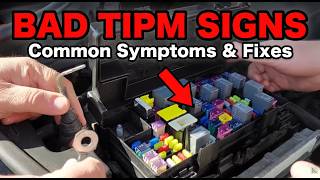
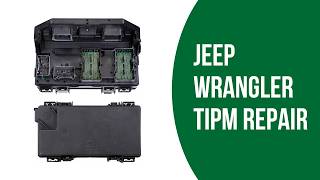
- Faulty Totally Integrated Power Module (TIPM): The TIPM is the fuse box and power distribution center, and it's a notoriously problematic component on 2007-2014 Wranglers. 🎬 See this guide on Jeep TIPM repair and replacement It can cause a vast array of bizarre electrical issues, including no-start conditions, fuel pump problems, and erratic behavior of wipers, horn, and door locks. A failing TIPM can send erratic signals or unstable power to the PCM, potentially triggering fault codes like P1604 or P2507 (ECM/PCM Power Input Low).
Diagnosis Steps
- Scan the PCM for all stored, pending, and permanent codes. Note if P1603 and/or P0700 are present with P1604. This combination is highly indicative of PCM failure on 2007-2011 models.
- Inspect the battery. Ensure terminals are clean and tight. Test battery voltage (must be above 12.4V) and perform a load test to confirm its health.
- Inspect all major power and ground connections between the battery, chassis, and engine block. Pay special attention to the main ground straps, which can corrode or break.
- Disconnect the PCM connectors (with the battery disconnected). Inspect for any signs of corrosion, moisture, or bent/pushed-out pins. Clean with electrical contact cleaner if necessary.
- For 2007-2011 models: If codes P1603 and P0700 are present and the battery/connections are good, the PCM is the most likely cause of failure.
- For 2012-2018 models: If only P1604 is present, further diagnosis of the starting and charging systems, as well as the TIPM, is required before condemning the PCM.
- Consider TIPM failure if other random electrical issues are present (e.g., horn, wipers, fuel pump acting erratically).
Parts You'll Likely Need
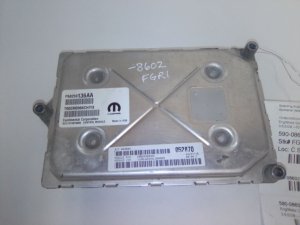
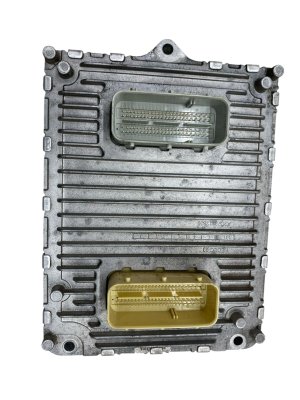
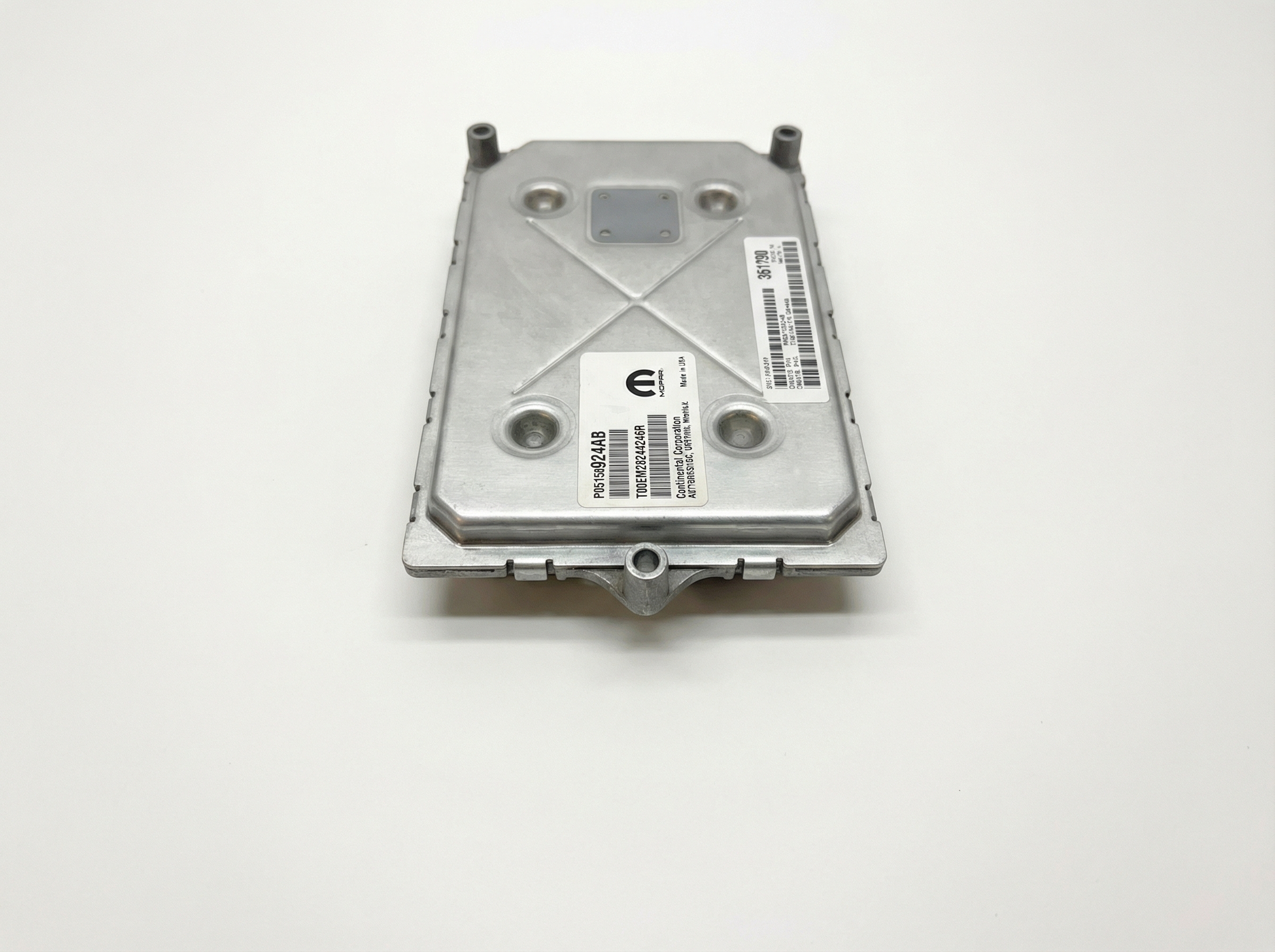
- Powertrain Control Module (PCM)
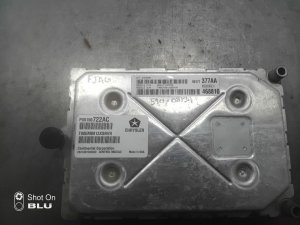
(OEM #Varies by year and transmission. Example for 2008 3.8L is 05187475AF, R5150466AA, or 05187286AB. The hardware family is often 05150466AA.)— This code, especially in combination with P1603 and P0700, is a hallmark indicator of an internal failure of the factory PCM on 2007-2011 models.
Trusted brands: Mopar (OEM), WranglerFix, Flagship One, Circuit Board Medics
OEM price range: $700 - $900
Aftermarket price range: $500 - $700
Related Codes That Often Appear With This One
- P1603 — This code means 'PCM Internal Dual-Port RAM Communication Failure'. It's an internal self-test failure code. Seeing P1603 and P1604 together is a very strong indication that the PCM itself has failed.
- P0700 — This is a generic code from the TCM requesting the check engine light be turned on. On 2007-2011 models where the TCM is inside the PCM, this code appears when the PCM can no longer properly control or communicate with its own transmission functions.
- P0622 — This code means 'Generator Field Control Circuit'. On these Jeeps, it often points to a failure within the PCM's voltage regulator circuit, which controls the alternator. It's another common symptom of internal PCM failure.
Platform-Specific Known Issues
- The integrated PCM/TCM design in 2007-2011 models is a known failure point. Several aftermarket companies specialize in providing remanufactured and warrantied PCMs specifically for these Wranglers due to the high failure rate.
- A user on JK-Forum.com described symptoms including non-functional front washer, intermittent passenger window, and non-working remote door locks, which were all traced back to a bad TIPM, illustrating how its failure can mimic other issues.
Mechanic-Grade Diagnostic Values
- PCM Power and Ground Verification (2007-2011 3.8L) — expected: Using a test light or multimeter at the PCM connectors (with key on): Pin 12 (Pink/White) on C1 should have ignition power. Pin 29 (Red) on C1 should have constant battery power. Multiple ground pins should show continuity to chassis ground.. Failure: Absence of power on Pin 12 or 29, or high resistance on ground pins, indicates a wiring or TIPM issue, not necessarily a bad PCM.
- Battery Voltage Under Load — expected: A healthy battery should maintain above 10.5V while cranking the engine. Resting voltage should be >12.4V.. Failure: A voltage drop below 10.5V during cranking can cause the PCM to reset or throw erroneous codes like P1604 due to insufficient power.
Scan Tool Commands That Help
- wiTECH (Chrysler/Jeep Dealer Tool): Restore Vehicle Configuration — This function is mandatory after installing a new or remanufactured PCM. It copies the vehicle's original configuration, including VIN, options, and security data (SKIM), from the old module or the cloud into the new PCM. Failure to perform this step will result in a no-start condition.
- wiTECH (Chrysler/Jeep Dealer Tool): PCM Re-Flash — If a new software calibration is available from Jeep to address specific issues, this function is used to update the PCM's firmware. This is sometimes a first step before condemning a module for certain software-related glitches, though it is less likely to fix a hardware-related P1604.
Wiring & Ground Locations
- G100 — On the passenger side of the engine bay, near the catalytic converter heat shield.. This is a primary engine block ground. A loose or corroded G100 can cause a host of electrical problems, including insufficient ground for the PCM and starter, leading to no-start conditions.
- G101 / G104 — Located under the heat shield on the passenger side of the engine. G101 is a common point for a braided ground strap from the firewall to the engine block.. The firewall-to-engine ground strap is notorious for breaking or corroding. When it fails, the starter may try to ground through smaller sensor ground wires, potentially damaging the PCM or other modules. This is a very common cause of intermittent no-crank or no-start issues.
- G102 — In the engine bay, to the left (driver's side) of the passenger headlamp assembly, near the power steering reservoir.. This ground point serves various components in the front of the engine bay. While not a direct PCM ground, poor connection here can introduce electrical noise that may affect module performance.
- G201 / G203 — Located under the kick panel in the passenger footwell.. These are primary interior and body ground points. Issues here can affect communication between the PCM and other interior modules like the instrument cluster or security module (SKIM).
- PCM Connectors (C1-C4) — On the passenger side of the engine bay, mounted to the firewall.. These are the direct interface to the PCM. Inspecting for pushed-out pins, corrosion from water intrusion, or damage from harness chafing is a critical step before replacing the PCM. A single bad pin can mimic a total PCM failure.
Real Owner Repair Stories
- JK-Forum.com user (2007 Jeep Wrangler) — Intermittent no-crank, no-start. Starter would just click, but on the second or fourth try, it would start normally. All lights stayed on, so the battery seemed okay.
❌ Tried (didn't work) Dealer replaced the starter., Owner replaced the battery.
✅ What actually fixed it The owner discovered the vehicle was missing its main grounding strap from the factory. After adding a new ground wire from the battery negative to the lower bellhousing (engine block), the problem was permanently resolved. - YouTube: Ozzstar's Cars (2006 Jeep Wrangler TJ (principles are identical for 2007-2011 JK)) — Intermittent hard shifting from 1st to 2nd, check engine light with codes P1603, P1604, P0700. Disconnecting the battery would temporarily fix the issue.
❌ Tried (didn't work) Verified all power and ground pins at the PCM connector were good, ruling out a simple wiring issue.
✅ What actually fixed it The intermittent nature of the fault combined with the specific code cluster (P1603/P1604/P0700) pointed to an internal PCM failure. The problem was resolved by replacing the PCM with a remanufactured unit from WranglerFix.
OEM Part Supersession History
05150466AA (Hardware Family for many 2008 3.8L)→05187487, R5150468AA, etc.— Revisions to address hardware failures and software updates.
Heads up: When ordering a replacement PCM, the VIN is the only reliable way to ensure compatibility. Using a PCM from a vehicle with a different transmission (manual vs. auto) or emissions package will not work, even if it physically plugs in.
Model Year Variations Within This Range
- 2007-2011 vs 2012-2018: The most significant change was the powertrain switch in 2012. The 2007-2011 models used the 3.8L V6 with an integrated PCM/TCM that is highly prone to the P1604 failure. The 2012-2018 models use the 3.6L Pentastar V6 with a separate TCM, making the P1604 code less common and not as definitively linked to PCM failure.
- 2011: The 2011 model year is a transitional year. While it retains the problematic 3.8L engine, it received the updated interior from the 2012+ models. This can lead to some confusion in diagnostics, but for code P1604, it should be treated like other 2007-2010 models due to the powertrain.
Diagnostic Flowchart
Other Known Issues on This Vehicle
Issues unrelated to this code that are worth knowing about as an owner of this generation:
- Totally Integrated Power Module (TIPM) Failure 🔴 High — Very common on 2007-2014 models. Can cause a wide range of electrical problems, most notably a crank/no-start due to fuel pump relay failure. (Ref: Several recalls and lawsuits have been issued, though not all-encompassing. Example: NHTSA recall 14V-530 for fuel pump relay failure in Grand Cherokees/Durangos.)
- Front Axle 'Death Wobble' 🔴 High — A notorious issue across all years. A violent, uncontrolled shaking of the front wheels and steering, usually triggered by hitting a bump at speed. Caused by worn or loose front suspension/steering components (track bar, ball joints, tie rod ends).
- Cracked Exhaust Manifold (3.8L V6) 🟠 Medium — Extremely common on the 2007-2011 3.8L engine. The cast iron manifolds are prone to cracking from heat cycles, causing an exhaust leak often heard as a ticking noise when cold.
- Left Cylinder Head Failure (Early 3.6L Pentastar) 🔴 High — Affected early 2012-2013 models. A manufacturing defect could cause excessive wear on the valve seats of the left-side cylinder head, leading to misfires (P0300, P0302, P0304, P0306) and a ticking noise. (Ref: Chrysler issued an extended warranty (X56) for 10 years/150,000 miles and Service Bulletin 09-002-14 to address the issue.)
- Water Leaks (Hardtop and Soft Top) 🟠 Medium — Common across all years. Leaks often occur at the A-pillar, door surrounds, and hardtop panel seams, leading to wet carpets and potential electrical issues.
- Heater Core Clogging 🟠 Medium — Common issue, particularly in earlier JK models. Casting sand from the engine block manufacturing process can clog the heater core, resulting in poor or no heat on the driver's side.
Used vs. New Parts: Buying Guide for This Vehicle
When a used part is the smart pick: For this repair, 'used' should mean a professionally remanufactured and warrantied PCM from a reputable specialist. A raw 'used' PCM from a junkyard is almost never a smart choice for a DIYer. The PCM is VIN-locked and tied to the vehicle's security system (SKIM). Without dealer-level tools (like wiTECH) to program the VIN and security keys, a junkyard PCM will result in a no-start condition.
What to inspect on the donor part:
- For a remanufactured PCM: A lifetime warranty, pre-programming to your VIN included in the price, and positive reviews on Jeep forums.
- For a junkyard PCM (if attempting with professional tools): Ensure it's from the exact same year, model, engine, and transmission. Grab the ignition key and SKIM module from the donor vehicle if possible, as it may be easier to swap the set than to reprogram.
OEM-only on this vehicle (don't cheap out):
- Powertrain Control Module (PCM) - While remanufacturers are technically aftermarket, they rebuild genuine OEM cores. Avoid cheap, newly-manufactured 'clone' PCMs from unknown brands, as they often have high failure rates.
Aftermarket brands forum-validated for this vehicle:
- WranglerFix
- Circuit Board Medics
- Flagship One (FS1)
- MAKS ECM Rebuilders
Brands owners have reported issues with on this vehicle:
- Unbranded, no-name sellers on eBay or Amazon offering 'plug-and-play' PCMs with no stated warranty or return policy.
Real Owner Stories
Aggregated from forums and TSBs cited above. Mileages and costs reflect what owners reported in those sources.
2007-2011 Jeep Wrangler JK 3.8L
Symptoms: The owner experienced shifting issues and a no-start condition, specifically citing codes P1603, P1604, and P0700 appearing together.
What fixed it: Replaced the PCM with a unit from specialist vendor WranglerFix.
Source hint: YouTube - Ozzstar's Cars - 'Jeep Wrangler TJ PCM / TCM replacement FIX P1603 P1604 P0700'
2007-2018 Jeep Wrangler JK
Symptoms: Non-functional front washer, intermittent passenger window operation, and non-working remote door locks.
What fixed it: The dealer diagnosed and replaced a bad Totally Integrated Power Module (TIPM).
Source hint: jk-forum.com - user description of symptoms mimicking other electrical issues
Related OBD-II Codes
Frequently Asked Questions
My 2012 Wrangler has a ticking noise and misfire codes; is this related to P1604?
Can I use a used PCM from a junkyard to fix the P1604 code on my JK Wrangler?
Why does my 2008 Wrangler have P1604 along with harsh shifting and a red security light?
Could my Wrangler's 'Death Wobble' be triggering electrical codes like P1604?
Is there a recall for the TIPM issues that mimic PCM failure symptoms?
Helpful Videos
We Have This Part in Stock

The information in this article is provided for general reference and educational purposes only. Vehicle specifications, procedures, and part compatibility can vary by production date, trim level, and region. Always consult your vehicle's factory service manual and verify part numbers before purchasing or performing repairs. Safety-critical components such as airbags, seat belts, and braking systems should be installed by a qualified professional.
- Jeep Wrangler:
- 🧭 Diagnostic Flowchart
- 🎬 Helpful Videos
- 🛍️ Shop This Part
- What's Unique About the 2007-2018 Jeep Wrangler
- Symptoms You May Notice
- Most Likely Causes
- Rare But Worth Checking
- Diagnosis Steps
- Parts You'll Likely Need
- Related Codes That Often Appear With This One
- Platform-Specific Known Issues
- Mechanic-Grade Diagnostic Values
- Scan Tool Commands That Help
- Wiring & Ground Locations
- Real Owner Repair Stories
- OEM Part Supersession History
- Model Year Variations Within This Range
- Other Known Issues on This Vehicle
- Used vs. New Parts: Buying Guide for This Vehicle
- Real Owner Stories
- 2007-2011 Jeep Wrangler JK 3.8L
- 2007-2018 Jeep Wrangler JK
- Related OBD-II Codes
- Frequently Asked Questions
- 🎟️ Get 5% Off