

P1604 on 2010-2016 Mercedes-Benz E-Class: 'Startability Malfunction' Causes and Fixes
P1604 means your E-Class cranked for too long without starting. This is a symptom, not a specific fault. The most common culprits are a failed crankshaft position sensor (a $50-$150 part) or a weak fuel pump/fuel pump control module. Always scan for other, more specific codes first, as P1604 rarely appears alone.
- P1604 is not the problem; it's a symptom. Your car is telling you it failed to start, and you must find the underlying reason.
- Always check for other codes first. A more specific code like P0335 (Crank Sensor) or P0087 (Fuel Pressure) is the real key to your diagnosis.
- On a 2010-2016 E-Class, the most likely cause of a crank-no-start is a bad crankshaft position sensor (CPS).
- If the engine doesn't crank at all, your problem is different (likely battery, starter, or ignition switch/EIS), and P1604 may not be the only code stored.
- Before buying parts, perform basic checks: ensure the battery is fully charged and listen for the fuel pump priming when you turn on the ignition.
What's Unique About the 2010-2016 Mercedes-Benz E-Class
While the P1604 code itself is generic, the reasons a W212 E-Class won't start are often platform-specific. These cars are well-known for crankshaft position sensor (CPS) failures, which will cause a 'crank-no-start' condition and log this code. Fuel delivery issues, including the fuel pump or its dedicated Fuel Pump Control Module (FPCM) in the trunk, are also common weak points. A generic OBD-II scanner will show P1604, but a Mercedes-specific diagnostic tool (like XENTRY/STAR) is essential for reading proprietary codes related to the Electronic Ignition Switch (EIS) and Electronic Steering Lock (ESL), which are common and complex failure points on this chassis that can also cause a no-start.
Generation note: This range covers the W212 (sedan/wagon) and C207/A207 (coupe/convertible) E-Class models. The W212 received a major facelift for the 2014 model year. However, the common causes for a no-start condition, such as crankshaft sensor, fuel system, and EIS/ESL failures, are prevalent across both pre-facelift (2010-2013) and post-facelift (2014-2016) models.
Symptoms You May Notice
- Engine cranks but does not start
- Engine starts and then immediately stalls
- Extended cranking time before the engine finally starts
- Check Engine Light is illuminated
- No crank, no start (if related to EIS/ESL failure)
- Replacing the starter motor when the engine is cranking normally. If the engine is turning over, the starter is working. The issue is with fuel, spark, or compression.
- Replacing the battery without testing it first. While a weak battery is a common cause, other issues can mimic its symptoms.
Most Likely Causes
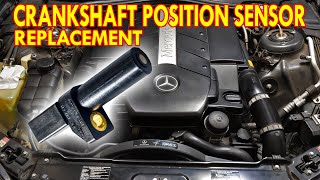
- Failed Crankshaft Position Sensor (CPS) 🔴 High Probability → Shop Engine Crankshaft Position Sensor The CPS is a widely documented failure point on many Mercedes-Benz models of this era, including the E-Class. The sensor is exposed to extreme heat and vibration at the back of the engine, causing the internal electronics to fail over time, leading to a classic crank-no-start scenario.
How to confirm: Use a scanner to monitor engine RPM while cranking. If the RPM reading is zero or erratic while the engine is turning over, the CPS is almost certainly bad. The sensor can also be tested for resistance with a multimeter; a good sensor typically reads between 700-1200 Ω. Often accompanied by code P0335.
Typical fix: Replacement of the crankshaft position sensor. It is typically located on the driver's side of the transmission bell housing, accessible from underneath the car. It is held in by a single E8 Torx bolt.
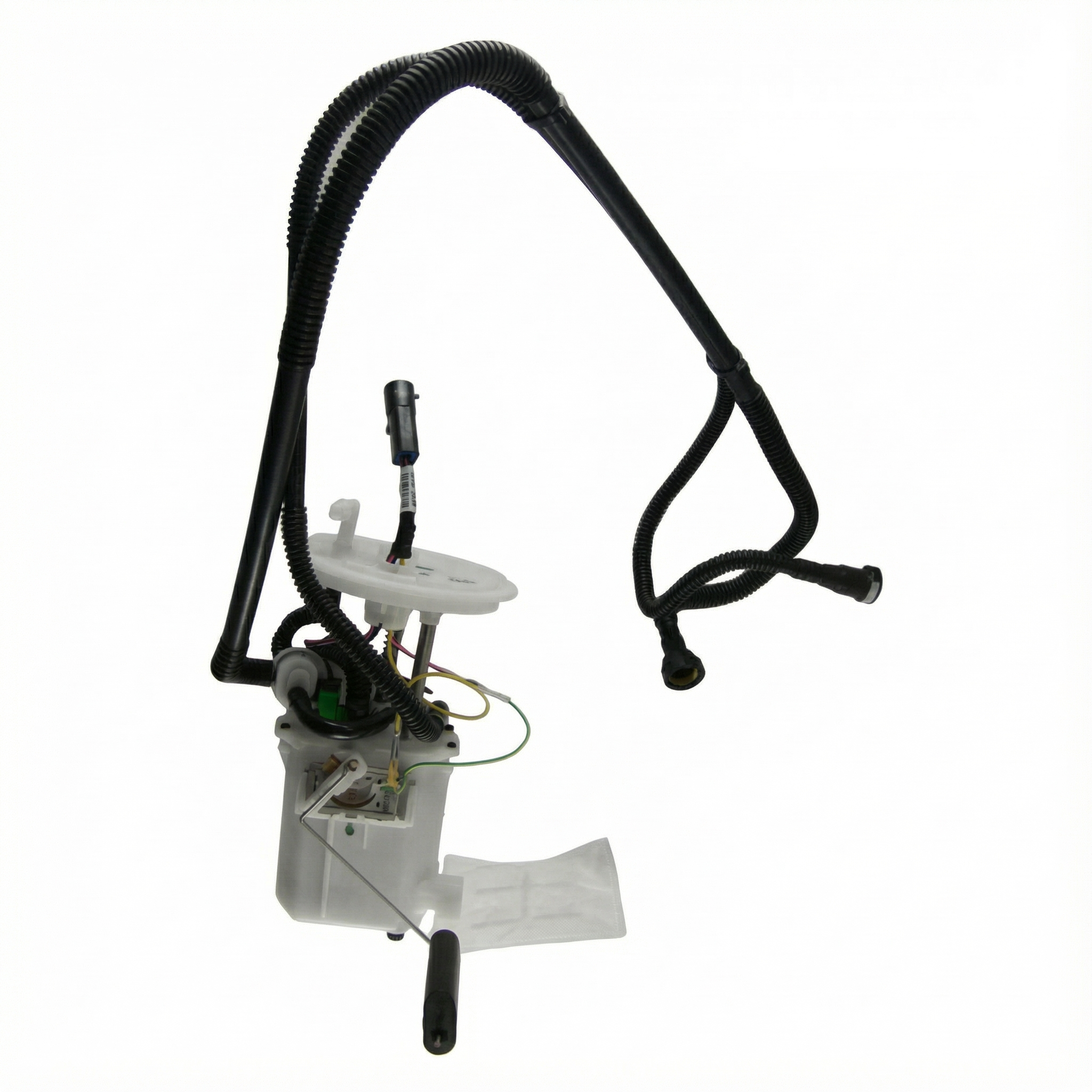
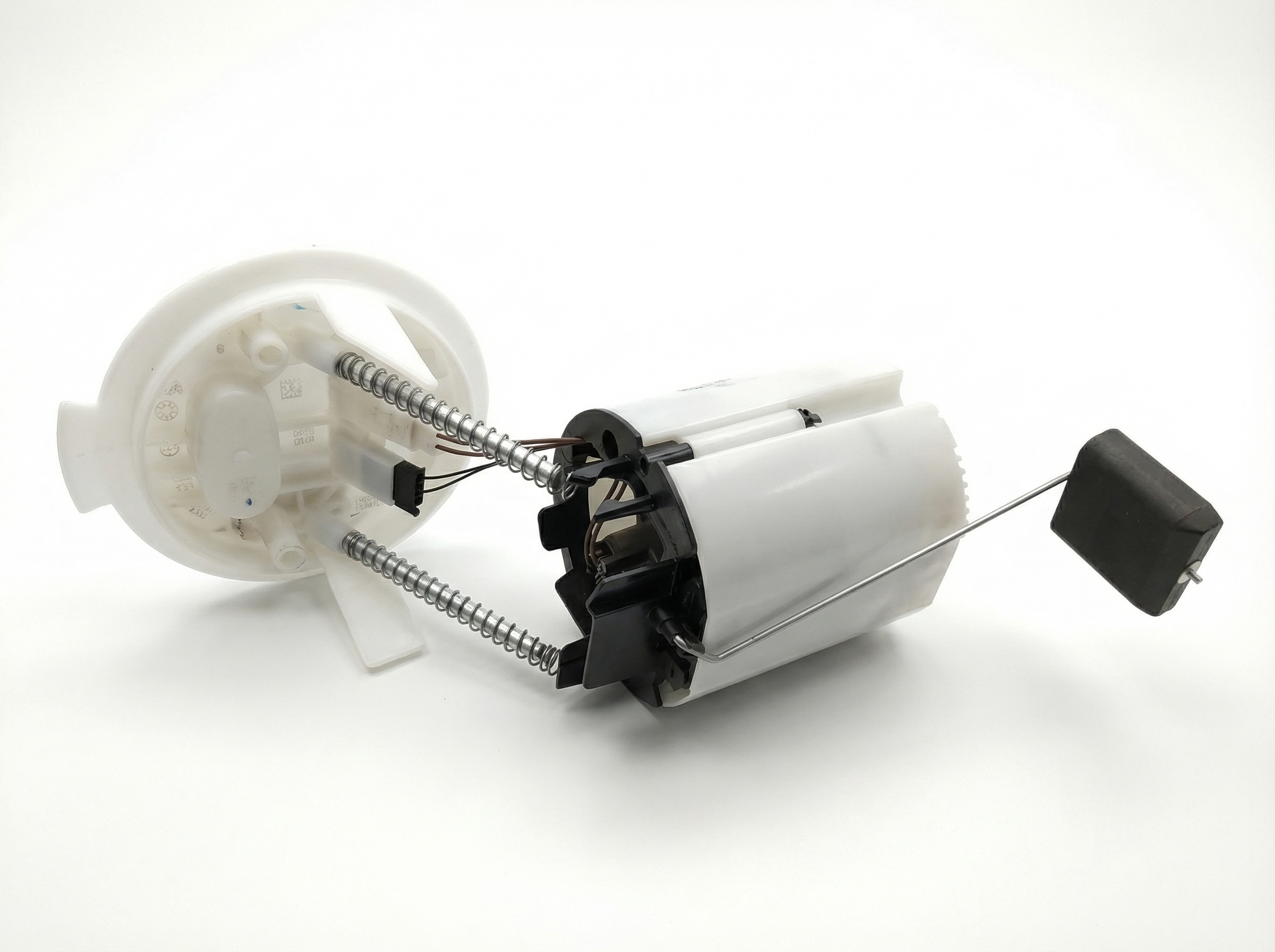
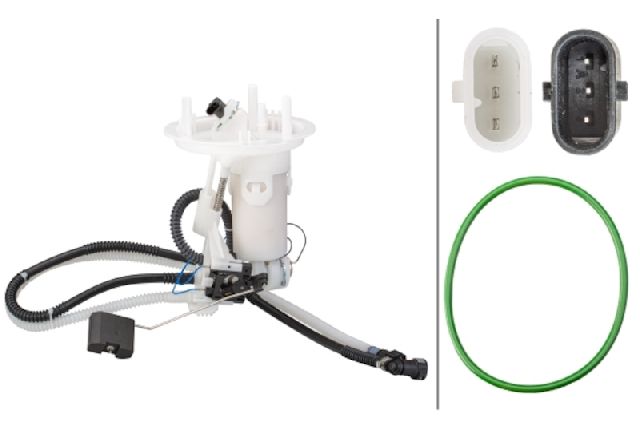
Est. part cost: $40-$150 - Failing Fuel Pump or Fuel Pump Control Module (FPCM) 🟡 Medium Probability → Shop Fuel Pump The fuel pump or its control module can fail, leading to a lack of fuel pressure. The FPCM, located in the trunk, is a known failure point and can stop sending power to the pump. A clogged fuel filter can also strain the pump, leading to premature failure.
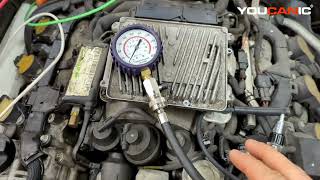
How to confirm: Listen for a humming sound from the rear seat area when the key is turned to the 'ON' position; this is the pump priming. If there is no sound, check fuse #23 in the rear SAM (fuse box in trunk). The definitive test is to connect a fuel pressure gauge to the fuel rail and verify pressure is within specification during cranking. Low-side pressure should be around 60-65 PSI (4.1-4.5 bar). A scan tool may show code P0087 (Fuel Rail Pressure Too Low) or P008A (Low Pressure Fuel System Pressure - Too Low).
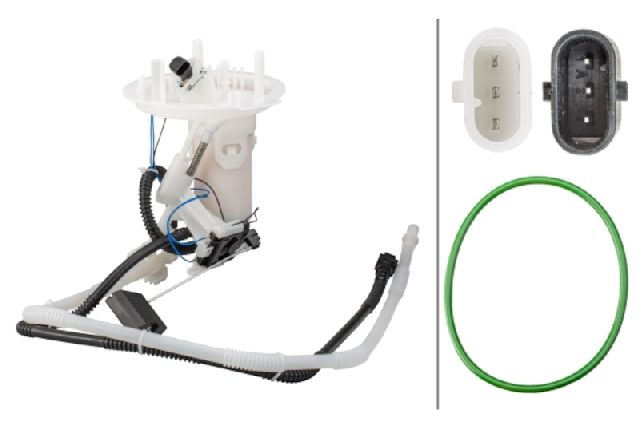
Typical fix: Replace the fuel pump (accessed from under the rear seat) or the fuel pump control module (in the trunk). If replacing the pump, it's wise to replace the filter at the same time.
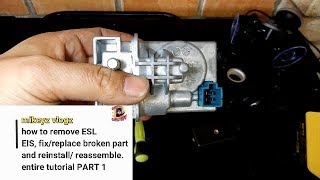
Est. part cost: $200-$600 - Faulty Electronic Ignition Switch (EIS) or Electronic Steering Lock (ESL) 🟡 Medium Probability The drive authorization system (immobilizer) is a complex and well-documented failure point on the W212 and related platforms. The EIS module can suffer from data corruption, or the motor in the ESL can fail, preventing the steering column from unlocking and the car from starting. This often results in a 'no crank' situation.
How to confirm: This usually requires a Mercedes-specific scanner to check the status of the drive authorization system. Key symptoms include the key turning in the ignition but nothing happening (no crank), or the steering wheel failing to unlock. Trying a spare key is a good first step, but if both keys fail, the issue is likely with the car's modules.
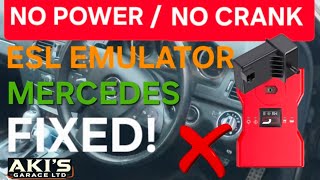
Typical fix: This is an expensive repair that must be done by a dealer or a specialized independent shop with the correct programming tools. The faulty component (EIS or ESL) is replaced and coded to the vehicle. An ESL motor can sometimes be replaced or an emulator installed as a more cost-effective solution.
Est. part cost: $700-$2500+ - Weak or Dead Battery 🟡 Medium Probability → Shop Vehicle Battery Modern Mercedes-Benz vehicles have a high electrical demand. A battery that is old or weak may have enough power to turn on the lights but not enough to maintain sufficient voltage during cranking for the ECM and fuel system to operate correctly. Loose or corroded terminals can also cause starting issues.
How to confirm: Test the battery voltage with a multimeter. It should be above 12.4V at rest. More importantly, have the battery load tested at an auto parts store. A voltage drop below 10V during cranking indicates a bad battery. Check for tight and clean battery terminals.
Typical fix: Replace the vehicle's main battery, ensuring it is the correct AGM type and size. The new battery may need to be registered with the vehicle's computer system.
Est. part cost: $200-$400
Rare But Worth Checking
- Failed Starter Motor or Relay: → Shop Starter Motor
Diagnosis Steps
- Connect a high-quality OBD-II scanner (preferably a Mercedes-specific one like XENTRY) and check for any other codes besides P1604. These other codes are your primary lead.
- Check the battery. Ensure it has a full charge (12.4V+) and have it load tested to confirm its health. Check terminals for corrosion and tightness.
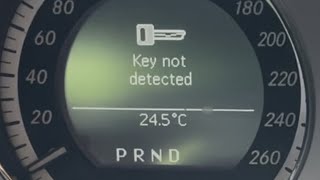
- Verify immobilizer function. When you insert the key, do you hear the steering lock disengage with a 'whirring' sound? Does the key turn? If not, suspect an EIS/ESL issue. Try your spare key.
- Verify fuel delivery. Turn the key to position 2 and listen for the fuel pump to prime for 1-2 seconds from the rear seat area. If there's no sound, check the fuel pump fuse (Fuse 23 in rear SAM) and relay.
- If possible, check fuel pressure at the fuel rail with a gauge to confirm the pump is working correctly.
- Check for an RPM signal on your scanner while cranking the engine. If you see 0 RPM, the crankshaft position sensor is the most likely cause.
- If the engine does not crank at all, listen for a click from the starter relay in the front fuse box when the key is turned. If it clicks, check for power at the starter motor. If it doesn't click, the problem is likely upstream (EIS, SAM).
- If the above steps do not identify the issue, the problem may be more complex (e.g., ECM failure, wiring harness damage) and require professional diagnosis with specialized equipment.
Parts You'll Likely Need
- Crankshaft Position Sensor
(OEM #A6429050000 (for OM642 Diesel), A2729050000 (for M272/M273 Gas))— This is the most common cause of a crank-no-start condition on this platform. Part number varies by engine; verify with VIN.
Trusted brands: Bosch, Genuine Mercedes-Benz, VDO
OEM price range: $90-$180
Aftermarket price range: $40-$100 - Fuel Pump Assembly
(OEM #A2124701394)— A failed fuel pump results in no fuel pressure, causing a no-start. Part number varies by engine and model year; verify with VIN.
Trusted brands: Bosch, Genuine Mercedes-Benz, VDO, Pierburg
OEM price range: $300-$600
Aftermarket price range: $200-$450
Related Codes That Often Appear With This One
- P0335 — P0335 indicates a fault in the Crankshaft Position Sensor circuit. If you see this with P1604, the CPS is almost certainly the cause of the no-start.
- P0087 — P0087 means 'Fuel Rail/System Pressure - Too Low'. Seeing this with P1604 points directly to a fuel delivery problem, such as a failing fuel pump or clogged filter.
- P008A — P008A indicates 'Low Pressure Fuel System Pressure - Too Low', also pointing directly to a fuel delivery issue, often the in-tank pump or its control module.
- B1000, B1703 — These are Mercedes-specific codes related to the Electronic Ignition Switch (EIS) and Electronic Steering Lock (ESL). They will not be visible on a standard OBD-II scanner but indicate the no-start is due to an immobilizer/drive authorization failure.
Platform-Specific Known Issues
- Fuel Pump Control Module Location: → Shop Fuel Pump The Fuel Pump Control Module (FPCM) is a common failure point that can cause a crank-no-start. It is located in the trunk, on the right side, behind the trim panel. It's a small silver box that can overheat and fail, cutting power to the fuel pump.
- EIS/ESL 'No Crank' Failure: A very common W212 issue is the failure of the Electronic Ignition Switch or Electronic Steering Lock. The primary symptom is inserting the key and turning it, but the engine does not crank at all. You may also notice the steering wheel does not unlock. This is not a DIY repair and requires a specialist.
Mechanic-Grade Diagnostic Values
- Crankshaft Position Sensor (CPS) resistance — expected: 700-1200 Ω (Ohms) when cool.. Failure: A reading of 0 ohms indicates a short, while a very high or open-circuit reading (Megaohms) indicates failure. Some failing sensors only go out of spec when hot.
- Low-Pressure Fuel System (In-tank pump) — expected: 4.5 to 5.5 Bar (65 to 80 PSI) at idle.. Failure: Pressure below 4.1 Bar (60 PSI) during cranking or at idle indicates a weak fuel pump, clogged filter, or faulty fuel pump control module.
- High-Pressure Fuel System (Direct Injection models, M276/M278) — expected: Around 120-200 Bar (1740-2900 PSI) depending on load.. Failure: Significantly lower pressure during cranking, often accompanied by code P0087, points to a high-pressure fuel pump (HPFP) failure.
- Battery Voltage During Cranking — expected: Should remain above 10.0V.. Failure: A drop below 10.0V while the starter is engaged indicates a weak battery that cannot support the vehicle's electrical modules, potentially causing a no-start even if the engine turns over.
Hidden / Shadow Codes Worth Checking
- P1630: Drive Authorization Signal. This is a manufacturer-specific code indicating a problem with the immobilizer system communication. It can mean the key is not recognized or there's a fault in the EIS, ESL, or ECM. (see via Requires a Mercedes-specific scanner like XENTRY, Autel, or Launch with MB software.)
- 910A (ASSYST PLUS): Invalid Drive Authorization Data. This code stored in the instrument cluster (A1) indicates a mismatch or replacement of control units like the EIS or instrument cluster without proper programming. (see via Requires a Mercedes-specific scanner to read codes from the Instrument Cluster module.)
Scan Tool Commands That Help
- XENTRY/STAR Diagnosis: Drive Authorization Status Check — This is the first step when a 'no-crank' condition is present. It checks the handshake between the key, EIS (N73), ESL (N26/5), and the ME-SFI (N3/10) engine control module to confirm each component has given its 'start enable' signal.
- XENTRY/STAR Diagnosis: Fuel Pump Actuation — To test the low-pressure fuel pump and its control module (FPCM) without needing to manually check for voltage at the pump. This command forces the pump to run, allowing a technician to verify its operation and check fuel pressure.
- XENTRY/STAR Diagnosis or equivalent (e.g., Autel, CGDI MB): EIS/ESL Programming/Virginizing — Required after replacing the Electronic Ignition Switch (EIS) or Electronic Steering Lock (ESL). A new unit must be coded to the vehicle's VIN and synchronized with the existing keys and engine computer. An emulator can also be programmed in place of a faulty ESL.
Wiring & Ground Locations
- W10 — Main battery ground point located on the front right strut tower in the engine bay.. A corroded or loose main ground can cause a variety of electrical issues, including insufficient voltage for control modules during a start attempt, leading to a no-start.
- Engine-to-Chassis Ground Strap — Typically a braided strap running from the engine block or transmission bell housing (driver's side) to the vehicle's chassis/frame rail.. This is the primary ground path for the starter motor. If this strap is broken or corroded, the starter may not get enough current to crank the engine, or it may crank very slowly.
- N10/1 (Front SAM) — The main fuse and relay box located in the engine compartment on the driver's side, near the firewall.. This module contains critical relays and fuses for the engine control module (ECM), starter (Relay K), and other systems required for starting. A fault within the SAM itself can cause a no-start.
- W16/4 — A ground point located under or near the battery tray in the engine compartment.. This serves as a ground point for various engine bay components. Poor contact here can lead to intermittent and hard-to-diagnose electrical faults.
Real Owner Repair Stories
- MBClub UK Forum User (2010 W212 E220) — Car would not start, just a single click from the engine bay when turning the key. The issue was intermittent at first, then became permanent.
❌ Tried (didn't work) Locking and unlocking the car, which worked initially but then stopped.
✅ What actually fixed it The user was advised to check for a click from the starter relay in the fuse box. Since a click was heard from the engine bay, the final diagnosis pointed to a failed starter motor, which was then replaced.
Model Year Variations Within This Range
- 2010-2013 (Pre-Facelift): These models were more prone to the mechanical failure of the Electronic Steering Lock (ESL) motor. Repair often involves replacing the motor inside the ESL unit or, more commonly, installing an ESL/ELV emulator which bypasses the mechanical lock entirely.
- 2014-2016 (Post-Facelift): Mercedes began phasing out the problematic mechanical ESL in favor of a more integrated electronic solution. While drive authorization issues can still occur, the specific failure of the separate ESL motor is less common on these later W212 models.
- Approx. 2012-2016: Introduction of the M276 (V6) and M278 (V8) direct-injection engines, replacing the M272/M273. These newer engines have different part numbers and locations for sensors like the CPS and have their own unique failure patterns, such as issues with high-pressure fuel pumps (HPFP), timing chain tensioners, and camshaft adjusters that can lead to starting problems.
Diagnostic Flowchart
Other Known Issues on This Vehicle
Issues unrelated to this code that are worth knowing about as an owner of this generation:
- Intake Manifold Lever/Flap Failure (M272/M273 V6/V8) 🟠 Medium — Common on pre-2012 models with the M272/M273 engine, typically over 80,000 miles. The plastic lever for the swirl flaps breaks.
- Rear AIRMATIC Suspension Air Spring Leaks 🟠 Medium — Very common on models equipped with rear or full air suspension, especially after 5-8 years. The rubber bags develop dry rot and leak, causing the rear of the car to sag overnight.
- Fading Interior Wood Trim 🟡 Low — Extremely common across all W212 models, particularly those exposed to sunlight. The wood trim on the center console and doors develops a milky, faded appearance. (Ref: TSB LI68.10-P-050113 (addresses replacing faded trim under warranty, now expired for most))
- Timing Chain Tensioner Rattle on Startup (M276 V6) 🟠 Medium — Affects early M276 engines (approx. 2012-2014). A brief rattle on cold start is caused by a lack of oil pressure at the tensioners. Mercedes issued updated parts (check valves, tensioners) to resolve it.
- Oil Leaks into Camshaft Position Sensor Harness (M276 V6) 🔴 High — A prevalent issue where oil seeps from the camshaft position sensors and wicks through the wiring harness, potentially damaging the engine control unit (ECU).
- Timing Chain Wear (OM651 Diesel) 🔴 High — The timing chain and its plastic guides can wear prematurely, typically between 80,000-120,000 miles, causing a rattle from the rear of the engine. If ignored, the chain can jump or snap, causing catastrophic engine damage.
Used vs. New Parts: Buying Guide for This Vehicle
When a used part is the smart pick: For purely mechanical components like a starter motor or alternator from a verified low-mileage donor vehicle, a used part can be a cost-effective option. Body control modules can also be sourced used, but require specialized programming to work.
Donor-vehicle mileage cap: roughly under 80000 miles for the part to have meaningful remaining life.
What to inspect on the donor part:
- For electronic modules, check for any signs of water damage or corrosion on the pins and connectors.
- For mechanical parts like a starter, look for minimal corrosion and check the date code if possible.
- Always try to get the VIN of the donor car to verify compatibility and check its history.
OEM-only on this vehicle (don't cheap out):
- Crankshaft Position Sensor (CPS): Aftermarket CPS units are notoriously unreliable on Mercedes-Benz vehicles and can fail quickly or be dead-on-arrival. Stick to Genuine Mercedes-Benz or the OEM supplier (Bosch/VDO).
- Electronic Ignition Switch (EIS) / Electronic Steering Lock (ESL): These are theft-relevant parts and must be purchased new from a dealer and programmed to the vehicle. Used units cannot be easily reprogrammed.
- Fuel Pump: While some high-quality aftermarket options exist (Bosch, Pierburg), cheap, unbranded fuel pumps have a very high failure rate and should be avoided to prevent being stranded again.
Aftermarket brands forum-validated for this vehicle:
- Bosch (Often the OEM supplier for fuel and electronic components)
- VDO (Also an OEM supplier for electronics)
- Pierburg (Known for high-quality fuel pumps)
Brands owners have reported issues with on this vehicle:
- Unbranded parts from eBay/Amazon
- URO Parts (Often cited on forums for poor quality control and premature failure on critical components)
Real Owner Stories
Aggregated from forums and TSBs cited above. Mileages and costs reflect what owners reported in those sources.
2014 Mercedes-Benz ML350 (M276 Engine)
Symptoms: The vehicle experienced a crank-no-start condition. The owner was advised to check the battery and fuses for potential wiring or sensor issues.
What fixed it: Diagnostic steps focused on checking the battery and fuses to identify potential wiring or sensor failures.
Source hint: MBWorld.org: Crank no start
2010-2016 Mercedes-Benz E-Class (W212)
Symptoms: The owner reported an intermittent P008A code and rough running engine, which are symptoms leading up to a total no-start condition.
What fixed it: Replacement of the Fuel Pump Control Module (Unit A0009000104).
Source hint: MBWorld.org: HELP: Fuel Pump Control Module Unit A0009000104
2010-2016 Mercedes-Benz E-Class (W212)
Symptoms: A sudden no-start condition with only a single click heard when attempting to start the vehicle.
What fixed it: Troubleshooting involved checking battery terminals (especially after recent service) and listening for the starter relay.
Source hint: MBClub.co.uk: W212 suddenly won't start
2010-2016 Mercedes-Benz E-Class (W212)
Symptoms: The vehicle would not crank or start for over a week. Diagnostic scans showed fault codes related to the drive authorization system.
What fixed it: The issue was identified as an EIS/ESL failure, requiring replacement or repair of the electronic ignition components.
Source hint: MBWorld.org: W212 NOT CRANKING OR STARTING BEEN OVER A WEEK NOW!
Related OBD-II Codes
Frequently Asked Questions
My 2010-2016 E-Class won't crank and the steering wheel won't unlock. Is this related to P1604?
Where is the Fuel Pump Control Module located on the W212 E-Class?
Which fuse should I check if I suspect a fuel delivery issue is causing my P1604 code?
Can a weak battery cause a P1604 startability code on a Mercedes E-Class?
How can I tell if my Crankshaft Position Sensor (CPS) is the reason my E-Class won't start?
Helpful Videos
Used OEM Parts in Stock
New Aftermarket Parts Available



The information in this article is provided for general reference and educational purposes only. Vehicle specifications, procedures, and part compatibility can vary by production date, trim level, and region. Always consult your vehicle's factory service manual and verify part numbers before purchasing or performing repairs. Safety-critical components such as airbags, seat belts, and braking systems should be installed by a qualified professional.
- Mercedes-Benz E-Class:
- 🧭 Diagnostic Flowchart
- 🎬 Helpful Videos
- 🛍️ Shop This Part
- What's Unique About the 2010-2016 Mercedes-Benz E-Class
- Symptoms You May Notice
- Most Likely Causes
- Rare But Worth Checking
- Diagnosis Steps
- Parts You'll Likely Need
- Related Codes That Often Appear With This One
- Platform-Specific Known Issues
- Mechanic-Grade Diagnostic Values
- Hidden / Shadow Codes Worth Checking
- Scan Tool Commands That Help
- Wiring & Ground Locations
- Real Owner Repair Stories
- Model Year Variations Within This Range
- Other Known Issues on This Vehicle
- Used vs. New Parts: Buying Guide for This Vehicle
- Real Owner Stories
- 2014 Mercedes-Benz ML350 (M276 Engine)
- 2010-2016 Mercedes-Benz E-Class (W212)
- 2010-2016 Mercedes-Benz E-Class (W212)
- 2010-2016 Mercedes-Benz E-Class (W212)
- Related OBD-II Codes
- Frequently Asked Questions
- 🎟️ Get 5% Off