

P1604 on 2008-2017 Mitsubishi Lancer: Understanding the 'Startability Malfunction' Code
P1604 on a Mitsubishi Lancer means the engine didn't start as quickly as the computer expected. This isn't a specific part failure, but a symptom. Start your diagnosis with the simplest causes: check your battery's health, test the starting/charging system relays, and ensure you have clean, sufficient fuel.
- P1604 means your Lancer failed to start properly, but it doesn't tell you why.
- Always check for other trouble codes first; they will provide the most important clues.
- Start your diagnosis with the easiest and most common culprits: a weak battery and low/bad fuel.
- Do not replace parts randomly. Follow a logical diagnostic sequence: Battery -> Fuel -> Spark -> Air.
- If the code appears by itself and the car starts and runs fine, it could be a historical code from a past event (like a nearly-dead battery). Clear the code and see if it returns.
What's Unique About the 2008-2017 Mitsubishi Lancer
For the 2008-2017 Mitsubishi Lancer, the P1604 code does not point to a single, well-known, platform-specific failure. Unlike some codes that have a notorious 'silver bullet' fix on certain models, P1604 remains a general starting-issue indicator. However, early models (especially 2008) were subject to a TSB for no-start conditions in cold weather due to freezing relays, which could present with a P1604. Additionally, some owners have reported issues with the ETACS (Electronic Total Automobile Control System) module, which controls the fuel pump relay, leading to starting problems. On many Lancer models of this generation, the fuel pump relay is integrated into the ETACS module and is not a separately replaceable component. Despite these specific instances, diagnosis must still begin with fundamental checks of fuel, spark, air, and battery.
Symptoms You May Notice
- Engine cranks for a long time before starting
- Engine cranks but does not start at all
- Engine starts and then immediately dies
- Check Engine Light is illuminated
- No-start is intermittent, sometimes happening in cold or damp weather.
- Replacing the starter motor when the engine is cranking normally. P1604 is not related to the starter's ability to crank the engine, but the engine's ability to fire up.
Most Likely Causes
- Weak or Failing Battery 🔴 High Probability → Shop Vehicle Battery Standard wear and tear; modern vehicle electronics are sensitive to low voltage during startup. A weak battery can cause the engine to crank slowly, exceeding the ECM's expected start time.
How to confirm: Test the battery voltage with a multimeter. A healthy, fully charged battery should read around 12.6V with the engine off. Perform a load test to check its cranking ability. Many auto parts stores offer free battery testing.
Typical fix: Replace the battery and clean the terminals.
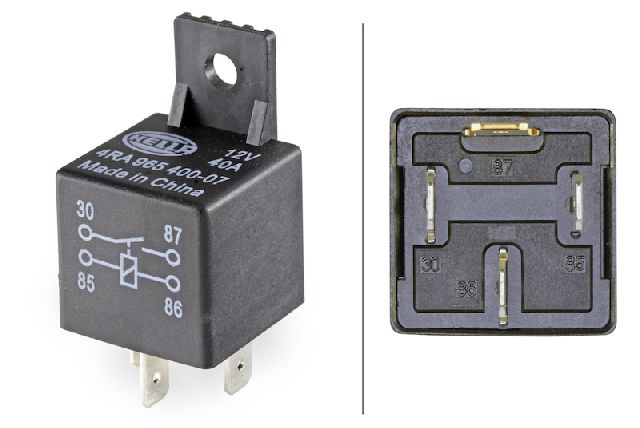
Est. part cost: $150-$300 - Faulty Power Relays 🔴 High Probability Early production Lancers (especially 2008 models) were subject to TSB-07-13-010 and TSB-19-13-003, which addressed no-start conditions caused by condensation freezing inside the main engine, starter, and fuel pump relays. This issue can occur even in moderately cold or damp conditions. A recall (SR-17-005) was also issued for defective relays in 2015-2016 Lancers that could cause stalling or overheating.
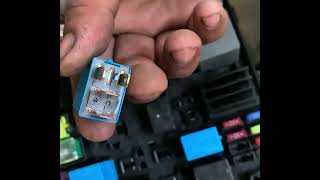
How to confirm: Check the vehicle's build date and cross-reference with TSBs. During a no-start event, swap a suspect relay (e.g., the fuel pump relay) with a known good, identical relay from a non-critical system (like the horn) to see if the car starts.
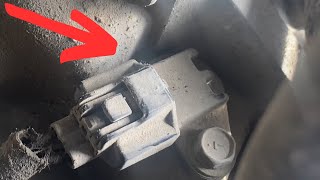
Typical fix: Replace the original black-cased relays with the updated, modified blue-cased, 🎬 Watch: Locate and replace your starter relay anti-freezing type relays. Mitsubishi part number for the updated relay is often cited as 8627A030.
Est. part cost: $10-$30 per relay - Fuel Delivery Issue 🟡 Medium Probability Fuel pumps and filters have a finite lifespan and can fail or degrade over time. The fuel pump relay is integrated into the ETACS module on some models, which can be a point of failure.
How to confirm: Listen for the fuel pump priming (a faint hum from the rear of the car) when you turn the key to the 'ON' position. Use a fuel pressure gauge to verify that the pressure meets the manufacturer's specifications during cranking.
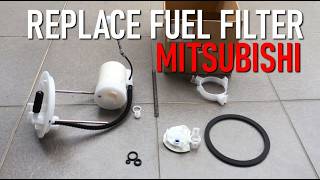
Typical fix: Replace the fuel pump assembly or the fuel filter. 🎬 See how to change the fuel pump and filter If the ETACS is diagnosed as the fault, it may require replacement and reprogramming.
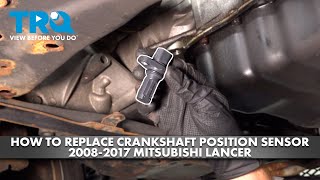
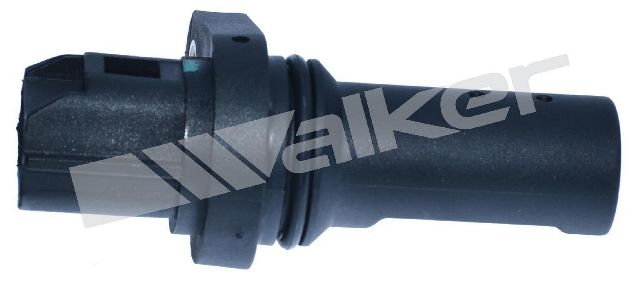
Est. part cost: $400-$900 for a pump, $100-$250 for a filter - Faulty Crankshaft Position Sensor (CKP) 🟡 Medium Probability → Shop Engine Crankshaft Position Sensor The CKP sensor is critical for ignition timing. If it fails, the ECM won't know the engine's rotation and won't command spark or fuel injection. Heat and vibration can cause these sensors to fail over time.
How to confirm: Scan for other codes that might point to the CKP sensor (like P0335). A more definitive test involves checking the sensor's output signal with an oscilloscope during cranking. A lack of signal is a clear indicator of failure.
Typical fix: Replace the crankshaft position sensor. 🎬 Watch: Crankshaft position sensor location and replacement guide
Est. part cost: $50-$150 - Immobilizer/Security System Error ⚪ Low Probability
How to confirm: Observe the security light on the dashboard when trying to start the car. If it's flashing or stays on, the system may not be recognizing your key. Try a spare key to rule out a bad key transponder. A fault in the KOS (Keyless Operation System) or ETACS can also cause this.
Typical fix: Reprogramming keys or replacing security system components, often requiring a dealer or specialized locksmith with tools like the MUT-III.
Est. part cost: $100-$500+
Rare But Worth Checking
- Faulty ETACS Module: The ETACS (Electronic Total Automobile Control System) controls various body and electrical functions, including, crucially, the fuel pump relay. A failure within this module can prevent the fuel pump from activating, leading to a no-start that can log P1604. Some owners have traced no-start issues to a bad fuel pump relay *inside* the ETACS. A recall was also issued for 2009-2010 models for an ETACS manufacturing defect that could cause voltage instability and loss of lights/wipers.
- Faulty Engine Control Module (ECM): → Shop Engine Control Module (ECM) This is a last-resort diagnosis. The ECM is a robust component and rarely fails. All other possibilities, including wiring and grounds, should be exhaustively checked before condemning the ECM.
- Clogged Air Filter or MAF Sensor Issue: While less common for a no-start, a severely clogged air filter or a malfunctioning Mass Air Flow (MAF) sensor can disrupt the air-fuel mixture enough to prevent a start.
Diagnosis Steps
- Scan for All Codes: Use an OBD-II scanner to check for any other codes stored alongside P1604. These codes are your best clues.
- Check the Basics: Is there fuel in the tank? Is the battery fully charged and are the terminals clean and tight?
- Test Battery Health: Perform a load test on the battery. A weak battery is a very common cause.
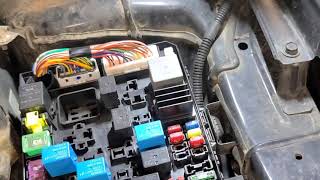
- Inspect Relays: Check for recalls (SR-17-005) or TSBs (TSB-07-13-010) related to your vehicle's year. If applicable, inspect and replace the main, starter, and fuel pump relays with the updated blue versions.
- Verify Fuel Delivery: Listen for the fuel pump priming. If possible, check fuel pressure to ensure it's within spec.
- Check for Spark: Use a spark tester to confirm the ignition system is generating a spark.
- Inspect Air Intake System: Check the air filter and ensure the intake path is not obstructed. Clean the MAF sensor if it appears dirty.
- Check Crankshaft/Camshaft Sensors: Test the output of these sensors if fuel and spark are present but the engine still won't start.
- Inspect Wiring: Look for any damaged or corroded wiring and grounds, especially for the ECM and critical sensors.
- Consult a Professional: If the basic checks do not reveal the problem, the issue may be more complex (e.g., ETACS module) and require advanced diagnostic tools like a MUT-III scanner.
Parts You'll Likely Need
- Battery — A weak battery is a frequent cause of starting issues and can trigger a P1604 code due to low voltage during cranking.
Trusted brands: Interstate, DieHard, Duralast
OEM price range: $200-$350
Aftermarket price range: $150-$300 - Multi-Purpose Relay
(OEM #8627A030 (Updated Blue Relay))— A known issue on early models involves original relays failing in cold/damp weather, causing a no-start. Replacing with the updated part is a common, inexpensive fix.
Trusted brands: Mitsubishi Genuine, Standard Motor Products
OEM price range: $20-$35
Aftermarket price range: $10-$25 - Fuel Pump Assembly
(OEM #1760A298)— A failing fuel pump won't provide adequate pressure for the engine to start, leading to a long crank or no-start condition.
Trusted brands: Denso, Bosch, Delphi
OEM price range: $500-$700
Aftermarket price range: $200-$450 - Crankshaft Position Sensor
(OEM #1865A126)
Related Codes That Often Appear With This One
- P0335 — Indicates a problem with the Crankshaft Position Sensor circuit, a common cause for no-start conditions that trigger P1604.
- P0171/P0172 — Fuel trim codes (System Too Lean/Rich) may be stored from failed starting attempts, indicating a potential fuel delivery or air measurement problem.
- U-codes (e.g., U1417) — Communication codes (U-codes) may appear if there is an issue with the immobilizer system (KOS) or a broader network problem between modules like the ETACS and ECM, preventing authorization for the start.
- P0657, P1590, U0101 — These codes are specifically mentioned in TSB-07-13-099 related to the freezing relay issue on early models, indicating faults with actuator supply voltage, starter communication, and lost communication with the TCM.
Technical Service Bulletins (TSBs) & Recalls
- TSB-07-13-010 / TSB-19-13-003: Addresses no-start conditions in extreme cold due to frozen relays on early model Lancers. Instructs replacement of original relays with modified anti-freezing types.
- SR-17-005: A safety recall for 2015-2016 Lancers involving defective relays that could cause engine stalling or overheating.
- SR-15-004 / TSB-15-13-003R: A safety recall and TSB for 2009-2010 Lancers concerning a faulty ETACS ECU that could cause voltage instability, leading to loss of headlights and wipers.
Platform-Specific Known Issues
- source — A well-documented issue covered by TSB-07-13-010 and TSB-19-13-003. Condensation can freeze inside the original black-cased engine control relays, preventing them from operating in cold weather. This leads to an intermittent no-start or long crank. The fix is to replace the affected relays with updated blue-cased versions. Forum users on EvolutionM.net have extensively discussed this, confirming the TSB resolves the issue for many.
- source — Some owners have traced a no-start condition to the failure of the fuel pump relay, which is integrated into the ETACS module. This is a more complex and expensive repair than a standard relay. Symptoms can be a consistent no-start with no sound from the fuel pump. A user on mitsubishi-forums.com detailed a complex diagnostic journey involving multiple ETACS modules and reprogramming efforts to solve a no-start.
Mechanic-Grade Diagnostic Values
- Fuel Pressure at Idle (Vacuum Hose Connected) — expected: ~38-40 PSI. Failure: Significantly lower pressure indicates a weak pump, clogged filter, or faulty regulator.
- Fuel Pressure at Idle (Vacuum Hose Disconnected & Plugged) — expected: ~43.5-47 PSI. Failure: If pressure does not rise to this level, the fuel pump or pressure regulator is likely faulty.
- Crankshaft Position Sensor (CKP) Power Supply Voltage — expected: 4.9 - 5.1 V (at Pin 1 of sensor connector, key on, engine off). Failure: No voltage or incorrect voltage points to a wiring or ECM issue, not necessarily a bad sensor.
- Crankshaft Position Sensor (CKP) Ground Circuit — expected: Near 0 Ω resistance between Pin 2 of the sensor connector and chassis ground.. Failure: High resistance indicates a bad ground path, which will cause the sensor to malfunction.
- Camshaft Position Sensor Resistance (when applicable) — expected: 33-40 Ω (when a metal object is near the sensor tip). Failure: Readings outside this range or an 'Over Limit' reading that doesn't change suggests a faulty sensor.
Scan Tool Commands That Help
- Mitsubishi MUT-III: Actuator Test - Fuel Pump Drive — This command allows a technician to directly activate the fuel pump circuit, bypassing the normal key-on sequence. If the pump runs with this command but not when turning the key, it helps isolate the problem to the control side (ECM, ETACS, wiring) rather than the pump itself.
Wiring & Ground Locations
- ECM Ground — The Engine Control Module (ECM) and its associated sensors ground to the engine block and chassis at several points. A key ground point is often located on the intake manifold.. A poor ECM or sensor ground can cause erratic sensor readings (like from the crank sensor) or interfere with the ECM's ability to properly control spark and fuel, leading to a no-start condition.
- Main Engine Bay Grounds — There are primary chassis ground points on both the left (driver) and right (passenger) side front frame rails in the engine bay, often near the strut towers. One is typically near the timing belt cover.. These are the main grounding points for many engine bay components, including the fuse/relay box. Corrosion or a loose connection at these points can cause widespread electrical issues, including relay and module failures that trigger P1604.
- ETACS-ECU Connector C-314 (Terminal 1) — This is the output pin from the ETACS module that sends power to the fuel pump.. When diagnosing a no-start where the fuel pump is suspected, a technician can test for voltage at this pin to determine if the ETACS is commanding the pump to turn on. A lack of voltage here points to an internal ETACS or control-side issue.
Real Owner Repair Stories
- EvolutionM Forum User (2002 Lancer ES) — Car cranks but will not start. Threw codes for both the Camshaft Position Sensor and the Crankshaft Position Sensor simultaneously.
❌ Tried (didn't work) Letting the car dry out in a garage after a snowstorm, suspecting moisture was the issue.
✅ What actually fixed it The user suspected a common cause for both codes rather than two simultaneous sensor failures. While the final post is not a definitive "I fixed it by doing X," the strong implication from other users was to check for power and signal at both sensors, as a shared power or ground issue (or a timing belt problem) is a more likely cause for both codes appearing at once than two independent sensor failures.
OEM Part Supersession History
8627A011, MR515993, and others→8627A030 (Blue Case Relay)— The original black-cased relays were prone to failure from internal moisture freezing in cold/damp conditions, leading to a no-start. The 8627A030 is an updated, anti-freezing design.
Model Year Variations Within This Range
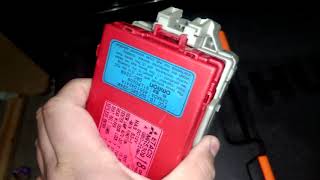
- 2008-2017 (Varies by trim/market): The location of the fuel pump relay. On some models, particularly Ralliart and Evo trims, it is a serviceable relay in the under-hood fuse box. On many base and ES/GTS models, the fuel pump relay is integrated into the ETACS-ECU (located behind the interior fuse panel) and is not designed to be replaced separately.
Diagnostic Flowchart
Other Known Issues on This Vehicle
Issues unrelated to this code that are worth knowing about as an owner of this generation:
- CVT Transmission Problems 🔴 High → Shop Transmission Assembly — Commonly reported, especially on higher mileage vehicles. Can manifest as shuddering, hesitation, whining, or complete failure. A class-action lawsuit was filed regarding these issues. (Ref: SR-16-006 was a recall to reprogram the CVT control unit for hesitation issues on 2016 models.)
- Clear Coat Peeling/Paint Failure 🟡 Low — Widespread cosmetic issue, particularly on dark and red colored cars. The clear coat begins to cloud, bubble, and then peel, especially on horizontal surfaces like the roof and trunk.
- Front Crossmember Corrosion 🔴 High — Affects vehicles in regions that use road salt. The front crossmember can rust severely, potentially leading to the detachment of a lower control arm. (Ref: Recall SR-20-003 was issued for 2008-2010 Lancers in salt-belt states to inspect and either treat or replace the crossmember.)
- ETACS Module Failure 🟠 Medium — Reported on 2009-2010 models. A manufacturing defect could cause high internal resistance, leading to voltage instability and failure of headlights, wipers, and other electronics. (Ref: Recall SR-15-004 / TSB-15-13-003R)
- Faulty Power Relays 🟠 Medium — Common on 2008 models (freezing issue) and 2015-2016 models (defective from factory). Can cause intermittent no-starts, stalling, or engine overheating. (Ref: TSB-07-13-010 (freezing); Recall SR-17-005 (defective))
Used vs. New Parts: Buying Guide for This Vehicle
When a used part is the smart pick: For complex electronic modules like the ETACS or a complete fuse box assembly, a used part from a reputable salvage yard can offer significant cost savings. These parts have a low failure rate from simple wear, so a used unit is often a viable option if it comes from a vehicle with no reported electrical issues.
Donor-vehicle mileage cap: roughly under 120000 miles for the part to have meaningful remaining life.
What to inspect on the donor part:
- Check for any signs of water intrusion or corrosion on the connectors and housing.
- Ensure the donor vehicle was not in a flood or involved in a front-end collision that could have damaged the module.
- If possible, match part numbers exactly, as there can be variations based on trim and model year.
- For an ETACS module, be aware that it may need to be reprogrammed to your vehicle's keys and options by a dealer or a specialist with a MUT-III tool.
OEM-only on this vehicle (don't cheap out):
- Crankshaft Position Sensor: While cheaper aftermarket options exist, forum members and mechanics strongly recommend using OEM or OEM-supplier (Denso, NGK/NTK) sensors for this critical part. Cheap aftermarket sensors for this application have a high rate of premature failure or being dead-on-arrival.
Aftermarket brands forum-validated for this vehicle:
- Relays: Standard Motor Products, Bosch
- Fuel Pumps: Denso, Bosch, Delphi
Brands owners have reported issues with on this vehicle:
- Unbranded or 'white-box' crankshaft and camshaft position sensors from online marketplaces are frequently reported to fail quickly.
Real Owner Stories
Aggregated from forums and TSBs cited above. Mileages and costs reflect what owners reported in those sources.
2008 Mitsubishi Lancer
Symptoms: The car experienced a no-start problem during cold weather, which was a known issue for early owners of the 2008 model year.
What fixed it: Replacing the original black-cased engine control relays with updated blue-cased versions as prescribed by the TSB.
Source hint: evolutionm.net thread 'official-tsb-2008-lancers-no-start-problem.html'
2008 Mitsubishi Lancer
Symptoms: A consistent no-start condition where the fuel pump made no sound, leading to a complex diagnostic journey involving the fuel pump relay control.
What fixed it: Tracing the fault to the ETACS module and fuel pump relay control, which required ETACS replacement and reprogramming.
Source hint: evolutionm.net thread 'etacs-ecu-problems-help-appreciated.html'
Related OBD-II Codes
Frequently Asked Questions
My 2008 Lancer won't start in cold weather; is there a specific TSB for this?
What is the recommended fix for the freezing relay issue on the Lancer?
Is there a recall for stalling issues on newer 2015-2016 Lancer models?
Could a problem with my headlights and wipers be related to my Lancer's startability issues?
I've replaced my relays but my 2008 Lancer still won't start. What else could it be?
Can a weak battery trigger the P1604 code on a Mitsubishi Lancer?
Helpful Videos

We Have This Part in Stock




The information in this article is provided for general reference and educational purposes only. Vehicle specifications, procedures, and part compatibility can vary by production date, trim level, and region. Always consult your vehicle's factory service manual and verify part numbers before purchasing or performing repairs. Safety-critical components such as airbags, seat belts, and braking systems should be installed by a qualified professional.
- Mitsubishi Lancer:
- 🧭 Diagnostic Flowchart
- 🎬 Helpful Videos
- 🛍️ Shop This Part
- What's Unique About the 2008-2017 Mitsubishi Lancer
- Symptoms You May Notice
- Most Likely Causes
- Rare But Worth Checking
- Diagnosis Steps
- Parts You'll Likely Need
- Related Codes That Often Appear With This One
- Technical Service Bulletins (TSBs) & Recalls
- Platform-Specific Known Issues
- Mechanic-Grade Diagnostic Values
- Scan Tool Commands That Help
- Wiring & Ground Locations
- Real Owner Repair Stories
- OEM Part Supersession History
- Model Year Variations Within This Range
- Other Known Issues on This Vehicle
- Used vs. New Parts: Buying Guide for This Vehicle
- Real Owner Stories
- 2008 Mitsubishi Lancer
- 2008 Mitsubishi Lancer
- Related OBD-II Codes
- Frequently Asked Questions
- 🎟️ Get 5% Off