

P1604 on 2009-2014 Nissan Murano: Startability Malfunction Causes and Fixes
P1604 means your Murano is cranking but not starting properly. This is often a secondary code. The most likely causes are a failing crankshaft position sensor, a weak fuel pump, or a dying battery. Always check for other codes to pinpoint the real problem.
- P1604 is a general code for a starting problem; you must look for other codes to find the specific fault.
- The most likely culprits on a 2009-2014 Murano are a bad crankshaft position sensor, a weak fuel pump, or a failing battery.
- Pay attention to the security light on the dash—if it stays on or flashes while cranking, the problem is your anti-theft system.
- Start your diagnosis with the simplest things: check the battery health and look for other trouble codes before replacing any parts.
What's Unique About the 2009-2014 Nissan Murano
For the second-generation (Z51) Murano, the P1604 code doesn't point to a single, unique design flaw. Instead, it reflects a failure in one of the fundamental systems required for starting. Owner and technician experiences with Muranos and other Nissans using the VQ35DE engine suggest that crankshaft position sensors and their wiring are a common point of failure leading to long crank or no-start conditions. Additionally, issues with the fuel pump or the NATS (Nissan Anti-Theft System) immobilizer can also be culprits. The code is essentially the ECM's final report that a start attempt failed after ruling out more specific component faults it can detect.
Symptoms You May Notice
- Engine cranks for a long time before starting
- Engine cranks but does not start at all (crank-no-start)
- Engine starts and then immediately stalls 🎬 Watch: Troubleshooting a Murano that starts and then quits.
- Check Engine Light is illuminated
- Security light may be flashing or solid during cranking (if immobilizer related)
- Replacing the starter motor when the engine is cranking strongly. If the engine is turning over at a normal speed, the starter is likely not the cause of the P1604 code.
- Replacing ignition coils or spark plugs without evidence of a misfire. While possible, a complete no-start is more often related to fuel, spark timing (crank sensor), or a dead battery rather than just worn plugs.
Most Likely Causes
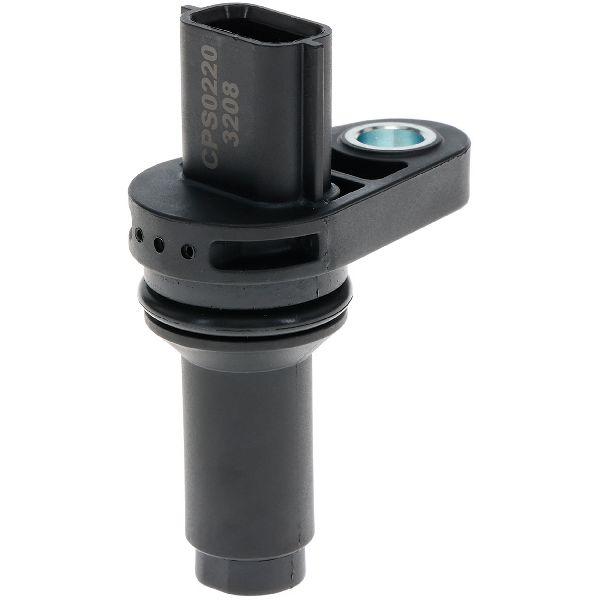
- Failing Crankshaft Position Sensor (CKP) 🔴 High Probability → Shop Engine Crankshaft Position Sensor Crankshaft sensors are a known high-failure item on many Nissan models with the VQ35DE engine, affecting 8-12% of engines at higher mileage. Oil leaks from the rear valve cover gasket are common and can drip directly onto the sensor or its connector, causing contamination and premature failure.
How to confirm: Scan for a companion code like P0335 (Crankshaft Position Sensor Circuit Malfunction). Use a scan tool to check for engine RPM while cranking; if it reads zero or is erratic, the sensor or its circuit is the likely fault. The sensor is located on the back of the engine block where it meets the transmission bell housing.
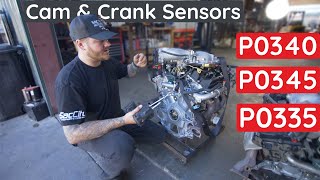
Typical fix: Replace the crankshaft position sensor. 🎬 Watch: How to remove the crankshaft and camshaft position sensors. It is highly recommended to use an OEM or OEM-quality (Hitachi, Denso) sensor, as aftermarket sensors have a high failure rate. Inspect the wiring harness for damage or oil contamination and clean the connector.
Est. part cost: $40-$120 - Weak or Failing Fuel Pump 🔴 High Probability → Shop Fuel Pump The fuel pump is a common failure point on most vehicles as they age, and it directly leads to a no-start or hard-start condition which triggers P1604.
How to confirm: Listen for a 2-second humming sound from the rear seat area when the key is turned to the 'ON' position; a lack of sound suggests the pump isn't priming. The definitive test is to connect a fuel pressure gauge to the fuel rail and verify the pressure is within Nissan's specification (typically around 51 psi).
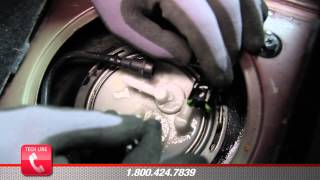
Typical fix: Replace the in-tank fuel pump module. Access is typically under the rear seat cushion. 🎬 See this DIY guide for replacing the fuel pump easily.
Est. part cost: $150-$350 - Weak Battery or Poor Electrical Connection 🟡 Medium Probability → Shop Vehicle Battery All vehicles are susceptible to battery failure after 3-5 years. The Murano's electronics require a strong, stable voltage to operate correctly during startup. A weak battery can cause voltage to drop too low during cranking, confusing the ECM.
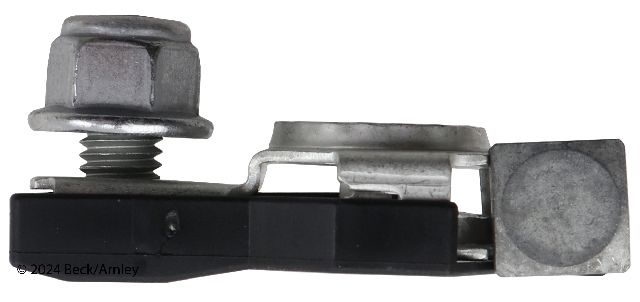
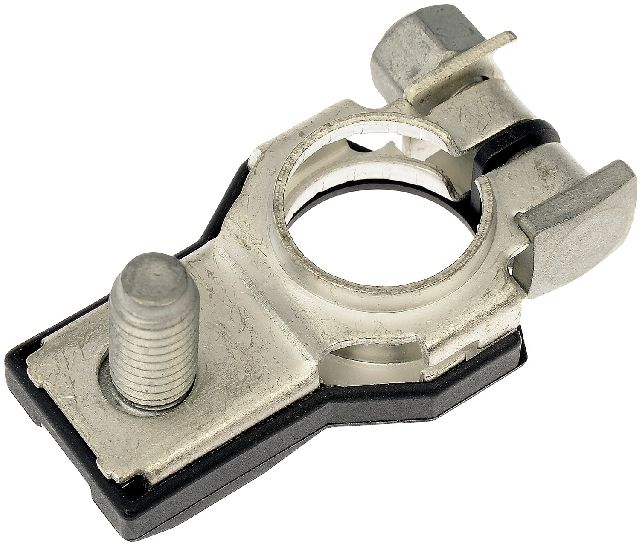
How to confirm: Test the battery voltage with a multimeter. A healthy battery should read about 12.6 volts with the engine off and 13.7-14.7 volts when running. Check for slow, labored cranking. Inspect battery terminals for corrosion and ensure they are tight. A loose or corroded ground cable is a common culprit.
Typical fix: Clean the battery terminals and cable ends, or replace the battery if it fails a load test.
Est. part cost: $150-$250 - Nissan Anti-Theft System (NATS) / Immobilizer Fault ⚪ Low Probability NATS can sometimes fail to recognize a valid key due to a faulty key transponder, a bad antenna ring around the ignition switch, or a BCM/ECM communication issue, preventing the engine from starting.
How to confirm: Observe the red security light on the dashboard when you try to start the engine. If the light stays on solid while cranking, it indicates an immobilizer issue. The car will crank but the ECM will not allow fuel injection or spark.
Typical fix: Try a different key first. If that fails, diagnosis by a dealer or a locksmith with Nissan-specific tools (like CONSULT) is usually required to reprogram keys or replace components like the BCM or ECM.
Est. part cost: $200-$1000+
Rare But Worth Checking
- Clogged Fuel Filter: The fuel filter is integrated into the fuel pump module. While less common than the pump motor failing, a severely clogged filter can restrict fuel flow and cause this code.
- Faulty Camshaft Position Sensor(s): While the crankshaft sensor is more critical for starting, a failed camshaft sensor can sometimes cause extended crank times before the ECM defaults to a backup strategy. This will usually be accompanied by a P0340 or P0345 code.
- Faulty Ground Straps or ECM Power Supply: → Shop Engine Ground Strap Corroded or broken engine-to-chassis ground straps can cause a variety of electrical issues, including no-start conditions. Similarly, a problem with the ECM's main power relay or fuse, often located in the IPDM (Intelligent Power Distribution Module), can prevent it from operating correctly and trigger a P1604.
Diagnosis Steps
- Scan for All Codes: Do not focus only on P1604. Look for other codes (like P0335, P0340, P0171) that will point to the specific faulty system.
- Check the Battery and Connections: Test the battery voltage (should be ~12.6V off, 13.7-14.7V running). Ensure terminals and main ground straps are clean, tight, and free of corrosion.
- Verify Immobilizer Status: Turn the key to 'ON' and watch the security light. If it remains lit solid when you crank the engine, the issue is with the NATS security system.
- Check for Crankshaft Sensor Signal: Use a scan tool to monitor Engine RPM (Tachometer) data while cranking. If it shows 0 RPM, the crankshaft position sensor or its wiring is the primary suspect.
- Test Fuel Pressure: If the crank sensor signal is present, check the fuel system. Listen for the fuel pump priming for 2 seconds at key-on. If possible, connect a fuel pressure gauge to the fuel rail to confirm it meets the ~51 psi specification.
- Inspect for Obvious Issues: Check for simple things like an empty fuel tank, contaminated fuel, or visible damage to engine wiring harnesses.
- Inspect Ignition System: If fuel and spark timing appear correct, perform a spark test to ensure the ignition coils are firing. This is a lower probability cause for a crank-no-start without misfire codes.
Parts You'll Likely Need
- Crankshaft Position Sensor
(OEM #23731-JA11B (supersedes 23731-JA11A))— This is a very common failure point on the VQ35DE engine that directly causes a no-start or long crank condition, triggering P1604.
Trusted brands: Hitachi (OEM), Denso, NTK
OEM price range: $80-$120
Aftermarket price range: $40-$70 - Fuel Pump Assembly
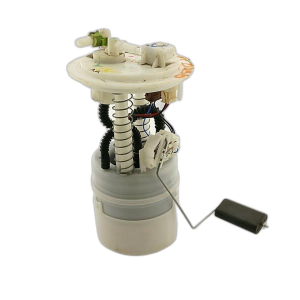
(OEM #17040-1AA0A)— A failed fuel pump results in no fuel pressure, which is a primary cause for a 'crank-no-start' condition.
Trusted brands: Bosch, Delphi, Spectra Premium
OEM price range: $300-$450
Aftermarket price range: $150-$250 - Vehicle Battery — A weak or dead battery cannot provide enough power to both crank the engine and run the vehicle's electronic systems, leading to starting issues.
Trusted brands: Interstate, DieHard, Duralast
OEM price range: $200-$300
Aftermarket price range: $150-$250
Related Codes That Often Appear With This One
- P0335 — This code for the crankshaft position sensor circuit is a direct cause of the engine not knowing when to fire, leading to a 'Startability Malfunction' (P1604).
- P0171 / P0174 — If a weak fuel pump is causing low fuel pressure, the engine may run lean, triggering these codes before it fails to start completely.
- P0340 / P0345 — These codes point to the camshaft position sensors. If the ECM receives conflicting data between the cam and crank sensors, it can result in a long crank or no-start condition.
Technical Service Bulletins (TSBs) & Recalls
- NHTSA ID: 10068031 / Nissan TSB ITB16-033: Addresses an issue on 2009 Muranos where the ABS Hydraulic Control Unit can malfunction, leading to a soft brake pedal. While not directly a cause of P1604, it's a significant known electrical/module issue on this platform.
- NHTSA Campaign ID: 17V184000 / Nissan TSB NTB17-036: A safety recall for 2013-2014 Muranos concerning a power steering hose clamp that can fail, causing a fluid leak and potential fire risk. This highlights a known quality issue with fluid-related components on this platform.
Platform-Specific Known Issues
- Crank Sensor Oil Contamination: On NissanMurano.org forums, multiple owners have documented that a common oil leak from the rear valve cover gasket drips directly onto the crankshaft position sensor, which is located below it on the transmission bell housing. This oil saturation is a leading cause of sensor failure and the resulting P1604/P0335 codes.
- Aftermarket Sensor Unreliability: Numerous threads on NICOCLUB and other Nissan forums warn against using aftermarket crankshaft or camshaft position sensors. These engines are notoriously sensitive to sensor quality, and using cheap parts often results in the code returning quickly or the new sensor being dead on arrival. Sticking to OEM or the original manufacturer (Hitachi) is strongly advised.
Mechanic-Grade Diagnostic Values
- Fuel Pressure (Key On, Engine Off) — expected: Approximately 51 psi (3.5 kg/cm²). Failure: Significantly lower pressure indicates a weak fuel pump, clogged filter, or faulty regulator. No pressure indicates a failed pump or relay.
- Crankshaft Position Sensor (POS) Resistance — expected: Nissan service procedures for the Hall-effect sensor used in this Murano do not rely on a resistance check. A resistance of 0 Ω or ∞ between any of the three terminals indicates a definite failure, but a 'good' resistance value is not a reliable indicator of function.. Failure: A definitive test requires checking for a signal with an oscilloscope or monitoring RPM on a scan tool while cranking.
- Crankshaft Position Sensor (POS) Connector Voltage — expected: With the key ON and connector unplugged: Pin 1 (Power) should have battery voltage. Pin 3 (Ground) should have continuity to chassis ground. Pin 2 is the signal wire.. Failure: Lack of voltage on Pin 1 or lack of ground on Pin 3 points to a wiring or ECM/IPDM issue, not a faulty sensor.
Scan Tool Commands That Help
- Nissan CONSULT: C/U Initialization — This function is mandatory after replacing the ECM. It registers the new ECM with the vehicle's NATS immobilizer system and keys. Failure to perform this will result in a crank-no-start condition.
- Nissan CONSULT or advanced bidirectional scanner: Fuel Pump Relay - Active Test — To verify the integrity of the fuel pump control circuit. This command allows the technician to manually turn the fuel pump on and off to confirm the relay, wiring, and pump motor are functional, bypassing the normal key-on trigger.
Wiring & Ground Locations
- E26 — At the lower right side of the engine compartment.. This is a primary ground point for the ECM. A corroded or loose connection at this location can cause a wide range of issues, including no-start and P1604.
- F84 — On the front of the engine.. This ground point serves the six ignition coils and the condenser. A fault here would lead to a lack of spark, causing a crank-no-start condition.
- M76 / M35 — M76 is behind the left end of the dash; M35 is behind the right end of the dash.. These are major interior ground points. The ECM, BCM, and various sensors rely on these grounds. For example, the ground for the crankshaft position sensor shield wire is connected through M76.
- IPDM E/R (Intelligent Power Distribution Module Engine Room) — In the engine bay, typically near the battery.. This module contains the non-serviceable ECM relay. If this internal relay fails, the ECM will not power up, causing a crank-no-start. The entire IPDM must be replaced if this relay is the fault.
Real Owner Repair Stories
- Nissan Forum user 'Scheib' (2014 Nissan Murano SL) — After the original battery died, it was replaced with a new one. The car would then crank strongly but would not start.
❌ Tried (didn't work) Replacing the battery.
✅ What actually fixed it The owner pulled the fuel pump fuse to check fuel pressure, which involves cranking the engine to relieve pressure. After re-installing the fuse, the car started and ran normally. The theory is that pulling the fuse and attempting to start 'reset' a glitched fuel pump circuit that occurred during the battery change.
OEM Part Supersession History
23731-JA11A→23731-JA11B— Improved design/materials to address premature failure, particularly heat-related intermittent issues.
Heads up: The new part (23731-JA11B) is a direct replacement for the old one. However, it is often recommended to replace all three position sensors (crank and both cams) at the same time, as a new sensor may have slightly different signal characteristics than the remaining old ones.
Model Year Variations Within This Range
- 2009 only: There is a critical production date split for the ECM. Models built through September 2008 use part #23710-1AA1D. Models built from October 2008 onward use a different ECM, such as #23710-1AL2A. Installing the incorrect ECM will result in a no-start condition as it will not communicate properly with the vehicle's other modules.
Diagnostic Flowchart
Other Known Issues on This Vehicle
Issues unrelated to this code that are worth knowing about as an owner of this generation:
- Continuously Variable Transmission (CVT) Failure 🔴 High → Shop Transmission Assembly — Very common, particularly in earlier years of the generation (2009-2012). Failures can occur before 100,000 miles, with symptoms like jerking, hesitation, and whining. (Ref: Nissan extended the warranty on some CVTs and issued TSBs for 'judder' issues (like P17F0/P17F1), often involving TCM reprogramming or full replacement.)
- Rear Subframe Corrosion 🔴 High — Common in regions using road salt. Rust can severely compromise the subframe, leading to knocking noises, poor alignment, and in extreme cases, suspension component separation. This was a known issue on prior Nissan models as well. (Ref: While earlier models had recalls/campaigns (P5216), many 2009-2014 owners report the issue without a formal recall covering their vehicle, leading to expensive out-of-pocket repairs.)
- Power Steering Hose Leak 🟠 Medium — Affects 2013-2014 models specifically. A hose clamp may be inadequate, allowing the hose to detach and leak fluid. (Ref: Nissan issued a safety recall (NHTSA Campaign #17V184000, Nissan Ref: R1710) and a TSB (NTB17-036) to replace the power steering high-pressure hose kit.)
- Brake System Problems (2009 Model Year) 🔴 High — The 2009 model year is noted for brake issues, including a soft pedal that goes to the floor, often attributed to a failing ABS actuator. (Ref: Nissan recalled some 2009 Muranos for an ABS Hydraulic Control Unit (HCU) issue (NHTSA ID: 10068031).)
- Timing Chain Guide/Tensioner Wear 🟠 Medium — A known issue on the VQ35DE engine, typically after 80,000-120,000 miles. Symptoms start with a brief rattle on startup that progressively gets longer. If ignored, it can lead to jumped timing and severe engine damage.
Used vs. New Parts: Buying Guide for This Vehicle
When a used part is the smart pick: For major electronic modules like the ECM (Engine Control Module) or BCM (Body Control Module), a used part from a donor vehicle with a matching part number can offer significant savings ($50-$150 used vs. $1000+ new). However, this is only viable if you have a plan for professional programming, as these parts are not plug-and-play.
Donor-vehicle mileage cap: roughly under 120000 miles for the part to have meaningful remaining life.
What to inspect on the donor part:
- Verify the part number EXACTLY matches your original part. For the 2009 ECM, check the vehicle production date.
- Inspect connectors for any signs of corrosion, bent pins, or water intrusion.
- When buying an ECM/BCM, ask the seller if it comes with the matching key and immobilizer components, as this can sometimes simplify programming.
- For a fuel pump assembly, listen for any rattling that could indicate broken internal components.
OEM-only on this vehicle (don't cheap out):
- Crankshaft Position Sensor
- Camshaft Position Sensors
Aftermarket brands forum-validated for this vehicle:
- Hitachi (OEM manufacturer for many Nissan electronics, including sensors)
- Denso (Sensors, Fuel Pumps)
- Bosch (Fuel Pumps)
Brands owners have reported issues with on this vehicle:
- Unbranded, 'white-box' crankshaft and camshaft position sensors. Forums are filled with stories of these failing immediately or within a few weeks, making the small initial savings a poor trade-off.
Real Owner Stories
Aggregated from forums and TSBs cited above. Mileages and costs reflect what owners reported in those sources.
2009 Nissan Murano VQ35DE
Symptoms: Engine cranks for a long time but will not start.
What fixed it: Replacing the crankshaft position sensor after checking for a P0335 companion code.
Source hint: NissanMurano.org - 'Crank but no start, P1604'
2009 Nissan Murano VQ35DE — ~125000 miles
Symptoms: Long crank followed by stalling; owner noticed oil leaks at the back of the engine.
What fixed it: Replacing the crankshaft sensor with an OEM Hitachi part and addressing a rear valve cover gasket leak that was saturating the sensor.
Source hint: Reddit r/MechanicAdvice - '09 Murano long crank then stalls, code P1604'
Related OBD-II Codes
Frequently Asked Questions
My 2009 Murano has a soft brake pedal; is this related to the P1604 start issue?
I see oil leaking near the back of the engine on my VQ35DE; could this cause my no-start condition?
Should I use an aftermarket crankshaft sensor to save money on my Murano repair?
How can I tell if my P1604 code is being caused by the Nissan Anti-Theft System (NATS)?
Is there a recall for my 2013 Murano that might involve fluid leaks?
Where is the fuel pump located on the 2009-2014 Murano if I need to replace it?
Helpful Videos


Used OEM Parts in Stock
New Aftermarket Parts Available


The information in this article is provided for general reference and educational purposes only. Vehicle specifications, procedures, and part compatibility can vary by production date, trim level, and region. Always consult your vehicle's factory service manual and verify part numbers before purchasing or performing repairs. Safety-critical components such as airbags, seat belts, and braking systems should be installed by a qualified professional.
- Nissan Murano:
- 🧭 Diagnostic Flowchart
- 🎬 Helpful Videos
- 🛍️ Shop This Part
- What's Unique About the 2009-2014 Nissan Murano
- Symptoms You May Notice
- Most Likely Causes
- Rare But Worth Checking
- Diagnosis Steps
- Parts You'll Likely Need
- Related Codes That Often Appear With This One
- Technical Service Bulletins (TSBs) & Recalls
- Platform-Specific Known Issues
- Mechanic-Grade Diagnostic Values
- Scan Tool Commands That Help
- Wiring & Ground Locations
- Real Owner Repair Stories
- OEM Part Supersession History
- Model Year Variations Within This Range
- Other Known Issues on This Vehicle
- Used vs. New Parts: Buying Guide for This Vehicle
- Real Owner Stories
- 2009 Nissan Murano VQ35DE
- 2009 Nissan Murano VQ35DE — ~125000 miles
- Related OBD-II Codes
- Frequently Asked Questions
- 🎟️ Get 5% Off