

P1604 on 2013-2016 Scion FR-S: Startability Malfunction Causes and Fixes
P1604 on a Scion FR-S means the engine is having trouble starting. It's a symptom code, not a specific part failure. The most common causes are a weak battery, fuel delivery issues (like a failing fuel pump), or simply running out of gas, which can happen even if the gauge shows fuel due to the car's saddle-style tank.
- P1604 means your FR-S failed to start properly, but it doesn't name the broken part.
- Always check for other trouble codes first; they will point to the real problem.
- The most likely culprits are a weak battery or a fuel delivery problem. Don't forget to check if you're simply out of gas.
- Due to the FR-S's saddle fuel tank, the car can run out of fuel even if the gauge shows it has some left. Adding a few gallons of gas is a simple and crucial first diagnostic step.
What's Unique About the 2013-2016 Scion FR-S
The Scion FR-S, a joint project with Subaru (BRZ), has a unique 'saddle' shaped fuel tank to accommodate the driveshaft. This design requires a transfer pump (jet pump) to move fuel from the passive side of the tank to the side with the main fuel pump. A failure in this system can lead to fuel starvation and a P1604 code, even when the fuel gauge shows a quarter tank or more. Additionally, because many of these cars are modified, issues related to aftermarket parts or recent major repairs (like a clutch replacement) can sometimes introduce problems that trigger this code.
Symptoms You May Notice
- Engine cranks but does not start
- Extended cranking time before the engine starts
- Engine starts and then immediately stalls
- Check Engine Light is on (though not always)
- In some cases, rough idle or inability to rev past a certain RPM if the car does manage to run.
- Replacing the starter motor when the engine is cranking normally. The P1604 code indicates a failure to *start*, not a failure to *crank*. If the engine is turning over, the starter is likely working.
Most Likely Causes
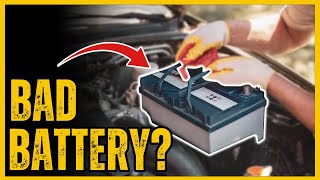
- Weak or Dying Battery 🔴 High Probability → Shop Vehicle Battery This is a common issue on all modern vehicles. The FR-S's electronics require a stable voltage during cranking. A weak battery can cause the voltage to drop too low, preventing the engine from starting properly and setting a 'ghost code'. One owner on the FT86Club forums reported a P1604 code when their battery failed at only 6,500 miles, reading under 8V.
How to confirm: Test the battery voltage with a multimeter. 🎬 Watch: Troubleshooting a crank-no-start condition on an FR-S. A healthy battery should read approximately 12.6 volts with the engine off and 13.7-14.7 volts when running. Most auto parts stores can perform a load test for free, which is a more definitive test of battery health.
Typical fix: Recharge or replace the battery.
Est. part cost: $150-$300 - Fuel Delivery Issue 🔴 High Probability The saddle-shaped fuel tank has a crossover pump that can fail, leaving fuel inaccessible on one side of the tank. This can cause the engine to starve for fuel even when the gauge reads partially full. A failing primary fuel pump is also a common cause.
How to confirm: Listen for the fuel pump to prime (a faint hum from the rear of the car) when you turn the key to the 'ON' position. A more definitive test is to check the fuel pressure at the rail using a fuel pressure gauge. The simplest first step is to add a few gallons of fresh gas to the tank, regardless of what the gauge reads.
Typical fix: Replace the failing fuel pump assembly or crossover pump. In some cases, the issue is simply running out of fuel.
Est. part cost: $150-$600 - Ignition System Fault 🟡 Medium Probability Worn spark plugs or failing ignition coils can cause a weak or inconsistent spark, making it difficult for the engine to start. This is a general maintenance issue not specific to the FR-S, but can still be a cause. Models from 2015-2016 received improved ignition coil packs from the factory.
How to confirm: Inspect spark plugs for wear, fouling, or damage. Test ignition coils for proper function. This is often accompanied by misfire codes (P030x).
Typical fix: Replace spark plugs and/or ignition coils as needed.
Est. part cost: $50-$200
Rare But Worth Checking
- Faulty Crankshaft or Camshaft Position Sensor: → Shop Engine Crankshaft These sensors tell the ECM the engine's speed and position. If they fail, the ECM won't know when to fire the spark plugs or injectors, leading to a no-start condition. This will usually be accompanied by a specific sensor fault code (e.g., P0017, P0018, P0019, P0335).
- Improperly Installed Aftermarket Parts: Poorly wired aftermarket alarms, remote starters, or audio equipment can interfere with the vehicle's starting circuits. An improperly seated O-ring on an aftermarket fuel pump has also been documented as a cause of lost fuel pressure and no-start conditions.
- Incorrectly Assembled Clutch Components: On manual transmission cars, a P1604 code was reported after a clutch job where the clutch timing plate (reluctor wheel) was misaligned 🎬 Watch: How a misaligned reluctor wheel causes stalling after clutch work., preventing the crankshaft position sensor from getting a correct reading. A forgotten ground strap between the transmission and chassis during reassembly can also cause a no-start with this code.
Diagnosis Steps
- Check for and diagnose any other stored DTCs first. P1604 is often secondary to another problem.
- Verify the fuel level. Do not trust the gauge implicitly; add a few gallons of fresh fuel to be certain.
- Check the battery. Ensure terminals are clean and tight. Test voltage and perform a load test.
- If the battery is good, check for fuel pressure. Listen for the pump priming. Use a fuel pressure gauge to verify it meets specification.
- Inspect the ignition system. Check for spark at the plugs. Inspect plugs for wear or fouling.
- Check the air intake system. Ensure the air filter is not clogged and the MAF sensor is clean. A very dirty throttle body can also contribute to stalling.
- If the car was recently worked on, carefully inspect all connections and components related to the repair, especially around the starter, grounds (transmission to chassis), and crankshaft position sensor.
- Review the freeze frame data for P1604. This provides a snapshot of sensor readings at the moment the fault occurred and can offer valuable clues.
Parts You'll Likely Need
- Fuel Pump Assembly
(OEM #SU003-07510 (replaces SU003-01018))— A failing fuel pump or fuel level sender is a primary cause of fuel delivery issues that trigger P1604 on this platform. The plastic housing can also crack over time, causing a dangerous fuel leak and loss of pressure. 🎬 See this step-by-step guide to replacing your fuel pump assembly.
Trusted brands: Toyota/Subaru Genuine, Denso, Delphi
OEM price range: $300-$410
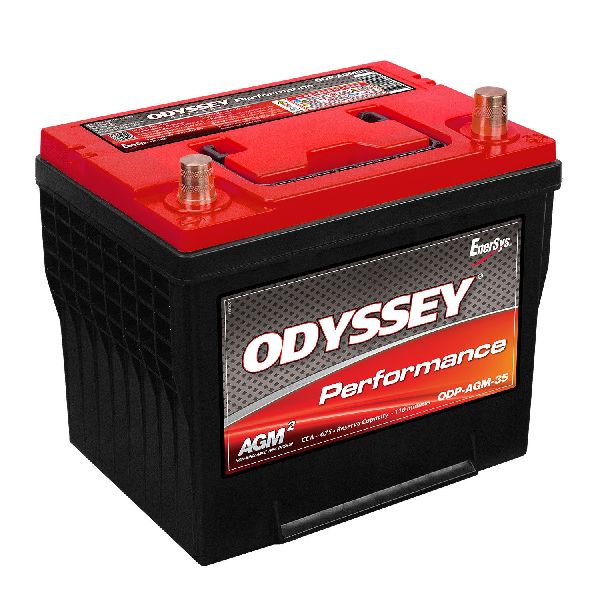
Aftermarket price range: $150-$350 - Battery — A weak battery is the simplest and often most common cause of starting-related trouble codes.
Trusted brands: Interstate, Deka, Optima
OEM price range: $200-$300
Aftermarket price range: $150-$250
Related Codes That Often Appear With This One
- P030x (e.g., P0300, P0301) — If the startability issue is caused by a lack of spark or fuel affecting specific cylinders, misfire codes may be logged.
- P0171/P0174 (System Too Lean) — If a failing fuel pump or clogged filter is causing low fuel pressure, the engine may run lean before it fails to start, logging these codes.
- P0019 (Crankshaft Position - Camshaft Position Correlation) — This can occur if there is an ECU mapping issue on early models or a mechanical timing issue (like a misaligned reluctor wheel after a clutch job) that also causes starting problems.
Technical Service Bulletins (TSBs) & Recalls
- Subaru TSB 11-130-13: Addresses issues including 'Difficulty Starting, Rough Idle, Cam Position or Misfire DTCs' on early models, which could be related to a P1604 event.
Platform-Specific Known Issues
- Owner Experience: Fuel Starvation with 1/4 Tank: An owner on FT86Club.com reported experiencing a P1604 code along with symptoms of fuel cut and an inability to rev past 3000 RPM. The car would crank but not start. The fuel gauge showed 1/4 tank. After adding more fuel to the tank, the car started successfully. The service center concluded there was an issue with the in-tank fuel system, highlighting the saddle tank issue where fuel becomes trapped on one side.
Mechanic-Grade Diagnostic Values
- High-Pressure Fuel Pump (HPFP) Resistance — expected: 0.45 - 0.55 Ω. Failure: A significantly higher reading, such as 1.7-1.9 Ω, indicates a potential internal fault in the pump.
- High-Pressure Fuel Rail Pressure at Idle — expected: Approximately 4 MPa (580 PSI). Failure: A significantly lower reading, such as 0.65 MPa (95 PSI), points to a severe issue with the high-pressure fuel system.
- Crankshaft Position Sensor Resistance — expected: 1836 - 2244 Ω (1.836 - 2.244 kΩ). Failure: A reading outside this range indicates a faulty sensor. However, a reading within spec does not rule out an intermittent failure or wiring issue.
- Low-Pressure Fuel Pump (In-Tank) Function — expected: Audible hum or vibration from the pump for a few seconds when the key is turned to 'ON'.. Failure: No sound from the pump. Can be confirmed by applying 12V directly to the pump terminals; if it doesn't run, it has failed.
Hidden / Shadow Codes Worth Checking
- Freeze Frame Data: While not a 'shadow code', P1604 requires analyzing the Freeze Frame data to be useful. This data captures a snapshot of all engine sensor values (fuel trims, engine speed, coolant temp, etc.) at the exact moment the startability fault was logged. It is the key to finding the root cause. (see via A professional scan tool like Toyota Techstream or an advanced OBD-II reader capable of displaying Freeze Frame data.)
Scan Tool Commands That Help
- Toyota Techstream: Read Freeze Frame Data — This is the primary diagnostic step for P1604. It allows a technician to see what the engine's sensors were reporting during the failed start attempt, pointing towards a fuel, spark, or air problem.
- Toyota Techstream / Advanced Scan Tool: Active Test: Fuel Pump / Fuel Pump Duty Control — To command the in-tank fuel pump to run without cranking the engine. This verifies the pump, relay, and wiring are functional. The FR-S uses a variable voltage fuel pump controller, which can also be monitored.
Wiring & Ground Locations
- Transmission Ground Strap — Connects the top, passenger side of the transmission bell housing to the chassis firewall/transmission tunnel.. This is a primary engine-to-chassis ground. It is frequently forgotten or improperly tightened after a clutch replacement, leading to a crank-no-start condition that can set a P1604 code.
- Engine Block Grounds — Two straps located at the front-bottom of the engine, one on each side, connecting the block to the frame rails.. These provide grounding for engine sensors and components. Corrosion or looseness can cause erratic sensor readings and starting issues.
- Fuel Pump Power Wire — At the fuel pump assembly connector under the rear seat. The positive trigger wire from the Fuel Pump Driver Module (FPDM) is typically Green.. Used to test for voltage at the fuel pump during cranking or via an active test to diagnose a no-fuel issue.
Real Owner Repair Stories
- YouTube channel 'golden Wrench' (2013 Scion FR-S) — Strong fuel smell while driving, fuel leak.
✅ What actually fixed it The entire fuel pump assembly was replaced. The original unit's plastic housing had developed a crack, causing a fuel leak and loss of pressure, which could lead to a no-start and P1604. - YouTube channel 'BRZSer' (2013 Subaru BRZ (modified with turbo)) — Car would not start when fuel was at 1/4 tank, leaning issues under load, eventually leading to a crank-no-start.
❌ Tried (didn't work) Searching for vacuum leaks, Searching for boost leaks, Searching for exhaust leaks
✅ What actually fixed it The O-ring on the aftermarket (DeatschWerks DW65c) in-tank fuel pump was not seated correctly, causing a loss of fuel line pressure. Reseating the pump and O-ring resolved the issue. - FT86Club.com user 'brunei86' (Toyota 86 (FR-S equivalent) with 8,900km) — Engine shake, idle dip to 200 RPM, inability to rev past 3000 RPM, and finally a crank-no-start condition with P1604.
❌ Tried (didn't work) Resetting the ECU
✅ What actually fixed it The fuel gauge showed 1/4 tank, but the car was out of accessible fuel. Adding fresh gasoline to the tank allowed the car to start immediately. The final diagnosis was a fault in the in-tank fuel transfer system (saddle tank issue).
OEM Part Supersession History
SU003-01018→SU003-07510— Standard part revision and update by the manufacturer.
Model Year Variations Within This Range
- 2015-2016: These models received an upgraded engine sub-harness and improved ignition coil packs from the factory. This may make them slightly less prone to ignition-related starting issues compared to 2013-2014 models.
- 2013: Early 2013 models were subject to a valve spring recall. While not a direct cause of P1604, a failing valve spring could lead to stalling and starting issues. More commonly, errors during the recall service by technicians have been anecdotally linked to subsequent engine problems.
Diagnostic Flowchart
Other Known Issues on This Vehicle
Issues unrelated to this code that are worth knowing about as an owner of this generation:
- Valve Spring Fracture (J02/WRK-18 Recall) 🔴 High — Affects 2013 model year vehicles with the FA20 engine manufactured between Jan 2012 - May 2013. Can lead to engine stalling and failure to restart. (Ref: Subaru Recall J02 / Toyota Recall K0B. While the recall work is intended to fix the issue, there are community reports of engine failures shortly after the recall was performed, allegedly due to improper reassembly.)
- Rough Idle / Idle RPM Dip 🟠 Medium — Common on early models (especially 2013). The engine idle will erratically dip from ~700 RPM to as low as 300-400 RPM, causing the car to shake. Often more pronounced with the A/C on. (Ref: An ECU reflash from the dealer was issued to correct over-aggressive monitoring parameters that caused the condition. In other cases, owners have fixed it by cleaning a dirty throttle body.)
- High-Pressure Fuel Pump Chirping 🟡 Low → Shop Fuel Pump — A persistent 'chirping' noise from the engine bay at idle is common across all years. It is caused by the high-pressure fuel pump (HPFP). While often benign, it can sometimes precede a pump failure.
- Direct Injector Seal Failure 🟠 Medium — The direct injector seals can fail, leading to a fuel leak, misfires (P030x codes), and a rough idle. A 'popping' noise can sometimes be heard. This was sometimes caused by a factory tune issue that was later corrected. (Ref: Subaru TSB 11-130-13 addresses related issues like difficulty starting and misfire DTCs.)
- Clutch Release Bearing Failure 🟠 Medium — The clutch release bearing (throw-out bearing) on manual transmission models is known to fail prematurely, especially on 2013 models. Symptoms include grinding noises when the clutch is depressed and hard shifting, particularly in cold weather. (Ref: Updated part number SU003-00802 is available.)
Used vs. New Parts: Buying Guide for This Vehicle
When a used part is the smart pick: For this repair, using used parts is generally not recommended for the core components. A used battery is a significant gamble. A used in-tank fuel pump assembly is also risky, as the plastic can become brittle and crack, and the pump motor has a finite life. Used sensors (crank/cam) can be a cost-effective option if sourced from a low-mileage vehicle.
Donor-vehicle mileage cap: roughly under 60000 miles for the part to have meaningful remaining life.
What to inspect on the donor part:
- For a fuel pump assembly, inspect the plastic housing carefully for any hairline cracks, especially around the top hat and hose connections.
- Verify the donor vehicle's VIN to ensure it did not have an open recall related to the part.
- Check electrical connectors for any signs of corrosion, melting, or damaged pins.
OEM-only on this vehicle (don't cheap out):
- High-Pressure Fuel Pump (HPFP): While aftermarket options exist for performance, the OEM unit is the only direct replacement to resolve the common 'cricket' noise issue without tuning. Aftermarket solutions are not available for this specific characteristic.
Aftermarket brands forum-validated for this vehicle:
- In-Tank Fuel Pump: Denso (often the OEM supplier), AEM, DeatschWerks (popular for performance upgrades, but ensure proper installation of seals).
Brands owners have reported issues with on this vehicle:
- Unbranded, generic fuel pump assemblies from online marketplaces are frequently cited on forums as having high failure rates and should be avoided.
Real Owner Stories
Aggregated from forums and TSBs cited above. Mileages and costs reflect what owners reported in those sources.
2013 Scion FR-S 2.0L — 6500 miles
Symptoms: The owner experienced a P1604 code when their battery failed, with the battery reading under 8V.
What fixed it: Battery replacement.
Source hint: common_causes section citing FT86Club forums
2013-2016 Scion FR-S 2.0L
Symptoms: The car would crank but not start, and could not rev past 3000 RPM. The fuel gauge showed 1/4 tank.
What fixed it: Adding more fuel to the tank (resolving a fuel starvation issue caused by the saddle tank design).
Source hint: FT86Club.com Thread 'Engine Check Light: P1604 Startability Malfunction'
2013 Scion FR-S 2.0L
Symptoms: After having heads polished and fixed following a blown valve, the engine would crank but not start. Headers were only warm on one side.
What fixed it: The context ends before the final fix, but the diagnosis pointed to a startability malfunction following major engine reassembly.
Source hint: owner_reports from ft86club.com
Related OBD-II Codes
Frequently Asked Questions
My 2013 Scion FR-S is stalling and won't restart; could this be related to the valve spring recall?
My fuel gauge shows 1/4 tank, but I have a P1604 code and the car won't start. Is the gauge wrong?
Does Subaru TSB 11-130-13 apply to the P1604 'Startability Malfunction' on my FR-S?
I just replaced my clutch and now I have a P1604 code. What should I check?
Can a weak battery really trigger a P1604 code on the FR-S?
My 2013 FR-S has a very low idle that dips to 300 RPM. Is there a fix for this?
Helpful Videos

We Have This Part in Stock


The information in this article is provided for general reference and educational purposes only. Vehicle specifications, procedures, and part compatibility can vary by production date, trim level, and region. Always consult your vehicle's factory service manual and verify part numbers before purchasing or performing repairs. Safety-critical components such as airbags, seat belts, and braking systems should be installed by a qualified professional.
- Scion FR-S:
- 🧭 Diagnostic Flowchart
- 🎬 Helpful Videos
- 🛍️ Shop This Part
- What's Unique About the 2013-2016 Scion FR-S
- Symptoms You May Notice
- Most Likely Causes
- Rare But Worth Checking
- Diagnosis Steps
- Parts You'll Likely Need
- Related Codes That Often Appear With This One
- Technical Service Bulletins (TSBs) & Recalls
- Platform-Specific Known Issues
- Mechanic-Grade Diagnostic Values
- Hidden / Shadow Codes Worth Checking
- Scan Tool Commands That Help
- Wiring & Ground Locations
- Real Owner Repair Stories
- OEM Part Supersession History
- Model Year Variations Within This Range
- Other Known Issues on This Vehicle
- Used vs. New Parts: Buying Guide for This Vehicle
- Real Owner Stories
- 2013 Scion FR-S 2.0L — 6500 miles
- 2013-2016 Scion FR-S 2.0L
- 2013 Scion FR-S 2.0L
- Related OBD-II Codes
- Frequently Asked Questions
- 🎟️ Get 5% Off