

P1604 on 2018 Subaru Outback 3.6L: Startability Malfunction Causes and Fixes
On a 2018 Subaru Outback, code P1604 indicates the engine struggled to start. The most common cause is a weak battery, as Subarus are very sensitive to voltage. Have the battery professionally load-tested before replacing any parts. A simple cleaning of the MAF sensor and throttle body is the next most likely fix. Also, check for available ECM software updates from a dealer, as Subaru has issued TSBs to correct overly sensitive logic for this code.
- P1604 means your Outback had a problem starting; it's a symptom, not a specific part failure.
- Before buying any parts, get your battery professionally load-tested. It is the most common and simplest fix for this code on this vehicle.
- If the battery is good, the next step should be cleaning the MAF sensor and throttle body, a low-cost, high-impact procedure.
- Be aware that a Subaru dealer may need to perform a software update on the engine computer to fully resolve the issue, as described in TSB 11-193-19.
- Do not drive the vehicle with this code, as the risk of being stranded with a car that won't start is very high.
What's Unique About the 2018-2018 Subaru Outback
The 5th generation Outback (2015-2019) is known for being particularly sensitive to battery health. The original equipment (OE) batteries are frequently reported by owners to fail prematurely, leading to a host of electrical issues, including the P1604 code. Additionally, this platform has a known issue where the Data Communications Module (DCM) for the Starlink system can cause a parasitic drain, weakening the battery over time and leading to starting problems. This is due to the DCM, which uses the 3G network, getting stuck in a loop trying to find a signal after the network was shut down. Subaru has also issued Technical Service Bulletins (TSBs) to address overly sensitive startability logic on similar platforms, which can sometimes store P1604 without even turning on the Check Engine Light. For instance, TSB Bulletin #11-192-19 notes that new ECM files were released to address isolated concerns of an extended cranking condition and P1604 codes stored in memory without illuminating the Check Engine light.
Symptoms You May Notice
- Engine cranks for an extended period before starting.
- Engine starts and then immediately stalls.
- Vehicle fails to start (no-start condition).
- Check Engine Light may be on, but the code can also be stored without illuminating the light.
- Rough or unstable idle after starting.
- Multiple other warning lights (VDC, EyeSight, RAB) may illuminate, as starting issues can disrupt communication between modules.
- Replacing the starter motor when the actual issue is a weak battery or poor connection.
- Replacing the fuel pump without first verifying fuel pressure.
- Replacing the ECM when only a software update is needed.
- Replacing the battery multiple times without diagnosing the underlying parasitic drain from the DCM.
Most Likely Causes
- Weak or Failing Battery 🔴 High Probability → Shop Vehicle Battery This generation of Outback is known for having undersized or poor-quality factory batteries and potential parasitic drain issues that lead to premature failure. The starting system is highly sensitive to low voltage during cranking. The Starlink DCM is a known cause of parasitic drain due to the 3G network shutdown. NHTSA ODI #11403236 describes a situation where the battery appeared to drain over a relatively short period, resulting in a P1604 startability malfunction along with low voltage codes for the radar and ABS systems.
How to confirm: Perform a professional load test on the battery. A simple voltage check is insufficient; the voltage should not drop below 10.0V during cranking. Check for parasitic draw; a healthy, sleeping car should draw less than 50mA. A draw over 150mA often points to the DCM. 🎬 Watch: How to fix the DCM parasitic battery drain
Typical fix: Replace the battery. Ensure the new battery meets or exceeds the original's Cold Cranking Amps (CCA) rating and clean the terminals thoroughly. Many owners opt for a higher-capacity Group 34 battery. 🎬 See this walkthrough on how to replace your battery Address any parasitic drain by having a dealer update or bypass the DCM.
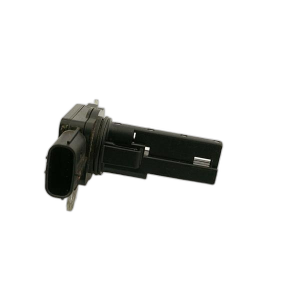
Est. part cost: $150-$350 - Dirty Mass Airflow (MAF) Sensor and/or Throttle Body 🟡 Medium Probability → Shop Fuel Injection Throttle Body Over time, oil vapors and dirt can coat the MAF sensor wire and throttle plate, disrupting the air-fuel mixture calculation during startup, especially on a cold engine. This is a common maintenance item that is often overlooked.
How to confirm: Visually inspect the MAF sensor wires inside the housing and the throttle body plate for grime. This is best done after ruling out the battery.
Typical fix: Clean the MAF sensor with dedicated MAF sensor cleaner and the throttle body with throttle body cleaner. Do not touch the sensor wires. 🎬 Watch: How to clean your MAF sensor and throttle body Ensure the sensor is completely dry before reinstalling.
Est. part cost: $15-$25 - Outdated ECM Software 🟡 Medium Probability Subaru has issued Technical Service Bulletins (TSBs) for similar models to fix overly sensitive logic for P1604. TSB 11-193-19R (a revision of the one in pass 1) and others address extended cranking and P1604 codes that may be stored without a CEL.
How to confirm: A Subaru dealer or a properly equipped independent shop can check your vehicle's VIN to see if a software update is available and has not yet been performed. This is the only way to confirm.
Typical fix: Reprogram (reflash) the Engine Control Module with the updated software. This must be done by a dealer or a shop with Subaru-specific tools like the Subaru Select Monitor.
Est. part cost: $0-$200 - Failing Fuel Pump or Clogged Filter ⚪ Low Probability → Shop Fuel Pump While not a widespread issue on the EZ36D, a fuel pump that is slow to build pressure can cause a long crank, triggering P1604. A buzzing sound from the fuel tank area could indicate a related issue addressed by TSB 09-76-20.
How to confirm: A fuel pressure test is the definitive method. A technician can measure the pressure at the fuel rail during startup to see if it's within specification.
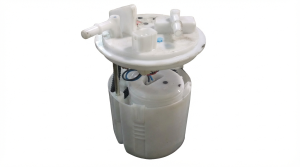
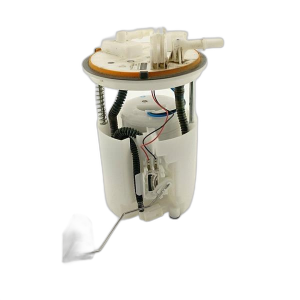
Typical fix: Replace the fuel pump assembly, which is located in the fuel tank. The OEM part number for the 3.6L engine is 42022AL01A.
Est. part cost: $260-$600
Rare But Worth Checking
- Faulty Crankshaft or Camshaft Position Sensor: → Shop Engine Crankshaft A failing crank or cam sensor can prevent the ECM from seeing that the engine is rotating, leading to a no-start condition that logs P1604 as a secondary code. You will almost always have a specific code for the sensor itself (e.g., P0335, P0340).
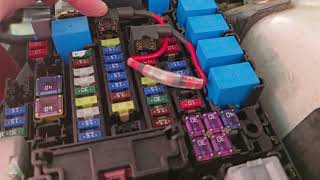
- Blown Fuse: In some cases, a blown fuse related to the starting system, fuel pump, or engine controls can prevent the vehicle from starting and may trigger a general startability code. A common DIY fix for the DCM parasitic drain involves pulling the DCM fuse (often #9 in the under-hood fuse box).
- Failing Starter Motor: → Shop Starter Motor A starter that is wearing out can draw excessive current, causing a large voltage drop, or it may crank the engine too slowly for the ECM's parameters, triggering P1604.
Diagnosis Steps
- Scan the ECM for any other trouble codes. If other codes are present, diagnose them first as P1604 is often a secondary code.
- Perform a professional load test on the battery. Check that the voltage does not drop below 10.0V during cranking.
- Perform a parasitic draw test. With the vehicle off and asleep for at least 30 minutes, the draw should be under 50mA. If it's significantly higher, start by pulling the DCM fuse (often #9 in the engine bay fuse box) to see if the draw drops.
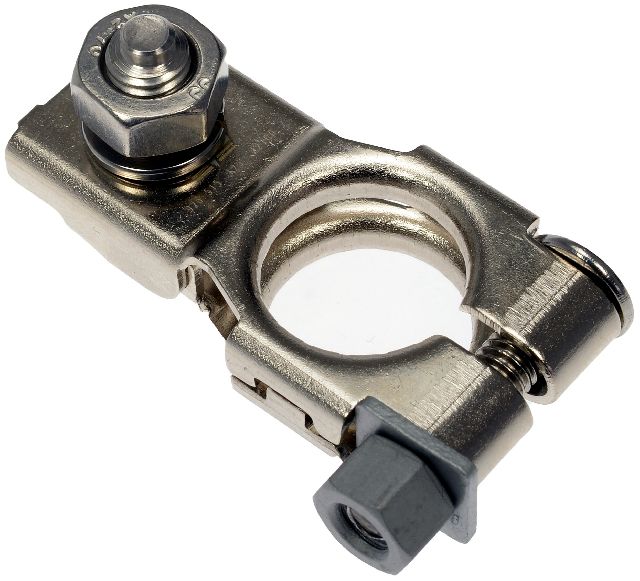
- Inspect battery terminals and ground connections for corrosion or looseness. Clean and tighten as necessary.
- If the battery and electrical draw are good, remove and clean the Mass Airflow (MAF) sensor using dedicated MAF sensor cleaner. Do not touch the sensor wires.
- While the intake tube is off, inspect and clean the throttle body plate with throttle body cleaner.
- Perform an idle relearn procedure after cleaning the MAF and throttle body.
- If the issue persists, contact a Subaru dealership to check if your vehicle's VIN is eligible for an ECM software update related to TSB 11-193-19R or similar campaigns.
- If no software update is available, perform a fuel pressure test to rule out a failing fuel pump.
- Inspect the starting and charging systems, including the starter motor and alternator, for proper function.
Parts You'll Likely Need
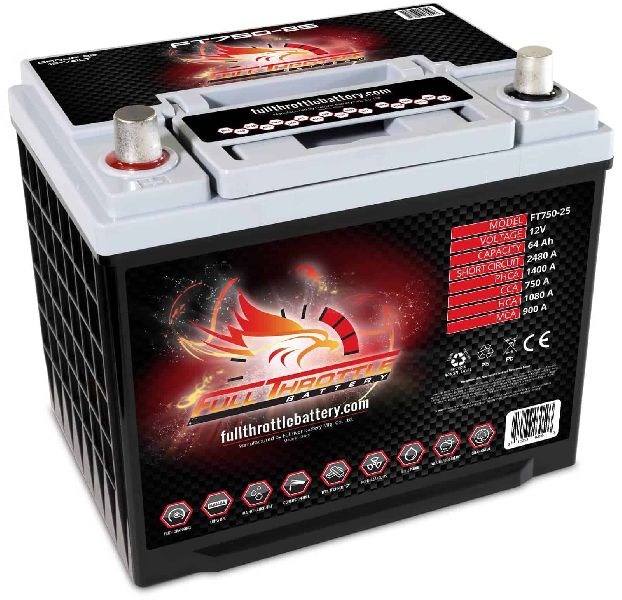
- Group 25 Battery — This is the most common cause of P1604 on this vehicle due to the platform's sensitivity to voltage and history of premature battery failure, often caused by a parasitic drain.
Trusted brands: Interstate, DieHard, Duracell, Subaru OE
OEM price range: $200-$300
Aftermarket price range: $150-$250 - Mass Airflow Sensor Cleaner — Cleaning the MAF sensor is a very common, low-cost diagnostic step that often resolves starting issues caused by an incorrect air-fuel mixture.
Trusted brands: CRC, Liqui Moly
Aftermarket price range: $15-$20 - Fuel Pump Assembly
(OEM #42022AL01A)— If the battery and air intake systems are healthy, a fuel pump that is slow to build pressure is the next most likely hardware failure.
Related Codes That Often Appear With This One
- P1603 — This is another 'Startability Malfunction' code often related to engine stalling or idle issues. They frequently appear together when starting problems are complex.
- P0562 — This code means 'System Voltage Low' and is a strong indicator that the root cause of the P1604 is a weak battery or a failing charging system.
- P0101 — This code for 'Mass Air Flow (MAF) Circuit Range/Performance' can appear with P1604 if a dirty MAF sensor is providing incorrect airflow data during cranking.
- P0087 — This code for 'Fuel Rail/System Pressure - Too Low' points directly to a fuel delivery problem (like a weak fuel pump) as the cause of the starting issue.
Technical Service Bulletins (TSBs) & Recalls
- TSB 15-308-23 / 15-312-23R: Dark Current Draw from DCM: These bulletins address excessive battery drain caused by the Data Control Module (DCM). The fix involves reprogramming the DCM to reduce dark current draw. For unsubscribed vehicles, it converts the DCM to a 'Factory' status. It also authorizes battery testing and replacement if the DCM is found to be the root cause.
- TSB Bulletin #11-192-19: ECM Logic Update: This bulletin addresses isolated concerns of an extended cranking (hard starting) condition and notes that a DTC P1604 may be stored in the ECM memory without illuminating the Check Engine light.
- TSB for P1604 ECM Logic (Example: TSB for Ascent): While the exact TSB for the 2018 Outback 3.6L was not found, a similar TSB for the 2019-2020 Ascent (Number not specified, but from Oct 2019) explicitly mentions reprogramming the ECM to fix 'extended cranking (hard starting) condition' and a 'DTC P1604 which may be stored in the ECM memory without illuminating the Check Engine light'. This confirms Subaru uses software updates to fix this exact issue.
- TSB 16-115-18: CVT Warranty Extension: While not directly related to P1604, this TSB is critical for owners. It extends the CVT warranty on 2016-17 Legacy/Outback models (including the 3.6L) to 10 years / 100,000 miles, providing assurance against common CVT concerns. Similar extensions have been offered for other model years.
- TSB 12-192-15R: Cracked Windshields: Addresses spontaneously cracking windshields on 2015-2016 models, often near the de-icer element. While not for the 2018 model year, it establishes a known history of this problem on the platform.
Platform-Specific Known Issues
- Parasitic Battery Drain from DCM: The Data Communications Module (DCM) for the Starlink system is known to malfunction and cause a parasitic battery drain, leading to a dead battery over time. Some owners pull the DCM fuse to solve this.
- Premature OEM Battery Failure: Many owners report that the original factory battery fails within 2-3 years, much sooner than expected.
Mechanic-Grade Diagnostic Values
- Parasitic Current Draw — expected: Less than 50-70mA after the vehicle has been off and locked for 30 minutes.. Failure: A sustained draw over 150mA often indicates a faulty Data Communications Module (DCM).
- Low-Side Fuel Pressure (Key On, Engine Off) — expected: Approximately 36 PSI (2.5 bar) when the pump primes.. Failure: Pressure that is significantly lower or bleeds off quickly suggests a weak pump or faulty check valve.
- Low-Side Fuel Pressure (Engine at Idle) — expected: Approximately 26 PSI.. Failure: Pressure that is much higher or lower than spec can indicate a faulty fuel pressure regulator or a restriction in the system.
- Crankshaft Position Sensor Resistance — expected: Approximately 2.0 kΩ (2,000 Ohms) for a functional 2-wire sensor.. Failure: An open circuit (no reading) or a reading far outside the typical 200-2,500 Ohm range indicates a failed sensor.
Hidden / Shadow Codes Worth Checking
- B2822 / B2805: These are Body codes related to the telematics (Starlink) system, indicating internal communication or power source failures in the DCM. While not directly causing P1604, they can point to the DCM as the source of a parasitic battery drain, which is a root cause of the startability issue. (see via A professional scan tool capable of reading Body Control Module (BCM) codes, such as the Subaru Select Monitor.)
Scan Tool Commands That Help
- Subaru Select Monitor (or equivalent): Clear Engine Adaptations / Memory Reset — This is a critical step after cleaning the throttle body and MAF sensor, or after replacing a battery. It forces the ECM to discard incorrect learned values for idle control and relearn them with the clean/new components, which can resolve stalling or rough idle after startup.
- Subaru Select Monitor (or equivalent): Live Data Monitoring (Cranking) — Monitor PIDs for 'Engine Speed', 'Battery Voltage', and 'Fuel Pump Duty Cycle' during a long-crank event. This helps determine if the issue is a lack of RPM signal (crank sensor), excessive voltage drop (battery/starter), or insufficient fuel delivery (fuel pump).
Wiring & Ground Locations
- Main Engine Grounds — On top of the intake manifold, secured by several 12mm bolts.. A poor engine ground can cause a host of electrical issues, including insufficient power to the ECM or sensors, leading to starting problems.
- DCM Fuse — Often fuse #9 in the under-hood/engine bay fuse box.. Pulling this fuse is a key diagnostic step for the common parasitic drain issue. If the current draw drops significantly after pulling it, the DCM is confirmed as the culprit.
Real Owner Repair Stories
- NHTSA ODI #11627701 — An owner reported a no-start condition where a dealership diagnosed P1604 and a cylinder 4 misfire. Despite the code, the fuel pressure was found to be within specification.
- ALLDATA Tech-Assist Case Study (2018 Subaru Forester 2.5L (same generation platform and code)) — MIL on, long crank time in the morning, occasional stall after starting.
❌ Tried (didn't work) A fuel pressure and bleed-down test was performed, but the fuel system was found to be operating to specification.
✅ What actually fixed it The technician cleaned the Mass Airflow (MAF) sensor and the throttle body, then cleared the DTC and reset the engine adaptations using a scan tool. The engine then started immediately and ran perfectly. - Reddit user in r/subaru (Gen 4 Subaru (unspecified model)) — P1604 code appeared and returned immediately after clearing, despite no noticeable starting issues.
❌ Tried (didn't work) Clearing the code with a scanner.
✅ What actually fixed it The user noted a friend with a different vehicle had the same code shortly before their battery failed. Replacing the failing battery resolved the code. This reinforces that the code can be an early warning for a weak battery even if cranking seems normal. - r/Subaru_Outback forum user (2019 Subaru Outback (5th Gen)) — Slow engine turnover, eventually leading to a completely dead battery.
❌ Tried (didn't work) Replacing the battery with a new, high-quality one (the problem returned after two months).
✅ What actually fixed it Diagnosed a 150mA parasitic draw caused by the DCM. The fix was to install an 'add-a-fuse' to move the DCM's power from a constant source to an ignition-switched source (fuse #43), which completely stopped the drain when the car was off.
"I Checked Everything" — The Actual Cause
- In a documented professional repair, a technician suspected a fuel system issue (like a leaky injector or bad check valve) was causing a long crank and P1604. However, a fuel pressure test showed the system was holding pressure perfectly. The actual cause was found to be a dirty throttle body and MAF sensor, which disrupted the air/fuel mixture on cold starts. The fix was cleaning the components and performing an ECM adaptation reset, not a fuel system repair.
Diagnostic Flowchart
Other Known Issues on This Vehicle
Issues unrelated to this code that are worth knowing about as an owner of this generation:
- Spontaneously Cracking Windshields 🔴 High — Widespread across multiple model years (2015-2022). Multiple class-action lawsuits have been filed and settled, leading to extended warranties for the windshield on certain model years. (Ref: TSB 12-192-15R (for 2015-16 models), various lawsuit settlements)
- Premature Battery Failure / Parasitic Drain 🔴 High → Shop Vehicle Battery — Extremely common on the 5th generation (2015-2019). Often caused by the Starlink DCM module failing to enter sleep mode, especially after the 3G network shutdown. Can drain a battery in 2-3 days. (Ref: TSB 15-308-23, TSB 15-312-23R)
- CVT (Continuously Variable Transmission) Reliability Concerns 🟠 Medium — Concerns about longevity and repair costs are common, though not all vehicles are affected. Symptoms include shuddering or stalling. Subaru extended the powertrain warranty on the CVT to 10 years/100,000 miles for many models, including the 2018 Outback, as a 'customer satisfaction' measure. (Ref: TSB 16-115-18 (CVT Warranty Extension))
- Infotainment System Glitches 🟡 Low — Owners report issues with the head unit freezing, rebooting, or becoming unresponsive. Often resolved with software updates from the dealer.
- Rusted Exhaust Heat Shields 🟡 Low — The bolts holding the exhaust heat shields can rust and break, leading to a metallic rattling or grinding noise during acceleration. This is a common issue on vehicles from rust-prone areas.
Used vs. New Parts: Buying Guide for This Vehicle
When a used part is the smart pick: For a P1604 repair, obtaining a used starter motor or alternator from a reputable salvage yard can be a cost-effective option, provided the donor vehicle is low-mileage.
Donor-vehicle mileage cap: roughly under 60000 miles for the part to have meaningful remaining life.
What to inspect on the donor part:
- Check for minimal corrosion on the part's housing and electrical connectors.
- Ensure the alternator pulley spins freely and smoothly without noise.
- Verify the donor vehicle has no reported flood or fire damage.
OEM-only on this vehicle (don't cheap out):
- Crankshaft Position Sensor
- Mass Airflow (MAF) Sensor
- Fuel Pump Assembly
Aftermarket brands forum-validated for this vehicle:
- Battery: Interstate, DieHard, Optima Red Top
Brands owners have reported issues with on this vehicle:
- Unnamed, 'white box' electronic sensors (e.g., crank/cam sensors) from online marketplaces are frequently cited as unreliable for Subaru applications.
Real Owner Stories
Aggregated from forums and TSBs cited above. Mileages and costs reflect what owners reported in those sources.
2018 Subaru Outback
Symptoms: Repeatedly dead battery issues.
What fixed it: A three-part fix: removing the DCM fuse, obtaining a dealer software update for the alternator's charging logic, and installing a new, better battery.
Source hint: Reddit - r/Subaru_Outback - 'Repeatedly DEAD BATTERY issue FINALLY SOLVED'
2015 Subaru Outback
Symptoms: The engine would start and then immediately stall.
What fixed it: Checking and addressing battery, fuel, and air systems (MAF/Throttle body).
Source hint: Reddit - r/MechanicAdvice - 'Code P1604 on 2015 Subaru Outback'
Related OBD-II Codes
Frequently Asked Questions
Why is my 2018 Outback 3.6L battery dying so quickly, and could it cause P1604?
Is there a specific TSB for the P1604 code on my 3.6L H6 engine?
Can I fix the battery drain myself by pulling a fuse?
What battery should I buy to prevent P1604 from returning?
Does the CVT warranty extension apply to my 2018 Outback 3.6L?
Could a buzzing sound from my fuel tank be related to my starting issues?
Helpful Videos
Used OEM Parts in Stock
New Aftermarket Parts Available


The information in this article is provided for general reference and educational purposes only. Vehicle specifications, procedures, and part compatibility can vary by production date, trim level, and region. Always consult your vehicle's factory service manual and verify part numbers before purchasing or performing repairs. Safety-critical components such as airbags, seat belts, and braking systems should be installed by a qualified professional.
- Subaru Outback:
- 🧭 Diagnostic Flowchart
- 🎬 Helpful Videos
- 🛍️ Shop This Part
- What's Unique About the 2018-2018 Subaru Outback
- Symptoms You May Notice
- Most Likely Causes
- Rare But Worth Checking
- Diagnosis Steps
- Parts You'll Likely Need
- Related Codes That Often Appear With This One
- Technical Service Bulletins (TSBs) & Recalls
- Platform-Specific Known Issues
- Mechanic-Grade Diagnostic Values
- Hidden / Shadow Codes Worth Checking
- Scan Tool Commands That Help
- Wiring & Ground Locations
- Real Owner Repair Stories
- "I Checked Everything" — The Actual Cause
- Other Known Issues on This Vehicle
- Used vs. New Parts: Buying Guide for This Vehicle
- Real Owner Stories
- 2018 Subaru Outback
- 2015 Subaru Outback
- Related OBD-II Codes
- Frequently Asked Questions
- 🎟️ Get 5% Off