

P1604 on 2012-2017 Toyota Camry: Startability Malfunction Causes and Fixes
On a 2012-2017 Toyota Camry, code P1604 means the engine failed to start or took too long to crank. The most common causes are a weak battery, poor terminal connections, or a failing fuel pump. Always test the battery and check for other codes first, as P1604 is often a secondary code indicating a symptom rather than a specific part.
- P1604 means your Camry failed to start properly, but it doesn't name the broken part.
- Always check for other trouble codes first, as they will provide more specific clues.
- Start your diagnosis with the simplest and most common causes: a weak battery and low fuel pressure.
- Do not drive the vehicle if this code is present; the no-start condition makes it unreliable and could leave you stranded.
- Don't assume the most expensive part (like the ECM) has failed. ECM failure is extremely rare.
What's Unique About the 2012-2017 Toyota Camry
For the XV50 generation Camry, like many modern Toyotas, the P1604 code is a general 'failure to start' flag. It doesn't point to a single part but rather indicates the engine control computer (ECM) registered a failed start attempt. 🎬 Watch: A quick overview of diagnosing the P1604 code. The system is sensitive and can be triggered by anything from a weak battery struggling in the heat to a fuel pump that's slow to build pressure. Because it's a symptom-based code, diagnosis requires a logical approach starting with the most common and simple failures like the battery and fuel delivery. In some cases, aftermarket accessories with high parasitic draw, like audio amplifiers, can drain the battery enough to cause low voltage during startup, triggering a P1604.
Symptoms You May Notice
- Engine cranks but does not start.
- Extended cranking time before the engine starts (e.g., 10-30 seconds).
- Engine starts and then immediately stalls.
- Check Engine Light is illuminated on the dashboard.
- Rough idle immediately after a difficult start.
- Replacing the starter motor when the engine is cranking normally. If the engine is turning over, the starter is working. The problem lies with fuel, spark, or compression.
- Replacing the ECM prematurely. ECM failure is exceptionally rare and should be the absolute last resort after thorough diagnosis of all other systems.
Most Likely Causes
- Weak or Failing Battery 🔴 High Probability → Shop Vehicle Battery Batteries have a finite lifespan of 3-5 years, and hot climates can accelerate their degradation. If the battery can't supply enough voltage (especially below 10.5V during cranking), the ECM and other modules may not function correctly, leading to a no-start condition.
How to confirm: Test the battery voltage with a multimeter. A healthy battery should read at least 12.6V when off. During cranking, the voltage should not drop below 10V. Most auto parts stores can perform a load test to check its health.
Typical fix: Recharge or replace the battery. Clean any corrosion from the terminals and ensure connections are tight.
Est. part cost: $150-$300 - Failing Fuel Pump 🔴 High Probability → Shop Fuel Pump A worn fuel pump may not be able to provide adequate fuel pressure quickly enough for a clean start. This is a common failure point on many vehicles as they age. Contaminated fuel can also clog the pump's strainer sock, restricting flow.
How to confirm: Turn the key to the 'ON' position (without starting) and listen for a 2-second 'bzzzt' or humming sound from the rear seat area, which indicates the pump is priming. For a definitive test, connect a fuel pressure gauge; the pressure should be within the manufacturer's specification (44-50 psi for the 2AR-FE engine).
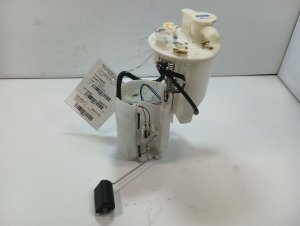
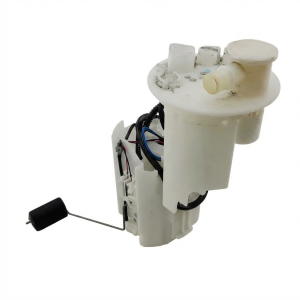
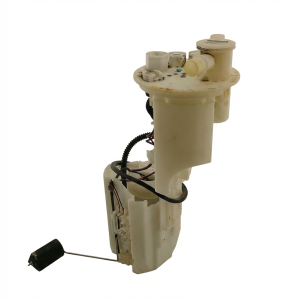
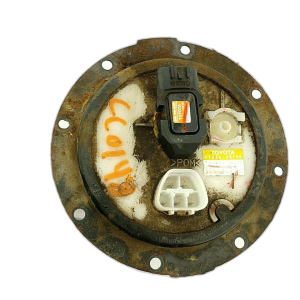
Typical fix: Replace the fuel pump assembly, which is located inside the fuel tank. 🎬 See this step-by-step fuel pump and strainer replacement walkthrough. It is recommended to use an OEM or a quality brand like Denso or Aisin.
Est. part cost: $150-$400 - Ignition System Issues 🟡 Medium Probability Worn spark plugs or failing ignition coils can result in a weak or nonexistent spark, preventing the engine from firing. While durable, coils can fail with age and heat cycles.
How to confirm: Inspect spark plugs for wear, fouling, and proper gap. Test ignition coils for resistance and output using a multimeter or an in-line spark tester. A weak or orange-colored spark is a sign of a problem.
Typical fix: Replace worn spark plugs (Denso and NGK are OEM suppliers) and/or any faulty ignition coils. 🎬 Watch: How to replace ignition coils on your 2.5L engine.
Est. part cost: $50-$200 - Clogged Fuel Filter or Injectors ⚪ Low Probability Over time, sediment from poor quality fuel can clog the fuel filter (which is an integrated 'sock' or strainer on the fuel pump assembly) or the injectors themselves, restricting fuel flow.
How to confirm: This is often diagnosed by ruling out other causes first. Low fuel pressure can be an indicator. A diagnostic test with starting fluid (sprayed into the intake) can confirm a fuel delivery issue; if the engine fires on starting fluid, it confirms a lack of fuel.
Typical fix: Replace the fuel pump strainer during a fuel pump replacement. Clogged injectors can sometimes be cleaned professionally, but replacement is often more reliable.
Est. part cost: $20-$500
Rare But Worth Checking
- Faulty Crankshaft Position Sensor (CKP): → Shop Engine Crankshaft Position Sensor The CKP sensor tells the ECM if the engine is rotating. If it fails, the ECM won't know to send spark and fuel, causing a crank-no-start condition. This will typically set its own specific code (like P0335), but can sometimes just result in a P1604 if it fails intermittently during cranking.
- Faulty Engine Control Module (ECM): → Shop Engine Control Module (ECM) This is very rare, but a malfunctioning ECM can cause a wide variety of issues, including a no-start condition. This should only be considered after all other possibilities have been exhaustively ruled out by a professional.
- Immobilizer System Fault: If the key is not recognized or there is a fault in the immobilizer system, the ECM will prevent the engine from starting. A scan tool can check the immobilizer status to confirm communication. This will often be accompanied by a B2799 code.
Diagnosis Steps
- Scan for other DTCs. P1604 is often a secondary code; other codes can point directly to the problem area (e.g., P0335 for a crankshaft sensor, P0171 for a fuel system issue).
- Check the battery and electrical connections. Test the voltage (should be 12.6V+ at rest) and perform a load test. Ensure terminals are clean and tight. A voltage drop below 10.5V during cranking is a red flag.
- Verify fuel delivery. Turn the key to 'ON' and listen for the 2-second fuel pump priming sound. If no sound, check the EFI and fuel pump fuses and relays. If possible, check fuel pressure with a gauge.
- Check for spark. Use an in-line spark tester to confirm that the ignition coils are producing a strong, blue spark. A weak, orange spark indicates a problem.
- Perform a starting fluid test. Carefully spray a small amount of starting fluid into the air intake while an assistant cranks the engine. If the engine fires up briefly, it strongly indicates a fuel delivery problem.
- Inspect the air intake system. Ensure the air filter is not completely clogged and that there are no major obstructions in the intake tube.
- Check immobilizer status. Use a capable scan tool to verify that the immobilizer system is recognizing the key and is not preventing the start.
- If all else fails, test sensors like the Crankshaft Position Sensor for proper operation using an oscilloscope or by checking for a signal with a multimeter while cranking.
Parts You'll Likely Need
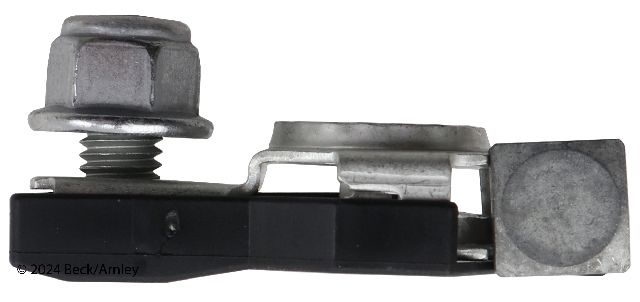
- Battery — A weak or dead battery is the most common cause of starting issues and can easily trigger a P1604 code. The correct size is typically Group 24F or 35.
Trusted brands: Interstate, Duralast, DieHard
OEM price range: $200-$300
Aftermarket price range: $150-$250 - Fuel Pump Assembly
(OEM #77020-06286 (for non-PZEV models, supersedes 77020-06282, 77020-06285))— A failing fuel pump that is slow to build pressure is a very common cause for extended crank times on this platform.
Trusted brands: Denso (OEM Supplier), Aisin, Delphi
OEM price range: $350-$500
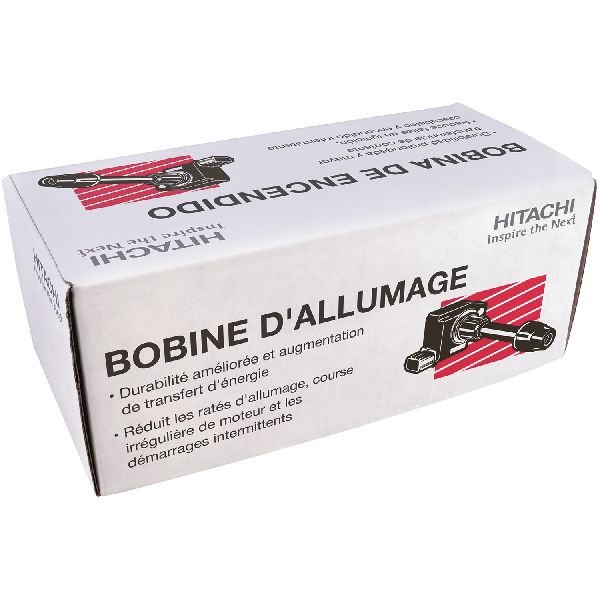
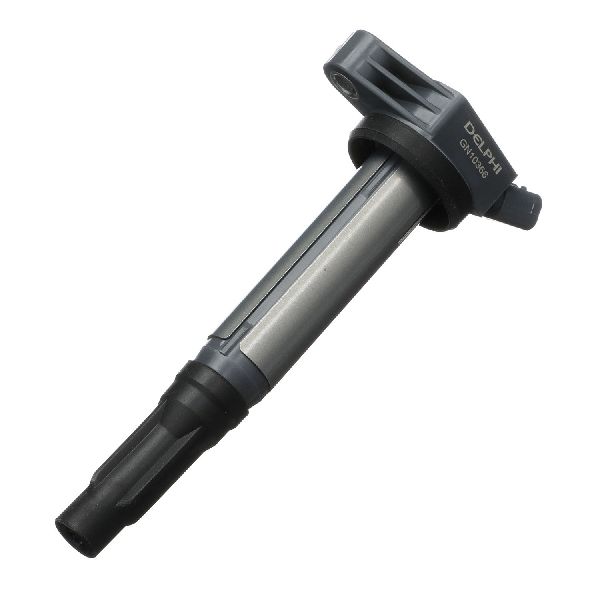
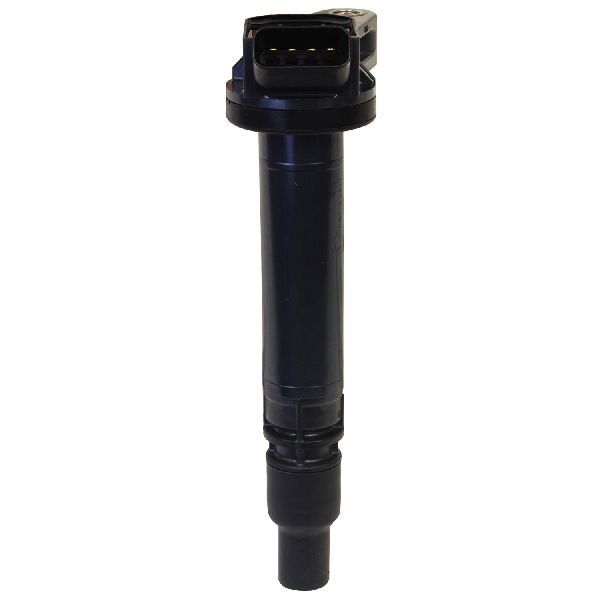
Aftermarket price range: $150-$300 - Ignition Coils
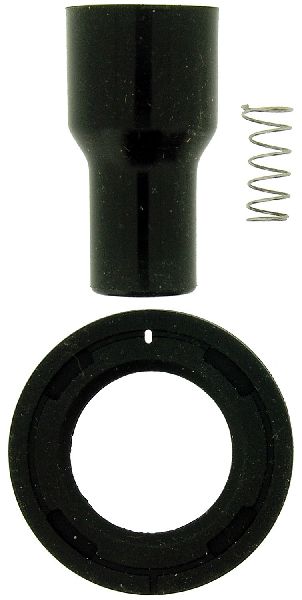
(OEM #90919-02258)— A failing ignition coil can cause a no-spark condition, leading to a crank-no-start and a P1604 code.
Trusted brands: Denso (OEM Supplier), NGK
OEM price range: $90-$120
Aftermarket price range: $40-$70
Related Codes That Often Appear With This One
- P1603 — P1603 is for 'Engine Stall History'. These often appear together, indicating the engine has had trouble starting (P1604) and has also stalled.
- P0171 / P0174 — These 'System Too Lean' codes can be caused by a failing fuel pump or clogged injectors that aren't delivering enough fuel, which also causes the starting difficulty logged by P1604.
- P0300-P0308 — Cylinder misfire codes may be present if the starting issue is related to weak spark or poor fuel delivery causing cylinders to not fire correctly during startup.
- P0335 — This code for the Crankshaft Position Sensor 'A' Circuit directly points to a potential root cause for the no-start condition that triggers P1604.
Technical Service Bulletins (TSBs) & Recalls
- T-SB-0166-19: Mentions P1604 in relation to Flex-Fuel vehicles (Tundra/Sequoia) having starting issues due to fuel alcohol calculations.
- T-SB-0058-13: An earlier version of the TSB for the same Flex-Fuel issue on Tundra/Sequoia models, also listing P1604.
Platform-Specific Known Issues
- While not specific to the Camry, some Toyota Tundra and Sequoia models had TSBs (T-SB-0166-19, T-SB-0058-13) for P1604 related to incorrect fuel alcohol density calculations on Flex Fuel vehicles, requiring an ECM reprogram. This highlights that ECM logic can sometimes be a factor in P1604 codes on Toyotas, though it's less common for the Camry.
Mechanic-Grade Diagnostic Values
- Fuel Pressure (Key On, Engine Off and at Idle) — expected: 304 - 343 kPa (44 - 50 psi). Failure: Pressure below 44 psi indicates a weak pump, clogged filter, or faulty regulator. Pressure should also hold steady and not drop below 21 psi for 5 minutes after the engine is turned off.
- Crankshaft Position Sensor (CKP) Resistance — expected: 985 to 1,600 Ω (cold) and 1,265 to 1,890 Ω (hot). Failure: A reading outside of this range indicates a faulty sensor.
- Ignition Coil Primary Winding Resistance — expected: 0.4 to 2.0 Ω. Failure: A reading outside this range suggests a faulty coil.
- Ignition Coil Secondary Winding Resistance — expected: 6,000 to 10,000 Ω (6kΩ - 10kΩ). Failure: A reading outside this range suggests a faulty coil.
Hidden / Shadow Codes Worth Checking
- Detail Code / Information Code: When P1604 is stored, the ECM also stores a 3-digit 'detail code' or 'information code' in the freeze frame data. This code provides a snapshot of engine conditions (like RPM, coolant temp, crank duration) at the moment the startability fault occurred, helping to differentiate between a long crank, an immediate stall, or other scenarios. (see via Requires a professional scan tool like Toyota Techstream to access the freeze frame data and view the detailed information.)
Scan Tool Commands That Help
- Toyota Techstream: Freeze Frame Data Analysis — This is the most critical function for P1604. It allows a technician to see the exact state of the engine (RPM, temperature, etc.) when the start failed, which is crucial for diagnosis. For example, it can show if the engine never reached target RPM or if it stalled from a low idle.
- Toyota Techstream: Active Test: Control the Fuel Pump / Speed — This bidirectional command allows the technician to manually turn the fuel pump on without cranking the engine. It's used to verify the fuel pump circuit (relay, wiring, and pump motor) is functional and to make fuel pressure testing easier.
- Toyota Techstream: Data List: Immobiliser Fuel Cut — When diagnosing a crank-no-start, checking this parameter in the data list will show if the immobilizer system is actively preventing the engine from starting by cutting fuel. If it reads 'ON', the issue is with the key or security system, not a component failure.
Wiring & Ground Locations
- Fuel Pump Relay (C/OPN Relay) — For 2015-2017 models, the traditional fuel pump relay is integrated into the non-serviceable 'integration relay' module within the under-hood fuse box (passenger side). For 2012-2014 models, it is often a replaceable relay labeled 'C/OPN' or 'EFI' in the same fuse box.. A failure of this relay or its integrated circuit will prevent the fuel pump from receiving power, causing a no-start condition and triggering P1604.
- EFI Fuse — Located in the under-hood fuse box on the passenger side of the engine bay. It is typically a 30A fuse.. This fuse protects the main electronic fuel injection circuit. If it blows, the fuel pump and injectors will lose power, causing a no-start.
- Engine Ground Straps — There are multiple ground points. A primary ground strap typically connects from the engine block (near the transmission) to the chassis/frame rail. Another key ground is from the negative battery terminal to the chassis.. A corroded or loose engine ground can cause insufficient voltage to the ECM, ignition coils, and sensors during the high-current draw of cranking, leading to intermittent no-start conditions and a P1604 code.
Real Owner Repair Stories
- Tacoma World forum user '4x4Rob' (2014 Toyota Tacoma (similar diagnostic principles apply)) — Intermittent long crank then stall on cold start. Second try would start with a low idle, then run normally. P1604 code was present.
❌ Tried (didn't work) Initial diagnosis was inconclusive.
✅ What actually fixed it The user, a technician, cleaned the throttle body and cleared the code as a first step, suspecting it was the cause of the low/unstable idle on startup that triggered the P1604. - NHTSA ODI #11023574 — An owner reported an intermittent issue where a service advisor pulled codes showing P1604 (Startability Malfunction) along with P2610 (ECM/PCM Internal Engine Off Timer Performance) and B1507.
OEM Part Supersession History
77020-06282, 77020-06285→77020-06286— Standard part revision and consolidation by the manufacturer for non-PZEV models.
Heads up: Always verify the part number against the vehicle's VIN. PZEV (Partial Zero Emission Vehicle) models use a different fuel pump assembly. Installing the wrong type can cause fuel system and emissions-related codes.
Model Year Variations Within This Range
- 2015-2017: The Camry received a major facelift for the 2015 model year, with almost all-new exterior panels and a redesigned interior. However, the standard 2.5L 2AR-FE engine and 6-speed automatic transmission were carried over with no significant mechanical changes affecting the causes of a P1604 code. The fuel pump relay also became part of a non-serviceable integration module in the fuse box around this time.
Diagnostic Flowchart
Other Known Issues on This Vehicle
Issues unrelated to this code that are worth knowing about as an owner of this generation:
- Torque Converter Shudder 🟠 Medium — Common on 2012-2014.5 models. Typically occurs under light acceleration between 25-50 mph. (Ref: T-SB-0041-15 (and others) addressed this with an ECM update and/or torque converter replacement.)
- VVT Cam Gear Rattle on Cold Start 🟡 Low — A brief (1-2 second) rattle upon cold startup is common across the 2AR-FE engine line. It is caused by a delay in oil pressure reaching the VVT actuator locking pin. (Ref: T-SB-0041-13 describes the condition and a repair procedure involving replacing the camshaft timing gear assembly.)
- Melting / Sticky Dashboard 🟡 Low — Affects 2007-2011 Camrys most, but some earlier XV50 models can be affected in high heat/humidity climates. The dash surface becomes shiny, sticky, and can crack. (Ref: Toyota issued a Warranty Enhancement Program (ZE6) to replace affected dashboards, though the primary coverage period has expired.)
- Excessive Oil Consumption 🟠 Medium — While more prevalent in the previous generation's 2AZ-FE engine, some 2AR-FE engines can consume oil due to piston ring design. Regular oil level checks are crucial. (Ref: T-SB-0169-16 was issued for some other Toyota models with similar issues, but this is a known point of observation for the 2AR-FE as well.)
Used vs. New Parts: Buying Guide for This Vehicle
When a used part is the smart pick: For this repair, used parts are generally not recommended for the most common failure items. A used battery or fuel pump carries a high risk of having limited remaining life, potentially causing the same problem to reoccur soon. A used starter or alternator could be considered if tested and from a low-mileage donor.
Donor-vehicle mileage cap: roughly under 60000 miles for the part to have meaningful remaining life.
What to inspect on the donor part:
- Check for the date code on a used battery; avoid anything over 2 years old.
- For any electrical component, inspect connectors for corrosion, melting, or broken locking tabs.
- Ask for the VIN of the donor car to verify mileage and confirm part compatibility (e.g., PZEV vs. non-PZEV).
- Avoid parts from vehicles that show signs of flood damage or have been in a major front-end collision.
OEM-only on this vehicle (don't cheap out):
- Crankshaft Position Sensor: Aftermarket CKP sensors are notoriously unreliable and can cause persistent or intermittent issues. Using a genuine Toyota or OEM Denso part is critical.
- Engine Control Module (ECM): In the rare event of an ECM failure, a used module must be professionally reprogrammed to the vehicle's VIN and immobilizer system. It is not a plug-and-play part.
Aftermarket brands forum-validated for this vehicle:
- Fuel Pump: Denso (OEM supplier), Aisin, Delphi
- Ignition Coils: Denso (OEM supplier), NGK
- Battery: Interstate, Duralast Gold/Platinum, DieHard
Brands owners have reported issues with on this vehicle:
- Unnamed or 'white-box' electronic sensors (like crankshaft sensors) and fuel pumps from online marketplaces often have high failure rates.
Real Owner Stories
Aggregated from forums and TSBs cited above. Mileages and costs reflect what owners reported in those sources.
2013 Toyota Camry 2.5L
Symptoms: The engine cranks but will not start. The owner demonstrated checking for spark and used starting fluid to see if the engine would fire.
What fixed it: The diagnosis confirmed a fuel delivery issue, leading to a discussion of fuel system causes such as the fuel pump.
Source hint: YouTube video titled 'Toyota Camry p1604'
2014 Toyota Camry 2.5L — 101000 miles
Symptoms: The owner experienced a P1604 code immediately after the car battery died.
What fixed it: The issue was linked to low voltage on startup, potentially caused by a parasitic drain from an aftermarket speaker/audio setup.
Source hint: Reddit r/MechanicAdvice thread 'P1604 on a 2014 Toyota Camry with 101k miles'
NHTSA ODI #11023574
Symptoms: An owner reported an intermittent issue where the vehicle speed control and identification were affected, and the service advisor pulled codes including P1604 - Startability Malfunction and P2610 - ECM/PCM Internal Engine Off Timer Performance.
What fixed it: This record documents the presence of the code alongside other ECM-related performance flags during intermittent failure events.
Related OBD-II Codes
Frequently Asked Questions
Does TSB-0166-19 regarding fuel alcohol density apply to my 2012-2017 Toyota Camry?
I have a 2013 Camry with a P1604 code that won't start. How can I tell if it's a fuel issue?
Can a dead battery trigger P1604 on my 2014 Camry?
What are the recommended spark plug brands for the 2AR-FE engine to avoid starting issues?
My Camry rattles for a second right after a difficult start. Is this related to P1604?
Is the fuel filter a separate serviceable part on the 2012-2017 Camry?
Helpful Videos

Used OEM Parts in Stock
New Aftermarket Parts Available

The information in this article is provided for general reference and educational purposes only. Vehicle specifications, procedures, and part compatibility can vary by production date, trim level, and region. Always consult your vehicle's factory service manual and verify part numbers before purchasing or performing repairs. Safety-critical components such as airbags, seat belts, and braking systems should be installed by a qualified professional.
- Toyota Camry:
- 🧭 Diagnostic Flowchart
- 🎬 Helpful Videos
- 🛍️ Shop This Part
- What's Unique About the 2012-2017 Toyota Camry
- Symptoms You May Notice
- Most Likely Causes
- Rare But Worth Checking
- Diagnosis Steps
- Parts You'll Likely Need
- Related Codes That Often Appear With This One
- Technical Service Bulletins (TSBs) & Recalls
- Platform-Specific Known Issues
- Mechanic-Grade Diagnostic Values
- Hidden / Shadow Codes Worth Checking
- Scan Tool Commands That Help
- Wiring & Ground Locations
- Real Owner Repair Stories
- OEM Part Supersession History
- Model Year Variations Within This Range
- Other Known Issues on This Vehicle
- Used vs. New Parts: Buying Guide for This Vehicle
- Real Owner Stories
- 2013 Toyota Camry 2.5L
- 2014 Toyota Camry 2.5L — 101000 miles
- NHTSA ODI #11023574
- Related OBD-II Codes
- Frequently Asked Questions
- 🎟️ Get 5% Off