

P1604 on 2009-2013 Toyota Corolla: Startability Malfunction Causes and Fixes
On a 2009-2013 Toyota Corolla, code P1604 almost always points to a weak or dying battery, or a failing fuel pump. Start by testing the battery and cleaning the terminals before suspecting more expensive parts like the fuel pump. This code indicates the engine cranked for too long (e.g., 15-30 seconds) without starting.
- P1604 means your car had a problem starting, but it doesn't name the broken part.
- Always check for other codes first; they will provide better clues to the root cause.
- The most likely culprits are the simplest: a weak battery or low fuel/failing fuel pump.
- Do not immediately assume the expensive ECM is the problem; it is a rare failure compared to the battery and fuel pump.
- Driving with this code is risky as the car has proven it is not reliable and could leave you stranded.
What's Unique About the 2009-2013 Toyota Corolla
For this generation of Corolla (E140), the P1604 code is a straightforward indicator of a problem in the starting 🎬 Watch: A breakdown of the P1604 code and common fixes., fuel, or ignition sequence. While generally reliable, a notable issue on the preceding generation (2005-2008 models) was a safety recall for Engine Control Modules (ECMs) with internal cracks that caused no-start conditions. While the recall doesn't officially cover all 2009-2013 models, an ECM failure, though less common, remains a possibility if more typical causes are ruled out. Another potential, though less common, cause can be an immobilizer system fault, which may sometimes occur after a battery replacement and require a key relearn procedure.
Symptoms You May Notice
- Engine cranks for a long time before starting.
- Engine cranks but does not start at all.
- Engine starts and then immediately stalls.
- Check Engine Light is illuminated on the dashboard.
- Reduced engine performance or vehicle enters 'limp mode'.
- Replacing the starter motor when the engine is cranking normally. 🎬 See this step-by-step guide for troubleshooting a no-start condition. If the engine is turning over, the starter is likely working; the problem is with fuel, spark, or compression.
Most Likely Causes
- Weak or Failing Battery 🔴 High Probability → Shop Vehicle Battery Heat and age are the primary killers of batteries. If the battery's voltage drops below 10V during cranking, the ECM may not get enough power to properly manage the starting sequence, triggering a P1604 code. Corroded or loose terminals can also cause intermittent no-start conditions.
How to confirm: Use a multimeter to test the battery. A healthy, fully charged battery should read about 12.6 volts with the engine off. While cranking the engine, the voltage should not drop below 10 volts. Also, inspect battery terminals for white or blue corrosion and ensure connections are tight.
Typical fix: Clean the battery terminals and cable ends with a wire brush. If the battery fails a load test or is over 4-5 years old, replace it.
Est. part cost: $120-$250 - Failing Fuel Pump or Clogged Fuel Filter 🔴 High Probability → Shop Fuel Pump The fuel pump wears out over time, and the in-tank fuel filter (or 'sock') can become clogged with sediment, restricting fuel flow. This prevents the engine from getting the required fuel pressure (typically 44-50 PSI for this model) to start quickly.
How to confirm: Turn the key to the 'ON' position (without starting) and listen for a faint 2-second hum from the rear of the car; this is the fuel pump priming. If you hear nothing, check the EFI fuse and relay first. For a definitive test, connect a fuel pressure gauge; if the pressure is below specification, the pump is a likely culprit. 🎬 Watch: How to diagnose and fix a crank-no-start issue. Toyota models can be difficult to test without a special adapter.
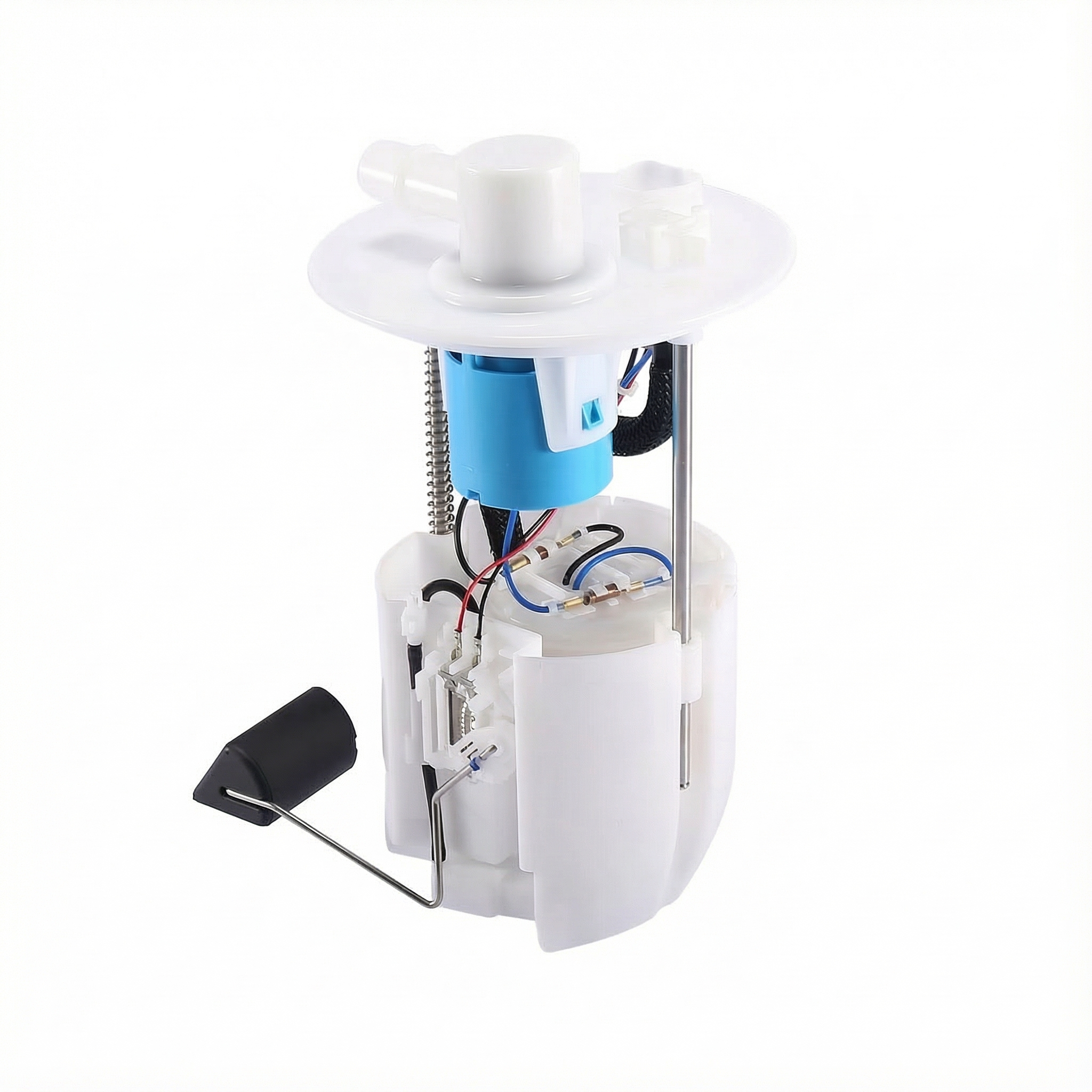
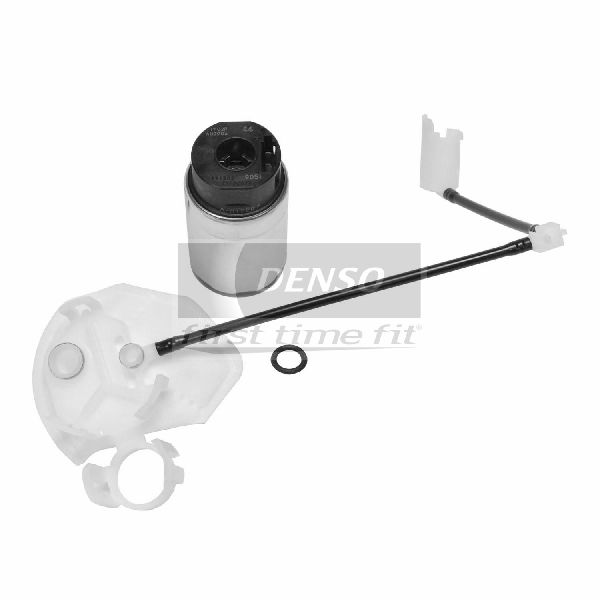
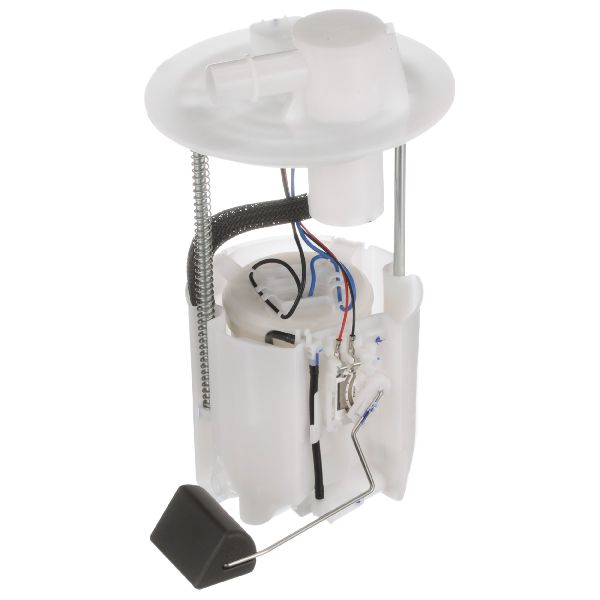
Typical fix: Replacement of the fuel pump module, which is located inside the fuel tank. It is recommended to replace the entire assembly, which includes the pump, filter, and sending unit. Using an OEM Denso unit is highly recommended by owners to avoid premature failure.
Est. part cost: $190-$350 - Faulty Engine Control Module (ECM) 🟡 Medium Probability → Shop Engine Control Module (ECM) A safety recall (NHTSA ID: 10V384000) was issued for 2005-2008 Corollas for ECMs where circuit board cracks could cause a no-start condition. While this recall doesn't officially extend to the full 2009-2013 range, the underlying design vulnerability makes the ECM a possible, though less likely, cause of failure on these models as well. NHTSA ODI #11602854 describes a case where a mechanic retrieved code P1604 and determined the electronic control module needed to be replaced.
How to confirm: This is a diagnosis of exclusion. All other potential causes (battery, fuel, spark, sensors) must be thoroughly tested and ruled out first. A professional may need to use advanced scan tools to check for communication with the ECM and verify power and ground signals at the module.
Typical fix: The ECM must be replaced. The new unit will need to be programmed to the vehicle's VIN and immobilizer system.
Est. part cost: $250-$900 - Worn Spark Plugs or Faulty Ignition Coils ⚪ Low Probability → Shop Ignition Coil Spark plugs are a routine maintenance item. If they are heavily worn or fouled, they can produce a weak spark that is insufficient for a quick, clean start, leading to extended cranking.
How to confirm: Inspect the spark plugs for wear, oil fouling, or heavy carbon buildup. Ignition coils can be tested by swapping a suspected bad coil with a known good one to see if a misfire code (if present) follows the coil.
Typical fix: Replace the spark plugs. If an ignition coil is found to be faulty, replace it.
Est. part cost: $20-$60 for plugs, $50-$100 per ignition coil
Rare But Worth Checking
- Faulty Crankshaft Position Sensor: → Shop Engine Crankshaft Position Sensor The ECM relies on the crankshaft position sensor to know the engine's speed and position. If this sensor fails, the ECM won't trigger spark or fuel injection, preventing the engine from starting and potentially logging a P1604.
- Dirty Throttle Body: → Shop Fuel Injection Throttle Body Heavy carbon buildup around the throttle plate can restrict the small amount of air needed for the engine to fire up, causing a hard start or immediate stall.
- Immobilizer System Fault: An issue with the key, transponder, or immobilizer unit can prevent the ECM from authorizing the engine to start. This can sometimes happen after a battery change and may require a key re-learning procedure.
- Transmission/Torque Converter Issues: → Shop Transmission Assembly In some instances, P1604 may appear alongside transmission-related codes. NHTSA ODI #11723306 reports a vehicle where P1604 was retrieved along with P0741 and P075B, which were related to the torque converter and CVT.
Diagnosis Steps
- Scan for all stored DTCs. If other codes are present, diagnose them first as P1604 is often a secondary code.
- Check the battery. Ensure it has a full charge (12.6V) and that the voltage does not drop below 10V while cranking. Clean any corrosion from the terminals.
- Verify you have fuel. Ensure the tank is not empty. Turn the key to 'ON' and listen for the 2-second hum of the fuel pump.
- Check fuel-related fuses and relays (often labeled 'EFI'). You can swap the EFI relay with a non-critical relay of the same type (like the horn) to test it.
- If possible, test the fuel pressure to confirm the pump is operating within specification (typically 44-50 PSI).
- Inspect the ignition system. Check the condition of the spark plugs and look for signs of damage on the ignition coils.
- Inspect the air intake system, including the air filter and the throttle body, for blockages or heavy buildup.
- If starting is intermittent and no other cause is found, consider an immobilizer system fault. Try using a spare key.
- If all other systems check out, investigate the possibility of a faulty ECM, especially if starting is intermittent and seemingly random.
Parts You'll Likely Need
- Battery — This is the most common cause. A weak battery lacks the power to crank the engine and power the vehicle's electronics simultaneously, leading to a startability error.
Trusted brands: Interstate, DieHard, Duralast
OEM price range: $150-$250
Aftermarket price range: $120-$200 - Fuel Pump Module Assembly
(OEM #77020-02290)— A failing fuel pump is the second most likely cause, as it cannot provide adequate pressure for the engine to start quickly.
Trusted brands: Denso (OEM supplier, part #950-0230 or W0133-1925653), Aisin
OEM price range: $350-$500
Aftermarket price range: $190-$300 - Engine Control Module (ECM)
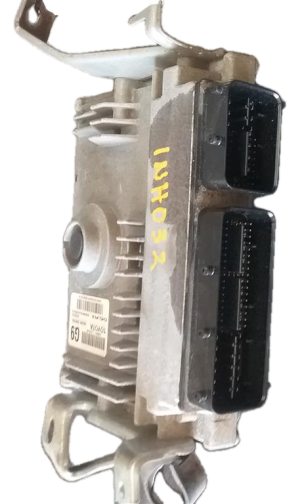
(OEM #89661-02M91)— A rare but possible cause of a no-start condition. A recall for this issue on earlier models makes it a part to consider if all else fails.
Trusted brands: Toyota (OEM)
OEM price range: $700-$900
Aftermarket price range: $250-$500 (remanufactured)
Related Codes That Often Appear With This One
- P1603 — P1603 indicates 'Engine Stall History'. These two codes often appear together, logging that the engine has had trouble both starting (P1604) and staying running.
- P0171 — This 'System Too Lean' code points to a lack of fuel. It can appear with P1604 if a weak fuel pump is causing both low fuel pressure during operation and a hard start condition.
- P0300-P0304 — Cylinder misfire codes can accompany P1604 if the root cause is related to weak spark from old plugs or failing ignition coils, affecting both starting and running.
Technical Service Bulletins (TSBs) & Recalls
- 2AZ-FE Engine Oil Consumption: Addresses excessive oil consumption in some 2009 Corollas equipped with the 2.4L 2AZ-FE engine (not the standard 1.8L). Details a procedure to replace the piston a
Platform-Specific Known Issues
- A safety recall (NHTSA ID: 10V384000) was issued for the 2005-2008 Corolla models for an Engine Control Module (ECM) that could develop cracks on the internal circuit board, leading to a no-start condition. While your 2009-2013 model is not officially covered, this history makes ECM failure a known, albeit uncommon, possibility in the broader Corolla family.
Mechanic-Grade Diagnostic Values
- Fuel Pressure (Engine Running) — expected: 44 - 50 PSI. Failure: Pressure below 44 PSI indicates a weak fuel pump or clogged filter.
- Fuel Pressure Leakdown (Engine Off) — expected: >= 21 PSI after 5 minutes. Failure: Pressure dropping below 21 PSI within 5 minutes indicates a faulty check valve in the fuel pump assembly or a leaking injector.
- Crankshaft Position Sensor Resistance (Cold Engine) — expected: 985 - 1600 Ohms. Failure: A reading outside this range indicates a faulty sensor.
- Crankshaft Position Sensor Resistance (Hot Engine, approx. 176°F/80°C) — expected: 1265 - 1890 Ohms. Failure: A reading outside this range when the engine is warm points to a sensor failing under heat.
- Battery Voltage (Cranking) — expected: >= 10.0 Volts. Failure: Voltage dropping below 10.0V during cranking indicates a weak or failing battery that cannot support the ECM and starting systems simultaneously.
Hidden / Shadow Codes Worth Checking
- Freeze Frame Data: While not a shadow code, Toyota service information emphasizes that for P1604, analyzing the freeze frame data is the primary diagnostic step. This data snapshot shows all sensor values at the moment the startability fault occurred, pointing to the root cause (e.g., low fuel pressure, no RPM signal, etc.). (see via Any professional OBD-II scanner with freeze frame data capability, including Toyota Techstream.)
Scan Tool Commands That Help
- Toyota Techstream: Active Test: Control the Fuel Pump / Speed — Use this command to manually turn on the fuel pump with the engine off. This is essential for testing fuel pressure without cranking the engine, and for verifying the fuel pump circuit (relay, wiring, pump) is functional.
- Toyota Techstream: Utility: Fuel Density Learning Value Reset — This is more common on Flex Fuel models but can be relevant. If the ECM incorrectly learns a high alcohol content in the fuel, it can cause starting problems. A TSB for other Toyota models notes this can cause P1604. Use this reset if fuel is known to be good but starting is hard.
Wiring & Ground Locations
- E1 — Located on the left kick panel area.. This is a primary chassis ground point for several interior and engine-related components. A loose or corroded E1 ground can cause a variety of intermittent electrical issues, including problems with the immobilizer system.
- A1, A2 — Located on the left front of the engine compartment.. These are major ground points for components in the engine bay. A compromised ground here can affect the ECM or other critical sensors needed for starting.
- A3, A4 — Located on the right front of the engine compartment.. Similar to A1/A2, these are key ground distribution points. Ensuring they are clean and tight is a crucial step in diagnosing any electrical fault, including a no-start.
- EFI Relay & C/OPN Relay — The EFI (Electronic Fuel Injection) relay is in the engine room relay block (J/B). The C/OPN (Circuit Opening) relay, which it controls, is often in the instrument panel J/B.. The ECM commands the EFI relay, which in turn activates the Circuit Opening Relay to power the fuel pump. A failure in either relay or the wiring between them will cut power to the fuel pump, causing a crank-no-start and P1604.
Real Owner Repair Stories
- Reddit user in r/MechanicAdvice (Toyota RAV4 (Gen 4, similar electrical architecture)) — P1604 code appeared, but the car started and ran fine. The code would return immediately after being cleared.
❌ Tried (didn't work) Clearing the code with a scanner.
✅ What actually fixed it The battery failed completely about a week after the P1604 code first appeared. Replacing the dead battery resolved the issue and the code did not return. The user noted this suggests the P1604 code was an early warning of the battery's imminent failure. - Owner Report (NHTSA ODI #10551666) — An owner reported that their vehicle stuttered on the drive, leading to fears it would shut down. A diagnostic test found code P1604 (ECM Error). The dealership performed tests on fuel samples and kept the vehicle for several days to investigate the computer.
OEM Part Supersession History
89661-02M91→89661-02F55— Standard part revision and update by the manufacturer.
Heads up: The new part number is a direct replacement for the original. However, when replacing the ECM, it must be programmed to the vehicle's VIN to ensure communication with the immobilizer and other modules.90919-05047 (Crankshaft Position Sensor)→90080-19024— Part revision by manufacturer.
Diagnostic Flowchart
Other Known Issues on This Vehicle
Issues unrelated to this code that are worth knowing about as an owner of this generation:
- Excessive Oil Consumption (2.4L 2AZ-FE Engine) 🔴 High — Common on the optional 2.4L engine (found in XRS models), not the standard 1.8L. Caused by faulty piston ring design. Can lead to engine failure if oil level is not monitored. (Ref: T-SB-0094-11)
- Water Pump Failure (1.8L 2ZR-FE Engine) 🟠 Medium — The water pump bearing or seal can fail, leading to coolant leaks, overheating, or the pulley separating from the pump shaft. It is a commonly reported failure point.
- Sticky/Sticking Accelerator Pedal 🔴 High — Part of a massive Toyota recall. The pedal's friction device could degrade, causing the pedal to be slow to return or, in rare cases, stick in a partially depressed position. (Ref: NHTSA ID: 10V017000)
- Faulty Power Window Master Switch 🟠 Medium — The driver's side power window master switch could short circuit, creating a fire hazard. This was subject to a safety recall. (Ref: NHTSA ID: 12V491000)
- Clunking Noise from Steering Intermediate Shaft 🟡 Low — A clunk or popping noise may be heard when turning the steering wheel at low speeds, caused by a faulty intermediate steering shaft.
Used vs. New Parts: Buying Guide for This Vehicle
When a used part is the smart pick: For this repair, a used part is a reasonable choice for the Engine Control Module (ECM). Since the primary failure mode is often internal and not wear-related, a tested unit from a reputable salvage yard can offer significant savings. Relays (like the EFI or C/OPN relay) are also excellent candidates for used parts.
Donor-vehicle mileage cap: roughly under 150000 miles for the part to have meaningful remaining life.
What to inspect on the donor part:
- For an ECM, ensure the part number is an exact match (e.g., 89661-02M91).
- Check for any signs of water damage or corrosion on the casing and connector pins.
- Verify the donor vehicle was not in a flood.
- Ask the seller if the part has been tested and if they offer a warranty, even if it's just 30-90 days.
OEM-only on this vehicle (don't cheap out):
- Fuel Pump Module Assembly
Aftermarket brands forum-validated for this vehicle:
- Denso (for fuel pump, ignition coils, sensors - often the OEM supplier)
- Aisin (for fuel system components)
Brands owners have reported issues with on this vehicle:
- Unnamed, 'white box' fuel pumps and critical sensors (crankshaft position sensor). Forum consensus strongly advises against ultra-cheap electronic parts for reliability reasons.
Real Owner Stories
Aggregated from forums and TSBs cited above. Mileages and costs reflect what owners reported in those sources.
2013 Toyota Corolla
Symptoms: Experienced a no-start condition and a P1604 code immediately after replacing the vehicle battery.
What fixed it: The issue suggested a possible immobilizer system fault requiring a key re-learn procedure after the battery swap.
Source hint: r/MechanicAdvice: P1604 code on 2013 Toyota Corolla, what does it mean?
Related OBD-II Codes
Frequently Asked Questions
Is my 2009-2013 Toyota Corolla covered by the ECM recall for circuit board cracks?
I have a 2009 Corolla with the 2.4L engine; could oil consumption be related to my starting issues?
Can a battery replacement cause a P1604 on my 2013 Corolla?
What fuel pressure should I expect when diagnosing a P1604 on this model?
Why does the P1604 code appear even though my battery is new?
Helpful Videos
Used OEM Parts in Stock
New Aftermarket Parts Available



The information in this article is provided for general reference and educational purposes only. Vehicle specifications, procedures, and part compatibility can vary by production date, trim level, and region. Always consult your vehicle's factory service manual and verify part numbers before purchasing or performing repairs. Safety-critical components such as airbags, seat belts, and braking systems should be installed by a qualified professional.
- Toyota Corolla:
- 🧭 Diagnostic Flowchart
- 🎬 Helpful Videos
- 🛍️ Shop This Part
- What's Unique About the 2009-2013 Toyota Corolla
- Symptoms You May Notice
- Most Likely Causes
- Rare But Worth Checking
- Diagnosis Steps
- Parts You'll Likely Need
- Related Codes That Often Appear With This One
- Technical Service Bulletins (TSBs) & Recalls
- Platform-Specific Known Issues
- Mechanic-Grade Diagnostic Values
- Hidden / Shadow Codes Worth Checking
- Scan Tool Commands That Help
- Wiring & Ground Locations
- Real Owner Repair Stories
- OEM Part Supersession History
- Other Known Issues on This Vehicle
- Used vs. New Parts: Buying Guide for This Vehicle
- Real Owner Stories
- 2013 Toyota Corolla
- Related OBD-II Codes
- Frequently Asked Questions
- 🎟️ Get 5% Off