

P1604 on 2014-2018 Toyota Highlander: Startability Malfunction Causes and Fixes
On a 2014-2018 Toyota Highlander, code P1604 is most often caused by water intrusion and corrosion in the main Engine Control Module (ECM) connector, as documented in Toyota TSB #T-TT-0462-17. This water leak often originates from a poorly sealed aftermarket windshield or its associated de-icer harness. This can lead to a no-start or stalling condition. The fix involves locating the ECM behind the glove box, cleaning and sealing the A43 connector, and addressing the water source; in severe cases
- P1604 on a 2014-2018 Highlander means 'Startability Malfunction' and is a serious issue that can leave you stranded.
- The most likely cause is water damage in the main engine computer (ECM) connector, as detailed in Toyota TSB T-TT-0462-17.
- Before replacing any parts, your first step should be to disconnect the battery and carefully inspect the A43 ECM connector for corrosion.
- This code is often accompanied by others, like P1603 (stall), P1605 (rough idle), and P030x (misfires), which are symptoms of the main fault.
- If the ECM connector is clean, the next most likely cause is a problem with the fuel delivery system, such as the fuel pump or its control module.
What's Unique About the 2014-2018 Toyota HIGHLANDER
The third-generation Highlander (2014-2019) is specifically known for an issue where water can leak and travel through the main wiring harness, collecting in the A43 ECM connector. This is often traced back to poorly sealed aftermarket windshields, specifically the de-icer harness connection. Water enters the harness and wicks its way through the wiring, eventually pooling in the ECM connector which is located in the dry environment of the cabin. Toyota issued Technical Service Bulletin #T-TT-0462-17 to address this exact problem, making it a primary and unique diagnostic starting point for this vehicle when a P1604 code appears.
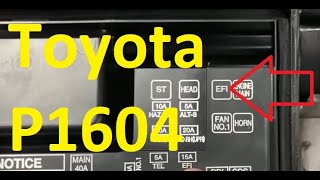
🎬 Watch: A breakdown of common causes for the P1604 code.Diagnostic Flowchart
Tap your situation to follow the diagnostic path that matches what you're seeing on this vehicle.
Symptoms You May Notice
- Engine cranks but does not start
- Engine takes an extended time to start
- Engine starts and then immediately stalls.
- Rough idle after starting.
- Check Engine Light is on
- VSC (Vehicle Stability Control) light may illuminate
- Vehicle may enter 'limp mode' with reduced power.
- No sound from the fuel pump when the key is turned to 'ON'
- Replacing the fuel pump without first checking for power at the pump or inspecting the ECM connector. Many owners and shops may jump to a fuel pump diagnosis when the root cause is electrical.
- Replacing fuel injectors or spark plugs without confirming a fuel pressure or spark issue first. The P1604 code on this vehicle is more often related to the systems that *control* fuel and spark (ECM, fuel pump module) rather than the end components themselves.
Most Likely Causes
- Water Intrusion and Corrosion in ECM Connector (A43) 🔴 High Probability As per TSB #T-TT-0462-17, water can wick through the engine wiring harness, often from a poorly sealed aftermarket windshield de-icer harness, and pool in the ECM connector, causing corrosion. This is the most well-documented cause for this specific vehicle.
How to confirm: Disconnect the battery. Remove the glove box to access the ECM. Carefully disconnect the A43 connector and visually inspect both the harness side and the ECM side for green or white crusty corrosion, moisture, or bent/damaged pins. The A43 connector is a specific plug on the ECM.
Typical fix: Clean the connector terminals meticulously with an electrical contact cleaner and a small, soft brush or terminal cleaning kit. Ensure the connector is completely dry using compressed air. Apply a thin layer of dielectric grease to the connector seal to prevent future moisture intrusion. Crucially, the source of the water leak (e.g., windshield seal, de-icer harness) must be identified and permanently repaired. If corrosion is severe and has damaged pins, the connector terminals, harness section, or even the ECM may need replacement.
Est. part cost: $10-$30 for cleaner and grease, $800+ if the ECM needs replacement. - Failing Fuel Pump or Fuel Pump Control Module 🟡 Medium Probability → Shop Fuel Pump TSB #T-SB-0072-19 links P1604 with low or no fuel pressure, which can be caused by a failing fuel pump or its control module (sometimes called Fuel Pump ECU). This can be a standalone failure or a consequence of the electrical issues from the primary water intrusion problem.
How to confirm: Listen for the fuel pump to prime (a brief hum from the rear of the vehicle) when the key is turned to 'ON'. If it's silent, check the C/OPN relay and EFI fuses first. A fuel pressure test is the definitive way to confirm low pressure, though many Toyotas do not have an easy service port, making this difficult for DIYers.
Typical fix: Replacement of the fuel pump control module or the entire fuel pump assembly. The fuel pump is located inside the fuel tank, accessible from under the rear seat. The control module on 2017-2019 models is located in the left rear quarter panel area.
Est. part cost: $200-$900 for a fuel pump control module, $150-$400 for a fuel pump assembly. - Weak or Failing Battery / Charging System Issue ⚪ Low Probability → Shop Vehicle Battery
How to confirm: Test the battery voltage with a multimeter. It should be ~12.6V with the engine off and 13.7-14.7V when running. A simple voltage test is not enough; a load test at an auto parts store is more definitive. Check terminals for tightness and corrosion.
Typical fix: Clean battery terminals and cable ends. If the battery fails a load test, replace it. If the running voltage is low, diagnose the alternator and charging system.
Est. part cost: $150-$300 for a new battery.
Rare But Worth Checking
- Faulty Engine Control Module (ECM): → Shop Engine Control Module (ECM) While the ECM itself can fail, it's much more common for its connections to be the problem. This should be considered only after all other possibilities, especially connector corrosion, have been ruled out. An ECM failure is often a result of the water damage, not an independent event.
- Clogged Fuel Filter: The fuel filter is integrated into the fuel pump assembly in the tank. While it can become clogged, it is less common than the pump or control module failing. It is typically replaced as part of the entire fuel pump assembly.
- Faulty Crankshaft Position Sensor: → Shop Engine Crankshaft Position Sensor A failing crankshaft position sensor can prevent the ECM from detecting engine rotation, leading to a no-start condition that can trigger P1604. This is less common than the water intrusion or fuel system faults.
Diagnosis Steps
- Read all stored DTCs with an OBD-II scanner. Note all codes, especially P1603, P1605, P030x, and U0100, as they provide critical context. Use a tool like Techstream to analyze freeze frame data for clues about the conditions when the code was set.
- Disconnect the vehicle's negative battery terminal.
- Access the Engine Control Module (ECM) by removing the glove box assembly.
- Carefully disconnect the A43 connector. Thoroughly inspect the connector (both the harness side and the ECM side) for any signs of moisture, green or white corrosion, or bent/damaged pins. This is the most critical step for this vehicle.
- If corrosion is found, meticulously clean the terminals using an electronic contact cleaner and a terminal cleaning kit or small brush. Let it dry completely and apply dielectric grease to the connector seal before reconnecting. Identify and repair the source of the water leak (e.g., windshield seal, de-icer harness).
- If the connector is clean, reconnect it and the battery. Check the battery's state of charge and perform a load test. Verify alternator output is between 13.7-14.7V when running.
- Listen for the fuel pump priming when the ignition is turned on. If there's no sound, check the C/OPN and EFI fuses and relays.
- If possible, perform a fuel pressure test to confirm if pressure is within specification. (See 'Specific Diagnostic Values' for specs). Low pressure points towards a failing fuel pump or control module.
- If no fuel pressure or starting issues are apparent, check the resistance of the Crankshaft Position Sensor.
- If all other systems check out, the issue may be with the ECM itself, which may require professional testing or replacement.
Parts You'll Likely Need
- Electronic Contact Cleaner & Dielectric Grease — Required for cleaning and protecting the corroded ECM connector, which is the most common cause of P1604 on this Highlander.
Trusted brands: CRC, WD-40 Specialist
Aftermarket price range: $10-$30 - Fuel Pump Control Module
(OEM #89571-34070 (2014-2016), 89571-58010 (2017-2019))— This module can fail, leading to the low fuel pressure conditions described in TSB #T-SB-0072-19, which triggers P1604. Part numbers differ by model year; always verify with VIN.
Trusted brands: Toyota (OEM), Denso
OEM price range: $300-$600
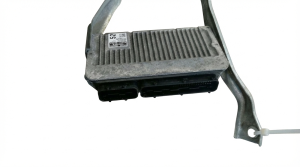
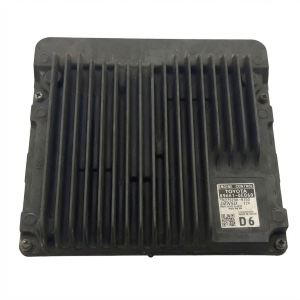
Aftermarket price range: $200-$450 - Engine Control Module (ECM)
(OEM #Varies by VIN)— In cases of severe, unrepairable corrosion damage to the connector pins, the entire ECM may need to be replaced. This part is VIN-specific and will require programming.
Trusted brands: Toyota (OEM)
OEM price range: $800+
Aftermarket price range: $400-$700 (Remanufactured)
Related Codes That Often Appear With This One
- P1603 — Often logged as 'Engine Stall Malfunction', it is a direct result of the starting/running issue that also triggers P1604.
- P1605 — Defined as 'Rough Idling Malfunction', this code appears when the engine manages to start but cannot maintain a stable idle, a common symptom of the P1604 fault.
- P0300-P0306 — These are random or specific cylinder misfire codes. They are a symptom of the underlying fuel delivery or control problem causing P1604.
- P0171 — 'System Too Lean (Bank 1)' indicates a lack of fuel, which directly aligns with the low fuel pressure conditions mentioned in TSBs related to P1604.
- U0100 — 'Lost Communication With ECM/PCM' can be triggered by the same electrical connection issues (like a corroded connector) that cause P1604.
- P0335 — 'Crankshaft Position Sensor 'A' Circuit' can be a root cause for the no-start condition that sets P1604.
Technical Service Bulletins (TSBs) & Recalls
- T-TT-0462-17: Describes various drivability concerns, including P1604, caused by corrosion and water in the A43 ECM connector, often from leaking aftermarket windshields and their de-icer harnesses.
- T-SB-0072-19: Mentions P1604 in a list of DTCs that can occur due to low or no fuel pressure, potentially related to the fuel pump control module.
Platform-Specific Known Issues
- Toyota Technical Service Bulletin T-TT-0462-17 specifically calls out that water from poorly sealed aftermarket windshields can travel down the windshield de-icer harness and wick through the engine room main harness, causing corrosion in the A43 ECM connector and leading to P1604 and other drivability DTCs.
- An owner of a 2015 Highlander reported multiple engine misfire codes (P0300-P0306), stall code (P1603), stability malfunction (P1604), and rough idle (P1605) concurrently, which ultimately led to the discovery of internal engine damage.
Mechanic-Grade Diagnostic Values
- Fuel Pressure (Low Pressure Side) - 2014-2016 2GR-FE — expected: 304 to 343 kPa (44 to 50 psi). Failure: Pressure below this range indicates a fuel delivery problem (pump, filter, or controller).
- Fuel Pressure (Low Pressure Side) - 2017-2018 2GR-FKS — expected: 196 to 833 kPa (28 to 121 psi). Failure: Pressure outside this wide range indicates a problem with the low-pressure pump or its controller.
- Fuel Pressure (High Pressure Side) - 2017-2018 2GR-FKS — expected: 2,400 to 19,500 kPa (348 to 2828 psi) at 3000 rpm. Failure: Pressure below this range points to an issue with the high-pressure mechanical fuel pump.
- Crankshaft Position Sensor Resistance (2014-2016 2GR-FE) — expected: Cold: 985 to 1,600 Ω. Hot: 1,265 to 1,890 Ω.. Failure: Resistance outside of the specified range indicates a faulty sensor.
Hidden / Shadow Codes Worth Checking
- Pending DTC with Freeze Frame Data: P1604 may be stored as a 'Pending' code without becoming a 'Current' or 'History' code if the fault occurs but does not repeat on the next drive cycle. Toyota's system does this so the freeze frame data (FFD) from the initial event can still be viewed by a technician using Techstream, which is critical for diagnosis. (see via Toyota Techstream software is required to view this status and the associated freeze frame data.)
Scan Tool Commands That Help
- Toyota Techstream: Active Test: Control Fuel Pump / Speed — This command allows a technician to manually turn on the fuel pump to verify its operation and check for power delivery from the Fuel Pump Control Module, bypassing the normal startup sequence. This is a key step in differentiating an electrical control issue from a failed pump motor.
- Toyota Techstream: Active Test: Control the Injection Mode (2GR-FKS only) — For 2017-2018 models, this test allows switching between port and direct injection. However, it is a known issue that selecting 'Direct' may result in an error. This is useful for a technician to know so they don't waste time diagnosing a software bug.
- Toyota Techstream: Data List & Freeze Frame Data — This is the most important function for P1604. It allows the technician to see the exact state of all engine sensors (RPM, coolant temp, fuel trims, etc.) at the moment the startability fault occurred, which provides essential clues to the root cause.
Wiring & Ground Locations
- ECM Connector A43 — Behind the glove compartment, plugged into the Engine Control Module.. This is the specific connector identified in TSB #T-TT-0462-17 as being susceptible to corrosion from water wicking through the main harness, which is a primary cause of P1604.
- Engine Harness Grounds (2GR-FE) — Key ground points are located on top of the valve covers (bolted to the body near the strut towers) and on the side of the cylinder head, directly underneath the throttle body.. A poor engine ground can cause erratic sensor readings and insufficient power to control modules, leading to starting issues and codes like P1604.
- Interior Ground Point — A common factory ground cluster is located behind the driver's side kick panel, near the interior fuse box.. The ECM and other interior modules rely on a clean, solid chassis ground. A loose or corroded ground in this location can cause a wide range of electrical issues, including no-start conditions.
- Fuel Pump Control Module (2017-2019) — Mounted in the left-hand (driver's side) rear quarter panel area, accessible by removing interior trim.. Knowing the location is critical for testing power to the fuel pump or replacing the module, which is a common cause of fuel pressure-related P1604 faults on these later models.
Model Year Variations Within This Range
- 2014-2016: These years use the 2GR-FE V6 engine with port injection only. The fuel pressure specification is 44-50 psi. The Fuel Pump Control Module is typically part number 89571-34070.
- 2017-2018: These years use the updated 2GR-FKS V6 engine with both port and direct injection (D-4S). The fuel system is more complex, with a low-pressure (28-121 psi) and high-pressure (up to 2800+ psi) side. The Fuel Pump Control Module is a different part, typically 89571-58010, and is located in the driver's side rear quarter panel.
Helpful Videos
Used OEM Parts in Stock
New Aftermarket Parts Available


The information in this article is provided for general reference and educational purposes only. Vehicle specifications, procedures, and part compatibility can vary by production date, trim level, and region. Always consult your vehicle's factory service manual and verify part numbers before purchasing or performing repairs. Safety-critical components such as airbags, seat belts, and braking systems should be installed by a qualified professional.
- Toyota HIGHLANDER:
- 🧭 Diagnostic Flowchart
- 🎬 Helpful Videos
- 🛍️ Shop This Part
- What's Unique About the 2014-2018 Toyota HIGHLANDER
- Symptoms You May Notice
- Most Likely Causes
- Rare But Worth Checking
- Diagnosis Steps
- Parts You'll Likely Need
- Related Codes That Often Appear With This One
- Technical Service Bulletins (TSBs) & Recalls
- Platform-Specific Known Issues
- Mechanic-Grade Diagnostic Values
- Hidden / Shadow Codes Worth Checking
- Scan Tool Commands That Help
- Wiring & Ground Locations
- Model Year Variations Within This Range
- 🎟️ Get 5% Off