

P1604 on 2009-2016 Toyota Sequoia 5.7L V8: Startability Malfunction Causes and Fixes
On a 2009-2016 Sequoia with the 5.7L Flex Fuel engine, P1604 is almost always caused by the engine computer incorrectly learning a high alcohol content in the fuel. The fix is a 'Fuel Density Learning Value Reset' with a bidirectional scan tool, not replacing parts. This issue is documented in Toyota TSB T-SB-0166-19.
- For a 2009-2016 Sequoia 5.7L Flex Fuel, P1604 is almost certainly due to an incorrect alcohol density reading in the ECM.
- Do NOT replace any parts until you have checked the 'Alcohol Density Estimate' with a bidirectional scan tool.
- The most common fix is a simple 'Fuel Density Learning Value Reset' which you can do yourself with the right tool (approx. $400) or have a shop perform.
- If the reset doesn't work, the issue may be covered under Toyota's Federal Emission Warranty (96 months/80,000 miles), which involves an ECM reflash and possibly a new fuel pump.
- If alcohol density is normal, then proceed with standard diagnostics for a no-start condition: battery, fuel pump, and starter.
What's Unique About the 2009-2016 Toyota Sequoia
For the Sequoia with the 5.7L Flex Fuel (3UR-FBE) engine, this code is uniquely and overwhelmingly tied to a known software issue. The ECM can incorrectly 'learn' a high percentage of ethanol in the fuel, even when using standard E10 gasoline. This miscalculation, often triggered by a battery change, running the fuel tank low, or even the switch to winter blend fuels, causes the ECM to command the wrong air/fuel mixture for starting, which leads to extended cranking and triggers P1604. This specific problem is well-documented by Toyota in Technical Service Bulletins (TSBs) T-SB-0166-19 and T-SB-0058-13, and is the most common cause for this code on this vehicle and its platform-mate, the Toyota Tundra.
Symptoms You May Notice
- Engine cranks for a long time before starting (extended crank)
- Engine cranks but does not start
- Engine starts and then immediately stalls
- Check Engine Light is on
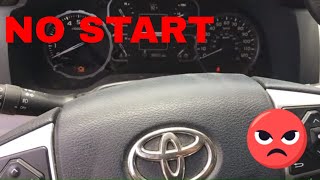
- Rough idle immediately after a difficult start 🎬 Watch: A mechanic explains why your 5.7L struggles to start.
- Replacing the fuel pump or starter motor before checking the 'Alcohol Density Estimate' value. The most common cause is a software issue that requires a reset, not a hardware replacement. 🎬 See how to fix the long start without replacing parts.
- Assuming the owner used E85 fuel when the high alcohol reading is an ECM glitch.
Most Likely Causes
- Incorrect Fuel Alcohol Density Value in ECM (Flex Fuel Models) 🔴 High Probability A known software logic issue in the ECM for 3UR-FBE engines causes it to miscalculate the ethanol content of the fuel, leading to an improper air/fuel mixture for starting. This is documented in Toyota TSBs T-SB-0058-13 and T-SB-0166-19.
How to confirm: Use a bidirectional scan tool to view live data. With the key on and engine off, check the 'Alcohol Density Estimate' parameter. If it reads 15% or higher (forum users report values as high as 63-85%) while using standard gasoline, this is the cause. Highly negative fuel trims (e.g., -20% or lower) are another strong indicator.
Typical fix: Perform a 'Fuel Density Learning Value Reset' using a bidirectional scan tool (like Toyota Techstream, Autel, or Launch). The path in Techstream is Powertrain > Engine and ECT > Utility > Fuel Density Learning Value Res 🎬 Watch: How to perform the alcohol density reset with Techstream.et. After the reset, it is recommended to add at least 2-3 gallons of fuel before starting. If the problem returns, an ECM software update (reflash) at a dealership may be required per TSB T-SB-0166-19, which may also involve replacing the fuel pump.
Est. part cost: $0 - Weak or Failing 12V Battery 🟡 Medium Probability → Shop Vehicle Battery A weak battery provides insufficient voltage and cranking speed, which the ECM can interpret as a startability fault. It can also cause the ECM to lose learned values or scramble its memory upon disconnection or a low voltage event, sometimes triggering the alcohol density issue.
How to confirm: Test the battery voltage with a multimeter. A healthy battery should read ~12.6V with the engine off and 13.7-14.7V while running. A load test, often offered for free at auto parts stores, is the most definitive test. Voltage dropping below 10V during cranking is a clear sign of a weak battery.
Typical fix: Replace the vehicle's 12V battery. The common size is a Group 27F.
Est. part cost: $150-$300 - Failing Fuel Pump ⚪ Low Probability → Shop Fuel Pump While less common as an independent failure for this code, the official TSB repair procedure for recurring alcohol density issues includes replacing the fuel pump assembly along with an ECM reflash, suggesting the pump's characteristics may contribute to the problem.
How to confirm: Listen for the pump to prime (a brief hum from the rear of the vehicle) when the key is turned to 'ON'. A definitive test requires checking the fuel pressure with a gauge to ensure it meets factory specifications (370-430 kPa or 53.7-62.4 psi).
Typical fix: Replace the fuel pump assembly located inside the fuel tank. If performing the TSB, this is done in conjunction with an ECM reflash.
Est. part cost: $400-$1200
Rare But Worth Checking
- Failing Starter Motor: → Shop Starter Motor While less common than the other causes, a starter that is failing can crank the engine too slowly, triggering a P1604 code even with a good battery. Replacement is very labor-intensive on the 5.7L V8 as it is located under the intake manifold.
Diagnosis Steps
- Scan for Codes: Connect an OBD-II scanner. Confirm P1604 is present and check for any other codes, especially P0171/P0174/P0172/P0175 or P1605.
- Check Alcohol Density (FFV Models): Using a bidirectional scan tool, access live data and view the 'Alcohol Density Estimate'. If it is 15% or higher (often seen at 60%+), this is your primary suspect.
- Reset Alcohol Density: If the density value is high, use the scan tool's special functions to perform a 'Fuel Density Learning Value Reset'. Clear all codes. It is recommended to add at least 3 gallons of fresh gasoline to the tank before attempting to start the vehicle. If it starts normally, the problem is solved.
- Test the Battery: If the alcohol density is normal or the vehicle is not a Flex Fuel model, test the battery's voltage and health. Ensure terminals are clean and tight. A weak battery can cause a host of electrical issues, including this code.
- Check Fuel Pressure: If the battery is good, check the fuel system. Listen for the fuel pump priming. If possible, connect a fuel pressure gauge and verify pressure is within the 53.7-62.4 psi range.
- Inspect the Starting System: If the battery is strong and fuel pressure is good, but the engine cranks slowly or not at all, the starter motor or its electrical circuit should be inspected.
Parts You'll Likely Need
- Bidirectional Scan Tool — This is a tool, not a part, but it's the most common requirement to fix the primary cause of P1604 by performing a 'Fuel Density Learning Value Reset'.
Trusted brands: Launch, Autel, Xtool, Toyota Techstream
Aftermarket price range: $350-$500 - 12V Battery
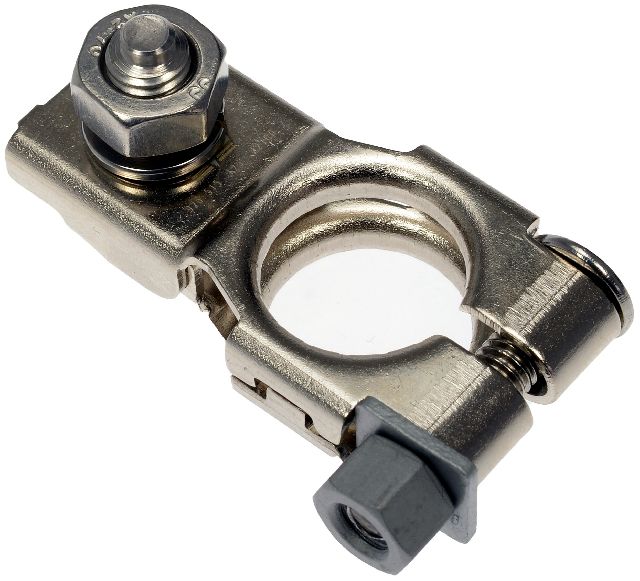
(OEM #Group 27F)— A weak battery is a common secondary cause of starting issues that can log a P1604 code.
Trusted brands: Interstate, DieHard, Duralast
OEM price range: $200-$300
Aftermarket price range: $150-$250 - Fuel Pump Assembly (Flex Fuel)
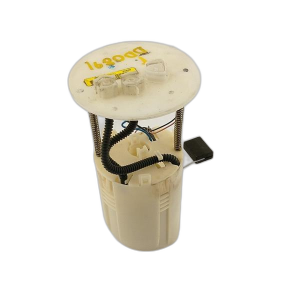
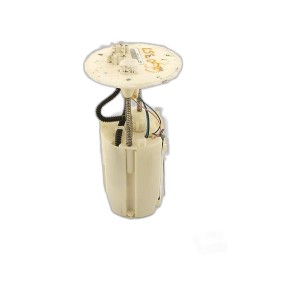
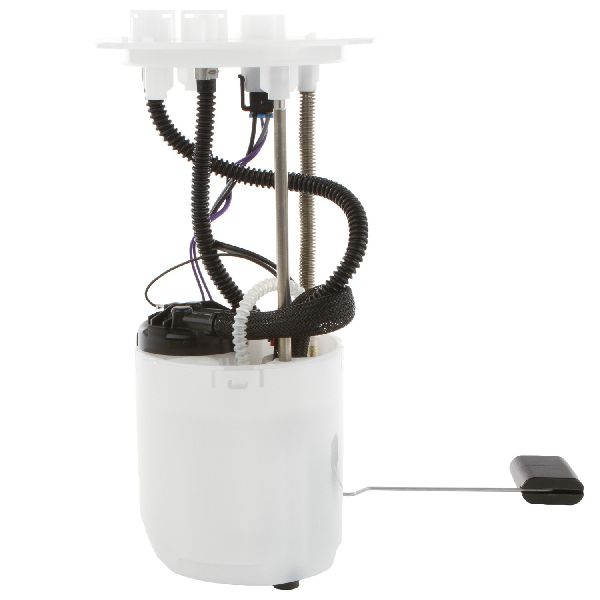
(OEM #77020-0C120 (Superseded by 77020-0C170))— If the alcohol density reset doesn't hold, the TSB repair procedure may require a new fuel pump and an ECM reflash. It can also fail independently, causing low fuel pressure.
Trusted brands: Denso, Aisin
OEM price range: $400-$600
Aftermarket price range: $80-$250
Related Codes That Often Appear With This One
- P0171 / P0174 — These 'System Too Lean' codes often appear with P1604 when the ECM has learned a high alcohol density. It injects fuel based on high ethanol content, but since the fuel is actually gasoline, the oxygen sensors detect a lean condition.
- P0172 / P0175 — These 'System Too Rich' codes can also appear as the ECM struggles to adapt to the perceived vs. actual fuel composition, causing wild swings in fuel trim.
- P1605 — This code for 'Rough Idling' is also mentioned in TSBs alongside P1604 as a potential companion code caused by the same alcohol density issue.
Technical Service Bulletins (TSBs) & Recalls
- T-SB-0166-19: Addresses hard start and P1604 on 2009-2018 Sequoia 3UR-FBE models due to incorrect alcohol density calculation. The full procedure may include an ECM reflash and fuel pump replacement.
- T-SB-0058-13: The older, superseded version of the bulletin for the same issue, covering 2012-2015 models.
Platform-Specific Known Issues
- Toyota Technical Service Bulletin T-SB-0166-19 (superseding T-SB-0058-13) directly addresses P1604 on 3UR-FBE engines caused by an elevated 'Alcohol Density Estimate'. The repair may be covered under the Toyota Federal Emission Warranty (96 months or 80,000 miles), which owners should verify with a dealer before paying for repairs.
Mechanic-Grade Diagnostic Values
- Fuel Pressure (FFV Models) — expected: 370 to 430 kPa (53.7 to 62.4 psi) with fuel pressure switching valve ON (high pressure mode, e.g., during startup). 270 to 330 kPa (39.2 to 47.9 psi) with valve OFF.. Failure: Pressure below 370 kPa (53.7 psi) during startup or below 270 kPa (39.2 psi) when running can indicate a weak fuel pump or leak.
- Live Data 'Alcohol Density Estimate' — expected: Below 15% when using standard E0-E10 gasoline.. Failure: A value of 15% or greater indicates the ECM has incorrectly learned the fuel composition, which is the primary cause of P1604 on these vehicles.
- Live Data 'Short FT #1' and 'Short FT #2' — expected: Should fluctuate around 0% on a healthy engine.. Failure: Consistently negative values (e.g., -15% or more) when 'Alcohol Density Estimate' is high confirms the ECM is trying to pull fuel to compensate for a perceived high ethanol content.
- Battery Voltage (Cranking) — expected: Should remain above 10.0V during engine cranking.. Failure: Dropping below 10.0V indicates a weak battery that may not have enough power to properly supply all modules during startup, potentially causing the ECM to glitch and trigger P1604.
Scan Tool Commands That Help
- Toyota Techstream: Powertrain / Engine and ECT / Utility / Fuel Density Learning Value Reset — This is the primary fix when the 'Alcohol Density Estimate' live data parameter is confirmed to be 15% or higher. It resets the learned value to zero.
- Autel / Launch / Xtool (Bidirectional): Special Functions > Fuel Density Learning Value Reset — This is the equivalent function on common aftermarket bidirectional scanners to fix the incorrect alcohol density reading without needing dealer software.
- Toyota Techstream: Active Test / Activate the Fuel Pressure Switching Valve — Used to manually switch the fuel pressure between high and low modes to verify the function of the fuel pressure switching valve and check for corresponding changes in fuel pressure and fuel trims.
Wiring & Ground Locations
- EC — Rear bank of the left cylinder head.. This is a primary engine ground. A poor connection here can cause erratic sensor readings and affect ECM operation, potentially leading to various running and starting issues.
- EB — Rear bank of the right cylinder head.. This is another primary engine ground point. Similar to EC, a compromised ground here can disrupt the ECM and engine sensor network.
- ECM (Engine Control Module) — Located in the engine compartment, on the passenger side.. Knowing the physical location is necessary for inspecting the module and its connectors for corrosion or damage, and for performing pin-out tests if deeper electrical diagnosis is required.
Real Owner Repair Stories
- Tundras.com forum user (2013 Toyota Tundra 5.7L Flex Fuel, 67,500 miles) — Hard starting, poor gas mileage, running rough.
❌ Tried (didn't work) Initially took to dealer who could not replicate the issue.
✅ What actually fixed it The owner purchased a bidirectional scan tool, found the 'Alcohol Density Estimate' was extremely high, and used the 'Fuel Density Learning Value Reset' special function. The truck immediately started starting and running normally. The alcohol level was reset to zero and the issue was resolved.
"I Checked Everything" — The Actual Cause
- For the P1604 code on a Flex Fuel Sequoia, the equivalent of a 'smoke test clean' scenario is when a technician confirms the battery, starter, and fuel pressure are all within specifications. In this case, the root cause is almost always the incorrect 'Alcohol Density Estimate' value stored in the ECM, which is not a physical failure and can only be identified and corrected with a bidirectional scan tool.
OEM Part Supersession History
77020-0C120→77020-0C170— Standard part evolution, likely for improved reliability or manufacturing process changes related to the TSB.
Model Year Variations Within This Range
- 2009: E85 flex-fuel capability was added for the 5.7L V8 in 2009, which is the engine variant (3UR-FBE) primarily affected by the P1604 alcohol density issue.
- 2010-2012: A 4.6L 1UR-FE V8 was available as a base engine, replacing the older 4.7L. These non-flex-fuel models are not prone to the primary alcohol density cause of P1604.
- 2013-2016: The 4.6L V8 was dropped after 2012, making the 5.7L V8 standard on all Sequoia models. This increases the likelihood that a Sequoia from these years has the affected 3UR-FBE flex-fuel engine.
Diagnostic Flowchart
Other Known Issues on This Vehicle
Issues unrelated to this code that are worth knowing about as an owner of this generation:
- Camshaft Tower Oil Leak 🟠 Medium — Common issue, often appearing between 60,000 and 120,000 miles. It's a seep from the sealant between the cam tower and cylinder head.
- Secondary Air Injection System (SAIS) Failure 🔴 High — Very common failure. The air pumps or switching valves fail, often due to moisture intrusion, forcing the vehicle into 'limp mode' with reduced power. Toyota issued a warranty extension for this issue on many vehicles (10 years/150,000 miles). (Ref: Warranty Extension (CSP ZHA))
- Water Pump Leak/Failure 🟠 Medium — A frequent failure point, typically between 60,000 and 120,000 miles. The pump often develops a slow leak from its weep hole before catastrophic failure.
- Cracked Exhaust Manifolds 🟠 Medium — The factory exhaust manifolds are prone to cracking, causing an exhaust leak and a ticking noise, especially when the engine is cold.
- Coolant Valley Plate Leak 🔴 High — A plate located under the intake manifold can develop a coolant leak that is difficult to see. It often drips down the back of the engine onto the transmission bellhousing.
Used vs. New Parts: Buying Guide for This Vehicle
When a used part is the smart pick: For this specific repair, used parts are generally not recommended. The primary fix is a software reset or reflash, which requires tools, not parts. If hardware is needed, a used fuel pump is a risky choice due to the high labor cost for installation, and a used battery is never a good idea.
Donor-vehicle mileage cap: roughly under 80000 miles for the part to have meaningful remaining life.
What to inspect on the donor part:
- If considering a used fuel pump, source it from a vehicle with a documented low-mileage and no history of fuel system issues.
- Ensure the donor vehicle was not from a region with known fuel quality problems.
OEM-only on this vehicle (don't cheap out):
- ECM Reflash: This software update can only be performed by a Toyota dealer or a highly-equipped independent shop with a J2534 pass-thru device and a subscription to Toyota's Techinfo service.
- Fuel Pump Assembly: Due to the high labor cost to access the in-tank pump, using a new OEM (Denso or Aisin) or top-tier aftermarket part is strongly recommended to avoid repeat failures.
Aftermarket brands forum-validated for this vehicle:
- Denso (Fuel Pump)
- Aisin (Fuel Pump)
Brands owners have reported issues with on this vehicle:
- Unbranded, 'white-box' fuel pump assemblies from online marketplaces. These have a high failure rate and are not worth the risk given the labor involved in replacement.
Real Owner Stories
Aggregated from forums and TSBs cited above. Mileages and costs reflect what owners reported in those sources.
2013 Toyota Tundra 5.7L V8 FFV
Symptoms: Extended crank and cold start misfire; the scan tool showed a 63% Alcohol Density Estimate despite using regular gasoline.
What fixed it: Identified as the issue covered by TSB T-SB-0166-19 regarding incorrect alcohol density calculation.
Source hint: Tundras.com thread titled '2013 Tundra 5.7L FFV - Extended Crank, Cold Start Misfire, 63% Alcohol Density'
2009-2019 Toyota Tundra 5.7L V8 FFV
Symptoms: Rough start issues common to the Flex Fuel 3UR-FBE engine.
What fixed it: The dealer performed the repair outlined in TSB T-SB-0166-19, which included a fuel pump replacement and an ECM reflash.
Source hint: Tundras.com thread titled 'Rough start Flex Fuel fix'
Related OBD-II Codes
Frequently Asked Questions
Does TSB T-SB-0166-19 apply to my 2009-2016 Toyota Sequoia with the 5.7L V8?
Will the Toyota Federal Emission Warranty cover the P1604 repair on my Sequoia?
My Sequoia is a Flex Fuel model; how can I tell if the ECM is miscalculating ethanol levels?
Can a weak battery really trigger a P1604 startability code on the 5.7L V8?
What is the specific fix for the 'Alcohol Density' issue mentioned in the TSB?
Is the Secondary Air Injection System failure related to P1604?
Helpful Videos

Used OEM Parts in Stock
New Aftermarket Parts Available


The information in this article is provided for general reference and educational purposes only. Vehicle specifications, procedures, and part compatibility can vary by production date, trim level, and region. Always consult your vehicle's factory service manual and verify part numbers before purchasing or performing repairs. Safety-critical components such as airbags, seat belts, and braking systems should be installed by a qualified professional.
- Toyota Sequoia:
- 🧭 Diagnostic Flowchart
- 🎬 Helpful Videos
- 🛍️ Shop This Part
- What's Unique About the 2009-2016 Toyota Sequoia
- Symptoms You May Notice
- Most Likely Causes
- Rare But Worth Checking
- Diagnosis Steps
- Parts You'll Likely Need
- Related Codes That Often Appear With This One
- Technical Service Bulletins (TSBs) & Recalls
- Platform-Specific Known Issues
- Mechanic-Grade Diagnostic Values
- Scan Tool Commands That Help
- Wiring & Ground Locations
- Real Owner Repair Stories
- "I Checked Everything" — The Actual Cause
- OEM Part Supersession History
- Model Year Variations Within This Range
- Other Known Issues on This Vehicle
- Used vs. New Parts: Buying Guide for This Vehicle
- Real Owner Stories
- 2013 Toyota Tundra 5.7L V8 FFV
- 2009-2019 Toyota Tundra 5.7L V8 FFV
- Related OBD-II Codes
- Frequently Asked Questions
- 🎟️ Get 5% Off