

P1605 on 2005-2016 Hyundai Tucson: Decoding a Confusing Internal PCM Error and Rough Idle Fault
This code is highly ambiguous for the Hyundai Tucson. It can mean a critical 'Internal Control ROM Error,' requiring Powertrain Control Module (PCM) replacement, which is common on some gas engines. Alternatively, especially on diesel engines, it simply means 'Rough Idling' with a wide variety of potential causes. Diagnosis must begin by identifying the engine type.
- The definition of P1605 on a Hyundai Tucson is uncertain and can mean two very different things.
- For gasoline engines, it may indicate a serious internal failure of the main engine computer (PCM), often requiring replacement.
- For diesel engines, it is a general 'Rough Idling' code that acts as a starting point for diagnosing a wide range of engine performance issues, and can even be caused by running out of fuel.
- Before any parts are replaced, a technician must confirm the vehicle's engine type and verify all power and ground connections to the PCM are stable.
- Due to the high cost of potential parts (PCM) and the diagnostic complexity, this code is best left to a professional service center.
What's Unique About the 2005-2016 Hyundai Tucson
The extreme confusion around this code is the key platform-specific issue. While many technical service documents for Hyundai diesel engines clearly define P1605 as 'Rough Idling,' some sources specifically link the 2005-2016 Tucson (gasoline models) to the much more severe 'Internal Control ROM Error' definition. This creates a critical diagnostic split: one path leads to a complex engine performance diagnosis for a diesel, while the other points directly to replacing the vehicle's main computer on a gasoline model. Without knowing the exact engine in the vehicle, a technician cannot be certain which definition applies.
Generation note: The 2005-2016 range covers the first (JM), second (LM), and the start of the third (TL) generation Tucson. Diesel engines were more common in European and other markets, while North America primarily had gasoline engines. The specific definition of P1605 is most critically dependent on the gasoline vs. diesel powertrain, which varies by market and generation.
Symptoms You May Notice
- Engine may stall unexpectedly, especially at idle
- Vehicle may not start or has difficulty starting
- Check Engine Light is on
- Noticeably rough, unstable, or vibrating idle
- Reduced engine power or vehicle entering 'limp mode'
- Hesitation or lack of acceleration
- Engine revs up and down on its own
- In some cases, ABS or other warning lights may appear if the PCM is failing
- Replacing spark plugs and coils to fix a 'Rough Idle' when the actual fault is the more serious 'PCM ROM Error' on a gasoline engine.
- Replacing the PCM when the actual fault is a simple 'Rough Idle' caused by a vacuum leak, bad fuel, or a clogged fuel filter on a diesel engine.
- Assuming the code means the same thing on a gasoline Tucson as it does on a diesel Tucson, leading to incorrect diagnostic paths.
Most Likely Causes
- Internal Powertrain Control Module (PCM) Failure 🔴 High Probability → Shop Engine Control Module (ECM) This definition ('Internal Control ROM Error') is cited for gasoline Hyundai models of this era and points to a non-recoverable internal fault, often due to software corruption or hardware failure.
How to confirm: After confirming stable voltage (12.6V+ off, 14V+ running) and clean, tight ground connections to the PCM, the diagnosis points to the PCM itself if no other codes are present and the code returns immediately after clearing. This is a process of elimination.
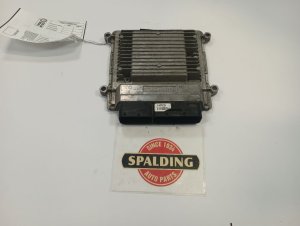
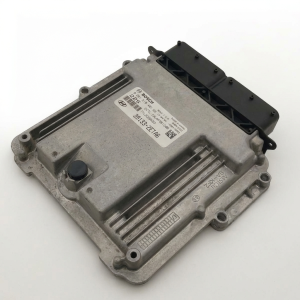
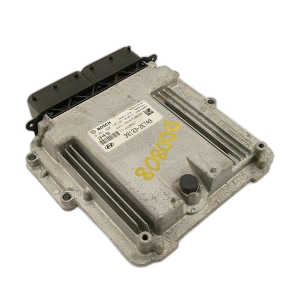
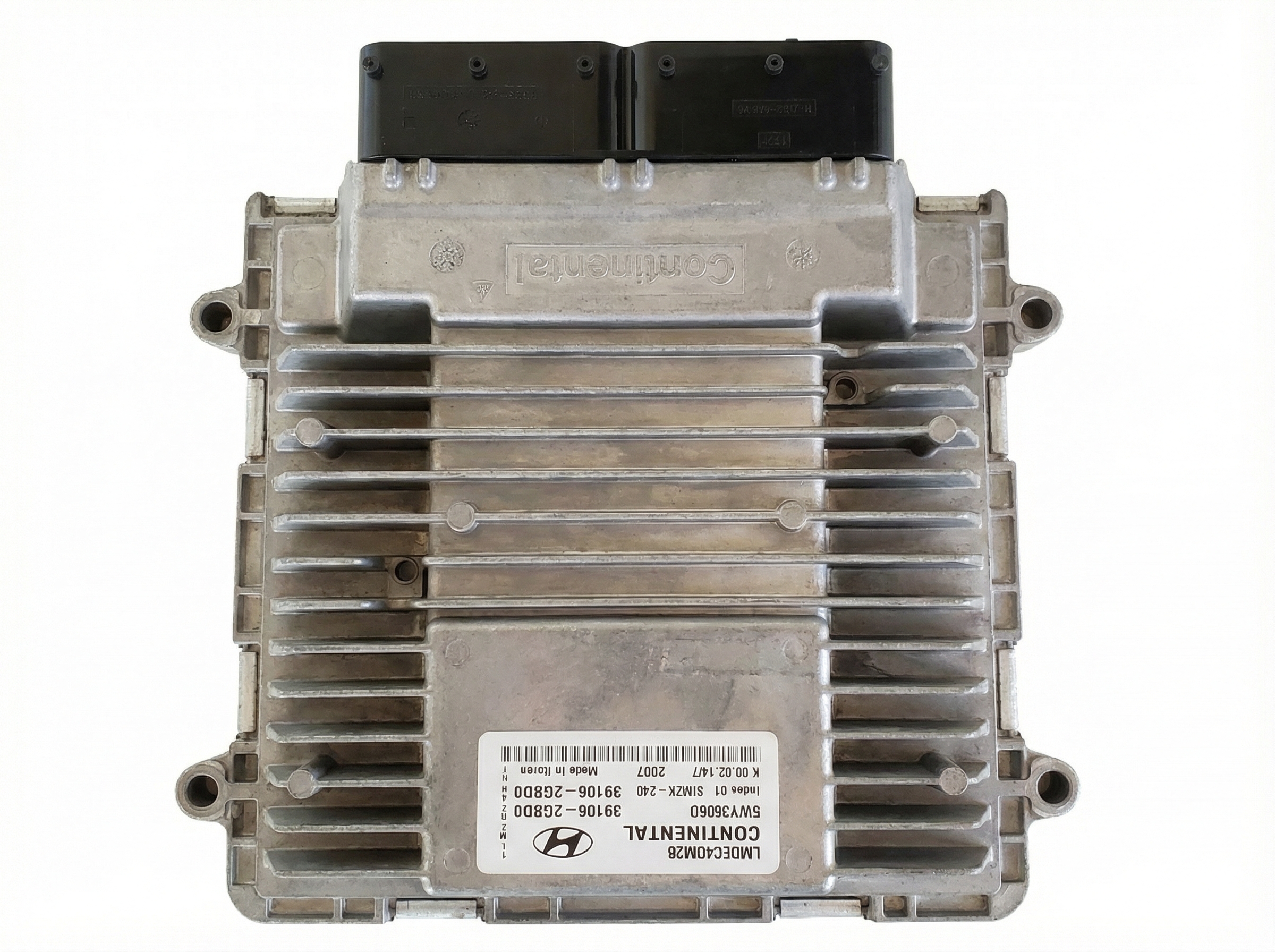
Typical fix: Replace the Powertrain Control Module (PCM) and have it programmed to the vehicle. Using a pre-programmed, VIN-matched unit can simplify installation. 🎬 Watch: How to replace your ECU without dealership prices
Est. part cost: $800-$1500 - Engine Performance Issues (Diesel Engines) 🔴 High Probability This 'Rough Idling' definition is well-documented for Hyundai's diesel (CRDi) systems. The list of potential causes is extensive, ranging from fuel quality to mechanical issues.
How to confirm: This is a symptom code. A mechanic will use a scan tool to check freeze frame data and live data for other issues. Key areas to investigate include fuel pressure, injector balance rates, EGR valve position, and glow plug operation.
Typical fix: Varies completely depending on the root cause. Could be anything from replacing a fuel filter, cleaning a dirty throttle body, replacing faulty glow plugs, or servicing fuel injectors.
Est. part cost: $50-$1000+ - Poor Electrical Connection or Low Voltage 🟡 Medium Probability All modern ECUs are sensitive to voltage. A weak battery, corroded terminals, or a bad ground can cause a variety of strange codes, including triggering a false PCM internal error or contributing to rough idle conditions.
How to confirm: Test the battery, charging system, and inspect all main power and ground wires connected to the PCM and engine block. Check for voltage drops under load.
Typical fix: Replace the battery, clean terminals, or repair the faulty ground connection.
Est. part cost: $20-$300
Rare But Worth Checking
- Running out of fuel:
Diagnosis Steps
- CRITICAL FIRST STEP: Identify your engine. Is it a gasoline or diesel engine? The entire diagnostic path depends on this.
- IF GASOLINE ENGINE (Suspect PCM ROM Error):
- Check for other DTCs. If P1605 is alone, it is more likely a PCM issue.
- Fully charge and test the battery. Ensure it is providing stable voltage (approx. 12.6V off, 13.5-14.8V running).
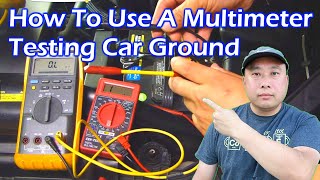
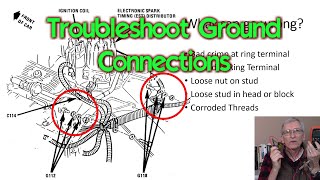
- Inspect, clean, and tighten all battery terminals and main chassis/engine ground connections. 🎬 Watch: How to troubleshoot automotive ground circuits
- Locate the PCM and verify its power and ground connections are clean, tight, and free of corrosion. Check for any damage to the wiring harness.
- If all power/ground checks pass and the code returns immediately after clearing, the PCM is very likely faulty and requires replacement.
- IF DIESEL ENGINE (Suspect Rough Idle):
- Check for other DTCs. Codes for injectors, glow plugs, or fuel pressure can point to the root cause.
- Confirm the vehicle has fuel. Running out of fuel is a known cause for this code on diesel models.
- Use a scan tool to analyze freeze frame data to see the exact conditions when the code was set (e.g., engine speed, fuel pressure, injector feedback).
- Investigate common diesel rough idle causes: clogged fuel filter, faulty glow plugs, EGR system problems, vacuum leaks, or failing fuel injectors.
Parts You'll Likely Need
- Powertrain Control Module (PCM)
(OEM #Varies by year/engine, e.g., 39170-23131 (2005-2006), 39175-2BTA7 (2004-2009), 39131-2E326 (2020-2021). Always verify with VIN.)— This is the most likely fix IF the vehicle is a gasoline model and the definition is 'Internal Control ROM Error'.
Trusted brands: Hyundai (OEM), Flagship One (Remanufactured), Module Mechanics (Remanufactured)
OEM price range: $800-$1800
Aftermarket price range: $350-$1000 (Remanufactured)
Related Codes That Often Appear With This One
- P1603 — On some systems, P1603 (Engine Stall History) is stored alongside P1605 (Rough Idling), as the two events are related. The ECM often stores P1605 first, making its freeze-frame data more valuable.
- U0100 — If the PCM is failing, it may also trigger U0100 (Lost Communication With ECM/PCM), indicating a broader communication breakdown on the vehicle's network.
- P0705 — In some cases, particularly with automatic transmissions, a P1605 can be related to communication errors between the transmission and engine modules, and may appear with codes like P0705 (Transmission Range Sensor Circuit Malfunction).
Technical Service Bulletins (TSBs) & Recalls
- TSB 20-AT-021H / 21-AT-003H: While not directly for P1605, these TSBs address updating the Transmission Control Unit (TCU) for judder issues on 7-speed DCT models (2016+). A faulty TCU or communication issue could potentially relate to a P1605 code.
Platform-Specific Known Issues
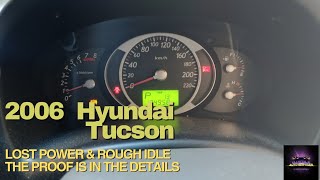
- A user on Hyundai Forums with a 2005 Tucson experienced a persistent stalling problem 🎬 See this diagnostic walkthrough for a stalling 2006 Tucson that the dealer struggled to diagnose over multiple visits, highlighting the intermittent nature of some faults that can trigger this code family.
Mechanic-Grade Diagnostic Values
- CRDi Fuel Rail Pressure (Live Data, Idle) — expected: 30-45 bar (approx. 435-650 PSI), should be stable.. Failure: Reading is erratic, static, shows 0.0, or is significantly outside the expected range.
- CRDi High-Pressure Fuel Rail (Live Data) — expected: Can range from ~250 bar at idle to over 1350 bar under load. A healthy system shows pressure tracking closely with the 'Target Common Rail Pressure' PID.. Failure: Actual pressure significantly lags behind target pressure, especially on acceleration (can indicate a weak high-pressure pump or leaks). Pressure is erratic or does not build.
- CRDi Injector Feedback/Balance (Live Data) — expected: Values should be close to 0 mm³/stroke for each cylinder at idle. Small variations are normal, but all should be relatively balanced.. Failure: One or more cylinders shows a consistently high positive or negative value, indicating the ECU is trying to compensate for a weak or over-fueling injector.
- PCM Sensor Reference Voltage (Gasoline Engine) — expected: ~5V at sensor connectors (e.g., TPS, MAP) with Key On, Engine Off.. Failure: Missing or low reference voltage points to a problem with the PCM's 5V circuit or a short in the harness, not necessarily an internal ROM error.
Scan Tool Commands That Help
- Hyundai GDS (Global Diagnostic System): Write VIN — This function is mandatory after installing a new, service-replacement PCM. The VIN must be written to the new module, or the engine will not start and/or will set a DTC P0630. This is a one-time write and cannot be used on a used PCM from another vehicle.
- Hyundai GDS (or equivalent advanced scanner): Active Test: Check the Cylinder Compression — For the diesel 'Rough Idle' variant, this test can help identify inconsistencies between cylinders by displaying the individual engine speed per cylinder, helping to pinpoint a specific cylinder with a mechanical or injector-related issue.
- Hyundai GDS (or equivalent advanced scanner): DTC Analysis & Freeze Frame Data — Crucial for the diesel 'Rough Idle' variant. Since P1605 is a symptom code, analyzing the freeze frame data and looking for other stored DTCs is the primary method to find the root cause (e.g., a fuel pressure code, EGR code, or injector code).
Wiring & Ground Locations
- ECM (Engine Control Module) — Typically located under the left side of the dashboard, near the driver's side kick panel.. This is the component that sets the code. Physical access is required to check its connectors for corrosion, and to test power and ground wires directly at the module if a PCM failure is suspected.
- G21 / G27 — Primary engine grounds located on the left side of the engine compartment.. A loose or corroded main engine ground can cause a host of electrical issues, including erratic sensor readings and false module failure codes like P1605. These should be inspected and cleaned before condemning the PCM.
- PCM/ECU Ground — The PCM harness has a dedicated ground wire that typically bolts to the chassis in the engine bay, often near the firewall or on an inner fender.. This is the direct ground for the control module. A poor connection here can cause the PCM to malfunction, potentially triggering a false internal error code. A voltage drop test on this ground is a key diagnostic step.
Real Owner Repair Stories
- AliExpress User Review / Forum Analysis (Hyundai 2.0L CRDi engine (D4HB), common in 2010-2014 Tucson/ix35 models, ~80k-100k miles) — Losing power under load (uphill, merging), intermittent Check Engine Light, rough idle. Eventually logged a persistent P0087 (Fuel Rail/System Pressure Too Low).
❌ Tried (didn't work) Initial diagnosis was difficult due to intermittent CEL., Considered replacing expensive high-pressure fuel pump.
✅ What actually fixed it Replaced the fuel rail pressure sensor (Part No. 09353-24100). The original sensor was found to be notorious for drifting out of calibration due to heat exposure. The user also noted corrosion in the electrical connector. Replacing the sensor restored stable fuel rail pressure and resolved all symptoms. - Tacoma World Forum User (Toyota Tacoma (different vehicle, but relevant diagnostic logic)) — P1605 and U0100 codes appeared.
✅ What actually fixed it The user noted from forum research that when P1605 appears alone, without other accompanying codes, it is very frequently an ECU/PCM failure. This provides anecdotal support for the 'process of elimination' diagnostic path for the gasoline engine ROM error variant.
When the Usual Fixes Don't Work
- While P1605 on this Tucson range is either 'ROM Error' or 'Rough Idle', it's important to note Hyundai has used this code for other meanings on different vehicles. For example, on a 1996-2000 Elantra, P1605 meant 'Rough Road Sensor Circuit Malfunction' and pointed to a faulty ABS wheel speed sensor. This underscores the absolute necessity of using a scan tool and service information that is specific to the vehicle's year and engine to get the correct code definition before starting any diagnosis.
Model Year Variations Within This Range
- 2004-2009 (First Gen, JM): Primarily used the 2.0L 'Beta II' I4 and 2.7L 'Delta' V6 gasoline engines in North America. The 'Internal ROM Error' definition of P1605 is most relevant to these gasoline engines. Diesel CRDi engines were available in other markets, which would use the 'Rough Idle' definition.
- 2009-2015 (Second Gen, LM / ix35): Switched to 2.0L and 2.4L 'Theta II' gasoline engines, and later the 2.0L 'Nu' engine. The V6 was dropped. The gasoline/diesel split for the P1605 definition continues. The 2nd gen was a significant redesign from the 1st.
- 2016 (Third Gen, TL): Introduced new powertrains including the 2.0L 'Nu' GDI and a 1.6L 'Gamma' Turbo GDI (T-GDI) engine paired with a 7-speed DCT. The increased complexity of direct injection and turbocharged systems adds more potential causes for a rough idle, but the fundamental P1605 split (ROM error vs. diesel rough idle) remains the primary diagnostic challenge.
Diagnostic Flowchart
Other Known Issues on This Vehicle
Issues unrelated to this code that are worth knowing about as an owner of this generation:
- Theta II Engine Failure 🔴 High — Widespread on 2.0L and 2.4L GDI engines (approx. 2011-2019 model years). Can occur at various mileages, sometimes prematurely. (Ref: Multiple recalls and a major class-action lawsuit settlement (e.g., HyundaiThetaEngineSettlement.com) resulted in extended warranties and potential engine replacements.)
- Rear Subframe Corrosion 🔴 High — Common on first-generation (2005-2009) and early second-generation (2010-2012) models, especially in 'Salt Belt' states. (Ref: Hyundai issued recalls (e.g., NHTSA 13V-354 / Hyundai Campaign 113) and service campaigns to inspect and rust-proof or replace the affected subframes.)
- Dual-Clutch Transmission (DCT) Hesitation and Failure 🟠 Medium → Shop Transmission Assembly — Common on models equipped with the 7-speed DCT (notably 2016-2017 models), often manifesting as hesitation from a stop, juddering, or premature failure. (Ref: Hyundai released multiple TSBs (e.g., 20-AT-021H, 21-AT-003H) with software updates for the TCU to improve logic and address judder.)
- Acceleration Issues / Hesitation 🟠 Medium — Frequently reported on the 2016-2018 model years, where the vehicle may refuse to accelerate from a stop for several seconds. Often related to the DCT issues. (Ref: Often addressed by the same TCU software updates intended for the DCT judder.)
Used vs. New Parts: Buying Guide for This Vehicle
When a used part is the smart pick: A used PCM is a cost-effective option if the original is confirmed faulty (for the gasoline 'ROM Error' P1605). It is significantly cheaper than a new OEM unit. However, it is NOT a plug-and-play solution and has critical programming requirements.
Donor-vehicle mileage cap: roughly under 120000 miles for the part to have meaningful remaining life.
What to inspect on the donor part:
- Part number MUST match your original PCM exactly. There are no substitutes.
- Inspect the donor unit for any signs of physical damage, corrosion, or water intrusion at the case seams and connectors.
- Obtain the VIN of the donor vehicle if possible, although it is not strictly necessary for cloning services.
OEM-only on this vehicle (don't cheap out):
- Powertrain Control Module (PCM) - While a used OEM unit is viable, it's strongly recommended to use either a new OEM part or a professionally remanufactured unit from a specialist. Avoid cheap, unbranded 'refurbished' units from non-reputable sources due to the programming complexity.
Aftermarket brands forum-validated for this vehicle:
- Flagship One (Remanufactured/Programmed)
- Module Mechanics (Remanufactured/Programmed)
- ECU Team Corp (Repair/Programming Service)
Brands owners have reported issues with on this vehicle:
- Any seller that claims a used PCM is 'plug and play' without requiring VIN programming or cloning of the original module's data. This is incorrect for modern Hyundai vehicles.
Real Owner Stories
Aggregated from forums and TSBs cited above. Mileages and costs reflect what owners reported in those sources.
2005 Hyundai Tucson
Symptoms: Persistent stalling problem that occurred multiple times; the vehicle would stall unexpectedly, making it difficult for the dealer to diagnose over several visits.
What fixed it: The source describes the frustration of intermittent stalling but notes the difficulty in diagnosis; in the context of P1605 gasoline models, this often points to a PCM ROM error requiring module replacement.
Source hint: https://www.hyundai-forums.com/threads/engine-stalled-one-too-many-times.58186/ - A 2008 thread discussing a persistent stalling problem on a 2005 Tucson
Related OBD-II Codes
Frequently Asked Questions
I have a 2016 Hyundai Tucson with a 7-speed DCT; could TSB 20-AT-021H or 21-AT-003H help with my P1605 code?
Is the P1605 code on my diesel Tucson different from the gasoline model?
Can a weak battery trigger a P1605 code on my 2005-2016 Tucson?
If I need to replace the PCM on my Tucson, can I use a used unit?
My 2016 Tucson hesitates from a stop and has a P1605; is this related to the Theta II engine issues?
Could running out of fuel cause P1605 on my diesel Tucson?
Helpful Videos


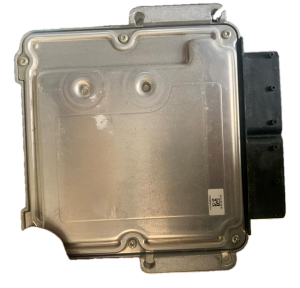
We Have This Part in Stock

The information in this article is provided for general reference and educational purposes only. Vehicle specifications, procedures, and part compatibility can vary by production date, trim level, and region. Always consult your vehicle's factory service manual and verify part numbers before purchasing or performing repairs. Safety-critical components such as airbags, seat belts, and braking systems should be installed by a qualified professional.
- Hyundai Tucson:
- 🧭 Diagnostic Flowchart
- 🎬 Helpful Videos
- 🛍️ Shop This Part
- What's Unique About the 2005-2016 Hyundai Tucson
- Symptoms You May Notice
- Most Likely Causes
- Rare But Worth Checking
- Diagnosis Steps
- Parts You'll Likely Need
- Related Codes That Often Appear With This One
- Technical Service Bulletins (TSBs) & Recalls
- Platform-Specific Known Issues
- Mechanic-Grade Diagnostic Values
- Scan Tool Commands That Help
- Wiring & Ground Locations
- Real Owner Repair Stories
- When the Usual Fixes Don't Work
- Model Year Variations Within This Range
- Other Known Issues on This Vehicle
- Used vs. New Parts: Buying Guide for This Vehicle
- Real Owner Stories
- 2005 Hyundai Tucson
- Related OBD-II Codes
- Frequently Asked Questions
- 🎟️ Get 5% Off