

P1605 on 2010-2024 Toyota 4Runner: Rough Idle Causes and Fixes
On a 2010-2024 4Runner, P1605 indicates a rough, unstable idle. The most common causes are simple and inexpensive to fix: a dirty Mass Airflow (MAF) sensor and/or a dirty electronic throttle body. Cleaning both is the best first step and often resolves the issue for under $30 in materials. Disconnecting the battery for a replacement can also trigger this code until the ECU relearns the idle trim.
- P1605 means 'Rough Idling' on your 4Runner; it's a symptom, not a specific part failure.
- The most common and effective first step is to clean the Mass Airflow (MAF) sensor and the electronic throttle body.
- Always check for other trouble codes first, as P1605 is often set as a result of another problem, like a vacuum leak (P0171/P0174).
- Do not replace expensive parts like the ECM or knock sensors unless all simpler causes have been definitively ruled out.
What's Unique About the 2010-2024 Toyota 4Runner
The 5th generation Toyota 4Runner with the 1GR-FE engine is known for its reliability, and a P1605 code is not indicative of a major systemic flaw. Unlike some other Toyota models where this code often points to water intrusion in the ECM, on the 4Runner it's more commonly related to basic maintenance items. Owners frequently resolve this code by cleaning the MAF sensor and throttle body, which can become dirty over time and disrupt the air/fuel mixture at idle. A recent battery change is another common trigger, as the ECM loses its learned idle values and may cause a rough idle until it recalibrates.
Symptoms You May Notice
- Rough, shaky, or unstable engine idle
- Engine RPMs dropping too low when stopped, sometimes to 350-500 RPM
- Engine may stall, especially at low speeds or shortly after startup
- Hesitation or low power during acceleration
- Check Engine Light is on
- Replacing knock sensors. Some generic code readers incorrectly define P1605 as a 'Knock Control CPU Malfunction'. For this 4Runner, P1605 is strictly 'Rough Idling'.
- Replacing oxygen (A/F) sensors. While a faulty sensor can cause a rough idle, it will almost always be accompanied by a specific sensor-related trouble code.
Most Likely Causes
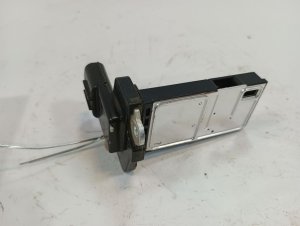
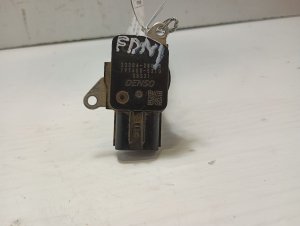
- Dirty Mass Airflow (MAF) Sensor 🔴 High Probability → Shop Fuel Injection Air Flow Meter The MAF sensor wire is delicate and can become contaminated with dirt and oil vapor over time, especially if an aftermarket oiled air filter is used. This causes it to send inaccurate airflow readings to the ECM, leading to an improper air/fuel mixture at idle.
How to confirm: Visually inspect the MAF sensor wires (located in the intake tube after the air filter box) for contamination. A diagnostic scan tool may also show irregular MAF readings at idle.
Typical fix: Carefully remove the sensor and clean it ONLY with a dedicated MAF sensor spray cleaner. Do not touch the sensor wires. Allow it to dry completely before reinstalling.
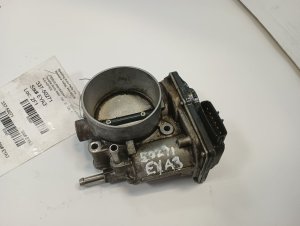
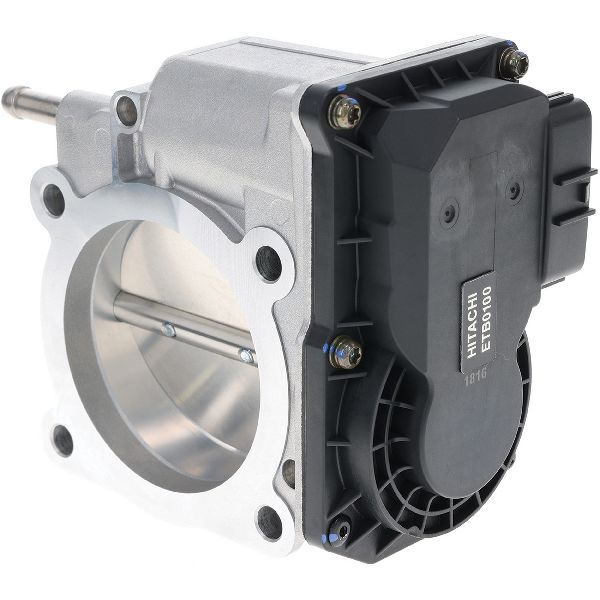
Est. part cost: $10-$15 for cleaner - Dirty Electronic Throttle Body 🔴 High Probability → Shop Fuel Injection Throttle Body Carbon and oil deposits from the PCV (Positive Crankcase Ventilation) system can build up around the throttle plate, restricting the small amount of air needed for a stable idle and causing the plate to stick.
How to confirm: Remove the intake hose from the throttle body and inspect the throttle plate and bore for a ring of black carbon buildup.
Typical fix: Clean the throttle body bore and plate with a dedicated throttle body cleaner and a soft cloth. It may be necessary to move the plate by hand (with the ignition off) to clean all surfaces. After cleaning, an idle relearn procedure may be necessary.
Est. part cost: $10-$15 for cleaner - Recent Battery Disconnection/Replacement 🟡 Medium Probability → Shop Vehicle Battery When the battery is disconnected, the ECM loses its stored memory for idle air control (the learned throttle plate position). When the vehicle is restarted, the idle may be too low and unstable, triggering a P1605 code until the ECM relearns the proper settings.
How to confirm: The code appears immediately after replacing or disconnecting the battery. The idle is very low (350-500 RPM).
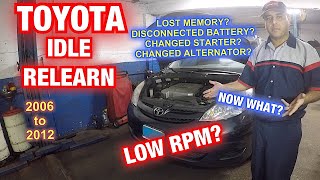
Typical fix: Perform an idle relearn procedure. This usually involves letting the vehicle idle in Park with all accessories off for 5-10 minutes until the idle speed stabilizes. Driving the vehicle for a few cycles may also allow it to relearn automatically.
Est. part cost: $0 - Vacuum Leak 🟡 Medium Probability Over time, rubber vacuum hoses, such as the PCV hose or intake manifold gaskets, can become brittle, crack, or disconnect. This allows unmetered air to enter the engine, disrupting the air-fuel ratio and causing a lean condition that leads to a rough idle.
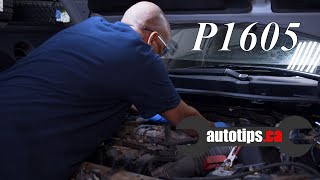
How to confirm: Visually inspect all vacuum hoses for cracks or disconnection. Listen for a hissing sound at idle. A smoke test is the most effective way to pinpoint the location of a leak. 🎬 Watch: How to quickly test for vacuum leaks
Typical fix: Replace the cracked or broken vacuum hose or intake gasket.
Est. part cost: $5-$50 - Weak or Failing Battery ⚪ Low Probability → Shop Vehicle Battery A battery with low voltage can cause a variety of strange electrical issues and codes, including P1605, as the ECM may not be receiving stable power, leading to erratic behavior.
How to confirm: Test the battery voltage with a multimeter. A healthy battery should read approximately 12.6 volts with the engine off and over 13.7 volts with the engine running.
Typical fix: Replace the vehicle's 12V battery.
Est. part cost: $150-$300
Rare But Worth Checking
- Failing Fuel Pump: While less common, a weak fuel pump can fail to deliver adequate pressure at idle, leading to stalling and a P1605 code. This was the subject of a recall for 2014-2015 models. Check for other fuel-related codes.
- Faulty Engine Control Module (ECM): → Shop Engine Control Module (ECM) In very rare cases, the ECM itself can be the cause. This should only be considered after all other possibilities have been thoroughly exhausted, as it is an expensive part to replace. It is often suspected when P1605 appears with no other accompanying codes.
Diagnosis Steps
- Check for other stored trouble codes. P1605 is often a symptom, and other codes (like P0171/P0174) can point to the root cause.
- If the battery was recently replaced or disconnected, perform an idle relearn procedure. Start the engine and let it idle in Park with all accessories off for 5-10 minutes until the RPM stabilizes.
- Visually inspect the engine bay for any obvious issues, such as disconnected vacuum hoses or loose electrical connectors.
- Clean the Mass Airflow (MAF) sensor using a dedicated MAF sensor cleaner.
- Clean the electronic throttle body using a dedicated throttle body cleaner.
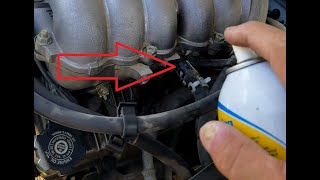
- If the idle is still rough, test for vacuum leaks using a smoke machine or by carefully spraying starter fluid around potential leak points and listening for a change in engine RPM.
- Test the battery and charging system to ensure proper voltage and stability. A healthy battery should be ~12.6V engine off and >13.7V engine running.
- If all else fails, inspect the fuel system for proper pressure and consider consulting a professional for more advanced diagnostics, such as checking fuel trims with a scan tool.
Parts You'll Likely Need
- Mass Airflow Sensor Cleaner — This is used for the most common and simple fix: cleaning the MAF sensor.
Trusted brands: CRC, WD-40 Specialist
Aftermarket price range: $10-$15 - Electronic Throttle Body Cleaner — This is used for the second most common fix: cleaning carbon buildup from the throttle body.
Trusted brands: CRC, Gumout
Aftermarket price range: $10-$15 - Mass Airflow (MAF) Sensor
(OEM #22204-31020)— If cleaning the sensor does not resolve the issue, the sensor itself may have failed and requires replacement.
Trusted brands: Denso (OEM)
OEM price range: $100-$150
Aftermarket price range: $50-$100
Related Codes That Often Appear With This One
- P1603 — This code means 'Engine Stall History'. If the rough idle condition that triggers P1605 becomes severe enough to cause the engine to stall, P1603 will also be stored.
- P1604 — This code means 'Startability Malfunction'. It is set when the engine cranks for too long without starting. It often appears with P1605 as the underlying issues (fuel, air, spark) can affect both starting and idling.
- P0171 / P0174 — These codes for 'System Too Lean' often point to a vacuum leak or a faulty MAF sensor, which are common root causes of the rough idle that triggers P1605. P1605 is the effect, while the lean codes point to the cause.
- U0100 — This code means 'Lost Communication With ECM/PCM'. Its appearance with P1605 could suggest a deeper electrical issue, such as a failing battery, a wiring problem, or a problem with the ECM itself.
Mechanic-Grade Diagnostic Values
- Mass Airflow (MAF) Sensor Reading at Idle — expected: 3.3 - 4.7 g/s at a stable, warm idle.. Failure: Readings significantly lower than 3.3 g/s often indicate a dirty or failing sensor. Readings that are erratic or do not increase smoothly with RPM also indicate a problem.
- Fuel Pressure at Idle (Dual VVT-i 1GR-FE) — expected: Approximately 324 kPa (47 psi). Note: Earlier single VVT-i engines used a lower pressure around 284 kPa (41 psi).. Failure: Significantly lower fuel pressure can indicate a weak fuel pump or a clogged filter, leading to a lean condition and rough idle.
Scan Tool Commands That Help
- Toyota Techstream: Read Freeze Frame Data — This is the most critical first step for a P1605 code. It captures a snapshot of all key engine parameters (engine speed, coolant temp, fuel trims, etc.) at the exact moment the rough idle was detected. This data is invaluable for determining if the issue is related to a lean condition, sensor malfunction, or other factors.
- Toyota Techstream: Utility -> Learning Value Reset / Reset Memory — After cleaning the throttle body or replacing a major air/fuel component, this function should be used to clear the ECM's learned values. This forces the computer to relearn the idle and fuel trim settings from a clean slate, which can resolve a rough idle that persists after the physical repair.
Real Owner Repair Stories
- Reddit user on r/4Runner (2014 SR5) — Rough idle with RPMs dropping to 350-500, P1605 code stored.
❌ Tried (didn't work) Initially just let the vehicle try to relearn idle on its own.
✅ What actually fixed it The issue occurred immediately after a battery replacement. The fix was cleaning the electronic throttle body. The community confirmed that disconnecting the battery wipes the ECM's learned idle position, and a dirty throttle body prevents it from relearning the correct position, causing the idle to be too low.
OEM Part Supersession History
22204-31010, 22204-0P010, 22204-0H010→22204-31020— Standard part consolidation and potential minor revisions by the manufacturer.
Model Year Variations Within This Range
- 2014-2024: For the 2014 model year, the 4Runner received a significant exterior facelift with new headlights and front fascia, but the 1GR-FE powertrain and the common causes for P1605 remained unchanged.
- 2020-2024: Starting in the 2020 model year, the 4Runner gained Toyota Safety Sense-P (TSS-P) as standard, which included adaptive cruise control and automatic emergency braking. It also received an updated infotainment system with Apple CarPlay and Android Auto. These changes do not affect the diagnosis of a P1605 code, which remains focused on the engine's air intake and fuel systems.
Diagnostic Flowchart
Other Known Issues on This Vehicle
Issues unrelated to this code that are worth knowing about as an owner of this generation:
- Front Differential Needle Bearing Failure 🟠 Medium — Common on vehicles with any amount of lift, but can occur on stock suspension. Typically presents as a cyclical groaning or grinding noise in 2WD that disappears in 4WD. (Ref: T-SB-0026-15 Rev2)
- Seized Front Brake Caliper Pistons 🟠 Medium — Very common, especially in regions using road salt. The pistons corrode and stick, causing brake drag, pulling to one side, and a burning smell.
- Secondary Air Injection System Failure 🔴 High — The foam filter inside the air pump can disintegrate, sending debris into the valves and causing them to stick open or closed. This triggers a check engine light and can put the vehicle in 'limp mode'. Can be an expensive repair ($2000+ at a dealer).
- Frame Rust 🔴 High — While improved from previous generations, 5th Gen 4Runners are still susceptible to significant frame rust, particularly in the salt belt. Preventative undercoating is highly recommended.
- Warped Front Brake Rotors 🟡 Low — Some owners report premature warping of the front brake rotors, leading to a shaking or pulsation feeling when braking.
- Failing Door Lock Actuators 🟡 Low — A common annoyance where one or more door lock actuators fail, preventing the door from locking or unlocking with the remote or power switch.
Used vs. New Parts: Buying Guide for This Vehicle
When a used part is the smart pick: For components like the electronic throttle body, a used OEM part from a reputable salvage yard can be a cost-effective alternative to a new part, especially if the failure is electronic rather than due to wear.
Donor-vehicle mileage cap: roughly under 100000 miles for the part to have meaningful remaining life.
What to inspect on the donor part:
- For a throttle body, check for a clean throttle plate and bore with minimal carbon buildup.
- Ensure all electrical connectors are intact with no bent or corroded pins.
- Verify the part came from a vehicle that was not involved in a front-end collision to avoid unseen damage.
OEM-only on this vehicle (don't cheap out):
- Mass Airflow (MAF) Sensor
Aftermarket brands forum-validated for this vehicle:
- Denso (for MAF Sensor, as they are the Original Equipment Manufacturer)
Brands owners have reported issues with on this vehicle:
- Cheap, unbranded MAF sensors from online marketplaces are frequently reported by owners to be poorly calibrated, fail quickly, or cause additional engine codes.
Real Owner Stories
Aggregated from forums and TSBs cited above. Mileages and costs reflect what owners reported in those sources.
2014 Toyota 4Runner SR5 4.0L V6
Symptoms: Immediately after a battery replacement, the vehicle experienced a low RPM/rough idle between 350-500 RPM and triggered a P1605 code.
What fixed it: Cleaning the throttle body to allow the ECU to properly relearn the idle position after its memory was wiped by the battery disconnection.
Source hint: T4R.org (Toyota 4Runner Forum) thread titled 'New battery leading to Low RPM/Rough Idle.' / Reddit r/4Runner
Related OBD-II Codes
Frequently Asked Questions
Why did my 2014 4Runner SR5 start idling at 350-500 RPM immediately after I changed the battery?
Can I use any cleaner to fix the P1605 code on my 1GR-FE 4.0L V6?
Is there a TSB for the grinding noise I hear in 2WD on my lifted 4Runner?
Will cleaning the MAF sensor fix a P1605 if I use an aftermarket oiled air filter?
How do I perform the idle relearn procedure on my 4Runner to clear the P1605 code?
Could a bad battery cause a P1605 rough idle code even if the car starts?
Helpful Videos



Used OEM Parts in Stock
New Aftermarket Parts Available

The information in this article is provided for general reference and educational purposes only. Vehicle specifications, procedures, and part compatibility can vary by production date, trim level, and region. Always consult your vehicle's factory service manual and verify part numbers before purchasing or performing repairs. Safety-critical components such as airbags, seat belts, and braking systems should be installed by a qualified professional.
- Toyota 4Runner:
- 🧭 Diagnostic Flowchart
- 🎬 Helpful Videos
- 🛍️ Shop This Part
- What's Unique About the 2010-2024 Toyota 4Runner
- Symptoms You May Notice
- Most Likely Causes
- Rare But Worth Checking
- Diagnosis Steps
- Parts You'll Likely Need
- Related Codes That Often Appear With This One
- Mechanic-Grade Diagnostic Values
- Scan Tool Commands That Help
- Real Owner Repair Stories
- OEM Part Supersession History
- Model Year Variations Within This Range
- Other Known Issues on This Vehicle
- Used vs. New Parts: Buying Guide for This Vehicle
- Real Owner Stories
- 2014 Toyota 4Runner SR5 4.0L V6
- Related OBD-II Codes
- Frequently Asked Questions
- 🎟️ Get 5% Off