

P1605 on 2013-2018 Toyota RAV4: Rough Idle Causes and Fixes
On a 2013-2018 RAV4, code P1605 indicates a rough idle where engine RPMs drop too low. The most common and effective fix is to clean the electronic throttle body and the Mass Airflow (MAF) sensor. This is a simple DIY job costing under $30 for the required cleaners.
- P1605 on a 2013-2018 RAV4 means the engine idle is unstable and dropping too low.
- Do not buy any parts initially. The most probable solution is cleaning the throttle body and MAF sensor, which costs less than $30 in supplies.
- This code is a symptom, not a diagnosis. If cleaning doesn't work, check for other codes or vacuum leaks before moving to more expensive parts.
- The job is very DIY-friendly and requires only basic hand tools and specific aerosol cleaners.
- Be aware of the open safety recall regarding the 12V battery hold-down clamp on these models, as it indicates a sensitivity in the electrical system.
What's Unique About the 2013-2018 Toyota RAV4
The XA40 generation RAV4 (2013-2018), equipped with the 2.5L 2AR-FE engine, is known to be sensitive to carbon buildup in the electronic throttle body. Over time, these deposits can restrict the small amount of air needed for a stable idle, directly causing the RPM drop that triggers a P1605 code. While many cars experience this, it's a particularly frequent cause on this platform, often making a simple throttle body cleaning the primary fix. A Toyota TSB for other models (S-SB-0008-16) explicitly links P1605 to excessive carbon buildup causing a rough idle.
Symptoms You May Notice
- Engine idles roughly, feeling shaky or unstable at a stop.
- Engine RPMs dip below normal at idle, sometimes causing the vehicle to shudder.
- Engine may stall when coming to a stop.
- Hesitation or a slight loss of power during acceleration.
- Difficulty starting the engine or a hard start.
- Replacing the ECM. The P1605 code rarely indicates a faulty Engine Control Module; it's almost always caused by an issue with an input like air, fuel, or spark.
- Replacing fuel injectors or the fuel pump without proper testing. While a fuel delivery issue can cause a rough idle, it's less common than a dirty throttle body or MAF sensor on this platform.
Most Likely Causes
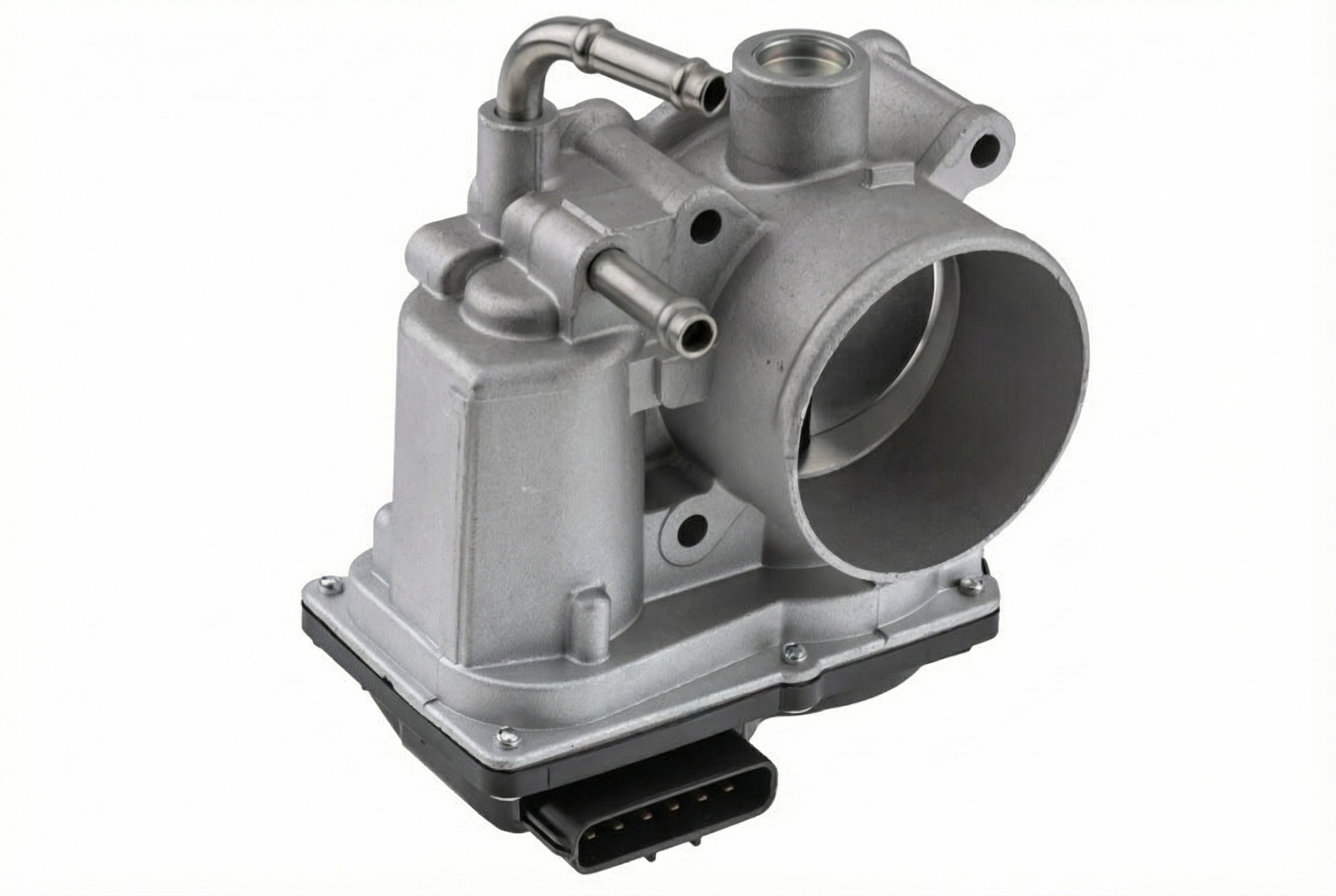
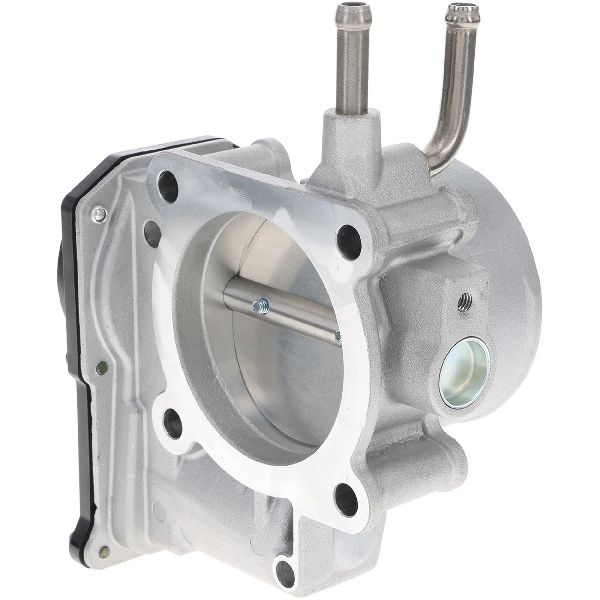
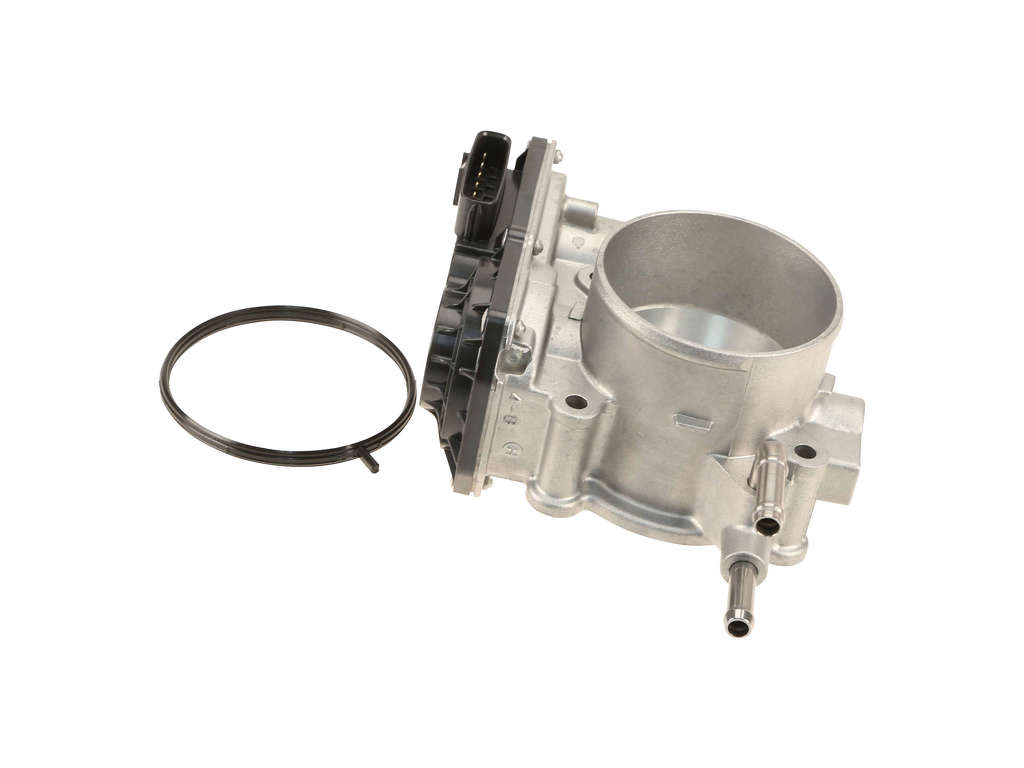
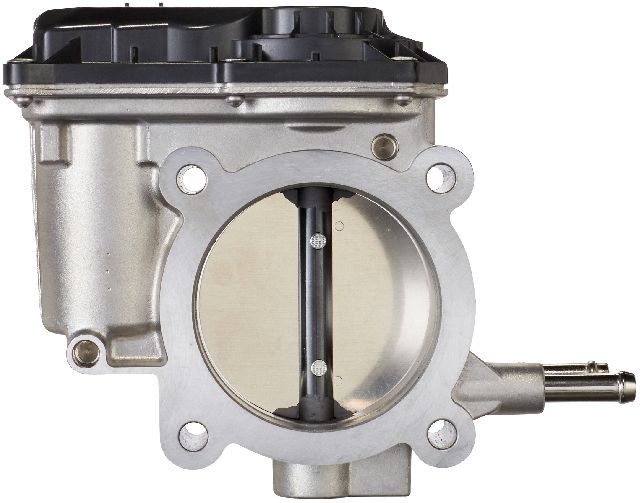
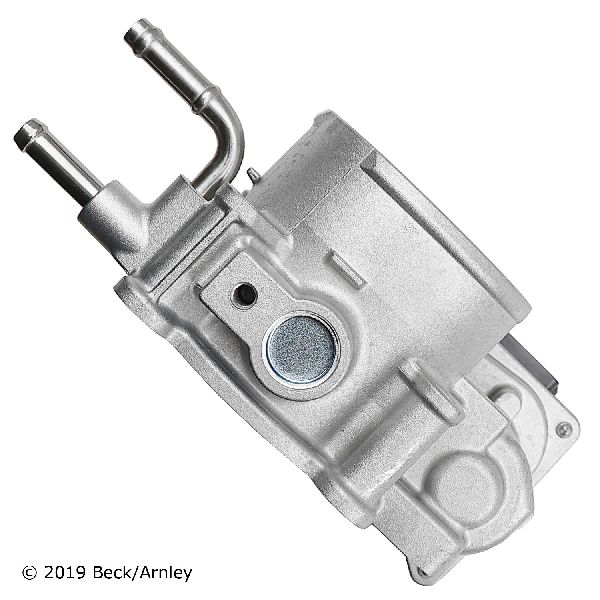
- Dirty Electronic Throttle Body 🔴 High Probability → Shop Fuel Injection Throttle Body Carbon deposits naturally accumulate around the throttle plate, restricting airflow at idle. This is a very common maintenance issue on modern engines, including the RAV4's 2AR-FE.
How to confirm: Visually inspect the inside of the throttle body by removing the main air intake hose. A ring of black carbon buildup around the edge of the throttle plate is a clear indicator.
Typical fix: Clean the throttle body bore and plate using a dedicated throttle body cleaner and a soft rag. It is recommended to replace the throttle body gasket during this service.
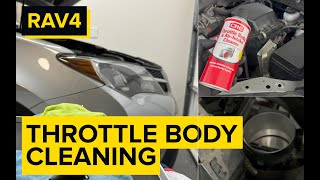
Est. part cost: $10-$15 for a can of cleaner, plus $8-$15 for a new gasket. 🎬 Watch: Step-by-step RAV4 throttle body cleaning guide
- Dirty Mass Airflow (MAF) Sensor 🔴 High Probability → Shop Fuel Injection Air Flow Meter The MAF sensor's delicate wires can get contaminated with dust, oil, and other debris, causing incorrect airflow readings. This is a frequent cause of idle and air-fuel mixture problems on many vehicles.
How to confirm: The sensor can be removed (typically with two screws) and visually inspected. However, contamination is often not visible to the naked eye. Cleaning it is a cheap and effective diagnostic step.
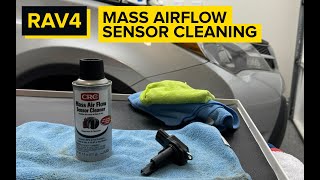
Typical fix: Remove the sensor and spray it thoroughly with a dedicated MAF sensor cleaner. Let it air dry completely before reinstalling. Never touch the sensor wires. 🎬 See how to safely clean your MAF sensor
Est. part cost: $10-$15 for a can of cleaner. - Vacuum Leak 🟡 Medium Probability Rubber and plastic vacuum hoses can become brittle and crack over time, allowing unmetered air to enter the engine and disrupt the air-fuel ratio.
How to confirm: Listen for a hissing sound around the engine bay at idle. The most reliable method is to have a mechanic perform a smoke test, which forces smoke into the intake to reveal the source of any leaks.
Typical fix: Replace the cracked or disconnected vacuum hose or leaking gasket.
Est. part cost: $5-$50 depending on the hose or gasket. - Weak or Failing Battery / Recent Disconnect ⚪ Low Probability → Shop Vehicle Battery Low system voltage can cause unpredictable behavior from the ECM and other modules. Additionally, if the battery was recently disconnected or replaced, the ECM's idle learn memory is erased, which can cause a temporary rough idle and log a P1605 until it relearns.
How to confirm: Test the battery voltage with a multimeter. A healthy battery should read approximately 12.6V with the engine off and 13.7V-14.7V with the engine running. If the battery was just replaced, this is the likely cause.
Typical fix: Recharge or replace the battery if it fails a load test. If the battery was just changed, perform an idle relearn procedure.
Est. part cost: $150-$300
Rare But Worth Checking
- Ran Out of Fuel: If the vehicle recently ran out of fuel, the engine's stumbling and stalling can log a P1605 code. If this is the cause, the code will likely not return after clearing it and refueling.
- Worn Spark Plugs or Faulty Ignition Coils: → Shop Ignition Coil While possible, a failing plug or coil will typically also trigger a specific misfire code (e.g., P0300-P0304), which would be the primary code to diagnose.
Diagnosis Steps
- Check for other stored trouble codes. Address any other codes, especially for misfires (P030x) or lean conditions (P0171), first.
- Clean the Mass Airflow (MAF) sensor using dedicated MAF sensor cleaner. Allow it to dry completely before reinstalling.
- Clean the electronic throttle body using dedicated throttle body cleaner and a soft cloth to remove all carbon buildup. It is advisable to replace the throttle body gasket at this time.
- After cleaning or battery replacement, perform an idle relearn procedure. A common method is to first ensure the engine is at operating temperature. Then, let the vehicle idle for 5-10 minutes with all accessories (A/C, radio, lights) turned OFF. Some owners report success by simply driving the vehicle for a few cycles, allowing the ECM to adapt automatically. A more forced procedure involves idling in Drive with the handbrake on for several minutes. 🎬 Watch: How to perform a Toyota idle relearn
- If the issue persists, inspect all vacuum hoses connected to the intake manifold for cracks or disconnections. Perform a smoke test to definitively check for vacuum leaks.
- Test the battery and charging system to ensure proper voltage.
- Inspect spark plugs for wear and proper gap. Test ignition coils.
- If all else fails, consider a fuel system diagnosis, including checking fuel pressure.
Parts You'll Likely Need
- Throttle Body Cleaner — This is required to remove the carbon buildup from the throttle body, which is the most likely cause of the rough idle.
Trusted brands: CRC, WD-40 Specialist
Aftermarket price range: $10-$15 - Mass Airflow Sensor Cleaner — Required to safely clean the delicate MAF sensor, another very common cause of P1605.
Trusted brands: CRC, Liqui Moly
Aftermarket price range: $10-$15 - Throttle Body Gasket
(OEM #22271-36020)— It is best practice to replace this gasket when removing the throttle body for cleaning to prevent vacuum leaks.
Trusted brands: Toyota (OEM), Fel-Pro
OEM price range: $10-$20
Aftermarket price range: $5-$15 - Mass Airflow (MAF) Sensor
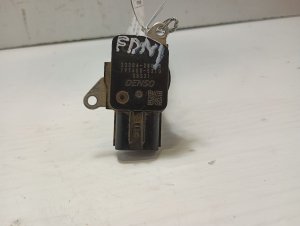
(OEM #22204-0V020 or 22204-0V010)— If cleaning the sensor does not resolve the issue and it is diagnosed as faulty, it will need to be replaced. Part number can vary, confirm with VIN.
Trusted brands: Denso (OEM)
OEM price range: $100-$150
Aftermarket price range: $50-$90
Related Codes That Often Appear With This One
- P1603 — P1603 means 'Engine Stall History'. It is often logged alongside P1605 because a severe rough idle can lead to the engine stalling completely.
- P0171 — P0171 means 'System Too Lean (Bank 1)'. A vacuum leak is a common cause for both a lean condition and a rough idle, so these codes can appear together.
Technical Service Bulletins (TSBs) & Recalls
- S-SB-0008-16: While for a Toyota iQ, this TSB directly links DTC P1605 with rough idle caused by excessive carbon buildup, supporting the primary diagnosis for the RAV4.
- T-SB-0023-15: Addresses torque converter shudder on 2013-2014 models, a separate common issue.
Platform-Specific Known Issues
- A safety recall was issued for 2013-2018 RAV4s concerning the 12-volt battery hold-down clamp. Some replacement batteries have smaller top dimensions, and if the clamp isn't tight, the battery can move during turns, causing the positive terminal to short against the clamp and create a fire risk. While not a direct cause of P1605, it highlights a known sensitivity in the vehicle's electrical/battery system.
Mechanic-Grade Diagnostic Values
- Mass Airflow (MAF) Sensor Reading at Idle — expected: Approximately 2.0-4.0 g/s at a stable, warmed-up idle with no load.. Failure: Readings that are erratic, stuck at a specific value, or significantly outside the expected range can indicate a faulty sensor or a vacuum leak.
- Short-Term Fuel Trim (STFT) and Long-Term Fuel Trim (LTFT) — expected: Ideally within +/- 5% at idle. Total trim (STFT + LTFT) should not exceed +/- 10%.. Failure: Consistently positive fuel trims (e.g., +15% or higher) strongly suggest a vacuum leak, as the ECM is adding fuel to compensate for unmetered air. Consistently negative trims could indicate issues like a leaking injector or faulty fuel pressure regulator.
- Battery Voltage — expected: Engine Off: ~12.6V. Engine Idling: ~13.7V - 14.7V.. Failure: Voltage below 12.4V with the engine off indicates a weak battery. Voltage below 13.2V or above 15.0V while running points to a charging system problem (alternator, regulator).
Hidden / Shadow Codes Worth Checking
- P1605 is an 'informational code': Toyota considers P1605 an informational code that records a symptom (rough idle) rather than a specific component failure. The key is to analyze the freeze-frame data stored with the code, which captures sensor readings at the exact moment the idle dropped, pointing to the underlying cause (e.g., lean mixture, low voltage). (see via A capable scan tool like Toyota Techstream is needed to view the detailed freeze-frame data associated with the P1605 code.)
Scan Tool Commands That Help
- Toyota Techstream: Data List & Freeze Frame Data — This is the first step. Use it to view the conditions when the P1605 was set. Look at fuel trims, MAF readings, and engine RPM to understand what caused the stumble.
- Toyota Techstream: Active Test: Control the Injection Volume — This allows a technician to manually increase or decrease the fuel injection volume to see if the idle stabilizes. It helps determine if the issue is fuel-related without replacing parts.
- Toyota Techstream: Utility: ETCS (Electronic Throttle Control System) Reset / Idle Learn — This function should be performed after cleaning or replacing the throttle body, or after disconnecting the battery. It erases the old learned idle values and forces the ECM to relearn the new correct idle position.
Wiring & Ground Locations
- Main Engine Ground Strap — Typically a thick wire running from the engine block (near the alternator or starter) or the transmission housing directly to the vehicle's chassis/frame.. A corroded or loose main engine ground can cause a variety of electrical issues, including erratic sensor readings and improper ECM function, which can lead to rough idle conditions.
- ECM/Sensor Grounds — The 2AR-FE engine has several smaller ground wires for the engine harness. Key locations are bolted to the cylinder head/valve cover and the intake manifold area.. A poor ground connection at these points can directly affect the signals from critical sensors like the MAF, throttle position sensor, and others, causing the ECM to receive incorrect data and command an improper idle.
Real Owner Repair Stories
- YouTube video from a diagnostic channel (2013-2018 Toyota RAV4) — Check engine light on, engine running rough, codes P1603 (Engine Stall History) and P1605 (Rough Idling). Live data confirmed misfires at idle.
❌ Tried (didn't work) Visual inspection of the air intake duct showed no cracks or obvious leaks.
✅ What actually fixed it The electronic throttle body was found to be heavily clogged with carbon deposits. The technician determined it was beyond cleaning and replaced the entire throttle body assembly. After replacement and clearing the codes, the engine idled smoothly and the codes did not return. - YouTube video from a diagnostic channel (Toyota vehicle (model not specified, but general diagnosis for P1605)) — P1605 code, rough idle, engine stalling.
❌ Tried (didn't work) Initial visual inspection of vacuum lines did not immediately reveal the issue.
✅ What actually fixed it A smoke test was performed, which revealed a significant leak from a cracked PCV (Positive Crankcase Ventilation) hose that was hidden from plain view. Replacing the broken vacuum hose resolved the lean condition and fixed the rough idle. - NHTSA ODI #10928436 — An owner reported that their vehicle stalled at a stoplight with the key light flashing. The vehicle was found to have stored codes P1605 and P219A at the time of the incident.
- NHTSA ODI #11205338 — A report describes a vehicle being towed to a dealership after stalling, where technicians recorded three trouble codes: P1603 (Engine Stall), P1604 (Startability Malfunction), and P1605 (Rough Idling).
- NHTSA ODI #11415574 — An owner experienced persistent issues despite replacing the fuel pump and vapor canister purge solenoid. The vehicle continued to display codes P0441, P0455, P1604, P1605, and P0171.
OEM Part Supersession History
22204-0V010, 22204-0T020→22204-0V020— Standard part revision and consolidation by the manufacturer.
Heads up: The newer part number 22204-0V020 is the correct replacement for the older numbers on this vehicle.N/A→N/A— The throttle body gasket, 22271-36020, appears to be consistent for the 2013-2018 model years without major supersessions noted.
Model Year Variations Within This Range
- 2013-2018: The 2.5L 2AR-FE engine and conventional 6-speed automatic transmission were used consistently throughout this generation for the non-hybrid models in North America, making the causes and fixes for P1605 very consistent across all years. No significant variations affecting this specific trouble code have been documented.
Diagnostic Flowchart
Other Known Issues on This Vehicle
Issues unrelated to this code that are worth knowing about as an owner of this generation:
- Torque Converter Shudder/Vibration 🟠 Medium — Common on 2013-2015 models, typically appears between 25-50 mph under light load. Can feel like driving over rumble strips. (Ref: T-SB-0023-15 addresses this issue with a software update for the ECM.)
- Clunking or Noisy Intermediate Steering Shaft 🟡 Low — A clunking or popping noise may be heard and felt through the steering wheel at low speeds, especially when turning. It is a well-documented complaint among owners. (Ref: While no specific recall exists for the RAV4, Toyota has released updated intermediate shafts for other models with the same issue.)
- Widespread Fuel Pump Failure 🔴 High — Affects millions of Toyota vehicles, including some 2019-2020 RAV4s, but the issue is known across the brand. The pump can fail without warning, causing the engine to stall while driving. (Ref: NHTSA recall 20V-012 (Toyota recall 20TA02) was issued, though it primarily targets later models, the problem is a known concern for the brand.)
- Grinding Rear Brakes at Low Speed 🟡 Low — A grinding noise from the rear wheels when applying brakes at low speed was common enough on 2013-2015 models to warrant a TSB. (Ref: T-SB-0037-15 describes replacing the rear brake pads and resurfacing or replacing rotors to fix the issue.)
Used vs. New Parts: Buying Guide for This Vehicle
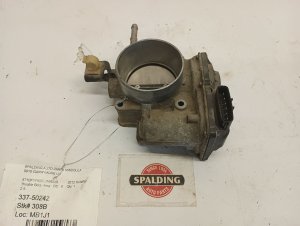
When a used part is the smart pick: A used electronic throttle body from a reputable salvage yard is a reasonable choice, especially from a lower-mileage donor vehicle. It should be thoroughly cleaned before installation. Other simple mechanical parts like intake hoses are also good candidates for used purchase.
Donor-vehicle mileage cap: roughly under 80000 miles for the part to have meaningful remaining life.
What to inspect on the donor part:
- Check for a clear return policy.
- Inspect the throttle body for physical damage to the housing or electrical connector.
- Ask for the VIN of the donor vehicle to verify mileage and check for accident history (avoid heavy front-end collisions).
OEM-only on this vehicle (don't cheap out):
- Mass Airflow (MAF) Sensor: Aftermarket MAF sensors are notoriously unreliable and can cause persistent performance issues. It is highly recommended to use a new OEM sensor, which is typically made by Denso.
Aftermarket brands forum-validated for this vehicle:
- Denso (for MAF Sensor, as they are the Original Equipment Manufacturer)
- Fel-Pro (for gaskets)
Brands owners have reported issues with on this vehicle:
- Unbranded or 'no-name' electronic sensors (like MAF sensors) from online marketplaces. These often use lower-quality components that do not meet the precise specifications required by the ECM.
Real Owner Stories
Aggregated from forums and TSBs cited above. Mileages and costs reflect what owners reported in those sources.
2014 Toyota RAV4 XLE
Symptoms: The engine RPMs would drop and the vehicle would start shaking, showing the classic P1605 symptoms.
What fixed it: Cleaning the very dirty throttle body and the MAF sensor cleared the code and smoothed out the idle.
Source hint: Reddit r/Rav4 - '2014 XLE with P1605 - now what?'
Related OBD-II Codes
Frequently Asked Questions
Does TSB T-SB-0023-15 apply to my 2014 RAV4 if I'm experiencing shaking?
I just replaced the battery in my 2015 RAV4 and now it's idling roughly and threw a P1605. What should I do?
Is there a safety concern with the battery on my 2013-2018 RAV4?
My 2014 RAV4 is stalling at stops; could this be the fuel pump recall I heard about?
Can I use any cleaner to fix the P1605 code on my RAV4's sensors?
How can I confirm if my RAV4 has a vacuum leak causing the P1605?
Helpful Videos

Used OEM Parts in Stock
New Aftermarket Parts Available



The information in this article is provided for general reference and educational purposes only. Vehicle specifications, procedures, and part compatibility can vary by production date, trim level, and region. Always consult your vehicle's factory service manual and verify part numbers before purchasing or performing repairs. Safety-critical components such as airbags, seat belts, and braking systems should be installed by a qualified professional.
- Toyota RAV4:
- 🧭 Diagnostic Flowchart
- 🎬 Helpful Videos
- 🛍️ Shop This Part
- What's Unique About the 2013-2018 Toyota RAV4
- Symptoms You May Notice
- Most Likely Causes
- Rare But Worth Checking
- Diagnosis Steps
- Parts You'll Likely Need
- Related Codes That Often Appear With This One
- Technical Service Bulletins (TSBs) & Recalls
- Platform-Specific Known Issues
- Mechanic-Grade Diagnostic Values
- Hidden / Shadow Codes Worth Checking
- Scan Tool Commands That Help
- Wiring & Ground Locations
- Real Owner Repair Stories
- OEM Part Supersession History
- Model Year Variations Within This Range
- Other Known Issues on This Vehicle
- Used vs. New Parts: Buying Guide for This Vehicle
- Real Owner Stories
- 2014 Toyota RAV4 XLE
- Related OBD-II Codes
- Frequently Asked Questions
- 🎟️ Get 5% Off