

P1605 on 2007-2013 Toyota Tundra 4.7L V8: Rough Idle Causes and Fixes
On a 2007-2013 Tundra with the 4.7L V8, code P1605 almost always means the engine is idling roughly due to a dirty Mass Airflow (MAF) sensor and/or a dirty throttle body. The most common fix is to clean both components, which costs under $25 and takes less than an hour.
- P1605 on the 4.7L Tundra means 'Rough Idling' and is a symptom, not a specific part failure.
- Before buying any parts, spend $25 on a can of MAF sensor cleaner and a can of throttle body cleaner. This is the most likely fix.
- Do not confuse this issue with the well-known software problem on the 5.7L Flex Fuel engine; the 4.7L's causes are typically much simpler.
- If the code appeared right after a battery change, it may resolve on its own after an idle relearn procedure.
What's Unique About the 2007-2013 Toyota Tundra
The 2007-2013 Tundra is the second generation of the truck. It's critical to distinguish the 4.7L 2UZ-FE engine from the 5.7L Flex-Fuel engine offered in the same truck. While P1605 on the 5.7L Flex-Fuel Tundra is famously linked to a specific ECM software bug requiring a dealer reflash (TSB T-SB-0058-13), this is not the case for the 4.7L V8. For this engine, the code is almost always triggered by more traditional and simple maintenance issues, primarily related to airflow.
Symptoms You May Notice
- Rough, shaky, or unstable engine idle, especially when stopped in gear.
- Engine RPMs dropping too low when stopped.
- Engine may stall at low speeds or shortly after startup.
- Check Engine Light is on.
- Replacing the ECM. Unlike the 5.7L Flex-Fuel Tundra, the 4.7L V8 rarely has an ECM software issue causing this code. The problem is almost always a simple maintenance item.
Most Likely Causes
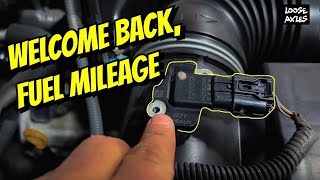
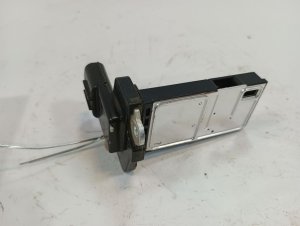
- Dirty Mass Airflow (MAF) Sensor 🔴 High Probability → Shop Fuel Injection Air Flow Meter The MAF sensor's delicate hot wire is sensitive to contamination from dust, debris, or oil from certain aftermarket air filters. This contamination causes incorrect airflow readings, leading to an unstable idle.
How to confirm: Visually inspect the sensor wires inside the MAF housing. If they appear dirty or coated, they need cleaning. A Reddit user noted even a tiny dandelion seed was enough to cause issues on their Tundra.
Typical fix: Remove the sensor and clean it carefully using only dedicated MAF sensor cleaner spray. Do not touch the wires. Let it dry completely before reinstalling.
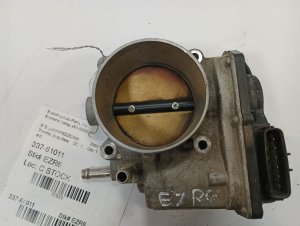
Est. part cost: $10-$15 for a can of cleaner. - Dirty Electronic Throttle Body 🔴 High Probability → Shop Fuel Injection Throttle Body
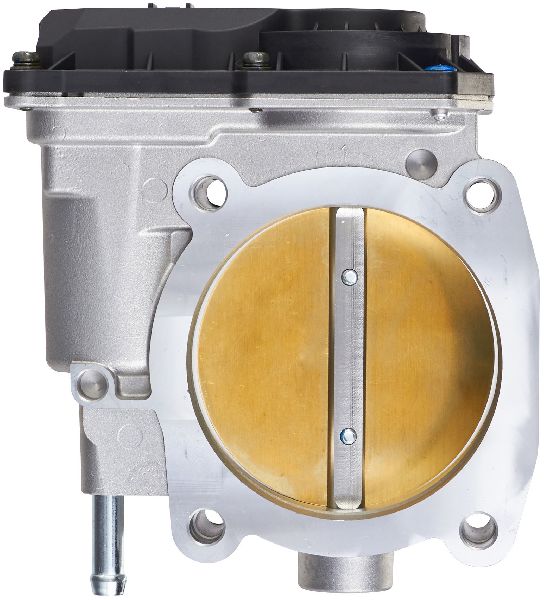
How to confirm: Remove the air intake hose from the throttle body and inspect the throttle plate and the bore for a ring of black carbon buildup.
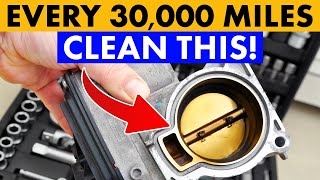
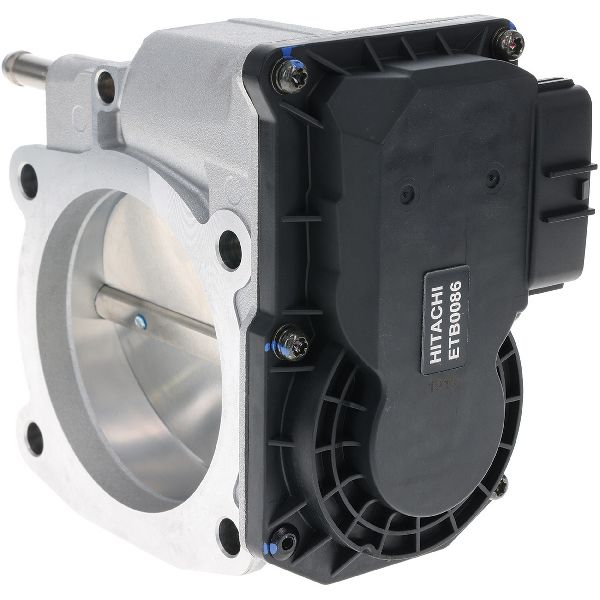
Typical fix: With the engine off, spray throttle body cleaner on a rag and wipe away the carbon buildup from the throttle plate and bore. Manually open the plate to clean the edges. This is often done at the same time as cleaning the MAF sensor. This cleaning also services the integrated Idle Air Control (IAC) function, which can get sticky from the same carbon buildup.
Est. part cost: $10-$15 for a can of cleaner. - Vacuum Leak 🟡 Medium Probability Rubber vacuum hoses and intake gaskets can become brittle and crack over time due to age and heat cycles, allowing unmetered air to enter the engine and disrupt the air-fuel ratio at idle.
How to confirm: Listen for hissing sounds around the engine bay at idle. A professional can perform a smoke test to pinpoint the exact location of the leak. Common leak points include the PCV hose and intake manifold gaskets.
Typical fix: Replace the cracked vacuum hose or leaking gasket.
Est. part cost: $5-$100 depending on the location of the leak. - Lost Idle Relearn Memory ⚪ Low Probability This occurs almost exclusively after the battery has been disconnected or replaced, erasing the ECM's learned idle values. The ECM needs to relearn the correct throttle plate angle to maintain a stable idle, compensating for normal carbon buildup.
How to confirm: The code appears immediately after reconnecting a battery.
Typical fix: Perform an idle relearn procedure. Start the engine, let it warm up completely (until the cooling fans cycle on), turn off all accessories (A/C, radio, lights), and let the truck idle in Park for 5-10 minutes for the ECM to relearn the correct idle speed. Sometimes a few drive cycles are required for the idle to fully stabilize.
Est. part cost: $0
Rare But Worth Checking
- Failing Spark Plugs or Ignition Coils: → Shop Ignition Coil While possible, this would typically be accompanied by specific misfire codes (P0300-P0308), which would point you to the correct cylinder.
- Weak Fuel Pump or Clogged Fuel Filter: Low fuel pressure can cause a rough idle and stalling. This would require a fuel pressure test to confirm.
Diagnosis Steps
- Check for any other stored trouble codes with an OBD-II scanner. Address other codes first, especially misfire or lean codes.
- If the battery was recently disconnected, clear the code and perform an idle relearn procedure.
- Visually inspect the entire air intake system, from the air filter box to the throttle body, for any cracks, loose clamps, or disconnected hoses.
- Remove and carefully clean the Mass Airflow (MAF) sensor using only dedicated MAF sensor cleaner. Let it dry completely before reinstalling.
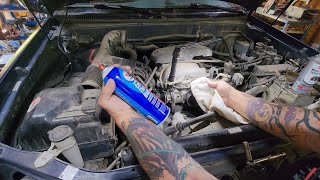
- Clean the electronic throttle body using throttle body cleaner and a soft cloth to remove all carbon buildup. 🎬 Watch: Step-by-step MAF and throttle body cleaning walkthrough
- If the problem persists, perform a smoke test to check for vacuum leaks from hoses or intake manifold gaskets.
- Inspect spark plugs for wear and ignition coils for proper function, especially if misfire codes are present.
- As a final step, consider testing fuel pressure to rule out a fuel delivery issue.
Parts You'll Likely Need
- Mass Airflow Sensor Cleaner — This is the most common and effective first step. Cleaning the MAF sensor is often all that is needed to resolve the rough idle.
Trusted brands: CRC, Liqui Moly
Aftermarket price range: $10-$15 - Throttle Body Cleaner — Often performed at the same time as cleaning the MAF, removing carbon from the throttle body helps restore smooth airflow at idle.
Trusted brands: CRC, WD-40 Specialist
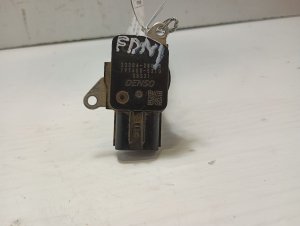
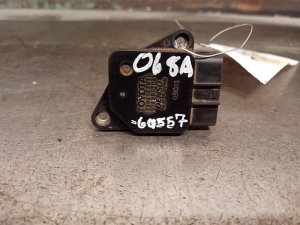
Aftermarket price range: $10-$15 - Mass Airflow (MAF) Sensor
(OEM #22204-0F030)— If cleaning the sensor does not resolve the issue, the sensor itself may have failed. This is much less common than it simply being dirty.
Trusted brands: Denso (OEM supplier, Part No. 197-6020)
OEM price range: $120-$180
Aftermarket price range: $50-$100
Related Codes That Often Appear With This One
- P1603 — This code means 'Engine Stall History' and is often stored with P1605 if the rough idle condition becomes severe enough to cause the engine to stall completely.
- P0171 / P0174 — These 'System Too Lean' codes indicate too much air or not enough fuel. A vacuum leak or a dirty MAF sensor is a common cause for both lean codes and the rough idle of P1605.
- P0300 - P0308 — These are cylinder-specific misfire codes. If the rough idle is caused by a bad spark plug or ignition coil, one of these codes will likely accompany P1605.
Platform-Specific Known Issues
- On the 2UZ-FE engine, the Idle Air Control (IAC) valve is not a separate, replaceable part. Its function is integrated into the electronic throttle body assembly. Therefore, cleaning the throttle body is the correct procedure for addressing idle control issues related to carbon buildup, as opposed to replacing a standalone IAC valve found on older engines. 🎬 See this pro-level Toyota throttle body cleaning guide
Technical Service Bulletins (TSBs) & Recalls
- TSB Bulletin #T-SB-0058-13: This bulletin notes that Tundra vehicles with the 3UR-FBE engine may exhibit a MIL "ON" condition with DTC P1605 (Rough Idle) after attempting to start the engine. It specifically mentions that Alcohol Density Estimate values may be high even though the vehicle was fueled with regular fuel, which can trigger this code alongside lean or rich codes.
Mechanic-Grade Diagnostic Values
- Low-Side Fuel Pressure at Idle — expected: 38-44 psi. Failure: Pressure significantly below this range indicates a weak fuel pump or clogged filter.
- Residual Fuel Pressure — expected: 21 psi or higher (five minutes after engine is turned off). Failure: A rapid drop in pressure can indicate a leaking injector or a faulty check valve in the fuel pump assembly.
- Throttle Position Sensor (TPS) Resistance (between terminals VTA & E2) — expected: 0.2-5.7 kOhms (fully closed), 2.0-10.2 kOhms (fully open). Failure: Readings outside of these ranges indicate a faulty TPS.
- Throttle Position Sensor (TPS) Resistance (between terminals VC & E2) — expected: 2.5-5.9 kOhms. Failure: Readings outside of this range indicate a faulty TPS.
Hidden / Shadow Codes Worth Checking
- Freeze Frame Data: P1605 is an informational code, so the freeze frame data is critical. It provides a snapshot of all engine sensor values (coolant temp, RPM, load, etc.) at the exact moment the idle dropped below the threshold. This data helps pinpoint whether the issue is related to a cold engine, high electrical load, A/C compressor engagement, or other specific conditions. (see via A professional scan tool like Toyota's Techstream software is required to view the multiple sets of freeze frame data that Toyota stores.)
Scan Tool Commands That Help
- Toyota Techstream: Freeze Frame Data Analysis — This should be the first step after reading the code. The service manual procedure for P1605 relies on analyzing the freeze frame data to narrow down the list of potential causes, such as checking the brake booster if the stop light switch was 'ON' when the code set.
Wiring & Ground Locations
- EC & EB — Main engine grounds are located on the rear of each cylinder head, near where the engine mates to the transmission.. Poor engine grounds can cause erratic sensor readings and unstable ECM operation, leading to a variety of running issues including rough idle. Ensuring these connections are clean and tight is a crucial step if basic maintenance doesn't solve the problem.
- EA — A ground point is located on the front left fender in the engine compartment.. This ground point serves various components in the engine bay. Corrosion or a loose connection here can contribute to electrical issues that may manifest as a rough idle.
- Coil Pack Ground — The bolt that holds each ignition coil pack to the valve cover also serves as a ground point for that coil.. A loose or corroded coil pack bolt can cause a weak spark, leading to a misfire that the ECM interprets as a rough idle, potentially setting P1605 without a specific misfire code.
OEM Part Supersession History
22204-75030→22204-0F030— Standard part update/revision by the manufacturer.
Model Year Variations Within This Range
- 2010-2013: For the 2010 model year, Toyota replaced the 4.7L 2UZ-FE V8 with the new 4.6L 1UR-FE V8. While the causes of P1605 are similar (primarily MAF and throttle body cleaning), it's important to ensure you are ordering parts for the correct engine, as sensors and other components may differ.
Diagnostic Flowchart
Other Known Issues on This Vehicle
Issues unrelated to this code that are worth knowing about as an owner of this generation:
- Secondary Air Injection System (SAIS) Failure 🔴 High — Very common, especially on 2007+ models. Pumps or valves get stuck open/closed due to moisture or debris, forcing the truck into 'limp mode'. Repair can be very expensive ($2000+). (Ref: T-SB-0230-12)
- Cracked Exhaust Manifolds 🟠 Medium — A well-known issue on the 2UZ-FE engine, causing an audible 'ticking' noise, particularly when the engine is cold. The noise may lessen as the manifold heats up and expands.
- Frame Rust 🔴 High — Affects vehicles operated in cold climates with high road salt usage. A class-action lawsuit led to a warranty enhancement program for frame inspection and potential replacement. (Ref: Warranty Enhancement Program (ZH7))
- Timing Belt Maintenance 🔴 High — The 2UZ-FE is an interference engine with a timing belt that requires replacement every 90,000 miles. Failure to replace it will result in catastrophic engine damage. This is a significant, recurring maintenance cost.
Used vs. New Parts: Buying Guide for This Vehicle
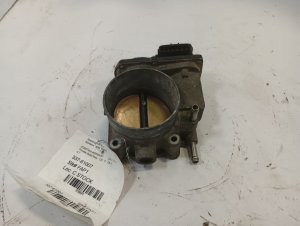
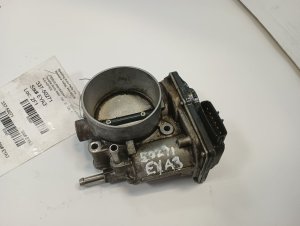
When a used part is the smart pick: Used parts like an electronic throttle body assembly can be a cost-effective option, as they are generally robust mechanical parts. A used throttle body from a low-mileage donor vehicle is often a reliable repair if cleaning the original unit fails.
Donor-vehicle mileage cap: roughly under 80000 miles for the part to have meaningful remaining life.
What to inspect on the donor part:
- For a throttle body, check for a clean throttle plate and bore with minimal carbon buildup.
- Ensure all electrical connectors are intact with no broken clips or corrosion.
- Verify the throttle plate moves smoothly by hand without binding or sticking.
OEM-only on this vehicle (don't cheap out):
- Mass Airflow (MAF) Sensor
Aftermarket brands forum-validated for this vehicle:
- Denso (for MAF Sensor, O2 Sensors, Spark Plugs - Denso is the OEM supplier for Toyota)
Brands owners have reported issues with on this vehicle:
- Unknown/no-name MAF sensors from online marketplaces. Forum users consistently report that non-OEM or non-Denso MAF sensors can be faulty out of the box or fail prematurely, causing persistent running issues.
Real Owner Stories
Aggregated from forums and TSBs cited above. Mileages and costs reflect what owners reported in those sources.
2007 Toyota Tundra 4.7L V8
Symptoms: Check Engine Light, VSC Off light, and a cluster of codes including P1605, P1603, P0171, and P0174.
What fixed it: Cleaning the MAF sensor and the throttle body completely solved the problem and cleared all codes.
Source hint: TundraSolutions.com - 'Check Engine, VSC Off, P1605, P1603, P0171, P0174'
2011 Toyota Tundra 4.7L V8
Symptoms: The truck showed codes P1603 and P1605, though it didn't appear to have obvious driving issues and was getting 15+ MPG.
What fixed it: Cleaning the MAF sensor and the throttle body; the owner noted the throttle body was dirty.
Source hint: r/ToyotaTundra - 'P1603 and p1605'
Related OBD-II Codes
Frequently Asked Questions
Can I replace the Idle Air Control (IAC) valve on my 2007-2013 Tundra 4.7L to fix P1605?
Why did my Tundra start idling roughly and throw P1605 immediately after I changed the battery?
Is there a TSB for the frame rust issues mentioned for this Tundra generation?
Does the 2UZ-FE 4.7L V8 have a timing belt or a chain, and does it affect P1605?
Is there a TSB for the Secondary Air Injection System failure on my 2007+ Tundra?
What should I use to clean the sensors on my Tundra to clear this code?
Helpful Videos
Used OEM Parts in Stock
New Aftermarket Parts Available



The information in this article is provided for general reference and educational purposes only. Vehicle specifications, procedures, and part compatibility can vary by production date, trim level, and region. Always consult your vehicle's factory service manual and verify part numbers before purchasing or performing repairs. Safety-critical components such as airbags, seat belts, and braking systems should be installed by a qualified professional.
- Toyota Tundra:
- 🧭 Diagnostic Flowchart
- 🎬 Helpful Videos
- 🛍️ Shop This Part
- What's Unique About the 2007-2013 Toyota Tundra
- Symptoms You May Notice
- Most Likely Causes
- Rare But Worth Checking
- Diagnosis Steps
- Parts You'll Likely Need
- Related Codes That Often Appear With This One
- Platform-Specific Known Issues
- Technical Service Bulletins (TSBs) & Recalls
- Mechanic-Grade Diagnostic Values
- Hidden / Shadow Codes Worth Checking
- Scan Tool Commands That Help
- Wiring & Ground Locations
- OEM Part Supersession History
- Model Year Variations Within This Range
- Other Known Issues on This Vehicle
- Used vs. New Parts: Buying Guide for This Vehicle
- Real Owner Stories
- 2007 Toyota Tundra 4.7L V8
- 2011 Toyota Tundra 4.7L V8
- Related OBD-II Codes
- Frequently Asked Questions
- 🎟️ Get 5% Off