

P1607 on 2017-2021 Chrysler Pacifica: PCM Timer Fault Causes and Fixes
This code almost always means the Powertrain Control Module (PCM) software is outdated. A weak or failing battery (main or auxiliary) is the second most likely cause. Before replacing any parts, check with a dealer for available PCM software updates (reflashes), which typically resolve the issue, and perform a load test on both batteries.
- P1607 on your Pacifica is most likely a software glitch, not a failed computer.
- Your first step should be to have a dealer check for and apply any available PCM software updates.
- A weak or failing 12V battery is the next most common cause. Have it professionally load-tested.
- Do not replace the expensive PCM unless software updates and battery/relay checks have been performed first.
What's Unique About the 2017-2021 Chrysler Pacifica
While no Technical Service Bulletin (TSB) specifically links P1607 to the 2017-2021 Pacifica, the underlying cause is well-established on numerous other Chrysler/FCA platforms of the same era. On vehicles like the Chrysler 200 and Dodge Journey, P1607 is a known software bug that is often overly sensitive and fixed with a simple PCM update. The Pacifica platform itself has a history of stalling and other electrical issues that Chrysler has addressed with PCM software updates, making an update the most logical first step for a P1607 code. Furthermore, the Pacifica's dual-battery system (main and auxiliary for the Engine-Stop-Start system) adds complexity; a failing auxiliary battery can cause widespread electrical issues, including this code, by putting a parasitic drain on the main battery.
Symptoms You May Notice
- Check Engine Light is on
- Engine may be difficult to start or have a no-start condition
- Engine may stall, sometimes when coming to a stop or during low-speed turns
- Rough or unstable idle
- Failure to pass an emissions test because system monitors cannot run correctly.
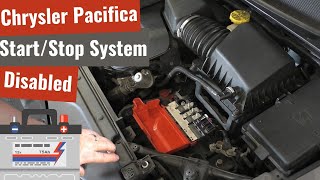
- "Service Auto Start/Stop" or similar message on the dash, 🎬 See how to diagnose a disabled start-stop system as the system is often disabled.
- Unpredictable electrical behavior, such as infotainment system glitches or flickering lights, due to unstable voltage.
- Replacing the Powertrain Control Module (PCM) without first attempting a software update or properly load-testing both batteries (main and auxiliary).
- Replacing only the main battery when the hidden auxiliary battery was the root cause of the failure.
Most Likely Causes
- Outdated Powertrain Control Module (PCM) Software 🔴 High Probability → Shop Engine Control Module (ECM) This is a common issue across many FCA platforms of this era. The diagnostic logic for the shutdown timer is often too sensitive and is corrected in later software versions. The Pacifica has received numerous PCM updates to fix related issues like stalling.
How to confirm: A Chrysler dealership or a well-equipped independent shop can check the current software version on your PCM against the latest version available from Chrysler using your VIN.
Typical fix: Reprogramming (reflashing) the PCM with the latest software. This is a non-invasive software update that often bundles fixes for multiple issues.
Est. part cost: $0 - Weak or Failing 12V Battery (Main or Auxiliary) 🟡 Medium Probability → Shop Vehicle Battery Modern Chrysler electrical systems are highly sensitive to voltage. The Pacifica uses a dual-battery system for its Engine-Stop-Start (ESS) feature. A failing auxiliary battery is a very common issue and will cause a parasitic drain on the main battery, leading to unstable voltage that can corrupt the PCM's memory and its ability to track time, triggering P1607.
How to confirm: Perform a load test on BOTH the main and auxiliary batteries. They must be disconnected from each other to test accurately. A simple voltage check is not sufficient. Many owners report that a parts store test may incorrectly show the batteries as good if they are not isolated first.
Typical fix: Replace the faulty battery. It is best practice to replace both the main and auxiliary batteries at the same time, as a failing one often damages the other. Ensure both are AGM type batteries. 🎬 Watch: Step-by-step auxiliary battery replacement guide
Est. part cost: $200-$500 for one or both batteries - Faulty PCM Power Relay ⚪ Low Probability Relays can fail or develop corrosion on their contacts, leading to an intermittent power supply to the PCM. This can disrupt the internal timer and cause the P1607 code. This is a common failure point on other FCA vehicles.
How to confirm: Locate the PCM power relay in the underhood fuse box (often labeled K5 on similar platforms). Swap it with an identical relay from a non-critical circuit (like the horn) and see if the problem resolves. The relay can also be tested with a multimeter and a 12V source.
Typical fix: Replace the PCM power relay.
Est. part cost: $15-$40
Rare But Worth Checking
- Poor PCM Power or Ground Connection: A corroded or loose main ground strap or a poor connection at the PCM connector can cause intermittent voltage drops, confusing the module and triggering this code. A recall (NHTSA campaign 19V348) was issued for 2017-2019 models for a faulty ground connection that could cause stalling. This should be inspected before considering PCM replacement.
- Failing Powertrain Control Module (PCM): → Shop Engine Control Module (ECM) This is extremely rare for this specific code. The PCM should only be replaced after a software update has been performed and all battery, relay, and wiring/ground issues have been completely ruled out by a professional.
Diagnosis Steps
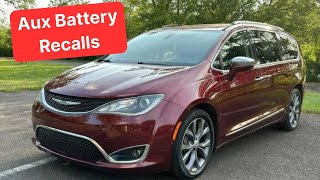
- Check for TSBs: Have a dealer check your VIN for any open recalls or applicable Technical Service Bulletins (TSBs) related to the PCM, engine stalling, or battery ground. Specifically mention recall 19V348 🎬 Watch: Is there an auxiliary battery recall? and TSB 18-001-19 REV. B.
- Test Both Batteries: Disconnect and isolate the main and auxiliary 12V batteries. Perform a professional load test on each one individually. A simple voltage check is insufficient. Replace both if one is found to be faulty, using AGM-type batteries.
- Inspect PCM Power Relay: Locate the PCM power relay in the underhood fuse box. Check for corrosion and test by swapping the relay with an identical one from a non-critical circuit.
- Perform PCM Software Update: If the batteries and relay are good, the next step is to have a dealer or qualified shop update the PCM to the latest software version. This is the most common fix.
- Inspect Wiring and Grounds: If the code persists, thoroughly inspect the PCM connectors for corrosion or damage. Crucially, inspect the main engine and chassis ground connections for tightness and corrosion, paying special attention to the area mentioned in recall 19V348.
- Consider PCM Replacement: Only as a final step, if all other possibilities have been exhausted, should the PCM itself be considered for replacement.
Parts You'll Likely Need
- 12V AGM Battery (Main and/or Auxiliary)
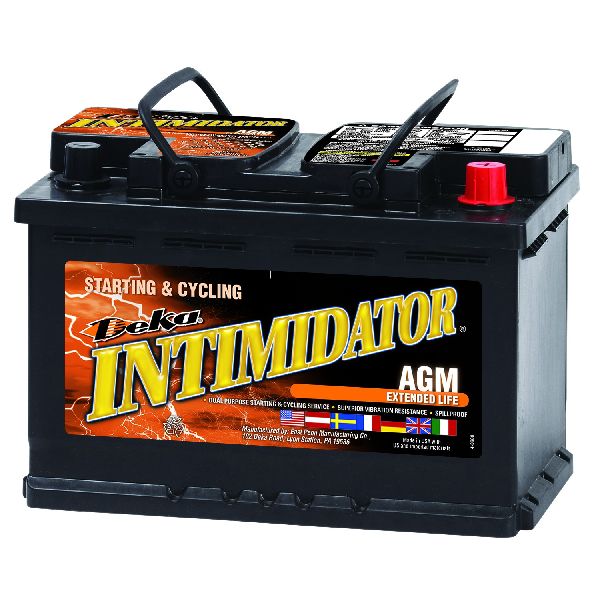
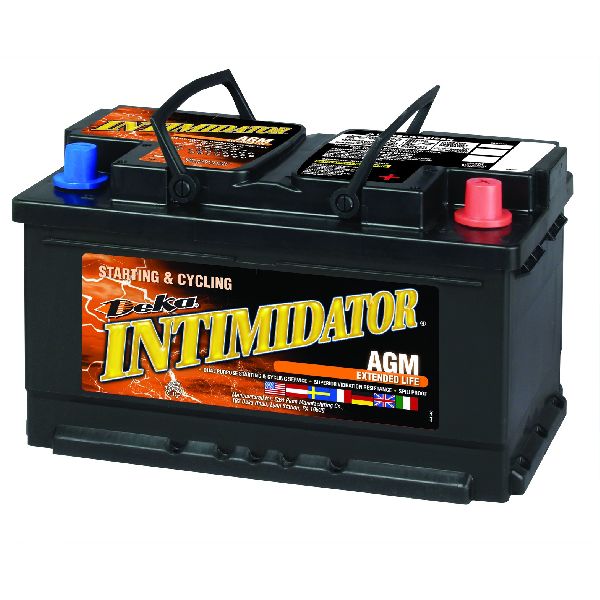
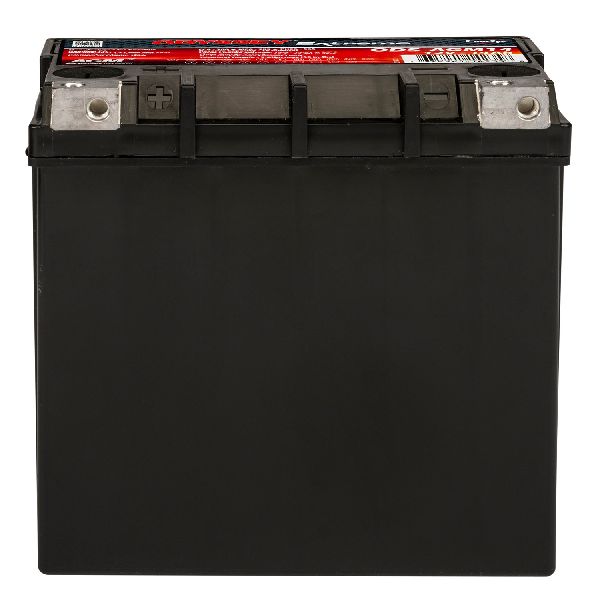
(OEM #Main: Group H7/94R AGM. Aux: AUX14 AGM.)— A weak or failing battery (main or aux) is a very common cause of this code due to voltage sensitivity and parasitic drain from the dual-battery system.
Trusted brands: Deka, East Penn, Mopar, Duralast Platinum
OEM price range: $250-$400
Aftermarket price range: $180-$350 - PCM Power Relay
(OEM #68200229AA (Micro Power ISO Relay))— A faulty relay can interrupt power to the PCM, causing the timer fault. It's an inexpensive and easy part to replace during diagnosis.
Trusted brands: Mopar, Standard Motor Products, Bosch
OEM price range: $17-$25
Aftermarket price range: $15-$40
Related Codes That Often Appear With This One
- P2610 — This is the generic SAE version of the same fault ('PCM Internal Engine Off Timer Performance') and often appears with P1607, strongly pointing to a software or timer issue.
- P0456 — An EVAP System Small Leak code can be set because the faulty shutdown timer prevents the PCM from correctly running the post-shutdown EVAP leak test. PCM updates for other models often fix both codes simultaneously. TSB 18-001-19 REV. B for the 2018 Pacifica explicitly lists P0456 as a code addressed by a PCM software update.
- U0402 — Implausible Data Received From the Transmission Control Module (TCM). This indicates a communication issue that can also be caused by the underlying PCM software fault. TSB 18-001-19 REV. B also lists this code as being resolved by a PCM flash.
Technical Service Bulletins (TSBs) & Recalls
- 18-001-19 REV. B: Addresses engine stalling, rough idle, and various DTCs (including P0456 and U0402) on the 2018 Pacifica via a PCM software update. While not specifically for P1607, it shows a pattern of fixing related symptoms with software.
- Recall 19V348 (Chrysler V53): Addresses a loose ground cable connection on 2017-2019 models that can cause stalling and loss of power
Platform-Specific Known Issues
- The 2017-2021 Chrysler Pacifica platform has been subject to multiple recalls and TSBs for engine stalling and other drivability issues, many of which are resolved by updating the Powertrain Control Module (PCM) software.
- The dual-battery system for the Engine-Stop-Start (ESS) feature is a frequent point of failure. The auxiliary battery often fails prematurely (within 2-3 years), causing a parasitic drain that kills the main battery and leads to a host of seemingly unrelated electrical problems.
Mechanic-Grade Diagnostic Values
- Battery Voltage (Resting, Engine Off) — expected: 12.4V - 12.7V. Failure: Below 12.4V indicates a discharged or weak battery that can cause spurious electrical codes like P1607.
- Charging System Voltage (Engine Running) — expected: 13.5V - 14.5V. Failure: Voltage outside this range points to a faulty alternator or regulator, which can cause unstable voltage that triggers P1607.
- PCM Power Relay Coil Resistance — expected: Approximately 70 - 90 Ohms (for similar relays). Failure: A reading significantly outside this range or an open circuit (infinite resistance) indicates a faulty relay coil.
- PCM Power and Ground Pins at Connector — expected: Consistent battery voltage (>12V) on power pins and low resistance (<0.5 Ohms) to chassis ground on ground pins.. Failure: Voltage drops or high resistance on ground circuits indicate a wiring or connection issue, not necessarily a faulty PCM.
- PCM Flashing Voltage (Maintained by Battery Charger) — expected: Stable voltage between 13.2V and 13.5V. Failure: Dropping below 13.2V or exceeding 13.5V during the reflash process can cause the update to fail or corrupt the PCM.
Scan Tool Commands That Help
- wiTECH Diagnostic Application: Reprogram PCM — This is the primary function used to load the latest manufacturer software that corrects the internal timer rationality fault. It is the most common fix for P1607 on FCA vehicles of this era.
- wiTECH Diagnostic Application: Reprogram TCM — Some TSBs for related platforms explicitly state that the Transmission Control Module (TCM) must also be updated to the latest software after the PCM has been flashed to ensure full compatibility and prevent other communication codes from appearing.
- wiTECH Diagnostic Application: Clear All DTCs — This function is automatically presented after a successful flash procedure and must be run to clear any codes set in various modules during the reprogramming event.
- wiTECH Diagnostic Application: Battery Replacement/Reset — After replacing the main or auxiliary battery, a battery reset procedure should be performed to inform the Body Control Module (BCM) and charging system of the new battery's state of health, ensuring proper charging strategy.
Wiring & Ground Locations
- Recall 19V348 (V53) Ground Stud — The recall addresses a loose ground connection on the main vehicle chassis, typically near the battery tray or on the inner fender structure.. A loose main ground causes system-wide voltage instability and can directly cause stalling and spurious PCM codes like P1607. This is a known critical failure point.
- G201 — Behind the left side of the dashboard, near the kick panel area.. This is a major interior ground point. While less likely to be the primary cause than engine bay grounds, corrosion or looseness here can cause bizarre electrical issues, including disrupting power to modules.
- PCM Connector C1, Pin 12 — On the largest PCM connector (C1).. This pin is a 'Fused Ignition Switch Output (Off-Run-Start)' circuit. Diagnostic procedures for P1607 on other Chrysler platforms involve testing for bright, consistent voltage at this pin with a test light to rule out a wiring issue before condemning the PCM.
- Rear Ground Strap — On the aft left-hand side of the undercarriage, bolted to the frame.. While often disturbed during trailer hitch installation, this ground is crucial for rear-body electronics. A poor connection here can contribute to overall electrical noise and instability.
Real Owner Repair Stories
- pacificaforums.com user (2018 Chrysler Pacifica Touring L) — Check engine light with P1607, stalling when coming to a stop, 'Service Auto Start/Stop' message.
❌ Tried (didn't work) Replaced the main battery only. The code returned within a week.
✅ What actually fixed it Replacing BOTH the main AGM battery and the auxiliary AGM battery at the same time. The owner noted that the auxiliary battery had failed and was creating a parasitic drain that the new main battery could not overcome, causing the voltage instability that triggered the P1607 code. - Reddit r/ChryslerPacifica user (Year not specified, but experiencing widespread electrical chaos.) — Dash flashing, gauges swinging, headlights failing when wipers are turned on, car nearly stalling, radio and power seats only work when slamming a door.
❌ Tried (didn't work) Checking fuses.
✅ What actually fixed it A commenter pointed to a known issue with a 'star connector' located above the glove box that can go bad and cause a multitude of unrelated, chaotic electrical problems due to a poor ground distribution. The original poster confirmed they would investigate this location.
OEM Part Supersession History
68200229AA→68603769AA— Standard part evolution, likely for improved contact material or manufacturing consistency.
Heads up: The new part number (68603769AA) is a direct replacement for the old one (68200229AA) and is fully compatible.
Model Year Variations Within This Range
- 2018-2021: Starting in 2018, Chrysler implemented a Security Gateway Module (SGW) that blocks most aftermarket scan tools from performing bidirectional commands like resets or reflashes. A specific bypass cable or a subscription to AutoAuth is required for non-dealer tools to access these functions.
- 2021: The 2021 model year received a significant refresh, including an updated Uconnect 5 infotainment system on a larger 10.1-inch screen and available All-Wheel Drive on non-hybrid models. While the underlying engine and electrical architecture are similar, PCM software and module calibrations are specific to the refresh and not interchangeable with 2017-2020 models.
Diagnostic Flowchart
Other Known Issues on This Vehicle
Issues unrelated to this code that are worth knowing about as an owner of this generation:
- Transmission Shudder, Jerking, and Premature Failure 🔴 High — Common on 2017-2018 models with the ZF 9-speed automatic. Can occur at various mileages, sometimes as low as 30,000 miles. (Ref: Multiple software update TSBs exist to improve shift quality, but mechanical failures are also common.)
- Engine Stop-Start (ESS) System Failure / Dual Battery Problems 🟠 Medium → Shop Vehicle Battery — Extremely common across all model years. The auxiliary battery often fails within 2-3 years, causing a parasitic drain on the main battery and leading to no-start conditions and various electrical warnings. (Ref: TSB S2008000075 provides diagnostic guidance for dealers, but no recall for the battery failure itself.)
- Engine Mount Failure 🟠 Medium — The lower torque strut mount (dog bone mount) is a common failure point, causing a clunking or thudding noise on acceleration. Can occur under 100,000 miles. (Ref: No specific recall, but it's a widely recognized repair. Aftermarket parts are readily available.)
- Uconnect Infotainment System Glitches 🟡 Low — Frequent complaints of the screen freezing, going black, or becoming unresponsive, particularly on 2017-2018 models. (Ref: Software updates can sometimes resolve issues, but in many cases, the unit requires replacement.)
- Sliding Door Wiring Harness Failure 🟠 Medium — The wiring inside the flexible harness for the power sliding doors can break from repeated flexing, causing the door to become inoperative and potentially creating a parasitic battery drain. (Ref: No recall, but a known issue in owner forums. Repair involves splicing the broken wires or replacing the harness.)
- Paint Bubbling/Peeling on Hood 🟡 Low — Primarily affects 2017-2018 models, where paint bubbles and peels along the leading edge of the aluminum hood, leading to corrosion. Often starts around 30,000-40,000 miles. (Ref: No recall. Warranty coverage varies, and many owners have had to pay for repainting out of pocket.)
Used vs. New Parts: Buying Guide for This Vehicle
When a used part is the smart pick: A used PCM Power Relay from a reputable auto recycler is a perfectly acceptable and cost-effective choice. It is a simple, non-wear item that can be easily tested. Other electrical components like connectors or sections of wiring harness are also good candidates for used parts.
Donor-vehicle mileage cap: roughly under 100000 miles for the part to have meaningful remaining life.
What to inspect on the donor part:
- For a relay, check for clean, non-corroded terminals.
- For a wiring harness, inspect for any signs of cuts, chafing, or previous repairs (e.g., tape, butt connectors).
- Ensure the donor vehicle is from a dry climate to minimize the risk of corrosion.
OEM-only on this vehicle (don't cheap out):
- Powertrain Control Module (PCM): Never install a used PCM. PCMs are VIN-locked to the original vehicle's security system (SKIM/WIN). A used module will not start the car without expensive and complex dealer-level reprogramming that is often not possible or supported.
- 12V Batteries (Main and Auxiliary): Never buy used batteries. Battery health degrades with every cycle and month of use. Installing a used battery is a false economy that will likely lead to the same electrical problems returning quickly.
Aftermarket brands forum-validated for this vehicle:
- Batteries: Deka, East Penn (who often manufacture for other brands), Duralast Platinum (AGM), Odyssey
- Relays: Standard Motor Products (SMP), Bosch, Mopar (OEM)
Brands owners have reported issues with on this vehicle:
- Avoid off-brand, no-name electronic modules or relays from online marketplaces. For critical components like the PCM power relay, sticking to OEM or a known-good aftermarket brand is essential for reliability.
Real Owner Stories
Aggregated from forums and TSBs cited above. Mileages and costs reflect what owners reported in those sources.
2017 Chrysler Pacifica
Symptoms: The Engine Start/Stop (ESS) warning light was on. A professional diagnostic using an oscilloscope found a parasitic draw that was keeping other modules awake and draining the main battery overnight.
What fixed it: Replacement of the bad auxiliary battery which was causing the parasitic draw.
Source hint: AESwave.com - Parasitic Stop-Start System, 2017 Chrysler Pacifica
2017-2021 Chrysler Pacifica
Symptoms: ESS start/stop icon with an exclamation mark appeared on the dash. The owner discovered the auxiliary battery had failed prematurely, causing a parasitic drain on the main battery.
What fixed it: Replacing both the main and auxiliary batteries with AGM types and resetting the system.
Source hint: Reddit r/ChryslerPacifica - ESS - Start/Stop icon with an exclamation beside it
2017-2021 Chrysler Pacifica
Symptoms: Engine Start/Stop (ESS) warning light. The owner noted that standard parts store battery tests failed to identify the issue because the batteries weren't isolated during the test.
What fixed it: Replacing the faulty auxiliary battery and performing a hard reset by disconnecting both negative cables for 10 minutes.
Source hint: Reddit r/ChryslerPacifica - Fixed—Engine Start/Stop (ESS) warning light: my experience
Related OBD-II Codes
Frequently Asked Questions
Does Recall 19V348 apply to my 2018 Chrysler Pacifica stalling issues?
Can I just test the voltage of my Pacifica's batteries to see if they are causing P1607?
Is there a specific TSB for the 2018 Pacifica regarding rough idle and stalling?
Why does my Pacifica show a 'Service Auto Start/Stop' message along with this code?
What type of replacement batteries should I use for my Pacifica?
Can a relay cause the P1607 code on a Chrysler Pacifica?
Helpful Videos
Used OEM Parts in Stock
New Aftermarket Parts Available


The information in this article is provided for general reference and educational purposes only. Vehicle specifications, procedures, and part compatibility can vary by production date, trim level, and region. Always consult your vehicle's factory service manual and verify part numbers before purchasing or performing repairs. Safety-critical components such as airbags, seat belts, and braking systems should be installed by a qualified professional.
- Chrysler Pacifica:
- 🧭 Diagnostic Flowchart
- 🎬 Helpful Videos
- 🛍️ Shop This Part
- What's Unique About the 2017-2021 Chrysler Pacifica
- Symptoms You May Notice
- Most Likely Causes
- Rare But Worth Checking
- Diagnosis Steps
- Parts You'll Likely Need
- Related Codes That Often Appear With This One
- Technical Service Bulletins (TSBs) & Recalls
- Platform-Specific Known Issues
- Mechanic-Grade Diagnostic Values
- Scan Tool Commands That Help
- Wiring & Ground Locations
- Real Owner Repair Stories
- OEM Part Supersession History
- Model Year Variations Within This Range
- Other Known Issues on This Vehicle
- Used vs. New Parts: Buying Guide for This Vehicle
- Real Owner Stories
- 2017 Chrysler Pacifica
- 2017-2021 Chrysler Pacifica
- 2017-2021 Chrysler Pacifica
- Related OBD-II Codes
- Frequently Asked Questions
- 🎟️ Get 5% Off