

P1607 on 2015-2016 Dodge Journey: PCM Shutdown Timer Fault Causes and Fixes
On a 2015-2016 Dodge Journey, code P1607 almost always points to a software glitch in the Powertrain Control Module (PCM). The most common and manufacturer-recommended fix is a PCM software update (reflash) performed by a Dodge dealer, which addresses this known issue. Before suspecting hardware, the software must be updated and the battery's health confirmed.
- P1607 on a 2015-2016 Journey is a very specific code pointing to a PCM internal timer issue.
- The most likely cause is a software bug that Dodge has released an update to fix, as detailed in TSBs 18-081-17 and 18-080-17.
- Do not replace the PCM without first having a dealer check for and perform the software update, as this is the most common and least expensive solution, typically costing $150-$250.
- Always check the battery's health first, as low voltage can cause unpredictable electronic issues.
- This code is often seen with P2610, P0456, and P0335, and all are typically resolved with the same software reflash.
What's Unique About the 2015-2016 Dodge JOURNEY
For the 2015-2016 Dodge Journey, this code is a well-documented issue. Chrysler (Dodge's parent company) released multiple Technical Service Bulletins (TSBs), specifically 18-081-17 for 2015 models and 18-080-17 for 2016 models, to correct this fault via a software update. This strongly suggests the problem is a factory software anomaly rather than a widespread hardware failure, making a dealer reflash the most direct path to a solution. This same issue is common across other FCA vehicles sharing the 2.4L and 3.6L engines from this era, such as the Jeep Cherokee and Chrysler 200.
Diagnostic Flowchart
Tap your situation to follow the diagnostic path that matches what you're seeing on this vehicle.
Symptoms You May Notice
- Check Engine Light is on
- Potential for hard starting, especially when cold.
- Engine may stall when coming to a stop or during a turn.
- In rare cases, may be accompanied by other electrical issues or performance problems if the PCM is beginning to fail.
- May be accompanied by harsh or erratic transmission shifting.
- Replacing the PCM before performing a software update. The TSBs indicate a software fix is the primary solution, which is much less expensive than a new computer.
- Replacing sensors like the Crankshaft Position Sensor when it appears with P1607. TSB 18-081-17 explicitly states that codes like P0335 (Crank Sensor) are also resolved by the same PCM software update.
Most Likely Causes
- Outdated PCM Software 🔴 High Probability Dodge issued multiple TSBs (#18-080-17, #18-081-17, #18-011-16, #18-033-16) to resolve this exact code with a software update, confirming it's a known bug. This issue is prevalent across many FCA platforms from this period.
How to confirm: A technician at a Dodge dealership or a qualified shop can check your vehicle's current software version against the latest available version using your VIN. Mentioning the specific TSB number (e.g., 18-081-17 for a 2015 model) can expedite the process.
Typical fix: Perform a PCM reflash to install the updated manufacturer software using a wiTECH scan tool. The flash process itself takes only a few minutes, with the total service time being around an hour.
Est. part cost: $0 - Failing Powertrain Control Module (PCM) ⚪ Low Probability → Shop Engine Control Module (ECM) While less common than the software issue, any electronic module can fail over time due to heat, vibration, or internal component degradation. The battery's location in the front wheel well on the Journey can sometimes lead to inconvenient replacement, potentially causing owners to delay replacing a weak battery, which can stress electronics.
How to confirm: This is typically diagnosed after a software reflash fails to resolve the code. A technician will rule out all other possibilities (wiring, power, grounds) before condemning the PCM.
Typical fix: Replace the PCM. The new module must be programmed to the vehicle's VIN. Aftermarket options are available that come pre-programmed.
Est. part cost: $800-$1000 - Weak or Failing Battery ⚪ Low Probability → Shop Vehicle Battery Low system voltage during the engine shutdown sequence can sometimes cause electronic modules to behave erratically, potentially corrupting the shutdown timer logic. The Dodge Journey is known to be sensitive to low voltage.
How to confirm: Test the battery's voltage and load capacity using a digital multimeter and a battery load tester. A healthy, resting battery should be at approximately 12.6 volts. A voltage below 12.4V indicates a weak battery that needs charging and re-testing.
Typical fix: Replace the vehicle's 12V battery. Note that on the Journey, the battery is located in the front driver's side wheel well, requiring removal of the wheel and fender liner for access. 🎬 See this step-by-step guide for replacing a dead Journey battery.
Est. part cost: $150-$300
Rare But Worth Checking
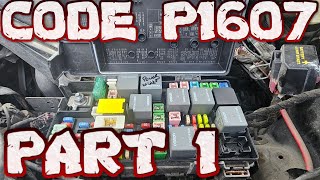
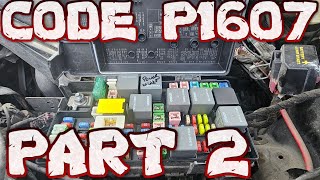
- PCM Power or Ground Circuit Issue: A poor connection or corrosion on the PCM's main power or ground wires can cause voltage irregularities that mimic an internal PCM fault. A YouTube video on a related 2010 Journey with P1607 showed the fix was a corroded PCM relay in the fuse box. This should be inspected before replacing the PCM.
Diagnosis Steps
- Scan for other DTCs. Note any other codes, especially P2610, P0456, and P0335, as they are often related and confirm the software issue.
- Check for applicable TSBs. Confirm with a dealer that TSB #18-081-17 (for 2015 models) or #18-080-17 (for 2016 models) applies to your vehicle's VIN.
- Test the battery and charging system. Ensure the battery is fully charged and healthy, and that the alternator is functioning correctly. A resting voltage below 12.4V indicates a weak battery that should be charged and re-tested. This is a critical first step before any software or parts replacement.
- Schedule a PCM reflash. If the battery is good, the next step is to have a Dodge dealer or qualified shop update the PCM software per the applicable TSB. This is the most likely fix.
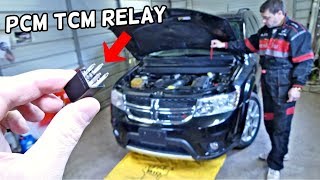
- Inspect PCM wiring and relays. If the code returns after the reflash, inspect the PCM connectors and its power and ground circuits for corrosion or damage. Check the PCM relay in the main fuse box for corrosion, 🎬 Watch: How to locate the PCM and TCM relays. as this has been a documented fix on similar models.
- Diagnose the PCM. If all wiring and software are confirmed to be good, the PCM itself is likely faulty and requires replacement.
Parts You'll Likely Need
- Powertrain Control Module (PCM)
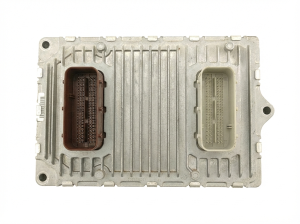
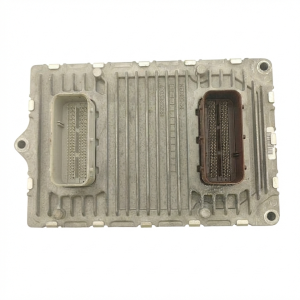
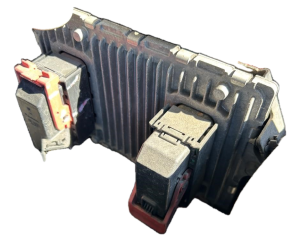
(OEM #68239174AE, 68239175AE, 68239176AE (example part numbers, VIN-specific))— This is the part that gets replaced if a software update and wiring checks do not resolve the code. It is rarely the actual cause for this specific code on this vehicle.
Trusted brands: Mopar (OEM), Flagship One (Aftermarket, pre-programmed), Car Computer Exchange (Repair Service)
OEM price range: $850-$1000
Aftermarket price range: $300-$700
Related Codes That Often Appear With This One
- P2610 — P2610 (PCM Internal Engine Off Timer Performance) is also a PCM timer-related code. The manufacturer TSBs for the Dodge Journey list both P1607 and P2610 as being resolved by the same software update.
- P0456 — P0456 (EVAP System Small Leak) is another code frequently mentioned in the same TSBs (18-081-17, 18-080-17) that is corrected by the PCM reflash.
- P0335 — P0335 (Crankshaft Position Sensor Circuit) is listed in the TSBs as a related code fixed by the software update, indicating the PCM is misinterpreting sensor data due to the software bug.
- U0140 — U0140 (Lost Communication With Body Control Module) is also listed in TSB 18-081-17 as a code that can be resolved with the PCM software update, highlighting the widespread electrical issues the bug can cause.
Technical Service Bulletins (TSBs) & Recalls
- 18-080-17: Addresses P1607 and P2610 with a PCM software update for 2016 models with 2.4L or 3.6L engines.
- 18-081-17: Addresses P1607 and P2610 with a PCM software update for 2015 models with 2.4L or 3.6L engines.
- 18-011-16: A previous, superseded TSB that also addresses P1607 with a software update for 2016 models.
- 18-033-16: A previous, superseded TSB that also addresses P1607 with a software update for 2015 models.
Platform-Specific Known Issues
- Multiple Technical Service Bulletins were issued by Dodge to fix this code with a software update, indicating it was a recognized problem from the factory for the 2015-2016 model years.
- The TSBs (18-081-17 and 18-080-17) bundle the fix for P1607 with a host of other seemingly unrelated codes like P0456 (EVAP leak) and P0335 (crank sensor), confirming a widespread software logic issue rather than multiple simultaneous hardware failures.
Mechanic-Grade Diagnostic Values
- Battery Voltage (Resting) — expected: ~12.6V. Failure: Below 12.4V indicates a weak or discharged battery that can cause various electronic faults, including P1607.
- Charging System Voltage (Engine Running) — expected: 13.5V - 14.5V. Failure: Voltage outside this range indicates a problem with the alternator or voltage regulator, which can lead to PCM issues.
- PCM Relay Coil Resistance — expected: Approximately 150 Ohms or more. Failure: Significantly less than 150 Ohms or an open circuit (infinite resistance) indicates a failed relay.
Scan Tool Commands That Help
- wiTECH 2.0: Flash PCM — This is the primary repair step for P1607 on this vehicle, used to load the updated software from Chrysler's servers as specified in the TSBs.
- wiTECH 2.0: Restore Vehicle Configuration — This function is used after replacing a PCM, especially with a used unit. It synchronizes the VIN and other configuration data from the vehicle's central records to the new module to ensure all systems communicate correctly.
- wiTECH 2.0: Learn ETC (Electronic Throttle Control) — This procedure is often required after a PCM is replaced or reprogrammed. It calibrates the throttle position sensors to the PCM.
Wiring & Ground Locations
- PCM Relay (K5) — In the underhood fuse box (Totally Integrated Power Module - TIPM).. This relay supplies power to the PCM. Corrosion on the relay terminals or a faulty relay can interrupt power, causing various PCM codes including P1607. This has been a documented fix.
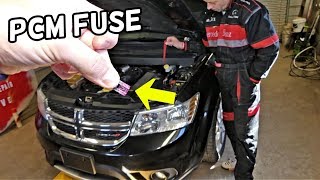
- PCM Fuse (F150 / J18) — In the underhood fuse box (TIPM). It is listed as a 20A or 25A fuse depending on the source.. This is the main fuse for the Powertrain Control Module. If this fuse is blown, the PCM will not power on, leading to a no-start condition and potentially setting codes if intermittent.
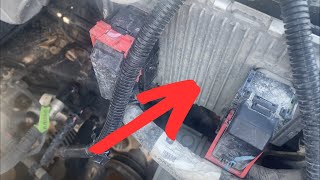
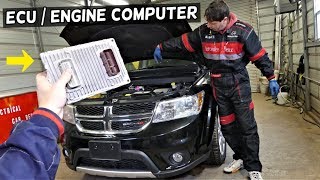
- PCM Connector C1 (Transmission/Data) — This is one of the large multi-pin connectors on the PCM itself, located in the engine bay.. Contains wiring for transmission controls and data lines. A poor connection here could cause related codes or erratic behavior.
- PCM Connector C2 (Engine/Power) — This is the second large multi-pin connector on the PCM.. Contains critical power, ground, and sensor/actuator wiring for the engine. Checking for battery voltage and clean grounds at these specific pins is a key diagnostic step if a wiring issue is suspected.
- Main Body Ground — A ground post on the passenger side of the engine bay, just behind the coolant reservoir and in front of the ABS module connector.. While not exclusively for the PCM, poor body grounds are a common source of hard-to-diagnose electrical issues on many vehicles. A user on a Dodge Journey forum identified a bad ground at this location as the cause of a crank, no-start condition.
Real Owner Repair Stories
- YouTube channel 'Double DDIY' (2010 Dodge Journey SE 2.4L (Similar platform and issue)) — Check Engine Light with code P1607 (PCM internal shutdown timer).
❌ Tried (didn't work) The video directly diagnoses the relay as the first step after checking fuses.
✅ What actually fixed it The PCM relay, located at position K5 in the underhood fuse box, was found to be heavily corroded. Replacing this relay resolved the issue.
Helpful Videos



We Have This Part in Stock

The information in this article is provided for general reference and educational purposes only. Vehicle specifications, procedures, and part compatibility can vary by production date, trim level, and region. Always consult your vehicle's factory service manual and verify part numbers before purchasing or performing repairs. Safety-critical components such as airbags, seat belts, and braking systems should be installed by a qualified professional.
- Dodge JOURNEY:
- 🧭 Diagnostic Flowchart
- 🎬 Helpful Videos
- 🛍️ Shop This Part
- What's Unique About the 2015-2016 Dodge JOURNEY
- Symptoms You May Notice
- Most Likely Causes
- Rare But Worth Checking
- Diagnosis Steps
- Parts You'll Likely Need
- Related Codes That Often Appear With This One
- Technical Service Bulletins (TSBs) & Recalls
- Platform-Specific Known Issues
- Mechanic-Grade Diagnostic Values
- Scan Tool Commands That Help
- Wiring & Ground Locations
- Real Owner Repair Stories
- 🎟️ Get 5% Off