

P1607 on 2007-2018 Jeep Wrangler: PCM Shutdown Timer Fault Explained
This code indicates a logic fault within the Powertrain Control Module (PCM), not necessarily a failed computer. The most common causes are a weak battery, a faulty Engine Coolant Temperature (ECT) sensor, or a software glitch. Start by load-testing the battery and checking the ECT sensor before considering PCM replacement.
- P1607 is a logic code, not a definitive PCM failure. Do not replace the PCM until you have ruled out simpler causes.
- Your first and most important diagnostic step is to professionally load-test the battery, as low voltage is the number one cause.
What's Unique About the 2007-2018 Jeep Wrangler
The 2007-2018 Jeep Wrangler JK generation is known for being sensitive to electrical system health, particularly related to the Totally Integrated Power Module (TIPM), which acts as the fuse box and electrical control center. Code P1607 often appears not because the expensive PCM has failed, but because of simpler, underlying issues. A weak battery or a failing sensor can provide the PCM with illogical data, causing it to fail its own self-check and set this code. Across many Chrysler/Jeep/Dodge platforms, this code is also frequently addressed with a PCM software update (reflash) from a dealership, indicating the original logic was too sensitive.
Generation note: This guide covers the Jeep Wrangler JK generation (2007-2018). This generation used two primary engines: the 3.8L V6 (2007-2011) and the 3.6L Pentastar V6 (2012-2018). The diagnostic logic for P1607 is similar for both, but part numbers and the location for the ECT sensor will differ significantly.
Symptoms You May Notice
- Check Engine Light is on
- Engine is hard to start
- Engine stalls unexpectedly
- No-start condition
- Replacing the PCM without first testing the battery and ECT sensor.
- Replacing the thermostat, which is generally not a direct cause for this specific logic fault, although a stuck-open thermostat could theoretically contribute by causing the engine to cool too quickly.
Most Likely Causes
- Weak or Failing Battery 🔴 High Probability → Shop Vehicle Battery The PCM requires a stable voltage above 10 volts to perform its self-checks correctly. A battery that fails a load test can cause voltage to drop during engine-off periods, disrupting the PCM's timer and logic functions, triggering the code. This is the most common cause across many Chrysler/Jeep/Dodge vehicles.
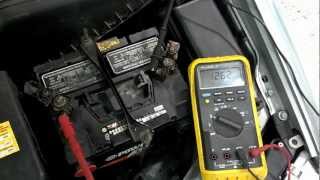
How to confirm: Perform a load test on the battery. 🎬 Watch: How to load test a battery with a multimeter A simple voltage check is not sufficient, as a battery can show 12V but fail under load. Resting voltage should be at least 12.4V.
Typical fix: Replace the battery. An AGM (Absorbent Glass Mat) battery is recommended for its stability and ability to handle the JK's electrical demands.
Est. part cost: $150-$300 - Faulty Engine Coolant Temperature (ECT) Sensor 🟡 Medium Probability The PCM relies entirely on the ECT sensor's readings to determine if the engine is cooling down at a plausible rate. An inaccurate or failed sensor provides bad data, causing the rationality check to fail.
How to confirm: Monitor the ECT sensor data on a scan tool for erratic readings. You can also test the sensor's resistance with a multimeter at different temperatures and compare it to the service manual specifications.
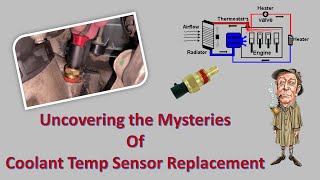
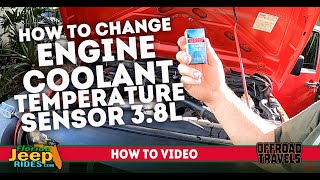
Typical fix: Replace the ECT sensor. Location differs by engine: on the 3.8L, it's easily accessible at the front near the thermostat housing. 🎬 See this 3.8L ECT sensor replacement walkthrough On the 3.6L, it is difficult to access, located on the rear of the driver's side cylinder head.
Est. part cost: $15-$50 - Outdated PCM Software 🟡 Medium Probability On many FCA vehicles, the original software logic for this self-test was overly sensitive. The manufacturer later released software updates to correct this without requiring hardware replacement. TSBs for other models often address P1607 with a reflash.
How to confirm: A Jeep dealership or a well-equipped independent shop can check your vehicle's VIN against their database for available PCM software updates (reflashes) using a tool like wiTECH.
Typical fix: Have a dealership or qualified shop update the PCM software. This typically costs one hour of labor.
Est. part cost: $0-$250
Rare But Worth Checking
- Faulty Powertrain Control Module (PCM): → Shop Engine Control Module (ECM) While the code directly points to an internal PCM issue, actual hardware failure is the least likely cause. This should only be considered after all other possibilities (battery, sensor, wiring, software) have been exhaustively ruled out.
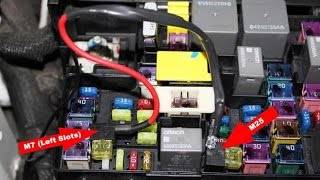
- Corroded or Faulty PCM Power Relay: A failing relay within the Totally Integrated Power Module (TIPM) can cause intermittent power loss to the PCM, triggering this code. The TIPM is a known weak point on these vehicles. Swapping the relay with a known good one is a simple 🎬 Watch: How to test and bypass a faulty TIPM relay and inexpensive diagnostic step.
- Poor Electrical Grounds or Wiring Issues: Corroded or loose ground straps for the engine or PCM can cause voltage irregularities that mimic an internal PCM fault. A thorough inspection of the main ground connections is recommended.
Diagnosis Steps
- Check for any Technical Service Bulletins (TSBs) related to your VIN and P1607. A software update may be the prescribed fix.
- Perform a professional load test on the battery. Ensure resting voltage is above 12.4V and charging voltage is 13.5V - 14.5V. Replace it if it fails.
- Inspect the battery terminals and main chassis ground connections for corrosion or looseness. Clean and tighten as necessary.
- Using a scan tool, monitor the Engine Coolant Temperature (ECT) sensor data to ensure it provides smooth and plausible readings as the engine warms up and cools down.
- Inspect the wiring and connector for the ECT sensor for any signs of damage or corrosion. On the 3.6L engine, this is difficult due to the sensor's location.
- Locate the PCM power relay in the fuse box (TIPM). Inspect it for corrosion and consider swapping it with an identical relay from a non-critical system (like the horn) to see if the problem resolves.
- If all other steps fail to identify the issue, the problem may be an internal failure of the PCM, which would require replacement and programming.
Parts You'll Likely Need
- Engine Coolant Temperature (ECT) Sensor
(OEM #5149077AB (Fits both 3.8L and 3.6L, but confirm with VIN))— This sensor provides the core data for the PCM's shutdown rationality check. It's a common failure point and is relatively inexpensive to replace.
Trusted brands: Mopar, NTK, Delphi
OEM price range: $30-$50
Aftermarket price range: $15-$35 - Automotive Battery (AGM Recommended) — Low or unstable voltage from a weak battery is a primary trigger for this logic code on many Chrysler products.
Trusted brands: Mopar, Interstate, DieHard
OEM price range: $200-$300
Aftermarket price range: $150-$250
Related Codes That Often Appear With This One
- P0562 — This code for 'System Voltage Low' often accompanies P1607 when a weak or failing battery is the root cause.
- P0117 — This code for 'Engine Coolant Temperature Sensor Circuit Low' can appear if the ECT sensor has failed electrically, which would also cause the P1607 rationality check to fail.
- P0118 — This code for 'Engine Coolant Temperature Sensor Circuit High' is the opposite of P0117 and also points to an ECT sensor electrical failure that would trigger P1607.
Technical Service Bulletins (TSBs) & Recalls
- Safety Recall U87 / NHTSA 18V-524: Powertrain Control Module - Affects some 2018 models for a faulty internal voltage regulator.
- While no specific TSB for the Wrangler and P1607 was found, numerous TSBs for other Chrysler/Jeep/Dodge vehicles (e.g., TSB #18-081-17 for Dodge Journey) prescribe a PCM software update to fix this exact code, indicating a common repair strategy across the manufacturer's lineup.
Platform-Specific Known Issues
- A recall (NHTSA 18V-524 / FCA U87) was issued for some 2018 Jeep Wranglers for a faulty voltage regulator chip inside the PCM that could cause stalling or a no-start condition. While not directly for P1607, it highlights known PCM issues on later models of this generation.
- The Totally Integrated Power Module (TIPM) in 2007-2014 models is a well-documented failure point, causing a wide range of electrical issues including fuel pump failure, random horn honking, and power window problems. A failing TIPM can cause voltage irregularities that may contribute to setting a P1607 code.
Mechanic-Grade Diagnostic Values
- Engine Coolant Temperature (ECT) Sensor Resistance — expected: At 20°C (68°F): ~2000-3000 Ohms. At 90°C (194°F): ~200-300 Ohms.. Failure: Readings significantly outside these ranges indicate a faulty sensor. For example, a sensor reading only 1.5 kOhms at room temperature is defective.
- PCM Fused Ignition Switch Circuit Voltage (at PCM C1 Connector) — expected: Battery voltage (~12V+) when the ignition is ON or CRANKING.. Failure: No voltage or low voltage indicates an open or high resistance in the circuit from the TIPM/fuse box to the PCM.
- PCM Power Relay Coil Resistance — expected: Approximately 150 Ohms or more.. Failure: Significantly less than 150 Ohms or an open circuit (infinite resistance) indicates a failed relay.
Wiring & Ground Locations
- G101 and G104 — On the right side (passenger side for US) of the engine block, located under the exhaust heat shield near the catalytic converter.. These are primary engine block grounds. A poor connection here can cause voltage instability for the entire engine management system, including the PCM, leading to logic faults like P1607.
- G103 and G105 — On the right side (passenger side) of the engine bay on the inner fender.. These are key chassis grounds. Corrosion or looseness can affect various electronic modules, contributing to electrical noise and voltage issues that can trigger PCM faults.
- PCM C1 Connector — The primary (often black) electrical connector at the Powertrain Control Module, which is located on the firewall in the engine bay.. This connector houses the critical power feeds from the ignition switch. Probing the Fused Ignition Switch circuits (F1, F202) at this connector is a key step in diagnosing power supply issues to the PCM.
Real Owner Repair Stories
- JK-Forum.com user (2007 Jeep Wrangler JK) — Intermittent no-crank, no-start condition.
❌ Tried (didn't work) Dealer replaced starter, Dealer replaced battery
✅ What actually fixed it The owner discovered the factory grounding strap was missing entirely. They added a new ground wire from the negative battery terminal directly to a bolt on the lower bellhousing, which permanently resolved the starting problems.
OEM Part Supersession History
5149096AB→5149077AB— Standard part number consolidation and potential minor design revision by the manufacturer.
Model Year Variations Within This Range
- 2007-2011 (3.8L Engine): These earlier models are particularly known for TIPM failures causing a wide array of electrical problems. The 3.8L engine also has a more accessible ECT sensor location near the thermostat housing.
- 2012-2018 (3.6L Engine): Introduced the more powerful and reliable 3.6L Pentastar V6. The TIPM design was revised, though still a potential source of issues. The ECT sensor on the 3.6L is notoriously difficult to access, located on the rear of the driver's side cylinder head.
- 2011: This was a significant transition year. While it retained the 3.8L engine, it received the updated interior from the later 3.6L models.
Diagnostic Flowchart
Other Known Issues on This Vehicle
Issues unrelated to this code that are worth knowing about as an owner of this generation:
- Cracked Exhaust Manifold (3.8L Engine) 🟠 Medium — Very common on the 2007-2011 3.8L V6, often occurs after 60,000 miles. Causes a ticking noise that is most noticeable on a cold start.
- Totally Integrated Power Module (TIPM) Failure 🔴 High → Shop Fuse Box — Common on 2007-2014 models. Can cause a wide array of random electrical problems, including a crank-no-start condition due to fuel pump relay failure.
- Oil Cooler / Filter Housing Leak (3.6L Engine) 🔴 High — Extremely common on the 2012-2018 3.6L Pentastar engine. The plastic housing cracks or the seals fail, causing a significant oil leak into the engine valley, which then runs down the back of the engine. (Ref: TSB 09-003-25 addresses misdiagnosis but not the root cause.)
- 'Death Wobble' (Steering Oscillation) 🔴 High — A notorious issue for solid front axle vehicles. A violent, uncontrolled shaking of the front end triggered by hitting a bump at speed (typically 45-65 mph). Caused by worn or loose steering/suspension components like the track bar, ball joints, or tie rod ends.
- Water Leaks from Hard Top / Doors 🟡 Low — A very common complaint across all model years. Water leaks into the cabin from the A-pillars, door seals, or Freedom Top panels, often resulting in wet floorboards.
- Clogged Heater Core 🟠 Medium — Commonly reported issue leading to poor or no heat on the driver's or passenger's side. Caused by casting sand from the engine block clogging the fine passages of the heater core.
Used vs. New Parts: Buying Guide for This Vehicle
When a used part is the smart pick: A used Totally Integrated Power Module (TIPM) from a reputable salvage yard can be a cost-effective solution, especially for older (2007-2011) models where a new unit is prohibitively expensive. Ensure the part number matches exactly.
Donor-vehicle mileage cap: roughly under 80000 miles for the part to have meaningful remaining life.
What to inspect on the donor part:
- Check for any signs of water intrusion or corrosion on the connectors and casing.
- Verify the donor vehicle was not involved in a front-end collision that could have damaged the TIPM.
- If possible, get the VIN of the donor vehicle to check for any history of electrical issues.
OEM-only on this vehicle (don't cheap out):
- Powertrain Control Module (PCM) - While used PCMs are available, they require specialized programming to the vehicle's VIN and security system, which can be complex and costly. A new or professionally remanufactured Mopar unit is the most reliable choice.
Aftermarket brands forum-validated for this vehicle:
- For TIPM repair/rebuild services: Circuit Board Medics is frequently mentioned as a reliable option that addresses the root cause of internal relay failure.
Brands owners have reported issues with on this vehicle:
- Avoid cheap, unbranded ECT sensors from online marketplaces, as their accuracy is critical for this specific code's logic.
- Be cautious with used TIPMs from private sellers without a warranty or return policy, as they may have the same internal faults as the part you are replacing.
Real Owner Stories
Aggregated from forums and TSBs cited above. Mileages and costs reflect what owners reported in those sources.
2012-2018 Jeep Wrangler 3.6L
Symptoms: The owner replaced the ECT sensor, cleared the code, and successfully drove over 500 miles without the light returning.
What fixed it: Replaced the Engine Coolant Temperature (ECT) sensor with a part from AutoZone.
Cost: $14-$14
Source hint: JK-Forum.com - Thread 'P1607 code'
2008 Jeep Wrangler
Symptoms: The P1607 code returned only one week after the ECT sensor was replaced. The battery and alternator both tested as 'good,' leaving the owner to suspect the PCM or thermostat.
What fixed it: Unresolved (highlighted a diagnostic dead-end when standard tests pass).
Source hint: Reddit (r/Wrangler) - Thread '2008 Wrangler P1607'
2007-2011 Jeep Wrangler 3.8L
Symptoms: The PCM performs a rationality check by comparing the Engine Coolant Temperature (ECT) drop over an 8-hour period; failure of this check triggers the code.
What fixed it: Identified as either a coolant level/sensor data issue or an internal PCM timer failure.
Source hint: JK-Forum.com - Thread 'P1607 what the hell'
Related OBD-II Codes
Frequently Asked Questions
Is there a recall for the PCM on my 2018 Jeep Wrangler that might be related to P1607?
I have a 2012 Wrangler with the 3.6L engine; why is the ECT sensor fix more expensive than on older models?
Can a bad TIPM cause a P1607 code on my 2010 Jeep Wrangler?
My battery shows 12V on my multimeter; does that mean it's not the cause of P1607?
Is there a software update to fix P1607 for the Jeep Wrangler like there is for the Dodge Journey?
What kind of battery is recommended to prevent voltage-related codes like P1607 in a JK Wrangler?
Helpful Videos
![How To Replace The Temperature Sending Unit/Sensor [3.8L V6 EGH Jeep JK]](https://img.youtube.com/vi/BHtc-FUPloM/mqdefault.jpg)
We Have This Part in Stock

The information in this article is provided for general reference and educational purposes only. Vehicle specifications, procedures, and part compatibility can vary by production date, trim level, and region. Always consult your vehicle's factory service manual and verify part numbers before purchasing or performing repairs. Safety-critical components such as airbags, seat belts, and braking systems should be installed by a qualified professional.
- Jeep Wrangler:
- 🧭 Diagnostic Flowchart
- 🎬 Helpful Videos
- 🛍️ Shop This Part
- What's Unique About the 2007-2018 Jeep Wrangler
- Symptoms You May Notice
- Most Likely Causes
- Rare But Worth Checking
- Diagnosis Steps
- Parts You'll Likely Need
- Related Codes That Often Appear With This One
- Technical Service Bulletins (TSBs) & Recalls
- Platform-Specific Known Issues
- Mechanic-Grade Diagnostic Values
- Wiring & Ground Locations
- Real Owner Repair Stories
- OEM Part Supersession History
- Model Year Variations Within This Range
- Other Known Issues on This Vehicle
- Used vs. New Parts: Buying Guide for This Vehicle
- Real Owner Stories
- 2012-2018 Jeep Wrangler 3.6L
- 2008 Jeep Wrangler
- 2007-2011 Jeep Wrangler 3.8L
- Related OBD-II Codes
- Frequently Asked Questions
- 🎟️ Get 5% Off