

P1607 on 2003-2008 Toyota Corolla: Engine Computer (ECM) Failure and Fixes
On a 2003-2008 Corolla, P1607 almost always indicates a failed Engine Control Module (ECM), a known issue particularly on 2005-2007 models. The failure is due to internal circuit board cracks. The fix is to replace the ECM, which requires professional programming to sync with the car's immobilizer.
- P1607 on a 2003-2008 Corolla is a strong indicator of a failed Engine Control Module (ECM).
- This is a known issue, especially on 2005-2007 models, and was addressed by a Toyota TSB for cracked internal circuit boards.
- Symptoms include the engine cranking but not starting, no spark, and no fuel injector pulse.
- The fix requires replacing the ECM, which must be professionally programmed to the car's immobilizer system.
- Before replacing the expensive ECM, always verify its power and ground connections are clean and secure, and that the battery is healthy.
What's Unique About the 2003-2008 Toyota Corolla
The 9th generation Corolla, specifically the 2005-2007 models with the 1ZZ-FE engine, was subject to a Technical Service Bulletin (TSB) for an intermittent 'no start' condition caused by a faulty ECM. The root cause was identified as potential cracks in the ECM's internal circuit board due to improper manufacturing. While the TSB doesn't explicitly name code P1607, the symptoms it describes—no spark, no fuel injector pulse, and a scan tool that can't communicate with the computer—are classic indicators of the type of internal failure that triggers this code. Therefore, P1607 on this vehicle is a very strong pointer to this specific, documented hardware failure.
Symptoms You May Notice
- Engine cranks but will not start
- Intermittent no-start condition
- Engine stalls unexpectedly
- Check Engine Light is on
- No spark and no fuel injector pulse during cranking
- Diagnostic scan tool may fail to communicate with the ECM
- Harsh or erratic automatic transmission shifting
- Replacing crankshaft or camshaft position sensors. While these can cause a no-start condition, a failed ECM will typically show no spark AND no injector pulse, which is less common with a single sensor failure.
Most Likely Causes
- Failed Engine Control Module (ECM) 🔴 High Probability → Shop Engine Control Module (ECM) A known manufacturing issue with the ECM was identified by Toyota for 2005-2007 models, leading to a TSB for no-start conditions. The internal circuit boards are prone to cracking.
How to confirm: After verifying the ECM has proper power and ground, confirm the absence of spark and injector pulse during cranking. If a scan tool cannot communicate with the ECM, the module has likely failed. This issue was covered under Toyota's Federal Emissions Warranty for 96 months or 80,000 miles.
Typical fix: Replace the Engine Control Module and have the new unit programmed to the vehicle.
Est. part cost: $200-$600 for a remanufactured unit, $800+ for a new OEM unit. - Poor Power or Ground Connection to ECM ⚪ Low Probability
How to confirm: Use a multimeter to perform a voltage drop test on the main power and ground wires at the ECM connector. Any significant voltage drop indicates a wiring issue. Check for corroded terminals or loose ground straps.
Typical fix: Clean corroded terminals, tighten loose connections, or repair the damaged section of the wiring harness.
Est. part cost: $0-$50
Rare But Worth Checking
- Low Battery Voltage: → Shop Vehicle Battery A weak or failing battery can sometimes cause voltage instability, leading the ECM to store internal memory or checksum error codes. Always test the battery and charging system before condemning an expensive computer. A dead battery requiring a jump start has been anecdotally linked to this code appearing.
Diagnosis Steps
- Attempt to connect to the Engine Control Module with a professional scan tool. Note if communication fails.
- If communication is successful, check for P1607 and any other stored codes.
- Perform a complete battery and charging system test. Ensure the battery has a full charge (above 12.4V) and can hold a load.
- Locate the ECM behind the glove box. Inspect its connectors for any signs of corrosion, moisture, or damage.
- Using a wiring diagram, identify the main power and ground pins for the ECM.
- With the key on, use a multimeter to verify that the ECM is receiving full battery voltage on its power pins and has a solid ground (less than 0.1V on the ground side).
- If power and grounds are good but the vehicle exhibits a no-start with no spark and no injector pulse, the ECM is the most likely cause of failure.
Parts You'll Likely Need
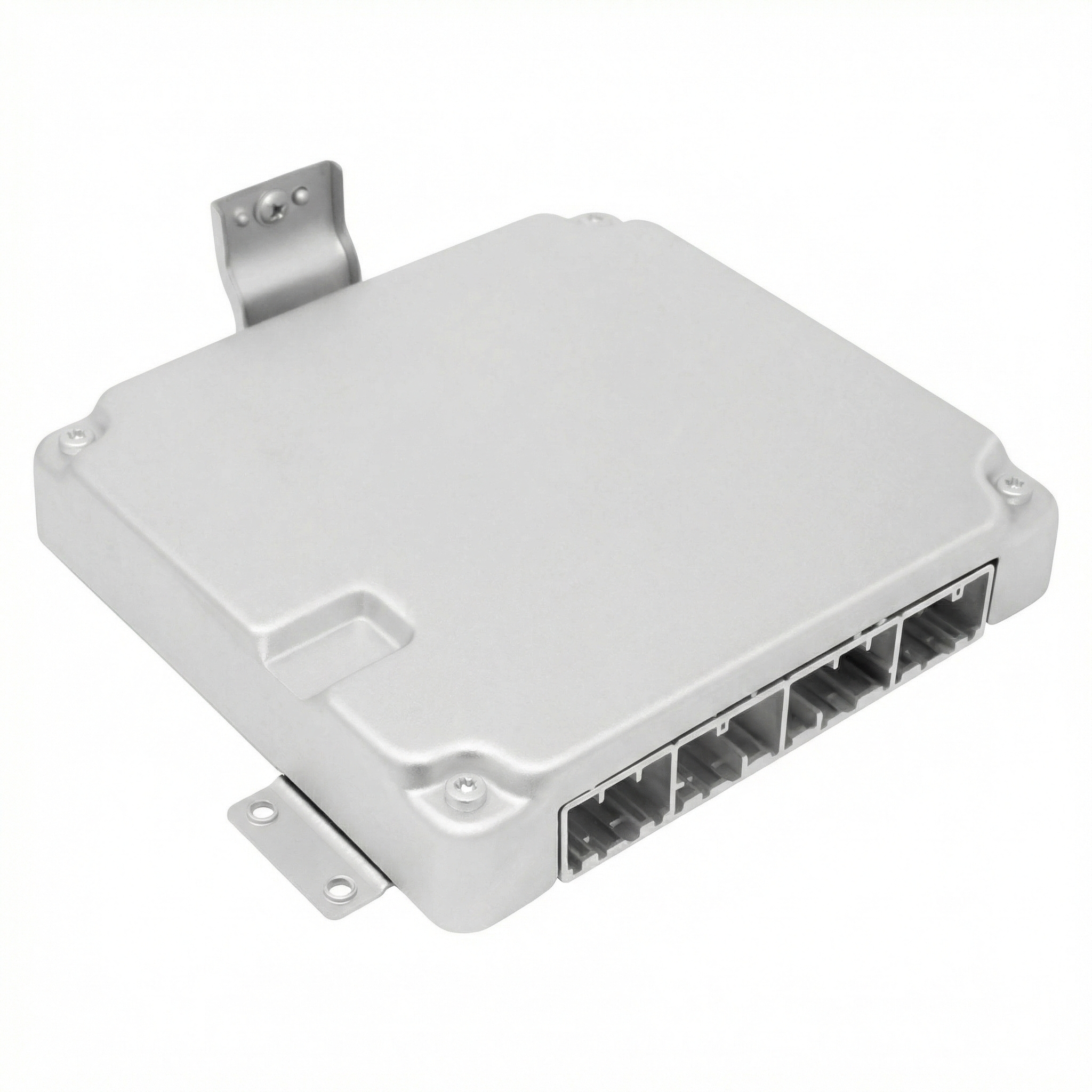
- Engine Control Module (ECM)
(OEM #89661-02K23 (supersedes multiple previous part numbers including 89661-02C10, 89661-02K20, 89661-02K22, etc.))— This is the component that fails internally, triggering the P1607 code and causing the no-start condition documented in Toyota's TSB.
Trusted brands: Denso (OEM), Cardone, Bosch
OEM price range: $800+
Aftermarket price range: $200-$600 (Remanufactured)
Technical Service Bulletins (TSBs) & Recalls
- T-EG018-05: '1ZZ-FE ENGINE 'NO START' CONDITION' - This TSB and its successors (EG049-06, EG024-07) address an internal ECM failure in 2005-2007 Corollas that causes a no-start condition. These older TSBs are now considered obsolete.
Platform-Specific Known Issues
- Toyota issued Technical Service Bulletin T-EG018-05 for 2005 model year Corollas (and later superseded it with TSBs like EG049-06 covering up to 2007 models) for a 'no start' condition. The cause was identified as an internal ECM problem, and the repair was to replace the module.
- The repair was covered under the Toyota Federal Emissions Warranty, which is in effect for 96 months or 80,000 miles, whichever occurs first.
Mechanic-Grade Diagnostic Values
- ECM Power Supply Voltage at Connector E6, Pin 1 (+B) to E4, Pin 7 (E1) — expected: 8V to 14V with Ignition ON. Failure: Voltage below 8V or 0V indicates a problem with the EFI relay or wiring.
- ECM Memory Power Supply at Connector E6, Pin 3 (BATT) to E4, Pin 7 (E1) — expected: 8V to 14V at all times. Failure: 0V indicates a blown fuse or wiring issue from the battery.
- ECM Ground Connection at Connector E4, Pin 7 (E1) to Chassis Ground — expected: Less than 1 Ω resistance. Failure: High resistance indicates a poor ground connection, which can cause various ECM issues.
Scan Tool Commands That Help
- Toyota Techstream: Utility -> All Readiness -> Input DTC: P1607 — After clearing codes, this function can be used to check the DTC judgment result. If the result shows 'ABNORMAL', it confirms the system has a malfunction without needing a full drive cycle.
- Toyota Techstream: Immobilizer Reset / Key Registration — This is the required professional procedure after installing a new or used ECM to synchronize it with the vehicle's keys and immobilizer module, allowing the engine to start. 🎬 Watch: How to sync your new ECM
Wiring & Ground Locations
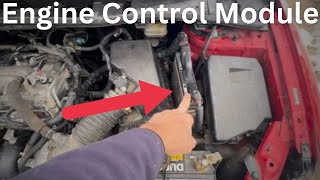
- ECM — Inside the cabin, behind the glove compartment assembly.. 🎬 Watch: How to replace the ECM yourself This is the physical location of the component that fails. Access is required for inspection of connectors and for replacement.
- ECM Ground Points (E1, E01, E02) — These are ground circuits that terminate at various points on the engine and chassis. For example, on a similar generation, ground point 'EA' is located on the cylinder head.. A poor ground connection on any of the main ECM ground pins can cause erratic behavior, voltage irregularities, and potentially trigger internal fault codes like P1607.
OEM Part Supersession History
89661-02C10, 89661-02C11, 89661-02C12, 89661-02C13→89661-02K23— These are earlier part numbers for the ECM in 2005-2007 models that were prone to the internal circuit failure.
Heads up: The final part number, 89661-02K23, is the recommended replacement for all the previous versions for automatic transmission models.89661-02D01, 89661-02D02→89661-02K23— Additional superseded part numbers, likely from different production runs or minor revisions, all replaced by the final updated version.
Heads up: All these earlier numbers are directly interchangeable with 89661-02K23 for the specified models.89661-02K20, 89661-02K21, 89661-02K22→89661-02K23— Later revisions of the ECM that were also eventually superseded by the final, most updated part number.
Heads up: 89661-02K23 is the final and most reliable version for replacement.
Model Year Variations Within This Range
- 2005-2007: These model years are most commonly affected by the internal ECM failure as documented in Toyota's TSBs and the corresponding GM recall for the Pontiac Vibe. While 2003-2004 and 2008 models can still experience ECM failure, it is far less common and not part of the known manufacturing defect campaign.
Diagnostic Flowchart
Other Known Issues on This Vehicle
Issues unrelated to this code that are worth knowing about as an owner of this generation:
- Excessive Oil Consumption 🔴 High — Common on 2005-2008 models with the 1ZZ-FE engine, often due to stuck/clogged piston oil return holes leading to worn piston rings. Can start as early as 60,000 miles. (Ref: T-SB-0134-08 (updated dipstick and oil capacity), but the unde)
Used vs. New Parts: Buying Guide for This Vehicle
When a used part is the smart pick: A used ECM from a junkyard is a viable, cost-effective option for this repair, provided you can match the part number exactly or find a compatible superseded number. The primary challenge is not the part itself, but the mandatory immobilizer programming required after installation.
Donor-vehicle mileage cap: roughly under 150000 miles for the part to have meaningful remaining life.
What to inspect on the donor part:
- Match the part number on the sticker EXACTLY or verify it's a compatible superseded part.
- Ensure the donor vehicle was not in a flood or had significant electrical fire damage.
- Inspect the connector pins on the used ECM for any signs of corrosion, bending, or damage.
- If possible, get the VIN of the donor car, as some programming services may require it.
OEM-only on this vehicle (don't cheap out):
- Engine Control Module (ECM) - While remanufactured units are available, using a genuine used OEM Denso unit is often the most reliable path as long as it is programmed correctly.
Aftermarket brands forum-validated for this vehicle:
- Flagship One (Remanufacturer - offers pre-programming services)
- Module Mechanics (Remanufacturer - offers programming services by sending in your original unit)
Brands owners have reported issues with on this vehicle:
- Unbranded, no-name sellers on platforms like eBay can be risky, as the part may be a non-repaired, faulty unit from another vehicle.
Real Owner Stories
Aggregated from forums and TSBs cited above. Mileages and costs reflect what owners reported in those sources.
2005-2008 Pontiac Vibe 1ZZ-FE
Symptoms: Code P0607 (equivalent to P1607) on the platform mate vehicle.
What fixed it: The dealer replaced the ECU under the 80,000-mile emissions warranty.
Source hint: GenVibe - Community for Pontiac Vibe Enthusiasts - 'Code help P0607'
2005 Toyota Corolla 1ZZ-FE
Symptoms: Engine 'no start' condition due to internal ECM problem.
What fixed it: Replace the Engine Control Module (ECM).
Source hint: T-EG018-05: '1ZZ-FE ENGINE 'NO START' CONDITION'
Related OBD-II Codes
Frequently Asked Questions
Is the ECM failure on my 2005-2007 Corolla covered by a warranty?
Does TSB T-EG018-05 apply to my 2005 Toyota Corolla?
Can I use an ECM from a Pontiac Vibe to fix my Corolla's P1607 code?
Why does my 2005 Corolla crank but fail to start with no spark or injector pulse?
Is there a recall for the ECM issue on the Corolla's platform mate, the Pontiac Vibe?
Can I install a used ECM from a junkyard to resolve P1607?
Helpful Videos
Used OEM Parts in Stock
New Aftermarket Parts Available

The information in this article is provided for general reference and educational purposes only. Vehicle specifications, procedures, and part compatibility can vary by production date, trim level, and region. Always consult your vehicle's factory service manual and verify part numbers before purchasing or performing repairs. Safety-critical components such as airbags, seat belts, and braking systems should be installed by a qualified professional.
- Toyota Corolla:
- 🧭 Diagnostic Flowchart
- 🎬 Helpful Videos
- 🛍️ Shop This Part
- What's Unique About the 2003-2008 Toyota Corolla
- Symptoms You May Notice
- Most Likely Causes
- Rare But Worth Checking
- Diagnosis Steps
- Parts You'll Likely Need
- Technical Service Bulletins (TSBs) & Recalls
- Platform-Specific Known Issues
- Mechanic-Grade Diagnostic Values
- Scan Tool Commands That Help
- Wiring & Ground Locations
- OEM Part Supersession History
- Model Year Variations Within This Range
- Other Known Issues on This Vehicle
- Used vs. New Parts: Buying Guide for This Vehicle
- Real Owner Stories
- 2005-2008 Pontiac Vibe 1ZZ-FE
- 2005 Toyota Corolla 1ZZ-FE
- Related OBD-II Codes
- Frequently Asked Questions
- 🎟️ Get 5% Off