

P1614 on 2011-2014 Chrysler 200: ECU Reset Causes and Fixes
On a 2011-2014 Chrysler 200, P1614 means a control module rebooted unexpectedly. This is almost always caused by a weak battery or bad connections, not a failed computer. Start by load-testing your battery and cleaning all terminals and grounds before considering more complex repairs.
- P1614 on your Chrysler 200 means a computer rebooted, it is NOT a security or key problem.
- The most likely cause is a weak battery. Get it professionally load-tested before buying any parts.
- Thoroughly clean your battery terminals and check the main ground straps, as poor connections are a common culprit.
- If the battery and connections are good, the issue may be a software glitch that a dealer needs to update.
- Do not replace the expensive Powertrain Control Module (PCM) unless all other possibilities have been exhausted.
What's Unique About the 2011-2014 Chrysler 200
Chrysler vehicles from this era are known for their sensitivity to battery voltage. Unlike on brands like Nissan where P1614 points to the anti-theft system, on the Chrysler 200 it's an electrical integrity code. The root cause is frequently an unstable power supply from a failing battery or poor connection, which causes a temporary computer reset rather than an actual component failure. This makes thorough battery and connection testing the most critical first step. A failing Totally Integrated Power Module (TIPM) can also be a source of these electrical glitches.
Symptoms You May Notice
- Check Engine Light is illuminated
- Engine may stall intermittently, sometimes while driving or coming to a stop
- Hesitation or stumbling during acceleration
- Harsh or erratic automatic transmission shifting
- Loss of radio presets or trip computer data
- Instrument cluster may flicker or gauges may drop out momentarily
- Replacing the PCM without testing the battery and connections first.
- Diagnosing an immobilizer or key transponder issue, which is the incorrect definition for this code on a Chrysler.
Most Likely Causes
- Weak or Failing Battery 🔴 High Probability → Shop Vehicle Battery Chrysler electronics are highly sensitive to voltage fluctuations. A battery that can't maintain stable voltage under load, even if it starts the car, can cause modules to reboot. This is the most common resolution reported by owners.
How to confirm: Perform a professional load test on the battery. A simple multimeter voltage check is not sufficient to rule out a weak battery. The battery should be tested both cold and after running.
Typical fix: Replace the vehicle's 12V battery.
Est. part cost: $150-$250 - Loose or Corroded Battery Terminals/Grounds 🟡 Medium Probability → Shop Vehicle Battery Corrosion on battery posts, terminals, or main ground straps creates resistance, which can cause a momentary voltage drop sufficient to reset a control module. Some owners report starting issues that are temporarily fixed just by wiggling or reconnecting the battery terminals, pointing to a connection issue.
How to confirm: Visually inspect the battery terminals for white or blue/green corrosion. Check that the main engine and chassis ground straps are clean, tight, and free of rust. Follow the main negative battery cable to its connection point on the chassis and ensure it's secure.
Typical fix: Disconnect, thoroughly clean the battery posts and terminals with a wire brush, and re-secure them. Clean or replace corroded ground straps. 🎬 See how to install a battery and add a ground wire
Est. part cost: $5-$50 - Outdated Powertrain Control Module (PCM) Software ⚪ Low Probability Manufacturers often release software updates to make control modules less sensitive to minor, normal voltage fluctuations that could trigger a false reset code. TSBs for similar FCA vehicles confirm this is a known fix path.
How to confirm: A Chrysler dealership or a well-equipped independent shop can check for available software updates (reflashes) for your vehicle's VIN.
Typical fix: Reprogram the PCM or TCM with the latest available software using a dealer-level scan tool.
Est. part cost: $0
Rare But Worth Checking
- Failing Alternator: An alternator with a faulty voltage regulator can produce voltage spikes or drops, causing modules to reset. This should be checked if the battery and connections are confirmed to be good.
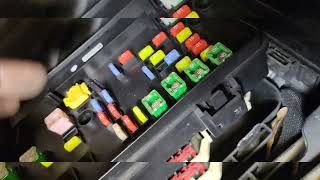
- Faulty Totally Integrated Power Module (TIPM): The TIPM, which is the main fuse and relay center, is a known failure point on this platform. Internal relay or circuit board failures can cause intermittent power loss to various modules, including the PCM, triggering a P1614. 🎬 Watch: How to replace the TIPM yourself Symptoms of a bad TIPM often include other random electrical issues.
- Faulty Powertrain Control Module (PCM): While the code indicates an internal ECU event, complete failure of the module is rare. This should only be considered after all power, ground, software, and TIPM issues have been definitively ruled out.
Diagnosis Steps
- Read all stored fault codes with an OBD-II scanner. Note any other codes that are present.
- Perform a professional load test on the 12V battery. Replace if it fails.
- If the battery passes, disconnect the battery terminals. Thoroughly clean the battery posts and cable terminals with a wire brush until they are shiny.
- Locate and inspect the main engine-to-chassis and battery-to-chassis ground straps. Ensure they are tight and free of corrosion. Unbolt, clean the contact surfaces, and re-tighten.
- Inspect the connections at the Totally Integrated Power Module (TIPM / fuse box). Ensure the main power feeds are tight and free of corrosion.
- With the battery reconnected, perform a parasitic draw test to ensure a component isn't draining the battery when the car is off.
- Clear all fault codes. Drive the vehicle to see if the P1614 code returns.
- If it does, contact a dealership or qualified shop to check if a PCM or TCM software update is available for your vehicle.
- If the code still returns after a software update, have the charging system (alternator) tested for proper operation.
- If all previous steps fail, the TIPM and PCM itself may need to be professionally diagnosed.
Parts You'll Likely Need
- AGM Battery (Group 48/H6) — A weak or failing battery is the most common cause of the voltage drops that trigger a P1614 code. A Group 48 (also called H6) battery is a common size for this vehicle.
Trusted brands: Mopar, Interstate, Duralast, DieHard
OEM price range: $200-$300
Aftermarket price range: $150-$250
Related Codes That Often Appear With This One
- P0562 — This code indicates 'System Voltage Low' and often appears with P1614, as low voltage is the primary trigger for the module reset.
- U0100 — This code for 'Lost Communication With ECM/PCM' can be set if the module's reboot is long enough to disrupt communication on the vehicle's data network.
Technical Service Bulletins (TSBs) & Recalls
- While no TSB is listed specifically for the 2011-2014 Chrysler 200 and P1614, TSB 18-006-20 REV. A for a newer 2.4L Jeep confirms the 'ECU Reset-Recovery Occurred' definition and establishes a pattern of FCA fixing this code with a PCM software update.
Mechanic-Grade Diagnostic Values
- PCM Ground Circuit Resistance — expected: Less than 1.0 ohm. Failure: Resistance higher than 1.0 ohm between the PCM's ground pin and the negative battery terminal indicates a poor ground connection that can cause module resets.
- Alternator AC Ripple Voltage — expected: Less than 0.5 Volts AC (500mV AC). Failure: AC voltage exceeding 0.5V indicates a failing alternator diode. This 'dirty' power can cause control modules to randomly reset, triggering P1614 even if the DC charging voltage appears normal.
- Charging System Voltage (Engine Running) — expected: 13.5V to 14.5V at the battery terminals.. Failure: Voltage below 13.2V suggests an undercharging alternator, while voltage above 15V suggests a faulty voltage regulator, both of which can cause module instability.
- Voltage Drop on Main Power/Ground Cables — expected: Less than 0.25 Volts. Failure: A voltage drop greater than 0.25V across the main battery positive or negative cables while cranking indicates high resistance in the cable or connections.
Hidden / Shadow Codes Worth Checking
- P1614-00: This is the full code with a Failure Type byte (-00) as seen by a dealer-level scan tool like wiTECH. It confirms the 'ECU Reset-Recovery Occurred' status without additional fault type information. (see via Chrysler wiTECH Diagnostic Application)
Scan Tool Commands That Help
- wiTECH Diagnostic Application: Reprogram PCM/TCM with latest software — This is the primary repair path if the P1614 code is caused by a software glitch making the module overly sensitive to normal voltage fluctuations. It's often directed by a Technical Service Bulletin (TSB).
- wiTECH Diagnostic Application: Clear any DTCs — This is performed after a successful module flash or repair to clear the P1614 code and any other communication codes that may have set during the event.
- wiTECH Diagnostic Application: PROXI Configuration Alignment — This routine is required after replacing or reprogramming certain modules (like the TIPM or TCM) to ensure all modules on the vehicle's network recognize the new or updated component correctly.
Wiring & Ground Locations
- Battery Location — Inside the driver's side front fender well, accessible by removing the wheel and fender liner.. The unconventional battery location makes terminal and ground inspection less straightforward. Corrosion can build up unseen, causing intermittent power loss to the PCM.
- G100 — On the driver's side strut tower, serving as the remote negative jump-start post.. This is a primary chassis ground point. Corrosion or looseness here can affect the entire vehicle's electrical stability, leading to module resets.
- G105 — On the right side of the engine compartment.. This ground point serves various components in the engine bay. A poor connection can introduce electrical noise or voltage drops.
- G200 — Behind the left kick panel inside the cabin.. This is a major interior ground point for various modules and controls. While less likely to cause a PCM reset, a fault here can contribute to widespread electrical issues.
- Main Engine Ground — Typically a braided strap from the engine block or transmission to the firewall or chassis rail.. This is the critical return path for the alternator and starter. High resistance here forces current to find other paths, causing voltage instability and potential module resets.
Real Owner Repair Stories
- AR15.com user (2012 Chrysler 200) — No crank, no start. Clicking from the starter. Battery and starter tested good off the vehicle.
❌ Tried (didn't work) Charging the battery, Jumping the vehicle, Removing and testing the starter (passed), Removing and testing the battery (passed)
✅ What actually fixed it The issue was a bad main vehicle ground connection. Cleaning and securing the ground resolved the no-start condition. - YouTube user 'The Fab Forums' (2013 Chrysler 200) — Intermittent no start, no crank condition.
❌ Tried (didn't work) Replacing the battery did not initially solve the problem.
✅ What actually fixed it Adding an additional 4-gauge ground wire from the battery's negative terminal connection point to a solid point on the transmission case. The owner suspected the factory ground was insufficient or had developed high resistance.
Diagnostic Flowchart
Other Known Issues on This Vehicle
Issues unrelated to this code that are worth knowing about as an owner of this generation:
- 3.6L Pentastar Left Cylinder Head Failure 🔴 High — Most common on 2011-2013 models. An extended warranty was issued by Chrysler for this specific problem. Symptoms include a ticking noise and misfire codes (e.g., P0300, P0302, P0304, P0306). (Ref: Chrysler Extended Warranty Bulletin (10 years/150,000 miles for the left cylinder head).)
- 62TE Automatic Transmission Problems 🟠 Medium — Common issues include harsh shifting, shuddering when coming to a stop, and occasional gear slippage. Often caused by faulty torque converter clutch solenoids or internal component wear.
- Blocked Heater Core 🟠 Medium — A very common complaint where the passenger side blows cold air while the driver's side has heat. This is caused by casting sand from the engine manufacturing process clogging the heater core.
- Engine Stalling While Driving 🔴 High — Widely reported on both 2.4L and 3.6L engines. Can be caused by a range of issues from a faulty PCM to fuel delivery problems. The NHTSA investigated this for the 2011-2013 models. (Ref: NHTSA Preliminary Investigation PE12027)
- Totally Integrated Power Module (TIPM) Failure 🔴 High — The TIPM (fuse box) can fail, causing a wide range of bizarre electrical issues, including the engine not starting, fuel pump issues, random horn/wipers activation, and stalling.
- Active Head Restraint (AHR) Random Deployment 🟠 Medium — The active headrests can deploy without a collision due to a faulty internal component, which can be startling and requires replacement of the headrest. (Ref: Recall 17V640000 for some 2012-2013 models.)
Used vs. New Parts: Buying Guide for This Vehicle
When a used part is the smart pick: For a faulty Totally Integrated Power Module (TIPM), a used part from a reputable salvage yard can be a cost-effective alternative to a new OEM unit, which can be expensive. Since the TIPM is a common failure point, there is a good supply of used units.
Donor-vehicle mileage cap: roughly under 100000 miles for the part to have meaningful remaining life.
What to inspect on the donor part:
- Ensure the part number on the used TIPM is an exact match to the original.
- Inspect the unit for any signs of water intrusion or corrosion on the connectors and pins.
- Purchase from a seller that offers a warranty or return policy.
- Check for physical damage to the casing or connectors.
OEM-only on this vehicle (don't cheap out):
- Powertrain Control Module (PCM) - While a used PCM can be installed, it requires professional programming to the vehicle's VIN and security information, which can be complex and costly. A new or remanufactured unit from the dealer or a specialist is often a more reliable path.
Aftermarket brands forum-validated for this vehicle:
- For TIPM repair, services like 'Circuit Board Medics' are known for repairing the original unit, which avoids the need for reprogramming.
Brands owners have reported issues with on this vehicle:
- Unknown, no-name TIPM units from online marketplaces should be avoided as their quality and compatibility can be questionable.
Real Owner Stories
Aggregated from forums and TSBs cited above. Mileages and costs reflect what owners reported in those sources.
2012 Chrysler 200 Touring
Symptoms: The vehicle was experiencing intermittent stalling and the P1614 code was present.
What fixed it: Replacing a 5-year-old battery completely solved the problem.
Source hint: chryslerforum.com - Thread '2012 Chrysler 200 Touring P1614'
Related OBD-II Codes
Frequently Asked Questions
My 2012 Chrysler 200 is stalling and showing P1614; could this be related to the Pentastar cylinder head issue?
Is there a TSB for the P1614 'ECU Reset' code on my Chrysler 200?
Can a bad battery cause my radio presets to disappear and the car to stall?
My 2012 Chrysler 200 Touring is stalling; what is the most likely fix for P1614?
Is the stalling issue on the 2011-2013 Chrysler 200 part of an official investigation?
Should I buy a used TIPM for my Chrysler 200 to fix electrical resets?
Helpful Videos
![TIPM [Dodge, Chrysler, Jeep] Removal and Solution](https://img.youtube.com/vi/qea1H85HBwU/mqdefault.jpg)
We Have This Part in Stock

The information in this article is provided for general reference and educational purposes only. Vehicle specifications, procedures, and part compatibility can vary by production date, trim level, and region. Always consult your vehicle's factory service manual and verify part numbers before purchasing or performing repairs. Safety-critical components such as airbags, seat belts, and braking systems should be installed by a qualified professional.
- Chrysler 200:
- 🧭 Diagnostic Flowchart
- 🎬 Helpful Videos
- 🛍️ Shop This Part
- What's Unique About the 2011-2014 Chrysler 200
- Symptoms You May Notice
- Most Likely Causes
- Rare But Worth Checking
- Diagnosis Steps
- Parts You'll Likely Need
- Related Codes That Often Appear With This One
- Technical Service Bulletins (TSBs) & Recalls
- Mechanic-Grade Diagnostic Values
- Hidden / Shadow Codes Worth Checking
- Scan Tool Commands That Help
- Wiring & Ground Locations
- Real Owner Repair Stories
- Other Known Issues on This Vehicle
- Used vs. New Parts: Buying Guide for This Vehicle
- Real Owner Stories
- 2012 Chrysler 200 Touring
- Related OBD-II Codes
- Frequently Asked Questions
- 🎟️ Get 5% Off