

P1614 on 2004-2014 Hyundai Sonata: Decoding Multiple Meanings & Fixes
P1614 on a Hyundai Sonata is not a single code but has multiple meanings depending on the vehicle's generation. It can indicate an Electronic Throttle System (ETS) communication error, especially on older models, or a fault in the Malfunction Indicator Lamp (MIL) request circuit. Diagnosis is critical before purchasing parts.
- P1614 on a 2004-2014 Sonata has multiple possible meanings; it is NOT a simple immobilizer code.
- The most likely definitions are an Electronic Throttle System (ETS) communication error or a MIL Request Circuit electrical fault.
- Your vehicle's symptoms are the best clue: limp mode points to the ETS, while no symptoms points to the MIL circuit.
- Do not replace expensive parts like the key or immobilizer module based on this code alone.
- If you use a plug-in insurance tracker or OBD-II dongle, remove it and clear the codes to see if it was the cause.
What's Unique About the 2004-2014 Hyundai Sonata
The 2004-2014 Sonata range spans three distinct vehicle generations (late EF, NF, and YF), each with evolving electronic systems. This is why a single P-code can have different meanings. A Hyundai Technical Service Bulletin (TSB 06-36-003) confirms P1614 as an Electronic Throttle System (ETS) communication error on early-2000s models, which applies to the 2004-2005 Sonatas and is also seen in the 2006-2010 NF generation. However, other official code lists and technician reports define it as an electrical fault in the check engine light request circuit, which may be more common on later NF and YF generation Sonatas. The key takeaway is that you must diagnose based on symptoms: a car in limp mode likely has the ETS fault, while a car driving normally might have the MIL circuit fault.
Generation note: This range covers the end of the 4th gen (EF, through 2005), the full 5th gen (NF, 2006-2010), and the full 6th gen (YF, 2011-2014). The 'ETS Module Error' definition is documented for the EF/early NF era, while the 'MIL Request Circuit' fault may be more common on later models. The ETS fault is a known cause for intermittent limp mode on the NF Sonata.
Symptoms You May Notice
- Check Engine Light is on
- Vehicle enters 'limp home' mode (if related to ETS fault)
- Reduced engine power and acceleration (if related to ETS fault)
- No noticeable drivability issues (if related to MIL circuit fault)
- Car may not start (rare, but possible if communication errors are severe)
- Intermittent stalling, but restarts normally (can be a symptom of the ETS fault)
- Replacing the ignition key or immobilizer module. Many generic code websites incorrectly list P1614 as an immobilizer issue for all makes. For Hyundai, this is rarely the case; do not replace these parts unless other immobilizer-specific codes are present.
Most Likely Causes
- Faulty Electronic Throttle System (ETS) Control Relay 🟡 Medium Probability On earlier models (approx. 2004-2010) with electronic throttles, the control module and its power supply relay can fail, causing communication errors with the main ECM. This is a documented cause of limp mode on the NF Sonata.
How to confirm: Scan for other ETS-related codes (e.g., P2106, P1295). Check power and ground at the ETS control relay and module. A professional scanner can monitor communication between the ETS and ECM. A common failure point is poor pin fitment at the ECM connector, which can be diagnosed by wiggling the connector while monitoring throttle data.
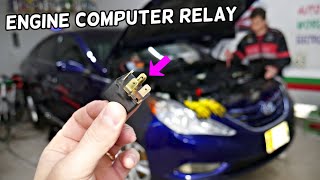
Typical fix: Replace the ETS control relay or, 🎬 Watch: How to locate and replace the engine computer relay less commonly, the ETS module itself. In some cases, cleaning and tightening the pins at the ECM connector has resolved the issue.
Est. part cost: $20-$50 for a relay, $150-$400 for a module. - Wiring Issue in the MIL Request Circuit 🟡 Medium Probability A short-to-power or a damaged wire between the Transmission Control Module (TCM) and the ECM can cause the 'MIL Request Circuit High' fault. This can happen due to chafing of the harness or corrosion in connectors.
How to confirm: Inspect the wiring harness between the TCM and ECM for damage. Use a multimeter to check for correct voltage on the MIL request signal wire as specified in the factory service manual. A high voltage reading (above spec) confirms the issue.
Typical fix: Repair the damaged section of the wiring harness or clean the affected connector.
Est. part cost: $5-$25 for wiring repair supplies. - Failing Engine Control Module (ECM) ⚪ Low Probability Internal ECM faults can cause a variety of communication and software-related codes. Some service documents list 'ECU Software Error' or internal failure as a possible definition for P1614.
How to confirm: This is a diagnosis of exclusion. All other possibilities (wiring, other modules, relays) must be ruled out first. A dealership or specialist with advanced diagnostic tools may be needed to confirm an internal ECM fault. Sometimes a used ECM can be plugged in to test for restored communication before full installation.
Typical fix: Replace and reprogram the Engine Control Module.
Est. part cost: $200-$800
Rare But Worth Checking
- Aftermarket OBD-II Device Interference: Plug-in insurance trackers or cheap Bluetooth scanners can sometimes interfere with the vehicle's CAN bus network, causing random communication codes like P1614. If you have one plugged in, remove it, clear the codes, and see if the problem returns.
- Faulty Transmission Control Module (TCM): If the P1614 code is for the 'MIL Request Circuit', the TCM itself could be failing and sending an erroneous request. This is less common than a wiring issue but possible. Often, this will be accompanied by other transmission-specific codes (P07xx).
Diagnosis Steps
- Note the Symptoms: Is the car in limp mode with poor acceleration, or does it drive normally with just a check engine light? This is the most important first step.
- Scan for All Codes: Use a quality OBD-II scanner that can read codes from ALL modules (ECM, TCM, etc.). Check for any other codes that are present. Codes like P2106, P1295, or any P07xx transmission codes are critical clues.
- If Limp Mode is Present (Suspect ETS Fault): Focus on the Electronic Throttle System. Check the ETS fuse and relay. Inspect the wiring going to the throttle body and ETS module. A known issue is poor pin tension at the ECM connector; wiggle the harness while the engine is running to see if it triggers the fault. Refer to a service manual for your specific year to locate the ETS relay.
- If No Drivability Issues (Suspect MIL Circuit Fault): The problem is likely electrical. Inspect the wiring harness between the main modules (ECM and TCM). Check for any signs of corrosion, damage, or chafing. Use a multimeter to check for high voltage on the MIL request signal wire as per the service manual.
- Check for TSBs: Ask a dealership or search online for Technical Service Bulletins (TSBs) that apply to your specific model year, as diagnostic procedures can vary. TSB 06-36-003 is relevant for the ETS fault.
- Rule out ECM: Only after confirming all wiring, relays, and other modules are good should the ECM be considered the cause.
Parts You'll Likely Need
- ETS Control Relay — For the ETS-related definition of P1614, a failing power relay is a common and inexpensive first part to replace during diagnosis.
Trusted brands: Hyundai Genuine, Bosch
OEM price range: $25-$50
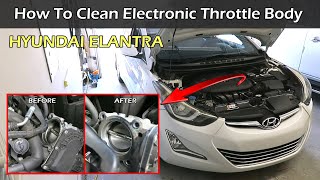
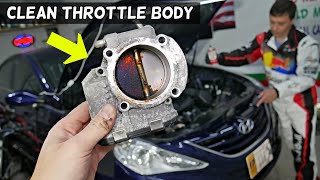
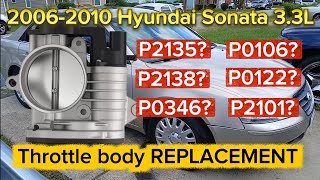
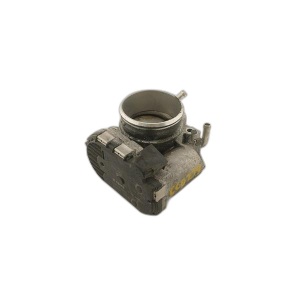
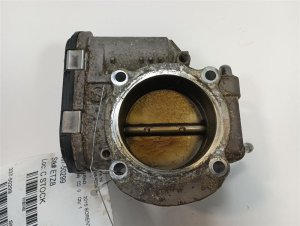
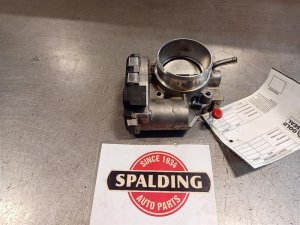
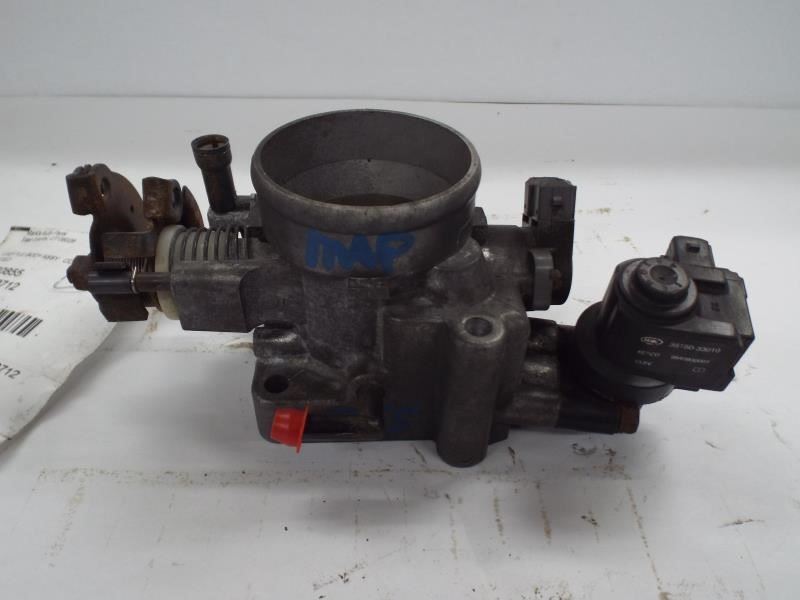
Aftermarket price range: $15-$30 - Electronic Throttle Body Assembly — If the ETS module or sensors are integrated into the throttle body on your model year, and are determined to be the cause of the communication fault, the entire assembly may need replacement. 🎬 Watch: Step-by-step guide to replacing the throttle body assembly Cleaning a dirty throttle body has 🎬 See this walkthrough on how to clean the throttle body also been reported to fix related codes.
Trusted brands: Hyundai Genuine, Delphi
OEM price range: $250-$500
Aftermarket price range: $150-$300
Related Codes That Often Appear With This One
- P2106 — This code means 'Limp Home Valve Malfunction' and is often triggered alongside P1614 when the Electronic Throttle System (ETS) is the root cause.
- P1295 — Another ETS-related code often seen with P1614 and P2106, indicating a power management fault that forces limp mode.
- U-series codes (e.g., U0100) — If P1614 is due to a communication error, you may also see generic 'Lost Communication' codes for the affected module, pointing to a broader network issue.
- P07xx codes — If the P1614 is a 'MIL Request' from the transmission, you will find the root cause code (e.g., P0720 for output speed sensor) stored in the Transmission Control Module (TCM).
Technical Service Bulletins (TSBs) & Recalls
- TSB 06-36-003: Defines P1614 as 'ETS MODULE RELATED ERROR' for 2001-2005 Hyundai models, involving a communication error between the ETS Module and ECM.
- A TSB for 2006-2007 Sonatas with the 3.3L engine mentions limp-home mode caused by a faulty accelerator pedal sensor assembly, which could be a related diagnostic path if other ETS codes are present.
Platform-Specific Known Issues
- Intermittent Limp Mode on 2006-2010 (NF) Sonata: Owners report intermittent limp mode, sometimes without a check engine light, that can be difficult to diagnose. The cause is often related to the electronic throttle system, with potential fixes ranging from replacing the throttle position sensor (TPS), cleaning the throttle body, or addressing poor wiring connections at the ECM.
Mechanic-Grade Diagnostic Values
- Throttle Position Sensor (TPS) Angle at Idle — expected: ~5.2 degrees. Failure: A reading of 0 or a value that doesn't change when the throttle plate is moved manually indicates a sensor or wiring failure.
- CAN Bus Idle Voltage — expected: ~2.5V on each CAN line (CAN-High, CAN-Low). Failure: A line stuck high (near battery voltage) or low (near 0V) indicates a short or an internal module fault on the network.
Scan Tool Commands That Help
- Hyundai GDS (Global Diagnostic System): Actuation Test: ETC Motor — To verify the mechanical operation of the electronic throttle body. The tool commands the throttle plate to open and close, allowing a technician to visually confirm its movement and listen for abnormal gear sounds without touching the accelerator pedal.
- Hyundai GDS (Global Diagnostic System): Throttle Position Learning / Reset — After replacing the throttle body assembly. This function resets the stored learned values for the closed and wide-open throttle positions, which is necessary for the ECM to control the new part correctly.
- Hyundai GDS Mobile (VCI-2): Wiggle Test — When a wiring issue is suspected. This function graphs sensor data at a high resolution, making it easier to see signal dropouts or glitches that occur while physically wiggling connectors and harnesses to find intermittent open or short circuits.
Wiring & Ground Locations
- ETS Control Relay — In the engine compartment fuse/relay box, typically on the driver's side. The relay is often labeled 'ETCS' or 'ECU' on the fuse box diagram.. This relay provides power to the Electronic Throttle Control System. A faulty or failing relay is a primary cause of the P1614/P2106/P1295 limp mode combination on NF Sonatas.
- ECM Ground Point — Typically bolted to the driver's side strut tower or inner fender in the engine bay. Look for a black wire or group of wires from the main harness attached to the chassis with a 10mm or 12mm bolt.. A poor ground connection for the ECM can cause a multitude of bizarre electrical issues and communication codes, including P1614. The voltage drop across a bad ground can disrupt sensitive module communications.
- Interior Fuse Box / Junction Block — Located on the driver's side of the instrument panel, behind a removable cover.. This panel contains fuses for the ECM and other control modules. In some models, relays for certain functions are integrated into this junction block and are not individually replaceable.
Real Owner Repair Stories
- Hyundai-Forums.com user (2008 Hyundai Sonata Limited 3.3L V6, 144K miles) — Car enters limp mode during medium acceleration, check engine light on with codes P161B, P2106, P1295. Restarts and drives fine temporarily.
❌ Tried (didn't work) Inspected grounds, Inspected intake manifold, Replaced Throttle Position Sensor (TPS), Flashed ECM, Replaced Throttle Body, Replaced Accelerator Pedal Sensor, Replaced ECM
✅ What actually fixed it The user did not post a final fix, but another user in the same thread with a 2008 Santa Fe and the same codes reported that a thorough cleaning of the throttle body resolved the issue for them. - Forum user experience (2011 Hyundai Sonata (YF Generation)) — Check Engine Light on with code P1614, no noticeable drivability issues.
❌ Tried (didn't work) Checking wiring between ECM and TCM.
✅ What actually fixed it Replacement of a faulty brake light switch. The internal contacts of the switch were failing, sending an erroneous signal to the control modules, which in turn triggered the 'MIL Request' from another module to the ECM. - RepairPal forum user (2006 Hyundai Sonata, 86K miles) — Intermittent flashing of battery, seat belt, ESC, and ABS lights. Eventually, the car died at a stoplight and would not restart, only clicking. Codes P2106 and P1295 were present.
❌ Tried (didn't work) Auto parts store tested battery and charging system, reported as good.
✅ What actually fixed it The final symptoms (clicking, sluggish power, no start) strongly point to a failed alternator that was no longer charging the battery, despite the earlier test. The ETS codes were likely triggered by the low system voltage as the battery drained.
OEM Part Supersession History
95225-29050→95225-38050— Standard part revision/update.
Model Year Variations Within This Range
- 2006-2010 (NF Generation): This generation is most susceptible to the 'ETS Module Related Error' definition, often accompanied by P2106 and P1295, causing limp mode. The primary culprits are the ETS relay, accelerator pedal sensor, and the throttle body itself.
- 2011-2014 (YF Generation): On these models, P1614 is more commonly associated with the 'MIL Request Circuit High Input' definition. The electronic systems are more integrated, and the root cause can be less direct, such as a faulty brake light switch sending conflicting data to the control modules.
Diagnostic Flowchart
Other Known Issues on This Vehicle
Issues unrelated to this code that are worth knowing about as an owner of this generation:
- Theta II Engine Seizure/Failure 🔴 High — Very common on 2011-2014 models with the 2.0L and 2.4L GDI engines. Can occur at various mileages, often starting with a knocking noise. (Ref: Multiple recalls (e.g., NHTSA 15V568000) and a class-action lawsuit. Hyundai extended warranties and released a Knock Sensor Detection System (KSDS) software update.)
- Subframe Corrosion 🔴 High — Common on 2004-2010 models (EF, NF generations) operated in 'Salt Belt' regions, leading to rust-through of the front or rear subframe. (Ref: Hyundai Recall 113 (NHTSA 13V354000) was issued to inspect and replace or rust-proof the rear crossmember on 2006-2010 Sonatas.)
- Steering Column Coupling Failure 🟠 Medium — Widespread on 2011-2014 models (YF generation), causing a distinct clicking or clunking noise when turning the steering wheel. (Ref: Hyundai extended the warranty for this specific part (Campaign TXX). The part is a small, flexible rubber coupling that degrades over time.)
- Parking Lights Won't Turn Off 🟡 Low — A common electrical issue on the NF generation (2006-2010) caused by an internal failure of the cabin fuse box (also known as the Junction Box). (Ref: No recall, but a well-documented problem in owner forums and repair databases.)
- Peeling Paint 🟡 Low — Affects many YF generation (2011-2014) Sonatas, particularly in white. The paint can delaminate and peel off in large sheets from the roof and hood. (Ref: No recall, but numerous owner complaints and a class-action lawsuit were filed over the issue.)
- Failed Transmission Speed Sensors 🟠 Medium — Common on the NF generation (2006-2010), causing harsh shifting, getting stuck in one gear (limp mode), and a check engine light. (Ref: No recall, but a very frequent repair documented in forums and by RepairPal.)
Used vs. New Parts: Buying Guide for This Vehicle
When a used part is the smart pick: For major electronic components like a Throttle Body Assembly or an Accelerator Pedal Sensor, a used part from a reputable salvage yard can be a cost-effective option. These parts are generally durable and not common wear items.
Donor-vehicle mileage cap: roughly under 120000 miles for the part to have meaningful remaining life.
What to inspect on the donor part:
- For a throttle body, ensure the butterfly valve moves smoothly with no binding and that the bore is relatively clean.
- Check all electrical connectors for signs of corrosion, melting, or broken locking tabs.
- Ask for the donor vehicle's VIN to verify compatibility and check for any major accident history that could have damaged the part.
OEM-only on this vehicle (don't cheap out):
- ETS Control Relay: Aftermarket relays can have different internal resistance, leading to incorrect operation or repeat failures. Given the low cost of the OEM part, it is the recommended choice.
- Engine Control Module (ECM): Used ECMs can be problematic due to immobilizer programming and software mismatches. It is best to use a new OEM part or a specialist remanufacturing service that can program it to your vehicle's VIN.
Aftermarket brands forum-validated for this vehicle:
- Delphi (For throttle bodies and sensors)
- NTK (For sensors)
Brands owners have reported issues with on this vehicle:
- Unbranded, 'white box' relays and sensors from online marketplaces are frequently reported as failing quickly or being dead-on-arrival.
Real Owner Stories
Aggregated from forums and TSBs cited above. Mileages and costs reflect what owners reported in those sources.
2006 Hyundai Sonata
Symptoms: The vehicle enters an intermittent limp mode, sometimes occurring without the check engine light being illuminated.
What fixed it: Addressing poor wiring connections at the ECM or cleaning the throttle body.
Source hint: vehicle_specific_issues: 'Intermittent Limp Mode on 2006-2010 (NF) Sonata'
2006 Hyundai Sonata
Symptoms: User describes the vehicle entering limp mode.
What fixed it: Cleaning and tightening the pins at the ECM connector to resolve poor pin fitment.
Source hint: Hyundai-Forums.com: '2006 sonata limp mode'
Related OBD-II Codes
Frequently Asked Questions
Does TSB 06-36-003 apply to my 2004 Hyundai Sonata?
My 2007 Sonata with the 3.3L engine is in limp mode; could the accelerator pedal be the problem?
Is there a common wiring issue on the NF Sonata (2006-2010) that causes P1614?
Can a faulty relay cause my Sonata to enter limp mode with this code?
I have a P1614 but no drivability issues; what should I check on my Sonata?
Are there any recalls for the 2011-2014 Sonata that I should be aware of while diagnosing engine codes?
Helpful Videos

We Have This Part in Stock

The information in this article is provided for general reference and educational purposes only. Vehicle specifications, procedures, and part compatibility can vary by production date, trim level, and region. Always consult your vehicle's factory service manual and verify part numbers before purchasing or performing repairs. Safety-critical components such as airbags, seat belts, and braking systems should be installed by a qualified professional.
- Hyundai Sonata:
- 🧭 Diagnostic Flowchart
- 🎬 Helpful Videos
- 🛍️ Shop This Part
- What's Unique About the 2004-2014 Hyundai Sonata
- Symptoms You May Notice
- Most Likely Causes
- Rare But Worth Checking
- Diagnosis Steps
- Parts You'll Likely Need
- Related Codes That Often Appear With This One
- Technical Service Bulletins (TSBs) & Recalls
- Platform-Specific Known Issues
- Mechanic-Grade Diagnostic Values
- Scan Tool Commands That Help
- Wiring & Ground Locations
- Real Owner Repair Stories
- OEM Part Supersession History
- Model Year Variations Within This Range
- Other Known Issues on This Vehicle
- Used vs. New Parts: Buying Guide for This Vehicle
- Real Owner Stories
- 2006 Hyundai Sonata
- 2006 Hyundai Sonata
- Related OBD-II Codes
- Frequently Asked Questions
- 🎟️ Get 5% Off