

P1614 on 2020-2024 Jeep Gladiator: ECU Reset Causes and Fixes
On a 2020-2024 Jeep Gladiator, code P1614 almost always means one of the vehicle's batteries is weak or there's a software glitch. The most common fix is to load test and replace the failing main or auxiliary battery. If batteries are good, a dealer software update is the next step.
- P1614 on your Gladiator means a computer module rebooted, most likely due to a power supply issue.
- Before any other repair, have BOTH your main and auxiliary batteries professionally load-tested. This is the most common cause.
- Do not replace the PCM or TCM; the module hardware is almost never the problem.
- Check that all battery terminals and major ground straps are clean and tight, as this is a simple and free potential fix.
- If batteries and connections are good, the problem is likely a software glitch that a Jeep dealer must fix with an update.
What's Unique About the 2020-2024 Jeep Gladiator
The Jeep Gladiator (JT platform) uses a dual-battery system to manage its Engine Stop-Start (ESS) feature, consisting of a large main battery and a smaller auxiliary battery. This platform is notoriously sensitive to the health of both batteries. A failure or weakness in either battery can cause intermittent and confusing voltage drops, which is a primary trigger for the P1614 module reset. Owner experiences detailed on forums like JeepGladiatorForum.com show that widespread electrical issues, logged as P1614, are frequently traced back to a failing auxiliary battery that owners may not even know exists. The complexity of this system means that even a slight voltage irregularity can cause a cascade of seemingly unrelated error codes and symptoms.
Symptoms You May Notice
- Multiple warning lights on the dashboard, such as for the check engine, ABS, traction control, and "Service 4WD".
- "Stop/Start Not Ready" or "Auxiliary Switches Not Available, Battery Charging 🎬 Watch: How to diagnose auxiliary battery charging issues" messages on the instrument cluster.
- Vehicle may enter a limp mode, limiting speed.
- Erratic or harsh transmission shifting, or being unable to shift out of Park.
- Intermittent loss of power steering.
- Malfunctioning gauges or speedometer.
- Engine may stall or fail to start, sometimes preceded by a "Vehicle Will Stop Soon" message.
- Audible 'clunk' from the drivetrain.
- Electrical gremlins, such as the AC blower turning on by itself or wipers activating randomly.
- Replacing the Powertrain Control Module (PCM) or Transmission Control Module (TCM). The P1614 code is designed to report that the module reset; it does not mean the module itself has failed. Module failure is extremely rare and should only be considered after all power supply issues are ruled out.
- Replacing only the main battery without testing the auxiliary battery. A bad auxiliary battery will continue to cause problems and can prematurely wear out a new main battery.
- Replacing the alternator. While an alternator failure can cause voltage issues, it is far less common than battery failure on this platform as the root cause for P1614.
Most Likely Causes
- Weak or Failing Auxiliary Battery 🔴 High Probability → Shop Vehicle Battery The auxiliary battery supports the Engine Stop-Start (ESS) system. It has a shorter lifespan than the main battery and its failure causes voltage instability, which is a very common trigger for module resets on this platform. Owners on forums consistently report this as the number one cause for P1614 and related electrical issues.
How to confirm: The battery must be disconnected and professionally load-tested. A simple voltage check is not sufficient, as a failing battery can show a surface charge of 12.6V but still be bad. The battery is located behind the passenger-side inner fender liner or under the main fuse box.
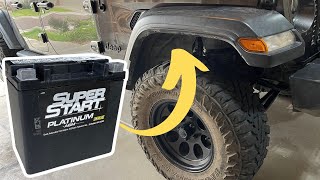
Typical fix: Replace the auxiliary battery. The most common method is accessing it from underneath by removing the passenger-side front wheel and fender liner. 🎬 Watch: The easy way to replace the auxiliary battery OEM Part numbers include 56029759AB and the newer 68647042AA.
Est. part cost: $100-$270 - Weak or Failing Main Battery 🔴 High Probability → Shop Vehicle Battery Like the auxiliary battery, the main AGM battery is under high demand. Any weakness can cause system voltage to drop below the threshold required by sensitive modules, triggering a reset. A bad auxiliary battery can also drain the main battery, leading to a dual failure.
How to confirm: Perform a professional load test at an auto parts store or repair shop. The battery may show normal voltage but fail under load. The test should be done with the battery isolated from the auxiliary system.
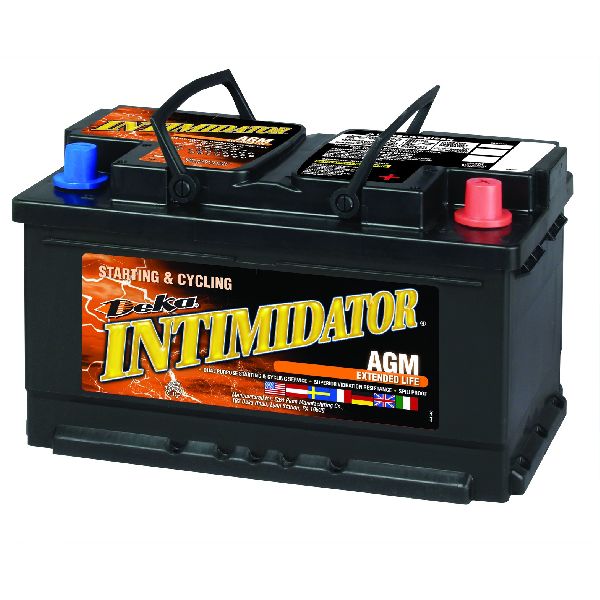
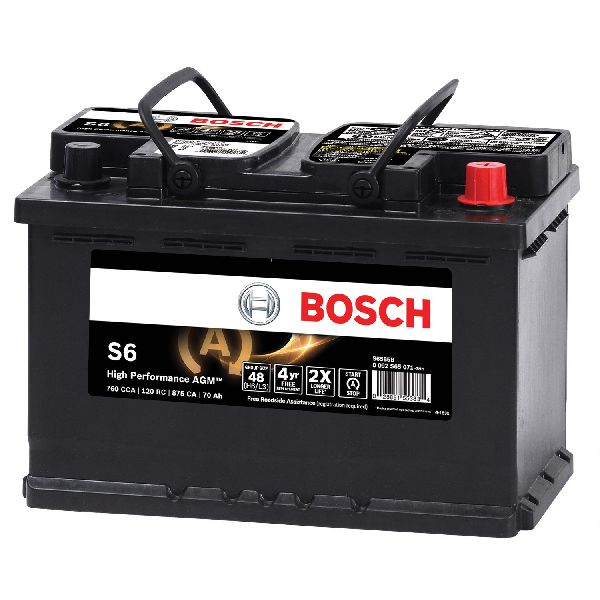
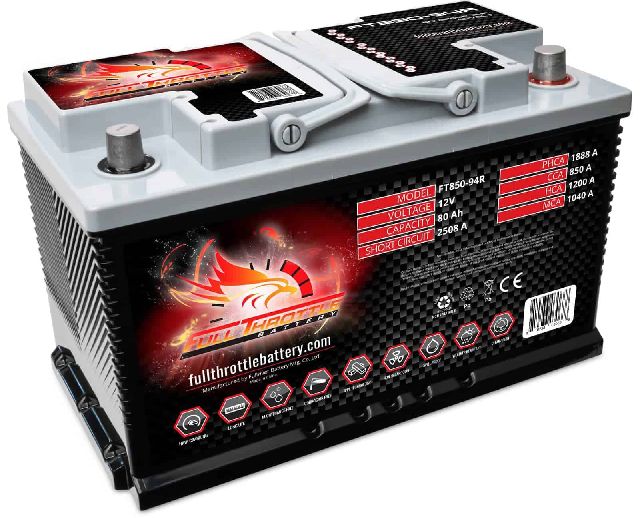
Typical fix: Replace the main battery. Ensure the replacement is the correct type 🎬 See this step-by-step main and aux battery replacement guide (AGM Group 94R/H7). A common Mopar OEM part number is BBH7A001AA.
Est. part cost: $180-$400 - Outdated Control Module Software 🟡 Medium Probability Jeep has released numerous software updates for its vehicles to fix erroneous codes caused by software being too sensitive to minor voltage fluctuations. While no TSB directly links P1614 to a software fix for the Gladiator, it's a known solution for other Jeeps (like the Cherokee) and a logical next step if batteries are confirmed good.
How to confirm: A Jeep dealership can check your vehicle's VIN against their database for any open Technical Service Bulletins (TSBs) or available software updates for the PCM, TCM, or BCM (Body Control Module).
Typical fix: The dealer reprograms (flashes) the affected module with the latest software version. This requires a proprietary dealer tool (wiTECH).
Est. part cost: $0-$200 - Loose or Corroded Battery Terminals or Ground Straps ⚪ Low Probability → Shop Vehicle Battery Vibration from normal and off-road use can loosen connections over time. Corrosion can build up and create resistance, leading to intermittent power loss. Key areas to check are both battery terminals and the main body/engine ground points.
How to confirm: Visually inspect and physically check the main battery terminals, auxiliary battery connections (if accessible), and the main engine/body ground straps for tightness and any signs of corrosion.
Typical fix: Clean the terminals and connection points with a wire brush and ensure all connections are secure. Apply a dielectric grease to prevent future corrosion.
Est. part cost: $0-$10
Rare But Worth Checking
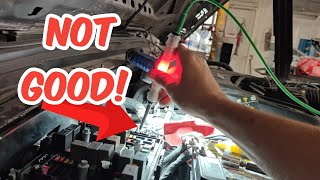
- Failing Fuse Array (Z-Case Fuse): The main fuse block (Z-Case fuse array) connected to the battery's Power Distribution Center (PDC) can have an internal fuse blow, causing a complete loss of power or strange electrical issues that mimic a dead battery. Owners have successfully fixed no-start conditions by replacing this array. The part number is often 68368853AA. A simple test with a test light can confirm if a fuse in the array is blown.
- Faulty Intelligent Battery Sensor (IBS): → Shop Vehicle Battery The IBS is a small module on the negative battery terminal that monitors battery health and state of charge for the ESS system. If it fails, it can send incorrect data to the BCM, leading to improper charging, voltage instability, and module resets. Resetting the IBS by disconnecting the negative terminal for 10-15 minutes is a suggested diagnostic step after replacing a battery.
Diagnosis Steps
- Scan for all codes. Note all codes present, especially any communication (U-codes) or voltage (P0562) codes, as they provide context for the P1614 reset.
- Perform a professional load test on BOTH the main and auxiliary batteries. This is the most critical step. Replace any battery that fails the load test, regardless of its voltage reading.
- If batteries are good, thoroughly inspect the terminals on both batteries for corrosion and tightness. Check the Intelligent Battery Sensor (IBS) connection on the main negative terminal.
- Follow the main negative battery cable to the chassis and the main ground strap from the engine to the firewall. Ensure these connections are clean and tight.
- Inspect the main Z-Case fuse array connected to the positive battery terminal for any signs of damage or corrosion. Use a test light to check for blown internal fuses within the array.
- If all power and ground systems are confirmed to be in good condition, contact a Jeep dealership to inquire about any available software updates for the Powertrain Control Module (PCM), Transmission Control Module (TCM), or Body Control Module (BCM) related to this code or general electrical stability.
- After replacing a battery, it is recommended to reset the IBS by disconnecting its two-wire connector or fully disconnecting the negative battery terminals for at least 10-15 minutes to allow the system to relearn the new battery's state of health.
Parts You'll Likely Need
- Auxiliary Battery
(OEM #68647042AA (supersedes 56029759AB))— This is a very common failure point on the Gladiator platform and a primary cause of the voltage fluctuations that trigger a P1614 code.
Related Codes That Often Appear With This One
- P0562 — This code means "System Voltage Low." It often appears with P1614 because a low voltage event from a weak battery is the direct cause of the module reset.
- U0074-00 — This code means "DEDICATED POWERTRAIN (D-PT) CAN BUS OFF." It can be logged when a module on the powertrain bus, like the TCM, resets and temporarily drops off the network.
- U0100 — This code means "Lost Communication With ECM/PCM." When the PCM unexpectedly reboots (triggering P1614), other modules on the network temporarily lose communication with it and log this code.
- U0101 — This code means "Lost Communication With TCM." Similar to U0100, if the Transmission Control Module is the one that resets, other modules will report a loss of communication with it.
Technical Service Bulletins (TSBs) & Recalls
- While no TSB for the Gladiator specifically names P1614 as the primary complaint, the root causes (voltage instability) are often addressed in software updates. Always check with a dealer for the latest flashes for the PCM, TCM, and BCM.
Platform-Specific Known Issues
- The dual-battery system for the Engine Stop-Start (ESS) is a known weak point, with the auxiliary battery often failing prematurely and causing a cascade of electrical problems.
- Accessing the auxiliary battery requires either removing the main battery and fuse box from the top, or removing the passenger front wheel and fender liner to access it from below. The latter is generally considered the easier method by DIYers.
Mechanic-Grade Diagnostic Values
- IBS 2-way Connector Voltage — expected: Greater than 11.8V. Failure: Voltage below 11.8V indicates a potential battery supply issue that needs to be addressed before condemning the IBS.
- IBS Quiescent Current for SOC Calibration — expected: Between -500mA and +50mA. Failure: If current draw is outside this range during vehicle sleep, the IBS cannot accurately relearn the battery's State of Charge (SOC).
- Battery Voltage During Module Flashing — expected: Maintained between 13.2 and 13.5 volts. Failure: Voltage dropping below 13.2V can cause the reflash procedure to fail.
Hidden / Shadow Codes Worth Checking
- B2193: IBS Internal Fault. This code is set by the Body Control Module (BCM) when the IBS software detects a defect in its own behavior. (see via A dealer-level scan tool (wiTECH) or advanced aftermarket scanner that can read BCM codes.)
- U113E: Lost Communication with LIN Bus. The BCM sets this if it cannot get a response from the IBS over the Local Interconnect Network (LIN) bus, pointing to a wiring, fuse, or IBS module failure. (see via A dealer-level scan tool (wiTECH) or advanced aftermarket scanner that can read BCM codes.)
Scan Tool Commands That Help
- Manual Procedure (No Tool): IBS Manual Reset/Reboot — After replacing batteries or if electrical issues persist with known-good batteries. Disconnecting the small 2-wire electrical connector on the IBS for 10-15 minutes forces the module to reboot. A more thorough method involves disconnecting both negative battery cables from the IBS and isolating them for the same duration.
- Autel MaxiIM / wiTECH: Battery Monitoring / IBS Reset — Used after installing new batteries to command the system to begin the relearn process for the new battery's state of charge and health. This is the professional equivalent of the manual reset.
Wiring & Ground Locations
- G909B — On the engine, provides a ground path for the PCM and TCM.. A poor connection at this ground can directly cause erratic behavior or resets in the Powertrain and Transmission Control Modules, triggering a P1614.
- G906A — Lower right front of the engine compartment, on the frame rail.. This is a major ground point for the Body Control Module (BCM) and other components in the front of the vehicle. A bad connection here can cause widespread electrical issues and communication faults between modules.
- G905A — Left side of the engine compartment.. Serves as a primary ground point for various dash and engine bay components. A loose or corroded connection can cause intermittent power drops.
- Rear Frame Grounds — On the frame on each side, accessible after removing the spare tire.. While less likely to be the primary cause, these grounds are important for the overall stability of the vehicle's electrical system, particularly for bed-mounted accessories or lighting that could potentially cause system interference if not properly grounded.
Real Owner Repair Stories
- Reddit user on r/JeepGladiator (2020 Jeep Gladiator, 4.5 years old) — Persistent "Start/Stop unavailable, service start/stop system" message with code P00FD (Battery "B" State of Charge Performance).
❌ Tried (didn't work) Replacing the auxiliary battery with a new one from O'Reilly Auto Parts.
✅ What actually fixed it Performing a full Intelligent Battery Sensor (IBS) reset. This involved disconnecting the main negative cable, the auxiliary negative cable, and the IBS plate from the battery post, isolating all three from each other for about an hour, cleaning the terminals, and then reassembling. The system then relearned and the error cleared. - JeepGladiatorForum.com user (2020 Jeep Gladiator, 4.5 years old, 60k miles) — "ESS not ready battery charging" for a year, followed by "Aux switches unavailable battery charging" on startup.
✅ What actually fixed it Replaced both the main (Group 94R) and auxiliary (AUX14) batteries. This resolved the warning messages. The user noted their cameras were temporarily unavailable after the swap but were expected to return after a few drive cycles.
"I Checked Everything" — The Actual Cause
- A common pattern for P1614 is when both batteries load test as 'good' and all ground connections are tight. In these cases, the root cause is often an internal failure of the Z-Case fuse array on the positive terminal, which interrupts power but isn't a component most people think to test. Another cause is a faulty Intelligent Battery Sensor (IBS) that sends incorrect voltage/current data to the BCM, causing instability even with healthy batteries.
When the Usual Fixes Don't Work
- While replacing a weak auxiliary battery is the most common fix, it is not always sufficient. A well-documented repair shows that even after installing a brand new auxiliary battery, the associated errors (P00FD) and symptoms persisted. The problem was only resolved after performing a complete manual reset of the Intelligent Battery Sensor (IBS), which involved fully isolating all negative connections for over an hour to force the system to relearn. This proves that a software/calibration issue within the IBS can be the ultimate culprit, even when the batteries themselves are new.
OEM Part Supersession History
56029759AB→68647042AA— Standard part revision/update by Mopar.68368853AA→68368853AA— This Z-Case fuse part number appears to be stable and has not been superseded for the 2020-2024 model years.
Model Year Variations Within This Range
- 2020 vs 2021+: The configuration of the negative battery terminals on the Intelligent Battery Sensor (IBS) was reversed. On 2020 models, the thinner/smaller cable is for the auxiliary battery. On 2021 and newer models, the main and auxiliary negative cables are in opposite positions. This is critical to know when disconnecting batteries to avoid shorting or improper diagnosis.
Diagnostic Flowchart
Other Known Issues on This Vehicle
Issues unrelated to this code that are worth knowing about as an owner of this generation:
- Steering Wander / Loose Steering Feel 🟠 Medium — Very common on 2020-2021 models. Less frequent on later models with the updated steering gear. (Ref: TSB 08-074-20 REV. B involves replacing the original aluminum steering gear with an updated steel version to improve steering feel and reduce wander.)
- Manual Transmission Clutch Overheating 🔴 High — Affects a significant number of manual transmission models from 2020-2023. (Ref: Multiple recalls (e.g., 21V-028, and a subsequent 2023 recall) have been issued. The clutch pressure plate can overheat and fracture, potentially damaging the transmission case and creating a fire risk.)
- Frame Weld and Corrosion Issues 🟠 Medium — Sporadic reports across all model years, often dependent on climate and use. (Ref: Jeep has issued TSBs for inspection, but owners report ongoing concerns with premature rust on frame welds and inside the boxed frame where debris collects.)
- Aluminum Body Panel Corrosion 🟡 Low — Commonly reported around door hinges and panel seams where steel fasteners contact aluminum panels. (Ref: Covered under the 5-year corrosion warranty. TSBs exist for proper repair procedures, which involve separating the panels and treating the corrosion.)
- EcoDiesel High-Pressure Fuel Pump (HPFP) Failure 🔴 High — A known issue for the 3.0L EcoDiesel engine option, potentially leading to engine failure. (Ref: A recall was issued for this problem on other Jeep/Ram models with the same engine. It can cause fuel system contamination and requires extensive repairs.)
- Water Leaks (Rear Window/Freedom Panels) 🟡 Low — Common complaint among owners, particularly around the rear sliding window seal and the hardtop's Freedom Panels. (Ref: No specific recall, but dealers address this under warranty with seal replacements or adjustments.)
Used vs. New Parts: Buying Guide for This Vehicle
When a used part is the smart pick: For purely electrical, non-wear components like the Z-Case fuse array, battery cables, or ground straps, a used part from a reputable auto recycler is a reasonable choice. These parts have no moving components and their condition can be visually verified.
Donor-vehicle mileage cap: roughly under 100000 miles for the part to have meaningful remaining life.
What to inspect on the donor part:
- For a Z-Case fuse, inspect for any signs of melting, cracking, or severe corrosion on the terminals.
- For cables and straps, ensure insulation is not cracked or frayed and that the terminal ends are not corroded or damaged.
- Avoid parts from vehicles with obvious signs of flood or fire damage.
OEM-only on this vehicle (don't cheap out):
- Batteries (Main and Auxiliary): Never buy a used battery. Its remaining life and health are unknown. New is the only reliable option.
- Intelligent Battery Sensor (IBS): While it can be purchased used, the failure rate and sensitivity of this part make a new OEM part a much safer investment to avoid repeat diagnostics.
Aftermarket brands forum-validated for this vehicle:
- Batteries: ACDelco, Duralast Platinum, and Optima are frequently mentioned in forums as reliable AGM replacements for both main and auxiliary batteries.
- High-End Batteries: Antigravity is a known-good brand for users looking to upgrade to a lighter, more powerful lithium battery.
Brands owners have reported issues with on this vehicle:
- No specific aftermarket brands were consistently reported as problematic in owner forums for this particular repair.
Real Owner Stories
Aggregated from forums and TSBs cited above. Mileages and costs reflect what owners reported in those sources.
2020 Jeep Gladiator
Symptoms: Owner experienced an odd experience with the automatic transmission and multiple codes including P1614.
What fixed it: The community diagnosed it as a battery issue, requiring replacement of the batteries due to the dual-battery ESS system failure.
Source hint: https://www.jeepgladiatorforum.com/forum/threads/auto-tranny-odd-experience.73177/page-2
2020 Jeep Gladiator
Symptoms: No power to the vehicle; discussion regarding the high amp fuse array.
What fixed it: Inspection and replacement of the Z-Case fuse array (Part 68368853AA).
Source hint: https://www.jeepgladiatorforum.com/forum/threads/no-power-to-my-2020-jeep-gladiator-z-case-fuse-array-68368853aa.69466/
Related OBD-II Codes
Frequently Asked Questions
Where is the auxiliary battery located on my 2020-2024 Jeep Gladiator?
Can I just check the voltage of my Gladiator's batteries to see if they are causing P1614?
Is there a specific TSB for P1614 on the Gladiator?
What part numbers should I look for when replacing the auxiliary battery?
What type of main battery does my Jeep Gladiator require?
Why does my Gladiator show 'Auxiliary Switches Not Available' along with this code?
Helpful Videos
We Have This Part in Stock



The information in this article is provided for general reference and educational purposes only. Vehicle specifications, procedures, and part compatibility can vary by production date, trim level, and region. Always consult your vehicle's factory service manual and verify part numbers before purchasing or performing repairs. Safety-critical components such as airbags, seat belts, and braking systems should be installed by a qualified professional.
- Jeep Gladiator:
- 🧭 Diagnostic Flowchart
- 🎬 Helpful Videos
- 🛍️ Shop This Part
- What's Unique About the 2020-2024 Jeep Gladiator
- Symptoms You May Notice
- Most Likely Causes
- Rare But Worth Checking
- Diagnosis Steps
- Parts You'll Likely Need
- Related Codes That Often Appear With This One
- Technical Service Bulletins (TSBs) & Recalls
- Platform-Specific Known Issues
- Mechanic-Grade Diagnostic Values
- Hidden / Shadow Codes Worth Checking
- Scan Tool Commands That Help
- Wiring & Ground Locations
- Real Owner Repair Stories
- "I Checked Everything" — The Actual Cause
- When the Usual Fixes Don't Work
- OEM Part Supersession History
- Model Year Variations Within This Range
- Other Known Issues on This Vehicle
- Used vs. New Parts: Buying Guide for This Vehicle
- Real Owner Stories
- 2020 Jeep Gladiator
- 2020 Jeep Gladiator
- Related OBD-II Codes
- Frequently Asked Questions
- 🎟️ Get 5% Off