

P1614 on 2009-2018 Kia Forte: Immobilizer & Starting Problems Explained
This code usually means there's a communication error in the anti-theft (immobilizer) system, often due to a faulty key transponder or antenna. Your car may not start. First, try your spare key. If that doesn't work, diagnosis will be needed for the key, antenna, or wiring.
- P1614 on a Kia Forte almost always means your car's anti-theft system doesn't recognize your key, and the car won't start.
- The very first step is to try your spare key. This simple check can save you a lot of time and money.
- If the spare key doesn't work, the problem is likely the antenna coil around the ignition or the associated wiring. This is a common failure point mentioned by owners.
- Fixing this code usually requires programming new keys or modules, which means a trip to a dealer or a qualified automotive locksmith is likely necessary.
What's Unique About the 2009-2018 Kia Forte
The Kia Forte across these years uses a standard transponder key immobilizer system. While generally reliable, issues can arise from key damage or failure of the antenna coil around theignition switch. Some earlier models within this range were also part of a broader group of Kia vehicles that were known for theft issues, leading to software updates and recalls related to the anti-theft logic, though not directly tied to this specific fault code.
Generation note: This range covers two generations of the Kia Forte: the first generation (TD, 2009-2013) and the second generation (YD, 2014-2018). Both generations use a similar transponder-based immobilizer system, and the causes and diagnostic steps for P1614 are generally consistent across both.
Symptoms You May Notice
- Engine will not start (cranks but does not fire up) 🎬 See this diagnostic walkthrough for intermittent crank-no-start issues
- Engine starts and then immediately stalls
- Flashing security indicator light on the dashboard (often looks like a car with a key or wrench symbol)
- Check Engine Light is on
- Replacing the starter motor when the engine cranks but won't start.
- Replacing the fuel pump without verifying that the immobilizer system is not the cause of the no-start condition.
Most Likely Causes
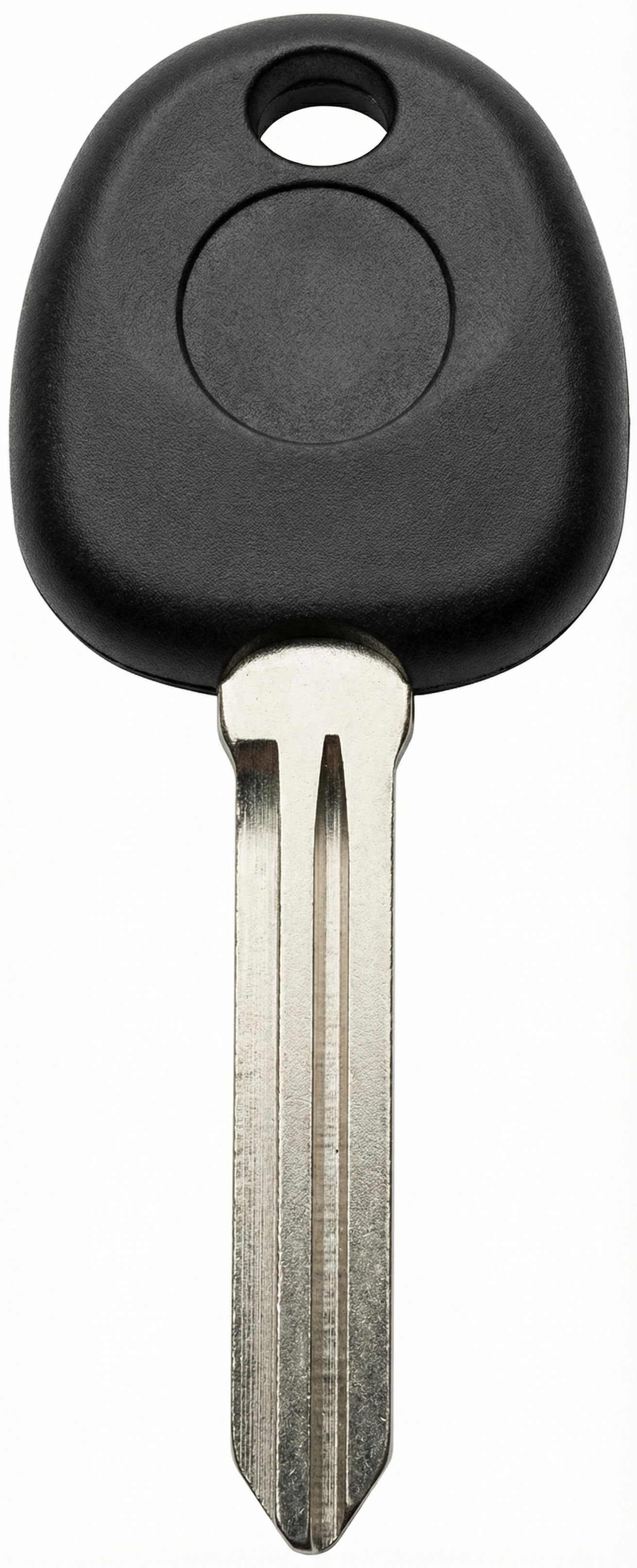
- Defective or Damaged Key Transponder 🔴 High Probability The RFID chip in the key is passive and requires no battery, but it can be damaged if the key is dropped, exposed to water, or subjected to strong magnetic fields.
How to confirm: Try starting the vehicle with a spare key. If the spare key works and the original does not, the first key is the problem. This is the most important first step.
Typical fix: Replace and program the faulty key.
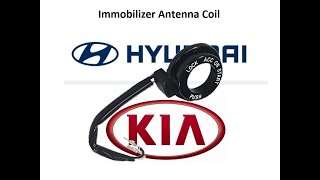
Est. part cost: $50-$200 for a new key and programming - Faulty Immobilizer Antenna Coil 🟡 Medium Probability → Shop Antenna The antenna coil (or ring) is located around the ignition cylinder. Over time, its internal wiring can develop an open or short, preventing it from powering and reading the key's transponder chip. This is a known issue on many Kia models.
How to confirm: A diagnostic scan tool that can read immobilizer data is needed to check if the antenna is receiving a signal from the key. A visual inspection for damaged wiring is also recommended. In some forum cases, owners reported that physically tapping the steering column near the ignition sometimes helped establish a temporary connection, pointing to a faulty coil.
Typical fix: Replace the immobilizer antenna coil. This part is often accessible after removing the steering column shrouds. 🎬 Watch: How to replace the immobilizer antenna coil
Est. part cost: $60-$150 - Wiring or Connection Issues ⚪ Low Probability Corrosion or damage to the wiring between the immobilizer antenna, the immobilizer module (sometimes part of the Body Control Module), and the ECM can disrupt communication. A poor ground connection can also cause intermittent failures.
How to confirm: Visually inspect the wiring harness for any signs of damage, chafing, or loose connections. Use a multimeter to check for continuity and proper voltage at the immobilizer module connectors according to a factory wiring diagram.
Typical fix: Repair the damaged section of the wiring harness or clean corroded connectors.
Est. part cost: $10-$50 for wiring supplies
Rare But Worth Checking
- Faulty Immobilizer Control Module or ECM: → Shop Anti-Theft Control Module While rare, the control module responsible for the immobilizer logic can fail internally. This is typically the last item to suspect after all other possibilities have been ruled out. In some Kia platforms, NHTSA ODI #10671702 notes that P1614 can be defined as an "Enhanced Traction System Engine Control Module Malfunction," suggesting a deeper module internal fault.
- Radio Frequency Interference: Strong RF signals from other devices on the keychain (like other car keys or access fobs) or nearby can sometimes interfere with the low-power communication between the key and the antenna.
- Low Vehicle Battery Voltage: → Shop Vehicle Battery A weak main vehicle battery can cause various communication errors between modules, potentially triggering a false P1614 code. Ensure the battery voltage is stable and above 12.4V before diagnosing the immobilizer system.
Diagnosis Steps
- Attempt to start the vehicle with all known spare keys. If a spare key works, the original key is faulty.
- If no keys work, check the battery in the key fob (if applicable), although the transponder chip itself is typically passive and doesn't require a battery.
- Observe the dashboard for a flashing security light when trying to start the car. This indicates the immobilizer is active and not recognizing the key.
- Check the main vehicle battery voltage to ensure it is sufficient (above 12.4V).
- Scan the vehicle for any other trouble codes in the ECM, BCM (Body Control Module), and instrument cluster.
- Visually inspect the wiring around the ignition cylinder and steering column for any obvious damage.
- Use an advanced scan tool to monitor the live data from the immobilizer system to see if it recognizes a key being inserted.
- If the key is not being recognized, test the immobilizer antenna coil for proper resistance and continuity according to the factory service manual. The part itself is relatively simple to access and replace.
- If the antenna and keys are good, the final step is to diagnose the immobilizer control module and the ECM, which usually requires a professional.
Parts You'll Likely Need
- Transponder Ignition Key — The transponder chip inside the key is the most common point of failure for this code.
Trusted brands: Kia (OEM)
OEM price range: $100-$200
Aftermarket price range: $40-$90 - Immobilizer Antenna Coil
(OEM #95440-1M500 (Example for 2010-2013 Forte, verify by VIN))— This coil, which reads the key chip, can fail and prevent communication with the ECM. It's a frequent point of failure discussed in owner forums.
Trusted brands: Kia (OEM)
OEM price range: $80-$150
Aftermarket price range: $50-$100
Platform-Specific Known Issues
- Intermittent No-Start: Owners on forums like kia-forums.com describe an intermittent problem where the car fails to start, but then works after a few tries. One user noted that tapping the steering column near the ignition switch would sometimes allow the car to start, which strongly points to a failing antenna coil or a loose connection.
Mechanic-Grade Diagnostic Values
- Immobilizer Antenna RF Communication Frequency — expected: 125 kHz. Failure: No signal or incorrect frequency detected with specialized tools.
Scan Tool Commands That Help
- Kia GDS or equivalent professional scanner (e.g., Autel): Key Teaching / Key Learning — Used to program new or additional transponder keys to the vehicle's immobilizer module. This is required whenever a new key is introduced.
- Kia GDS or equivalent professional scanner: Immobilizer / ECM Neutralization (Initialization) — This function 'virginizes' or resets the immobilizer module or ECM, typically before replacing it. A neutralized module can then be programmed to a different vehicle.
- Kia GDS or equivalent professional scanner: Live Data Parameter Viewing — To diagnose the system, a technician will view parameters like 'Number of Learned Keys' and 'Immobilizer Control Unit Status' (e.g., Learned, Virgin). If the number of keys is zero, it indicates a memory loss or reset.
- Kia GDS or equivalent professional scanner: Limp Home Mode — An emergency function that, if previously set up with a password at a dealership, can allow a one-time engine start to get the vehicle to a service center without a recognized key.
Wiring & Ground Locations
- Immobilizer Control Unit (ICU) — On second-generation (2014-2018) models, the ICU is a separate module located behind the crash pad lower panel, near the center of the dash.. This is the brain of the immobilizer system. Its connectors and ground are critical points for checking voltage and continuity when diagnosing a communication failure.
- Body Control Module (BCM) — On some first-generation (2010-2011) models, the BCM is located in the center of the dash, behind the radio. The immobilizer function may be integrated into this module.. If the immobilizer is part of the BCM, a failure here can cause the P1614 code along with other seemingly unrelated body electrical issues.
Model Year Variations Within This Range
- 2014-2018 (YD Generation): These models feature a distinct, separate Immobilizer Control Unit (ICU) located behind the lower dashboard. This makes the module itself a separate point of failure and replacement compared to earlier models where the function might be integrated into the BCM.
- 2011-2018: Vehicles within this range equipped with a standard twist-to-start ignition were eligible for a free anti-theft software update from Kia. This update adjusted the alarm logic and ignition requirements but does not change the fundamental diagnosis of a P1614 fault.
Diagnostic Flowchart
Other Known Issues on This Vehicle
Issues unrelated to this code that are worth knowing about as an owner of this generation:
- Engine Failure (Theta II & Nu GDI) 🔴 High — Widespread across multiple model years, particularly 2012-2015. Can occur under 100,000 miles. (Ref: Subject of class-action lawsuits and warranty extensions (e.g., SC147).)
- Steering Column Knock/Click (MDPS Coupler) 🟠 Medium — Very common issue causing a clicking or knocking sound when turning the steering wheel. (Ref: TSB CHA074 provides a procedure for replacing the flexible rubber coupler in the steering column.)
- Faulty Brake Light Switch / Stopper Pad 🟠 Medium — Common on 2012-2014 models, leading to brake lights staying on or the vehicle being able to shift out of park without braking. (Ref: Recall SC158 / NHTSA 17V773 was issued to replace the brake pedal stopper pad.)
- No Sound from Speakers 🟡 Low — Reported on 2011-2016 and 2018 models, often caused by a software glitch. (Ref: No official recall, but owners report a hard reset (disconnecting the battery for 15 minutes) often resolves the issue.)
Used vs. New Parts: Buying Guide for This Vehicle
When a used part is the smart pick: A used Immobilizer Antenna Coil from a junkyard is a reasonable choice. It is a simple, non-electronic component that either works or doesn't, and it is not programmed to the vehicle.
Donor-vehicle mileage cap: roughly under 150000 miles for the part to have meaningful remaining life.
What to inspect on the donor part:
- Inspect the plastic ring for cracks or significant damage.
- Ensure the wiring pigtail is intact with no cuts or frays.
- Check that the connector pins are straight, clean, and free of corrosion.
OEM-only on this vehicle (don't cheap out):
- Transponder Key
- Immobilizer Control Module
- Engine Control Module (ECM)
Brands owners have reported issues with on this vehicle:
- Unbranded, low-cost transponder keys from online marketplaces may have poor quality chips that fail to program or have a short lifespan.
Real Owner Stories
Aggregated from forums and TSBs cited above. Mileages and costs reflect what owners reported in those sources.
Kia Ceed (European platform mate)
Symptoms: The immobilizer light fails to illuminate on the dashboard and the car will not start.
What fixed it: The immobilizer antenna was identified as the likely culprit.
Source hint: kia-forums.com: "Problem with Immo"
2009-2018 Kia Forte
Symptoms: Intermittent problem where the car fails to start, but then works after a few tries. Tapping the steering column near the ignition switch would sometimes allow the car to start.
What fixed it: This behavior points to a failing antenna coil or a loose connection.
Source hint: kia-forums.com forum citation in vehicle_specific_issues
2009-2018 Kia Forte
Symptoms: Occasional immobilizer problem with intermittent starting issues using both keys.
What fixed it: One user reported the problem was partially solved by replacing the immobilizer antenna, while another had success after a mechanic cleaned wiring contacts behind the steering wheel.
Source hint: kia-forums.com: "Occasional immobilizer problem"
Documented NHTSA Reports
Kia Amanti (Cross-Manufacturer Reference)
Symptoms: An owner reported that the check engine light remained on with error code P1614, which was described as an "Enhanced Traction System Engine Control Module Malfunction." The issue occurred while driving on major highways.
What fixed it: In this instance, turning the ignition off and back on was noted as a temporary measure.
Source hint: NHTSA ODI #10671702
Related OBD-II Codes
Frequently Asked Questions
My 2012 Kia Forte has a clicking sound when I turn the steering wheel; is this related to the P1614 immobilizer code?
Can I use a used immobilizer antenna coil from a junkyard for my Kia Forte?
I have a 2014 Forte and the brake lights won't turn off. Is there a recall for this?
Will replacing the battery in my Kia Forte key fob fix the P1614 'crank-no-start' issue?
Is there a TSB for the engine failure I'm worried about on my 2013 Forte?
Why does tapping my steering column sometimes allow my Kia Forte to start?
Helpful Videos
We Have This Part in Stock


The information in this article is provided for general reference and educational purposes only. Vehicle specifications, procedures, and part compatibility can vary by production date, trim level, and region. Always consult your vehicle's factory service manual and verify part numbers before purchasing or performing repairs. Safety-critical components such as airbags, seat belts, and braking systems should be installed by a qualified professional.
- Kia Forte:
- 🧭 Diagnostic Flowchart
- 🎬 Helpful Videos
- 🛍️ Shop This Part
- What's Unique About the 2009-2018 Kia Forte
- Symptoms You May Notice
- Most Likely Causes
- Rare But Worth Checking
- Diagnosis Steps
- Parts You'll Likely Need
- Platform-Specific Known Issues
- Mechanic-Grade Diagnostic Values
- Scan Tool Commands That Help
- Wiring & Ground Locations
- Model Year Variations Within This Range
- Other Known Issues on This Vehicle
- Used vs. New Parts: Buying Guide for This Vehicle
- Real Owner Stories
- Kia Ceed (European platform mate)
- 2009-2018 Kia Forte
- 2009-2018 Kia Forte
- Documented NHTSA Reports
- Kia Amanti (Cross-Manufacturer Reference)
- Related OBD-II Codes
- Frequently Asked Questions
- 🎟️ Get 5% Off