

P1614 on 2005-2015 Kia Optima: Understanding the Two Possible Meanings and Fixes
Code P1614 on a 2005-2015 Kia Optima is ambiguous. It can mean either an immobilizer/key recognition failure causing a no-start condition, or an electrical fault in the check engine light circuit. Diagnosis is critical to avoid buying the wrong parts.
- P1614 for a 2005-2015 Kia Optima has two possible, conflicting meanings: an immobilizer failure or a Check Engine Light circuit fault.
- The primary symptom will tell you which path is more likely: a car that won't start points to the immobilizer, while an issue with the Check Engine Light itself points to the circuit fault.
- If the car won't start, try your spare key first. This is the simplest and cheapest diagnostic step.
- Due to the ambiguity, throwing parts at the problem is not recommended. Professional diagnosis is the most cost-effective approach to ensure the correct problem is being addressed.
What's Unique About the 2005-2015 Kia Optima
The challenge with the P1614 code on this generation of Kia Optima is the lack of a single, universally agreed-upon definition. While many manufacturers use P1614 for immobilizer faults, several Kia-specific code lists define it as an electrical issue with the check engine light circuit. This ambiguity is the key issue for this platform; owners may experience entirely different symptoms (a car that won't start vs. a check engine light that behaves erratically) from the same code. Without access to a dealer-level scan tool or factory service manual, it's difficult to know which problem the car is reporting. The closely related Hyundai Sonata can also log P1614, but for different reasons again, such as an Electronic Throttle System (ETS) error, further highlighting the code's ambiguity.
Generation note: The 2005-2015 range covers two generations of the Kia Optima: the second generation (MG, 2005.5-2010) and the third generation (TF, 2011-2015). The underlying cause and definition of P1614 could differ between these generations, particularly in their electrical architecture and immobilizer systems. For example, the immobilizer antenna coil part number is different for each generation. This further complicates diagnosis without specific evidence.
Symptoms You May Notice
- Engine cranks but will not start (if immobilizer-related).
- Flashing security indicator light on the dashboard (often a symbol of a car with a key inside) when trying to start the engine (if immobilizer-related).
- Engine may not crank at all (if immobilizer-related).
- Check Engine Light (MIL) is always on, or does not turn on when it should (if MIL circuit-related).
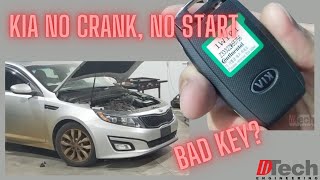
- Replacing the starter when the engine doesn't crank (if the immobilizer is the cause, it can disable the starter relay 🎬 Watch: Diagnose a Kia no-crank, no-start immobilizer issue).
- Replacing the PCM without first diagnosing the MIL circuit wiring (for the 'MIL circuit high' definition).
- Replacing the battery when the car cranks strongly but won't start, which is a classic immobilizer symptom.
Most Likely Causes
- Defective or Unprogrammed Ignition Key 🔴 High Probability → Shop Ignition Switch This is a common cause for the immobilizer-related definition of P1614 across many makes and models. The transponder chip inside the key can fail, lose its programming, or the battery in a smart key can become weak.
How to confirm: Try starting the vehicle with a spare key. If the spare key works, the original key is faulty. If you have a smart key, replacing its internal battery is a cheap first step.
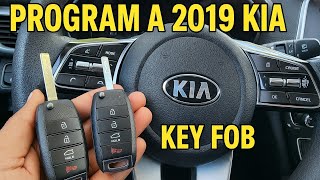
Typical fix: The faulty key needs to be replaced and the new key programmed to the vehicle by a dealer or automotive locksmith. 🎬 Watch: How to program a new Kia Optima key
Est. part cost: $150-$400 - Faulty Immobilizer Antenna Ring 🟡 Medium Probability → Shop Antenna This is another common cause for the immobilizer-related definition. The antenna coil around the ignition switch reads the key's transponder chip and can fail, preventing communication.
How to confirm: This typically requires a scan tool that can read live data from the immobilizer system to see if it's receiving a signal from the key. A technician may also test the coil's resistance.
Typical fix: Replace the immobilizer antenna ring around the ignition cylinder. This is often a DIY-possible repair.
Est. part cost: $50-$150 - Short or Fault in the MIL Control Circuit Wiring 🟡 Medium Probability This applies to the 'MIL Request Circuit Voltage High' definition. Wiring can become damaged or shorted over time due to vibration, heat, or improper repairs.
How to confirm: A technician would need to use a multimeter to check for high voltage or a short to power on the MIL control wire between the PCM and the instrument cluster.
Typical fix: Repairing the damaged section of the wiring harness.
Est. part cost: $5-$50
Rare But Worth Checking
- Faulty Powertrain Control Module (PCM): While rare, the PCM itself can fail. If it's the source of the 'MIL Request Circuit Voltage High' signal, it would need replacement. This should only be considered after all wiring has been thoroughly checked.
- Faulty Instrument Cluster: → Shop Instrument Cluster For the 'MIL Request Circuit Voltage High' definition, a short circuit within the instrument cluster's printed circuit board could cause the issue. This is an unlikely but possible cause.
- Faulty Immobilizer Control Module: → Shop Anti-Theft Control Module For the immobilizer definition, the control module itself (sometimes called a SMARTRA unit on Hyundai/Kia) can fail, but this is less common than key or antenna issues.
- Enhanced Traction System Malfunction: Although less common for the Optima, a report for a different Kia model (NHTSA ODI #10671702) noted P1614 was defined as an "Enhanced Traction System Engine Control Module Malfunction," suggesting the code may sometimes relate to traction control communication.
Diagnosis Steps
- Note all symptoms: Does the car fail to start? Is there a security light flashing? Or is the issue only with the Check Engine Light's behavior?
- Scan for codes: Use an OBD-II scanner to confirm P1614 and check for any other codes that may be present, such as P1610 or P1611.
- IF a no-start condition exists: Try a spare key. If it works, the primary key is the problem. If it's a smart key, try replacing the battery first.
- IF a no-start condition exists: Observe the dashboard security light (often a key symbol). If it's flashing rapidly when you try to start the car, it points to an immobilizer issue.
- IF the Check Engine Light behaves oddly: This points to the 'MIL circuit' definition. The next step is to inspect the wiring harness between the PCM and the instrument cluster for any visible damage, chafing, or corrosion.
- Due to the two possible meanings, further diagnosis should be performed by a professional. They can use an advanced scan tool to check the immobilizer status or a multimeter to test the MIL circuit voltage to confirm the specific fault.
Parts You'll Likely Need
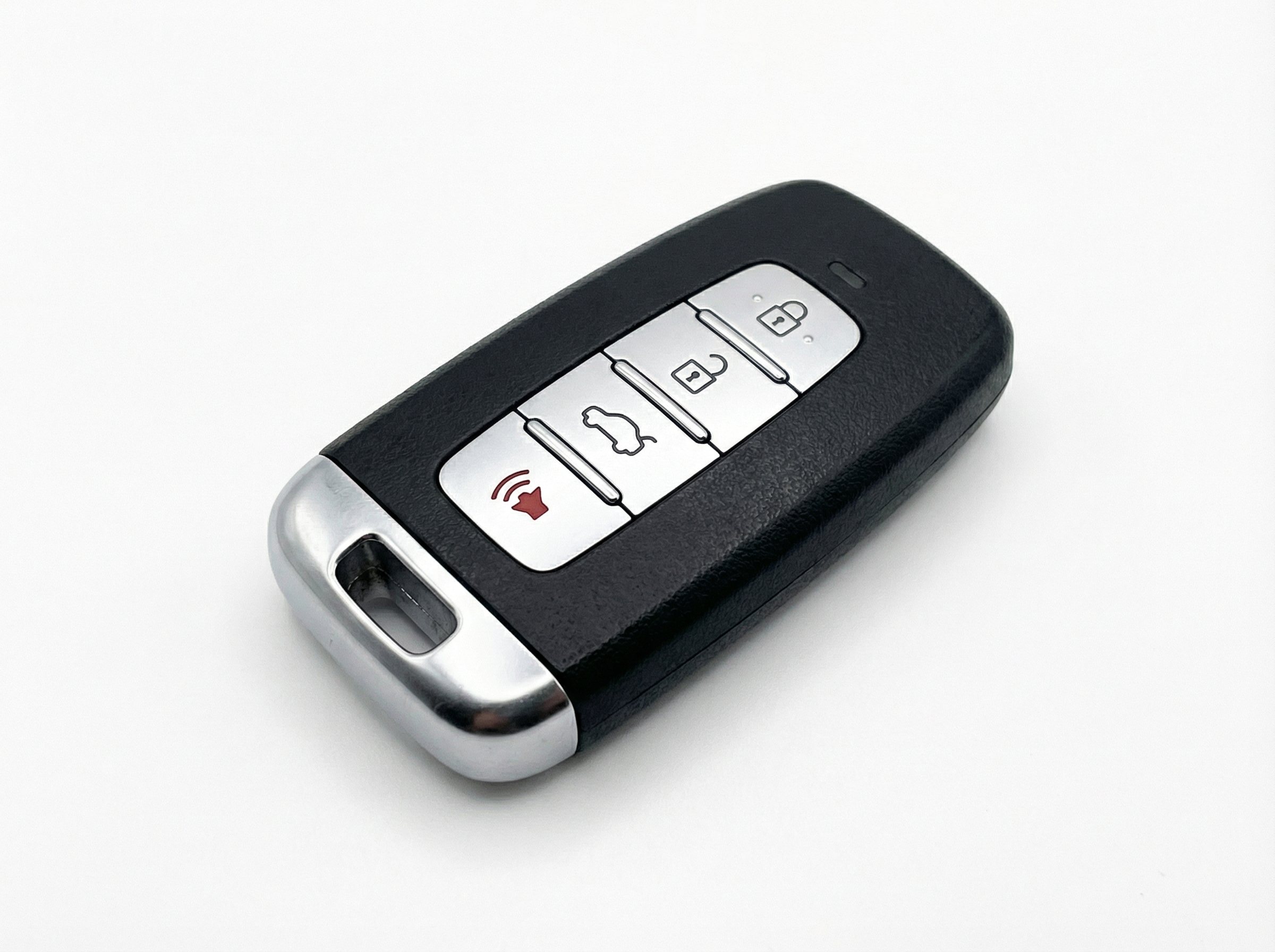
- Transponder Key — If the code is for an immobilizer fault, a damaged or faulty key is a very common cause.
OEM price range: $200-$400
Aftermarket price range: $100-$250 - Immobilizer Antenna Coil
(OEM #95401-2G000 (for 2008-2010 Optima MG) or 95440-2J000 (fits some 2011-2015 TF models, confirm with VIN))— If the key is not the problem in an immobilizer-related fault, the antenna that reads the key is the next most likely component to fail.
Trusted brands: Genuine Kia
OEM price range: $70-$150
Aftermarket price range: $40-$90
Related Codes That Often Appear With This One
- P1610 — On some systems, P1610 ('Lock Mode') can be triggered alongside P1614 after multiple failed start attempts with an unrecognized key.
- P1611 — P1611 is often defined as 'MIL Request Circuit Voltage Low'. If you see P1614 or P1611, it strongly suggests an electrical fault in the check engine light circuit.
Technical Service Bulletins (TSBs) & Recalls
- TSB SC147: Recall related to Theta II engine failures.
- TSB CHA044 / Customer Satisfaction Program CS1604: Addresses the failing steering column coupler, extending warranty coverage.
Platform-Specific Known Issues
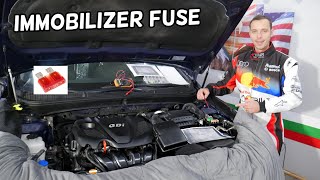
- On a Kia forum, an owner of an Optima described an intermittent no-start problem with a flashing immobilizer light. They replaced the immobilizer antenna coil, which seemed to fix the problem for a few days, but the issue returned. The problem occurred randomly—sometimes after sitting overnight, other times just 10 minutes after being driven. This highlights that even a common fix like the antenna coil may not solve a more complex underlying issue, such as a failing immobilizer module or wiring problem. 🎬 See how to locate and replace the immobilizer fuse
Mechanic-Grade Diagnostic Values
- Immobilizer Antenna Coil Resistance — expected: Approximately 7.5 Ω. Failure: A reading significantly higher or lower than 7.5 Ω, or an open circuit (infinite resistance), indicates a faulty coil.
Scan Tool Commands That Help
- Kia GDS (Global Diagnostic System): Immobilizer - Key Teaching — This function is required after replacing a key, the immobilizer control module (SMARTRA), or the ECM. It programs the unique transponder codes of the keys into the vehicle's memory. A 6-digit PIN code, obtained from a dealer, is required.
- Kia GDS (Global Diagnostic System): Immobilizer - Parameter Check — To diagnose an immobilizer-related P1614, a technician can use the GDS to view live data parameters. This includes checking the status of the ECM, keys, and the Immobilizer Control Unit (ICU) to see if they are 'Learned', 'Virgin', or 'Neutral'. It also shows how many keys are currently programmed to the vehicle.
- Kia GDS (Global Diagnostic System): Immobilizer - Neutralization — This function is used to 'divorce' a used ECM from its original vehicle before installing it in another. It neutralizes the immobilizer data, allowing it to be programmed to a new set of keys. This is an advanced function typically used when swapping major components.
Wiring & Ground Locations
- Sensor 3 Fuse (10A) — In the under-hood fuse box on 2010-2015 (TF Generation) Optimas. It is the third fuse in one of the rows.. For the TF generation, this 10A fuse provides power to the immobilizer system. A blown fuse will cause a no-start and may trigger immobilizer-related fault codes. This fuse also powers other sensors, such as camshaft position sensors, which could cause additional codes.
- Immobilizer Control Unit (SMARTRA) — The SMARTRA (Smart Transponder Antenna) unit is typically integrated with the antenna coil around the ignition lock cylinder or is a small separate module located in the steering column or under the driver's side dashboard.. This is the brain of the immobilizer system. It communicates with the key's transponder via the antenna coil and sends an approval signal to the ECM. A failure in this module or its wiring is a potential cause of an immobilizer-related P1614.
- BCM (Body Control Module) — Located under the driver's side dash, above the gas pedal for the 2011-2015 (TF Generation) Optima.. While the immobilizer has its own control unit, the BCM is a central hub for many electrical functions. In some cases of intermittent electrical faults, a poor connection or fault within the BCM could potentially contribute to communication errors on the network, although it is not a primary cause for P1614.
Real Owner Repair Stories
- Kia-Forums.com user (Kia Optima (year not specified, but within the 2005-2015 range)) — Intermittent no-start condition where the key recognition light on the dashboard would not illuminate. The car would crank but not start.
❌ Tried (didn't work) Using the spare key., Replacing the immobilizer antenna coil (this worked for a few days, then the problem returned).
✅ What actually fixed it The user did not post a final resolution, but their experience highlights a key diagnostic point: when a common fix like the antenna coil only works temporarily, the root cause is likely a more complex issue, such as a failing immobilizer control module (SMARTRA), a wiring harness problem, or a faulty ECM. - NHTSA ODI #10671702 — An owner reported that while the check engine light only remained on once, it provided code P1614, which was identified as an "Enhanced Traction System Engine Control Module Malfunction." The owner noted that in the past, turning the ignition off and back on would temporarily resolve the issue.
OEM Part Supersession History
95401-2G000→N/A, still active
Heads up: This immobilizer antenna coil is specific to the 2008-2010 Kia Optima (MG generation). It is not compatible with the 2011-2015 (TF generation) models, which use different part numbers.
Model Year Variations Within This Range
- 2005.5-2010 (MG Generation): These models use immobilizer antenna coil P/N 95401-2G000. The immobilizer system is a more traditional transponder key system.
- 2011-2015 (TF Generation): These models use different immobilizer antenna coils (e.g., 95401-3W010 for some folding key types) and introduced smart key with push-button start options. The electrical architecture, including fuse locations for the immobilizer, is different from the previous generation.
Diagnostic Flowchart
Other Known Issues on This Vehicle
Issues unrelated to this code that are worth knowing about as an owner of this generation:
- Theta II Engine Failure 🔴 High — Widespread on 2011-2015 models with the 2.0L Turbo and 2.4L GDI engines. Machining errors can cause premature bearing wear, leading to knocking, seizing, and complete engine failure, often under 100,000 miles. (Ref: Recall SC147; Class action lawsuit settlement (In re: Hyundai and Kia Engine Litigation II) extended warranties to 15 years/150,000 miles and provided for a Knock Sensor Detection System (KSDS) software update.)
- Failing Steering Column Coupler 🟠 Medium — Very common on the third generation (2011-2015). The flexible rubber coupler in the electronic power steering column wears out, causing a distinct clicking or knocking sound when turning the steering wheel. (Ref: Kia TSB CHA044 and Customer Satisfaction Program CS1604 were issued, extending the warranty for this part to 10 years/unlimited mileage in some cases.)
- Peeling White Paint 🟡 Low — Common on models from approximately 2012-2015, particularly with 'Snow White Pearl' paint. The clear coat and paint delaminate and peel in large sheets, often starting on the roof and A-pillars. (Ref: No official recall, but numerous owner complaints have been filed. Kia's standard paint warranty is 3 years/36,000 miles, so most repairs are out-of-pocket, though some owners report receiving goodwill assistance from Kia corporate.)
Used vs. New Parts: Buying Guide for This Vehicle
When a used part is the smart pick: For this repair, a used Immobilizer Antenna Coil from a reputable salvage yard is a reasonable choice. It is a simple electromagnetic component with a low failure rate from wear, making a used part a cost-effective option.
Donor-vehicle mileage cap: roughly under 150000 miles for the part to have meaningful remaining life.
What to inspect on the donor part:
- Ensure the part number matches your original part exactly.
- Inspect the plastic housing for cracks or signs of extreme heat.
- Check the electrical connector for any bent, corroded, or broken pins.
- If possible, get the part from a vehicle that was not in a front-end collision.
OEM-only on this vehicle (don't cheap out):
- Immobilizer Control Module (SMARTRA)
- Engine Control Module (ECM)
Brands owners have reported issues with on this vehicle:
- Unbranded 'no-name' immobilizer modules or keys from online marketplaces. These often have high failure rates and can cause programming issues that are costly to resolve. It is critical that replacement immobilizer modules and keys can be properly programmed to the vehicle.
Real Owner Stories
Aggregated from forums and TSBs cited above. Mileages and costs reflect what owners reported in those sources.
Kia Optima
Symptoms: Intermittent no-start problem with a flashing immobilizer light on the dashboard. The problem occurred randomly—sometimes after sitting overnight, other times just 10 minutes after being driven.
What fixed it: The owner replaced the immobilizer antenna coil, but the issue returned after a few days, suggesting a more complex underlying issue like a failing immobilizer module or wiring problem.
Source hint: https://www.forum.kia-club.polska.pl/viewtopic.php?t=37019 (Title: 'Sporadyczny problem z immobilizerem' / 'Occasional immobilizer problem')
Kia Amanti (Cross-Model Reference)
Symptoms: An owner reported a check engine light that remained on once, providing error code P1614. The vehicle also experienced issues where turning the ignition off and back on was required in the past (NHTSA ODI #10671702).
What fixed it: The code was identified as an "Enhanced Traction System Engine Control Module Malfunction," though a permanent fix was not specified in the report.
Related OBD-II Codes
Frequently Asked Questions
My 2011-2015 Kia Optima has a flashing security light and won't start; is this related to the Theta II engine recall (SC147)?
Can I use a used immobilizer antenna ring from a salvage yard for my Optima?
I have a smart key for my Optima and it won't start. What is the first thing I should check?
Is the P1614 code on my Kia Optima the same as the P1614 code on a Hyundai Sonata?
Does the Customer Satisfaction Program CS1604 cover my P1614 immobilizer issue?
My Check Engine Light is always on, but the car starts fine. Could this still be P1614?
Helpful Videos
We Have This Part in Stock


The information in this article is provided for general reference and educational purposes only. Vehicle specifications, procedures, and part compatibility can vary by production date, trim level, and region. Always consult your vehicle's factory service manual and verify part numbers before purchasing or performing repairs. Safety-critical components such as airbags, seat belts, and braking systems should be installed by a qualified professional.
- Kia Optima:
- 🧭 Diagnostic Flowchart
- 🎬 Helpful Videos
- 🛍️ Shop This Part
- What's Unique About the 2005-2015 Kia Optima
- Symptoms You May Notice
- Most Likely Causes
- Rare But Worth Checking
- Diagnosis Steps
- Parts You'll Likely Need
- Related Codes That Often Appear With This One
- Technical Service Bulletins (TSBs) & Recalls
- Platform-Specific Known Issues
- Mechanic-Grade Diagnostic Values
- Scan Tool Commands That Help
- Wiring & Ground Locations
- Real Owner Repair Stories
- OEM Part Supersession History
- Model Year Variations Within This Range
- Other Known Issues on This Vehicle
- Used vs. New Parts: Buying Guide for This Vehicle
- Real Owner Stories
- Kia Optima
- Kia Amanti (Cross-Model Reference)
- Related OBD-II Codes
- Frequently Asked Questions
- 🎟️ Get 5% Off