

P1614 on 2008-2019 Mazda 6: Immobilizer Failure Causes and Fixes
P1614 on a Mazda 6 means the car's anti-theft system doesn't recognize your key, resulting in a crank-no-start condition. The most common cause is a faulty transponder chip inside the key itself. Trying your spare key is the first and easiest diagnostic step. If the spare works, the original key is bad.
- P1614 means your Mazda 6's anti-theft system has failed to recognize the key, and the car will not start.
- The very first step is to try your spare key. This simple action can immediately isolate the problem to a faulty primary key.
- Do not replace parts like the starter or fuel pump before confirming the immobilizer system is working correctly.
- A professional locksmith or dealership is required for the final repair, as new keys and modules must be electronically programmed to the car.
What's Unique About the 2008-2019 Mazda 6
For this generation of Mazda 6, the P1614 code is almost exclusively tied to the key and immobilizer handshake. Unlike some other manufacturers where this code can be ambiguous, on a Mazda it's a very direct pointer to the anti-theft system. The system is generally reliable, but the most frequent point of failure is the key itself, often due to being dropped or from internal component failure over time. The diagnostic process is straightforward, but the solution almost always requires specialized programming tools from a dealer or automotive locksmith. Radio frequency interference from other devices can also sometimes trigger this fault.
Generation note: This range covers the second generation (2008-2013) and the third generation (2014-2019) of the Mazda 6. While the fundamental immobilizer concept is the same, the third generation introduced keyless push-button start systems. The causes and the meaning of the code remain consistent, but the physical components (e.g., key fob vs. traditional key, location of antennas) will differ slightly. Second generation models with push-button start were noted to have more electrical glitches with the smart key system at higher mileage.
Symptoms You May Notice
- Engine cranks but will not start
- Flashing security indicator light on the dashboard (often looks like a key or a car with a padlock)
- No-crank, no-start condition in some cases
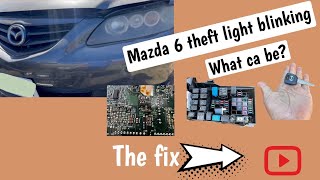
- Engine starts and then immediately stalls 🎬 See this video on diagnosing a blinking Mazda theft light
- Replacing the starter motor when the engine cranks but doesn't start.
- Replacing the fuel pump without verifying that the immobilizer system is not the root cause of the no-start condition.
- Replacing the vehicle's main battery without confirming it has failed a load test.
Most Likely Causes
- Defective or Damaged Ignition Key 🔴 High Probability → Shop Ignition Switch The transponder chip in the key is small and can be damaged if the key is dropped repeatedly. Internal electronics can also fail with age, or the key's battery can die in keyless fobs.
How to confirm: Test the vehicle with a spare key. If the spare key works and the original does not, the original key is faulty. For keyless fobs, try replacing the internal battery first.
Typical fix: The key must be replaced and programmed to the vehicle by a dealer or an automotive locksmith.
Est. part cost: $150-$400 - Faulty Immobilizer Antenna Coil 🟡 Medium Probability → Shop Antenna The antenna is a thin coil of wire around the ignition lock cylinder (or start button) that reads the key chip. It can fail electrically over time, preventing the key's signal from being read.
How to confirm: This requires a professional scan tool to check if the antenna is powering up and attempting to read the key. An oscilloscope can also be used to check for a signal. A simple visual inspection of the wiring to the coil is a good first step.
Typical fix: Replace the immobilizer antenna ring.
Est. part cost: $50-$150 - Low Vehicle Battery Voltage ⚪ Low Probability → Shop Vehicle Battery Like many modern cars, low system voltage can cause unpredictable errors in various electronic modules, including the immobilizer.
How to confirm: Test the battery voltage with a multimeter. A healthy battery should read at least 12.4 volts with the engine off. Attempting to jump-start the vehicle may temporarily resolve the issue, confirming a weak battery.
Typical fix: Charge or replace the vehicle's 12V battery.
Est. part cost: $100-$250 - Wiring Harness Issues ⚪ Low Probability Wiring between the immobilizer antenna, immobilizer module, and the ECM can become damaged or corroded, though this is not a common failure point.
How to confirm: Visually inspect the wiring around the steering column and perform continuity tests on the relevant wires using a multimeter.
Typical fix: Repair the damaged section of the wiring harness.
Est. part cost: $5-$50
Rare But Worth Checking
- Failed Immobilizer Control Module: → Shop Anti-Theft Control Module While rare, the control module that manages the key verification process can fail. This is usually the last part to suspect after all other components have been tested.
- Failed Powertrain Control Module (PCM): Extremely rare, but a fault within the PCM itself can prevent it from correctly communicating with the immobilizer system.
- Aftermarket Remote Starter Interference: → Shop Starter Motor Improperly installed aftermarket remote start systems can interfere with the factory immobilizer logic, causing intermittent P1614 codes. One owner reported confusing the system by using the remote start while the key was in the ignition, which was resolved by a system reset.
Diagnosis Steps
- Attempt to start the vehicle with all known spare keys. If a spare key works, the primary key is the issue.
- Observe the dashboard for a flashing security light. A steady, rapid flash when trying to start the car confirms the immobilizer is active.
- For keyless start models, hold the fob directly against the push-start button when attempting to start. This can overcome a weak fob battery or antenna.
- Check the vehicle's main battery. Ensure it has a full charge (12.4V+) and clean terminals.
- Check for sources of radio frequency (RF) interference near the key, such as other key fobs, access cards, or mobile phones, as they can disrupt the signal.
- Visually inspect the wiring around the ignition cylinder and steering column for any obvious damage.
- If the above steps do not resolve the issue, the vehicle needs to be diagnosed by a professional with a scan tool capable of communicating with the immobilizer system to test the antenna and module.
- A professional will be required to program a new key or module if they are found to be faulty.
Parts You'll Likely Need
- Transponder Ignition Key — This is the most common failure point. The internal transponder chip fails, preventing the car from recognizing it as an authorized key.
Trusted brands: Mazda (OEM)
OEM price range: $150-$400
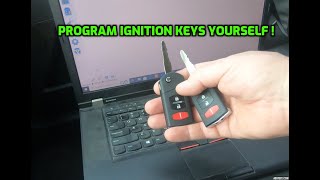
Aftermarket price range: $50-$150 (plus programming costs) 🎬 Watch: How to program Mazda keys at home using FORScan
- Immobilizer Antenna
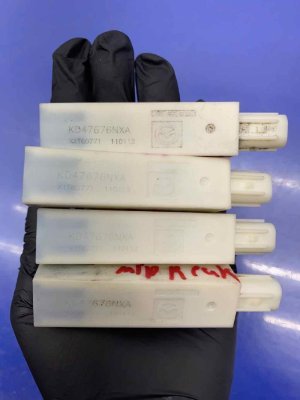
(OEM #GS3M-66-144A (2009-2013 w/ push button start), GS3L-66-938 (2009-2010 w/o fob key), KD47-67-6NXA (2014+ example))— Also known as the transponder coil, this part reads the key chip. If it fails, no signal is sent to the control module, triggering the P1614 code.
Trusted brands: Mazda (OEM)
OEM price range: $70-$150
Aftermarket price range: $40-$90
Platform-Specific Known Issues
- Reddit User Experience (2014): A user on Reddit with a 2014 Mazda 6 reported a flashing immobilizer light and a no-start condition. They tried disconnecting the battery and holding the key to the start button with no success, indicating a likely need for professional diagnosis.
- Forum Owner Experience (2006): An owner of a 2006 Mazda 6 on a forum experienced a flashing immobilizer light and alarm issues after installing a remote starter. The problem was resolved by resetting the system: turning the key to the 'ON' position for 20 minutes to allow it to reprogram. While this was an earlier model, the principle of system confusion from aftermarket electronics can still apply.
Hidden / Shadow Codes Worth Checking
- B10D7:81: Indicates an incorrect key/transmitter has been received by the immobilizer system. This often points directly to a faulty transponder chip in the key. (see via A professional scan tool like Mazda M-MDS or an advanced aftermarket scanner capable of reading Body Control Module (BCM) codes.)
- P1260:00: A generic immobilizer-related code indicating a theft attempt has been detected. It often sets in conjunction with more specific immobilizer codes like P1614 when the PCM does not receive the correct authorization. (see via A professional scan tool like Mazda M-MDS or an advanced aftermarket scanner.)
- U2120:00: Communication error with the Forward Sensing Camera. This can be triggered after a PCM reprogramming if the technician does not wait at least 10 minutes after locking the doors for all modules to reset properly. (see via Mazda's MDARS/IDS scan tool during post-programming checks.)
Scan Tool Commands That Help
- Mazda IDS / FORScan: PATS Functions - Parameter Reset — This function is required after replacing the PCM or the Instrument Cluster (IC). It erases all stored key IDs and re-initializes the link between the modules. A minimum of two keys is required to complete the procedure.
- Mazda IDS / FORScan: PATS Functions - Ignition Key Code Erase — Used as part of the Parameter Reset procedure or to clear all existing keys from memory before programming a new set. This is a necessary step when a key is lost or stolen to ensure the old key can no longer start the vehicle.
- Mazda IDS / FORScan: PATS Functions - Program Additional Ignition Key — This is used to add a new key when you already have at least two working, programmed keys. It's a simpler procedure than a full parameter reset.
- Mazda M-MDS: Customer Spare Key Programming Enable/Disable — This function allows or prohibits the ability to add new keys without using the dealer scan tool. It is often used by fleet or rental companies to prevent unauthorized key duplication.
Real Owner Repair Stories
- YouTube user 'Mazda 6 PATS programming after ECU replacement' (2007 Mazda 6 2.3L (Note: This is a 1st gen, but the PATS programming principles are highly relevant to the 2nd gen)) — Crank no-start condition after suspecting a bad ECU.
❌ Tried (didn't work) The initial diagnosis pointed to a bad ECU, but replacing it alone did not solve the problem due to the immobilizer system.
✅ What actually fixed it The owner purchased a used ECU and had it cloned with the original's data. Then, using the FORScan software and an ELM327 OBD-II interface, they performed the 'Erase and Program Keys' service function. This required generating an 'incode' from the 'outcode' provided by FORScan using an online calculator. After successfully programming two keys, the immobilizer light went out and the car started.
OEM Part Supersession History
kd45676nx, kd45676nxa, kd47676nx→KD47-67-6NXA— Part consolidation and potential minor revisions for improved reliability or manufacturing efficiency.
Heads up: This part number is for the keyless entry antenna on third-generation (2014+) models. It is crucial to match the part number exactly or use a confirmed superseded number when replacing.
Model Year Variations Within This Range
- 2008-2013 (Second Generation): The immobilizer system (PATS) is typically managed by a dedicated immobilizer module or has its logic integrated into the Instrument Cluster (IC) and PCM. The antenna coil is a ring around the physical ignition lock cylinder. Some higher trims feature a push-button start system that is a precursor to the more integrated third-gen system.
- 2014-2019 (Third Generation): The immobilizer system is more deeply integrated into the Body Control Module (BCM) and Start Stop Unit. Keyless entry and push-button start are standard or widely available. Instead of a single antenna ring at the ignition, there are multiple low-frequency (LF) antennas inside and outside the cabin to detect the key's location.
Diagnostic Flowchart
Other Known Issues on This Vehicle
Issues unrelated to this code that are worth knowing about as an owner of this generation:
- Melting/Sticky Dashboard 🟠 Medium — Common on 2009-2013 models, especially in hot, humid climates. Can occur at any mileage. (Ref: Mazda issued a warranty extension program (SSP93) covering this issue for 10 years from the original warranty start date.)
- Infotainment System 'Ghost Touch' and Delamination 🟠 Medium — Widespread on 2014-2017 models. The screen layers delaminate, causing phantom touches, unresponsiveness, and cracking. (Ref: No recall, but a known manufacturing defect. Some owners have had success with goodwill repairs out of warranty.)
- Carbon Buildup on Intake Valves (SkyActiv-G Engines) 🟠 Medium — A known characteristic of all direct-injection engines, including the SkyActiv-G. Can become problematic after 60,000-100,000 miles, causing misfires. (Ref: TSB 01-012/19 and 01-020/15 address misfire codes (P0300-P0304) caused by carbon buildup and outline a cleaning procedure.)
- Failed Cooling Fan Control Module 🔴 High — A common issue on 2nd generation (2008-2013) models, leading to engine overheating.
- Ticking Noise from Valve Lash Adjusters 🟡 Low — Reported on both generations, often on higher-mileage vehicles or those with infrequent oil changes.
Used vs. New Parts: Buying Guide for This Vehicle
When a used part is the smart pick: An immobilizer antenna coil/ring is a simple component that rarely fails but is safe to source from a junkyard if needed. Ensure the part number matches exactly.
Donor-vehicle mileage cap: roughly under 150000 miles for the part to have meaningful remaining life.
What to inspect on the donor part:
- Check for intact wiring and connectors with no signs of corrosion or physical damage.
- Verify the part number on the used component matches the original part precisely.
OEM-only on this vehicle (don't cheap out):
- Transponder Keys / Key Fobs: While aftermarket keys are available, they can have quality control issues with the transponder chip. For highest reliability, OEM keys are recommended.
- Immobilizer Control Module / PCM / BCM: These modules are VIN-locked to the original vehicle. A used module cannot be simply swapped in; it requires specialized tools to be 'cloned' with the original module's data or 'virginized' and then reprogrammed to the new vehicle, a service not all shops can perform.
Aftermarket brands forum-validated for this vehicle:
- FORScan (Software): A highly-regarded aftermarket diagnostic tool for Ford and Mazda vehicles that provides dealer-level capabilities for PATS functions.
- Autel (Scan Tools/Key Programmers): Known for powerful aftermarket tools capable of performing immobilizer functions, including key registration and module programming.
Brands owners have reported issues with on this vehicle:
- Unbranded, cheap online key fobs: Many users report issues with these keys failing to program or having very short-lived transponder chips.
Real Owner Stories
Aggregated from forums and TSBs cited above. Mileages and costs reflect what owners reported in those sources.
2014 Mazda 6
Symptoms: Flashing immobilizer light and a no-start condition; attempted to disconnect the battery and hold the key to the start button with no success.
What fixed it: Indicated a need for professional diagnosis with a scan tool to communicate with the immobilizer system.
Source hint: Reddit r/AskMechanics thread titled 'mazda_6_2014_immobiliser_issue/'
2006 Mazda 6
Symptoms: Flashing immobilizer light and alarm issues after installing a remote starter.
What fixed it: Resetting the system by turning the key to the 'ON' position for 20 minutes to allow it to reprogram.
Source hint: Mazda6Club.com forum thread titled '06-mazda-6-immobilizer-malfunction'
Related OBD-II Codes
Frequently Asked Questions
My 2014 Mazda 6 has a flashing immobilizer light and won't start; I tried the battery disconnect trick but it didn't work. What should I try next?
Is there a TSB for the misfire codes I'm seeing alongside my other issues on my SkyActiv-G Mazda 6?
My 2010 Mazda 6 dashboard is becoming sticky and melting. Is there a recall for this?
Can I use a used immobilizer control module from a donor Mazda 6 to fix P1614?
I just installed a remote starter on my 2006 Mazda 6 and now the immobilizer light is flashing. How do I fix it?
What should the battery voltage be on my Mazda 6 to ensure the immobilizer functions correctly?
Helpful Videos
We Have This Part in Stock

The information in this article is provided for general reference and educational purposes only. Vehicle specifications, procedures, and part compatibility can vary by production date, trim level, and region. Always consult your vehicle's factory service manual and verify part numbers before purchasing or performing repairs. Safety-critical components such as airbags, seat belts, and braking systems should be installed by a qualified professional.
- Mazda 6:
- 🧭 Diagnostic Flowchart
- 🎬 Helpful Videos
- 🛍️ Shop This Part
- What's Unique About the 2008-2019 Mazda 6
- Symptoms You May Notice
- Most Likely Causes
- Rare But Worth Checking
- Diagnosis Steps
- Parts You'll Likely Need
- Platform-Specific Known Issues
- Hidden / Shadow Codes Worth Checking
- Scan Tool Commands That Help
- Real Owner Repair Stories
- OEM Part Supersession History
- Model Year Variations Within This Range
- Other Known Issues on This Vehicle
- Used vs. New Parts: Buying Guide for This Vehicle
- Real Owner Stories
- 2014 Mazda 6
- 2006 Mazda 6
- Related OBD-II Codes
- Frequently Asked Questions
- 🎟️ Get 5% Off