

P1614 on 2010-2021 Subaru Forester: Immobilizer Failure Causes and Fixes
P1614 on a Subaru Forester means the car's security system doesn't recognize your key, preventing the engine from starting. The most common cause is a faulty transponder chip in the key itself. Always try your spare key first before attempting any other repairs. A weak car battery can also cause this communication error.
- P1614 means your Forester won't start because of a security system communication error.
- The first and most important diagnostic step is to try your spare key. This often solves the problem immediately.
- If a spare key doesn't work, the next most likely culprits are the immobilizer antenna around the ignition or its wiring.
- Repairs involving the key or Body Integrated Unit (BIU) require professional programming and are not simple DIY fixes.
- Do not immediately assume major components like the starter or fuel pump have failed; the immobilizer is designed to disable these systems.
What's Unique About the 2010-2021 Subaru Forester
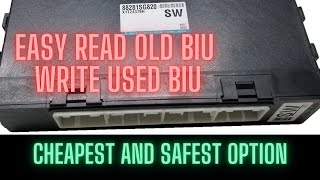
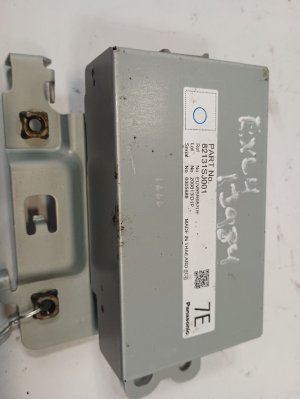
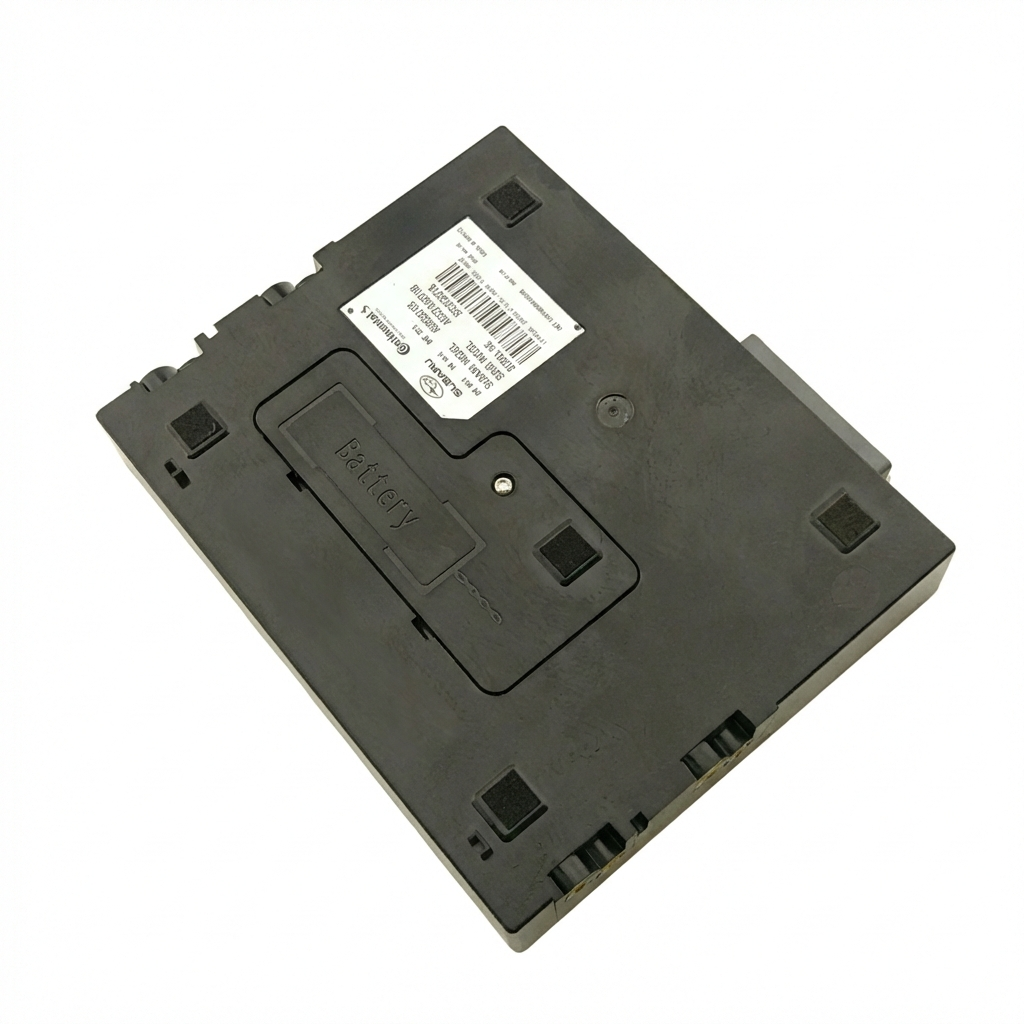
On Subaru platforms from this era, the Body Integrated Unit (BIU) acts as the master controller for the immobilizer system. It must successfully communicate with the key's transponder, the instrument cluster, and the Engine Control Unit (ECU) for the vehicle to start. This interconnectedness means that replacing any of these three modules (BIU, cluster, or ECU) with a used part is not a simple plug-and-play repair; it requires special programming with a tool like the Subaru Select Monitor (SSM) to synchronize the components. This makes professional service necessary for module-related failures, as the car will not start until the new BIU is registered to the vehicle's VIN and existing keys.
Generation note: This guide covers the SH (2010-2013), SJ (2014-2018), and SK (2019-2021) generations of the Subaru Forester. While the fundamental design of the immobilizer system is similar across these generations, specific part numbers for components like the Body Integrated Unit (BIU) and immobilizer antenna will differ. For example, the immobilizer antenna for a 2009-2013 Forester is part number 88215AG000, while a 2014-2015 model uses 88216FJ003, and a 2018+ model may use 88216FL001. Newer models (approx. 2020+) utilize more advanced Type 'G' (turn-key) or 'H' (push-button start) immobilizer systems that require an online authentication key via the SSM4 for any programming.
Symptoms You May Notice
- Engine cranks but will not start
- Engine will not crank at all
- Flashing or solid security indicator light on the dashboard (often looks like a key or a car with a lock)
- Intermittent starting issues
- Key fob not recognized by the vehicle
- Replacing the starter motor when the engine doesn't crank. The immobilizer can prevent the starter from engaging.
- Replacing the fuel pump because the engine cranks but won't start. The immobilizer disables fuel and/or spark, mimicking a fuel delivery problem.
Most Likely Causes
- Defective or Damaged Key Transponder 🔴 High Probability The transponder chip in the key fob can be damaged from being dropped, from a dead internal battery, or from internal failure over time.
How to confirm: The easiest way to confirm this is to try starting the vehicle with a spare key. If the spare key works and the primary key does not, the primary key is the issue. An automotive locksmith can also test the signal from the transponder chip.
Typical fix: The defective key will need to be replaced and the new key programmed to the vehicle by a dealer or automotive locksmith.
Est. part cost: $150-$400 - Faulty Immobilizer Antenna Ring 🟡 Medium Probability → Shop Antenna The antenna is a coil of wire around the ignition cylinder that reads the key chip. Like any electronic component, it can fail over time, resulting in an inability to read the key's signal.
How to confirm: A technician can use a specialized scan tool to check for a signal from the antenna. A visual inspection of the wiring and connector for damage is also recommended. The part is relatively accessible behind the steering column trim. A multimeter can be used to check the resistance of the antenna coil; a reading of less than 10 Ω is typically expected.
Typical fix: Replace the immobilizer antenna assembly.
Est. part cost: $80-$130 - Failing Body Integrated Unit (BIU) ⚪ Low Probability → Shop Body Control Module The BIU (also known as a BCM) controls many body electronics. Internal failure can be caused by voltage spikes, moisture intrusion, or age.
How to confirm: This is typically diagnosed by observing other seemingly unrelated electrical issues, such as erratic power windows, door locks, interior lights, or a parasitic battery drain. A professional scan tool may show communication codes (U-codes) or specific BIU-related faults (B-codes).
Typical fix: The BIU must be replaced. A new or used unit must be programmed or 'cloned' from the original to synchronize with the vehicle's ECU and instrument cluster. All existing keys must be present during reprogramming.
Est. part cost: $50-$200 (Used), $300-$500 (New) - Wiring or Connector Issues ⚪ Low Probability
How to confirm: Perform a 'wiggle test' on the connectors for the immobilizer antenna and BIU. Visually inspect the wiring harnesses for any signs of damage, corrosion, or loose connections, particularly in the steering column area.
Typical fix: Repair the damaged section of the wiring harness or clean/secure the faulty connector.
Est. part cost: $5-$50
Rare But Worth Checking
- Weak Vehicle Battery: → Shop Vehicle Battery Low system voltage can sometimes cause communication errors between modules. Before diving into complex diagnostics, ensure the battery is fully charged (at least 12.4V) and tests good. A dead battery can cause the security system to lose key programming.
- Faulty Engine Control Module (ECM): While rare, it's possible for the ECM's immobilizer circuit to fail. This is usually the last item to be considered after all other components have been ruled out.
- Radio Frequency Interference: Strong radio frequency interference from aftermarket devices (chargers, dash cams) or even other keys on the same keychain can sometimes disrupt the signal between the key and the antenna ring.
Diagnosis Steps
- Try starting the vehicle with all known spare keys. If a spare key works, the original key is faulty.
- Check the vehicle's battery. Ensure it has a full charge (at least 12.4V) and that the terminals are clean and tight. A weak battery is a common cause of module communication errors.
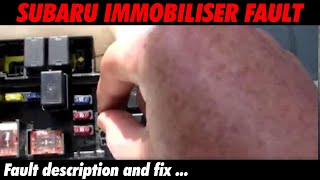
- Inspect fuses related to the immobilizer system, Body Integrated Unit (BIU), and Engine Control Module (ECM) in the interior and engine bay fuse boxes. 🎬 See how a blown fuse causes an immobilizer fault
- Observe the security indicator light on the dashboard. Note its behavior (flashing, solid, off) when trying to start the car, as this can provide diagnostic clues.
- Visually inspect the wiring and connector at the immobilizer antenna ring around the ignition switch for any obvious damage.
- If available, use a scan tool capable of reading body and immobilizer codes to check for communication with the BIU and see live data. A professional tool like the Subaru Select Monitor is required for deep diagnostics.
- If a key is suspected, an automotive locksmith can test the transponder chip inside the key fob.
- If the BIU is suspected, a professional diagnosis is required to confirm the failure and perform the necessary programming for a replacement unit. Be aware that all registered keys will be required for programming the new module.
Parts You'll Likely Need
- Immobilizer Antenna
(OEM #88215AG000 (2009-2013), 88216FJ003 (2014-2015), 88216FL001 (2018+))— This part reads the transponder chip in the key. If it fails, the security code cannot be sent to the BIU. Part numbers vary by generation.
Trusted brands: Subaru (OEM)
OEM price range: $85-$130
Aftermarket price range: $50-$90 - Transponder Key — The chip inside the key is the most common failure point for this code. A new key must be cut and professionally programmed to the vehicle.
OEM price range: $200-$400 (including programming)
Aftermarket price range: $150-$250 (from automotive locksmith) 🎬 Watch: Programming a Forester when all keys are lost
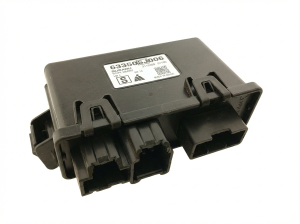
- Body Integrated Unit (BIU)
(OEM #e.g., 88281SG270 (2017 Forester))— As the master module for the immobilizer, a BIU failure will cause a P1614. Replacement requires programming to match the car's other modules. Part numbers are highly specific to the vehicle's year and options.
Trusted brands: Subaru (OEM)
OEM price range: $300-$500
Aftermarket price range: N/A (Used parts require cloning/programming services)
Platform-Specific Known Issues
- BIU Replacement Requires All Keys: When replacing the Body Integrated Unit (BIU), the Subaru dealer procedure requires all registered keys to be present for reprogramming. If a key is lost, it can significantly complicate the repair, potentially requiring the ECU and combination meter to be sent to Subaru for service at a much higher cost.
Mechanic-Grade Diagnostic Values
- Immobilizer Antenna Coil Resistance — expected: Less than 10 Ω. Failure: An open circuit (infinite resistance) or a value significantly higher than the specification indicates a failed antenna coil.
- BIU Power Supply Voltage (at BIU connector) — expected: 10V or more with ignition OFF. Failure: Voltage below 10V indicates a problem with the power supply circuit or fuse, not necessarily the BIU itself.
- BIU Ignition Circuit Voltage (at BIU connector) — expected: 10V or more with ignition ON. Failure: Voltage below 10V with the key on points to a fault in the ignition switch circuit feeding the BIU.
Scan Tool Commands That Help
- Subaru Select Monitor (SSM): Immobilizer Registration — This function is required after replacing the BIU, ECM, or adding new keys. It teaches the system to recognize the new components and valid key transponders.
- Subaru Select Monitor (SSM): Unit Customizing (BIU) — When installing a new BIU, this function must be used to set the vehicle's market destination (e.g., US, Europe) and configure options before the immobilizer registration can be performed.
- Subaru Select Monitor (SSM): Communication Line Check — This diagnostic test verifies the communication integrity between the ECM and the BIU. It's a critical step to perform before condemning either module, as it can identify a wiring or network fault as the root cause.
Model Year Variations Within This Range
- 2015+: The introduction of proximity keys and push-button start systems added complexity to the immobilizer system. While the core components (BIU, ECM, Cluster) are similar, the programming procedures are more advanced than on earlier turn-key models.
- 2020+: Newer models (approx. 2020 and later) use a more secure immobilizer system (Type G/H) that requires the Subaru Select Monitor 4 (SSM4) to connect to a secure Subaru server for an 'Authentication Key' to perform any immobilizer-related programming. This makes DIY or independent shop repairs much more difficult without the proper, up-to-date subscriptions and tooling.
Diagnostic Flowchart
Other Known Issues on This Vehicle
Issues unrelated to this code that are worth knowing about as an owner of this generation:
- Excessive Oil Consumption (FB Series Engines) 🔴 High — Common in 2011-2015 models with the 2.5L FB25 engine. Owners report adding a quart of oil every 1000-2000 miles. Caused by faulty piston rings. (Ref: TSB 02-157-14R was issued, and a class-action lawsuit led to warranty extensions and potential short block replacement for affected vehicles.)
- CVT Transmission Issues & Warranty Extension 🟠 Medium — Prevalent in SJ generation (2014-2018) Foresters. Symptoms include jerking, hesitation, and stalling. Subaru extended the CVT warranty to 10 years/100,000 miles for many models. (Ref: Subaru Service Bulletin 16-115-18 (and others) detail the CVT warranty extension program.)
- Front Lower Control Arm Corrosion 🔴 High — Affects earlier models (up to 2008, but relevant for the 2010-2013 SH generation's lineage) in salt-belt states. Severe rust can cause the control arm to break away from the frame, leading to a loss of steering. (Ref: NHTSA Campaign ID 11V464000 (Subaru Recall WVX-34) was issued for inspection and replacement.)
- Failing Air Conditioning (A/C) System 🟡 Low — Common complaints on the SJ (2014-2018) generation include refrigerant leaks and compressor or condenser failure.
- Premature Rear Spring Failure 🟠 Medium — Some 2014-2018 Foresters have experienced broken rear coil springs. A recall was issued for this issue. (Ref: Recall for faulty rear suspension springs mentioned in some automotive articles.)
Used vs. New Parts: Buying Guide for This Vehicle
When a used part is the smart pick: A used Immobilizer Antenna is a perfectly viable and cost-effective repair. A used Body Integrated Unit (BIU) or Engine Control Module (ECM) can also be used, but ONLY if you use a 'cloning' service. This service copies the VIN and security data from your original module to the used donor part, making it plug-and-play.
Donor-vehicle mileage cap: roughly under 150000 miles for the part to have meaningful remaining life.
What to inspect on the donor part:
- Match the OEM part number EXACTLY. Even a single digit difference can mean incompatibility.
- Inspect all connector pins for signs of corrosion, moisture, or physical damage.
- Avoid parts from vehicles with flood or fire damage, as this can cause hidden electronic issues.
OEM-only on this vehicle (don't cheap out):
- Transponder Keys: While aftermarket keys exist, OEM keys programmed by a dealer or reputable locksmith offer the highest reliability. Poor quality aftermarket transponder chips are a common source of intermittent issues.
Brands owners have reported issues with on this vehicle:
- Generic, unbranded transponder keys from online marketplaces can have inconsistent chip quality, leading to programming failures or intermittent starting problems.
Real Owner Stories
Aggregated from forums and TSBs cited above. Mileages and costs reflect what owners reported in those sources.
2016 Subaru Crosstrek
Symptoms: No-crank, no-start condition diagnosed as a failed BIU. The owner was missing one of the three registered keys.
What fixed it: The dealer required the BIU, ECU, and instrument cluster to be sent to Subaru to delete the missing key and synchronize the system.
Cost: $2,000+
Source hint: reddit.com/r/subaru/comments/196p2j8/dealer_biu_replacement_requiring_all_keys_total/
Subaru Forester (SJ Generation)
Symptoms: Flashing security light while trying to start the car, indicating a key recognition problem.
What fixed it: Primary diagnostic steps recommended included checking the key fob battery, trying a spare key, or disconnecting the car battery for 10 minutes.
Source hint: reddit.com/r/SubaruForester/comments/15j5qza/flashing_security_light/
Related OBD-II Codes
Frequently Asked Questions
Why does the dealer need all my keys just to replace the Body Integrated Unit (BIU)?
My security light is flashing while the car is off; is this related to code P1614?
Can I use a used Body Integrated Unit to fix this code on my Forester?
Is there a TSB for the CVT stalling issues mentioned in the context for my 2014-2018 Forester?
Could a weak car battery cause a P1614 immobilizer error?
How can I tell if the P1614 code is caused by my key or the antenna ring?
Helpful Videos

We Have This Part in Stock

The information in this article is provided for general reference and educational purposes only. Vehicle specifications, procedures, and part compatibility can vary by production date, trim level, and region. Always consult your vehicle's factory service manual and verify part numbers before purchasing or performing repairs. Safety-critical components such as airbags, seat belts, and braking systems should be installed by a qualified professional.
- Subaru Forester:
- 🧭 Diagnostic Flowchart
- 🎬 Helpful Videos
- 🛍️ Shop This Part
- What's Unique About the 2010-2021 Subaru Forester
- Symptoms You May Notice
- Most Likely Causes
- Rare But Worth Checking
- Diagnosis Steps
- Parts You'll Likely Need
- Platform-Specific Known Issues
- Mechanic-Grade Diagnostic Values
- Scan Tool Commands That Help
- Model Year Variations Within This Range
- Other Known Issues on This Vehicle
- Used vs. New Parts: Buying Guide for This Vehicle
- Real Owner Stories
- 2016 Subaru Crosstrek
- Subaru Forester (SJ Generation)
- Related OBD-II Codes
- Frequently Asked Questions
- 🎟️ Get 5% Off