

Ultimate P1620 Guide: The Last Page You'll Ever Need to Read
A Manufacturer-by-Manufacturer Breakdown of Causes, Symptoms, and Fixes
- P1620 is a manufacturer-specific code; always search your exact make and model first to determine if it points to a BMW thermostat, GM coolant sensor, Ford anti-theft system, or Volvo throttle module.
- On 1999-2006 BMWs, P1620 guarantees a failed electronic thermostat heater requiring a $330-$600 replacement, even if the dashboard temperature gauge reads perfectly normal.
- For GM and Saturn vehicles, immediately check the coolant reservoir; driving with an undetected low coolant level causes catastrophic engine overheating and a $2,500+ head gasket repair.
- Ford, Volvo, and Suzuki owners must take their vehicle to a specialist with proprietary software, as P1620 indicates a module communication or anti-theft failure that generic OBD-II scanners cannot fix.
What Does P1620 Mean?
P1620 is a manufacturer-specific code, meaning its definition changes entirely depending on your car's make. For BMW, it indicates a failed thermostat electronic control circuit. For General Motors (GM) and Saturn, it signals a low engine coolant level. On Ford vehicles, it relates to the passive anti-theft system (PATS). On 1999-2002 Volvos, it indicates a faulty electronic throttle module (ETM).
Technical definition: The official SAE/ISO definition for P1620 is manufacturer-specific. Common definitions include: BMW: Map Cooling Thermostat Control Circuit Signal High; GM/Saturn: Low Coolant Circuit; Ford: SBDS Interactive Codes (PATS); Toyota: ECT1 Signal Circuit Malfunction; Volvo/VW: Instrument Panel Engine Coolant Temperature Signal Open Circuit / Short To Positive; Hyundai: A/C Relay Short Circuit.
Can I Drive With P1620?
Yes, but proceed with extreme caution Whether you can drive depends heavily on your vehicle's make. BMW owners can drive short-term but risk $1,500+ catalytic converter damage from running rich. GM/Saturn owners must stop immediately; driving with low coolant causes rapid overheating and $2,500+ head gasket failures. Volvo and Ford owners risk sudden stalling or being stranded by anti-theft immobilizers.
Common Causes
- Faulty Thermostat Assembly (BMW) (Very Common) — On BMW models, this code guarantees a failure of the heating element inside the electronically controlled thermostat. The thermostat still opens mechanically, preventing overheating, but the computer loses its ability to precisely control engine temperature via 'map cooling'.
- Low Engine Coolant Level (GM/Saturn) (Very Common) — For GM and Saturn vehicles, the most frequent cause is a low coolant level in the reservoir triggering the level sensor. This indicates a physical leak in the cooling system that requires immediate repair.
- Faulty or Contaminated Coolant Level Sensor (GM/Saturn) (Common) — If the coolant level is full on a GM or Saturn, the sensor itself has failed internally or become coated in sludge. This sends a false 'low coolant' signal to the computer.
- Faulty Electronic Throttle Module (ETM) (Volvo) (Common) — On 1999-2002 Volvos, P1620 links directly to a failing Electronic Throttle Module (ETM). Internal throttle position sensor contacts wear out, causing erratic idle, stalling, and limp-home mode.
- Faulty Passive Anti-Theft System (PATS) Transceiver (Ford) (Less Common) — On Fords, the transceiver ring around the ignition cylinder fails to read the chip in the key. This results in an intermittent no-start condition accompanied by a flashing theft light.
- Damaged Wiring or Connectors (Less Common) — Corroded, chafed, or loose wiring to the thermostat, coolant sensor, PATS transceiver, or throttle module interrupts the signal and triggers the code.
- Faulty A/C Compressor Relay (Hyundai/Daewoo) (Less Common) — On specific Hyundai and Daewoo models, P1620 points to a short circuit in the air conditioning compressor relay, disabling the A/C system.
- Lost ECU/Injector Calibration (Maruti Suzuki) (Rare) — In certain Suzuki models, P1620 means 'ECU Code Not Registered'. Critical calibration data for fuel injectors or keys is lost, requiring a specialized scan tool to re-register the components.
Symptoms
- Check Engine Light is On (Gauge Reads Normal) — The most common symptom. On BMWs, the dashboard temperature gauge reads perfectly normal because the mechanical thermostat still functions, but the electronic heater has failed.
- Low Coolant Warning Light — On GM and Saturn vehicles, this dashboard warning light illuminates alongside the Check Engine Light.
- Reduced Fuel Economy & Poor Heater Performance — On BMWs, the engine runs slightly cooler than optimal, causing the ECU to enrich the fuel mixture (reducing MPG by 10-15%) and blowing lukewarm air from the heater.
- Intermittent No-Start or Flashing Anti-Theft Light — On Ford models, the engine refuses to crank, accompanied by a rapidly flashing PATS (theft) indicator light.
- Erratic Idle, Stalling, or 'Limp Mode' — On Volvo models with a faulty ETM, the car idles roughly, stalls unexpectedly in traffic, or enters a severely reduced power mode.
- Air Conditioning Does Not Work — For Hyundai and Daewoo vehicles, the A/C system fails to blow cold air due to a shorted compressor relay.
- Black Smoke from Exhaust — On Toyotas, a faulty Engine Coolant Temperature sensor causes the engine to run excessively rich, producing visible black smoke.
Diagnostic Flowchart
Tap your situation to follow the diagnostic path that matches what you're seeing on this code.
Common Fixes & Costs
- Replace Engine Thermostat Assembly (BMW) — Parts: $80-$200, Labor: $250-$400, ~2.5 hr book time (Intermediate)
- Top Off Engine Coolant and Repair Leak (GM/Saturn) — Parts: $20-$150, Labor: $150-$500, ~2.0 hr book time (Intermediate)
- Replace Engine Coolant Level Sensor (GM/Saturn) — Parts: $40-$120, Labor: $80-$150, ~0.8 hr book time (DIY)
- Repair or Replace Electronic Throttle Module (Volvo) — Parts: $550-$1100, Labor: $130-$260, ~2.0 hr book time (Professional)
- Replace A/C Compressor Relay (Hyundai) — Parts: $15-$50, Labor: $25-$75, ~0.2 hr book time (DIY)
Used vs. New Parts: Buying Guide
When a used part is worth it: For inexpensive electronic parts like thermostats or coolant sensors, new aftermarket parts with a warranty are always a better value. For expensive modules like the Volvo ETM, a professionally remanufactured unit with an upgraded design is superior to a used OEM part.
Donor-vehicle mileage cap: roughly under 80000 miles for the part to have meaningful remaining life.
Donor quality checklist:
- Verify the exact part number matches; superseded numbers are often incompatible.
- For electronic modules, confirm the donor vehicle had no related fault codes.
- Avoid parts from vehicles in rust-belt states, as corrosion damages connectors.
Decision logic:
- If Part is under $100 new and is a known wear item (e.g., thermostat, sensor) → Always buy new for the warranty and reliability.
- If Vehicle is over 150K miles and the part is expensive (>$500) → A used part from a low-mileage donor is a reasonable gamble to save money.
- If Part has a well-known design flaw (e.g., original Volvo ETM) → Favor a remanufactured part with an improved design over a new or used OEM part.
Warranty tradeoff: Used parts typically offer a 30-90 day functional warranty that excludes labor costs. New aftermarket parts come with a 1-year to limited lifetime warranty.
Worst-case if a used part fails: $300-800 (The cost of repeat labor to install another part, plus the potential cost of a second part if the used one fails outside its short warranty period.)
What Happens If You Wait — Timeline
- 0-1 month (BMW): Code P1620 is set. Check Engine Light is on. Engine runs slightly cooler than optimal, causing a rich fuel mixture. No other symptoms are obvious. (MPG impact: 5-10%% · Added cost: $20-50 in wasted fuel)
- 1-6 months (BMW): Sustained rich condition reduces the efficiency of the catalytic converters. MPG loss becomes noticeable. Heater performance is poor in winter. (MPG impact: 10-15%% · Added cost: $100-300 in wasted fuel, plus initial catalytic converter strain.)
- 6-12+ months (BMW): The catalytic converter substrate becomes permanently damaged or clogged from the overly rich mixture, leading to a massive loss of power. (MPG impact: 15-25%% · Added cost: $1,500 - $2,500 (for catalytic converter replacement).)
- 0-1 week (GM with slow leak): P1620 and 'Low Coolant' light appear intermittently on cold starts. The coolant level is just below the sensor threshold but sufficient to cool the engine. (MPG impact: 0%% · Added cost: $0 (but risk is high))
- 1 week - 2 months (GM with slow leak): The leak continues, and the coolant level drops further. The temperature gauge fluctuates or reads higher than normal in traffic. (MPG impact: 0%% · Added cost: $150-250 (for a tow if the car overheats).)
- Single event (GM with ignored leak): A single drive in hot weather with insufficient coolant causes a severe overheat. The cylinder head warps or the head gasket blows. (MPG impact: N/A% · Added cost: $2,500 - $4,500+ (for head gasket repair or a replacement engine).)
Cost of Not Fixing It
- Immediate (0-1 Month): On a BMW, a 10-15% drop in fuel economy and poor heater performance. On a GM, risk of overheating if the coolant level is truly low. On a Ford, risk of being stranded with a no-start condition. (Added cost: $0 - $200 (for towing))
- Medium Term (1-6 Months): On a BMW, the engine running rich overheats and degrades the catalytic converters. On a GM, continued driving with a slow leak leads to a major overheating event. (Added cost: $1,200 - $2,800 (for catalytic converter replacement on a BMW))
- Long Term (6+ Months): On a GM vehicle, a single severe overheating event caused by an ignored low coolant level warps the cylinder head or blows the head gasket. (Added cost: $2,000 - $4,500+ (for head gasket or engine replacement))
Diagnosis Steps
- Identify Your Vehicle's Specific Definition
Use a search engine to find the exact definition of P1620 for your vehicle's make, model, and year (e.g., '2005 BMW P1620'). This dictates your entire diagnostic path.
Tools: OBD-II Scanner, Internet Access (Beginner) - Check Engine Coolant Level (GM/Saturn)
With the engine cool, check the coolant level in the overflow reservoir. If low, top it off and inspect for leaks (puddles, sweet smell, white residue). Do not proceed until the level is correct.
Tools: Flashlight, Correct Engine Coolant (Beginner) - Test GM/Saturn Coolant Level Sensor Circuit
If the coolant is full, unplug the two-wire connector from the coolant level sensor. Use a paperclip to bridge the two terminals in the connector. Turn the ignition on. If the 'Low Coolant' light turns off, the sensor is faulty and requires replacement.
Tools: Jumper Wire or Paperclip (Intermediate) - Test BMW Thermostat Heater Resistance
Unplug the electrical connector from the thermostat housing. Set your multimeter to Ohms (Ω). Touch the probes to the two pins on the thermostat. A functional heater reads 10-20 Ohms. A reading of 'OL' (infinite resistance) confirms the internal heater is broken.
Tools: Multimeter (Intermediate) - Inspect Wiring and Connectors
Visually inspect the wiring harness going to the component identified in Step 1. Look for chafed wires, corrosion, or pins backing out of the connector.
Tools: Flashlight (Beginner) - Test BMW Thermostat Control Voltage
With the thermostat unplugged and ignition on, check for voltage at the harness connector. One pin shows battery voltage (~12V). The other is a pulse-width modulated ground from the ECU, showing fluctuating voltage. This confirms the ECU is sending the correct signal.
Tools: Multimeter, Vehicle-Specific Wiring Diagram (Advanced) - Check Volvo ETM & MAF Sensor Data
Use a Volvo VIDA scanner to check for ETM-specific fault codes. Monitor the Mass Air Flow (MAF) sensor data at idle (should be ~14 Kg/Hr). A faulty MAF causes similar symptoms and must be ruled out before replacing the expensive ETM.
Tools: Volvo-Specific Scan Tool (Advanced) - Verify Ford PATS Transceiver Circuit
Test the transceiver module circuits at the connector. Pin 1 requires battery voltage (>10V). Pin 2 requires ground (<5 Ω). Pins 3 and 4 are data lines; check for continuity (<5 Ω) and ensure they are not shorted to ground.
Tools: Multimeter, Vehicle-Specific Wiring Diagram (Advanced) - Test Toyota ECT Sensor Resistance
Disconnect the Engine Coolant Temperature sensor and measure its resistance. A typical sensor reads 2,200-3,000 Ω at 20°C (68°F) and 250-350 Ω at 80°C (176°F). Significant deviation indicates a faulty sensor.
Tools: Multimeter, Thermometer, Service Manual (Advanced) - Seek Professional Diagnosis for Complex Systems
Ford's 'SBDS Interactive Codes', Volvo's ETM programming, and Suzuki's 'ECU Not Registered' faults require dealer-level scan tools. Generic tools cannot access the proprietary modules needed to fix these specific P1620 variations.
Tools: Professional Diagnostic Equipment (Professional)
When This Code Triggers (Freeze-Frame Conditions)
- Engine Coolant Temp: 175-205°F (80-96°C) (The fault is detected once the engine reaches normal operating temperature and the ECU attempts to actively control the thermostat (BMW).)
- RPM: 1500-2500 RPM (Sets during steady-state cruising when the engine computer runs routine checks on systems like the thermostat heater circuit.)
- Engine Load: 20-50% (Occurs under light to moderate engine load, consistent with highway cruising or steady city driving.)
- Vehicle Speed: 40-65 mph (65-105 kph) (Appears during constant speed driving, providing the stable conditions required for the ECU to run diagnostic monitors.)
Related Codes
- P0128 — Appears with P1620 on BMWs. P1620 indicates a fault in the thermostat's electrical heater, while P0128 indicates a mechanical failure (stuck open). If you have both, the entire thermostat assembly is destroyed.
- P0491 / P0492 — Secondary Air Injection System codes common on BMWs alongside P1620. Brittle vacuum lines near the thermostat often crack during thermostat replacement, creating a vacuum leak.
- P1260 — On Ford vehicles, P1260 ('Theft Detected, Vehicle Immobilized') is a companion code to P1620. It confirms the PATS system actively disabled the engine.
- P0117 / P0118 — Indicates 'Engine Coolant Temperature Sensor Circuit Low/High Input.' On GM vehicles, P1620 points to the coolant level, while P0117/P0118 point to the coolant temperature. Check the reservoir level first for P1620.
Climate & Environmental Factors
- Extreme Cold: Exacerbates issues. For BMWs, the engine takes significantly longer to reach operating temperature with a failed thermostat heater, drastically reducing fuel economy. For GM vehicles, cold contraction causes a slow leak to drop below the sensor threshold, triggering the code on startup.
- Extreme Heat: Increases stress on the cooling system. A failing BMW thermostat cannot preemptively cool the engine under load, increasing the risk of knock. For GM vehicles, a low coolant level causes rapid and severe overheating.
- High Humidity: Accelerates corrosion on electrical connectors and sensor contacts, contributing to intermittent faults in the GM coolant sensor, BMW thermostat connector, or Ford PATS transceiver.
How to Talk to a Mechanic About This Code
Say this: "I have a P1620 code on my [Your Car's Make/Model]. For a BMW: 'Please test the thermostat heater's resistance and control circuit.' For a GM/Saturn: 'I've confirmed the coolant is full, so please test the level sensor circuit.' For a Ford/Volvo: 'I suspect a PATS/ETM issue; do you have the manufacturer-specific software to diagnose it?'"
This signals you understand the specific nature of the code for your vehicle. It directs the technician toward an efficient diagnostic path and prevents them from replacing unrelated parts.
Avoid saying:
- 'My check engine light is on, can you just fix it?' (Invites a costly, broad diagnosis).
- 'I think it's the [wrong part], can you replace it?' (Don't guess; describe the code and symptoms).
- 'Just do whatever you think is best.' (Gives up all control over the cost and scope of the repair).
Questions to ask before authorizing the repair:
- Can you explain exactly how you confirmed this part has failed? (e.g., 'Did the thermostat heater show an open circuit?')
- Is this part the only cause of the code, or is there a wiring issue?
- What is the warranty on the replacement part and your labor?
- Will you provide me with the old part when the job is done?
Where to Take It: Dealer vs Independent vs Chain
- Dealer:
Recommended for Ford, Volvo, and other makes where P1620 requires proprietary software.
Best for: Vehicles still under warranty., Complex, proprietary issues like Ford's PATS system or Volvo's ETM, which require specific software for diagnosis and programming.
Downsides: Highest labor rates (1.5-2x independent shops)., Recommends replacing entire assemblies when a smaller component is the issue. (Typical cost: +50% vs. baseline) - Independent Shop:
Best overall fit for BMW and GM/Saturn repairs. A good independent specialist diagnoses this efficiently and offers better value.
Best for: Out-of-warranty vehicles with common P1620 causes (BMW thermostat, GM coolant sensor)., Finding a specialist deeply familiar with these specific issues.
Downsides: Diagnostic capabilities vary widely; check reviews and ASE certifications., May lack expensive, dealer-level tools for programming modules on Ford/Volvo. (Typical cost: +0% vs. baseline) - Chain Shop:
AVOID for diagnosing P1620. They are highly likely to misdiagnose the root cause, leading to wasted money on incorrect parts.
Best for: Simple, unrelated maintenance like oil changes or tires.
Downsides: Technicians lack specialized knowledge for manufacturer-specific codes., High pressure to upsell common items (flushes, filters) unrelated to the P1620 code. (Typical cost: -10% vs. baseline)
When to Walk Away From the Repair
If the total estimated repair cost exceeds 40-50% of your car's private-party value, seriously consider selling or trading it in.
- Car worth $2000, fix is $1200: Walk away. The repair cost for the Volvo ETM is over 50% of the car's value.
- Car worth $4500, fix is $600: Fix it. The cost to replace the thermostat on a BMW E46 is well below the threshold.
- Car worth $1100, fix is $2500: Walk away. An ignored low coolant level on an old Saturn led to a blown head gasket, and the repair cost is more than double the car's value.
What Scan Tool You Need for This Code
Minimum: A code reader that reads and clears generic powertrain codes. For P1620, this only identifies the code's presence, not the diagnosis.
A basic $20 reader cannot read manufacturer-specific codes from other modules (Ford's PATS), view live sensor data to test a GM circuit, or access special functions for a Volvo ETM.
Budget: BlueDriver Pro or Foxwell NT301 (~$100) — Reads freeze-frame data and views live sensor data streams. This confirms if a GM coolant level circuit responds to being jumped or monitors engine temperature on a BMW.
Mid-range: Foxwell NT510 Elite or Innova 5610 (~$180) — Offers manufacturer-specific diagnostics. Accesses deeper systems like Ford's PATS or Volvo's ETM modules to pull underlying codes. Offers bidirectional controls to test components directly.
Professional: Autel MaxiCOM MK808 / MK906BT (~$500-1200) — Provides full bidirectional control and special functions. Performs software programming for a new Volvo ETM, codes a new key for a Ford PATS system, and runs advanced diagnostic tests.
Rent vs buy: For a one-time code read, use a free loaner tool from a parts store. To properly diagnose any version of P1620, buy a scanner with live data capabilities.
How to Clear the Code After You Fix It
- Use an OBD-II scan tool to erase the P1620 fault code.
- Perform a complete OBD-II drive cycle to allow the vehicle's readiness monitors to run.
- Re-scan the vehicle to confirm the code has not returned and that readiness monitors are set to 'Ready'.
Drive cycle (~30 minutes): A generic drive cycle includes: 1) A cold start (engine off for 8+ hours). 2) Idle for 2-3 minutes. 3) Drive at a steady highway speed (around 55 mph) for 10-15 minutes. 4) Perform 15-20 minutes of stop-and-go city driving. 5) Allow the engine to cool completely.
Readiness monitors affected: Catalyst Monitor, Oxygen (O2) Sensor Monitor, Comprehensive Component Monitor
Before emissions retest: drive at least 100 miles to fully set monitors.
Watch out for:
- Clearing the code with a scanner does not fix the underlying mechanical or electrical issue; the code returns immediately.
- Taking the vehicle for an emissions test immediately after clearing the code results in an automatic failure due to 'Not Ready' monitor status.
- Failing to follow the specific drive cycle for your vehicle's make prevents monitors from completing their self-tests.
Will This Fail Emissions / State Inspection?
Yes — this code typically fails an OBD-II emissions inspection.
- California: An illuminated Check Engine Light is an automatic failure. After repairs, a full drive cycle must be completed to set all readiness monitors to 'Ready' before a retest passes.
- New York: Any vehicle with the Check Engine Light on automatically fails. The system detects recently cleared codes and fails the test for having 'Not Ready' monitors.
- Texas: An active P1620 code causes an automatic failure. Vehicles model year 2001 and newer allow one readiness monitor to be 'Not Ready'; two or more causes a failure.
Most Commonly Affected Vehicles
- BMW 3-Series (E46), 5-Series (E39), X3 (E83), X5 (E53), Z3, Z4 (1999-2006) — Frequently use an electronically controlled thermostat where the internal heater fails, triggering P1620. The failure is in the electronics, not the mechanical thermostat.
- Saturn S-Series (SL, SC, SW), L-Series, Ion (1996-2007) — Prone to P1620 due to failing coolant level sensors (Part #10096163) or coolant leaks from the radiator and hoses.
- Volvo S60, V70, S80, C70, XC70 (1999-2002) — Known for Electronic Throttle Module (ETM) failures. Original units with a yellow label are highly prone to failure.
- Chevrolet / GMC / Pontiac Silverado, Sierra, Tahoe, Grand Prix (2000-2007) — Experience P1620 due to faulty coolant level sensors located in the radiator side tank or coolant reservoir.
- Ford Contour, Mustang, Focus, Ranger (1996-2008) — P1620 is an 'SBDS Interactive Code' related to the anti-theft (PATS) system, requiring dealer diagnostics to pull underlying codes.
- Hyundai Accent, Elantra, Terracan (2000-2007) — P1620 typically indicates a fault in the A/C compressor relay circuit, leading to a non-working air conditioner.
- Volkswagen Golf, Jetta, Passat (Mk4/B5) (1999-2005) — Sets P1620 for an open circuit in the Engine Coolant Temperature signal sent to the instrument cluster.
- Toyota Corolla, Camry (2000-2009) — Defined as 'ECT1 Signal Circuit Malfunction,' pointing to an issue with the primary Engine Coolant Temperature sensor circuit.
- Chrysler / Dodge / Jeep Various models (2000-2010) — Indicates a problem with the '2.5V Reference Voltage' circuit from the PCM, affecting multiple sensors simultaneously.
Manufacturer-Specific Notes
- BMW: The temperature gauge reads perfectly normal in the middle, but the code sets because the computer cannot perform its 'map cooling' function for preemptive cooling under load.
- General Motors (GM) / Saturn: This code relates exclusively to the coolant level, not the temperature. The sensor gums up and sends a false signal even when full. Jumping the connector pins is a definitive test.
- Ford: P1620 is a 'Service Bay Diagnostic System' placeholder code. It means the computer detected a fault requiring a Ford-specific diagnostic tool (IDS) to read the real codes stored in the PATS module.
- Volvo: Points directly to a failing Electronic Throttle Module (ETM). Volvo extended the warranty on these to 10 years/200,000 miles under campaign No. 155, confirming the massive prevalence of the issue.
- Hyundai: Unlike other manufacturers, Hyundai uses P1620 to signal a fault in the A/C compressor relay circuit. Check the fuse box and A/C relay first.
- Chrysler/Dodge/Jeep: Points to an issue with a 2.5-volt reference circuit from the PCM. A short in one sensor or its wiring sets this code and disables other shared systems.
Real Owner Stories
2000 Saturn SL2 with ~150K miles
Check Engine Light and Low Coolant light were on. No perceived driving issues or overheating.
What they tried:
- Verified coolant level was full.
- Noticed orange foam/muck in the coolant tank.
- Removed and cleaned the coolant reservoir. The float sensor inside was stuck and freed up after cleaning.
Outcome: After reinstalling the cleaned tank and topping off the coolant, the Low Coolant light went out. This confirmed the issue was a contaminated/stuck sensor, not a bad sensor or low coolant.
Lesson: On a GM/Saturn, if the coolant level is full, don't immediately buy a new sensor. First, try cleaning the reservoir and the sensor probes, as contamination causes the float to stick, triggering a false P1620 code.
2003 BMW Z4 3.0i
Car threw three codes: P1620 (Thermostat), P0171 (Lean Bank 1), and P0174 (Lean Bank 2). Service records indicated a slight leak from the thermostat housing.
What they tried:
- Replaced the Mass Airflow (MAF) sensor to address the lean codes, but it didn't solve the problem.
- Checked for vacuum leaks but couldn't find any.
Outcome: The owner replaced the thermostat due to the P1620 code and known leak. The lean codes were caused by a vacuum leak from the cracked thermostat housing.
Lesson: On BMWs, multiple codes are often related. A part causing a P1620, like a leaking thermostat housing, creates a vacuum leak triggering lean codes (P0171/P0174). Fix the component-specific code (P1620) first.
1999 Ford Ranger with intermittent no-start
Truck intermittently failed to crank, accompanied by a rapidly flashing 'THEFT' light. Sometimes it started after waiting.
What they tried:
- A locksmith confirmed the key sent a proper signal.
- A Ford dealer diagnosed a faulty PATS transceiver but said the part was obsolete.
- Owner tried cycling the key multiple times, which worked temporarily.
Outcome: The issue was a failing electrical component within the PATS transceiver ring. Resolution required finding a used transceiver and having it programmed.
Lesson: For Ford's P1620, an intermittent no-start with a flashing theft light is a classic PATS failure. Don't waste money on a new key until the transceiver and its wiring are tested.
How to Prevent This Code From Triggering
- Perform a cooling system flush and refill every 3-5 years or 50,000 miles. (Every 3-5 years) — Coolant additives deplete over time, causing the fluid to become acidic. Fresh coolant protects against internal rust and sludge that clogs radiators and destroys GM level sensors.
- Use only the manufacturer-specified (OEM) coolant type (e.g., BMW Blue G48, Dex-Cool for GM). (Every time coolant is added) — Incorrect coolants react with system components, gel, and clog passages. Using the correct chemistry is critical for longevity.
- Proactively replace the entire BMW E46 cooling system (thermostat, water pump, expansion tank, hoses). (Every 75,000-100,000 miles) — Plastic components in BMW cooling systems have a finite life and fail predictably. Replacing them as a kit prevents catastrophic failure and saves labor costs.
- Regularly inspect coolant hoses for softness, bulging, or cracking. (Every oil change) — Hoses degrade from the inside out. A hose that feels soft or spongy is about to fail. Replacing a $30 hose prevents a tow and engine damage.
- For Ford PATS systems, avoid large metal keychains and handle keys with care. (Daily habit) — Heavy keychains wear out the ignition cylinder. Dropping the key damages the internal transponder chip, triggering an anti-theft event.
Frequently Asked Questions
Can I just clear the P1620 code and keep driving?
You can clear the code, but it returns immediately if the underlying problem remains. Ignoring it causes catastrophic overheating on GMs, stalling on Volvos, or no-starts on Fords. Fix the root cause to prevent expensive engine damage.
My temperature gauge is normal. Can my thermostat still be bad?
Yes. Modern BMW thermostats have an electronic heater that allows the computer to open them early for better performance. If this heater fails, it sets code P1620 even while the mechanical thermostat works and the gauge reads normal.
My coolant is full on my GM/Saturn but the P1620 code is on. What's next?
The coolant level sensor is likely faulty or contaminated with sludge. Disconnect the sensor and jump the two connector pins with a paperclip. If the low coolant light turns off, replace the sensor.
What is 'map cooling' on a BMW?
Map cooling allows the engine computer to actively control engine temperature based on driving load. Under hard acceleration, the computer powers an electric heater inside the thermostat to open it early and preemptively cool the engine. Code P1620 indicates this electronic heater circuit has failed.
Can a bad battery cause a P1620 code?
A failing battery causes low system voltage, which triggers unpredictable electronic faults across sensitive modules. On Opel vehicles, P1620 specifically means 'ECM supply voltage out of limits.' Test your battery and alternator if you experience multiple random electrical codes.
Can I clean my Volvo ETM to fix P1620?
Cleaning carbon buildup from the throttle body plate temporarily resolves sticky idle symptoms. However, it does not fix the physical wear of the internal electronic position sensors causing the P1620 code. The only permanent solution is replacing or rebuilding the ETM with contactless sensors.
I have a C1620 or B1620 code, is that the same as P1620?
No. The first letter dictates the system: 'P' is Powertrain, 'C' is Chassis, and 'B' is Body. For example, C1620 on a Kia refers to an uncalibrated air suspension height sensor. Always diagnose using the exact alphanumeric code.
How much does it cost to diagnose a P1620 code?
Most repair shops charge a standard diagnostic fee equal to one hour of labor. Expect to pay between $150 and $250 for a professional diagnosis. This fee is often applied toward the final repair cost if you have the shop do the work.
Key Takeaways
- P1620 is a manufacturer-specific code; always search your exact make and model first to determine if it points to a BMW thermostat, GM coolant sensor, Ford anti-theft system, or Volvo throttle module.
- On 1999-2006 BMWs, P1620 guarantees a failed electronic thermostat heater requiring a $330-$600 replacement, even if the dashboard temperature gauge reads perfectly normal.
- For GM and Saturn vehicles, immediately check the coolant reservoir; driving with an undetected low coolant level causes catastrophic engine overheating and a $2,500+ head gasket repair.
- Ford, Volvo, and Suzuki owners must take their vehicle to a specialist with proprietary software, as P1620 indicates a module communication or anti-theft failure that generic OBD-II scanners cannot fix.
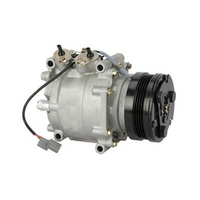
Shop the Parts Behind P1620
Below are the parts most often responsible for code P1620, ranked by how frequently each one is the actual culprit (per the diagnosis above). Tap any to see what we have for your vehicle.




The information in this article is provided for general reference and educational purposes only. Vehicle specifications, procedures, and part compatibility can vary by production date, trim level, and region. Always consult your vehicle's factory service manual and verify part numbers before purchasing or performing repairs. Safety-critical components such as airbags, seat belts, and braking systems should be installed by a qualified professional.
- 🧭 Diagnostic Flowchart
- 🛍️ Shop This Part
- What Does P1620 Mean?
- Can I Drive With P1620?
- Common Causes
- Symptoms
- Common Fixes & Costs
- Used vs. New Parts: Buying Guide
- What Happens If You Wait — Timeline
- Cost of Not Fixing It
- Diagnosis Steps
- When This Code Triggers (Freeze-Frame Conditions)
- Related Codes
- Climate & Environmental Factors
- How to Talk to a Mechanic About This Code
- Where to Take It: Dealer vs Independent vs Chain
- When to Walk Away From the Repair
- What Scan Tool You Need for This Code
- How to Clear the Code After You Fix It
- Will This Fail Emissions / State Inspection?
- Most Commonly Affected Vehicles
- Manufacturer-Specific Notes
- Real Owner Stories
- 2000 Saturn SL2 with ~150K miles
- 2003 BMW Z4 3.0i
- 1999 Ford Ranger with intermittent no-start
- How to Prevent This Code From Triggering
- Frequently Asked Questions
- Can I just clear the P1620 code and keep driving?
- My temperature gauge is normal. Can my thermostat still be bad?
- My coolant is full on my GM/Saturn but the P1620 code is on. What's next?
- What is 'map cooling' on a BMW?
- Can a bad battery cause a P1620 code?
- Can I clean my Volvo ETM to fix P1620?
- I have a C1620 or B1620 code, is that the same as P1620?
- How much does it cost to diagnose a P1620 code?
- Key Takeaways
- 🎟️ Get 5% Off