

OBD-II Code P1621: Control Module Memory Problem / Immobilizer Mismatch
What P1621 means, why it triggers, and the exact steps to fix it
- Diagnose P1621 based on your specific vehicle brand, as it means a failed Transmission Control Module (TCM) on 2007-2014 GM vehicles, but indicates a mismatched immobilizer key on Ford and Mazda models.
- Test your battery and alternator before replacing any modules, because a cranking voltage drop below 9.6V corrupts the module's startup self-test and triggers a false P1621 code.
- Stop driving immediately if your transmission shifts harshly or locks into a single gear, as a failing TCM will destroy internal transmission clutches and turn a $800 module repair into a $4,000 transmission rebuild.
- Budget an extra $150 to $300 for mandatory software programming if you replace an ECM or TCM, because a new module is completely blank and will not start the vehicle until synced with your VIN using dealer-level tools.
What Does P1621 Mean?
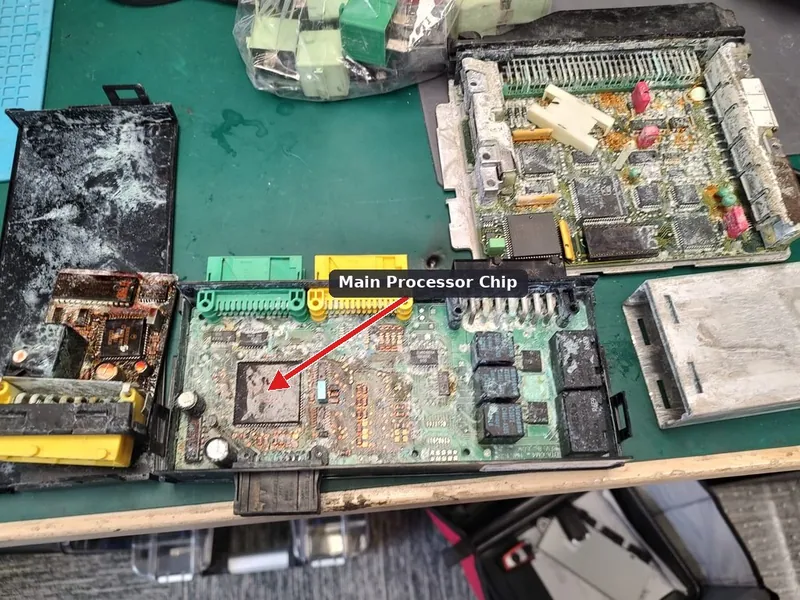
The P1621 code indicates a vehicle control module failed its startup memory self-check, or there is a security mismatch between the immobilizer and the engine computer. Modules like the Engine Control Module (ECM) or TCM test their software (EEPROM) at every startup. When this memory corrupts or fails, P1621 triggers. On specific brands like Ford or Mazda, it strictly means the anti-theft system does not recognize the key.
Technical definition: Control Module Long Term Memory Performance / Immobilizer Code Words Do Not Match. This dual-meaning code indicates either a control module failed an internal self-test of its Electronically Erasable Programmable Read-Only Memory (EEPROM), or the vehicle's immobilizer system security codes do not match the engine control module. The specific meaning depends entirely on the vehicle manufacturer.
Can I Drive With P1621?
Yes, But With Caution. You can drive the vehicle, but it will likely stall, shift erratically, or enter a reduced power 'limp mode'. Continued driving is unsafe and risks severe mechanical damage. A faulty Transmission Control Module (TCM) causes harsh shifting that destroys internal transmission components, easily turning a $800 module replacement into a $4,000 transmission rebuild.
Common Causes

- Internal Control Module Failure (TCM or ECM/PCM) (Very Common) — An internal failure of the Transmission Control Module (TCM) or Engine Control Module (ECM/PCM) is the primary cause. Constant heat cycles and vibration degrade the internal memory chip, especially for TCMs located inside the hot transmission housing.
- Low Battery Voltage or Charging System Problems (Common) — A weak battery or failing alternator causes voltage drops during startup. This interrupts the module's self-test and corrupts its memory, triggering a false P1621 code.
- Immobilizer System Fault (Ford/Mazda/Subaru) (Common) — On specific brands, this code strictly means the security code in the key's transponder does not match the engine computer. A damaged key, faulty immobilizer antenna, or communication line error causes this.
- Poor Power or Ground Connections to the Module (Common) — Corroded ground straps or damaged wiring providing power to the ECM/TCM interrupt the module's keep-alive memory. This causes intermittent faults that mimic a dead module.
- Failed or Interrupted Software Update (Less Common) — If a software update (reflash) is interrupted by a voltage drop or tool failure, it corrupts the module's memory and permanently sets this code.
- Shorted Oxygen (O2) Sensor Circuit (Dodge/Ram) (Rare) — On 5.7L Hemi models, a short-to-ground in an O2 sensor's signal wire bleeds voltage into the return circuit. The ECM misinterprets this as an internal memory problem.
Symptoms

- Check Engine Light is On — The Malfunction Indicator Lamp (MIL) illuminates immediately. A transmission-specific warning message may also appear on the dash.
- Security Light Flashing — If the code relates to the immobilizer, the dashboard security light flashes rapidly while cranking, and the engine will not fire.
- Loss of Stored Electronic Settings — Radio presets, the clock, and seat memory positions reset to factory defaults every time you start the vehicle due to ECM memory corruption.
- Poor Transmission Performance (Limp Mode) (also visible on scanner) — The vehicle shifts harshly, delays engagement, or locks into a single gear (limp mode). The gear indicator (PRNDL) often goes blank.
- Engine Stalling or No-Start Condition (also visible on scanner) — The engine cuts out while driving or fails to start entirely. A no-start is guaranteed if the immobilizer system is the root cause.
Diagnostic Flowchart

Tap your situation to follow the diagnostic path that matches what you're seeing on this code.
Common Fixes & Costs
- Replace and Program Transmission Control Module (TCM/TEHCM) — Parts: $300-$600, Labor: $400-$900, ~3.0-6.0 hr book time (Professional)
- Replace and Program Engine Control Module (ECM/PCM) — Parts: $250-$800, Labor: $150-$400, ~1.0-2.5 hr book time (Professional)
- Replace Battery and Clean Terminals — Parts: $150-$300, Labor: $50-$100, ~0.5-1.0 hr book time (DIY)
- Repair Damaged Wiring or Ground Connection — Parts: $10-$50, Labor: $150-$450, ~1.0-3.0 hr book time (Intermediate)
- Reprogram or Replace Key Fob (Immobilizer) — Parts: $50-$250, Labor: $100-$200, ~0.5-1.0 hr book time (Professional)
- Replace Fuel Cut-Off Valve (Hyundai/Kia Specific) — Parts: $20-$80, Labor: $100-$250, ~0.8-1.5 hr book time (Intermediate)
Used vs. New Parts: Buying Guide
When a used part is worth it: For older vehicles where a new module exceeds the car's value. A used module is cost-effective only if you have a confirmed shop willing to reprogram it.
Donor-vehicle mileage cap: roughly under 80000 miles for the part to have meaningful remaining life.
Donor quality checklist:
- Verify the part number matches exactly.
- Ensure the donor vehicle was not scrapped due to transmission issues.
Decision logic:
- If The module requires programming (most modern TCMs/ECMs) → Buy a new or remanufactured unit. Many shops refuse to program used modules because the process frequently fails.
- If The vehicle is less than 10 years old → Favor a remanufactured part with a warranty. The risk of a used part failing and requiring repeat labor outweighs the initial savings.
Warranty tradeoff: Used parts offer a 30-day warranty that excludes labor. Remanufactured modules include 1-year warranties. New OEM parts carry 2-year warranties.
Worst-case if a used part fails: $500-1500 if a used module fails, requiring a second module purchase plus repeat labor and programming fees.
What Happens If You Wait — Timeline
- 0-1 month: Check Engine Light illuminates. You experience occasional harsh shifts, slight hesitation, or intermittent limp mode engagement. (MPG impact: 3-5%% · Added cost: $20-50 in wasted fuel.)
- 1-4 months: Shifting becomes consistently violent. The vehicle frequently locks into 3rd gear (limp mode), making highway driving unsafe. Transmission temperatures rise due to slipping. (MPG impact: 10-15%% · Added cost: $100-250 in wasted fuel and thermal stress on transmission fluid.)
- 4-8 months: Constant harsh shifting causes mechanical damage. Internal transmission clutch packs wear excessively from slamming into gear. Burnt transmission fluid smell is noticeable. (MPG impact: 15-25%% · Added cost: $1,500 - $4,000 as the repair now requires a partial or full transmission rebuild.)
- 8+ months: Catastrophic failure. The TCM dies completely, resulting in a no-start or no-shift condition. Internal transmission components fail entirely, requiring a tow. (MPG impact: N/A (Vehicle is undrivable)% · Added cost: $4,000 - $7,000 for a complete transmission replacement.)
Cost of Not Fixing It
- 0-1 month: Erratic shifting, stalling, and decreased fuel economy. The vehicle enters 'limp mode' randomly, creating a safety hazard in traffic. (Added cost: Negligible, besides increased fuel consumption.)
- 1-6 months: Incorrect gear commands from a faulty TCM cause excessive wear on clutches and bands inside the transmission. (Added cost: $1,500 - $4,000 for transmission component repair or a full rebuild.)
- 6+ months: Catastrophic transmission failure. The module dies completely, leaving the vehicle stranded with a no-start or no-shift condition.
Diagnosis Steps
- Check the Battery and Charging System First
Ensure the battery is fully charged (12.4-12.8V engine off) and the alternator outputs 13.5-14.8V. A cranking voltage below 9.6V corrupts module self-tests and causes false P1621 codes. Clean all battery terminal corrosion.
Tools: Multimeter, Battery Terminal Cleaner (Beginner) - Read All Codes from All Modules
Scan the ECM, TCM, BCM, and immobilizer module. P0700 indicates a TCM fault, U-codes indicate communication loss, and P06xx codes confirm internal module hardware failure.
Tools: Advanced OBD-II Scanner (Beginner) - Inspect Module Wiring, Connectors, and Fuses
Visually inspect the ECM and TCM wiring harnesses. Look for chafed wires, water intrusion, or bent pins. Verify all ECM/TCM and immobilizer fuses are intact.
Tools: Flashlight, Inspection Mirror, Multimeter (Intermediate) - Test Immobilizer System (If Applicable)
For Ford, Mazda, or Subaru, try starting the vehicle with a known-good spare key. If the car starts, the original key's transponder chip is dead. If the theft light flashes rapidly with both keys, the immobilizer transceiver ring is faulty.
Tools: Second Vehicle Key (Beginner) - Perform a Voltage Drop Test on Ground Circuits
Set a multimeter to a low DC Volts scale. Connect the red lead to the module's ground pin and the black lead to the negative battery terminal. With the ignition on, the reading must be under 0.1 volts (100mV). Higher readings confirm a bad ground.
Tools: Multimeter, Back-Probes, Wiring Diagram (Advanced) - Check CAN Bus Network Integrity
With the battery disconnected, measure resistance between CAN High and CAN Low at the OBD-II port (pins 6 and 14). A healthy network reads 60 ohms. A 120-ohm reading means a module is offline; 0 ohms indicates a short circuit.
Tools: Multimeter, Wiring Diagram (Advanced) - Analyze Live Data for O2 Sensor Variant (Dodge/Ram)
On 5.7L models, view O2 sensor live data. With the engine running, watch the 'Bias Voltage' PIDs. If a return circuit is shorted, all four sensor bias voltages drop and cycle between 0V and 1V, confirming a wiring fault, not a bad PCM.
Tools: Advanced OBD-II Scanner with Live Data (Advanced) - Attempt a Software Reflash
Before replacing a module, have a professional shop reflash it with the latest OEM software. If the reflash fails or the code returns immediately, the module hardware is permanently dead.
Tools: J2534 Pass-Thru Device, OEM Software Subscription (Professional) - Confirm and Replace the Faulty Module
If all wiring and voltage tests pass, the module has an internal hardware failure. Replace the specific module (ECM or TCM) and program it to the vehicle's VIN using OEM software.
Tools: Professional Scan Tool, OEM Service Information (Professional)
When This Code Triggers (Freeze-Frame Conditions)
- Fault Trigger: Key On / Engine Start (The code sets immediately at startup when the module performs its internal memory self-test.)
- Battery Voltage: < 11.8V or > 13.5V (The fault logs during a low voltage condition at startup or an over-voltage spike while running.)
Related Codes
- P0601 — P0601 flags a failure of the module's program integrity check (checksum). P1621 targets long-term memory (EEPROM). Seeing them together confirms the module is dead.
- P0700 — A generic 'Transmission Control System Malfunction' code. The ECM sets this to illuminate the check engine light when the TCM stores a fault like P1621.
- U0100 / U0101 — These indicate 'Lost Communication With ECM/TCM'. If seen with P1621, the module has failed completely and dropped off the network.
Climate & Environmental Factors
- High Heat: Sustained high temperatures break down solder joints and internal memory chips, causing TCMs located inside the transmission housing to fail.
- Humidity and Moisture: Moisture seeps into module connectors, causing pin corrosion. This creates unwanted resistance that triggers memory and communication faults.
- Vibration: Constant engine vibration weakens circuit board solder connections over time, causing intermittent memory component failure.
How to Talk to a Mechanic About This Code
Say this: "I have a P1621 code on my vehicle. Before condemning any control modules, please verify the battery cranking voltage, check for OEM software updates, and test the main power and ground connections to the TCM and ECM."
This directs the technician to follow a logical diagnostic path instead of immediately jumping to a $1,000 module replacement.
Avoid saying:
- 'The code is P1621, just replace the computer.'
- 'My car is shifting funny, do whatever it takes to fix it.'
Questions to ask before authorizing the repair:
- Did you confirm which module stored the P1621 code? Was it the ECM or the TCM?
- Did you test the power and ground lines at the module's connector?
- Does the quoted price include the necessary programming for the new module?
Where to Take It: Dealer vs Independent vs Chain
- Dealer:
Recommended. The dealer has guaranteed access to the programming tools required for P1621 repairs.
Best for: Cases requiring a manufacturer-specific software reflash (Dodge/Ram), Complex immobilizer system issues (Ford, Mazda, Subaru)
Downsides: Highest labor rates, Quick to replace modules rather than perform wiring diagnostics. (Typical cost: +50% vs. baseline) - Independent Shop:
Good fit, provided they explicitly state they have J2534 module programming capabilities.
Best for: Out-of-warranty vehicles with known issues (GM TEHCM failure), Diagnosing wiring or ground faults
Downsides: May lack OEM-level programming tools. You must verify they can program new modules. (Typical cost: +0% vs. baseline) - Chain Shop:
AVOID for the full repair. They lack the tools to correctly diagnose and fix a P1621.
Best for: Confirming the code and testing the battery.
Downsides: Lack advanced diagnostic training for complex electronic faults., Cannot program new ECMs or TCMs. (Typical cost: -10% vs. baseline)
When to Walk Away From the Repair
If the estimated repair cost exceeds 40-50% of your car's private-party value, consider selling the vehicle.
- Car worth $4000, fix is $2000: Walk away. The repair cost is 50% of the car's value.
- Car worth $12000, fix is $1500: Fix it. The repair is 12.5% of the car's value.
What Scan Tool You Need for This Code
Minimum: A scanner that reads manufacturer-specific codes from the Transmission Control Module (TCM) and Body Control Module (BCM).
A basic $20 reader only shows a generic P0700 code. It cannot read the specific P1621 code stored in the TCM.
Budget: BlueDriver Pro Scan Tool (~$100) — Connects to your smartphone to read codes from all modules (ECM, TCM) and view freeze-frame data.
Mid-range: Foxwell NT510 Elite (~$180) — Provides access to manufacturer-specific codes and performs system resets for one chosen vehicle brand.
Professional: Autel MaxiCOM MK808S (~$450) — Reads all modules on all makes and performs active tests. Essential for confirming a module is dead before replacement.
Rent vs buy: Auto parts stores scan codes for free, but their scanners often miss TCM codes. Buying a tool like the BlueDriver is mandatory for accurate DIY diagnosis.
How to Clear the Code After You Fix It
- Reconnect the battery if disconnected for repair.
- Use an OBD-II scan tool to perform a 'Clear Codes' function.
- For GM vehicles, perform a 'Transmission Adaptive Values Learn' with a professional scan tool after TCM replacement.
- For Ford PATS issues, execute the specific key programming procedure.
Drive cycle (~20 minutes): Cold start (engine temp below 122°F), idle for 3 minutes with A/C on. Accelerate to 55 mph and hold steady for 5 minutes. Coast down to 20 mph without braking. Accelerate to 60 mph and hold for 5 minutes. Coast to a stop.
Readiness monitors affected: Catalyst (CAT), Evaporative System (EVAP), Oxygen (O2) Sensor
Watch out for:
- Disconnecting the battery clears the code but resets all readiness monitors to 'Not Ready', causing an automatic emissions failure.
- Failing to perform the relearn procedure after replacing a TCM leaves the vehicle with persistent shifting problems.
Will This Fail Emissions / State Inspection?
Yes — this code typically fails an OBD-II emissions inspection.
- California: An active Check Engine Light results in an automatic failure. All required readiness monitors must be 'Ready' after repair.
- Texas: An illuminated Check Engine Light is an automatic failure. Clearing the code right before the test results in a 'Not Ready' failure.
Most Commonly Affected Vehicles
- Saturn VUE / Aura / Outlook (2007-2010) — The TCM/TEHCM inside the 6T70/6T75 transmission fails constantly due to heat. TSB #PIP4653E addresses this.
- Chevrolet Equinox / Silverado / Suburban / Traverse (2007-2014) — Caused by a failing TCM. On 6-speed models, the TCM is inside the transmission pan; on 4-speed models, the ECM controls the transmission.
- GMC Acadia / Sierra / Yukon (2007-2014) — Shares platforms with Chevrolet where TCM/TEHCM failure inside the 6-speed transmission triggers P1621 and U0101.
- Pontiac Torrent / G6 (2007-2009) — P1621 almost always points to an internal failure of the TCM for the 6-speed automatic.
- Ford Focus / Mustang / Ranger (2000-2011) — P1621 means 'Immobilizer Code Words Do Not Match', pointing to a PATS anti-theft system failure, not a memory module issue.
- Hyundai / Kia Accent / Elantra / Sonata (2005-2015) — The definition points to a 'Fuel Cut Off Valve Malfunction' or an 'A/C Compressor Clutch Relay' circuit fault.
- Isuzu D-MAX / NPR (2005-2015) — Relates to an EEPROM error within the ECM, corresponding to flash code 54.
- Subaru Impreza / Forester / Outback (2005-2014) — Indicates an immobilizer system error, often 'Immobilizer communication line error'.
Manufacturer-Specific Notes
- General Motors (GM): P1621 points directly to a 'Control Module Long Term Memory Performance' failure, almost always in the Transmission Control Module (TCM/TEHCM).
- Ford / Mazda: P1621 strictly means 'Immobilizer Code Words Do Not Match', pointing to an issue with the PATS anti-theft system.
- Hyundai / Kia: The definition means 'Fuel Cut-off Solenoid Valve Malfunction' or 'A/C Compressor Clutch Relay Circuit Failure'.
- Dodge / Ram / Jeep: On 5.7L Hemi models, P1621 means 'O2 Sensor Reference Voltage Low'. TSBs #18-052-15 REV A and #18-084-16 address this with a PCM software update.
- Suzuki: Means 'Immobilizer Communication Line Error', caused by wiring issues or a faulty immobilizer module.
Real Owner Stories
2008 GMC Sierra with 6-speed Allison, 'Range Shift Inhibited' message
While driving, the gear indicator disappeared and the truck went into limp mode, displaying 'Range Shift Inhibited'. The scanner showed P1621 and U0101 (Lost Communication with TCM).
What they tried:
- The owner suspected the TCM, checked the ignition switch, and verified all fuses were intact.
Outcome: A faulty high-speed sensor in the transfer case caused the issue. The mismatched speed signals made the system think the transmission was slipping, triggering limp mode and communication codes. Replacing the $48 sensor resolved all symptoms.
Lesson: Even when codes point directly to a major module, the root cause is often a cheaper sensor providing conflicting data. Test inputs before condemning expensive modules.
2003 Silverado 2500HD with aftermarket programmer
After installing a Bully Dog performance programmer, P1621 appeared. The truck's clock, radio presets, and seat memory reset at every startup.
What they tried:
- Resetting the programmer to the stock tune failed to clear the code.
Outcome: Improper fuse removal during the programmer's installation caused the memory corruption. The owner disconnected the positive battery cable and shorted it to the negative terminal for a hard reset, fully draining the modules. This cleared P1621 permanently.
Lesson: Aftermarket tuners corrupt module memory if installed improperly. Always return the vehicle to its stock tune and perform a hard battery reset before assuming the module failed.
2014 Dodge Ram 1500 5.7L Hemi, Check Engine Light on
The Check Engine Light illuminated with only code P1621 present. The truck exhibited no drivability issues.
What they tried:
- A shop reset the code, but it returned. They replaced an O2 sensor, but the code returned again.
Outcome: A known Powertrain Control Module (PCM) software glitch caused the code. A dealer reflash outlined in TSB #18-052-15 REV A permanently solved the problem.
Lesson: For 5.7L Dodge/Ram models, always check for TSBs related to P1621. The cause is usually a software bug requiring a dealer reflash, not a hardware failure.
2012 Chevy Equinox with multiple seemingly unrelated codes
The check engine light illuminated with 12 different codes, including P0030 (O2 Heater), P0443 (EVAP), and P0102 (MAF), alongside P1621.
What they tried:
- The owner replaced the MAF and MAP sensors, which worsened the idle.
Outcome: A shared 5V reference signal from the under-hood fuse box caused the issue. A single blown fuse for that circuit caused all connected components to throw circuit-low codes simultaneously.
Lesson: When a dozen unrelated circuit fault codes appear at once, the root cause is always a shared power fuse, ground connection, or 5V reference circuit.
How to Prevent This Code From Triggering
- Perform Regular Battery and Charging System Checks (Every 6 months) — Voltage spikes from a failing alternator or low voltage from a weak battery corrupt module memory and trigger false codes. Stable voltage protects sensitive electronics.
- Service Transmission Fluid per Manufacturer Schedule (Every 30,000-60,000 miles) — For modules located inside the transmission (TEHCMs), fluid acts as a coolant. Dirty fluid loses cooling properties, causing the module to overheat and fail prematurely.
- Keep Control Modules Cool and Dry (Ongoing) — Heat and moisture destroy electronics. Keeping cowls and drains clear prevents water from corroding ECM connectors, while functional engine cooling reduces thermal stress.
- Inspect and Clean Ground Connections (Every 2-3 years) — Corroded ground straps cause intermittent voltage drops and electrical noise that disrupt module operation. A clean, tight ground is mandatory for vehicle electronics.
Frequently Asked Questions
Can a weak battery really cause the P1621 code?
Yes. A battery providing below 9.6V during cranking prevents a control module from completing its internal self-check, triggering a false P1621. Always test the battery and charging system before replacing expensive modules.
What is the difference between P1621 and P0601?
Both codes indicate internal module failure. P0601 flags a failure of the module's program integrity check (checksum), while P1621 specifically targets long-term memory (EEPROM) degradation. Seeing either code strongly suggests the module requires replacement.
My mechanic wants to replace the whole transmission for a P1621. Is that necessary?
Usually, no. On most vehicles, the TCM or TEHCM is a separate, serviceable component located inside the transmission pan. Replacing the entire transmission is unnecessary unless prolonged driving with the bad module caused secondary mechanical damage.
What is a TEHCM?
TEHCM stands for Transmission Electro-Hydraulic Control Module. It integrates the Transmission Control Module (TCM), valve body, and solenoids into a single unit inside the transmission. This design is highly prone to heat-related failures in 2007-2014 GM 6-speed automatics.
Why does replacing a control module cost so much?
The cost stems from the expensive hardware, labor to access internal transmission modules, and mandatory post-installation programming. A new module is a blank slate that requires specialized dealer-level tools to sync with your vehicle's VIN. Without this programming, the vehicle will not start.
Can I replace a TCM or ECM myself?
Physical replacement is possible for advanced DIYers if the module is accessible. However, the mandatory post-installation programming requires expensive J2534 pass-thru tools and OEM software subscriptions. You must tow the vehicle to a shop for programming after installing the part.
What are the most common misdiagnoses for a P1621 code?
The most common mistake is replacing the Engine Control Module (ECM) when the fault actually lies in the Transmission Control Module (TCM). Mechanics also frequently condemn modules without testing for low battery voltage or corroded ground wires. On Dodge/Ram trucks, a shorted O2 sensor is often misdiagnosed as a dead PCM.
Key Takeaways
- Diagnose P1621 based on your specific vehicle brand, as it means a failed Transmission Control Module (TCM) on 2007-2014 GM vehicles, but indicates a mismatched immobilizer key on Ford and Mazda models.
- Test your battery and alternator before replacing any modules, because a cranking voltage drop below 9.6V corrupts the module's startup self-test and triggers a false P1621 code.
- Stop driving immediately if your transmission shifts harshly or locks into a single gear, as a failing TCM will destroy internal transmission clutches and turn a $800 module repair into a $4,000 transmission rebuild.
- Budget an extra $150 to $300 for mandatory software programming if you replace an ECM or TCM, because a new module is completely blank and will not start the vehicle until synced with your VIN using dealer-level tools.
Helpful Videos



Shop the Parts Behind P1621
Below are the parts most often responsible for code P1621, ranked by how frequently each one is the actual culprit (per the diagnosis above). Tap any to see what we have for your vehicle.
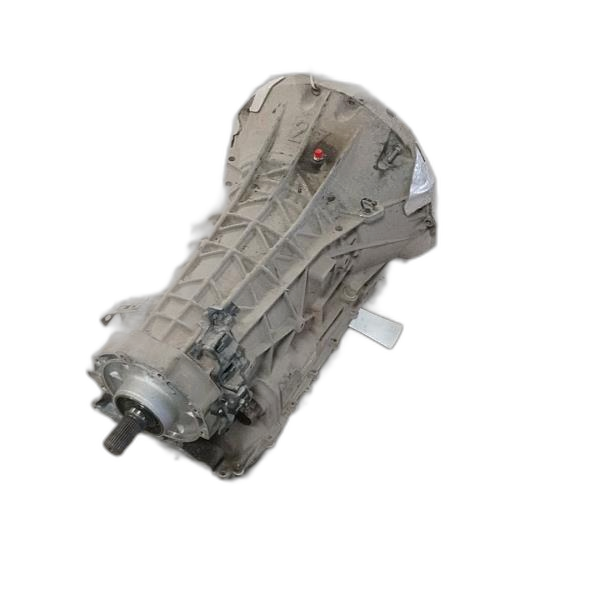
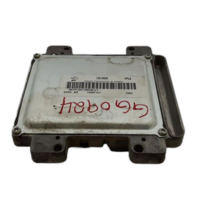

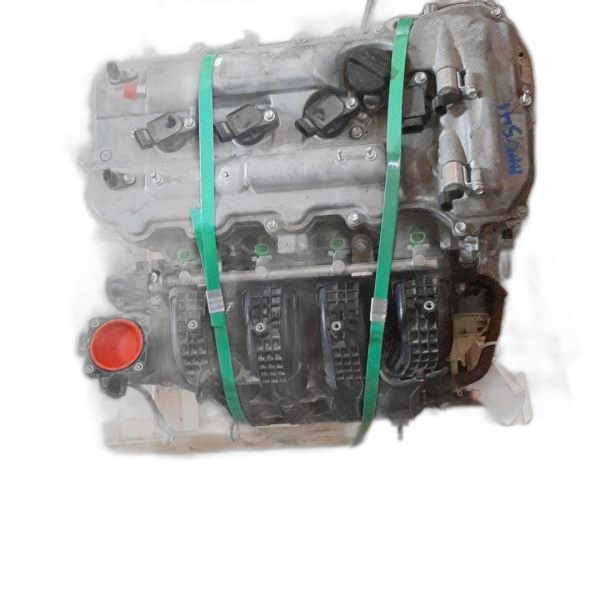


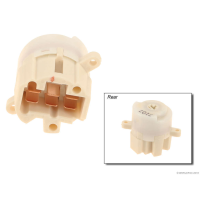







The information in this article is provided for general reference and educational purposes only. Vehicle specifications, procedures, and part compatibility can vary by production date, trim level, and region. Always consult your vehicle's factory service manual and verify part numbers before purchasing or performing repairs. Safety-critical components such as airbags, seat belts, and braking systems should be installed by a qualified professional.
- 🧭 Diagnostic Flowchart
- 🎬 Helpful Videos
- 🛍️ Shop This Part
- What Does P1621 Mean?
- Can I Drive With P1621?
- Common Causes
- Symptoms
- Common Fixes & Costs
- Used vs. New Parts: Buying Guide
- What Happens If You Wait — Timeline
- Cost of Not Fixing It
- Diagnosis Steps
- When This Code Triggers (Freeze-Frame Conditions)
- Related Codes
- Climate & Environmental Factors
- How to Talk to a Mechanic About This Code
- Where to Take It: Dealer vs Independent vs Chain
- When to Walk Away From the Repair
- What Scan Tool You Need for This Code
- How to Clear the Code After You Fix It
- Will This Fail Emissions / State Inspection?
- Most Commonly Affected Vehicles
- Manufacturer-Specific Notes
- Real Owner Stories
- 2008 GMC Sierra with 6-speed Allison, 'Range Shift Inhibited' message
- 2003 Silverado 2500HD with aftermarket programmer
- 2014 Dodge Ram 1500 5.7L Hemi, Check Engine Light on
- 2012 Chevy Equinox with multiple seemingly unrelated codes
- How to Prevent This Code From Triggering
- Frequently Asked Questions
- Can a weak battery really cause the P1621 code?
- What is the difference between P1621 and P0601?
- My mechanic wants to replace the whole transmission for a P1621. Is that necessary?
- What is a TEHCM?
- Why does replacing a control module cost so much?
- Can I replace a TCM or ECM myself?
- What are the most common misdiagnoses for a P1621 code?
- Key Takeaways
- 🎟️ Get 5% Off