

P1621 on 2007-2014 Buick LaCrosse: Control Module Memory Failure Guide
On a 2007-2014 Buick LaCrosse, code P1621 indicates an internal memory failure in a control module, most commonly the Transmission Control Module (TCM). For the 2010-2014 models with the 6T70/6T75 transmission, this module is located inside the transmission itself. The fix almost always requires professional replacement and programming of the TCM, which can cost between $600 and $1,500.
- P1621 on a Buick LaCrosse is a serious code that almost always points to a problem with the Transmission Control Module (TCM).
- This is not a DIY repair. The most common fix is replacing the TCM, which requires expensive, specialized programming tools. On 2010+ models, the TCM is inside the transmission, increasing labor costs.
- Before condemning the TCM, a professional should always verify the battery, charging system, and inspect the module's wiring harness for chafing or damage, as this is a known failure point.
- GM has issued Technical Service Bulletins (TSBs) that directly guide technicians to diagnose the TCM for this code.
What's Unique About the 2007-2014 Buick LACROSSE
On this platform, particularly the second generation (2010-2014) equipped with the 6T70/6T75 automatic transmission, the diagnosis for P1621 is heavily guided by GM's own service bulletins. These bulletins specifically identify the Transmission Control Module (TCM) as the common point of failure. Unlike many other vehicles where the TCM is a separate, externally mounted box, on these LaCrosse models, the TCM is integrated with the valve body and solenoids into a single unit called the Transmission Electro-Hydraulic Control Module (TEHCM), which is located inside the transmission. This internal location makes it more susceptible to heat and vibration, but also makes wiring issues at the main connector a common cause of communication faults.
Diagnostic Flowchart
Tap your situation to follow the diagnostic path that matches what you're seeing on this vehicle.
Generation note: The 2007-2014 range covers two LaCrosse generations (2007-2009 and 2010-2014). TSBs confirm that this control module memory issue is relevant to both generations. The second generation (2010-2014) commonly uses the 6T70/6T75 transmission, where the TCM is an internal component (TEHCM), making the repair more involved than on the earlier models which may have an external module.
Symptoms You May Notice
- Check Engine Light (Malfunction Indicator Lamp) is on
- Transmission may shift harshly or erratically.
- Vehicle may enter 'limp mode' (stuck in a single gear, often second or third).
- Intermittent no-start condition
- Inability to communicate with the Transmission Control Module using a scan tool.
- Traction control light may illuminate.
- Erratic door lock behavior when hitting bumps (indicative of a wiring short).
- Replacing the Powertrain Control Module (PCM) when the fault is in the Transmission Control Module (TCM). It is critical to use a scan tool that can identify which specific module stored the code.
- Replacing the TCM without first inspecting the wiring harness. On these platforms, a chafed harness can mimic the symptoms of a failed TCM, and replacing the module will not fix the issue.
Most Likely Causes
- Internal Transmission Control Module (TCM) Failure 🔴 High Probability → Shop Transmission Assembly This is a documented issue in GM TSBs for this vehicle and transmission family. The internal EEPROM memory fails its integrity check. On 6T70/6T75-equipped models, the TCM is located inside the transmission, where it is exposed to constant heat and vibration, leading to a higher failure rate of its electronic components.
How to confirm: After confirming good power, ground, and wiring to the TCM, and after attempting a software reflash, the code's persistence points to a hardware failure inside the module.
Typical fix: Replace the Transmission Control Module (or TEHCM) and program it to the vehicle.
Est. part cost: $250-$630 - Corrupted TCM Software 🟡 Medium Probability Software glitches can cause memory checksum errors. GM's own diagnostic procedure for this code is to first attempt a reflash before replacing the hardware.
How to confirm: Check for available TCM software updates using a dealership-level scan tool. The code may clear and not return after a successful update.
Typical fix: Reprogram (reflash) the TCM with the latest software calibration from GM.
Est. part cost: $0 (labor only, typically $100-$250) - Poor Power, Ground, or Communication Wiring 🟡 Medium Probability The wiring harness leading to the transmission is known to chafe against the transmission case or other components, causing wires to short out. This can lead to a loss of communication (U0101) and internal fault codes like P1621. Corroded grounds are also a common GM issue.
How to confirm: Visually inspect the wiring harness where it passes over the transmission and connects to the main plug. Check for chafed or broken wires. Use a multimeter to perform a voltage drop test on the TCM's power and ground circuits.
Typical fix: Repair the damaged section of the wiring harness and protect it with loom. Clean or repair the faulty connector pins or ground points. Apply dielectric grease to protect the connection.
Est. part cost: $5-$50
Rare But Worth Checking
- Low System Voltage: A weak or failing battery/alternator can cause various electronic modules to set internal fault codes during startup. Always test the battery and charging system to rule out this simple cause before condemning an expensive module.
Diagnosis Steps
- Connect a professional scan tool capable of reading codes from all vehicle modules.
- Confirm that the P1621 code is stored in the Transmission Control Module (TCM). Note any other P06xx or U-series codes, especially U0101.
- Test the vehicle's battery and charging system to ensure they are operating correctly and providing stable voltage (12.4V+ engine off, 13.7-14.7V engine on).
- Visually inspect the TCM wiring harness, especially where it runs over the top of the transmission, for any signs of chafing, damage, corrosion, or moisture.
- Using a multimeter and wiring diagram, verify that the TCM has proper voltage on its power supply circuits and a solid connection on its ground circuits. Perform a voltage drop test.
- Check for any available software updates for the TCM. If an update is available, perform the reflash procedure as recommended by GM.
- If all wiring, power, and grounds are good and the code returns after a reflash (or if no reflash is available), the TCM is faulty and requires replacement.
Parts You'll Likely Need
- Transmission Control Module (TCM/TEHCM)
(OEM #24256861 (ACDelco, widely used, confirm application))— This is the most common cause of P1621 on this vehicle, as documented in TSBs. The module's internal memory fails, requiring complete replacement. For 2010+ models, this is often an internal TEHCM unit.
Trusted brands: ACDelco / GM Genuine Parts, Dorman (Remanufactured)
OEM price range: $400-$800
Aftermarket price range: $250-$450
Related Codes That Often Appear With This One
- U0101 — This code means 'Lost Communication With TCM' and is a very common companion code, often caused by the same wiring issues or internal TCM failure that triggers P1621.
- P0700 — This is a generic code indicating the TCM has requested the check engine light be turned on. It confirms the fault originates within the transmission control system.
- P0601 — This code means 'Internal Control Module Memory Check Sum Error' and is a direct companion to P1621, indicating a memory integrity failure.
- P062F — This code means 'Internal Control Module EEPROM Error', which is very similar to P1621 and points directly to a failure of the long-term memory chip.
Technical Service Bulletins (TSBs) & Recalls
- PIP4653E: Addresses DTCs P0601, P0603, P0604, P062F, or P1621 stored in the Transmission Control Module (TCM) and advises confirming the code is in the TCM before proceeding with diagnostics.
- 05-06-04-060A: Informs technicians that control module DTCs like P1621 can be shared across multiple modules, stressing the need for accurate diagnosis to pinpoint the faulty module.
Platform-Specific Known Issues
- For the 2010-2014 LaCrosse with the 6T70/6T75 transmission, the TCM is not an easily accessible external module. It is a Transmission Electro-Hydraulic Control Module (TEHCM) located inside the transmission oil pan, attached to the valve body. This location subjects it to significant thermal stress and vibration, which is a leading theory for its high failure rate. Replacement requires draining the transmission fluid and removing the side pan.
- The wiring harness that connects to the TEHCM is a known weak point. It can rub against the transmission case, eventually wearing through the insulation and causing wires to short to each other or to ground. This can cause a loss of communication (U0101) and various TCM fault codes, including P1621.
Mechanic-Grade Diagnostic Values
- TEHCM Shift Solenoid (On/Off type) Resistance — expected: 20-40 Ohms. Failure: Readings outside this range indicate a failed solenoid, requiring TEHCM replacement.
- TEHCM Pressure Control Solenoid (PWM type) Resistance — expected: 3-8 Ohms. Failure: Readings outside this range indicate a failed solenoid, requiring TEHCM replacement.
- CAN Bus Line Voltage (Key On, Engine Off) — expected: CAN High: 2.5-3.5V, CAN Low: 1.5-2.5V. Failure: Voltages outside these ranges suggest a short or open in the communication wiring between modules.
- TEHCM Solenoid Bolt Torque — expected: 106 in-lb (12 Nm). Failure: Incorrect torque can lead to leaks or damage to the valve body or TEHCM.
Hidden / Shadow Codes Worth Checking
- U0101 in other modules after TCM replacement: If a used TEHCM is installed, other modules like the ECM or BCM may log a U0101 code because they have lost communication with the *original* VIN-matched TCM. This indicates a programming mismatch, not necessarily a new wiring fault. (see via Professional scan tool (GM GDS2/Tech2) capable of reading codes from all vehicle modules (ECM, BCM, etc.).)
Scan Tool Commands That Help
- GM GDS2 / Tech2 with TIS2Web subscription: Service Programming System (SPS) — This is required after installing a new or used TEHCM. It programs the module with the correct VIN and vehicle-specific software calibrations. Failure to program will result in a no-start condition or immediate fault codes.
- GM GDS2 / Tech2: Transmission Service Fast Learn — After a successful SPS programming event, this procedure must be run. It allows the newly programmed TEHCM to learn the clutch volume and characteristics of the specific transmission it is installed in. This ensures smooth shifting.
- GM GDS2 / Tech2: Solenoid Cleaning Process — If solenoid performance DTCs are present, this automated function cycles all solenoids to flush out potential debris before condemning the TEHCM.
Wiring & Ground Locations
- G101 / G106 — G101 is located on the lower front of the engine block. It often jumpers to G106, located on the front center of the frame cross rail under the crank pulley.. This is a primary ground point for the Engine Control Module (ECM) and Transmission Control Module (TCM). A loose or corroded connection here can cause low voltage or voltage drops to the TCM, leading to internal memory faults like P1621 and communication loss (U0101).
- G103 — Located on the left frame rail, sometimes under the Starter Generator Control Module bracket on certain models. Also described as being on the cowl above the brake booster.. This ground serves the Body Control Module (BCM), Instrument Panel Cluster (IPC), and the Data Link Connector (DLC). A poor connection here can disrupt network communication and cause a wide array of seemingly unrelated electronic issues, including no-start conditions and module communication loss.
- TEHCM 20-pin Connector (X216) — This is the main round connector on the outside of the transmission case that provides the electrical connection to the internal TEHCM.. This is the single point of failure for all power, ground, and communication to the TCM. The pins must be checked for corrosion, fretting, and proper fitment. A voltage drop test across the power and ground pins at this connector is a critical diagnostic step.
- Harness Chafing Point — The main wiring harness that runs over the top of the transmission and down to the 20-pin connector.. This harness is known to rub against the transmission case or sharp edges of the engine block. Worn insulation can lead to shorts to ground or shorts between wires, causing codes U0101 and P1621, mimicking a failed TEHCM.
Real Owner Repair Stories
- Reddit user @MurderBear5000 (GM Vehicle with U0101 (platform not specified, but behavior is identical to LaCrosse)) — Vehicle would not start, displayed 'Service Stabilitrak' and 'Service Traction Control' messages, gear indicator was blank, and scan tool showed U0101 'Lost Communication with TCM'.
❌ Tried (didn't work) Previously, the owner had spent $2,200 replacing the transmission for the same symptoms, which likely wasn't necessary.
✅ What actually fixed it The positive battery terminal was loose and corroded. Cleaning and tightening the terminal restored power and communication to the TCM, resolving all symptoms and codes. The owner of the repair shop called 30 minutes after drop-off to say it was fixed.
OEM Part Supersession History
24256861→24287420, among others. The history is complex.— GM frequently updates TEHCMs to improve reliability, address solenoid issues, or change internal logic. Later generations often have improved pressure switches and thermal tolerance.
Heads up: Using the wrong part number, even if it physically fits, can result in programming failure or a no-communication condition. The internal circuitry and software structure differ between part numbers. Always verify the correct part number for the specific VIN and transmission broadcast code on the case.
Model Year Variations Within This Range
- 2012-2014: The 2.4L Ecotec engine used in some LaCrosse models is known for potential timing chain and oil consumption issues, which are separate from the transmission problems but are a significant reliability concern for the vehicle as a whole. The 3.6L V6 is generally considered more reliable.
- 2007-2009 vs 2010-2014: The first generation LaCrosse (pre-2010) used different transmissions and may have an externally mounted TCM, making diagnosis and repair different. The second generation (2010+) almost exclusively uses the 6T70/6T75 with the internal TEHCM, which is the primary focus of the P1621 issue on this platform.
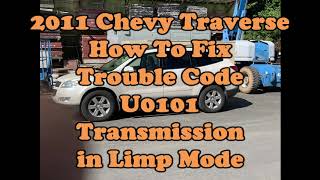
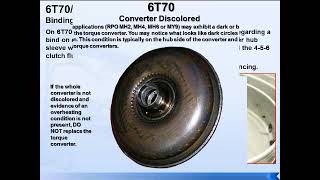
Helpful Videos

We Have This Part in Stock


The information in this article is provided for general reference and educational purposes only. Vehicle specifications, procedures, and part compatibility can vary by production date, trim level, and region. Always consult your vehicle's factory service manual and verify part numbers before purchasing or performing repairs. Safety-critical components such as airbags, seat belts, and braking systems should be installed by a qualified professional.
- Buick LACROSSE:
- 🧭 Diagnostic Flowchart
- 🎬 Helpful Videos
- 🛍️ Shop This Part
- What's Unique About the 2007-2014 Buick LACROSSE
- Symptoms You May Notice
- Most Likely Causes
- Rare But Worth Checking
- Diagnosis Steps
- Parts You'll Likely Need
- Related Codes That Often Appear With This One
- Technical Service Bulletins (TSBs) & Recalls
- Platform-Specific Known Issues
- Mechanic-Grade Diagnostic Values
- Hidden / Shadow Codes Worth Checking
- Scan Tool Commands That Help
- Wiring & Ground Locations
- Real Owner Repair Stories
- OEM Part Supersession History
- Model Year Variations Within This Range
- 🎟️ Get 5% Off