

P1621 on 2007-2011 Buick Lucerne: Control Module Memory Failure Causes and Fixes
On a 2007-2011 Buick Lucerne, code P1621 indicates an internal memory failure in a control module, most often the Transmission Control Module (TCM). This can cause harsh shifting, getting stuck in gear, or a no-start condition. The fix is almost always replacing the faulty module, which requires professional programming and can cost between $700 and $1500.
- P1621 on a Buick Lucerne is a serious code indicating an internal memory failure in a control module.
- The Transmission Control Module (TCM) is the most likely culprit, especially if you are experiencing shifting problems.
- Do not immediately replace the module; first, have a professional test the battery and charging system, as low voltage can sometimes trigger this code falsely.
- This is not a DIY repair. The fix requires specialized tools to diagnose and, most importantly, to program the new module to your vehicle's VIN.
What's Unique About the 2007-2011 Buick LUCERNE
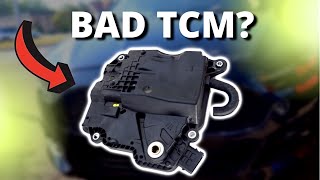
For this generation of GM vehicles, including the Buick Lucerne, the P1621 code is very frequently traced to a failure within the Transmission Control Module (TCM). Lucerne models came with either a 4-speed (4T65-E with V6 engines) or, on V8 models, a 4-speed heavy-duty (4T80-E) automatic transmission. For models with the V6 and 4T65-E, the TCM is a separate module located in the engine compartment. For some other GM platforms of this era using 6-speed transmissions, the TCM is integrated into the valve body inside the transmission pan as a TEHCM (Transmission Electro-Hydraulic Control Module). This internal location subjects the electronics to constant heat and vibration, which is a primary reason for their high failure rate. While the code can point to other modules, the TCM is the most common point of failure when this code appears.
Diagnostic Flowchart
Tap your situation to follow the diagnostic path that matches what you're seeing on this vehicle.
Symptoms You May Notice
- Check Engine Light is illuminated
- Harsh or erratic transmission shifting
- Vehicle gets stuck in one gear (limp mode)
- Transmission may feel like it has shifted to Neutral
- Delayed gear engagement
- Vehicle may stall or fail to start
- Gear position indicator (PRNDL) on the dash may be blank or incorrect
- Replacing transmission solenoids when the code indicates a fault with the module's processor, not the mechanical solenoids it controls.
- Replacing the entire transmission when only the serviceable electronic control module (TCM) has failed.
- Assuming it must be the Engine Control Module (ECM) when on this platform, the Transmission Control Module (TCM) is the more common failure point for P1621.
Most Likely Causes
- Internal Failure of the Transmission Control Module (TCM/TEHCM) 🔴 High Probability → Shop Transmission Assembly On many GM platforms of this era, control modules are a known failure point due to heat and vibration causing the breakdown of internal electronic components and solder joints over time. While the Lucerne's V6 models have an externally mounted TCM, it is still the most common culprit for P1621.
How to confirm: A professional scan tool will show the P1621 code stored in the TCM. If the module is unresponsive (triggering U-codes like U0101) or fails a re-flash attempt after power and grounds are verified, it is condemned.
Typical fix: Replace the Transmission Control Module (TCM). The new module must be professionally programmed to the vehicle using GM's Service Programming System (SPS).
Est. part cost: $300-$800 - Low or Unstable System Voltage 🟡 Medium Probability Control modules require stable voltage to perform self-checks. An aging battery or failing alternator can cause voltage to dip during cranking, leading to a false memory error. Multiple GM TSBs advise checking for voltage issues before condemning a module.
How to confirm: Test the battery with a load tester; it should read above 12.4V at rest. Check the alternator output while the engine is running; it should be between 13.7V and 14.7V.
Typical fix: Replace the weak battery or faulty alternator.
Est. part cost: $150-$500 - Faulty Engine Control Module (ECM) ⚪ Low Probability → Shop Engine Control Module (ECM) While less common for this code on the Lucerne, the ECM can also suffer from internal memory failures. TSB #05-06-04-060A notes that P1621 can be set in any module with this self-diagnostic capability.
How to confirm: If a scan tool shows P1621 is stored in the ECM and not the TCM, and all power/ground circuits to the ECM are good, the ECM is the likely culprit.
Typical fix: Replace the Engine Control Module and have it programmed by a professional.
Est. part cost: $250-$700
Rare But Worth Checking
- Corrupted Software from Aftermarket Tuning: If an aftermarket performance tuner was used, it may have corrupted the module's memory. Reverting to the stock factory tune may resolve the issue, but sometimes the module is permanently damaged ('bricked').
- Poor Connection at Module Connector: Corrosion or a loose pin on the main connector to the TCM or ECM can interrupt power or data, mimicking an internal failure. This should always be checked before replacing an expensive module.
Diagnosis Steps
- Connect a professional OBD-II scanner capable of reading manufacturer-specific codes from all modules. Determine which module (ECM, TCM, etc.) has stored the P1621 code.
- Using a GM-specific tool like a GDS2, check for a two-digit symptom byte. A byte like '37' (Invalid Serial Data Received) further confirms an internal memory checksum failure.
- Check for other codes. The presence of P0700 points toward the TCM, while other P06xx codes reinforce a module failure diagnosis. U-codes like U0101 suggest a complete module failure.
- Test the battery and charging system. Ensure battery voltage is above 12.4V at rest and that the alternator charges correctly (13.7-14.7V). Correct any voltage issues first, clear codes, and see if P1621 returns.
- Inspect the wiring harness and connector for the implicated module (most likely the TCM). Look for any signs of damage, corrosion, or loose pins.
- Using a multimeter, verify the module is receiving proper power and has a solid ground connection according to the vehicle's service manual. The TCM and ECM are grounded at G101 on the lower front of the engine block.
- If power, ground, and wiring are confirmed good, the module itself is faulty. An attempt to reprogram the module with the latest software is a final diagnostic step; if it fails, replacement is necessary.
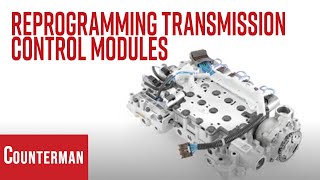
- After installing the new module, it MUST be programmed to the vehicle's VIN using a J2534 pass-thru device and a subscription to GM's Service Programming System (SPS). This step is mandatory and requires a professional. 🎬 Learn more about how professionals reprogram GM transmission control modules.
Parts You'll Likely Need
- Transmission Control Module (TCM/TEHCM)
(OEM #Varies by transmission and year. Examples for similar GM platforms include 24256861, 24252114, and 24275873. Always verify with VIN.)— This is the most common point of failure for code P1621 on this vehicle, often due to internal electronic failure.
Trusted brands: ACDelco, Dorman (Remanufactured), Cardone (Remanufactured)
OEM price range: $450-$800
Aftermarket price range: $300-$600
Related Codes That Often Appear With This One
- P0700 — The ECM sets P0700 to turn on the check engine light whenever the TCM (Transmission Control Module) detects a fault within itself, such as P1621. It is the most common companion code.
- P0601 — This code means 'Internal Control Module Memory Check Sum Error' and is a very similar fault. Seeing it with P1621 strongly confirms an internal module failure.
- U0101 — This code means 'Lost Communication with TCM'. If the module has failed completely, it may stop communicating on the vehicle's data network, triggering this code in other modules. It's a strong indicator of a dead TCM.
- P0603, P0604, P062F — These are all related internal memory error codes (KAM Error, RAM Error, EEPROM Error). Their presence alongside P1621 reinforces the diagnosis of a failed module.
Technical Service Bulletins (TSBs) & Recalls
- 05-06-04-060A: Communicates Information to technicians on control module Diagnostic Trouble Code(s) (DTC)(s) P0601, P0602, P0603, P0604, P0606, P062F, P06F3, P1621 which can be shared in multiple modules. It confirms this is a known type of internal module failure.
Platform-Specific Known Issues
- The provided Technical Service Bulletin (TSB) #05-06-04-060A acknowledges that codes P1621, along with other P06xx codes, can be set in multiple modules and advises technicians on diagnosing these internal memory faults.
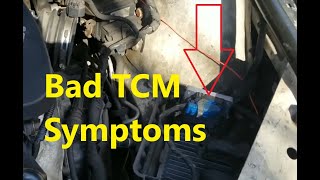
- For Lucerne models with the 4-speed 4T65-E transmission (V6 models), the TCM is a separate component located on the left rear of the engine compartment. V8 models used the heavier-duty 4T80-E transmission.
Mechanic-Grade Diagnostic Values
- Battery Voltage (Key Off) — expected: >12.4 Volts. Failure: Voltage below 12.4V indicates a weak battery that can cause false module codes during startup.
- Charging System Voltage (Engine Running) — expected: 13.7 - 14.7 Volts. Failure: Voltage outside this range indicates a faulty alternator or voltage regulator, which can cause module instability.
Hidden / Shadow Codes Worth Checking
- Symptom Byte '37': Invalid Serial Data Received. This is a sub-code visible on a GM-specific scan tool (like a Tech 2 or GDS2) that strongly points to an internal data corruption or checksum error within the module that set the P1621 code. (see via GM Tech 2 or GDS2 Scan Tool)
Scan Tool Commands That Help
- GDS2 / Tech2: Transmission Adaptive Functions Learn — After replacing the TCM or valve body, this procedure must be run to allow the new module to learn the specific hydraulic characteristics and clutch volumes of the transmission for proper shifting.
Wiring & Ground Locations
- TCM (V6 Models) — Located on the left rear of the engine compartment.. This is the physical location of the most common failing part. Inspecting its connector for corrosion or damage is a key diagnostic step.
- G101 — Located on the lower front of the engine block.. This is a primary ground point for both the Engine Control Module (ECM) and the Transmission Control Module (TCM). A loose or corroded connection here can cause intermittent power loss and trigger false P1621 codes.
- G110 — Located on the left front of the engine.. This is another engine ground strap location. Verifying all engine-to-chassis grounds are clean and tight is critical when diagnosing electronic module faults.
Real Owner Repair Stories
- Chevrolet Forum (2002 Silverado (similar GM electronics)) — P1621 code appeared, clock, radio presets, and seat memory positions kept resetting on startup.
❌ Tried (didn't work) Resetting the computer by disconnecting the battery did not resolve the issue.
✅ What actually fixed it The issue started immediately after installing a Bully Dog aftermarket programmer. The user concluded the programmer corrupted the VCM/PCM's memory. The final fix required either reverting to the stock tune successfully or replacing the damaged control module.
Model Year Variations Within This Range
- 2006-2008: These years used a 197-hp 3.8L V6 engine or a 275-hp 4.6L Northstar V8. Both were paired with a 4-speed automatic (4T65-E for V6, 4T80-E for V8).
- 2009-2011: The base V6 engine was upgraded to a 227-hp 3.9L V6, which was also paired with the 4-speed 4T65-E automatic transmission. The V8 option remained the 4.6L Northstar.
Helpful Videos


We Have This Part in Stock



The information in this article is provided for general reference and educational purposes only. Vehicle specifications, procedures, and part compatibility can vary by production date, trim level, and region. Always consult your vehicle's factory service manual and verify part numbers before purchasing or performing repairs. Safety-critical components such as airbags, seat belts, and braking systems should be installed by a qualified professional.
- Buick LUCERNE:
- 🧭 Diagnostic Flowchart
- 🎬 Helpful Videos
- 🛍️ Shop This Part
- What's Unique About the 2007-2011 Buick LUCERNE
- Symptoms You May Notice
- Most Likely Causes
- Rare But Worth Checking
- Diagnosis Steps
- Parts You'll Likely Need
- Related Codes That Often Appear With This One
- Technical Service Bulletins (TSBs) & Recalls
- Platform-Specific Known Issues
- Mechanic-Grade Diagnostic Values
- Hidden / Shadow Codes Worth Checking
- Scan Tool Commands That Help
- Wiring & Ground Locations
- Real Owner Repair Stories
- Model Year Variations Within This Range
- 🎟️ Get 5% Off