

P1621 on 2011-2015 Buick Regal: TCM Memory Fault Causes and Fixes
P1621 on a 2011-2015 Buick Regal indicates an internal memory error in a control module, most commonly the Transmission Control Module (TCM). This often leads to harsh shifting, getting stuck in one gear (limp mode), or feeling like the car has shifted into neutral. The primary fix is replacing the TCM, which must be programmed to the vehicle. Before replacing the module, it is critical to rule out low system voltage from a weak battery or alternator. The repair can cost between $500 and $2,300.
- P1621 on your Regal almost always points to a problem with the Transmission Control Module (TCM).
- Symptoms are primarily transmission-related, such as harsh shifting, getting stuck in gear, or feeling like it shifts to neutral.
- Before replacing the expensive TCM, always have a professional check the vehicle's battery, alternator, and ground connections first, as low voltage is a known cause.
- This is not a DIY-friendly repair. The fix requires expensive scan tools for diagnosis and programming the new module to your car's VIN.
What's Unique About the 2011-2015 Buick REGAL
On this generation of Buick Regal, which uses a 6-speed automatic transmission (like the 6T40 or 6T45), the P1621 code is specifically called out in General Motors Technical Service Bulletins (TSBs) as a known issue related to the Transmission Control Module (TCM). While on other vehicles this code might point to the main engine computer (ECM/PCM), on the Regal, technicians are directed to investigate the TCM first. The TCM in these transmissions is often a combined module with the valve body (known as a TEHCM - Transmission Electro-Hydraulic Control Module), located inside the transmission case, where it is subjected to constant heat and vibration, likely contributing to a higher failure rate.
Diagnostic Flowchart
Tap your situation to follow the diagnostic path that matches what you're seeing on this vehicle.
Symptoms You May Notice
- Check Engine Light is illuminated
- Harsh, erratic, or delayed gear shifts
- Transmission gets stuck in one gear (limp mode), often 3rd gear
- Vehicle unexpectedly shifts into neutral while driving, with high revs but no movement
- Poor or hesitant acceleration
- Noticeable decrease in fuel economy
- Inability to communicate with the TCM using a scan tool (may be accompanied by U-codes)
- Replacing transmission shift solenoids or speed sensors when no other codes for those components are present.
- Replacing the Engine Control Module (ECM) when the fault is actually in the Transmission Control Module (TCM), as specified in TSBs for this vehicle.
- Condemning the entire transmission when only the TCM has failed. One owner of a platform-mate (Chevy Malibu) was quoted over $5,000 for a transmission when the likely issue was the $2,300 TCM.
Most Likely Causes
- Internal Transmission Control Module (TCM) Failure 🔴 High Probability → Shop Transmission Assembly As highlighted by TSBs #PIP4653E and #05-06-04-060A, the TCM is a known point of failure. Its location inside the transmission leads to heat cycles and vibrations that can cause internal components, like solder joints on the processor or the memory chip (EEPROM), to fail.
How to confirm: A professional scan tool is needed to confirm the code is stored in the TCM. If all power and ground circuits to the TCM test good, and a software reflash fails or is not possible, the module is condemned. In some cases, the TCM will fail to communicate at all.
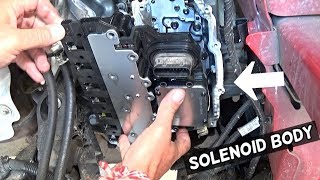
Typical fix: Replace the Transmission Control Module (or the entire TEHCM unit) 🎬 Watch: This walkthrough shows how to remove and replace the TEHCM. and program the new unit to the vehicle using GM's Service Programming System (SPS).
Est. part cost: $300-$1000 - Low or Unstable System Voltage 🟡 Medium Probability Modern control modules are sensitive to voltage fluctuations. A weak battery or failing alternator can cause memory corruption during startup, triggering a P1621 before the module itself has failed. TSB #05-06-04-060A specifically advises to repair any low voltage conditions before diagnosing memory codes. TSB #16-NA-303 and #18-NA-161 detail specific voltage drop testing procedures for battery cables, which can be a root cause.
How to confirm: Test the battery's state of charge and cranking amps using a GR8 tester. With the engine running, test the alternator output voltage at the battery terminals. It should be stable, typically between 13.5 and 14.5 volts. Perform a loaded voltage drop test on the positive and negative battery cables as per TSB #18-NA-161; voltage drop should not exceed 100 mV on the positive side or 200 mV on the negative side while cranking.
Typical fix: Replace the weak battery or failing alternator. Replace faulty battery cables that show excessive voltage drop. Ensure all battery terminals and ground connections are clean and tight, torqued to 7 Nm (62 lb-in).
Est. part cost: $150-$400 - Corrupted TCM Software ⚪ Low Probability Software glitches can occur, or a previous programming event may have been interrupted or completed incorrectly. Repair services often re-flash modules with the latest GM software as part of a repair.
How to confirm: This is a diagnosis of exclusion. If the module's hardware and electrical inputs are good, a software issue is likely. A shop with GM programming tools can attempt a reflash.
Typical fix: Reprogram ('reflash') the TCM with the latest software from GM using their Service Programming System (SPS). This must be done by a dealer or a properly equipped independent shop.
Est. part cost: $0 (if part of another repair) - $200 (as a standalone service)
Rare But Worth Checking
- Poor Ground Connection to the TCM or Fuse Block: A corroded or loose ground wire for the TCM can cause intermittent and bizarre electrical issues, including memory faults. Key ground points are often on the transmission bellhousing and firewall. On some GM platforms, ground G101, located on the lower front of the engine block, provides the ground for the TCM. A poor internal connection in the under-hood fuse block has also been found to cause intermittent power loss to the TCM, leading to communication codes.
- Failed Aftermarket Tune: If the vehicle has an aftermarket engine or transmission tune (e.g., from Bully Dog), it can cause this code if not installed correctly or if the software is incompatible. Restoring the factory programming improperly can also corrupt the module.
- Chafed Wiring Harness: On platform mates like the GMC Acadia and Chevy Traverse, a known issue is the wiring harness rubbing against the chassis or other components near the TCM connector, leading to broken wires, corrosion, and loss of communication. This is a worthwhile inspection point.
Diagnosis Steps
- Scan for Codes: Use a professional-grade scan tool to confirm P1621 is present and check which module stored it (ECM or TCM). Note any other codes, especially P0700 or U-codes.
- Check Battery and Charging System: This is a critical first step. Verify the battery is fully charged (above 12.4V engine off) and the alternator output is stable (13.5-14.5V engine on). A low voltage condition can trigger this code. Perform a loaded voltage drop test on battery cables per TSB #18-NA-161.
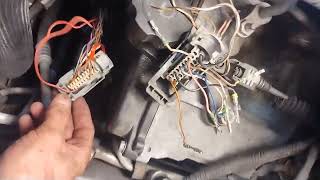
- Inspect Power and Grounds: Visually inspect the battery terminals, main engine/chassis grounds, and the wiring harness connector at the TCM for corrosion 🎬 Watch: Here is the correct way to unplug the TCM connector., damage, or looseness. Check grounds at the transmission bellhousing and firewall. Specifically check ground G101 on the engine block if applicable to your engine.
- Verify TCM Power and Ground: Using a multimeter and wiring diagram, confirm the TCM is receiving proper battery voltage and has a solid ground connection at its connector pins. A voltage drop test on the ground circuit should show less than 0.1-0.3 volts. Wiggle the harness and tap on the fuse block to check for intermittent connections.
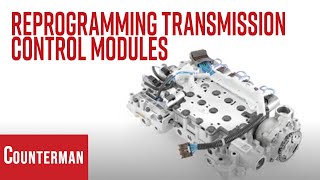
- Attempt Reprogramming: If all electrical inputs are good, attempt to reflash the TCM with the latest GM software 🎬 See how a professional technician handles the module reprogramming process. using the Service Programming System (SPS). If the procedure completes successfully, clear codes and test drive. This can fix software corruption.
- Replace TCM: If reprogramming fails, the code returns immediately, or the module will not communicate, the TCM has an internal hardware fault and must be replaced. The new module must be programmed to the vehicle.
Parts You'll Likely Need
- Transmission Control Module (TCM/TEHCM)
(OEM #ACDelco 24256525 (or superseding numbers like 24275860, 24287420))— This is the most common cause of P1621 on this vehicle. The internal memory fails, requiring module replacement. It is often integrated with the valve body solenoids inside the transmission.
Trusted brands: ACDelco (GM Genuine Parts), Dorman (Remanufactured), Sonnax (Remanufactured)
OEM price range: $500-$1000
Aftermarket price range: $300-$650
Related Codes That Often Appear With This One
- P0601 — This code means 'Internal Control Module Memory Check Sum Error' and is a very similar fault. TSB #05-06-04-060A and #PIP4653E list it alongside P1621 as a common related code.
- P0700 — This is a generic code that means 'Transmission Control System Malfunction'. It is set by the ECM to turn on the check engine light when the TCM has stored a specific fault code, like P1621.
- U0101 — This code means 'Lost Communication With TCM'. It often appears when the TCM has failed completely, has lost power/ground due to a wiring issue, or there is a problem on the CAN bus network.
Technical Service Bulletins (TSBs) & Recalls
- PIP4653E: Mentions that DTCs P0601, P0603, P0604, P062F or P1621 may be stored in the Transmission Control Module and directs technicians to confirm the code is set in the TCM.
- 05-06-04-060A: Communicates that DTCs including P1621 can be shared in multiple modules and are not specific to one controller. It crucially advises technicians to check for and repair any low voltage conditions *before* proceeding with module diagnostics.
Platform-Specific Known Issues
- Owner Experience: Sudden 'Neutral' Condition: An owner on a Reddit forum described an issue with their 2011 Regal where, after driving for a couple of miles, the transmission would act as if it shifted into neutral. The engine would rev high, but the car would not move forward or in reverse. Turning the car off and restarting it would temporarily resolve the issue for another mile or two before it reoccurred. This is a classic symptom of an intermittent TCM failure.
- Repair Story: TCM:
Mechanic-Grade Diagnostic Values
- Positive Battery Cable Voltage Drop (under load) — expected: < 100 mV. Failure: Voltage drop above 100 mV indicates high resistance.
- Negative Battery Cable Voltage Drop (under load) — expected: < 200 mV. Failure: Voltage drop above 200 mV indicates high resistance.
- ECM/TCM Ground Circuit Voltage Drop (Key-On-Engine-Off) — expected: < 0.1 V. Failure: A reading greater than 0.3V is unacceptable and indicates a faulty ground circuit or corrosion.
- Battery Cable Clamp Nut Torque — expected: 7 Nm (62 lb-in). Failure: Loose clamps can cause intermittent voltage issues.
Scan Tool Commands That Help
- GM GDS2 / Techline Connect: Service Programming System (SPS/SPS2) — This function is required to program a new or replacement TCM. The process involves selecting 'Replace and Program ECU', connecting to the vehicle, and downloading the correct calibration file from GM's servers based on the VIN.
- GM GDS2 / Techline Connect: Transmission Adaptive Pressure Reset — After a new TCM is programmed or if shift quality issues are present, this function resets the learned shift adapts, forcing the module to relearn clutch apply pressures.
- Professional Scan Tool: Solenoid Cleaning Procedure — For issues related to solenoid performance codes that might accompany P1621, this automated process cycles the solenoids while the system is pressurized to dislodge debris. This should be attempted before condemning the TEHCM for solenoid-specific faults.
Wiring & Ground Locations
- G101 — Located at the lower front of the engine, on the engine block.. On some GM platforms, this ground point serves the Engine Control Module (ECM) and the Transmission Control Module (TCM). A poor connection here can cause communication errors and memory faults like P1621.
- G103 — Located at the left rear of the engine compartment on the cowl, above the brake booster.. This is a major ground point for the Body Control Module (BCM) and the Data Link Connector (DLC). A fault here can cause widespread communication issues across the vehicle's network.
- TCM Main Connector — The TEHCM connector is located on the outside of the transmission case, where the main harness connects to the internal control module.. This is the primary connection for all power, ground, and data lines to the TCM. Verifying power and ground at the pins of this connector is a critical diagnostic step. The high-speed GMLAN data lines are essential for communication.
Real Owner Repair Stories
- YouTube user 'Conquryourfear & Do It Urself' (GM Vehicle (model not specified) with 6T-series transmission) — No communication between ECM and TCM, causing the transmission to start in 3rd gear (limp mode).
❌ Tried (didn't work) A professional shop diagnosed it as a bad TCM and/or ECM, quoting a high replacement cost.
✅ What actually fixed it The owner discovered a lack of ground to the TCM and ECM. He fixed it by running a new ground wire from the negative battery terminal directly to the mounting bolts of both the TCM and ECM, restoring communication and normal transmission function. - Chevrolet Forum user 'treetop' (2002 Chevy Silverado (different platform, but same code definition)) — P1621 code appeared, clock resets on startup, radio and seat memory positions are lost.
❌ Tried (didn't work) Resetting the aftermarket programmer back to the stock tune did not resolve the issue after the fault occurred.
✅ What actually fixed it The issue was directly attributed to installing a Bully Dog aftermarket programmer without following the correct procedure (which involved removing specific fuses first). The improper flash corrupted the VCM/PCM's long-term memory (EEPROM), causing the P1621 code. The final fix required replacing the vehicle's computer.
OEM Part Supersession History
24256525→24275860, 24287420, 24287421, 24041956— Part has been updated and revised multiple times by GM to improve reliability and address failure points.
Heads up: The most critical change is between Gen 1 and Gen 2 TEHCMs. A Gen 1 TEHCM can be identified by a letter as the 8th digit on the module's cover, while a Gen 2 has a number. They are not interchangeable without significant issues. The main split occurred around mid-2012 production.
Model Year Variations Within This Range
- 2011-mid 2012: These models use the 'Gen 1' TEHCM. They are known to have issues with a break-prone 3-5-Reverse wave plate, which was later updated. The TEHCM itself is a different generation from later models and parts are not directly interchangeable.
- mid 2012-2015: These models use the 'Gen 2' TEHCM. The TEHCM can be identified by a number as the 8th digit on the cover. While still prone to failure, some internal components and valve bodies were revised from the Gen 1 design.
Helpful Videos


We Have This Part in Stock

The information in this article is provided for general reference and educational purposes only. Vehicle specifications, procedures, and part compatibility can vary by production date, trim level, and region. Always consult your vehicle's factory service manual and verify part numbers before purchasing or performing repairs. Safety-critical components such as airbags, seat belts, and braking systems should be installed by a qualified professional.
- Buick REGAL:
- 🧭 Diagnostic Flowchart
- 🎬 Helpful Videos
- 🛍️ Shop This Part
- What's Unique About the 2011-2015 Buick REGAL
- Symptoms You May Notice
- Most Likely Causes
- Rare But Worth Checking
- Diagnosis Steps
- Parts You'll Likely Need
- Related Codes That Often Appear With This One
- Technical Service Bulletins (TSBs) & Recalls
- Platform-Specific Known Issues
- Mechanic-Grade Diagnostic Values
- Scan Tool Commands That Help
- Wiring & Ground Locations
- Real Owner Repair Stories
- OEM Part Supersession History
- Model Year Variations Within This Range
- 🎟️ Get 5% Off