

P1621 on 2012-2015 Buick Verano: Control Module Memory Fault Causes and Fixes
On a 2012-2015 Buick Verano, code P1621 almost always indicates an internal memory performance error in the Transmission Control Module (TCM). This is a very common failure on this platform and its sibling, the Chevrolet Cruze. The most common and definitive fix is replacing the TCM, which is located inside the transmission and requires professional programming. Expect costs to range from $600 to over $1,200.
- P1621 on a 2012-2015 Verano almost always points to a problem with the Transmission Control Module (TCM).
- Symptoms often include a Check Engine Light and erratic or harsh transmission shifting.
- The most likely solution is replacing the TCM, which is not a simple DIY job as it requires professional programming.
- Before replacing the module, a technician should rule out software issues by attempting a reflash, and check for simple wiring or connection problems.
- This code is often accompanied by other P06xx series codes, which further confirms an internal module fault.
What's Unique About the 2012-2015 Buick VERANO
For the 2012-2015 Buick Verano and its platform-mate, the Chevrolet Cruze, the P1621 code is overwhelmingly associated with an internal failure of the Transmission Control Module (TCM). While on other GM vehicles it could point to the main Engine Control Module (ECM) or Body Control Module (BCM), on the Verano, diagnostic efforts should strongly focus on the TCM first, especially if transmission-related symptoms are present. Manufacturer Technical Service Bulletins (TSBs) and countless owner forum posts confirm this vehicle-specific tendency. The TCM itself is a sealed unit combined with solenoids and sensors, mounted inside the transmission, making it a labor-intensive repair.
Diagnostic Flowchart
Tap your situation to follow the diagnostic path that matches what you're seeing on this vehicle.
Symptoms You May Notice
- Check Engine Light (Malfunction Indicator Lamp) is on
- Erratic or harsh automatic transmission shifting, sometimes described as 'clunking' into gear.
- Vehicle enters 'limp mode' with reduced engine power and may be stuck in a single gear (often 2nd or 3rd).
- Failure to shift into certain gears or a complete loss of reverse.
- In some cases, the vehicle may not start or may stall.
- Warning messages on the dash such as 'Service Stabilitrak' or 'Service Traction Control' may appear due to lost communication with the TCM.
- Replacing the Engine Control Module (ECM) when the fault is in the Transmission Control Module (TCM).
- Replacing internal transmission components like solenoids when the issue is purely electronic within the TCM. The TCM and solenoids are often replaced as one unit (TEHCM).
- Assuming an aftermarket tuner caused the issue. While improper programming can cause this code, on this platform it is far more likely to be a hardware failure.
Most Likely Causes
- Internal Failure of the Transmission Control Module (TCM) 🔴 High Probability → Shop Transmission Assembly As cited in TSB #PIP4653E, the TCM is the most common location for this fault code on the Verano. These modules, often called TEHCMs (Transmission Electro-Hydraulic Control Module), are known to fail due to heat cycles and degradation of internal electronics and plastic components. This is a widely documented issue on forums for the Verano and its platform-mate, the Chevy Cruze.
How to confirm: After ruling out power/ground issues to the module, a professional scan tool is used to attempt communication. If the module fails to communicate (often setting a U0101 code in the ECM 🎬 Watch: Diagnosing limp mode and no communication codes) or the P1621 code returns immediately after clearing or a reflash attempt, the TCM is condemned.
Typical fix: Replace the Transmission Control Module (TEHCM). The new module is located inside the transmission side cover and must be programmed to the vehicle's VIN using GM's Service Programming System (SPS).
Est. part cost: $300-$750 - Corrupted TCM Software 🟡 Medium Probability Software glitches can occur, causing the memory checksum test to fail. TSB #05-06-04-060A notes that this code can be set across multiple modules, often pointing to software or communication issues. A reflash is the first logical step before condemning the expensive hardware.
How to confirm: A dealership or qualified shop with a GM MDI or equivalent J2534 pass-thru device can check for available software updates for the TCM. If an update is available, it should be performed.
Typical fix: Reprogram (reflash) the TCM with the latest manufacturer software. This is often attempted before module replacement, though success rates are mixed if the hardware is truly failing.
Est. part cost: $0 - Poor Power or Ground Connection to the Control Module ⚪ Low Probability While less common than outright module failure, loose or corroded connections can cause voltage drops and communication errors that may trigger memory-related codes. The TCM connector harness can chafe against the transmission case or other components, leading to broken wires.
How to confirm: Visually inspect the TCM connectors and wiring harness for damage or corrosion. Use a multimeter to verify stable battery voltage and a solid ground connection at the module's connector pins. A technician may check for voltage on the communication enable circuit (Circuit 5986) as described in GM bulletins.
Typical fix: Clean or repair the affected wiring and connectors. Ensure all ground points are clean and tight. In cases of chafing, repair the wires and protect the harness with loom or tape.
Est. part cost: $5-$50
Diagnosis Steps
- Connect a professional OBD-II scanner and confirm P1621 is present. Note if it is stored in the ECM or TCM. Check for other codes, especially U0101 (Lost Communication with TCM).
- Check for any available Technical Service Bulletins (TSBs) related to P1621 or transmission performance for your specific VIN, such as PIP4653E and 05-06-04-060A.
- Inspect the battery and charging system. Low or unstable voltage can sometimes cause spurious module errors. A simple battery reset (disconnecting the negative terminal for 30 minutes) is a low-effort first step.
- Locate the Transmission Control Module (TCM) connector on the outside of the transmission case. On the Verano, the TCM itself is inside the transmission, but the external harness connector can be inspected.
- Inspect the electrical connector and wiring harness for any signs of corrosion, damage, chafing, or moisture intrusion. Pay close attention to the harness routing near the transmission.
- Using a wiring diagram and multimeter, verify the TCM has proper power (ignition and battery voltage) and ground at the connector pins.
- If wiring is confirmed to be good, the next step is to attempt to reprogram (reflash) the TCM with the latest GM software. This must be done by a professional with the correct equipment (GM MDI or J2534 tool).
- If the reprogramming fails, cannot be initiated due to no-communication, or the code immediately returns, the Transmission Control Module is faulty and must be replaced.
- Install the new TCM/TEHCM assembly, which requires opening the side cover of the transmission. Program the new module to the vehicle's VIN. Clear all codes and perform a test drive to verify the repair. The transmission may need to go through a re-learn procedure, and shifts may feel harsh initially.
Parts You'll Likely Need
- Transmission Control Module (TCM/TEHCM)
(OEM #24256524 (Note: This is a common Gen 1 part number; always verify with VIN. Other numbers include 24268164, 24287425 for Gen 2).)— This is the most common cause of P1621 on the Verano, as confirmed by TSBs and extensive owner reports. The module's internal memory fails, requiring complete replacement. It is sold as an assembly with the solenoids.
Trusted brands: ACDelco (GM Genuine), Dorman (e.g., 609-000, 609-015)
OEM price range: $500-$750
Aftermarket price range: $300-$550
Related Codes That Often Appear With This One
- U0101 — This code means 'Lost Communication With TCM'. It is very common to see this alongside P1621, as the internal TCM fault prevents it from communicating on the CAN bus network.
- P0700 — This is a general 'Transmission Control System Malfunction' code. The TCM requests the ECM to turn on the check engine light by sending this code. It's an umbrella code indicating a more specific fault is stored in the TCM.
- P0601 — This code means 'Internal Control Module Memory Check Sum Error,' which is a very similar and related internal fault. Both are mentioned in TSB #05-06-04-060A and #PIP4653E.
- P0603 — This code indicates 'Internal Control Module Keep Alive Memory (KAM) Error,' another memory-related fault often seen with P1621. It is also listed in TSB #05-06-04-060A and #PIP4653E.
- P0604 — This code for 'Internal Control Module Random Access Memory (RAM) Error' points to a different type of memory failure within the same module. It is also listed in TSB #05-06-04-060A and #PIP4653E.
- P062F — This code for 'Internal Control Module EEPROM Error' is another specific memory fault. It is also listed in TSB #05-06-04-060A and #PIP4653E.
Technical Service Bulletins (TSBs) & Recalls
- 05-06-04-060A: Information on control module DTC(s) P0601, P0602, P0603, P0604, P0606, P062F, P06F3, P1621 which can be shared in multiple modules.
- PIP4653E: Diagnostic aid for vehicles with Malfunction Indicator Lamp on and DTCs P0601, P0603, P0604, P062F or P1621 stored in the Transmission Control Module.
Platform-Specific Known Issues
- TSB #PIP4653E: Specifically notes that on some vehicles, the Malfunction Indicator Lamp may be on with DTCs P0601, P0603, P0604, P062F or P1621 stored in the Transmission Control Module, directing technicians to diagnose the TCM.
- TSB #05-06-04-060A: Communicates to technicians that DTC P1621 (among other P06xx codes) can be set in multiple control modules and instructs them to identify which module set the code before proceeding with diagnosis.
- Owner Experience: Reddit: A user on Reddit wit
Mechanic-Grade Diagnostic Values
- Voltage at TEHCM connector Pin 1 (typically Pink wire) to chassis ground with Key On, Engine Off. — expected: ~12.6 Volts (Battery Voltage). Failure: Voltage significantly below battery voltage or 0V indicates a problem with the power supply wire or the relevant fuse (e.g., F23UA in the underhood fuse block).
- Resistance between TEHCM connector Pin 16 (typically Black wire) and a clean chassis ground point. — expected: < 1.0 Ohm. Failure: Higher resistance (O.L. or several ohms) indicates a poor ground connection, often at ground point G112 on the transmission case.
Hidden / Shadow Codes Worth Checking
- P1621-37: On a GM-specific scan tool like GDS2, a two-digit symptom byte may be displayed. Symptom byte '37' specifies 'Invalid Serial Data Received', pointing directly to a data integrity or memory checksum failure within the control module. (see via GM GDS2 (Global Diagnostic System 2) or equivalent high-end professional scan tool.)
Scan Tool Commands That Help
- GM GDS2 / SPS (Service Programming System): TCM Programming and Setup — This function is mandatory after replacing the TCM/TEHCM. It uses the GM SPS to download the correct VIN-specific software and calibration file to the new module. Without this step, the vehicle will not start or run correctly.
- GM GDS2 / Tech2Win: Transmission Adaptive Functions Learn — After a new TCM is programmed, this procedure should be performed. It allows the new module to learn the specific hydraulic and mechanical characteristics of the transmission to ensure smooth shifting. Initial shifts may be harsh until this learn procedure is completed.
Wiring & Ground Locations
- G112 — On top of the transmission case, typically secured by a bellhousing bolt.. This is a primary ground point for the Transmission Control Module (TCM). Corrosion or a loose connection at this point can cause a voltage drop, leading to communication errors, incorrect data, and memory-related fault codes like P1621.
- X1 Connector (at TEHCM) — The main 16-pin electrical connector on the side of the transmission that connects the vehicle harness to the internal TEHCM.. This is the sole interface for power, ground, and communication to the TCM. All diagnostic voltage and resistance checks are performed at this connector's pins to verify the integrity of the external wiring before condemning the internal module.
Real Owner Repair Stories
- Chevrolet Cruze Forum (CruzeTalk) (2012 Chevrolet Cruze (platform-mate to Verano with same 6T40 transmission)) — Check engine light on, harsh shifting, and codes P1621 and U0101.
❌ Tried (didn't work) Clearing codes (they returned immediately)., Initial shop diagnosis recommended replacing the entire TCM/TEHCM for over $1000.
✅ What actually fixed it The owner located the main ground wire on the transmission case (G112). The bolt was tight, but upon removal, significant corrosion was found underneath the terminal. Cleaning the terminal and the mounting surface on the case to bare metal and re-securing the ground wire resolved all symptoms and codes. - Reddit r/MechanicAdvice (2016 Buick Verano with U0101 (often paired with P1621)) — Car suddenly stops accelerating, multiple dash warnings ('Service Stabilitrak', 'Service Power Steering'), and intermittent no-start. Code U0101 eventually set.
❌ Tried (didn't work) Replacing the battery., Replacing spark plugs and coil packs.
✅ What actually fixed it The root cause was a failing alternator causing unstable voltage across the vehicle's electrical system. The voltage was dropping to 12.5V while running, disrupting module communication. Replacing the alternator stabilized the voltage and resolved the communication codes and symptoms.
OEM Part Supersession History
24256524→24041956 (and others)— Revisions to address failure points and component updates.
Heads up: The TEHCM for the Gen 1 6T40/6T45 transmission (used in 2012-2015 Verano) is NOT compatible with the TEHCM for the Gen 2 version of the transmission (e.g., part number 24287425). While they may look similar, the internal electronics and programming are different. Using the wrong generation part will result in a no-start or immediate fault codes.
Model Year Variations Within This Range
- 2012-2015: All Buick Veranos in this range use the Gen 1 6T40/6T45 automatic transmission. There were no major changes to the TCM/TEHCM design within this specific model year range that would affect the diagnosis of P1621. The primary cause and fix remain consistent across these years.
Helpful Videos

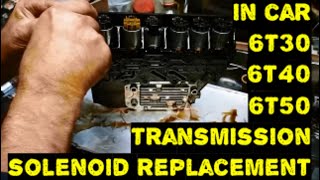

We Have This Part in Stock


The information in this article is provided for general reference and educational purposes only. Vehicle specifications, procedures, and part compatibility can vary by production date, trim level, and region. Always consult your vehicle's factory service manual and verify part numbers before purchasing or performing repairs. Safety-critical components such as airbags, seat belts, and braking systems should be installed by a qualified professional.
- Buick VERANO:
- 🧭 Diagnostic Flowchart
- 🎬 Helpful Videos
- 🛍️ Shop This Part
- What's Unique About the 2012-2015 Buick VERANO
- Symptoms You May Notice
- Most Likely Causes
- Diagnosis Steps
- Parts You'll Likely Need
- Related Codes That Often Appear With This One
- Technical Service Bulletins (TSBs) & Recalls
- Platform-Specific Known Issues
- Mechanic-Grade Diagnostic Values
- Hidden / Shadow Codes Worth Checking
- Scan Tool Commands That Help
- Wiring & Ground Locations
- Real Owner Repair Stories
- OEM Part Supersession History
- Model Year Variations Within This Range
- 🎟️ Get 5% Off