

P1621 on 2013-2015 Cadillac ATS: Control Module Memory Failure Causes and Fixes
On a 2013-2015 Cadillac ATS, code P1621 almost always points to an internal memory failure in the Transmission Control Module (TCM). The fix requires replacing the TCM, which must be professionally programmed. Expect a shop cost of $700 to $1500. Before condemning the module, a technician should rule out low battery voltage and check for loose pins at the main transmission connector.
- P1621 on a 2013-2015 ATS means the Transmission Control Module (TCM) has most likely failed its internal memory check.
- This is not a DIY repair. The replacement TCM must be professionally programmed to your car's VIN.
- Before replacing the expensive TCM, a mechanic must verify the battery is healthy, check for software updates, and inspect the main transmission harness connector for loose pins.
- Symptoms include a check engine light, erratic shifting, and potentially getting stuck in one gear.
What's Unique About the 2013-2015 Cadillac ATS
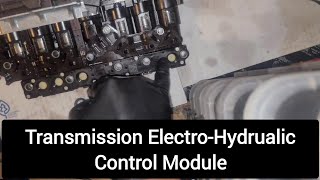
For the first-generation Cadillac ATS, this code is strongly associated with the Transmission Control Module (TCM), as highlighted in GM Technical Service Bulletins. While the code could technically apply to other modules, real-world data and TSBs like PIP4653E specifically point to the TCM as the culprit when this code appears. Unlike some other GM vehicles where the TCM is a separate unit, on many ATS models with automatic transmissions, the TCM is integrated into the valve body assembly inside the transmission oil pan, making replacement more labor-intensive. Another TSB, PIC4740F, notes that unseated pins in the main transmission harness connector can cause communication issues that could be misdiagnosed as a failed module, making a harness inspection a critical first step.
Diagnostic Flowchart
Tap your situation to follow the diagnostic path that matches what you're seeing on this vehicle.
Symptoms You May Notice
- Check Engine Light (Malfunction Indicator Lamp) is on
- Erratic or harsh transmission shifting
- Transmission stuck in one gear (limp mode), often 3rd gear
- Delayed engagement when shifting into Drive or Reverse
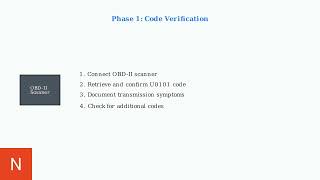
- Loss of communication with the TCM (may show as code U0101 on a professional scan tool)
- Vehicle may enter a reduced power mode
- No Crank or Crank/No Start condition in rare cases
- Replacing the entire transmission when only the electronic control module is faulty.
- Replacing external sensors, as P1621 is an internal module fault.
- Overlooking a weak battery or poor connection at the transmission harness, leading to unnecessary TCM replacement.
Most Likely Causes
- Internal Transmission Control Module (TCM) Failure 🔴 High Probability → Shop Transmission Assembly The TCM is an electronic module that can fail over time due to thermal stress and vibration. TSB #PIP4653E directly links P1621 to an internal TCM fault requiring replacement. For models where the TCM is inside the transmission (known as a TEHCM), it is constantly subjected to heat and potentially contaminated fluid, increasing failure rates.
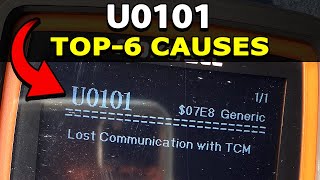
How to confirm: After confirming the battery and charging system are healthy, and checking for software updates, a persistent P1621 code (especially with other module codes like P0601, P0604, or U0101) condemns the TCM. A professional scan tool may lose communication 🎬 See the top 6 causes for lost TCM communication with the TCM entirely.
Typical fix: Replace the Transmission Control Module and program the new unit to the vehicle's VIN using GM's Service Programming System (SPS).
Est. part cost: $250-$800 - Low or Unstable Battery Voltage ⚪ Low Probability → Shop Vehicle Battery Control modules require stable voltage to perform startup self-checks. An old or weak battery can cause voltage to dip during cranking, which can corrupt the memory check and trigger a P1621 code. Modern GM vehicles use a variable charging system that can sometimes run as low as 12.3-12.6V, which puts extra stress on an aging battery. The battery on the ATS is located in the trunk, making it important to check connections at both the trunk and the under-hood jump posts.
How to confirm: Test the battery's state of charge and health. It should have at least 12.4V with the engine off. Check the charging system voltage with the engine running; it may fluctuate but should rise to 13.7V-14.7V under load or during certain charging modes.
Typical fix: Recharge or replace the vehicle's battery. Clear codes and see if P1621 returns.
Est. part cost: $150-$350 - Corrupt Software / Needing Reprogramming ⚪ Low Probability Occasionally, a software glitch can cause internal memory errors. GM sometimes releases updated calibrations to fix such issues. TSB #PIP4653E suggests reprogramming the TCM as a potential first step if the code is isolated to that module.
How to confirm: A dealer or qualified shop with access to GM's TIS2Web/SPS system can check if a newer software calibration is available for the TCM.
Typical fix: Reprogram (reflash) the TCM with the latest software calibration. If the code returns, the module hardware has failed.
Est. part cost: $0 (if part of another repair) - $200 (as a standalone service)
Rare But Worth Checking
- Poor Connection at Transmission Harness Connector: → Shop Transmission Assembly
Diagnosis Steps
- Scan for all DTCs in all modules. Note any other codes that appear with P1621, especially P0700, U0101, P0601, P0603, P0604, or P062F.
- Check the battery and charging system. The battery is located in the trunk. Ensure battery voltage is above 12.4V with the engine off and that the alternator is charging correctly (typically 13.7V-14.7V, though GM systems can vary). A weak battery is a common cause of spurious module codes.
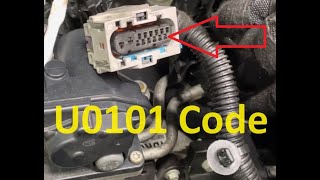
- Inspect the main transmission wiring harness connector for any visible damage, corrosion, or loose pins, as per TSB PIC4740F. Gently tug each wire to check for security.
- Inspect the TCM grounds and power supply wires for integrity and cleanliness. A key ground point for the TCM/ECM on similar GM platforms is G105, located on an engine or transmission stud.
- Using a professional scan tool with access to GM's Service Programming System (SPS), check if a software update is available for the Transmission Control Module.
- If an update is available, perform the reflash procedure. Clear the codes and perform a drive cycle to see if P1621 returns.
- If no update is available, connections are good, and the code returns after a reflash, the Transmission Control Module has an internal hardware fault and must be replaced.
- Install a new TCM and use the SPS to program it to the vehicle's VIN and specific configuration.
Parts You'll Likely Need
- Transmission Control Module (TCM)
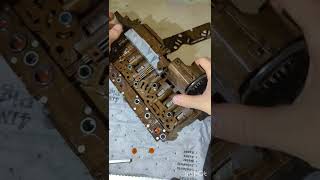
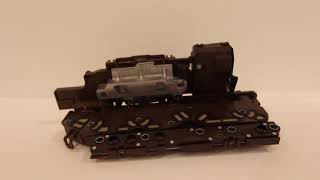
(OEM #24275873)— This module is the direct cause of the P1621 code due to an internal memory self-check failure, as confirmed by GM TSBs. This part number often refers to the complete control solenoid valve body assembly 🎬 Watch: How to repair the internal transmission module membrane (TEHCM) which includes the TCM.
Trusted brands: ACDelco (GM Original Equipment)
OEM price range: $400-$800
Aftermarket price range: $250-$500
Related Codes That Often Appear With This One
- P0700 — This is a generic code that means the TCM has stored a fault and requested the check engine light. It will almost always appear with a specific TCM code like P1621.
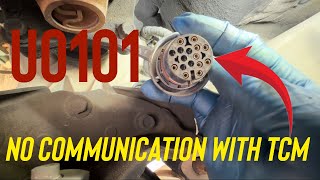
- U0101 — This code means 'Lost Communication With TCM'. It is a very common companion code because the internal fault that sets P1621 often causes the module to stop communicating on the vehicle's data network.
- P0601 — This code means 'Internal Control Module Memory Check Sum Error'. It is another type of internal memory failure and is often set alongside P1621, confirming a faulty module.
- P0603 — This code indicates an error with the module's Keep Alive Memory (KAM). Both TSBs provided mention this code in conjunction with P1621.
- P0604 — This code means 'Internal Control Module Random Access Memory (RAM) Error'. It points to a fault with the module's short-term operational memory and is cited in TSB #PIP4653E.
- P062F — This code indicates an 'Internal Control Module EEPROM Error', directly related to the long-term memory that P1621 also monitors. It is cited in TSB #PIP4653E.
Technical Service Bulletins (TSBs) & Recalls
- PIP4653E: Confirms that P1621 stored in the Transmission Control Module indicates an internal failure requiring module replacement, though reprogramming should be attempted if the code is isolated to the TCM.
- 05-06-04-060A: Communicates that P1621 is one of several control module internal self-test codes.
- PIC4740F: Advises checking for unseated pins in the transmission connector as a potential cause for communication and performance issues that can mimic a failed module.
Platform-Specific Known Issues
- GM Technical Service Bulletin #PIP4653E directly states that if DTCs P0601, P0603, P0604, P062F, or P1621 are found in the TCM, the module has an internal fault and requires replacement (though reprogramming may be attempted first).
- GM Technical Service Bulletin #05-06-04-060A notes that P1621 is one of several internal module diagnostic codes that can be set in multiple control modules, but for the ATS, it is most commonly associated with the TCM.
- GM Preliminary Information Bulletin #PIC4740F warns technicians to check for unseated pins in the transmission connector for a variety of symptoms including communication DTCs and harsh shifting, which directly overlap with the P1621 fault.
Mechanic-Grade Diagnostic Values
- TCM Ground Circuit Resistance — expected: < 0.5 Ω. Failure: Resistance higher than 0.5 Ω indicates a corroded, loose, or damaged ground connection which can cause intermittent module faults.
- CAN High Voltage (Key On, Engine Off) — expected: ~2.5V to 3.5V (average ~2.7V). Failure: Significant deviation from this range, or a voltage stuck at a specific value, indicates a short or open on the data bus.
- CAN Low Voltage (Key On, Engine Off) — expected: ~1.5V to 2.5V (average ~2.3V). Failure: Significant deviation from this range, or a voltage stuck at a specific value, indicates a short or open on the data bus.
Hidden / Shadow Codes Worth Checking
- N/A (Persistent Fault Flag): Some aftermarket handheld tuners have been known to improperly modify memory, causing a persistent P1621 code to be 'stained' into the Engine Control Module (ECM). In these specific cases, the code may remain even after flashing back to stock and may not cause any adverse driving symptoms. (see via Visible with standard scan tools, but its origin is historical (from a previous tune) rather than an active hardware fault.)
Scan Tool Commands That Help
- GM GDS2 / Professional Bidirectional Scanner: Module Communication Test — To actively 'ping' the TCM to see if it is responsive on the CAN bus. If the test fails and all wiring, power, and grounds are confirmed good, it points to an internal module failure.
- GM GDS2 / Professional Bidirectional Scanner: Solenoid Command Status Test / Clean Cycle — This function commands individual solenoids within the TEHCM. While not a direct test for a P1621 memory fault, it can help determine if the module is partially functional or has other internal issues before ordering a replacement.
- GM SPS (Service Programming System): TCM Programming/Setup — This is required after installing a new TCM/TEHCM. The tool downloads the correct VIN-specific software from GM's servers and flashes it to the new module, allowing it to communicate with the vehicle.
Wiring & Ground Locations
- Battery — Inside the trunk, on the left (driver's) side, behind a removable trim panel.. Verifying battery health is a key first step. Technicians should be aware of the trunk location and also check the under-hood jump start posts for clean connections.
- G105 (Typical GM Ground) — Often located on an engine or transmission mounting stud, sometimes under the throttle body area. Exact location should be verified with a service manual for the specific engine.. This is a common primary ground point shared by the ECM and TCM on many GM platforms. A corroded or loose connection here can starve the TCM of a stable ground, causing communication loss and various fault codes, including P1621.
- Transmission Main Connector (X181/TEHCM Connector) — The large, round, twist-lock connector on the side of the transmission case where the main vehicle harness connects to the internal transmission electronics.. This is the single point of failure for all power, ground, and data communication to the internal TCM. TSBs frequently cite poor pin fit, corrosion, or backed-out pins in this connector as a cause for codes that mimic internal TCM failure.
Real Owner Repair Stories
- Chevy Cruze diagnostic video (similar GM architecture) (2014 Chevy Cruze) — Multiple warning lights, 'Service Stabilitrak', 'Service Power Steering', and no communication with TCM (U0101).
❌ Tried (didn't work) Initial diagnosis pointed towards a failed TCM since it was not communicating.
✅ What actually fixed it A bent pin was found in terminal 37 of the X3 connector at the underhood fuse block. The pin was likely bent during a previous, unrelated repair. Straightening the pin restored communication and resolved all codes without replacing any parts. - EFILive Forum user (GM Truck (LLY Duramax)) — Check Engine Light with code P1621 would appear after heavy acceleration.
❌ Tried (didn't work) Clearing the code would work temporarily, but it would return.
✅ What actually fixed it The issue was traced back to the previous use of a handheld aftermarket tuner. The consensus was that the tuner had 'stained' the ECM's memory, causing the code to be logged persistently. The code itself was determined to have no negative impact on the vehicle's performance in this specific context.
OEM Part Supersession History
24041874, 24257213→24275873— Standard part revision and improvement by the manufacturer.
Heads up: The new part number (24275873) is the correct service replacement for the older numbers. Always verify fitment by VIN, as multiple TEHCM versions exist for different transmissions.
Model Year Variations Within This Range
- 2013-2015: The specific automatic transmission installed varies based on the engine. 2.5L (LCV) and early 3.6L (LFX) engines were typically paired with the 6-speed GM 6L45 automatic transmission. The 2.0L Turbo (LTG) and later 3.6L engines began using the 8-speed GM 8L45 automatic around the 2016 model year, but some late 2015 models may have it. The TCM (TEHCM) is specific to the transmission model, making it critical to identify the engine and transmission before ordering parts.
Helpful Videos



We Have This Part in Stock


The information in this article is provided for general reference and educational purposes only. Vehicle specifications, procedures, and part compatibility can vary by production date, trim level, and region. Always consult your vehicle's factory service manual and verify part numbers before purchasing or performing repairs. Safety-critical components such as airbags, seat belts, and braking systems should be installed by a qualified professional.
- Cadillac ATS:
- 🧭 Diagnostic Flowchart
- 🎬 Helpful Videos
- 🛍️ Shop This Part
- What's Unique About the 2013-2015 Cadillac ATS
- Symptoms You May Notice
- Most Likely Causes
- Rare But Worth Checking
- Diagnosis Steps
- Parts You'll Likely Need
- Related Codes That Often Appear With This One
- Technical Service Bulletins (TSBs) & Recalls
- Platform-Specific Known Issues
- Mechanic-Grade Diagnostic Values
- Hidden / Shadow Codes Worth Checking
- Scan Tool Commands That Help
- Wiring & Ground Locations
- Real Owner Repair Stories
- OEM Part Supersession History
- Model Year Variations Within This Range
- 🎟️ Get 5% Off