

P1621 on 2007-2014 Cadillac CTS: Control Module Memory Failure Causes & Fixes
This code typically indicates an internal memory problem within a control module, most often the Transmission Control Module (TCM) or Engine Control Module (ECM). On the 2007-2014 CTS, this is a well-documented failure of the TCM. The most common fix is replacing the faulty module and having it programmed, which requires professional tools.
- P1621 means a critical control module (likely the TCM or ECM) has failed its internal memory self-test.
- Before condemning the module, always test the vehicle's battery and charging system, as low voltage can trigger this code.
- A GM-specific TSB (PIP4653E) points to the Transmission Control Module (TCM) as a common culprit for this code on the CTS.
- This is not a DIY-friendly repair. The fix almost always involves replacing the module and using specialized tools to program the new part to the car.
What's Unique About the 2007-2014 Cadillac CTS
On GM vehicles like the Cadillac CTS, P1621 is a well-documented issue. Manufacturer Technical Service Bulletins (TSBs) specifically address this code. Bulletin #PIP4653E points directly to the Transmission Control Module (TCM) as a common location for this code to appear, often alongside other internal module fault codes (P0601, P0604, etc.). This makes the TCM a primary suspect on the CTS, especially when accompanied by harsh shifting or other transmission symptoms. The issue is common enough that many specialists offer pre-programmed TCMs for sale.
Diagnostic Flowchart
Tap your situation to follow the diagnostic path that matches what you're seeing on this vehicle.
Generation note: The 2007-2014 range covers the end of the first generation (2007) and the full second generation (2008-2014) of the Cadillac CTS. The TSBs related to this code apply to vehicles in both generations, particularly those equipped with 6-speed automatic transmissions like the 6L50. The underlying cause (control module failure) is not specific to one generation but is a known issue across the GM Sigma platform.
Symptoms You May Notice
- Malfunction Indicator Lamp (Check Engine Light) is on
- Transmission may exhibit harsh shifting, delayed engagement, or get stuck in one gear (limp mode)
- Vehicle may stall or have a rough idle
- Potential no-start condition
- Loss of communication with the affected module during a scan tool diagnosis
- Erratic or cycling door locks while driving
- Multiple warning lights (e.g., StabiliTrak, ABS) may illuminate simultaneously
- Replacing sensors or other components when the root cause is the control module that reads them.
- Replacing the ECM when the fault is actually in the TCM, as indicated by TSB PIP4653E.
- Replacing the entire transmission for harsh shifting when the issue is purely electronic within the TCM/TEHCM. 🎬 Watch: Diagnosing common shifting problems on a Cadillac CTS.
Most Likely Causes
- Internal Transmission Control Module (TCM) or Engine Control Module (ECM) Failure 🔴 High Probability → Shop Engine Control Module (ECM) As noted in TSB PIP4653E, the TCM is a known point of failure for this code. These modules, especially the TCM which can be located inside the transmission (as part of the TEHCM), are subject to heat and vibration over many years, leading to degradation of electronic components and solder joints, causing memory corruption.
How to confirm: After confirming good power, grounds, and wiring to the module, the diagnosis points to an internal fault. A high-end scan tool may show the module failing self-tests or will explicitly state the P1621 code is stored in the TCM. The final confirmation is when a software reflash doesn't fix it or a replacement module does.
Typical fix: Replace the faulty control module (most commonly the TCM) and program the new unit to the vehicle. For transmissions like the 6L50, this involves replacing the entire Transmission Electro-Hydraulic Control Module (TEHCM) which contains the TCM.
Est. part cost: $300-$800 - Low Battery Voltage or Charging System Issues 🟡 Medium Probability → Shop Vehicle Battery Modern control modules are highly sensitive to voltage. A weak or failing battery, or a faulty alternator, can provide insufficient or unstable voltage during the startup self-check sequence, causing a module to fail its memory test and falsely set a P1621 code.
How to confirm: Test the battery with a digital battery tester. It should have at least 12.4V at rest and maintain voltage under load. Check the alternator output with the engine running; it should be between 13.7V and 14.7V. Check for corroded terminals or loose connections.
Typical fix: Recharge or replace the battery. Replace the alternator if its output is out of spec. Clean all battery-related connections.
Est. part cost: $150-$400 - Poor Power or Ground Connection to the Control Module ⚪ Low Probability
How to confirm: Perform a voltage drop test on the module's power and ground circuits. With the module connected and the key on, check the voltage between the power pin at the connector and the positive battery terminal (should be near 0V), and between the ground pin and the negative battery terminal (should be near 0V). TSB PIC4740E specifically calls out checking for unseated pins in the main transmission connector as a cause for communication loss and various DTCs.
Typical fix: Clean or repair the corroded/damaged wiring or ground points. Ensure the module connector is clean, free of moisture, and seated securely. Reseat any loose pins in the connector harness.
Est. part cost: $5-$50
Diagnosis Steps
- Scan for all DTCs. Note if P1621 is accompanied by other module-related codes like P0601, P0603, etc., which strengthens the case for a module failure. Crucially, use a scan tool that can read codes from all modules to determine if P1621 is stored in the ECM or the TCM.
- Check Battery and Charging System Health. Ensure the battery has a full charge (12.4V+) and the alternator is charging correctly (13.7-14.7V). A weak power supply is a common cause of false module codes.
- Inspect Module Wiring and Connectors. Visually inspect the wiring harness and connectors for the ECM and TCM. Per TSB PIC4740E, pay close attention to the main transmission harness connector for any signs of corrosion, damage, water intrusion, or unseated pins.
- Verify Power and Ground to the Module. Using a multimeter and a wiring diagram, confirm that the suspect module is receiving correct battery and ignition voltage and has a solid ground connection. Perform voltage drop tests to ensure the integrity of the circuits under load.
- Attempt Module Reprogramming. If all wiring and power/grounds are good, the issue is likely internal to the module. A dealer or qualified shop can attempt to 'reflash' or update the module's software. Sometimes this can correct software corruption, though it is often a temporary fix for a failing hardware component.
- Replace the Control Module. If reprogramming is unsuccessful or the code returns immediately, the module has a hardware failure and must be replaced. The new module will require programming to the vehicle's VIN.
Parts You'll Likely Need
- Transmission Control Module (TCM)
(OEM #24252114 (Superseded by other numbers, verify by VIN))— TSB PIP4653E specifically identifies the TCM as a source for this code on these vehicles. It is the most common point of failure. For many models with 6-speed automatics, this is part of the TEHCM assembly inside the transmission.
Trusted brands: ACDelco (GM Genuine)
OEM price range: $400-$800
Aftermarket price range: $300-$600 - Engine Control Module (ECM) — If the code is not stored in the TCM, or if other engine-related codes are present, the ECM may be the source of the memory fault. This is less common for P1621 on this platform.
Trusted brands: ACDelco
OEM price range: $400-$800
Aftermarket price range: $300-$600
Related Codes That Often Appear With This One
- P0601 — Internal Control Module Memory Check Sum Error. This is a more specific version of an internal memory fault.
- P0603 — Internal Control Module Keep Alive Memory (KAM) Error. This relates to the memory that stores learned values.
- P0604 — Internal Control Module Random Access Memory (RAM) Error. This indicates a fault with the module's short-term working memory.
- P062F — Internal Control Module EEPROM Error. This points to a failure in the module's programmable read-only memory.
- U0101 — Lost Communication With TCM. This code often appears alongside P1621 when the TCM has failed internally and is no longer communicating on the CAN bus network.
- P0700 — Transmission Control System (MIL Request). This is a generic code indicating the TCM has detected a fault and has requested the Check Engine Light to be turned on.
Technical Service Bulletins (TSBs) & Recalls
- PIP4653E: Mentions that DTC P1621 (along with others like P0601, P0604) may be found stored in the Transmission Control Module, indicating an internal fault that requires module replacement.
- 05-06-04-060A: Notes that P1621 is one of several control module diagnostic codes that can be shared across multiple modules, confirming it as a generic internal fault type. [NHTSA]
- PIC4740E / 18-NA-303: While not directly for P1621, this TSB addresses symptoms like no-crank, hard shifts, and loss of communication with the TCM/ECM. It points to unseated pins in the transmission harness connector as a potential cause, which is a critical diagnostic step before condemning the module.
Platform-Specific Known Issues
- Owner Experience: Intermittent No-Start and Hard Shifting: A user on a Cadillac forum described a 2008 CTS that would intermittently fail to start and exhibit very harsh shifting when it did run. The dealer initially suspected the ECM but after diagnostics found that P1621 was stored in the TCM. Replacing and programming a new TCM resolved all symptoms. The owner noted the repair cost was approximately $1100 at the dealership.
- DIY Repair Story: TCM Replacement on a 2009 CTS 3.6L: An owner on the Edmunds forum with a 2009 CTS reported P1621 and the transmission stuck in limp mode. After verifying the battery and connections were good, they opted to replace the TCM themselves. They purchased a pre-programmed TCM online and followed a YouTube tutorial for the replacement. The physical replacement took about 2 hours, and the pre-programmed unit worked immediately, resolving the code and shifting issues.
Mechanic-Grade Diagnostic Values
- TCM Power Pin Voltage — expected: Should match battery voltage (approx. 12.4-12.6V with key on, engine off).. Failure: Voltage significantly below battery voltage indicates a wiring issue, fuse, or relay problem.
- TCM Ground Circuit Voltage Drop — expected: Less than 0.1V (100mV).. Failure: Voltage higher than 0.1V indicates high resistance in the ground circuit, often due to corrosion at a ground point like G106 or G131.
- Transmission Fluid Temperature for Service Fast Learn — expected: Between 70-100°C (158-212°F).. Failure: The procedure will abort if the temperature is outside this range.
Hidden / Shadow Codes Worth Checking
- Symptom Byte 37: While not a separate code, a dealer-level scan tool (like GDS2) may display a 2-digit symptom code alongside P1621. Symptom byte '37' typically specifies an internal electronic malfunction or checksum error, reinforcing the diagnosis of an internal module failure. (see via GM GDS2 or equivalent professional scan tool.)
Scan Tool Commands That Help
- GDS2 / Tech2: Replace and Reprogram ECU — This function is used within the GM Service Programming System (SPS) to flash the new TCM/TEHCM with the vehicle's specific VIN and software calibration. It is mandatory when a new module is installed.
- GDS2: Service Fast Learn Adapts — After replacing and programming a TCM/TEHCM, this stationary procedure must be run. It allows the new module to learn the specific hydraulic and mechanical characteristics of the clutches inside the transmission, ensuring proper shift quality. Failure to perform this step can result in harsh shifting even with a new part.
Wiring & Ground Locations
- G106 — On the right rear of the engine.. This is a primary engine and module ground point. Corrosion or a loose connection here can interrupt power and communication to the ECM and TCM, potentially causing false P1621 codes.
- G131 — Located on the left rear of the engine.. Another critical engine-to-chassis ground. Like G106, poor contact here can cause a host of electrical issues, including module memory and communication faults.
- G110 — On the right frame rail, near the ABS module.. This ground serves the Electronic Brake Control Module (EBCM). While not directly for the TCM, a fault here can disrupt CAN bus communication, leading to various 'U' codes and potentially affecting other modules.
- TEHCM Connector (X1) — On the side of the transmission case (passenger side for 6L50). It's a 16-pin connector.. This is the main electrical interface for the internal TCM/TEHCM. Per TSB PIC4740E, loose pins, moisture, or corrosion in this connector are a common cause of communication loss (U-codes) and other transmission faults that can accompany P1621.
Real Owner Repair Stories
- cadillacforums.com user report (2008 Cadillac CTS) — Check engine light, transmission stuck in limp mode, codes P0700 and P1621 present.
❌ Tried (didn't work) Replacing the battery.
✅ What actually fixed it The final repair was the replacement of the internal Transmission Electro-Hydraulic Control Module (TEHCM). After the new module was installed and programmed, all codes were cleared and normal transmission function was restored. - Forum user report (2009 Cadillac CTS) — Multiple warning lights, harsh shifting, and intermittent limp mode with code P1621.
❌ Tried (didn't work) Initial diagnosis suggested replacing the TCM.
✅ What actually fixed it Before replacing the module, the owner cleaned the main engine-to-chassis ground straps (G106/G131), which were found to be corroded. Cleaning the contact points and re-securing the grounds resolved all symptoms and the P1621 code did not return.
OEM Part Supersession History
24239224, 24234503→24252114, which itself has been superseded by later numbers like 24256524.— Revisions to improve reliability and address known failure modes of the internal TEHCM components.
Heads up: These TEHCM units are not plug-and-play. Different hardware versions exist for different model years and engine configurations. The correct part must be ordered by VIN, and it always requires programming via GM's Service Programming System (SPS) to function.
Model Year Variations Within This Range
- 2007 vs 2008-2014: The 2007 model year was the final year of the first-generation CTS and typically used the 5-speed 5L40-E automatic transmission. The second generation, starting in 2008, introduced the 6-speed 6L50 automatic for V6 models. The common P1621 failure associated with the internal TEHCM is predominantly an issue on the 2008-2014 models equipped with the 6L-series transmissions.
Helpful Videos

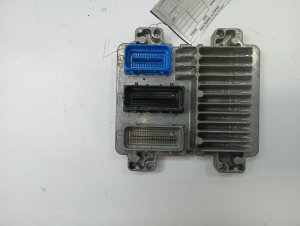
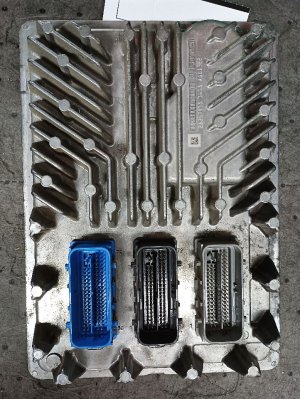
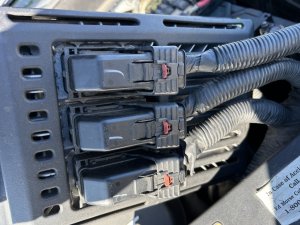
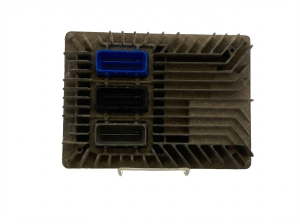
Used OEM Parts in Stock
New Aftermarket Parts Available




The information in this article is provided for general reference and educational purposes only. Vehicle specifications, procedures, and part compatibility can vary by production date, trim level, and region. Always consult your vehicle's factory service manual and verify part numbers before purchasing or performing repairs. Safety-critical components such as airbags, seat belts, and braking systems should be installed by a qualified professional.
- Cadillac CTS:
- 🧭 Diagnostic Flowchart
- 🎬 Helpful Videos
- 🛍️ Shop This Part
- What's Unique About the 2007-2014 Cadillac CTS
- Symptoms You May Notice
- Most Likely Causes
- Diagnosis Steps
- Parts You'll Likely Need
- Related Codes That Often Appear With This One
- Technical Service Bulletins (TSBs) & Recalls
- Platform-Specific Known Issues
- Mechanic-Grade Diagnostic Values
- Hidden / Shadow Codes Worth Checking
- Scan Tool Commands That Help
- Wiring & Ground Locations
- Real Owner Repair Stories
- OEM Part Supersession History
- Model Year Variations Within This Range
- 🎟️ Get 5% Off