

P1621 on 2007-2009 Cadillac XLR: Control Module Memory Failure Causes and Fixes
On a 2007-2009 Cadillac XLR, code P1621 indicates an internal memory failure, almost always within the Transmission Control Module (TCM). This is a known issue for the 6L80 transmission. The fix requires replacing the integrated TCM/valve body unit (TEHCM) inside the transmission pan and programming the new unit. This is a professional-level repair costing between $700 and $1,500.
- P1621 on a 2007-2009 XLR almost certainly means the Transmission Control Module (TCM/TEHCM) has failed internally.
- The repair is complex and expensive, as the module is located inside the transmission oil pan and must be replaced.
- This is not a DIY job. The replacement module must be programmed to your vehicle's VIN by a professional with GM-specific tools.
- Before condemning the module, always verify the battery is healthy and the main transmission connector is clean and secure, as electrical issues can sometimes mimic module failure.
- Do not replace the entire transmission; the problem is electronic, not mechanical.
What's Unique About the 2007-2009 Cadillac XLR
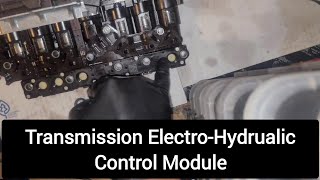
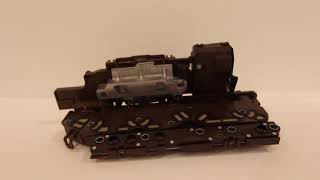
The Cadillac XLR from 2007-2009 uses a 6L80 6-speed automatic transmission. A key design aspect of this transmission is that the Transmission Control Module (TCM) is integrated with the valve body and solenoids into a single unit called a Transmission Electro-Hydraulic Control Module (TEHCM). This TEHCM is located inside the transmission oil pan, subjecting it to constant heat cycles and vibration, which is the leading cause of the electronic failures that trigger code P1621. This is a widespread issue affecting many GM vehicles using the 6L80 transmission, including its platform-mate, the C6 Chevrolet Corvette.
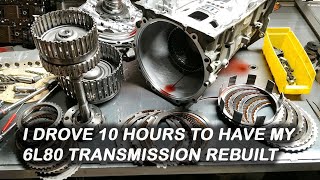
🎬 Watch: A full rebuild of the C6 Corvette 6L80 transmission.Diagnostic Flowchart
Tap your situation to follow the diagnostic path that matches what you're seeing on this vehicle.
Symptoms You May Notice
- Check Engine Light is on
- Transmission may enter 'limp mode' (stuck in one gear, often 3rd).
- Harsh or erratic shifting
- Delayed gear engagement
- Failure to shift
- Transmission-related warning messages on the dashboard (e.g., 'Service Transmission').
- Loss of communication with the TCM, preventing a scan tool from reading codes.
- Replacing the entire transmission when only the electronic control module (TEHCM) is faulty.
- Replacing various engine or transmission sensors, as P1621 is an internal module fault, not a sensor input fault.
Most Likely Causes
- Internal Transmission Control Module (TCM/TEHCM) Failure 🔴 High Probability → Shop Transmission Assembly The TCM is located inside the transmission pan (as part of the TEHCM), where it is exposed to high temperatures and constant vibration, leading to a higher rate of electronic failure over time. This is a well-documented issue on GM vehicles with the 6L80 transmission, including the XLR and C6 Corvette.
How to confirm: After verifying battery voltage is stable and all external wiring to the transmission is secure, a persistent P1621 code that is confirmed to be stored in the TCM points to an an internal module failure. Often, a professional scan tool will lose communication with the TCM entirely.
Typical fix: Replace the Transmission Electro-Hydraulic Control Module (TEHCM) assembly and program the new module to the vehicle's VIN using GM's Service Programming System (SPS). Some services offer pre-programmed TEHCMs. 🎬 Watch: What you need to know about TEHCM replacements.
Est. part cost: $300-$800 - Low or Unstable Battery Voltage 🟡 Medium Probability → Shop Vehicle Battery Like its C6 Corvette platform-mate, the XLR has its battery located away from the engine compartment, which can sometimes lead to grounding issues over time. All modern control modules are sensitive to low voltage during startup self-tests.
How to confirm: Test the battery and charging system. Ensure battery voltage is above 12.4V with the engine off and within 13.7-14.7V with the engine running. A load test is the most definitive way to check battery health. Voltage should not drop below 10V during cranking.
Typical fix: Recharge or replace the battery. Clean any corrosion from the battery terminals and check the main chassis ground points for tightness and corrosion. In some cases, a full 'hard reset' by disconnecting the battery can temporarily clear a glitched module.
Est. part cost: $150-$350 - Poor Power or Ground Connection to the TCM ⚪ Low Probability
How to confirm: Inspect the main round, twist-lock transmission connector (16-pin) for corrosion, moisture, or unseated pins. Perform a voltage drop test on the power and ground circuits at the connector.
Typical fix: Clean the connector terminals with a specialized electronic cleaner, repair any damaged wires, or re-seat the connector pins. Ensure the connector is fully seated and locked.
Est. part cost: $0-$50
Rare But Worth Checking
- Corrupted TCM Software: In some cases, a software glitch can cause this memory error. A dealer or qualified shop can check for and apply any available software updates for the TCM using a GM Techline subscription before condemning the hardware. However, for a hard memory fault like P1621, a reflash is less likely to be a permanent fix than a hardware replacement.
Diagnosis Steps
- Scan all vehicle modules for stored Diagnostic Trouble Codes (DTCs). Use a professional scan tool to confirm that P1621 is stored in the Transmission Control Module (TCM).
- Check the battery and charging system. Ensure voltage is stable and above 12.4 volts. Load test the battery to confirm its health, ensuring voltage does not drop below 10V during cranking.
- Inspect the main transmission wiring harness and the large, round 16-pin connector on the side of the transmission case for damage, corrosion, or fluid intrusion.
- If external wiring and power supply are good, the next step is to check for any available software updates for the TCM using a GM-specific scan tool (Tech 2 or MDI) with a Service Programming System (SPS) subscription. A reflash may solve a software glitch.
- If the code persists after checking wiring, power, and software, the Transmission Electro-Hydraulic Control Module (TEHCM) is faulty and requires replacement.
Parts You'll Likely Need
- Transmission Electro-Hydraulic Control Module (TEHCM)
(OEM #24256861 (Verify with VIN, this is a common but not universal number))— This is the integrated unit containing the TCM, valve body, and solenoids. Its internal electronics fail due to heat and vibration, causing code P1621. This is the most common and definitive fix.
Trusted brands: ACDelco, Dorman
OEM price range: $400-$818
Aftermarket price range: $300-$500 - DEXRON-VI Automatic Transmission Fluid — The transmission pan must be dropped to access the TEHCM, requiring the fluid to be drained and refilled. A typical service requires 6-8 quarts.
Trusted brands: ACDelco, Valvoline, Castrol
OEM price range: $10-$15 per quart
Aftermarket price range: $8-$12 per quart - Transmission Pan Gasket
(OEM #24224781)— The gasket is a one-time use part and must be replaced whenever the transmission pan is removed to prevent leaks.
Trusted brands: ACDelco, Fel-Pro
OEM price range: $25-$40
Aftermarket price range: $15-$30
Related Codes That Often Appear With This One
- P0700 — This is a generic code that means the TCM has stored a fault and requested the check engine light. P1621 is often the specific fault the TCM has stored.
- P0601 — This code means 'Internal Control Module Memory Check Sum Error' and directly relates to P1621, as both indicate a fatal internal processor or memory fault within the same module.
- P0603 — This code for 'Keep Alive Memory (KAM) Error' points to a problem with the module's ability to retain memory, which is a similar fault.
- P0604 — This code for 'Internal Control Module Random Access Memory (RAM) Error' is another internal fault code that strongly suggests the module has failed.
- U0101 — This code means 'Lost Communication With TCM' and often appears when the TCM fails internally and stops communicating on the vehicle's data network.
Platform-Specific Known Issues
- TSB #PIP4653E directly states that P1621 found in the Transmission Control Module (TCM) indicates an internal fault requiring module replacement. It often appears with codes P0601, P0603, P0604, and P062F.
- TSB #05-06-04-060A groups P1621 with other internal control module memory codes (P0601, P0603, P0604, etc.), reinforcing that this is a known module failure pattern across many GM vehicles.
- The XLR's platform-mate, the C6 Chevrolet Corvette, experiences the exact same P1621 failure pattern related to the TEHCM in its 6L80 transmission.
Mechanic-Grade Diagnostic Values
- Pressure Control Solenoid (PCS) Resistance — expected: 3.0 - 8.0 ohms at 70°F (21°C). Failure: Readings outside this range indicate a failed solenoid within the TEHCM.
- Shift Solenoid (SS) Resistance — expected: 20 - 40 ohms at 70°F (21°C). Failure: Readings outside this range indicate a failed solenoid within the TEHCM.
- TCM Voltage Supply to Solenoids — expected: 8.3 - 9.3 volts. Failure: Incorrect voltage from the TCM indicates an internal driver fault.
- Transmission Fluid Pressure Switches (within TEHCM) — expected: 0.7 - 1.9 ohms when circuit is closed. Failure: Failure to return to this resistance range during testing points to a bad TEHCM.
Scan Tool Commands That Help
- GM Techline Connect (SPS2): Replace and Reprogram — This function is mandatory after installing a new TEHCM. It downloads the vehicle-specific calibration from GM servers and writes it to the new module, programming the VIN and correct operating software.
- GM GDS2/Tech 2: Service Fast Learn Adapts / Reset Adapts — This procedure must be performed after a successful TEHCM replacement and programming. It forces the new module to quickly learn the transmission's clutch fill times and hydraulic characteristics for smooth shifting.
Wiring & Ground Locations
- TCM (Module #11) — Inside the transmission, integrated into the valve body assembly (TEHCM).. This is the module that sets the code. Its internal location makes physical inspection impossible without transmission disassembly.
- G401 / G402 — Bolted on the side of the rear left-hand (LH) and right-hand (RH) frame rails.. These are major rear chassis grounds. Since the transmission is located mid-rear and the battery is in the rear on an XLR, these grounds are critical for the stability of the entire electrical system, including the TCM.
- G104 / G106 — Located in the rear of the vehicle, near the battery.. These are the primary ground points for the battery. Corrosion or looseness here can cause unstable voltage to the entire vehicle, potentially triggering memory-related fault codes like P1621 during startup.
Real Owner Repair Stories
- Corvette Forum (2008 Chevrolet Corvette (6L80)) — Transmission in default mode, no communication with TCM via Tech 2 scanner.
❌ Tried (didn't work) Installing a 2011 model year 6L80 transmission into a 2008 vehicle., Attempting to flash the 2011 TCM with the 2008 vehicle's software.
✅ What actually fixed it The resolution was the understanding that 2006-2009 TEHCMs are interchangeable, but 2010 and later TEHCMs are year-specific and not backwards-compatible. The user needed to either find a correct 2008-compatible transmission or swap the original 2008 TEHCM into the newer transmission (if possible). - eBay Buyer Feedback (2009 Chevy 2500 LTZ (LMM Duramax with 6L80/Allison)) — Transmission was shifting hard and going in and out of limp mode.
❌ Tried (didn't work) Not specified, but implies continued driving with symptoms.
✅ What actually fixed it The owner purchased a pre-programmed, new TEHCM. After installing the new module, the truck was 'back to driving like Brand New Again'.
OEM Part Supersession History
24256861→19435614— Standard part lifecycle update by GM, likely for minor hardware or manufacturing process improvements.
Heads up: The new part number (19435614) is the direct replacement for 24256861 and should be fully compatible for the original applications.24272004→24256861— Part consolidation and updates for early 6L80 models.
Heads up: 24256861 was the updated part for a range of vehicles, replacing older numbers.
Model Year Variations Within This Range
- 2007-2009: TEHCMs from 2007-2009 Cadillac XLRs (and platform-mate Corvettes) are generally interchangeable with each other.
- 2010 and newer: Starting in 2010, GM began using year-specific TEHCMs that are not backward-compatible with 2007-2009 vehicles. Installing a 2010 or newer TEHCM or complete transmission into a 2007-2009 XLR will result in a no-communication error and limp mode. The correct 2007-2009 generation TEHCM must be used.
Helpful Videos
We Have This Part in Stock



The information in this article is provided for general reference and educational purposes only. Vehicle specifications, procedures, and part compatibility can vary by production date, trim level, and region. Always consult your vehicle's factory service manual and verify part numbers before purchasing or performing repairs. Safety-critical components such as airbags, seat belts, and braking systems should be installed by a qualified professional.
- Cadillac XLR:
- 🧭 Diagnostic Flowchart
- 🎬 Helpful Videos
- 🛍️ Shop This Part
- What's Unique About the 2007-2009 Cadillac XLR
- Symptoms You May Notice
- Most Likely Causes
- Rare But Worth Checking
- Diagnosis Steps
- Parts You'll Likely Need
- Related Codes That Often Appear With This One
- Platform-Specific Known Issues
- Mechanic-Grade Diagnostic Values
- Scan Tool Commands That Help
- Wiring & Ground Locations
- Real Owner Repair Stories
- OEM Part Supersession History
- Model Year Variations Within This Range
- 🎟️ Get 5% Off