

P1621 on 2007-2013 Chevrolet Avalanche: Control Module Memory Fault Guide
Code P1621 on a 2007-2013 Avalanche indicates an internal memory performance error in a control module, most commonly the Transmission Control Module (TCM) located inside the transmission pan. The most frequent fix is replacing the entire TCM assembly (known as the TEHCM), which requires dropping the transmission pan and programming the new module to your vehicle's VIN.
- P1621 is not a sensor fault; it's an internal error in a major computer like the TCM or PCM.
- The most common fix is to replace the faulty control module.
- A replacement module MUST be programmed to your vehicle's VIN to function correctly.
- Before replacing an expensive module, always verify the battery is healthy and check for clean, tight power and ground connections to the module.
- This repair is not recommended for DIYers without access to advanced programming tools; professional service is advised.
What's Unique About the 2007-2013 Chevrolet AVALANCHE
For the 2007-2013 Avalanche and its GMT900 platform mates (Silverado, Tahoe, etc.), this code is frequently associated with an internal failure of the Transmission Control Module (TCM). On models equipped with the 6-speed 6L80 automatic transmission, the TCM is not a separate, externally-mounted box. Instead, it is integrated into the Transmission Electro-Hydraulic Control Module (TEHCM), which is located *inside* the transmission oil pan, bolted to the valve body. This location subjects the electronics to constant heat cycles and vibration, making it a well-documented failure point. TSB PIP4653E specifically points to the TCM as a common source of this fault.
Diagnostic Flowchart
Tap your situation to follow the diagnostic path that matches what you're seeing on this vehicle.
Symptoms You May Notice
- Check Engine Light is on
- Transmission may shift harshly, late, or erratically
- Vehicle may enter 'limp mode' (stuck in one gear, often 3rd)
- Engine may stall or hesitate
- Loss of communication with the scan tool for the affected module
- PRNDL (gear position indicator) on the dash may be blank or incorrect 🎬 Watch: 6 common symptoms of a failing transmission control module
- Clock, radio presets, and seat memory may reset upon startup if the PCM is the affected module.
- Replacing transmission solenoids or sensors. This code points to an issue with the control module's brain, not the mechanical or sensory parts it controls. The solenoids are part of the TEHCM assembly and are replaced with it.
- Replacing the PCM when the code is stored in the TCM. It is critical to use a scanner that can identify which module logged the fault.
Most Likely Causes
- Internal Failure of the Transmission Control Module (TCM/TEHCM) 🔴 High Probability → Shop Transmission Assembly The TCM is part of the TEHCM, located inside the hot, vibrating environment of the transmission pan. Heat cycles and vibration lead to solder joint failure and electronic component degradation over time. TSB PIP4653E confirms this is a known issue.
How to confirm: After verifying power and ground, a professional scan tool is used to confirm the P1621 code is stored in the TCM. If communication with the TCM is lost (often showing code U0101) or if P1621 returns immediately after clearing, the module is condemned.
Typical fix: Replace the Transmission Electro-Hydraulic Control Module (TEHCM). This involves draining the transmission, removing the pan, unbolting the old TEHCM from the valve body, installing the new one, and reinstalling the pan with a new filter and fluid. 🎬 See this walkthrough on how to remove the TEHCM assembly The new module must then be programmed.
Est. part cost: $200-$400 - Internal Failure of the Powertrain Control Module (PCM) 🟡 Medium Probability → Shop Engine Control Module (ECM) TSB 05-06-04-060A notes this code can appear in multiple modules, with the PCM being another primary controller. While less common than TCM failure for this code on this platform, it can happen.
How to confirm: A diagnostic scan tool will show the code P1621 stored specifically in the PCM, not the TCM. Diagnosis involves ruling out all other causes before condemning the module.
Typical fix: Replace the Powertrain Control Module and program it to the vehicle.
Est. part cost: $250-$500 - Poor Power or Ground Connection to the Module ⚪ Low Probability Vibration and corrosion can weaken electrical connections. Key ground points for the engine and modules on GMT900 trucks, like G103 (front of passenger side cylinder head) and G104 (rear of driver side cylinder head), can become corroded, causing intermittent voltage drops that corrupt module memory. A GM service document also notes that ground bolts without proper hardening can fail to maintain clamp load, leading to poor connections.
How to confirm: Visually inspect all power and ground wires connected to the TCM and PCM. Use a multimeter to perform a voltage drop test on the power and ground circuits under load. A drop of more than 0.2 volts indicates a problem. Check fuses #14 (TCM-BATT) and #19 (TRANS IGN1) in the under-hood fuse box.
Typical fix: Clean or repair the corroded or loose connections and terminals. This involves removing the ground bolt, cleaning the eyelet and mounting surface to bare metal, and re-securing it tightly. Per a GM document, if a ground eyelet is found to be loose, the bolt should be replaced with P/N 11588337 and torqued to 80 lb-in (9 Nm).
Est. part cost: $5-$50 - Software/Calibration Corruption ⚪ Low Probability Improper programming from an aftermarket tuner or a failed factory update can corrupt the module's memory. This is a common cause reported by owners who have used handheld programmers.
How to confirm: If an aftermarket tuner was recently used, attempt to revert to the stock tune. A dealership or qualified shop can check if a factory software update is available and attempt to reflash the module as a first step, as suggested by TSB PIP4653E.
Typical fix: Reprogram the affected module (TCM or PCM) with the latest factory software using a GM MDI or equivalent J2534 tool. 🎬 Watch: Step-by-step guide to programming a new GM TCM
Est. part cost: $0-$200
Diagnosis Steps
- Connect a professional-grade OBD-II scanner to confirm the P1621 code and note which module (TCM or PCM) it is stored in.
- Check for other related control module codes (P0700, P0601, U0101, P0604).
- Inspect the battery and charging system. Ensure voltage is stable and within specification (typically 12.4-12.6V with engine off, 13.7-14.7V with engine running). Low voltage can cause memory errors.
- Visually inspect the main 16-way transmission connector on the outside of the case for corrosion, moisture, or backed-out pins.
- Visually inspect the wiring harness and connectors leading to the suspect module (TCM or PCM) for any signs of damage, corrosion, or loose pins.
- Using a multimeter, verify the module has a clean and stable power supply and a solid ground connection. Check key ground points like G103 on the passenger-side cylinder head.
- If all wiring and power/ground circuits are good, the next step is to attempt to reflash the module with the latest manufacturer software. This requires specialized tools like a GM MDI or Tech 2.
- If the code persists after a reflash, or if the module is unresponsive (setting U-codes), the module itself has failed and must be replaced.
- Install the new module and program it to the vehicle's VIN using a compatible scan tool and software subscription.
Parts You'll Likely Need
- Transmission Control Module (TCM/TEHCM)
(OEM #24256960 (also known as 24252114, 24256861, superseded by 19435614). Always verify with VIN.)— This is the most common point of failure for code P1621 on this platform, as documented by GM's own service bulletins. For the 6L80 transmission, this is the entire TEHCM assembly inside the pan.
Trusted brands: ACDelco (Genuine GM), Dorman (Remanufactured), Flagship One (Programmed)
OEM price range: $300-$450
Aftermarket price range: $200-$350 - Powertrain Control Module (PCM/ECM) — If the code is stored in the PCM instead of the TCM, the PCM's internal memory has failed. This is the second most likely cause.
Trusted brands: ACDelco
OEM price range: $350-$550
Aftermarket price range: $250-$450
Related Codes That Often Appear With This One
- P0700 — P0700 is a generic code indicating the Transmission Control Module has requested the check engine light be turned on. It is a gateway code that is almost always present when a specific transmission fault like P1621 occurs in the TCM.
- P0601 — This code means 'Internal Control Module Memory Check Sum Error'. Like P1621, it indicates a fatal internal memory problem within the same module, and they often appear together as noted in TSBs PIP4653E and 05-06-04-060A.
- U0101 — This code means 'Lost Communication with TCM'. It is often seen alongside P1621 when the TCM has failed completely and is no longer responsive on the vehicle's data network.
- P0604 — This code means 'Internal Control Module Random Access Memory (RAM) Error'. It is another internal self-check failure code that reinforces the conclusion that the module itself has failed.
Technical Service Bulletins (TSBs) & Recalls
- PIP4653E: Mentions P1621 as a possible DTC stored in the Transmission Control Module (TCM) when investigating a Malfunction Indicator Lamp. Recommends reprogramming the TCM if the code is set there.
- 05-06-04-060A: Informs technicians that P1621 is a control module DTC that can be shared across multiple modules, indicating an internal memory fault.
Platform-Specific Known Issues
- Internal TCM Location: On the common 6L80 6-speed automatic transmission, the TCM is not an easily accessible external part. It is integrated into the TEHCM (Transmission Electro-Hydraulic Control Module) which is located inside the transmission, bolted to the valve body. This requires draining the fluid and removing the transmission pan for access.
Mechanic-Grade Diagnostic Values
- CAN Bus Resistance at DLC — expected: Approximately 60 Ohms between Pin 6 and Pin 14. Failure: Readings significantly higher or lower than 60 Ohms suggest a wiring problem on the data bus which can cause module errors.
- 6L80 TEHCM On/Off Shift Solenoid Resistance — expected: 20 - 40 Ohms. Failure: A reading outside this range indicates a failed solenoid, which is internal to the TEHCM and requires module replacement.
- 6L80 TEHCM PWM Pressure Control Solenoid Resistance — expected: 3 - 8 Ohms. Failure: A reading outside this range indicates a failed solenoid, which is internal to the TEHCM and requires module replacement.
- Voltage Drop on Power/Ground Circuit — expected: Less than 0.2 Volts. Failure: A voltage drop greater than 0.2V indicates excessive resistance in the circuit, which can corrupt module memory.
Scan Tool Commands That Help
- GM GDS2/Techline Connect: Service Programming System (SPS) — This function is mandatory after replacing the TEHCM or PCM. It downloads the correct software and VIN information into the new module, 'marrying' it to the vehicle.
- GM GDS2/Techline Connect: Fast Learn / Reset Transmission Adapts — This procedure should be performed after programming a new TEHCM. It resets the transmission's adaptive learning values, allowing it to quickly learn the new hydraulic and electronic characteristics for smooth shifting.
Wiring & Ground Locations
- G101 — Lower front of the engine, on the engine block.. This ground serves the Engine Control Module and Transmission Control Module. A poor connection here can cause intermittent power loss and memory corruption in either module.
- G103 — On the cowl at the left (driver's side) rear of the engine compartment, above the brake booster.. This is a major body ground that serves multiple interior modules, including the Body Control Module (BCM) and Data Link Connector (DLC). A fault here can cause widespread communication issues that may be misdiagnosed as a single module failure.
- TEHCM Fuses (Under-hood) — In the under-hood fuse block.. Fuse #14 (TCM-BATT) and fuse #19 (TRANS IGN1) provide battery and ignition power to the TCM. A blown or loose fuse will cause a no-communication or P1621 code.
Real Owner Repair Stories
- Chevrolet Message Forum user 'Treetop' (2003 Silverado 2500HD Duramax (Note: Older model, but P1621 definition and cause are similar)) — Clock, radio, and seat memory would reset on startup. Check engine light with code P1621.
❌ Tried (didn't work) Initial diagnosis pointed towards PCM failure.
✅ What actually fixed it The problem started immediately after using a Bully Dog programmer without removing the required fuses first. Setting the programmer back to the stock tune and performing a hard reset (disconnecting the battery and shorting the cables to drain residual power) resolved the memory loss issues and the code.
OEM Part Supersession History
24256861→19435614— GM updated the part to improve reliability and address known failure modes.
Heads up: TEHCMs from different hardware generations are not interchangeable. Installing a TEHCM with the wrong part number or from a different year range can result in a no-start condition or immediate limp mode, even after programming.24252114→24256960— This is a hardware code and part number pairing. 24256960 is the service part number for units with hardware code 24252114.
Heads up: Always verify the correct part number using the vehicle's VIN before ordering.
Model Year Variations Within This Range
- 2007-2010: Early Gen 1 6L80 TEHCMs were more prone to pressure switch failures and TCC apply solenoid issues. Later revisions featured improved solenoids and better thermal tolerance.
- 2011-2013: Later TEHCMs have different internal logic and calibration IDs. They are not backward-compatible with earlier models. The external connector style may also differ between early and late models.
Helpful Videos




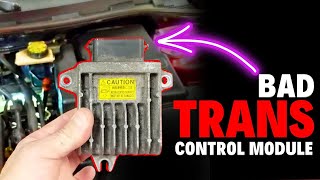
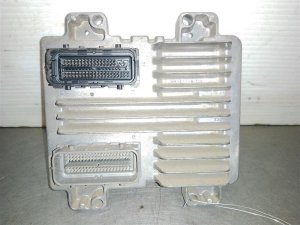
Used OEM Parts in Stock
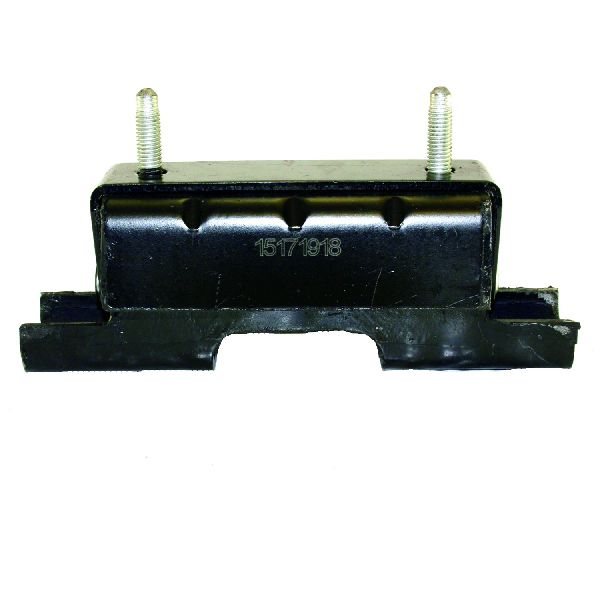
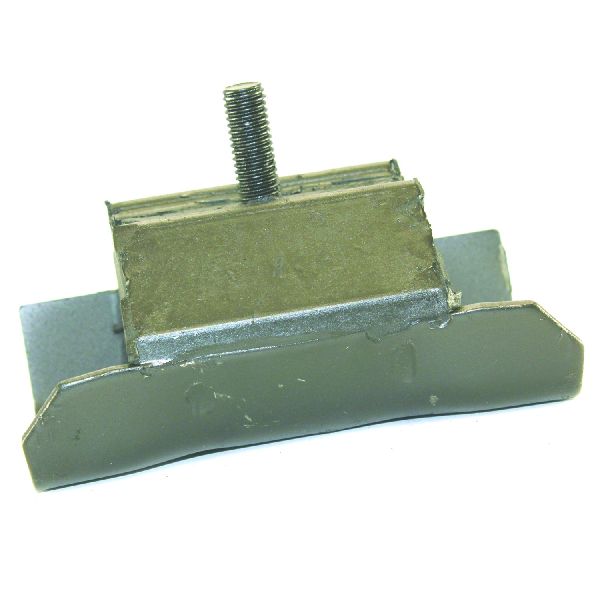
New Aftermarket Parts Available

The information in this article is provided for general reference and educational purposes only. Vehicle specifications, procedures, and part compatibility can vary by production date, trim level, and region. Always consult your vehicle's factory service manual and verify part numbers before purchasing or performing repairs. Safety-critical components such as airbags, seat belts, and braking systems should be installed by a qualified professional.
- Chevrolet AVALANCHE:
- 🧭 Diagnostic Flowchart
- 🎬 Helpful Videos
- 🛍️ Shop This Part
- What's Unique About the 2007-2013 Chevrolet AVALANCHE
- Symptoms You May Notice
- Most Likely Causes
- Diagnosis Steps
- Parts You'll Likely Need
- Related Codes That Often Appear With This One
- Technical Service Bulletins (TSBs) & Recalls
- Platform-Specific Known Issues
- Mechanic-Grade Diagnostic Values
- Scan Tool Commands That Help
- Wiring & Ground Locations
- Real Owner Repair Stories
- OEM Part Supersession History
- Model Year Variations Within This Range
- 🎟️ Get 5% Off