

P1621 on 2012-2014 Chevrolet Captiva: Control Module Memory Failure Causes and Fixes
On a 2012-2014 Captiva, P1621 almost always indicates an internal memory failure in the Transmission Control Module (TCM). The most common fix is replacing the TCM, which is located inside the transmission and requires professional programming, with shop costs typically ranging from $700 to $1,500. This is a well-documented failure on the 6T-series transmissions used in the Captiva and its platform-mates.
- P1621 on a 2012-2014 Captiva almost certainly means the Transmission Control Module (TCM) has failed internally.
- This is a common, well-documented problem due to the TCM's location inside the hot transmission.
- Repair is not a DIY job; it requires professional replacement and programming of the new module.
- Before condemning the TCM, a professional should always verify the battery, charging system, and wiring are in good condition.
- Platform mates like the Chevy Equinox and GMC Terrain share the same 6T-series transmission and suffer from the exact same issue.
What's Unique About the 2012-2014 Chevrolet CAPTIVA
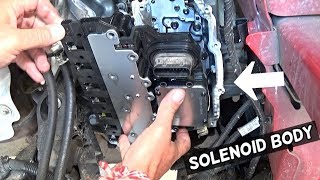
The Chevrolet Captiva Sport (the model sold in the US) and its platform siblings like the Chevrolet Equinox, GMC Terrain, and Saturn Vue, use a 6T-series automatic transmission (e.g., 6T40/6T45). A key design feature of these transmissions is that the Transmission Control Module (TCM) is located inside the transmission case, mounted to the valve body. This design exposes the module to constant, high operating temperatures and vibration, leading to a higher-than-average failure rate of its internal electronics and solder joints. GM has acknowledged this pattern in TSBs #PIP4653E and #05-06-04-060A, which directly link P1621 to TCM failure, making it the primary suspect on this vehicle, unlike in other cars where the ECM might be the cause.
Diagnostic Flowchart
Tap your situation to follow the diagnostic path that matches what you're seeing on this vehicle.
Symptoms You May Notice
- Check Engine Light (Malfunction Indicator Lamp) is on.
- Harsh or erratic shifting.
- Vehicle gets stuck in one gear (limp mode).
- Transmission hesitates or bucks when coming to a stop, especially when warm.
- Loss of communication with the TCM, which may cause other warning lights like 'Service Stabilitrak' to appear.
- Potential for the engine to stall or a no-start condition.
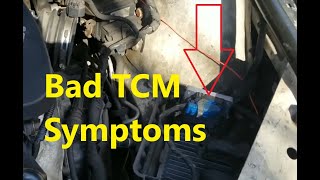
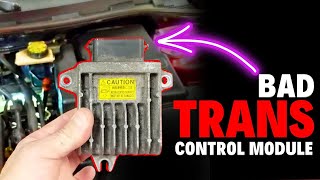
- Inability for a scan tool to communicate with the TCM. 🎬 Watch: 6 common symptoms of a failing transmission control module.
- Replacing the Engine Control Module (ECM) when the code is set by the TCM. TSB #PIP4653E specifically warns technicians to verify which module set the code before replacement.
- Replacing the entire transmission when only the electronic TCM has failed. The mechanical components of the transmission may be perfectly fine.
Most Likely Causes
- Internal Failure of the Transmission Control Module (TCM) 🔴 High Probability → Shop Transmission Assembly The TCM is located inside the transmission (as part of the TEHCM - Transmission Electro-Hydraulic Control Module), where it is exposed to high temperatures and constant vibration, leading to the eventual breakdown of internal electronic components and solder joints. This is a well-documented issue in GM TSB #PIP4653E.
How to confirm: A professional technician will use a scan tool to confirm the P1621 code is set in the TCM. After verifying power and ground to the module are good and attempting a re-flash of the software fails to resolve the issue, the diagnosis points to an internal fault.
Typical fix: Replace the Transmission Control Module (TCM) and program the new unit. This involves removing the transmission pan/cover to access the module.
Est. part cost: $250-$800 - Poor Power or Ground Connection to the TCM ⚪ Low Probability Chassis grounds, particularly those under the battery tray (like G103 on related platforms), are susceptible to corrosion. A poor ground can cause voltage fluctuations that may corrupt module memory or trigger false internal fault codes. GM has noted that improper battery grounding is a cause for various transmission DTCs.
How to confirm: Inspect the main transmission harness connector for corrosion, moisture, or bent pins. Use a multimeter to test for stable battery voltage and low resistance on the ground circuits at the TCM connector, especially when electrical loads like the radiator fan are active. Check known powertrain ground locations on the engine and chassis for corrosion or looseness.
Typical fix: Clean corroded connectors with a contact cleaner, repair damaged wires, or tighten loose ground points.
Est. part cost: $0-$50 - Low or Unstable Battery Voltage ⚪ Low Probability → Shop Vehicle Battery
How to confirm: Test the battery's state of charge and the alternator's output. A voltage drop during startup or while running can cause modules to set erroneous memory codes. Voltage should be stable and above 12.4V with the engine off.
Typical fix: Recharge or replace the weak battery and/or replace the failing alternator.
Est. part cost: $150-$400
Rare But Worth Checking
- Corrupted TCM Software/Calibration:
Diagnosis Steps
- Connect a professional scan tool capable of reading transmission codes to confirm the presence of P1621 and note any other codes. Verify that the code is stored in the Transmission Control Module (TCM), not the ECM.
- Check and record freeze frame data to understand the conditions when the code was set.
- Thoroughly test the vehicle's battery and charging system to ensure stable voltage is being supplied to all modules. A healthy battery should read above 12.4 volts with the engine off and 13.8-14.5V while running.
- Visually inspect the main wiring harness connector at the transmission for any signs of damage, corrosion, or moisture. Check for pushed-out pins.
- Using a wiring diagram, carefully check for consistent power and clean ground connections at the TCM connector. Specifically, check for stable 12V+ at Pin 30 and less than 0.5 ohms resistance to chassis on ground pins 12 and 24.
- If power, ground, and wiring are confirmed to be good, the next step is to attempt to re-flash the TCM with the latest GM software. If the code returns or the re-flash fails, the fault is internal to the TCM.
- The final step is the replacement and programming of the Transmission Control Module.
Parts You'll Likely Need
- Transmission Control Module (TCM)
(OEM #24268164, 24256524, 24287421 (Multiple revisions exist, always verify by VIN))— This is the most common cause of code P1621 on this vehicle, as confirmed by GM TSBs. The module fails internally due to heat and vibration.
Trusted brands: ACDelco (OEM Remanufactured), Dorman, Various aftermarket remanufacturers
OEM price range: $400-$800
Aftermarket price range: $250-$500
Related Codes That Often Appear With This One
- P0700 — This is a generic code that means the TCM has requested the check engine light. It almost always appears when there is a specific transmission fault code like P1621.
- U0101 — This code means 'Lost Communication with TCM'. It often appears with P1621 when the TCM fails internally, causing it to stop communicating on the vehicle's data network (CAN bus).
- P0601, P0603, P0604, P062F — These are all internal control module memory error codes. Their presence alongside P1621 strongly confirms an internal failure of the TCM, as noted in TSB #05-06-04-060A and #PIP4653E.
Technical Service Bulletins (TSBs) & Recalls
- PIP4653E: Notes that P1621 may be stored in the TCM and to verify the module before diagnosis.
- 05-06-04-060A: Communicates that P1621 is one of several codes indicating an internal control module fault.
Platform-Specific Known Issues
- GM Technical Service Bulletin #PIP4653E specifically identifies DTC P1621 (along with P0601, P0603, P0604, P062F) as being potentially stored in the Transmission Control Module (TCM) and advises technicians to confirm which module set the code before proceeding with diagnostics.
- GM Technical Service Bulletin #05-06-04-060A groups P1621 with a family of codes that indicate internal control module memory faults, reinforcing that this is a known issue across multiple GM platforms.
- The internal location of the TCM within the 6T40/6T45 transmission is the primary design factor leading to this common failure.
Mechanic-Grade Diagnostic Values
- TCM Power Supply Pin Voltage — expected: Approximately 12 Volts (matching battery voltage).. Failure: Low or no voltage indicates a problem with the power supply wire or fuse.
- TCM Ground Pin Resistance — expected: Less than 0.5 ohms to a clean chassis ground.. Failure: High resistance indicates a poor ground connection, which can cause erratic module behavior.
- Input Speed Sensor (ISS) / Output Speed Sensor (OSS) Supply Voltage — expected: 8.3 - 9.3 Volts (supplied by the TCM).. Failure: Incorrect voltage from the TCM to these sensors can indicate an internal TCM fault, though it would likely set other codes as well.
Scan Tool Commands That Help
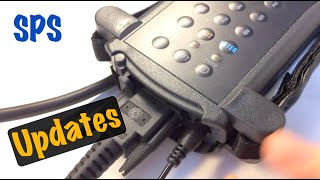
- GM GDS2 (Global Diagnostic System 2): Module Replacement and Programming (SPS2) — This function is mandatory after installing a new TCM. It programs the module with the correct VIN and vehicle-specific software calibrations.
- GM GDS2 (Global Diagnostic System 2): Fast Learn Procedure — After a new TCM is programmed, a Fast Learn procedure must be performed to erase old adaptive values and allow the new module to calibrate shift points and clutch pressures.
Wiring & Ground Locations
- G103 — Located on the left side of the engine compartment, sometimes under or near the underhood fuse block.. This is a primary chassis ground point. Corrosion or looseness here can cause intermittent voltage drops to multiple modules, including the TCM, potentially triggering false memory codes like P1621.
- TEHCM Main Connector — The 14-way connector on the outside of the transmission case that connects the vehicle harness to the internal TCM.. This is the single point for all power, ground, and communication to the TCM. Checking specific pins here is the most direct way to verify the integrity of the external circuits before condemning the internal module.
- Pin 30 (TEHCM Connector) — Pin 30 on the main transmission electrical connector.. This is a key power supply pin for the TCM. It should have a stable 12V+ with the key on.
- Pins 12 & 24 (TEHCM Connector) — Pins 12 and 24 on the main transmission electrical connector.. These are ground reference pins for the TCM. They must have excellent continuity to the chassis ground.
Real Owner Repair Stories
- Reddit r/autorepair (2013 Chevy Captiva 2.4L) — Car starts and drives fine when cold. Once it warms up, it starts jumping and bucking when coming to a stop, as if stuck in gear. Putting it in Neutral or Park resolves the issue temporarily. No check engine lights or stored codes were initially present.
❌ Tried (didn't work) Initial diagnosis was difficult due to the lack of codes.
✅ What actually fixed it The user did not post a final fix, but the symptoms described (heat-related failure, bucking at a stop) are classic signs of the internal TCM failing within the 6T40/6T45 transmission, a diagnosis supported by other technicians in the thread.
OEM Part Supersession History
24256524→24041956— Part revision and update by the manufacturer.
Heads up: The Gen 1 TEHCM (which includes the TCM) cannot be interchanged with Gen 2 TEHCMs. The valve body and TCM must be of the same generation.24287421→24287420 is listed as a compatible number, but part catalogs show 24287421 as a valid, more recent number for some applications.— Standard part number revisions.
Heads up: Always verify the correct part number by VIN before ordering, as multiple revisions exist and programming is required.
Helpful Videos


We Have This Part in Stock

The information in this article is provided for general reference and educational purposes only. Vehicle specifications, procedures, and part compatibility can vary by production date, trim level, and region. Always consult your vehicle's factory service manual and verify part numbers before purchasing or performing repairs. Safety-critical components such as airbags, seat belts, and braking systems should be installed by a qualified professional.
- Chevrolet CAPTIVA:
- 🧭 Diagnostic Flowchart
- 🎬 Helpful Videos
- 🛍️ Shop This Part
- What's Unique About the 2012-2014 Chevrolet CAPTIVA
- Symptoms You May Notice
- Most Likely Causes
- Rare But Worth Checking
- Diagnosis Steps
- Parts You'll Likely Need
- Related Codes That Often Appear With This One
- Technical Service Bulletins (TSBs) & Recalls
- Platform-Specific Known Issues
- Mechanic-Grade Diagnostic Values
- Scan Tool Commands That Help
- Wiring & Ground Locations
- Real Owner Repair Stories
- OEM Part Supersession History
- 🎟️ Get 5% Off