

P1621 on 2004-2012 Chevrolet Colorado: Control Module Memory Failure Guide
P1621 on a 2004-2012 Colorado indicates an internal memory failure in either the Powertrain Control Module (PCM/ECM) or the Transmission Control Module (TCM). Before replacing either expensive module, first rule out a weak battery, bad grounds (specifically the fender splice packs), or issues from an aftermarket tuner, as these are common and cheaper causes.
- P1621 means a critical computer (PCM or TCM) has an internal memory error.
- Before suspecting a bad computer, ALWAYS test the battery and check all main power and ground connections. Electrical instability is a very common cause.
- If you have ever used an aftermarket engine tuner, try flashing the truck back to its stock program first.
- This is not a DIY repair. A professional scan tool is needed to identify the faulty module, and any replacement module must be programmed to the truck.
What's Unique About the 2004-2012 Chevrolet Colorado
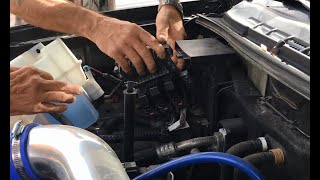
The 2004-2012 Chevrolet Colorado and its platform mates (GMC Canyon, Hummer H3) are part of the GMT355 family. Unlike many other GM trucks from this era where P1621 almost always points to a failed Transmission Control Module (TCM), the first-gen Colorado has a more balanced probability between PCM and TCM failure. Both are separate, externally-mounted modules in the engine bay on the driver's side, making them relatively accessible for testing. A significant vehicle-specific issue is the failure-prone Passlock anti-theft system, which can cause starting issues and codes that are sometimes misdiagnosed as a primary PCM failure.
Generation note: This guide covers the entire first generation of the Chevrolet Colorado (2004-2012). There are no significant differences within this generation regarding the meaning or diagnosis of code P1621.
Symptoms You May Notice
- Check Engine Light is on
- Vehicle may not start or is hard to start, sometimes requiring a 10-minute wait (Passlock issue)
- Engine runs rough, stalls, or has reduced power
- Transmission shifts harshly, erratically, or gets stuck in 3rd gear (limp mode)
- Poor fuel economy
- Other warning lights like ABS or the security/Passlock light may illuminate
- Loss of communication with the scan tool
- Replacing sensors. P1621 is an internal module self-test failure; it is almost never caused by an external sensor.
- Replacing the PCM when the TCM is at fault, or vice-versa. Proper diagnosis with a capable scan tool is needed to identify which module set the code.
- Assuming the transmission has a mechanical failure. Harsh shifting or limp mode can be caused by an electronic fault in the TCM, not a mechanical problem inside the transmission.
- Replacing the BCM for a Passlock issue. While the BCM is involved, the fault often lies with the ignition lock cylinder's sensor, which is a separate and cheaper part.
Most Likely Causes
- Low Battery Voltage or Failing Charging System 🔴 High Probability → Shop Vehicle Battery All modern vehicles are sensitive to voltage. Low voltage during startup is a primary cause of memory corruption in control modules. Multiple owners on forums like 355nation.net have reported that replacing an old or weak battery resolved the P1621 code.
How to confirm: Test the battery with a multimeter. A healthy battery should read ~12.6V with the engine off and ~14.0-14.7V while running. Have the battery and alternator professionally load-tested at an auto parts store, as a voltage test alone can be misleading.
Typical fix: Charge or replace the battery. If the charging voltage is low, diagnose the alternator and charging system.
Est. part cost: $150-$300 - Corroded or Loose Battery Terminals and Ground Straps 🟡 Medium Probability → Shop Engine Ground Strap The first-gen Colorado is known for having poor ground connections, specifically the splice packs (SP105 and SP106) located on the driver and passenger side inner fenders. Corrosion in these packs causes unstable voltage and a host of electrical gremlins, including module faults.
How to confirm: Visually inspect battery terminals. Locate the ground splice pack on the driver's side fender, behind the battery/ABS module. Disassemble it and inspect for green or white corrosion. Clean all contact points with a wire brush and dielectric grease. Repeat for the passenger side pack behind the airbox.
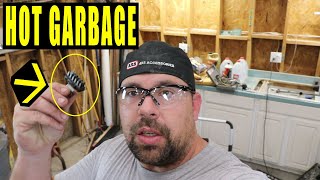
Typical fix: Clean all ground contact points and battery terminals. Many owners cut off the splice pack connector, solder the wires together, and attach them to the fender with a new ring terminal for a permanent fix. 🎬 Watch: How to find and fix these common ground issues.
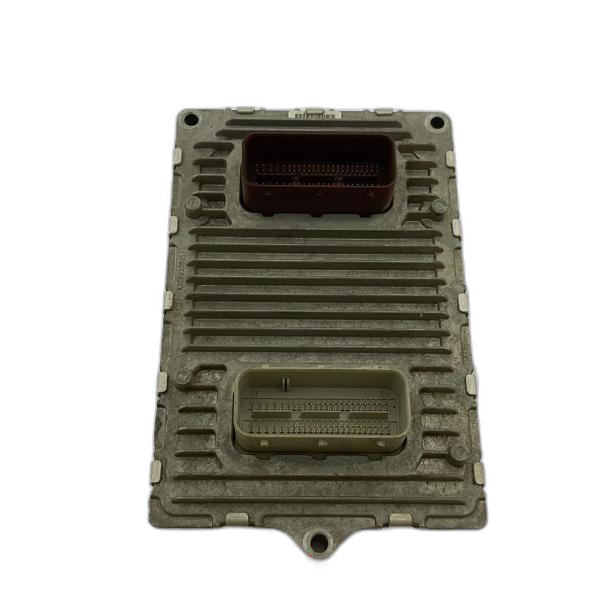
Est. part cost: $10-$50 - Internal Failure of the Powertrain Control Module (PCM/ECM) 🟡 Medium Probability → Shop Engine Control Module (ECM)
How to confirm: After confirming battery and grounds are perfect, use a high-end scan tool that can communicate with individual modules to see if the PCM is the one storing the P1621 code. This is a process of elimination; if all external factors are ruled out, the module itself is the likely cause.
Typical fix: Replace the PCM and have the new unit professionally programmed to the vehicle's VIN, followed by a Passlock relearn procedure.
Est. part cost: $300-$700 - Internal Failure of the Transmission Control Module (TCM) 🟡 Medium Probability → Shop Transmission Assembly
How to confirm: Similar to the PCM, use a high-end scan tool to see if the TCM is the source of the code. If symptoms are purely transmission-related (erratic shifting, limp mode) and the P1621 is accompanied by a P0700, the TCM is the primary suspect. This has been confirmed by owners on forums like coloradofans.com.
Typical fix: Replace the TCM. On the Colorado, this is an external module that must be programmed to the vehicle's VIN after installation.
Est. part cost: $250-$600
Rare But Worth Checking
- Corrupted Software from an Aftermarket Tuner: If an aftermarket performance programmer (e.g., Bully Dog, DiabloSport) was used, a failed or improper flash can corrupt the PCM's memory. The first diagnostic step should be to attempt to flash the PCM back to its stock factory tune. Forum users have reported this code appearing immediately after using a handheld tuner.
- Failing Ignition Switch / Passlock Sensor: → Shop Ignition Switch A worn-out ignition switch or the embedded Passlock sensor can send erratic signals to the BCM and PCM, causing no-start conditions and, in some cases, communication fault codes that can be related to P1621. If you also have a flashing security light, this is a strong possibility.
Diagnosis Steps
- Check Battery and Charging System: Ensure the battery voltage is stable and correct (~12.6V off, ~14.0-14.7V running). A weak or failing battery is a common cause of memory codes and has fixed this issue for other Colorado owners.
- Inspect Electrical Connections: Clean and tighten battery terminals. Critically, inspect and clean the ground splice packs on both inner fenders (SP105/G105 on driver's side, SP106 on passenger's). These are a known weak point.
- Scan with a Professional Tool: Use a scan tool capable of reading manufacturer-specific codes from individual modules (PCM, TCM, BCM), such as a GM Tech2. Determine which module stored the P1621 code. This is the most critical step.
- Address Aftermarket Tuners: If the vehicle has or had an aftermarket tuner, flash the PCM back to the stock program and see if the code clears.
- Investigate Passlock System: If a no-start condition is the primary symptom, check for BCM codes like B2960. A flashing security light is a key indicator of a Passlock fault.
- Verify Power and Ground at the Module: If a specific module is identified, use a multimeter and wiring diagram to check for stable power and clean ground signals at the module's connector to rule out a wiring issue.
- Replace the Faulty Module: If all previous steps are passed, the identified module (PCM or TCM) has failed internally and must be replaced.
- Program the New Module: A new PCM or TCM is not plug-and-play. It must be programmed with the vehicle's specific VIN and software using dealer-level tools, followed by a security relearn procedure.
Parts You'll Likely Need
- Powertrain Control Module (PCM/ECM)
(OEM #VIN Specific (e.g., 12597521, 12569773 for early models))— If diagnosis points to the engine controller, its internal memory has failed, requiring replacement. Part numbers are highly specific to the year, engine, and emissions.
Trusted brands: ACDelco (Remanufactured), Flagship One, Flashmasters
OEM price range: $400-$700
Aftermarket price range: $200-$500 - Transmission Control Module (TCM)
(OEM #24230461 (Verify by VIN))— If diagnosis points to the transmission controller, its internal memory has failed. This is a common failure point for P1621 on many GM vehicles.
Trusted brands: ACDelco (Remanufactured), Garrett Tuning
OEM price range: $400-$600
Aftermarket price range: $250-$500
Related Codes That Often Appear With This One
- P0700 — P0700 is a generic code set by the PCM to indicate that the Transmission Control Module (TCM) has stored a fault. If you see P0700, it strongly suggests the P1621 code originated in the TCM.
- P0601, P0603, P0604 — These are all internal control module memory or processor error codes. Seeing them alongside P1621 further confirms that a control module has failed internally.
- B2960 — This Body Control Module (BCM) code relates to a 'Security System Sensor Data Incorrect' fault. If you see this with P1621 and are having no-start issues, it points strongly toward a problem with the Passlock system (ignition switch sensor) rather than a primary PCM internal failure.
Technical Service Bulletins (TSBs) & Recalls
- TSB #04-06-04-047: This bulletin provides information on various engine performance and drivability issues, and includes procedures for PCM replacement that mandate a 'V.T.D. (Vehicle Theft Deterrent) Relearn Procedure,' which is critical when dealing with Passlock-related faults or module replacement.
- TSB Bulletin #05-06-04-060A: This manufacturer bulletin provides information to technicians regarding control module Diagnostic Trouble Codes (DTCs) including P1621, which can be shared across multiple modules.
Platform-Specific Known Issues
- Passlock Anti-Theft System Failure: A very common issue on first-gen Colorados is a failure of the Passlock sensor inside the ignition lock housing. This causes a no-start or an intermittent crank-no-start condition, often with a flashing security light on the dash. The system requires a 10-minute 'relearn' cycle to start the truck. This can be misdiagnosed as a PCM failure, but is often fixed by replacing the ignition lock housing.
- Corroded Fender Ground Splice Packs: The main under-hood ground points are two splice packs (G105/SP105 and SP106) bolted to the inner fenders. They are not weatherproof and are notorious for corroding, causing unstable voltage to dozens of components, including the PCM and TCM. Cleaning or bypassing these grounds is a common preventative fix for many electrical issues on these trucks.
Mechanic-Grade Diagnostic Values
- Battery Voltage (Key ON, Engine OFF) — expected: >12.4 Volts. Failure: A reading below 12.4V indicates a discharged battery that can cause memory corruption during startup self-checks.
- Battery Voltage (Cranking) — expected: >9.5 Volts. Failure: Voltage dropping below 9.5V during cranking can cause modules to reset or corrupt their memory, triggering P1621.
- Charging System Voltage (Engine Running) — expected: ~14.0 - 14.7 Volts. Failure: Voltage outside this range indicates a problem with the alternator or voltage regulator, which can lead to module damage or faults.
- PCM/TCM Ground Circuit Resistance — expected: < 1.0 Ohm to battery negative terminal. Failure: High resistance on a ground circuit creates a floating ground, causing unstable module operation and memory errors.
Scan Tool Commands That Help
- GM Tech2 / GDS2: Service Programming System (SPS) — This is a mandatory function used to load the correct VIN-specific software onto a new or replacement PCM or TCM. Without this, the vehicle will not start or run correctly.
- GM Tech2 / GDS2: VTD (Vehicle Theft Deterrent) Relearn — After replacing the PCM, the Tech2 can be used to perform the security relearn procedure to sync the new module with the vehicle's Passlock system and keys.
- GM Tech2 / GDS2: Crankshaft Position Variation Learn (CASE Relearn) — After replacing the PCM, a CASE relearn is required to calibrate the new module to the specific crankshaft position sensor. Failure to do this will typically set a P0315 code and illuminate the check engine light, though the vehicle will still run.
- GM Tech2 / GDS2: View Captured Data / Snapshot — This function allows a technician to record and review live data streams from the moment a code was set, which can help differentiate between a hard module failure and an intermittent wiring or voltage issue.
Wiring & Ground Locations
- SP105 / G105 — Located on the driver's side inner fender, near the EBCM (ABS module) and battery.. This is a major ground splice pack that grounds the fuel pump, fuel level sender, Run/Crank relay, and EBCM. Corrosion here is extremely common and can cause stalling, no-starts, and various electrical faults that can be misdiagnosed as a bad PCM.
- SP106 / G106 — Located on the passenger's side inner fender, behind the engine air cleaner box.. This ground splice pack serves the HVAC control module, Data Link Connector (DLC), and the automatic transmission shift-lock solenoid. A bad ground here can cause communication issues with a scan tool or other strange electrical behavior.
- G103 — Located on the lower left side of the engine.. This is a primary engine ground point. A poor connection here can affect the PCM and other critical engine sensors.
- Passlock Wire (for bypass) — A white wire with a blue stripe in the harness under the steering column.. In cases of a recurring Passlock anti-theft issue causing a no-start (often misdiagnosed with PCM faults), some owners choose to bypass the system by cutting this wire *while the engine is running* to permanently disable the security check. This is an unofficial fix for chronic Passlock problems.
Real Owner Repair Stories
- Chevrolet Forum user 'treetop' (2002 Silverado (similar GM electrical architecture)) — P1621 code, clock resetting, seat and radio memory loss.
❌ Tried (didn't work) Resetting the 'Change Oil' warning., Flashing the PCM back to the stock tune after the problem started.
✅ What actually fixed it The user concluded the Bully Dog programmer damaged the computer because the problem started immediately after installation and persisted after returning to stock. The thread implies the final fix was replacing the PCM, as the user acknowledged they had damaged it.
OEM Part Supersession History
12569773→12597521, 19209820, 19209821— Standard part updates for hardware revisions and software compatibility.
Heads up: Part number 12597521 is a common service replacement for 2004-2006 Colorado, Canyon, and Hummer H3 models, but VIN programming is always required for compatibility.
Model Year Variations Within This Range
- 2004-2006: These early models typically use PCM service numbers like 12569773 or 12597521.
- 2007: The 2007 model year was a transition year with different PCM part numbers for the I4 and I5 engines.
- 2008-2009: These years introduced new engine options, including the 5.3L V8, which uses a completely different PCM than the I4 and I5 models. Diagnosis remains similar, but the specific PCM part number is critical.
Diagnostic Flowchart
Used vs. New Parts: Buying Guide for This Vehicle
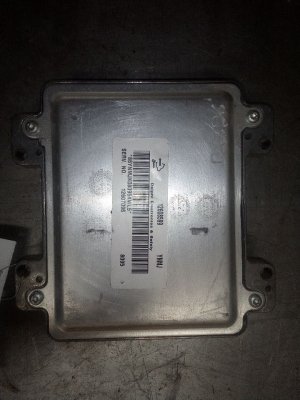
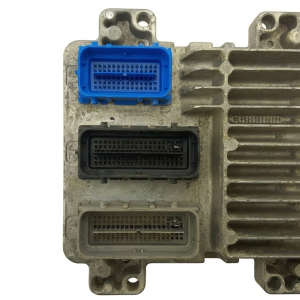
When a used part is the smart pick: A used PCM or TCM from a junkyard is NOT a good choice for a DIY repair on this vehicle. These modules are VIN-locked to the original vehicle. Installing a used module without reprogramming will result in a no-start condition due to the Passlock anti-theft system. It only makes sense if you have personal access to professional tools (like a GM Tech2 with a TIS subscription) to wipe and reprogram the module, or if you are sending it to a specialized service that can do this for you before installation.
Donor-vehicle mileage cap: roughly under 150000 miles for the part to have meaningful remaining life.
What to inspect on the donor part:
- Verify the part number on the used module EXACTLY matches the original or a known superseded number.
- Source the part from a southern or dry-climate state to minimize the risk of internal corrosion.
- Inspect connector pins for any signs of corrosion, bending, or water damage before purchase.
OEM-only on this vehicle (don't cheap out):
- Powertrain Control Module (PCM)
- Transmission Control Module (TCM)
Aftermarket brands forum-validated for this vehicle:
- ACDelco (Remanufactured)
- Reputable programming services like PCM of NC, Garrett Tuning, or Module Mechanics who supply pre-programmed modules.
Brands owners have reported issues with on this vehicle:
- Unknown eBay/Amazon sellers offering non-programmed or 'plug-and-play' modules without requiring a VIN. These are unlikely to work correctly.
Real Owner Stories
Aggregated from forums and TSBs cited above. Mileages and costs reflect what owners reported in those sources.
2004-2012 Chevrolet Colorado
Symptoms: Check Engine Light was on with codes P1621 and P0335.
What fixed it: The issue was resolved by replacing the old battery with a new one.
Source hint: https://www.355nation.net/threads/p1621-and-p0335-codes.51602/ (User reports P1621 fixed with a new battery)
2004-2012 Chevrolet Colorado
Symptoms: Transmission was shifting erratically and going into limp mode, with codes P1621 and P0700 stored.
What fixed it: The problem was diagnosed as an internal failure of the Transmission Control Module (TCM), which required replacement.
Source hint: https://www.coloradofans.com/threads/p1621-and-p0700.142089/ (Discussion on P1621 with P0700 pointing to TCM failure)
2004-2012 Chevrolet Colorado
Symptoms: Vehicle had an intermittent no-start condition where it would crank but not fire. The security light would flash, and sometimes it would start after waiting for 10 minutes.
What fixed it: The root cause was a faulty Passlock sensor, which was fixed by replacing the entire ignition lock housing.
Source hint: https://www.355nation.net/threads/another-passlock-question.190338/ (Discussion on Passlock issues causing no-start conditions)
2004-2012 Chevrolet Colorado
Symptoms: Truck was experiencing a host of electrical gremlins, including module fault codes like P1621, due to unstable voltage.
What fixed it: The problem was permanently fixed by locating the corroded ground splice packs (SP105 and SP106) on the inner fenders, cutting off the connectors, and soldering the wires together to a new ring terminal bolted directly to the fender.
Source hint: https://www.youtube.com/watch?v=Wp5o_t-V_aA (Video guide on locating and fixing the common ground splice packs, SP105 and SP106)
Related OBD-II Codes
Frequently Asked Questions
My Colorado won't start and the security light is flashing. Is this related to the P1621 code?
I've heard about bad grounds on the 2004-2012 Colorado. Where are they and could they cause P1621?
Can I just swap in a used PCM from a junkyard to fix my P1621 code?
My transmission is shifting hard and is stuck in 3rd gear. How is that related to a P1621 code?
If I replace the PCM or TCM, is any special procedure required?
My battery tests at 12.6 volts. Could it still be the cause of my P1621?
Helpful Videos

Used OEM Parts in Stock
New Aftermarket Parts Available

The information in this article is provided for general reference and educational purposes only. Vehicle specifications, procedures, and part compatibility can vary by production date, trim level, and region. Always consult your vehicle's factory service manual and verify part numbers before purchasing or performing repairs. Safety-critical components such as airbags, seat belts, and braking systems should be installed by a qualified professional.
- Chevrolet Colorado:
- 🧭 Diagnostic Flowchart
- 🎬 Helpful Videos
- 🛍️ Shop This Part
- What's Unique About the 2004-2012 Chevrolet Colorado
- Symptoms You May Notice
- Most Likely Causes
- Rare But Worth Checking
- Diagnosis Steps
- Parts You'll Likely Need
- Related Codes That Often Appear With This One
- Technical Service Bulletins (TSBs) & Recalls
- Platform-Specific Known Issues
- Mechanic-Grade Diagnostic Values
- Scan Tool Commands That Help
- Wiring & Ground Locations
- Real Owner Repair Stories
- OEM Part Supersession History
- Model Year Variations Within This Range
- Used vs. New Parts: Buying Guide for This Vehicle
- Real Owner Stories
- 2004-2012 Chevrolet Colorado
- 2004-2012 Chevrolet Colorado
- 2004-2012 Chevrolet Colorado
- 2004-2012 Chevrolet Colorado
- Related OBD-II Codes
- Frequently Asked Questions
- 🎟️ Get 5% Off