

P1621 on 2006-2013 Chevrolet Corvette: TCM Memory Failure Causes and Fixes
On a 2006-2013 Corvette with the 6L80 automatic, code P1621 almost always means the Transmission Control Module (TCM) has failed. This part is inside the transmission oil pan and requires professional replacement and programming, typically costing $700-$1500. Before condemning the module, a thorough check of battery voltage and grounds is essential.
- P1621 on a 2006-2013 Corvette almost certainly means the Transmission Control Module (TCM) has failed.
- Symptoms are transmission-related, including harsh shifting, getting stuck in gear (limp mode), and a blank gear indicator.
- The TCM is inside the transmission pan (as part of the TEHCM) and requires professional replacement and programming.
- Always check the battery and ground connections thoroughly before condemning the expensive TCM, as voltage issues can cause similar symptoms.
- This is a well-known failure on the 6L80 transmission, affecting many other GM vehicles like the Silverado and Tahoe.
What's Unique About the 2005-2013 Chevrolet Corvette
The C6 Corvette with the 6L80 transmission (2006-2013 models) houses its Transmission Control Module (TCM) inside the transmission oil pan as part of the Transmission Electro-Hydraulic Control Module (TEHCM). This location subjects the electronics to significant heat cycles and vibration, leading to a well-documented high rate of failure of solder joints and other internal components. Unlike on some other GM vehicles where P1621 might point to the main engine computer, on the C6 Corvette, diagnosis is specifically directed toward this internal transmission module by GM's own service bulletins.
Symptoms You May Notice
- Harsh, erratic, or delayed shifting
- Transmission gets stuck in one gear (limp mode, often 3rd gear)
- Check Engine Light is on
- 'Service Traction Control' or 'Service Electrical System' message on the driver information center
- Gear position indicator (PRNDL) on the dashboard is blank or incorrect
- Vehicle may show a 'Reduced Engine Power' message
- Complete loss of forward gears, but Reverse still works (or vice-versa)
- Replacing the main Engine Control Module (ECM) or Powertrain Control Module (PCM). It is critical to confirm with a scan tool that the code is set by the TCM.
- Replacing the entire transmission assembly. P1621 is an electronic fault, not a mechanical one. Unless there is evidence of mechanical damage (e.g., metal in the pan), the transmission itself is likely fine.
Most Likely Causes
- Internal Transmission Control Module (TCM/TEHCM) Failure 🔴 High Probability → Shop Transmission Assembly The TCM is integrated into the TEHCM, which is located inside the hot transmission oil pan. Constant exposure to heat and vibration leads to premature failure of the electronic components and solder joints over time. This is a widely documented issue on GM's 6L80 transmission across many platforms.
How to confirm: Use a professional scan tool to confirm P1621 is stored in the TCM, not another module. If all power and ground inputs to the module are good under load, the module itself is faulty. A definitive test is when an attempt to re-flash the module's software fails or the code returns immediately. Often, the scan tool will lose communication with the TCM entirely, logging a U0101 code in other modules.
Typical fix: Replace the entire Transmission Electro-Hydraulic Control Module (TEHCM) assembly. The new module must be programmed to the vehicle's VIN by a dealer or a qualified shop with GM programming software (SPS).
Est. part cost: $300-$650 - Low Battery Voltage or Poor Ground Connection ⚪ Low Probability → Shop Vehicle Battery C6 Corvettes are notoriously sensitive to voltage. The battery is located in the rear, and long cable runs combined with potential corrosion on ground points can cause voltage drops that trigger false module error codes during startup.
How to confirm: Test the battery with a digital tester; it should be above 12.4V at rest. Check that the alternator is charging correctly (13.7-14.7V). Inspect and clean the battery terminals and the main chassis ground points, especially the one under the battery tray and the large connector on the fender wall beside the battery.
Typical fix: Charge or replace the weak battery. Clean, tighten, or repair all corroded or loose ground connections. One owner on CorvetteForum fixed a U0101/P1682 issue by finding a ground pin that had backed out 🎬 See how one owner fixed limp mode and electrical issues of a large connector near the battery.
Est. part cost: $0-$250
Rare But Worth Checking
- Aftermarket Engine/Transmission Tune: → Shop Transmission Assembly Improperly applied aftermarket tunes can sometimes corrupt the memory of the TCM or PCM, leading to a P1621 code. If the code appeared shortly after installing a tune, reverting to the stock tune is a key diagnostic step.
- Wiring Harness Fault: While less common than outright module failure, high resistance in a power or ground wire within the main harness can starve the TEHCM for voltage under load, causing it to malfunction and set codes. In one documented case on a 2011 Express van with the same powertrain, a faulty power feed wire was the culprit, not the TEHCM itself.
Diagnosis Steps
- Scan for Diagnostic Trouble Codes (DTCs) in ALL modules using a professional scan tool that can read manufacturer-specific codes.
- Confirm that code P1621 is stored in the Transmission Control Module (TCM). Note any other codes, especially P0700 or U0101.
- Check Battery Health: Test the battery voltage (must be >12.4V) and perform a load test. C6 Corvettes are very sensitive to low voltage.
- Inspect Power and Ground Connections: Ensure battery terminals are clean and tight. Inspect and clean the main chassis and engine ground points, paying close attention to the ground under the battery tray (G104) 🎬 Watch: A guide to finding and cleaning Corvette ground wires and on the engine block (G106).
- Check Fuses: Inspect fuses related to the TCM and ignition (e.g., in the underhood fuse block).
- Attempt a Re-flash: A qualified shop may attempt to re-program (re-flash) the TCM with the latest GM software. If this process fails or the code returns immediately, it confirms the TCM has failed internally.
- Check for Wiring Faults: If the problem is intermittent, perform a voltage drop test on the TEHCM power and ground circuits at the main transmission connector to rule out high resistance in the harness.
- Replace the TCM/TEHCM: If all external factors are ruled out, the TCM/TEHCM assembly inside the transmission pan must be replaced and programmed.
Parts You'll Likely Need
- Transmission Electro-Hydraulic Control Module (TEHCM)
(OEM #24256861 (Commonly cited, but has been superseded by numbers like 19431596. Always verify by VIN).)— This is the assembly that contains the faulty Transmission Control Module (TCM). For the 6L80 transmission, the TCM is not sold separately. This is the definitive fix for an internal P1621 fault.
Trusted brands: ACDelco (OEM), Sonnax (Remanufactured), Street Smart Transmission (Remanufactured)
OEM price range: $450-$650
Aftermarket price range: $300-$500
Related Codes That Often Appear With This One
- P0700 — This is a generic code the ECM sets to turn on the Check Engine Light. It simply means the TCM has stored a fault code, which in this case is P1621.
- U0101 — This code means 'Lost Communication with TCM'. If the P1621 fault is severe enough, the TCM may fail completely and stop communicating on the vehicle's data network, causing other modules to log this code. This combination strongly points to a failed TEHCM.
- P0601, P0603, P0604, P062F — These are all internal control module memory or processor error codes. Seeing any of these along with P1621 strongly confirms a fatal internal failure of the TCM, as noted in TSB PIP4653E.
Technical Service Bulletins (TSBs) & Recalls
- PIP4653E: Advises that DTCs P1621, P0601, P0603, P0604, or P062F stored in the TCM may require module replacement after ruling out external factors.
- 05-06-04-060A: General bulletin noting that codes like P1621 indicate internal control module faults and stresses the need to identify which module set the code, as this DTC can be shared in multiple modules.
Platform-Specific Known Issues
- GM Technical Service Bulletin #PIP4653E specifically links P1621 (and related codes like P0601, P0604, etc.) to an internal TCM fault on this platform.
Mechanic-Grade Diagnostic Values
- TEHCM Shift Solenoid (On/Off type) Resistance — expected: 20-40 Ohms. Failure: A reading outside this range indicates a failed solenoid coil, requiring TEHCM replacement.
- TEHCM Pressure Control Solenoid (PWM type) Resistance — expected: 3-8 Ohms. Failure: A reading outside this range indicates a failed solenoid coil, requiring TEHCM replacement.
- TEHCM Shift Solenoid (On/Off type) Current Draw — expected: 0.3 - 0.7 Amps @ 12V. Failure: Incorrect amperage draw during a bench test points to an internal solenoid fault.
- TEHCM Pressure Control Solenoid (PWM type) Current Draw — expected: 1.5 - 4.0 Amps @ 12V. Failure: Incorrect amperage draw during a bench test points to an internal solenoid fault.
- TEHCM Pressure Switch State — expected: Normally Closed (shows continuity with no pressure). Failure: When testing with a multimeter, the switch should show an open circuit when the internal diaphragm is pressed. If it remains open or closed regardless of state, the switch is bad.
Scan Tool Commands That Help
- GM GDS2 / Tech2 / J2534 Pass-Thru: Service Programming System (SPS) — This is required to flash the new TEHCM with the vehicle's specific VIN and the latest factory calibration files. The function is typically labeled 'Replace and Reprogram'. This is not optional; the vehicle will not operate correctly without it.
- GM GDS2 / High-End Bidirectional Scanner (e.g., Autel): Transmission Service Fast Learn / Adaptive Values Learn — After a new TEHCM is programmed via SPS, this procedure must be run to allow the module to learn the clutch fill volumes and shift characteristics. It involves a series of automated and manual steps with the engine running and transmission fluid at operating temperature (160-200°F). Skipping this will result in poor shift quality.
Wiring & Ground Locations
- G104 / G108 — On the frame rail right next to the battery, under the battery tray. Requires battery removal to access and service properly.. This is a major ground point for multiple modules. Corrosion here due to battery fumes or moisture is a common cause of widespread electrical issues, including module communication faults like U0101 that accompany P1621.
- G106 — On the right side of the engine block, typically above or near the starter motor.. This is a primary engine and PCM ground. A loose or corroded connection here can cause voltage instability for the entire powertrain control system, potentially leading to false module memory codes. Access requires caution as the main starter power lug is nearby.
- Main Harness Connector near Battery — A large, multi-pin connector located on the passenger-side fender wall, near the battery.. This connector serves as a pass-through for many critical circuits, including grounds for the powertrain. A pin backing out of this connector has been documented as a direct cause of U0101 (Lost Communication with TCM), mimicking a failed TEHCM.
- X184 (or C184 on 2005 models) — Engine compartment, passenger side, near the firewall. It serves as the transmission-to-engine harness interface.. This is the main external connection point for the TEHCM. All power, ground, and data lines for the transmission pass through this connector. Checking for voltage, ground, and pin integrity here is a key step before condemning the internal TEHCM.
Real Owner Repair Stories
- CorvetteForum user 'j Gip' (C6 Corvette with Automatic Transmission) — Codes P1682 and U0101, transmission in limp mode (only Reverse and 3rd gear), car would barely take any throttle.
❌ Tried (didn't work) Cleaning all module connections., Cleaning the mass air flow sensor., Checking connections directly at the transmission.
✅ What actually fixed it The ground wire pin had backed out of the large multi-pin connector located on the fender wall beside the battery. The user bypassed the faulty pin in the connector by cutting the ground wire on both sides and splicing it directly.
OEM Part Supersession History
24256861→19431596 (among others)— GM frequently updates electronic modules to improve reliability, address component obsolescence, or fix firmware issues. Later part numbers generally have improved internal components and thermal tolerance.
Heads up: Always verify the correct part number by VIN. Remanufacturers like Sonnax list multiple OE numbers (e.g., 24251029, 24256051, 24258304) that are consolidated into their specific remanufactured part based on model year breaks.
Model Year Variations Within This Range
- 2006-2009 vs 2010+ : TEHCMs from 2006-2009 are generally interchangeable with each other. However, beginning in 2010, the TEHCM hardware and internal software became year-specific. A 2011 TEHCM, for example, cannot be installed and programmed into a 2008 vehicle, and vice-versa. This will result in a no-communication or limp-mode condition. It is critical to order the correct TEHCM for the specific model year.
Diagnostic Flowchart
Other Known Issues on This Vehicle
Issues unrelated to this code that are worth knowing about as an owner of this generation:
- Harmonic Balancer Wobble 🔴 High — Common across all C6 model years, especially LS2/LS3 engines. Often presents as a belt 'chirp' before visible wobble. Failure can damage the steering rack or front main seal. (Ref: TSB #05-06-01-001A (for early 2005 models with loose bolts), but the more common issue is the rubber delaminating, which affects all years.)
- Fuel Level Sending Unit Failure 🟠 Medium — Very common. Causes the fuel gauge to read empty after a fill-up, often setting code P2068. The issue is sulfur deposits on the sender contacts. Repair is labor-intensive as it requires dropping the fuel tanks. (Ref: A service bulletin was released for early models, but the issue persists. Using Top Tier gas with detergents (like Techron) is a common preventative recommendation.)
- Automatic Shifter Cable Bushing Failure 🟡 Low — Increasingly common as the plastic bushings age and become brittle. The shifter will feel loose and move freely without changing gears, potentially leaving the car stuck in Park, Neutral, or Reverse.
- Shifter Stuck in Park 🟡 Low — Common issue caused by failure of microswitches or the shift lock solenoid within the shifter assembly. This is a separate issue from the cable bushing failure.
Used vs. New Parts: Buying Guide for This Vehicle
When a used part is the smart pick: Almost never. A used TEHCM from a salvage yard is VIN-locked to its original vehicle. Standard dealer tools (SPS) cannot overwrite the existing VIN on a used module to program it to a new vehicle. This makes a typical used part unusable.
Donor-vehicle mileage cap: roughly under 50000 miles for the part to have meaningful remaining life.
What to inspect on the donor part:
- This only applies if sending a core to a specialty cloning or remanufacturing service.
- Ensure the module still communicates, even if it has fault codes. A completely dead module cannot be cloned.
- Verify the part number/tag ID on the used module matches the required part for your vehicle's year.
OEM-only on this vehicle (don't cheap out):
- Transmission Electro-Hydraulic Control Module (TEHCM) - While not strictly 'OEM-only', the choice is between a new OEM (ACDelco) part or a high-quality remanufactured unit from a specialist. Standard used parts are not a viable option due to VIN-locking.
Aftermarket brands forum-validated for this vehicle:
- Sonnax (Remanufactured): Widely regarded in the transmission industry for quality remanufacturing processes, including ultrasonic cleaning, replacement of common failure items like pressure switches, and full electro-hydraulic testing.
- Plug N Play Parts / Spartan Autoworks (Cloning Service): Offers a service to clone the data from your old, failing module onto a new or refurbished one, which avoids the need for dealer programming. This is only an option if your original module is still able to communicate.
Brands owners have reported issues with on this vehicle:
- Unbranded, no-name sellers on platforms like eBay or Amazon that do not have a clear remanufacturing process or warranty support. The risk of receiving a non-functional or incorrectly programmed part is very high.
Real Owner Stories
Aggregated from forums and TSBs cited above. Mileages and costs reflect what owners reported in those sources.
2006 Chevrolet Corvette A6
Symptoms: Transmission hanging in 3rd gear with the check engine light on; classic limp mode symptoms.
What fixed it: Identified as a TCM fault requiring module replacement/repair.
Source hint: CorvetteForum: 'Transmission Hanging in 3rd gear'
2005-2013 Chevrolet Corvette
Symptoms: Vehicle threw P1682 and U0101 codes, which are related communication and power codes.
What fixed it: Found and repaired a ground pin that had backed out of a large connector near the battery.
Source hint: CorvetteForum: Real-world repair story for similar codes
2005-2013 Chevrolet Corvette 6L80
Symptoms: Codes P0878 and P2724, leading to limp mode and eventual loss of forward gears.
What fixed it: Internal TEHCM failure required replacement of the assembly.
Source hint: CorvetteForum: '6l80e troubles. Big suprise...'
Related OBD-II Codes
Frequently Asked Questions
Does GM Technical Service Bulletin #PIP4653E apply to my C6 Corvette's P1621 code?
Can a weak battery in my 2005-2013 Corvette cause a false P1621 code?
If I replace the TEHCM assembly myself to fix P1621, is it plug-and-play?
Why does my Corvette lose forward gears but keep Reverse when P1621 is present?
Is there a specific ground point I should check on my C6 Corvette for communication codes?
What other GM vehicles share this P1621 TEHCM issue with the Corvette?
Helpful Videos

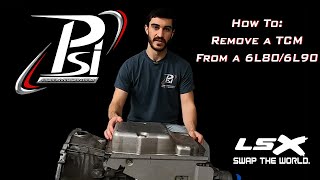
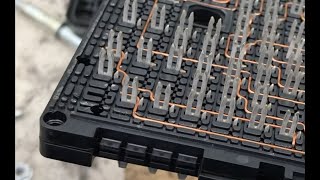
We Have This Part in Stock

The information in this article is provided for general reference and educational purposes only. Vehicle specifications, procedures, and part compatibility can vary by production date, trim level, and region. Always consult your vehicle's factory service manual and verify part numbers before purchasing or performing repairs. Safety-critical components such as airbags, seat belts, and braking systems should be installed by a qualified professional.
- Chevrolet Corvette:
- 🧭 Diagnostic Flowchart
- 🎬 Helpful Videos
- 🛍️ Shop This Part
- What's Unique About the 2005-2013 Chevrolet Corvette
- Symptoms You May Notice
- Most Likely Causes
- Rare But Worth Checking
- Diagnosis Steps
- Parts You'll Likely Need
- Related Codes That Often Appear With This One
- Technical Service Bulletins (TSBs) & Recalls
- Platform-Specific Known Issues
- Mechanic-Grade Diagnostic Values
- Scan Tool Commands That Help
- Wiring & Ground Locations
- Real Owner Repair Stories
- OEM Part Supersession History
- Model Year Variations Within This Range
- Other Known Issues on This Vehicle
- Used vs. New Parts: Buying Guide for This Vehicle
- Real Owner Stories
- 2006 Chevrolet Corvette A6
- 2005-2013 Chevrolet Corvette
- 2005-2013 Chevrolet Corvette 6L80
- Related OBD-II Codes
- Frequently Asked Questions
- 🎟️ Get 5% Off