

P1621 on 2007-2014 Chevrolet Corvette: TCM Memory Fault Guide
Code P1621 on a 2007-2014 Corvette typically indicates an internal memory failure in the Transmission Control Module (TCM). The most common fix is replacing the TCM, which is located inside the transmission oil pan and must be programmed by a dealer or a qualified shop. Expect costs to range from $500 to over $1,100.
- P1621 on a 2007-2014 Corvette almost always means the Transmission Control Module (TCM/TEHCM), located inside the transmission, has failed internally.
- Symptoms include a check engine light, harsh shifting, 'Service Traction Control' messages, and potentially getting stuck in gear.
- While checking the battery and key ground points (especially under the battery tray) is a crucial first step, the most likely solution is replacing the TCM.
- TCM replacement is not a simple DIY job; it requires dropping the transmission pan and professional programming to sync the new module with your vehicle.
What's Unique About the 2007-2014 Chevrolet CORVETTE
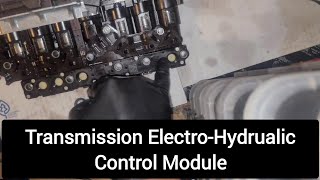
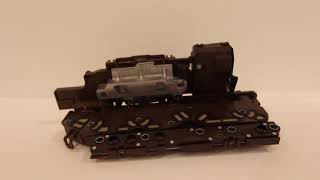
While P1621 can refer to a memory issue in various modules on different GM vehicles, on the C6 and early C7 Corvette, it is strongly associated with the Transmission Control Module (TCM) for the 6-speed 6L80 automatic transmission. The TCM in these vehicles is a Transmission Electro-Hydraulic Control Module (TEHCM), which integrates the computer, solenoids, and pressure switches into a single unit inside the transmission pan. 🎬 See this walkthrough on removing the TCM from the transmission. Manufacturer TSBs specifically guide technicians to investigate the TEHCM when this code appears, making the diagnosis more direct than on other platforms where it might be a more general Powertrain Control Module (PCM) fault.
Diagnostic Flowchart
Tap your situation to follow the diagnostic path that matches what you're seeing on this vehicle.
Generation note: This range covers the later C6 generation (2007-2013) and the first year of the C7 generation (2014). Both generations in this timeframe used a 6L80 6-speed automatic transmission, and the associated TCM issues appear to be common across them. The provided TSBs apply to vehicles through the 2014 model year.
Symptoms You May Notice
- Check Engine Light (Malfunction Indicator Lamp) is on
- Transmission may be stuck in one gear (limp mode)
- Harsh, erratic, or delayed shifting
- "Service Traction Control" or "Service Electrical System" messages on the Driver Information Center (DIC)
- Loss of communication with the TCM, which may cause other codes like U0101 to appear
- Gear position indicator on the dashboard may be blank or incorrect
- Vehicle may show "Reduced Engine Power" message
- Replacing the Powertrain Control Module (PCM/ECM) when the fault is in the TCM. On Corvettes, TSBs specifically direct diagnosis towards the TCM for this code.
- Replacing the entire transmission. P1621 is an electronic fault code. Unless there is evidence of mechanical failure (like metal debris in the pan), the problem is almost certainly the TEHCM, not the transmission's mechanical components.
Most Likely Causes
- Internal Transmission Control Module (TCM) Failure 🔴 High Probability → Shop Transmission Assembly The issue is well-documented in GM Technical Service Bulletins for this platform, pointing to internal memory (EEPROM) corruption or hardware failure within the TCM, which is part of the TEHCM assembly. [TSB #PIP4653E, TSB #05-06-04-060A] Heat cycles and age are primary contributors to the failure of this internally-mounted electronic component.
How to confirm: After ruling out power/ground issues, a diagnostic scan tool showing P1621 stored in the TCM is the primary confirmation. If a shop attempts to reprogram (reflash) the module and the process fails or the code returns immediately, the module is definitively faulty.
Typical fix: Replacement of the Transmission Control Module (TEHCM), which is inside the transmission pan. This must be followed by programming the new module to the vehicle using specialized software.
Est. part cost: $250-$600 - Poor Power or Ground Connection to the TCM ⚪ Low Probability Corvettes are known to be sensitive to voltage fluctuations. A weak battery or corroded ground can cause a host of electrical gremlins that can mimic module failure. Forum users frequently advise checking grounds as a first step for any electrical issue. The main ground under the battery tray is a common culprit for corrosion.
How to confirm: Inspect the TCM wiring harness and the main 16-way connector on the outside of the transmission case for damage, corrosion, or backed-out pins. Use a multimeter to verify stable battery voltage (above 12.4V) and check for good ground continuity at the TCM connector according to a factory wiring diagram. Key grounds to inspect on a C6 include the one under the battery tray and the one on the engine block near the starter.
Typical fix: Repairing the damaged wiring, cleaning the ground connection points with a wire brush, or replacing a faulty/weak battery.
Est. part cost: $10-$250
Rare But Worth Checking
- Failed or Interrupted Module Reprogramming: If an aftermarket tune was recently installed or a factory reflash was interrupted (e.g., due to a voltage drop), it can corrupt the module's memory and set this code. Reverting to the stock tune or attempting a clean reflash with a stable power supply can sometimes resolve this. This was reported by a Silverado owner who used a Bully Dog programmer and encountered P1621.
Diagnosis Steps
- Scan for all DTCs in all modules. Use a scan tool that can read manufacturer-specific codes. Confirm that P1621 is stored in the TCM and note if any communication codes like U0101 are present in other modules.
- Check Battery Health & Connections: Ensure the battery is fully charged (above 12.4V) and in good condition. C6 Corvettes are notoriously sensitive to low voltage. Check that all battery terminal connections are clean and tight, as loose connections after a battery change are a common source of issues.
- Inspect Key Ground Points: Visually inspect and clean the primary ground locations. The most critical one is located on the frame rail directly under the battery tray, which is prone to corrosion. Also check the ground on the engine block near the starter (G106).
- Inspect TCM Wiring: Visually inspect the main 16-way wiring harness connector on the outside of the transmission case for any signs of damage, corrosion, or loose pins. A CorvetteForum user noted that a ground wire pin had backed out of a large connector near the battery, causing a U0101 code.
- Verify Power and Ground at the Connector: Using a factory wiring diagram, check for proper voltage and ground at the TCM connector itself. Wiggle the harness while testing to check for intermittent connections.
- Attempt a Re-flash: A dealer or qualified independent shop can attempt to reprogram (re-flash) the TCM with the latest GM software. If the process fails, cannot be initiated, or the code returns immediately, it confirms the module is bad.
- Replace the TCM/TEHCM: If all previous steps fail, the TCM is faulty and must be replaced. This involves draining the transmission fluid, dropping the pan, and replacing the entire TEHCM assembly, followed by programming the new module.
Parts You'll Likely Need
- Transmission Control Module (TCM / TEHCM)
(OEM #Varies by year, examples include ACDelco 24256861 (often superseded). Always verify with VIN.)— This code, especially when supported by TSBs, points directly to an internal, non-serviceable failure of the TCM's memory. In the 6L80, this is an integrated unit called the Transmission Electro-Hydraulic Control Module (TEHCM). [16, TSB #PIP4653E]
Trusted brands: ACDelco (OEM), Sonnax (Remanufactured)
OEM price range: $400-$600
Aftermarket price range: $250-$450 (Remanufactured)
Related Codes That Often Appear With This One
- U0101 — U0101 means 'Lost Communication with TCM'. If the TCM has an internal fault (like P1621), it may stop communicating on the vehicle's CAN bus data network, causing other modules (like the ECM and BCM) to report this code.
- P0700 — P0700 is a generic code that means the TCM has stored a fault. It's an indicator light for the main engine computer, telling it to turn on the Check Engine Light because the transmission has a problem. P1621 is the specific fault the TCM has stored.
- P0601, P0603, P0604, P062F — These are all internal control module memory or processor error codes. TSB #PIP4653E groups them with P1621, indicating a similar root cause of internal module failure. [TSB #PIP4653E]
Technical Service Bulletins (TSBs) & Recalls
- PIP4653E: Advises technicians that DTCs P0601, P0603, P0604, P062F or P1621 may be stored in the Transmission Control Module and to confirm the location of the code before replacing parts.
- 05-06-04-060A: Informs technicians that codes like P1621 indicate internal control module failures and can be set by various modules, stressing the need to identify which module set the code.
Platform-Specific Known Issues
- GM TSB #PIP4653E explicitly links P1621 (along with P0601, P0603, P0604, P062F) to the Transmission Control Module on these vehicles, instructing technicians to check for the code there.
- GM TSB #05-06-04-060A provides general information that P1621 is an internal control module failure code, supporting the diagnosis of a faulty module.
- The TCM is located inside the transmission oil pan as part of the TEHCM, making replacement more labor-intensive than on vehicles with an externally mounted module.
Mechanic-Grade Diagnostic Values
- System Voltage During Programming — expected: Greater than 12 volts but less than 16 volts. A battery charger or maintainer is required.. Failure: Fluctuations, spikes, or voltage outside the specified range can interrupt programming and corrupt the module.
- TEHCM-to-Valve Body Bolt Torque — expected: 71 in-lb. Failure: Incorrect torque could lead to leaks or damage to the TEHCM or valve body.
- Input/Output Speed Sensor Bolt Torque — expected: 100 in-lb. Failure: Incorrect torque could lead to sensor damage or improper reading.
Scan Tool Commands That Help
- GDS2 / Tech 2: Service Programming System (SPS) — This function is required to flash the vehicle's VIN and correct operating software onto a new or remanufactured TEHCM after installation.
- GDS2 / Tech 2: Service Fast Learn — This procedure must be performed after reprogramming the TCM. It allows the module to learn the individual clutch apply pressures and characteristics, which is essential for proper shift quality.
Wiring & Ground Locations
- G104 — On the frame rail, just forward and outboard of the battery tray.. This is a primary chassis ground from the battery. Corrosion here is extremely common and can cause widespread electrical issues, including module communication faults that mimic P1621.
- G106 — On the passenger's side of the engine block, above the starter.. This is the main battery-to-engine and PCM-to-engine ground. A poor connection here can affect the entire powertrain control system.
- G201 — In the driver's side footwell/threshold area, below the dash near the A-pillar.. This grounds several interior electronic components. While less likely to be the primary cause for a TCM code, checking all major grounds is a key diagnostic step for any electrical fault on a Corvette.
- Main Fender Wall Connector — Large electrical connector located on the fender wall, beside the underhood fuse block/battery area.. This is a major pass-through connector. A ground pin backing out of this connector was the confirmed fix for a user's U0101 (Lost Communication with TCM) code, which demonstrates the importance of checking major harness connections, not just the grounds themselves.
- G402 — On the inner side of the right (passenger) frame rail in the rear of the vehicle.. This is a rear body ground. While the TCM is mid-ship, a bad ground anywhere can introduce electrical noise onto the data bus, potentially causing communication errors.
Real Owner Repair Stories
- CorvetteForum user (C6 Corvette Automatic) — Codes P1682 and U0101, transmission only had reverse and third gear (limp mode).
❌ Tried (didn't work) Cleaning all module connections., Cleaning the mass air flow sensor., Checking connections at the transmission.
✅ What actually fixed it The ground wire pin had backed out of the large connector located on the fender wall beside the battery. The user cut the ground wire on both sides of the connector and spliced in a new wire to bypass the faulty pin. - Chevrolet Forum user 'treetop' (2002 Silverado (different vehicle, but same P1621 code and GM electronics)) — Code P1621, clock, radio, and seat memory resetting on startup.
❌ Tried (didn't work) Resetting the aftermarket programmer back to the stock tune.
✅ What actually fixed it The issue started after installing a Bully Dog programmer without following the instructions to remove specific fuses first. This corrupted the module's memory. The reported fix was to fully reset the computer by disconnecting the battery and following a specific procedure.
OEM Part Supersession History
24241350 / 24252114→24256861 / 24256863 and later versions— Hardware and software revisions to address known failure points.
Heads up: Early Gen 1 TEHCMs (2007-2009) are noted for more frequent pressure switch failures. Later modules (2010-2013) featured improved solenoids and gaskets. Modules from 2014+ have different integrated calibrations and are generally not interchangeable with earlier years without specific programming.24256861→Multiple numbers including 24287420, 24294925, and ACDelco part 19435614.— Ongoing revisions for reliability and component availability.
Heads up: Always verify the correct part number for your vehicle's VIN. While many are physically similar, internal software and hardware differences can cause no-start or no-communication issues if the wrong TEHCM generation is installed.
Model Year Variations Within This Range
- 2007-2009: These early 6L80 TEHCMs are considered 'Gen 1' and are more prone to internal pressure switch failures and TCC solenoid issues compared to later revisions.
- 2010-2013: These TEHCMs feature improved solenoids and an updated pressure manifold gasket, offering better reliability than the first-generation units.
- 2014: The 2014 model year TEHCMs have integrated calibration changes and are not directly interchangeable with earlier modules. They require the specific software for that model year.
Helpful Videos



We Have This Part in Stock



The information in this article is provided for general reference and educational purposes only. Vehicle specifications, procedures, and part compatibility can vary by production date, trim level, and region. Always consult your vehicle's factory service manual and verify part numbers before purchasing or performing repairs. Safety-critical components such as airbags, seat belts, and braking systems should be installed by a qualified professional.
- Chevrolet CORVETTE:
- 🧭 Diagnostic Flowchart
- 🎬 Helpful Videos
- 🛍️ Shop This Part
- What's Unique About the 2007-2014 Chevrolet CORVETTE
- Symptoms You May Notice
- Most Likely Causes
- Rare But Worth Checking
- Diagnosis Steps
- Parts You'll Likely Need
- Related Codes That Often Appear With This One
- Technical Service Bulletins (TSBs) & Recalls
- Platform-Specific Known Issues
- Mechanic-Grade Diagnostic Values
- Scan Tool Commands That Help
- Wiring & Ground Locations
- Real Owner Repair Stories
- OEM Part Supersession History
- Model Year Variations Within This Range
- 🎟️ Get 5% Off