

P1621 on 2007-2014 Chevrolet Equinox: TCM Memory Failure Causes and Fixes
On a 2007-2014 Equinox, code P1621 indicates an internal memory or programming fault within a control module, most commonly the Transmission Control Module (TCM). The fix almost always requires replacing and programming the TCM, a job for a professional shop costing between $600 and $1,400. For 2010-2014 models, this part is inside the transmission and called a TEHCM.
- P1621 on a 2007-2014 Equinox is a serious code indicating a memory failure inside the Transmission Control Module (TCM).
- Do not immediately replace the PCM or the entire transmission; diagnosis should focus on the TCM as per GM's own service bulletins.
- The most common fix is to replace the TCM and have the new one professionally programmed to your vehicle.
- Before replacing the module, always check the battery and ground connections, as electrical instability can sometimes trigger this code.
- This is not a DIY-friendly repair; it requires specialized tools for both diagnosis and programming.
What's Unique About the 2007-2014 Chevrolet EQUINOX
For this generation of Chevrolet Equinox, General Motors has issued multiple Technical Service Bulletins (TSBs) that directly address code P1621. [⭐ MANUFACTURER TSB — highest authority] Bulletin #PIP4653E (2014 POWER TRAIN, dated 2014-06-03), [⭐ MANUFACTURER TSB — highest authority] Bulletin #05-06-04-060A (2008 ELECTRICAL SYSTEM, dated 2015-02-24) These bulletins confirm that the code is often found in the Transmission Control Module (TCM), sometimes alongside other module integrity codes like P0601 or P0604. This indicates a known issue with the TCM's internal electronics or software. On the 2010-2014 models with the 6-speed automatic, the TCM is integrated with the valve body and solenoids into a single unit called a TEHCM (Transmission Electro-Hydraulic Control Module) located inside the transmission, making it a common failure point due to heat and vibration.
Diagnostic Flowchart
Tap your situation to follow the diagnostic path that matches what you're seeing on this vehicle.
Generation note: This range covers the end of the first generation (2007-2009) and the beginning of the second generation (2010-2014) Equinox. While the code's meaning is consistent, the hardware differs significantly. First-gen models often used a 5-speed automatic or an Aisin 6-speed with an externally mounted TCM. Second-gen models (2010+) primarily use the GM 6T40/6T45 6-speed automatic, where the TCM is integrated into the valve body inside the transmission pan as a TEHCM (Transmission Electro-Hydraulic Control Module). This internal location makes replacement more labor-intensive and costly.
Symptoms You May Notice
- Check Engine Light (Malfunction Indicator Lamp) is on
- Transmission may shift harshly or erratically
- Vehicle may enter 'limp mode' (stuck in one gear, often 2nd or 3rd)
- Intermittent no-start condition
- Loss of communication with the transmission module on a scan tool
- PRNDL display may go blank or show incorrect gear
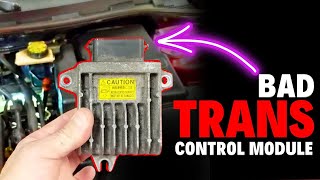
- Car may not shift out of Park 🎬 Watch: 6 common symptoms of a failing transmission control module
- Replacing the Powertrain Control Module (PCM/ECM). TSBs for this platform specifically point to the P1621 code being set in the Transmission Control Module (TCM). [⭐ MANUFACTURER TSB — highest authority] Bulletin #PIP4653E (2014 POWER TRAIN, dated 2014-06-03) Replacing the PCM would not solve a TCM-specific fault.
- Replacing the entire transmission. P1621 is an electronic fault, not a mechanical one. Unless there are other codes and symptoms pointing to mechanical failure (like the 3-5-R wave plate failure common in these transmissions, covered by TSB 14882), the transmission hard parts are likely fine.
Most Likely Causes
- Internal Failure of the Transmission Control Module (TCM/TEHCM) 🔴 High Probability → Shop Transmission Assembly As documented in GM's own TSBs, the TCM on this platform is a known failure point. [⭐ MANUFACTURER TSB — highest authority] Bulletin #PIP4653E (2014 POWER TRAIN, dated 2014-06-03) On 2010+ models where the TEHCM is inside the transmission, constant exposure to heat cycles and vibration contributes to the failure of sensitive electronics and solder joints over time.
How to confirm: A professional technician will use a scan tool to confirm P1621 is stored in the TCM. After verifying stable power and ground to the module, if communication is still erratic or the code returns immediately after clearing, the module is condemned. This is a hard internal fault.
Typical fix: Replace the Transmission Control Module (or TEHCM on 2010+ models) and program the new unit to the vehicle's VIN using specialized GM software (SPS).
Est. part cost: $250-$600 - Low Battery Voltage or Poor Ground Connection 🟡 Medium Probability → Shop Vehicle Battery All modern vehicles are sensitive to low voltage. A weak battery or corroded ground can cause unpredictable behavior in electronic modules during startup, potentially corrupting memory or triggering false diagnostic codes. TSB 05-06-04-060A explicitly warns that low voltage conditions can set these types of codes and should be investigated before module replacement.
How to confirm: Test the battery's state of charge and health with a multimeter or battery tester. It should read ~12.6V with the engine off and ~14.0-14.7V with the engine running. Inspect the main battery terminals, chassis grounds (especially the one near the transmission case), and the specific ground straps for the TCM for corrosion or looseness.
Typical fix: Clean or tighten corroded ground connections. Replace a weak or failing battery.
Est. part cost: $0-$250 - Corrupted Software from Aftermarket Tuning ⚪ Low Probability Improperly applied aftermarket engine or transmission tunes can corrupt the memory of the TCM or PCM, leading to integrity codes like P1621. A forum user confirmed this was the cause of their P1621 code after using a Bully Dog programmer.
How to confirm: The vehicle owner would know if a tuning device was recently used. The diagnostic step is to use a factory-level scan tool to attempt to flash the module back to its original factory programming. If the flash fails, the module is likely permanently damaged.
Typical fix: Re-flash the TCM to the stock GM calibration. If the module is permanently damaged ('bricked'), it will require replacement.
Est. part cost: $100-$250 for flashing, cost of new module if damaged
Rare But Worth Checking
- Internal TEHCM Pressure Switch Failure: → Shop Transmission Valve Body
Diagnosis Steps
- Verify the code with a professional OBD-II scanner capable of reading manufacturer-specific codes from all modules. Confirm that P1621 is active in the TCM.
- Check battery voltage and charging system performance. Ensure voltage is stable and above 12.4V with the engine off and 14.0-14.7V while running. A weak battery is a known cause of module memory errors.
- Inspect all power and ground connections to the battery, chassis, and the TCM itself. Clean any corrosion and tighten loose connections. Pay special attention to the main ground strap from the battery to the chassis and engine block.
- If an aftermarket tuner was used, attempt to flash the TCM back to the factory settings.
- Using an advanced scan tool, attempt to clear the code. If it returns immediately, it confirms a hard fault within the module.
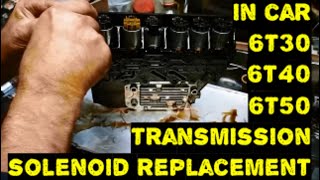
- For 2010+ models, the TEHCM is inside the transmission. The job involves draining the fluid, dropping the pan, and unbolting the module from the valve body. 🎬 See this walkthrough on how to remove and replace the TEHCM
- If all external factors are ruled out, the TCM/TEHCM is faulty and must be replaced.
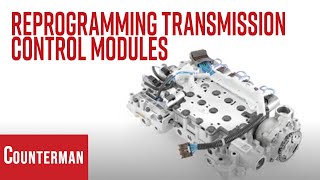
- Install a new TCM/TEHCM and use a GM-specific diagnostic tool (like GDS2/MDI with an active subscription) to program the new module to the vehicle's VIN and configuration. This step is mandatory. 🎬 Watch: How to reprogram a new transmission control module
Parts You'll Likely Need
- Transmission Control Module (TCM/TEHCM)
(OEM #24256524 (This is a common base number for the 6T40/6T45 TEHCM, but it has many superseded numbers like 24276411. Always verify with VIN.))— This is the part that sets the code due to an internal memory failure, as confirmed by GM's service bulletins. For 2010-2014 models, this is the TEHCM inside the transmission.
Trusted brands: ACDelco (GM Genuine), Dorman (e.g., 609-000, 609-008)
OEM price range: $400-$600
Aftermarket price range: $250-$450
Related Codes That Often Appear With This One
- P0601 — This code means 'Internal Control Module Memory Check Sum Error'. Like P1621, it indicates a fatal internal memory fault in a module. [⭐ MANUFACTURER TSB — highest authority] Bulletin #PIP4653E (2014 POWER TRAIN, dated 2014-06-03), [⭐ MANUFACTURER TSB — highest authority] Bulletin #05-06-04-060A (2008 ELECTRICAL SYSTEM, dated 2015-02-24)
- P0603 — This code indicates 'Internal Control Module Keep Alive Memory (KAM) Error'. It's another code pointing to a memory problem within the control module. [⭐ MANUFACTURER TSB — highest authority] Bulletin #PIP4653E (2014 POWER TRAIN, dated 2014-06-03), [⭐ MANUFACTURER TSB — highest authority] Bulletin #05-06-04-060A (2008 ELECTRICAL SYSTEM, dated 2015-02-24)
- P0604 — This code means 'Internal Control Module Random Access Memory (RAM) Error', again pointing to an internal electronic failure. [⭐ MANUFACTURER TSB — highest authority] Bulletin #PIP4653E (2014 POWER TRAIN, dated 2014-06-03), [⭐ MANUFACTURER TSB — highest authority] Bulletin #05-06-04-060A (2008 ELECTRICAL SYSTEM, dated 2015-02-24)
- P062F — This code is for 'Internal Control Module EEPROM Error', directly related to the long-term memory failure indicated by P1621. [⭐ MANUFACTURER TSB — highest authority] Bulletin #PIP4653E (2014 POWER TRAIN, dated 2014-06-03), [⭐ MANUFACTURER TSB — highest authority] Bulletin #05-06-04-060A (2008 ELECTRICAL SYSTEM, dated 2015-02-24)
- U0101 — This code means 'Lost Communication with TCM'. While P1621 is an internal fault, a failing module can also intermittently drop off the vehicle's communication network, setting a U-code in other modules like the ECM or BCM.
Technical Service Bulletins (TSBs) & Recalls
- PIP4653E
- 05-06-04-060A
- 14882
Platform-Specific Known Issues
- Bulletin #PIP4653E directly mentions that DTC P1621 may be found stored in the Transmission Control Module, indicating an internal module fault is the likely cause.
- Bulletin #05-06-04-060A is an informational bulletin that warns technicians that codes like P1621 are for internal module failures and to confirm which module has set the code before replacing parts. It also notes that low voltage can be a cause.
- For 2010-2014 models with the 6T40/6T45 transmission, the TEHCM is the component that fails. Aftermarket replacements from brands like Dorman often use upgraded PEEK plastic to better resist heat and debris, which are common causes of failure for the original part.
Helpful Videos

We Have This Part in Stock

The information in this article is provided for general reference and educational purposes only. Vehicle specifications, procedures, and part compatibility can vary by production date, trim level, and region. Always consult your vehicle's factory service manual and verify part numbers before purchasing or performing repairs. Safety-critical components such as airbags, seat belts, and braking systems should be installed by a qualified professional.
- Chevrolet EQUINOX:
- 🧭 Diagnostic Flowchart
- 🎬 Helpful Videos
- 🛍️ Shop This Part
- What's Unique About the 2007-2014 Chevrolet EQUINOX
- Symptoms You May Notice
- Most Likely Causes
- Rare But Worth Checking
- Diagnosis Steps
- Parts You'll Likely Need
- Related Codes That Often Appear With This One
- Technical Service Bulletins (TSBs) & Recalls
- Platform-Specific Known Issues
- 🎟️ Get 5% Off