

P1621 on 2007-2011 Chevrolet Express: Control Module Memory Failure Causes and Fixes
P1621 on a Chevy Express indicates a memory failure in the Engine Control Module (ECM) or, more commonly, the Transmission Control Module (TCM). The most frequent fix is replacing the faulty module, which requires professional programming. Before replacement, always check battery voltage, charging system stability, and all module power and ground connections, as intermittent voltage can mimic module failure.
- P1621 is a serious code indicating an internal memory failure in the ECM or TCM.
- Do not immediately replace the module. First, rule out simpler issues like a weak battery or corroded ground connections.
- On 2009+ models with a 6-speed transmission, the TCM inside the transmission pan is a highly probable cause.
- Any replacement ECM or TCM must be professionally programmed to the vehicle; it is not a DIY-friendly part swap.
- If you have ever used an aftermarket engine tuner, it could be the root cause of this code.
What's Unique About the 2007-2011 Chevrolet EXPRESS
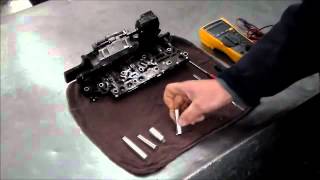
The Chevrolet Express from 2007-2011 used different transmissions that affect diagnosis. Earlier models (approx. 2007-2009) often used 4-speed automatics (4L80-E) where the main Engine Control Module (ECM) handled all functions. Later models, particularly from the 2010 model year onward, introduced the 6-speed 6L80/6L90 transmission, which has a separate Transmission Control Module (TCM), known as a TEHCM (Transmission Electro-Hydraulic Control Module), located inside the transmission oil pan. 🎬 Watch a detailed breakdown of the internal TEHCM and pressure switches. This internal TCM is a very common failure point due to constant exposure to heat and vibration, making it a primary suspect for P1621 on later models.
Diagnostic Flowchart
Tap your situation to follow the diagnostic path that matches what you're seeing on this vehicle.
Symptoms You May Notice
- Check Engine Light is on
- Erratic, harsh, or delayed transmission shifting
- Transmission may get stuck in one gear (limp mode)
- Engine may stall, be difficult to start, or fail to start entirely
- Loss of communication with the ECM or TCM when using a scan tool
- PRNDL gear indicator on the dashboard may go blank or flash
- In some cases, other memory items like the clock or radio presets may be lost
- Torque converter shudder or failure to lock/unlock correctly
- Replacing transmission solenoids or other internal transmission parts without first identifying if the P1621 code is stored in the TCM. If the TCM itself has failed, replacing other components will not solve the issue.
- Replacing the wrong module. It is critical to use a scan tool that can identify exactly which module (ECM or TCM) has the internal fault before ordering parts.
Most Likely Causes
- Internal Control Module Failure (ECM or TCM/TEHCM) 🔴 High Probability On models with the 6-speed transmission (approx. 2010+), the TCM (TEHCM) is located inside the hot transmission oil pan, leading to a high failure rate from heat cycles and vibration. This is a well-documented issue on the GMT platform. General electronic age can also lead to ECM failure on any model.
How to confirm: After verifying all power, ground, and network circuits are good, a professional scan tool will show the code is set within a specific module (TCM or ECM). If communication is lost, especially when hot, or if attempts to re-flash the module fail, the module is condemned.
Typical fix: Replacement of the faulty ECM or TCM/TEHCM, followed by professional programming of the new module to the vehicle using GM's SPS.
Est. part cost: $250-$800 - Poor Power or Ground Connections to the Module 🟡 Medium Probability Vans are subject to heavy use and vibration. Over time, main ground straps on the engine and frame (such as G103 and G104 on related platforms) can corrode or loosen. Pins in the large connectors, especially the 16-way transmission connector, can also back out, causing intermittent voltage drops that corrupt module memory.
How to confirm: Perform a voltage drop test on the main power and ground wires for the suspect module while the circuit is loaded. Inspect and clean all ground strap connection points from the battery to the frame and engine block. Wiggle the wiring harness at the module while monitoring scan tool data for communication dropouts.
Typical fix: Cleaning or tightening corroded ground connections. Repairing or replacing the affected wiring harness connector. In some cases, running a new dedicated power or ground wire is necessary.
Est. part cost: $5-$50 - Failing Battery or Charging System ⚪ Low Probability → Shop Vehicle Battery These vans have large electrical demands. A weak battery or failing alternator can provide unstable voltage (dropping below 12.0V), especially during startup, which can cause temporary memory glitches and checksum errors in control modules.
How to confirm: Test the battery with a digital load tester (not just a voltmeter). Check the alternator output to ensure it's stable and within the typical 13.7-14.7 volt range while running. Check for voltage drops during cranking.
Typical fix: Replace the vehicle's battery and/or alternator.
Est. part cost: $150-$400
Rare But Worth Checking
- Aftermarket Programmer/Tuner Issues: If an aftermarket performance tuner was used, it may have corrupted the ECM's or TCM's software. This is a known issue with some handheld programmers on GM trucks. Sometimes returning the ECM to the factory tune can fix it, but other times the module is permanently damaged ('stained') and requires replacement.
- Wiring Harness Chafing/Damage: The main wiring harness can chafe against the engine block, frame, or other components over time, leading to shorted or open circuits on the GMLAN data lines or power feeds to the modules. TSB 08-07-30-021H describes this issue for related GM trucks.
Diagnosis Steps
- Verify Battery and Charging System: Ensure the battery has a full charge (12.4V+ engine off) and the alternator is charging correctly (13.7-14.7V engine running). Low voltage during cranking can set this code.
- Scan All Modules: Use a professional-grade scan tool to check for codes in ALL vehicle modules (Engine, Transmission, Body, etc.). Note specifically which module stored the P1621 code, as this is the faulty component.
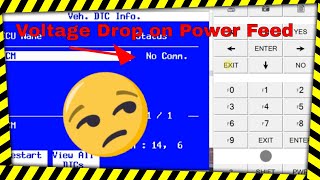
- Check Fuses: Inspect all fuses related to the ECM and TCM in both the under-hood and interior fuse panels. 🎬 Watch this video to see a TCM power fuse voltage drop test. A video for a 2011 Express showed a voltage drop issue on the TCM power feed fuse causing a no-communication issue.
- Inspect Power and Grounds: Visually inspect the main connectors at the ECM and TCM for corrosion or damage. Locate and clean the main engine-to-chassis (G103/G104 on similar trucks) and battery ground points.
- Perform Voltage Drop Test: If tools are available, test the power and ground circuits at the suspect module's connector to ensure there is less than 0.2V of drop under load. This is critical for ruling out wiring issues.
- Check for TSBs: Specifically look for TSB 08-07-30-021H, which addresses GMLAN communication loss from backed-out terminals in the transmission connector and chafed wiring on this platform.
- Condemn the Module: If all external wiring, power, and grounds are confirmed to be good, the control module itself is the source of the fault and must be replaced and programmed.
Parts You'll Likely Need
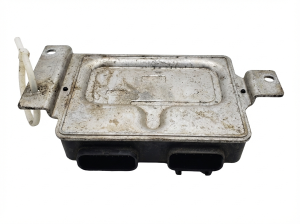
- Transmission Control Module (TCM/TEHCM)
(OEM #24256861 (Common for 6L80/6L90 TEHCM))— On models with the 6-speed automatic transmission (approx. 2010+), this module (TEHCM) is located inside the transmission and is the most common failure point that causes code P1621.
Trusted brands: ACDelco GM Original Equipment, ACDelco Gold/Professional
OEM price range: $350-$700
Aftermarket price range: $200-$450 - Engine Control Module (ECM/PCM) — This is the other primary module that can fail and set this code. It is the more likely culprit on earlier models with a 4-speed transmission where it controls both engine and transmission.
Trusted brands: ACDelco GM Original Equipment
OEM price range: $400-$800
Aftermarket price range: $250-$500
Related Codes That Often Appear With This One
- P0700 — This code means 'Transmission Control System MIL Request'. It's a general code set by the ECM when the TCM detects a fault (like P1621) and asks for the Check Engine Light to be turned on. It's a strong indicator that the problem is in the transmission controls.
- U0101 — This code means 'Lost Communication with TCM'. If the TCM has an internal P1621 fault, it will often stop communicating on the vehicle's data network, causing other modules to set a U0101 code. 🎬 See how to diagnose a lost communication code on an Express van. This combination strongly points to a failed TCM.
- U0100 — This code means 'Lost Communication With ECM/PCM'. If the ECM has an internal fault like P1621, it may stop communicating on the vehicle's data network, triggering this code in other modules.
- P0601, P0602, P0603, P0604, P0606 — These are all internal control module memory or processor fault codes. Seeing them with P1621 strongly indicates the module has failed internally and needs replacement. [Bulletin #05-06-04-060A, 22]
Technical Service Bulletins (TSBs) & Recalls
- 05-06-04-060A: Notes that P1621 is one of several codes related to internal control module faults that can appear in multiple different modules. [Bulletin #05-06-04-060A, 1]
- 08-07-30-021H: While not mentioning P1621 directly, this TSB is highly relevant. It details troubleshooting for loss of GMLAN communication, which often accompanies P1621. It points to backed-out terminals in the 16-way transmission connector and chafed wiring harnesses as common causes for codes like U0100 and U0101 on the same platform, including the Express/Savana.
Platform-Specific Known Issues
- Real-World Repair Story: Voltage Drop, Not a Bad TCM: A YouTube video by 'Hands On Auto Training' on a 2011 Chevy Express documented a no-communication issue with the TCM and a blank PRNDL indicator. The initial thought was a failed, unprogrammed module. However, diagnosis revealed only 3 volts at the TCM power pin despite 12 volts at the fuse. The problem was a high-resistance wire between the fuse box and the TCM. A jumper wire restored communication, allowing the module to be programmed. This highlights the importance of voltage drop testing before condemning an expensive module.
Mechanic-Grade Diagnostic Values
- High-Speed GMLAN Bus Voltage (At Rest) — expected: Approx. 2.5V on both GMLAN-High and GMLAN-Low wires, with a differential voltage near 0V.. Failure: Voltages stuck high or low, or a significant difference between the two wires at rest.
- High-Speed GMLAN Bus Voltage (Active Communication) — expected: GMLAN-High wire toggles to ~3.5V while GMLAN-Low toggles to ~1.5V, creating a ~2.0V differential to represent a logic '0'.. Failure: No voltage change during communication attempts, or voltages that do not meet these approximate levels.
- TCM/TEHCM Power Supply Voltage (Loaded) — expected: Battery voltage (typically 12.0V+) on all power feed pins at the TCM connector while it is plugged in and the key is on.. Failure: A significant voltage drop on one or more power wires when the module is connected indicates high resistance in that circuit. For example, a wire reading 12V unplugged but dropping to 3V when plugged in is faulty.
- TEHCM On/Off Shift Solenoid Resistance — expected: 20-40 Ohms.. Failure: Resistance outside this range indicates a failed solenoid winding, requiring TEHCM replacement.
- TEHCM PWM Pressure Control Solenoid Resistance — expected: 3-8 Ohms.. Failure: Resistance outside this range points to a failed solenoid, requiring TEHCM replacement.
Scan Tool Commands That Help
- GDS2 / Tech2: Service Programming System (SPS) — This function is required to program a new ECM or TCM/TEHCM to the vehicle. The new module will not function until it is programmed with the correct VIN and software calibration.
- GDS2: Transmission Service Fast Learn — After a new TEHCM is installed and programmed, this procedure must be run. It allows the newly programmed module to learn the specific hydraulic characteristics and clutch fill volumes of the transmission. It must be performed with the transmission fluid at operating temperature (e.g., 158°F–230°F).
Wiring & Ground Locations
- G103 — On the front of the passenger side (right) cylinder head. A critical TSB for the Express also specifically calls out checking the G103 ground at the rear of the driver's side (left) engine head. Check both locations for clean, tight connections.. This is a primary engine ground. A poor connection here can cause voltage instability for the ECM and TCM, leading to memory corruption and communication errors.
- G104 — Located on the rear corner of the driver's side (left) cylinder head.. Another essential engine ground point that provides a return path for the control modules. Corrosion or looseness here is a common cause of intermittent electronic faults.
- 16-Pin Transmission Connector — The main electrical connector on the outside of the transmission case where the vehicle harness connects to the internal TEHCM.. This is the single point for all power, ground, and data communication to the TCM. It is the primary location for performing voltage drop tests on the TCM power and ground circuits to rule out wiring issues before condemning the module.
Real Owner Repair Stories
- Chevrolet Forum user 'treetop' (2002 Chevrolet Silverado (Note: Different vehicle, but same P1621 code and principle)) — P1621 was set, and the clock, radio, and seat memory would constantly reset.
❌ Tried (didn't work) Setting the programmer back to the stock factory tune did not resolve the issue once it had started.
✅ What actually fixed it The problem began immediately after using a Bully Dog aftermarket programmer. The implication is that the programmer corrupted the PCM's memory, and the ultimate fix would be PCM replacement. This serves as a strong warning about the risks of aftermarket tuning.
"I Checked Everything" — The Actual Cause
- A common diagnostic trap for this code is checking for power at the TCM fuse or connector with the module disconnected. The circuit may show full battery voltage, suggesting it's 'good'. However, the actual cause can be high resistance in the power feed wire that only becomes apparent under load. In one documented case on a 2011 Express, a power wire read 11.9V disconnected but dropped to 3V when connected to the TCM, preventing communication. The fix was repairing the wire, not replacing the module. A loaded voltage drop test is required to find this failure.
When the Usual Fixes Don't Work
- While the most common cause of P1621 on a 6-speed Express is a failed TEHCM, it should not be replaced without first proving the integrity of its power and ground circuits under load. In a documented case on a 2011 Express with a no-communication issue and related codes, the TEHCM was not at fault. The actual problem was high resistance in one of the power feed wires in the main harness. The wire showed proper voltage when disconnected but dropped to an unusable level when the TEHCM was plugged in. Repairing the faulty wire resolved the issue without needing a costly and complex TEHCM replacement.
OEM Part Supersession History
24256861→19435614— The original TEHCM units are a known high-failure part. The supersession is likely an updated version with more robust components, such as improved internal pressure switches and better tolerance for heat and vibration.
Heads up: Crucially, TEHCMs are not interchangeable between different year groups. They are identified by a 'Tag ID' on the unit. Installing a TEHCM with the wrong Tag ID, even if it physically fits, can result in a no-start condition or immediate limp mode because the hardware and internal software are different. Always match the replacement part to the vehicle's VIN and original Tag ID.
Model Year Variations Within This Range
- 2010-2011: These later models in the specified range use the 6L80/6L90 transmission with the internal TEHCM. The common part number for this era is 24256861. It is critical to know that GM revised the TEHCM hardware and software several times, and units from different year groups (e.g., 2007-2009 vs. 2010-2013) are not cross-compatible.
Helpful Videos
Used OEM Parts in Stock
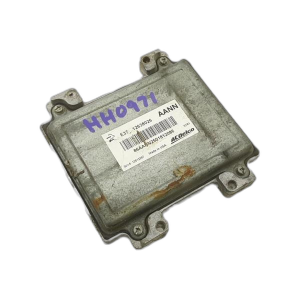
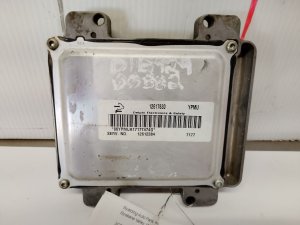
New Aftermarket Parts Available


The information in this article is provided for general reference and educational purposes only. Vehicle specifications, procedures, and part compatibility can vary by production date, trim level, and region. Always consult your vehicle's factory service manual and verify part numbers before purchasing or performing repairs. Safety-critical components such as airbags, seat belts, and braking systems should be installed by a qualified professional.
- Chevrolet EXPRESS:
- 🧭 Diagnostic Flowchart
- 🎬 Helpful Videos
- 🛍️ Shop This Part
- What's Unique About the 2007-2011 Chevrolet EXPRESS
- Symptoms You May Notice
- Most Likely Causes
- Rare But Worth Checking
- Diagnosis Steps
- Parts You'll Likely Need
- Related Codes That Often Appear With This One
- Technical Service Bulletins (TSBs) & Recalls
- Platform-Specific Known Issues
- Mechanic-Grade Diagnostic Values
- Scan Tool Commands That Help
- Wiring & Ground Locations
- Real Owner Repair Stories
- "I Checked Everything" — The Actual Cause
- When the Usual Fixes Don't Work
- OEM Part Supersession History
- Model Year Variations Within This Range
- 🎟️ Get 5% Off