

P1621 on 2007-2014 Chevrolet Impala: Control Module Memory Failure Causes and Fixes
On a 2007-2014 Impala, P1621 indicates an internal memory failure in a control module. For 2012-2014 models with a 6-speed transmission, this is almost always a failed Transmission Control Module (TCM) located inside the transmission. For earlier 4-speed models, it's more likely the Engine Control Module (ECM). This is a non-DIY repair requiring professional module replacement and programming, costing between $600 and $1,500.
- P1621 means a critical computer in your Impala has failed an internal memory check.
- The most common cause is a faulty Transmission Control Module (TCM) on 2012-2014 models or a faulty Engine Control Module (ECM) on 2007-2011 models.
- This is not a DIY repair. The replacement module must be professionally installed and programmed to your car's VIN.
- Before replacing any expensive modules, always have a mechanic verify the battery and charging system are working correctly, as low voltage can sometimes set false codes.
- Ignoring this code can lead to serious drivability problems, including getting stuck in gear or the car not starting.
What's Unique About the 2007-2014 Chevrolet IMPALA
For the Impala, the meaning of P1621 depends heavily on the model year and transmission. On 9th generation models from 2012-2013 and all 10th generation 2014 models, which use a 6-speed 6T70/6T75 automatic, this code is a well-documented indicator of a failing Transmission Control Module (TCM), as noted in GM Technical Service Bulletin #PIP4653E. These TCMs (also called TEHCMs) are located inside the transmission pan, where constant exposure to heat and vibration contributes to a high failure rate. On older 2007-2011 models with the 4-speed automatic (4T65-E), transmission functions were handled by the Engine Control Module (ECM), making it the more likely point of failure for this code.
Diagnostic Flowchart
Tap your situation to follow the diagnostic path that matches what you're seeing on this vehicle.
Generation note: The 2007-2014 range covers two Impala generations. The 9th generation ran from 2006-2013 (with a 'Limited' fleet model sold in 2014). The 10th generation began in 2014. The primary difference regarding P1621 is the transmission: 2007-2011 models often had a 4-speed automatic with an external ECM, while 2012-2014 models used a 6-speed automatic with an internal TCM (TEHCM), which is the more common failure point for this code.
Symptoms You May Notice
- Check Engine Light is on
- Harsh, erratic, or delayed transmission shifting
- Transmission stuck in one gear (limp mode)
- Vehicle may stall or fail to start
- Service Stability System message may appear on the driver information center
- Gear position indicator (PRNDL) on the dashboard may be blank or not update
- Replacing transmission solenoids or other internal transmission components. P1621 is an electronic control module fault, not a mechanical one.
- Replacing the entire transmission. The transmission itself is usually mechanically sound; only the electronic control module (TEHCM) needs to be replaced.
Most Likely Causes
- Internal Transmission Control Module (TCM) Failure 🔴 High Probability → Shop Transmission Assembly Applies to 2012-2014 models with the 6-speed automatic. The TCM (also called a TEHCM) is located inside the transmission pan, where it is exposed to constant heat and vibration, leading to a high failure rate of its internal circuit board and memory. TSB #PIP4653E directly points to this as the cause when P1621 is stored in the TCM.
How to confirm: A professional scan tool must be used to confirm the P1621 code is stored in the TCM. If power and ground to the module are good and a software re-flash fails to resolve the issue, the module itself is condemned.
Typical fix: Replace the Transmission Control Module (TEHCM). This requires removing the transmission pan. The new module must be programmed by a professional using GM software, followed by a 'fast learn' or 'adaptive reset' procedure.
Est. part cost: $250-$600 - Internal Engine Control Module (ECM/PCM) Failure 🔴 High Probability → Shop Engine Control Module (ECM) Applies primarily to 2007-2011 models with the 4-speed automatic, where the ECM controls both engine and transmission. TSB #05-06-04-060A notes that P1621 can be set by various modules, including the ECM, due to internal microprocessor integrity conditions.
How to confirm: A professional scan tool confirms the code is stored in the ECM. After verifying all power and ground circuits to the ECM are intact, the module is deemed faulty.
Typical fix: Replace the Engine Control Module and have it professionally programmed to the vehicle.
Est. part cost: $200-$500 - Low Battery Voltage or Faulty Charging System ⚪ Low Probability → Shop Vehicle Battery
How to confirm: Test the battery with a digital battery tester to check its health and state of charge. With the engine running, use a multimeter to verify the alternator output is between 13.7 and 14.7 volts. Low or unstable voltage can cause false memory errors during startup.
Typical fix: Charge or replace the battery, or replace the faulty alternator.
Est. part cost: $150-$400
Rare But Worth Checking
- Chafed Engine Wiring Harness: → Shop Engine Wiring Harness GM issued a preliminary bulletin (PI0631C, later revised to PI0631G) for 2012-2013 Impalas regarding the engine harness rubbing through on the transmission case. This can cause a variety of electrical faults and DTCs by shorting wires for the ECM, TCM, and other sensors, and is worth inspecting before condemning a module. 🎬 Watch: How to find and fix common chafed wiring issues.
- Poor Module Ground Connection: A loose or corroded ground connection for the ECM or TCM can cause unstable voltage and trigger internal performance codes. Checking the main module ground points (e.g., G103 on the cylinder head, G112 on the engine block) is a valid diagnostic step before replacing an expensive module.
- Corrupted Software from Aftermarket Tuner: Improperly installing or using an aftermarket performance programmer (like a Bully Dog) can corrupt the module's memory and set a P1621 code. In some cases, returning the vehicle to the stock tune can resolve the issue, but in others, the module may be permanently damaged.
Diagnosis Steps
- Verify battery and charging system health. Ensure battery voltage is above 12.4V with the engine off and between 13.7-14.7V when running.
- Use a professional-grade scan tool to read codes from ALL modules to identify which module (ECM or TCM) has stored the P1621 code. This is the most critical step.
- Inspect all fuses related to the ECM and TCM in the under-hood and interior fuse panels.
- Visually inspect the engine wiring harness, particularly where it passes near the transmission case, for any signs of chafing or damage, as noted in bulletin PI0631G.
- If the TCM is the suspect module (2012-2014 models), a technician will test its power and ground connections at the main transmission connector before dropping the pan.
- If wiring and voltages are good, the next step is often to attempt to reprogram (re-flash) the suspect module with the latest GM software. If the code returns, the module is faulty.
- If all external checks pass, the control module that stored the code is faulty and must be replaced.
- Install and program the new control module using GM's Techline Connect software or an equivalent professional tool. For a new TCM, a 'fast learn' procedure is also required.
Parts You'll Likely Need
- Transmission Control Module (TCM/TEHCM)
(OEM #24261875, 24275870, 24264346)— This is the most common failed part for 2012-2014 Impalas with a 6-speed transmission that set code P1621. It contains the control logic that has failed its internal memory check. Part number 24261875 is a common replacement.
Trusted brands: ACDelco, Dorman
OEM price range: $400-$600
Aftermarket price range: $250-$450 - Engine Control Module (ECM/PCM) — For 2007-2011 models with a 4-speed transmission, the ECM is the more likely source of the P1621 fault. Part numbers vary significantly by year and engine, so VIN verification is required. 🎬 See this guide on how to locate and replace the ECM.
Trusted brands: ACDelco
OEM price range: $300-$500
Aftermarket price range: $200-$400
Related Codes That Often Appear With This One
- P0700 — This code means the Transmission Control Module (TCM) has requested the check engine light. It's a general code that will almost always be present when a specific transmission code like P1621 is stored in the TCM.
- P0601, P0603, P0604, P062F — These are all internal control module memory or processor fault codes. Their presence alongside P1621 strongly confirms a failed ECM or TCM, as referenced in TSBs #PIP4653E and #05-06-04-060A.
- U0101 — This code means 'Lost Communication with TCM'. It often appears with P1621 when the TCM has failed completely and is no longer communicating on the vehicle's data network.
Technical Service Bulletins (TSBs) & Recalls
- PIP4653E: Notes that P1621 stored in the TCM indicates an internal module fault.
- 05-06-04-060A: Groups P1621 with other internal control module fault codes that can appear in multiple modules.
- PI0631G: Describes a potential for the engine wiring harness to rub through on the transmission case on 2012-2013 Impalas.
Platform-Specific Known Issues
- TSB #PIP4653E directly identifies DTC P1621 (along with others like P0601, P0603) as an indicator of an internal fault when stored in the Transmission Control Module.
- TSB #05-06-04-060A confirms that P1621 is part of a family of internal control module fault codes and can be set in multiple different modules, stressing the need for proper diagnosis.
- For 2012-2013 models, Preliminary Information bulletin #PI0631G warns of a potential for the engine wiring harness to chafe on the transmission case, leading to various electrical faults including blown fuses and communication DTCs.
Mechanic-Grade Diagnostic Values
- TCM Power Input Pins Voltage — expected: 12.4V+ (Key On, Engine Off), 13.7-14.7V (Engine Running). Failure: Low or no voltage indicates a problem with the fuse, wiring, or power source, not necessarily the module itself.
- TCM Ground Circuit Voltage Drop — expected: Less than 0.1V (100mV) between the ground pin at the connector and the negative battery terminal.. Failure: Voltage higher than 0.1V indicates high resistance in the ground circuit, which can cause module malfunction.
- TCM Ground Circuit Resistance — expected: Less than 0.5 ohms between the ground pin at the connector and a clean chassis ground.. Failure: Higher resistance points to a corroded or loose ground connection.
Scan Tool Commands That Help
- GM SPS (Service Programming System) via Techline Connect: Replace and Reprogram ECU — This function is mandatory when installing a new, blank TCM or ECM. It downloads the correct VIN-specific software and calibrations to the module.
- GDS2 / Tech2 / Professional Scan Tool: Transmission Adaptive Pressure Reset / Service Fast Learn Adapts — This procedure must be performed after programming a new TCM. It allows the module to learn the hydraulic characteristics of the specific transmission clutches, ensuring proper shift quality.
Wiring & Ground Locations
- Main Transmission Connector (TEHCM) — On the side of the transmission case, it is a large, round, 16-pin, twist-lock style connector for 6-speed models.. This is the single connection point for all power, ground, and communication to the internal TCM. Corrosion or backed-out pins, especially the power pin, can mimic a complete module failure.
- TEHCM Switched Power Pin — Pin 12 (typically a pink wire) on the main 16-pin transmission connector.. This pin supplies the key-on power to the TCM. Verifying battery voltage at this specific pin is a critical diagnostic step before condemning the module.
- G103 Ground — On the front of the passenger side cylinder head.. This is a primary ground point for powertrain control modules. A loose or corroded connection here can cause unstable voltage and various performance codes, including P1621.
- PI0631G Harness Chafe Area — The engine wiring harness may rub on the front-right or rear-right side of the transmission case, near the cooler lines.. A rub-through can short any wire in the harness, potentially cutting power, ground, or communication to the TCM/ECM, leading to P1621 or other communication faults.
Real Owner Repair Stories
- Chevrolet Forum user (2002 Chevrolet Silverado (different model, but demonstrates a known cause)) — Code P1621 set, clock, radio presets, and seat memory resetting on startup.
❌ Tried (didn't work) Resetting the programmer back to the stock factory tune did not fix the issue.
✅ What actually fixed it The user concluded the aftermarket Bully Dog programmer had permanently damaged the VCM/PCM, as the problems persisted even after removing the tune. This serves as a cautionary tale about the risks of aftermarket tuners.
"I Checked Everything" — The Actual Cause
- A common scenario for P1621 is when the external power and ground wires at the TCM connector test perfectly with a multimeter, leading a technician to believe the wiring is good. However, the actual fault can be an internal break on the ground plane of the module's circuit board. An advanced diagnostic technique is to check for voltage on a sensor's ground reference wire at the connector (e.g., transmission fluid temp sensor ground). If this ground reference wire reads 12V instead of near 0V, it confirms the module has an internal ground fault and must be replaced.
OEM Part Supersession History
24264346, 24041871→24275870— Standard part revision and consolidation by the manufacturer.
Heads up: The listed part numbers are for the TEHCM (TCM integrated with valve body solenoids) used in 6-speed transmissions. While they are often listed as compatible, it is always critical to verify the correct part number for the specific vehicle VIN before ordering.
Model Year Variations Within This Range
- 2014 only: In 2014, Chevrolet sold both the all-new 10th generation Impala and a carryover 9th generation model called the 'Impala Limited,' which was primarily for fleet sales. The Impala Limited used the 3.6L V6 and 6-speed automatic from the 2012-2013 models. Therefore, a P1621 diagnosis on a 2014 Impala Limited follows the same procedure as a 2012-2013 model, with the internal TEHCM being the most likely cause.
Helpful Videos

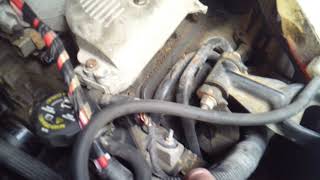

Used OEM Parts in Stock
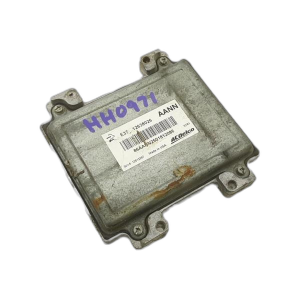
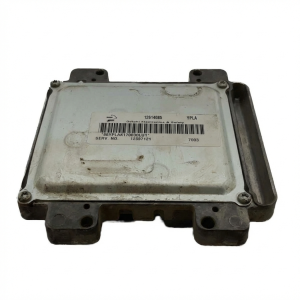
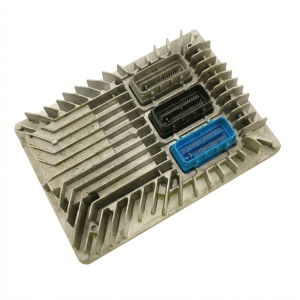
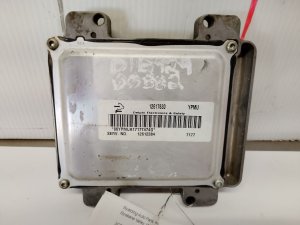
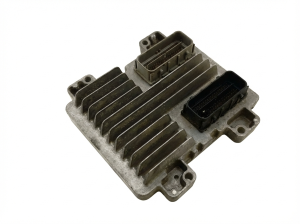
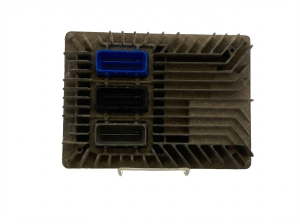
New Aftermarket Parts Available


The information in this article is provided for general reference and educational purposes only. Vehicle specifications, procedures, and part compatibility can vary by production date, trim level, and region. Always consult your vehicle's factory service manual and verify part numbers before purchasing or performing repairs. Safety-critical components such as airbags, seat belts, and braking systems should be installed by a qualified professional.
- Chevrolet IMPALA:
- 🧭 Diagnostic Flowchart
- 🎬 Helpful Videos
- 🛍️ Shop This Part
- What's Unique About the 2007-2014 Chevrolet IMPALA
- Symptoms You May Notice
- Most Likely Causes
- Rare But Worth Checking
- Diagnosis Steps
- Parts You'll Likely Need
- Related Codes That Often Appear With This One
- Technical Service Bulletins (TSBs) & Recalls
- Platform-Specific Known Issues
- Mechanic-Grade Diagnostic Values
- Scan Tool Commands That Help
- Wiring & Ground Locations
- Real Owner Repair Stories
- "I Checked Everything" — The Actual Cause
- OEM Part Supersession History
- Model Year Variations Within This Range
- 🎟️ Get 5% Off