

P1621 on 2011-2015 Chevrolet Volt: Control Module Memory Failure Causes and Fixes
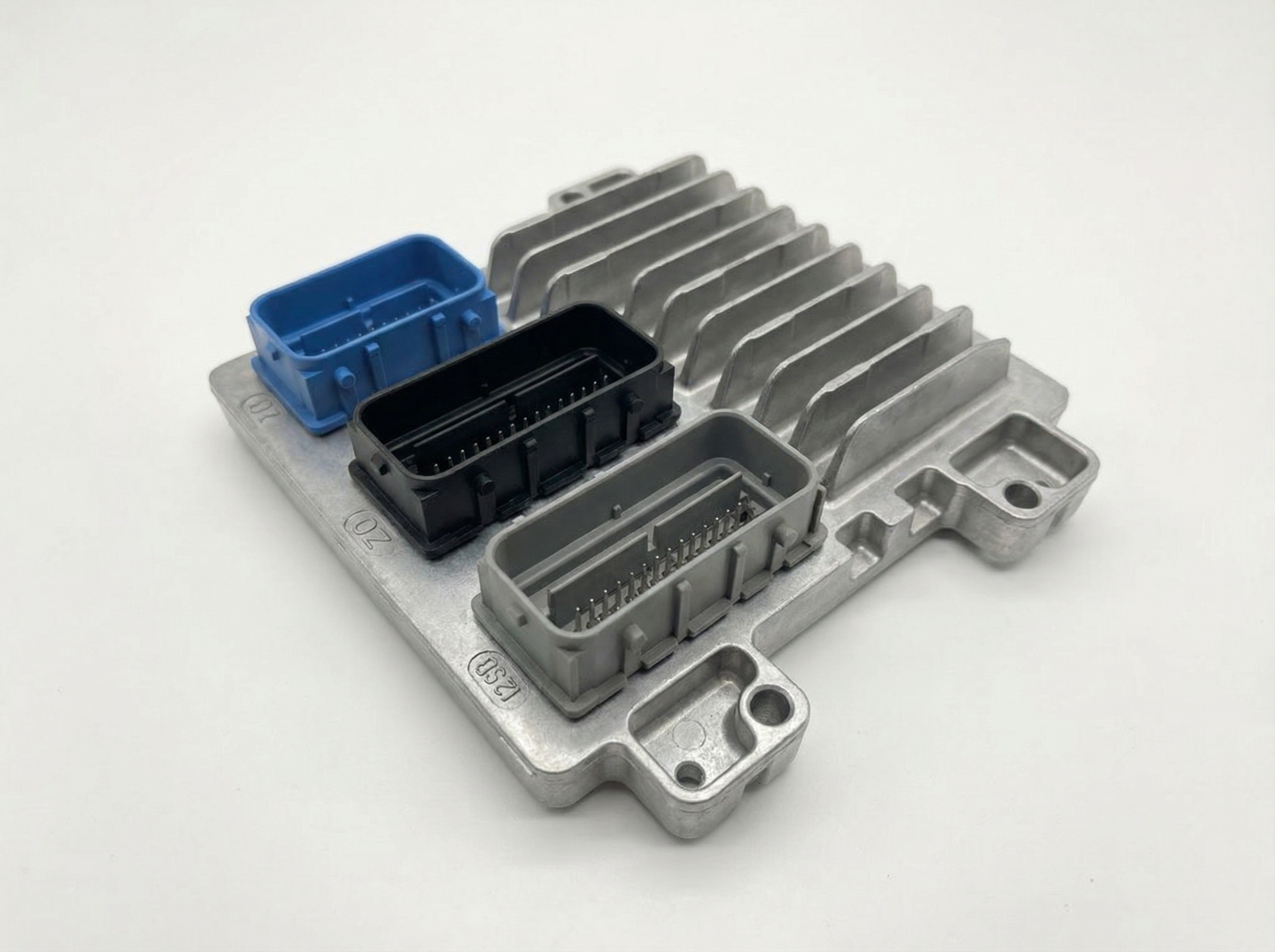
P1621 on a 2011-2015 Chevy Volt indicates an internal memory performance failure in a critical control module. This is a serious code that typically points to a faulty module, such as the Engine Control Module (ECM) or another of the Volt's specific controllers like the Hybrid Powertrain Control Module (HPCM). The fix almost always requires professional diagnosis to identify the failed module, followed by replacement and reprogramming.
- P1621 is a serious code indicating a memory failure inside one of the Volt's critical control modules.
- This is not a DIY-friendly repair. It requires professional diagnostic tools to identify the failed module and special equipment to program the replacement.
- While the most likely cause is a failed module, the 12V auxiliary battery and its connections should always be checked first to rule out a simple electrical issue.
- On a Volt, the fault could be in the ECM, but also in hybrid-specific modules like the BECM or HPCM. Analysis of sibling GM platforms suggests transmission-related controllers are a common point of failure for this code.
What's Unique About the 2011-2015 Chevrolet VOLT
The Chevrolet Volt is a complex plug-in hybrid with numerous interdependent control modules beyond the standard Engine Control Module (ECM). A GM Technical Service Bulletin (TSB #05-06-04-060A) specifically notes that P1621 can be set in multiple different modules. On the Volt, this could include the ECM, the Hybrid Powertrain Control Module (HPCM), or the Battery Energy Control Module (BECM), among others. Unlike a conventional car where the fault is usually in the ECM or TCM, diagnosis on a Volt requires identifying which of its many unique modules has failed. This contrasts with its Delta II platform-mates like the Chevrolet Cruze and Buick Verano, where P1621 is overwhelmingly associated with the Transmission Control Module (TCM) specifically.
Diagnostic Flowchart
Tap your situation to follow the diagnostic path that matches what you're seeing on this vehicle.
Symptoms You May Notice
- Check Engine Light is on
- Vehicle may enter a reduced power or 'limp mode'
- Vehicle may not start
- Unpredictable stalling
- Other warning lights related to the hybrid or charging system may illuminate
- Erratic or harsh shifting if the fault is in a transmission-related module.
- Replacing sensors. This code is an internal module fault and is almost never caused by an external engine or transmission sensor, with very rare exceptions as noted above.
- Assuming it's only the Engine Control Module (ECM). On a Volt, the fault could be in several other critical modules, like the Battery Energy Control Module (BECM) or Hybrid Powertrain Control Module (HPCM). On many other GM vehicles, it is most commonly the Transmission Control Module (TCM).
- Ignoring the 12V battery. Technicians sometimes condemn an expensive control module without first thoroughly testing the 12V auxiliary battery and its connections.
Most Likely Causes
- Internal Control Module Failure 🔴 High Probability As noted in GM TSB #05-06-04-060A, internal memory faults are a known issue across many GM vehicles. The complexity of the Volt's electronics, with multiple modules like the BECM and HPCM, creates more potential points of failure. These modules can fail from age, heat cycles, or internal component degradation. On many related GM vehicles of the same era, the Transmission Control Module (TCM/TEHCM) is a frequent failure point for this code.
How to confirm: A technician will use a GM-specific scan tool (GDS2) to communicate with all vehicle modules and determine which one has stored the P1621 code. If all power and ground circuits to that module are intact and stable, the module itself is condemned. The TSB for this code family instructs technicians to replace the module if external factors are ruled out.
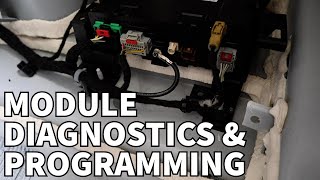
Typical fix: Replacement of the faulty control module (e.g., ECM, BECM, HPCM), followed by programming the new module to the vehicle's specific configuration using GM's Service Programming System (SPS). 🎬 Watch: How to get started with GM SPS2 programming.
Est. part cost: $200-$800 - Low Battery Voltage or Poor Connections ⚪ Low Probability → Shop Vehicle Battery Like many modern vehicles with sensitive electronics, the Volt can exhibit strange electrical behavior if the 12V auxiliary battery is weak or has corroded terminals. Voltage drops during startup can sometimes corrupt a module's self-check process and trigger a false memory code. A GM recall on other platforms (Corvette, #04006) specifically noted that low voltage at the PCM could cause safety-critical failures.
How to confirm: Test the 12V battery's state of charge and health with a digital battery tester. Check the charging system output to ensure it's within the typical 13.5-14.8 volt range when the vehicle is ready. Inspect all battery terminals and primary ground straps for corrosion or looseness.
Typical fix: Replace the weak 12V battery or clean/tighten all power and ground connections.
Est. part cost: $150-$300
Rare But Worth Checking
- Aftermarket Programming Failure: If the vehicle's software was modified with an aftermarket tuning device, an improper or incomplete flash can corrupt a module's memory and set this code. In a documented case on a Chevrolet Silverado, a user installed a Bully Dog programmer without following the procedure to remove certain fuses, which immediately triggered P1621. Reverting to the factory tune and performing a hard reset may resolve the issue.
- Erratic Sensor Data Causing Logical Error: In a rare but documented case on a GM vehicle, a P1621 code was triggered alongside a P0193 (Fuel Rail Pressure Sensor Circuit High Input). The root cause was not the control module, but the faulty fuel rail pressure sensor 🎬 See how a faulty sensor can trigger this memory code. itself. Replacing the sensor cleared both codes, suggesting that severely erratic data from a key sensor can sometimes be misinterpreted by the PCM/ECM as an internal memory or processing fault.
Diagnosis Steps
- Verify the 12V auxiliary battery and charging system. Ensure the battery voltage is stable and above 12.4V with the vehicle off. A weak 12V battery is a common source of spurious electronic faults in the Volt.
- Use a professional-grade scan tool (GM GDS2 recommended) to read codes from ALL modules (Engine, Hybrid, Body, etc.) to identify which specific module has stored the P1621 fault. This is the most critical step.
- Inspect all fuses related to the identified control module.
- Check the wiring harness and connectors for the faulty module. Look for any signs of damage, corrosion, or loose pins. On related GM platforms, unseated pins in the main transmission connector are a known cause of communication issues.
- Perform a voltage drop test on the module's main power and ground wires to ensure it's receiving stable power and has a solid ground connection. A good ground should read below 5 ohms after 60 seconds of the vehicle being off, and ideally below 0.3 ohms once the vehicle is fully asleep.
- If an aftermarket tune is present, revert the vehicle to its factory programming and perform a hard reset (disconnecting the battery) to see if the code clears.
- If all wiring, power, and grounds are confirmed to be good, and the factory software is loaded, the control module is faulty and requires replacement.
- After replacement, the new module must be programmed by a qualified technician using GM's Service Programming System (SPS).
Parts You'll Likely Need
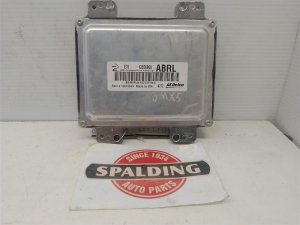
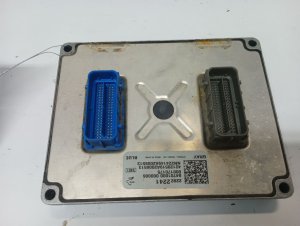
- Control Module (ECM, BECM, HPCM) — This code indicates an internal, unrecoverable memory error within a control module. The specific module must be identified through advanced diagnostics, but replacement is the ultimate fix. While no single part number is consistently cited for the Volt with P1621, on related GM platforms the Transmission Electro-Hydraulic Control Module (TEHCM) is a common failure point (e.g., ACDelco P/N 24256861 for 6L80 transmissions).
Trusted brands: ACDelco
OEM price range: $250-$800
Aftermarket price range: $150-$600
Related Codes That Often Appear With This One
- P0601 — This code means 'Internal Control Module Memory Check Sum Error' and is a very similar internal fault. TSB #05-06-04-060A lists it alongside P1621 as a related code indicating an internal module failure.
- P0603 — This code indicates a 'Keep Alive Memory (KAM) Error' and can also point to power supply issues or an internal module fault. TSB #05-06-04-060A also lists this in the same family of codes.
- P0604 — This code for 'Internal Control Module Random Access Memory (RAM) Error' is another internal fault code often grouped with P1621 in GM service literature.
- P0700 — This code means 'Transmission Control System Malfunction'. If the P1621 is stored in a transmission-related module like the HPCM, this code will often be present in the ECM to signal that a fault exists within the transmission controls.
Technical Service Bulletins (TSBs) & Recalls
- 05-06-04-060A: Communicates that DTCs P0601, P0602, P0603, P0604, P0606, P062F, P06F3, and P1621 are generic internal module fault codes. It instructs technicians to identify which module set the code before replacing it.
Platform-Specific Known Issues
- The first-generation Volt has several critical control modules that can set this code. While not directly linked to P1621 in all cases, the Battery Energy Control Module (BECM) has been a known failure point on Volts, leading to no-start or loss of power conditions and prompting NHTSA investigations. A P1621 code could potentially originate from this module.
- While specific forum threads for P1621 on the Volt are scarce, the issue is extremely well-documented on its Delta II platform-mates, the Chevy Cruze and Buick Verano. On those vehicles, P1621 almost always points to an internal failure of the Transmission Control Module (TCM), which is located inside the transmission. This strong trend suggests the Volt's Hybrid Powertrain Control Module (HPCM), which manages the complex drive unit, should be a key point of investigation.
Mechanic-Grade Diagnostic Values
- Control Module Ground Circuit Continuity — expected: Below 5 ohms after the vehicle has been off for 60 seconds. Below 0.3 ohms after the vehicle has been asleep for 3-10 minutes.. Failure: A reading that remains high (e.g., over 20 ohms) indicates a poor ground connection which can cause module performance issues.
- TEHCM Shift Solenoid Resistance (Analogous 6T40/45 Transmission) — expected: 3 to 5 ohms for the six pressure control solenoids.. Failure: A reading outside this range, or an open/short circuit, indicates a failed solenoid within the TEHCM, which could potentially cause the module to report internal faults.
Scan Tool Commands That Help
- GM GDS2/Tech2: SPS (Service Programming System) — This function is required after replacing a control module (like the ECM, HPCM, or BECM). It downloads the correct software and VIN information from GM's servers to the new module, allowing it to communicate with the rest of the vehicle.
- GM GDS2/Tech2: Clear Secured High Voltage DTCs — On the Chevy Volt, some critical high-voltage system codes cannot be cleared with a standard 'Clear DTCs' command. While P1621 is not always a secured HV code, if it is set in the HPCM or BECM alongside other HV codes, this special function may be required. In some cases, even this is insufficient and a full SPS reprogram is needed.
- GM GDS2/Tech2: Transmission Adaptive Values Learn — If the P1621 code originated in the HPCM (which controls the drive unit) and the module is replaced, this procedure must be performed after programming. It allows the new module to learn the specific hydraulic and mechanical characteristics of the transmission to ensure smooth operation.
Wiring & Ground Locations
- K20 Engine Control Module (ECM) Connector X1 — On the Engine Control Module (ECM).. This connector provides power and communication lines to the ECM. For a 2012 Volt, Pin 20 (RD/BN) is Battery Positive Voltage, Pin 19 (VT/WH) is Run/Crank Ignition Voltage, and Pin 13 (BK/BN) is a Low Reference (ground). Pins 1 and 15 are the High Speed GMLAN data lines. Verifying power, ground, and data integrity at these pins is a key step before condemning the ECM.
- G103 — On some GM vehicles, this is a primary engine or ECM ground located on the cylinder head or engine block. On other platforms, it's on the cowl above the brake booster and grounds the BCM and Data Link Connector.. A loose or corroded G103 ground can interrupt the ground path for a critical control module, causing erratic behavior and potentially setting memory performance codes like P1621. Its exact location and function should be verified with a service manual for the specific Volt year.
- K20 Engine Control Module (ECM) Connector X2 — On the Engine Control Module (ECM).. This connector provides multiple low reference (ground) circuits for the ECM and the components it controls. On a 2012 Volt, pins 20, 21, and 24 are all designated as Low Reference circuits. A fault in one of these ground paths could cause internal processing errors.
Real Owner Repair Stories
- YouTube video of a non-Volt GM vehicle repair (GM Vehicle (unspecified, likely a car/SUV)) — Engine kept cutting out while driving. Could be restarted but would stall again.
❌ Tried (didn't work) Replaced the entire ECU (Engine Control Unit) kit.
✅ What actually fixed it After weeks, a new code, P0193 (Fuel Rail Pressure Sensor Circuit High Input), appeared. The scan tool showed an impossibly high pressure reading. Replacing the faulty fuel rail pressure sensor resolved all symptoms and cleared both the P0193 and the original P1621 code. The ECU was likely misinterpreting the severely erratic sensor signal as an internal memory fault. - Reddit user u/Dirty_Bong_Water2020 (2011-2012 Chevrolet Cruze (platform-mate to the Volt)) — Bad TCM, no reverse, no shifting.
❌ Tried (didn't work) Initial attempts to have the dealer program a new TCM were quoted at $1,800 and required a valve body replacement.
✅ What actually fixed it The user replaced the TCM themselves and used a VXDiag programmer (a clone of the GM MDI tool) with Techwin2 software on a laptop to program the new module to the car. After programming, the car regained reverse and forward gears. The user noted that shifting was rough at first but became smoother as the new module completed its adaptive learning process.
OEM Part Supersession History
24272004→24256861— This is a common supersession for the TEHCM (TCM) used in 6L80 transmissions found in many GM trucks and SUVs of the era. The updated part number likely contains hardware or software revisions to improve reliability.
Heads up: While this specific part is not for the Volt, it illustrates a common pattern for GM control modules. It is critical to use a VIN-based catalog to find the correct, most current part number for the specific module (ECM, HPCM, BECM) that has failed in the Volt.Multiple (e.g., 24272004, 24276411)→24297306 (for 6T40/6T45 TEHCM)— Part numbers for the TEHCM used in the Volt's platform-mates (Cruze, Verano, Malibu) were frequently updated to address high failure rates. The newer parts often have improved internal components.
Heads up: Using the wrong TEHCM part number, even if it physically fits, will result in a no-start or no-communication issue as the software will not match the vehicle. Programming with GM's SPS is mandatory.
Model Year Variations Within This Range
- 2011-2012 vs 2013-2015: The High Voltage Interlock Circuit (HVIC) system was simplified for the 2013 model year. The earlier system had circuit connections to peripheral components like the A/C compressor and onboard charger, which were eliminated in the 2013+ design. While not directly a cause of P1621, a fault in this related safety system could potentially affect the HPCM2, which monitors it.
Helpful Videos


We Have This Part in Stock

The information in this article is provided for general reference and educational purposes only. Vehicle specifications, procedures, and part compatibility can vary by production date, trim level, and region. Always consult your vehicle's factory service manual and verify part numbers before purchasing or performing repairs. Safety-critical components such as airbags, seat belts, and braking systems should be installed by a qualified professional.
- Chevrolet VOLT:
- 🧭 Diagnostic Flowchart
- 🎬 Helpful Videos
- 🛍️ Shop This Part
- What's Unique About the 2011-2015 Chevrolet VOLT
- Symptoms You May Notice
- Most Likely Causes
- Rare But Worth Checking
- Diagnosis Steps
- Parts You'll Likely Need
- Related Codes That Often Appear With This One
- Technical Service Bulletins (TSBs) & Recalls
- Platform-Specific Known Issues
- Mechanic-Grade Diagnostic Values
- Scan Tool Commands That Help
- Wiring & Ground Locations
- Real Owner Repair Stories
- OEM Part Supersession History
- Model Year Variations Within This Range
- 🎟️ Get 5% Off