

P1621 on 2013-2015 Chrysler 300: O2 Sensor Voltage Low Causes & Fixes
On a 2013-2015 Chrysler 300 with a 5.7L V8, code P1621 is almost always caused by a software glitch in the Powertrain Control Module (PCM). The primary fix is a dealer-performed software update (reflash) as outlined in multiple Technical Service Bulletins, not replacing the O2 sensors. This issue is identical on its platform mates, the Dodge Charger and Challenger.
- P1621 on this vehicle almost always points to a PCM software issue, not a bad oxygen sensor.
- The first and most important diagnostic step is to check with a dealer if your VIN is eligible for a PCM software update per TSBs like #18-073-20.
- Do not replace any parts, especially O2 sensors, until you have confirmed the PCM software is up to date.
- This code often appears with other codes like P1622, P0606, and U0140; they are all symptoms of the same root PCM problem.
What's Unique About the 2013-2015 Chrysler 300
On this specific generation of Chrysler 300 (and its platform mates, the Dodge Charger and Challenger), the P1621 code is very frequently a symptom of a known software issue within the Powertrain Control Module (PCM). Chrysler released several Technical Service Bulletins (TSBs) to address this, where the prescribed fix is a PCM software update. Unlike many other vehicles where this code might point to wiring or a sensor, on this platform, the PCM itself is the most common starting point for diagnosis.
Diagnostic Flowchart
Tap your situation to follow the diagnostic path that matches what you're seeing on this vehicle.
Symptoms You May Notice
- Check Engine Light (Malfunction Indicator Lamp) is on
- Rough or irregular idle
- Hesitation or stumbling during acceleration
- Reduced fuel economy
- Engine may enter a limited power "limp mode"
- Replacing one or more oxygen sensors. The code P1621 points to the reference voltage circuit that powers the sensors, not the signal from the sensors themselves. On this platform, replacing O2 sensors for this code is almost never the correct fix and a waste of money.
Most Likely Causes
- Powertrain Control Module (PCM) Software Anomaly 🔴 High Probability → Shop Engine Control Module (ECM) Manufacturer TSBs #18-073-20, #18-052-15 REV A, and #18-084-16 were released specifically to address this and other related codes with a software update for the 5.7L engine.
How to confirm: Contact a Chrysler/Dodge dealer with your vehicle's VIN and ask them to check if TSB #18-073-20 or other related bulletins are open and applicable. A shop with a wiTECH tool can also check the current software calibration ID against the latest version.
Typical fix: Reprogramming (reflashing) the PCM with the latest software version. This must be done by a dealer or a qualified shop with a wiTECH scan tool. The flash process itself takes only a few minutes once connected. Owners report paying between $150-$250 for this service.
Est. part cost: $0 - Failed Powertrain Control Module (PCM) 🟡 Medium Probability → Shop Engine Control Module (ECM) If a software update does not resolve the issue, or if the code appears alongside P0606 (Internal Control Processor), it points to an internal hardware failure of the PCM.
How to confirm: This is typically diagnosed by exclusion after a software update has been performed and all wiring has been confirmed to be intact. It is the last step after ruling out software and wiring.
Typical fix: Replace the PCM. The new module will require programming to the vehicle's VIN and specific configuration. This can be done by the dealer or by online services that sell pre-programmed modules.
Est. part cost: $400-$800 - Wiring Harness Short to Ground ⚪ Low Probability
How to confirm: Inspect the wiring harness between the PCM and all four oxygen sensors, especially near hot exhaust components or where the harness may rub against the engine block. Disconnect the PCM and sensors, then use a multimeter to check for continuity between the O2 sensor reference voltage wire and a known good ground. Any continuity indicates a short.
Typical fix: Locate and repair the damaged section of the wiring harness. This may involve repairing a chafed wire or replacing a melted connector.
Est. part cost: $5-$50
Diagnosis Steps
- Scan the PCM for all stored Diagnostic Trouble Codes (DTCs). Note if P1621 appears with P1622, P0606, U0140, P0300, P219A, or P219B.
- Contact a Chrysler dealer with your VIN to determine if TSB #18-073-20, #18-052-15 REV A, or #18-084-16 are applicable and have not yet been performed. This is the most critical and cost-effective first step.
- If a TSB is open, have the dealer or a qualified shop perform the PCM reflash. This is the most probable solution.
- If the code returns after the reflash, verify the battery and charging system are healthy. Low or unstable voltage can cause various module errors.
- Inspect the engine wiring harness, specifically the sections going to the O2 sensors, for any signs of physical damage, melting, or chafing against the engine or exhaust.
- Using a scan tool with the engine at operating temperature, monitor the O2 sensor voltage readings. According to service information, they should switch between approximately 2.5 and 3.4 Volts. If the voltage is stuck low, this confirms the fault condition.
- To test the circuit integrity, turn the ignition off, disconnect an O2 sensor connector, then turn the ignition back on. With a scan tool, the voltage for that sensor should read approximately 5.0 Volts. If it's still low, the issue is in the wiring or PCM, not the sensor.
- If all wiring is confirmed to be good and the software is up to date, the PCM is the likely point of failure and should be replaced.
Parts You'll Likely Need
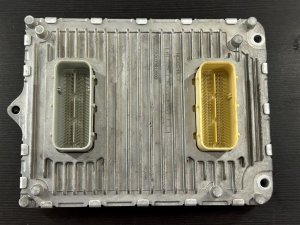
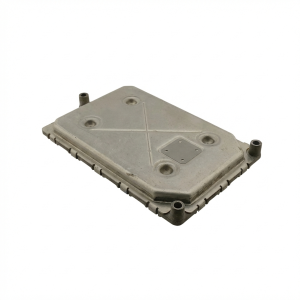
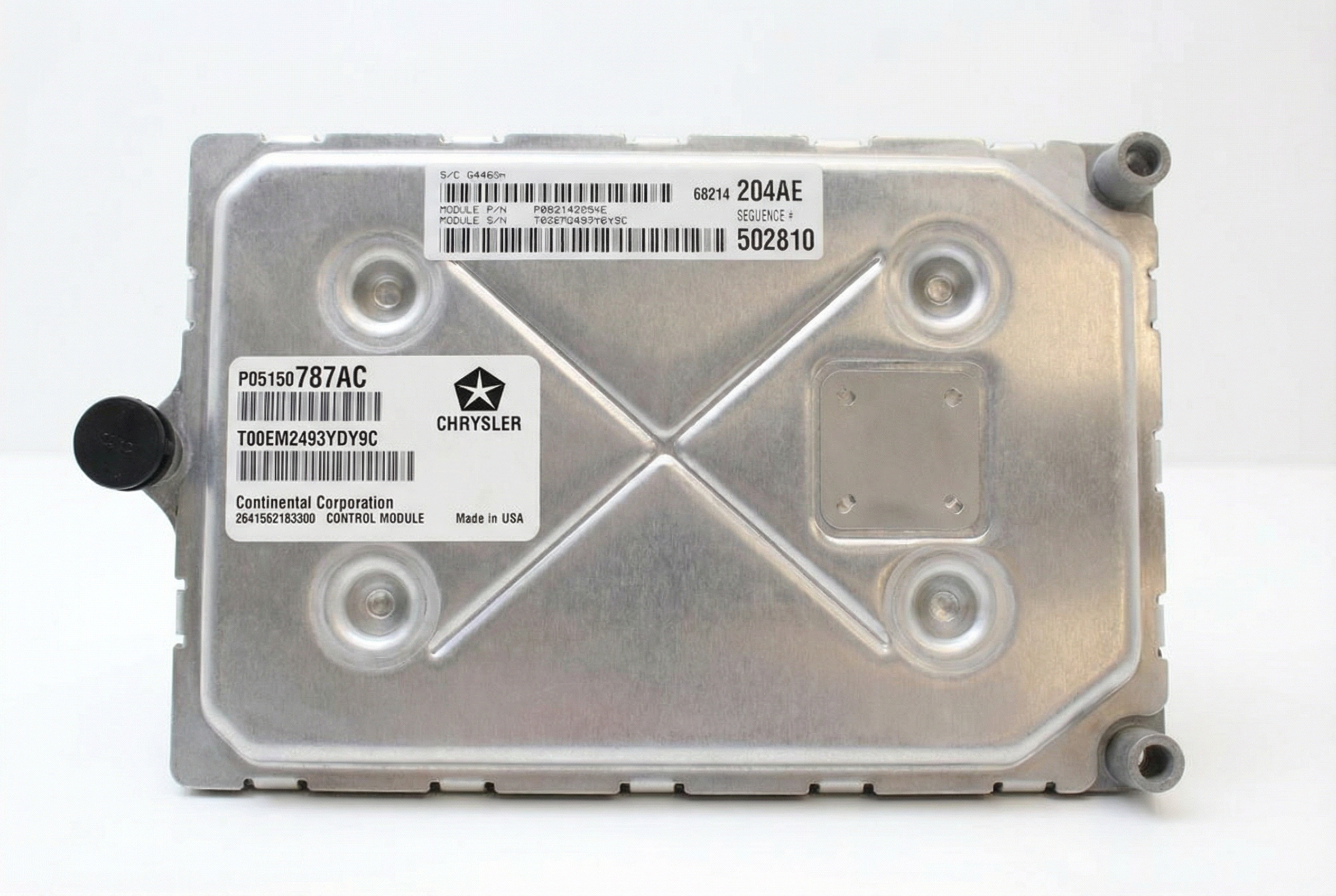
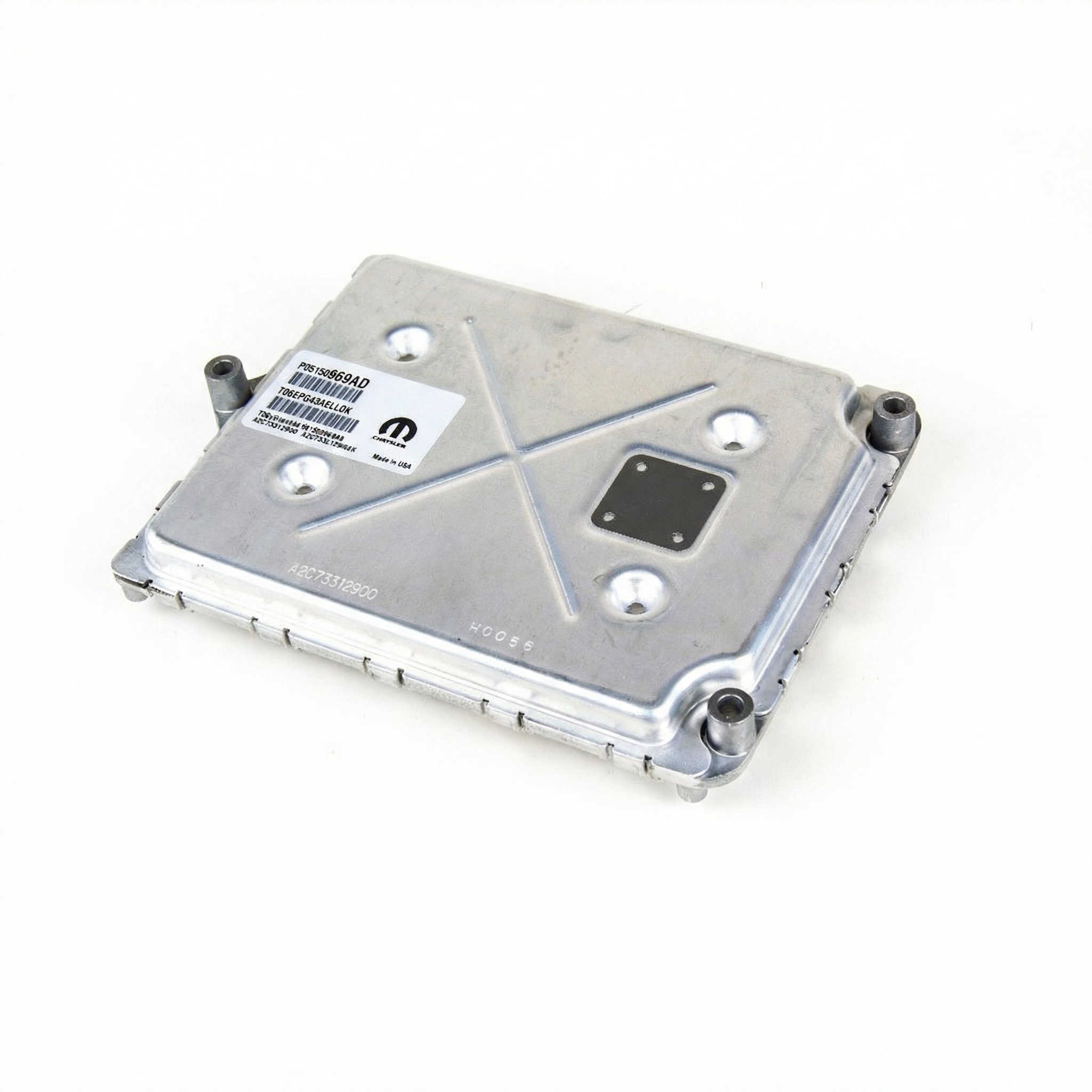
- Powertrain Control Module (PCM)
(OEM #Varies by VIN, e.g., 68212702AF, 5150797AC. Part numbers are frequently superseded; always verify with VIN.)— This is the most likely part to have failed if a software update does not resolve the code and wiring is intact. It is the source of the reference voltage.
Trusted brands: Mopar (OEM)
OEM price range: $600-$800
Aftermarket price range: $400-$600
Related Codes That Often Appear With This One
- P1622 — This is the code for 'O2 Sensor Reference Voltage Circuit High'. P1621 and P1622 are often listed together in the same TSBs, indicating a common root cause in the PCM's software or internal voltage regulation.
- P0606 — This code means 'Internal Control Processor' failure. Its appearance alongside P1621 is a strong indicator that the PCM itself is faulty, either due to a software glitch or hardware failure, both addressed by the same TSBs.
- U0140 — This code indicates 'Lost Communication With Body Control Module'. Its inclusion in the TSBs suggests a broader electronic module issue that is resolved by the PCM reflash.
- P0300 — This code for 'Multiple Cylinder Misfire' can be a secondary effect. An incorrect reference voltage can disrupt the air-fuel ratio calculations, leading to misfires. This code is also listed as being resolved by the PCM flash in TSB 18-073-20.
- P219A / P219B — These codes for 'Bank 1/2 Air-Fuel Ratio Imbalance' are also listed in TSB 18-073-20 as being resolved by the same PCM software update, indicating the software glitch can affect fuel trim calculations.
Technical Service Bulletins (TSBs) & Recalls
- 18-073-20: Flash: Powertrain Control Module (PCM) Updates, addresses P1621, P1622, P0606, U0140, P0300, P219A, P219B and others for 2013-2015 models with the 5.7L engine.
- 18-052-15 REV A: Flash: Powertrain Control Module (PCM) Updates, also addresses P1621/P1622 and P0606.
- 18-084-16: Flash: Powertrain Control Module (PCM) Updates, lists P1621 as a code resolved by a PCM reflash, superseding earlier bulletins.
- 18-052-15: The original version of the TSB, also citing P1621 as a condition fixed by a software update.
Platform-Specific Known Issues
- A known software glitch in the PCM is the most common cause for P1621 on 2013-2015 models with the 5.7L engine. Chrysler issued TSB #18-073-20 to fix this, along with a cluster of other potential codes, via a software update.
- Owner Experience: On forums like lxforums.com, numerous owners of 300s, Chargers, and Challengers report having the P1621 code appear, being told by independent shops they need new O2 sensors, and then finding that the dealer reflash per the TSB was the actual and final fix.
Mechanic-Grade Diagnostic Values
- O2 Sensor Reference Voltage (at sensor connector) — expected: Approximately 5.0 Volts DC with the sensor unplugged, key on, and engine off.. Failure: A reading significantly below 5.0V points to a short to ground in the wiring harness or an internal PCM fault.
- O2 Sensor Bias Voltage (Scan Tool Live Data) — expected: On a warm engine in closed loop, the voltage should cycle between approximately 2.5V and 3.5V.. Failure: If a short occurs on the return circuit, all four sensor bias voltages will drop and cycle between 0V and 1V.
- O2 Sensor Raw Voltage (Scan Tool Live Data) — expected: On a warm engine in closed loop, the voltage should cycle rapidly between approximately 0.1V and 0.9V.. Failure: If a short occurs on a single sensor's *signal* wire, that sensor will read 0V, while the other sensors may still appear to switch normally or erratically as the short bleeds into the shared return circuit.
- Charging System Voltage — expected: 13.5V to 14.8V with the engine running.. Failure: Voltage outside this range indicates an alternator or battery issue that can cause various PCM and module errors.
Scan Tool Commands That Help
- wiTECH: Reprogram PCM with latest software — This is the primary repair procedure for P1621 on this platform, as specified by multiple TSBs, to correct a known software anomaly.
- wiTECH: 'PCM Replaced' function — After successfully flashing the PCM, this function (found under the WCM/WIN module miscellaneous functions) must be performed to transfer the vehicle's Secret Key (immobilizer) information to the updated PCM.
- Professional Scan Tool: Live Data Monitoring of all O2 Sensor Voltages — Used to diagnose the specific nature of the circuit fault. Viewing all four sensors' raw and bias voltages simultaneously can help determine if the short is on a shared return circuit (affecting all sensors) or a single sensor's signal wire (affecting one sensor primarily).
Wiring & Ground Locations
- PCM Power Fuses — In the main under-hood fuse box (Power Distribution Center), typically on the passenger side of the engine bay.. Fuses F31, F34, F37 supply power to the PCM, while F34, F35, F36, and F37 are also listed for O2 sensor heaters. A blown or intermittent fuse can cause PCM errors, including reference voltage faults.
- PCM C1 Connector — The Powertrain Control Module is located in the engine bay; C1 is one of the large multi-pin connectors that plug into it.. This connector carries the primary power, ground, and sensor reference voltage circuits. Back-probing specific pins at this connector is a key step in verifying circuit integrity between the PCM and the sensors.
- Engine/Transmission Ground Straps — Key locations include a strap from the engine block to the chassis, from the transmission bellhousing to the chassis, and from the engine mount to the K-member.. A poor or missing ground can cause unstable voltage across the entire engine management system, leading to erratic sensor readings and module faults like P1621.
- O2 Return Wire (Downstream) — In a similar Mopar vehicle, this is Pin 32 (Circuit K904, Dark Blue/Dark Green wire) on the PCM connector.. This is the specific circuit that the PCM monitors for the O2 sensor return voltage. Knowing the pin number allows for precise testing for shorts or opens directly at the PCM.
Real Owner Repair Stories
- EFILive Forum / Diesel Place Forum (GM LLY Diesel Truck (different vehicle, but same code definition)) — P1621 'Long Term ECM Performance' code would appear after heavy acceleration.
❌ Tried (didn't work) Clearing the code; it would return.
✅ What actually fixed it The issue was traced back to a previous aftermarket handheld programmer that had 'stained' the ECM's memory. No definitive fix was found, highlighting the risk of using non-OEM tuning devices which can cause persistent memory performance codes. - YouTube user 'Roundstone' (Unknown vehicle, likely European based on user location) — Engine kept cutting out while driving, code P1621 was present. Later, code P0193 (Fuel Pressure Too High) also appeared.
❌ Tried (didn't work) Replacing the ECU (PCM).
✅ What actually fixed it The 5V reference circuit is shared by multiple sensors. The actual fault was an internally shorted fuel rail pressure sensor, which was pulling down the reference voltage and causing the P1621 code. Replacing the fuel rail pressure sensor resolved both codes.
Model Year Variations Within This Range
- 2013-2015: The 5.7L V8 in this platform uses four narrowband O2 sensors whose return circuits are tied together internally in the PCM. A short on any one of the four return wires will affect all four and set a single code like P1621. This differs from other engines (e.g., Hellcat) that use wideband sensors with separate, non-tied return circuits that set individual codes.
- 2015: The 2015 model year received a significant refresh, including the ZF 8-speed automatic transmission becoming standard with the 5.7L V8. While the TSBs for P1621 cover the 2015 model year, PCM part numbers and software calibrations are highly specific and must be matched to the vehicle's exact configuration, including the transmission type.
Helpful Videos
We Have This Part in Stock

The information in this article is provided for general reference and educational purposes only. Vehicle specifications, procedures, and part compatibility can vary by production date, trim level, and region. Always consult your vehicle's factory service manual and verify part numbers before purchasing or performing repairs. Safety-critical components such as airbags, seat belts, and braking systems should be installed by a qualified professional.
- Chrysler 300:
- 🧭 Diagnostic Flowchart
- 🎬 Helpful Videos
- 🛍️ Shop This Part
- What's Unique About the 2013-2015 Chrysler 300
- Symptoms You May Notice
- Most Likely Causes
- Diagnosis Steps
- Parts You'll Likely Need
- Related Codes That Often Appear With This One
- Technical Service Bulletins (TSBs) & Recalls
- Platform-Specific Known Issues
- Mechanic-Grade Diagnostic Values
- Scan Tool Commands That Help
- Wiring & Ground Locations
- Real Owner Repair Stories
- Model Year Variations Within This Range
- 🎟️ Get 5% Off